Latifa Echakhch – "L'air du temps" Solo Exhibition
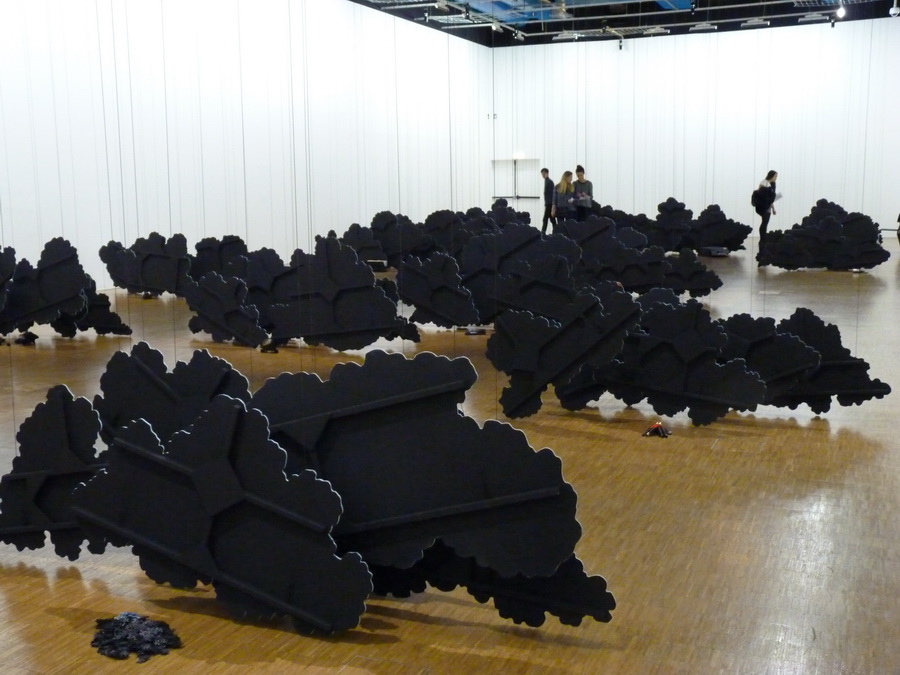
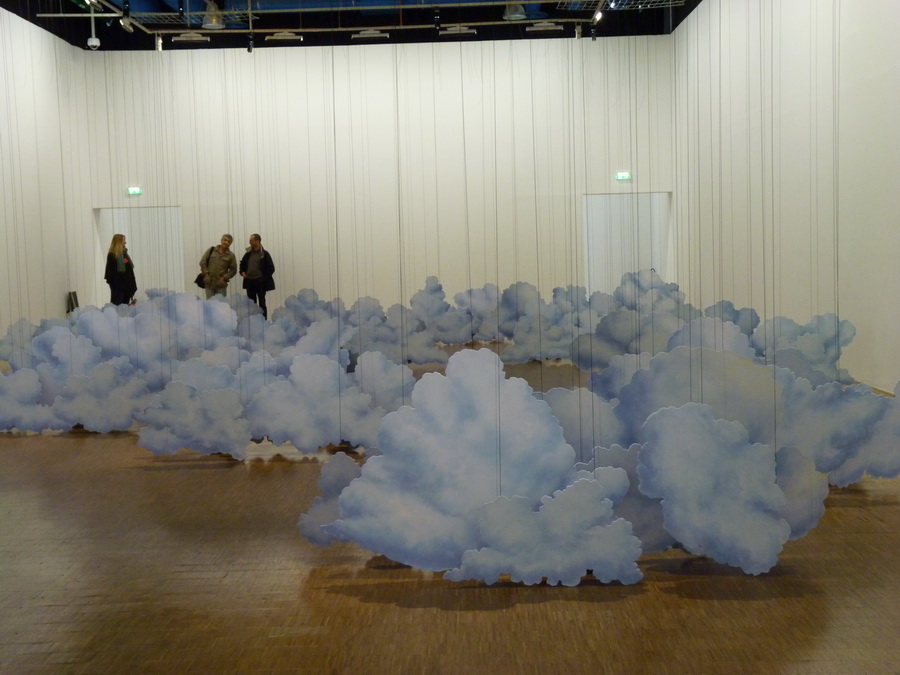
One of the scenes from Latifa Echakhch's solo exhibition "L'air du temps" at the Centre Pompidou, Espace 315 Gallery.
Text and Photos by Chen Chi-Hsiang Location: Centre Pompidou, Espace 315 Gallery Dates: October 8 to January 26, 2015
Preface: Latifa Echakhch (b. 1974) is the winner of the 2013 Marcel Duchamp Prize. The annual Duchamp Prize exhibition is held at the Centre Pompidou’s Espace 315 Gallery. This year, after the summer break, it was exhibited simultaneously with the most famous postmodern architect Frank Gehry in the adjacent gallery space. Obviously, when visiting these two exhibitions on that day, a stark contrast emerged. The Duchamp Prize exhibition for Latifa Echakhch was empty, with hardly anyone curiously entering to visit; the atmosphere was cold like winter. This is a common phenomenon in contemporary art, not surprising, as it is a realm for a minority of art lovers. Furthermore, Frank Gehry’s architectural retrospective had an eye-catching effect, while the side exhibition was bustling with crowds, creating a chain reaction of popularity. It was a commercially successful exhibition, worth seeing quickly. Audiences of all ages were present, almost including teachers and students from all major and minor architecture schools in Paris. Groups upon groups of guided tours made it lively. Rarely does an architectural art exhibition attract such a crowd; even the previous Swiss world-class architect Bernard Tschumi did not have such an effect. This shows the charm of Frank Gehry’s architectural art.
Latifa Echakhch: I actually did not know who Latifa Echakhch was. Although I have greater curiosity about new contemporary art in Paris and have been seriously viewing exhibitions, Latifa Echakhch remained very unfamiliar to me. Due to the Duchamp Prize, I saw her work for the first time, which gave me the opportunity to understand her deeply through materials. Born in Morocco, she immigrated to France with her parents at age three. She participated in the 2011 Venice Biennale in Italy and is considered one of the most promising artists of the new generation today. Her artistic creation features a unique cross-cultural background and a fresh global perspective. Besides her solo exhibition at the Centre Pompidou this year, I also saw more of her works at this year's FIAC International Art Fair. In addition to paintings (such as the abstract Drum series, 2012), there are objects juxtaposed into forms (Ghost, 2014) and installations, carrying some surrealist and conceptual implications, similar to the multi-media exploration of many young artists today. With multi-faceted references ranging from personal privacy, politics, literature, biography, and history, etc., her installations often have a strong relationship with space (not necessarily establishing spatial installations). Recent installations have shifted from dramatic effects involving circus and theater concepts to desert spaces and ghostly events. The artist wrote: "I work according to a process of condensation and making each project as radical as possible. I often explore for a long time, just to find a concise and necessary form." (Note 1)
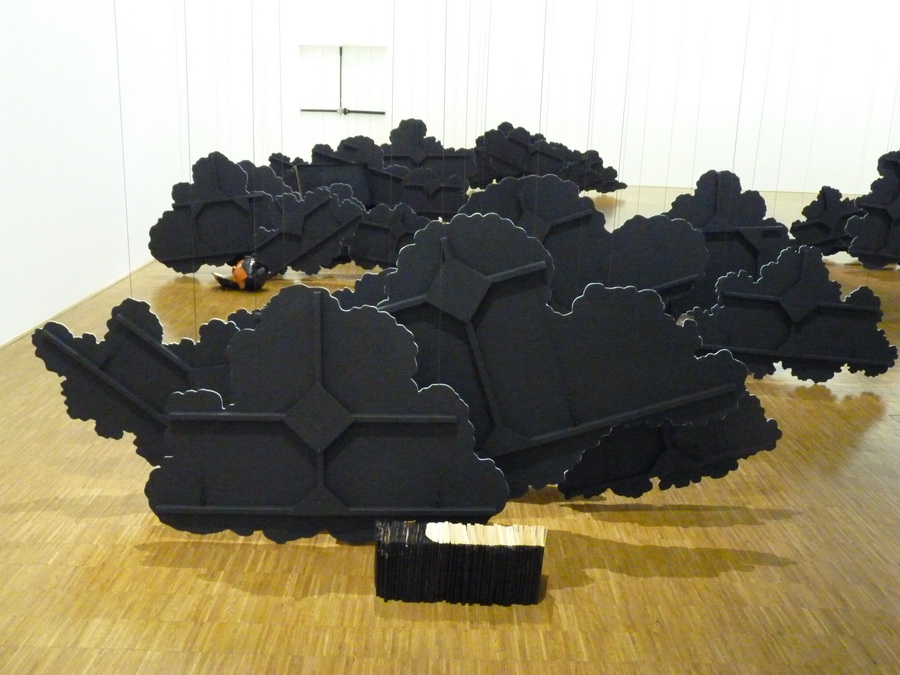
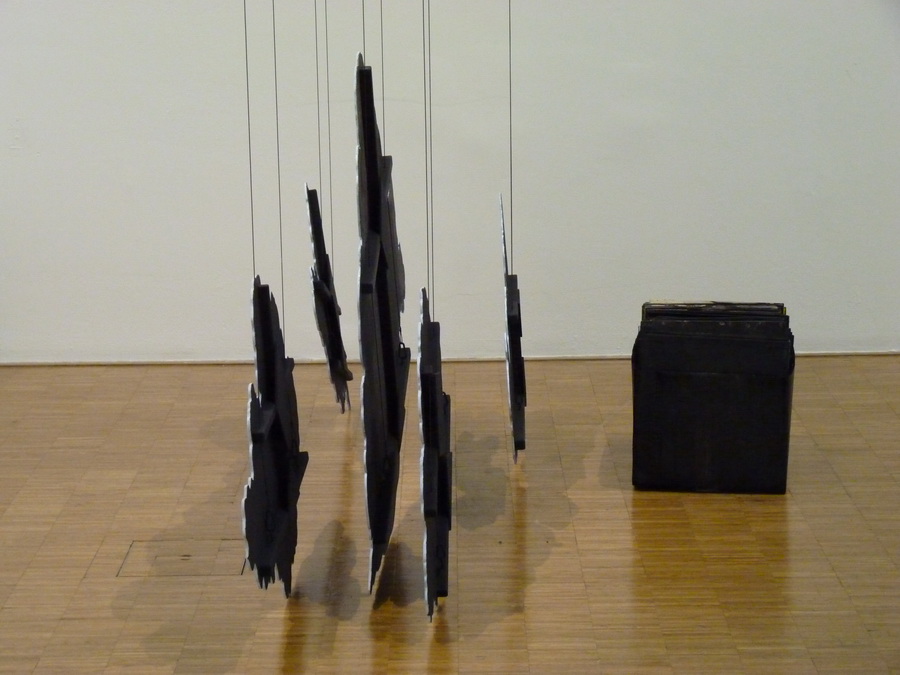
"L'air du temps" Spatial Installation: The theme of the Duchamp Prize solo exhibition, "L'air du temps," intends to create a unique atmospheric context and scene, referencing theatrical forms and decorative concepts. Upon entering, group after group of dark clouds are spread on the ground, forming a strong contrast with the clean white walls around. The pitch-black clouds are suspended by transparent fishing lines, which look like continuous light rain under dramatic lighting, adding a special sentiment. People can leisurely wander through them, entering the magical, whimsical hometown of clouds, filled with poetic imagination. On the front side, dark clouds are dense, and various objects are placed along the edges of each group. When people walk close and look back, they see sunny skies with white clouds, cloud formations drifting on the ground, poetic and picturesque, full of meditative space. Surrounded by clouds, it feels like being by a lake, taking the audience to that unreachable realm.
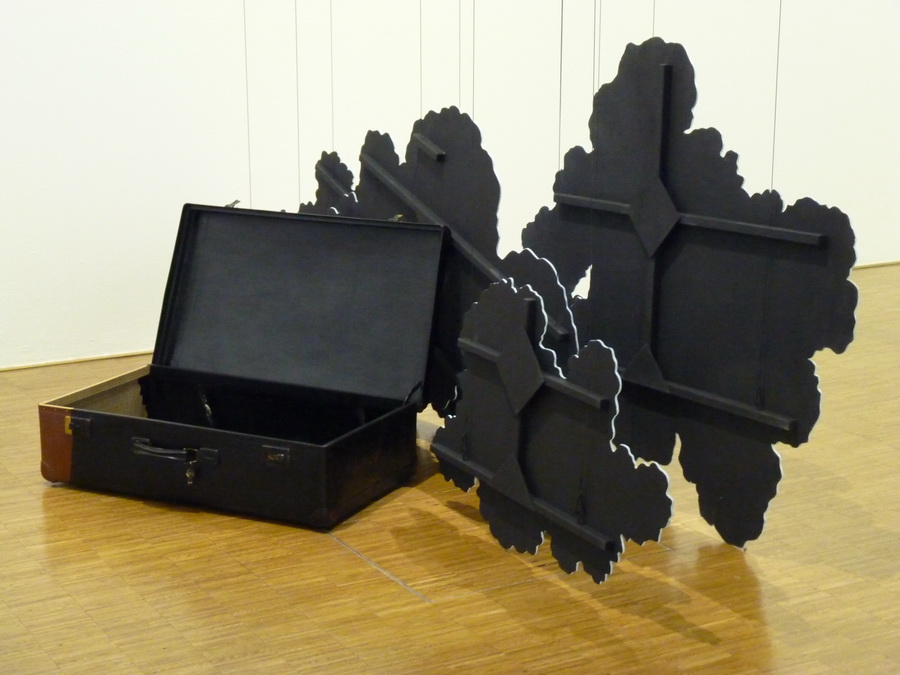
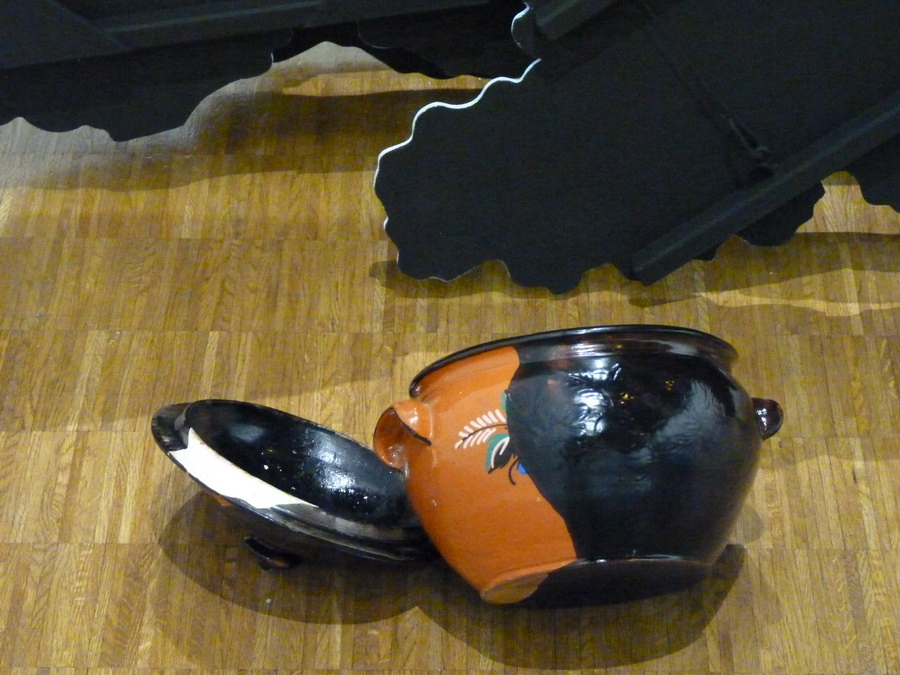
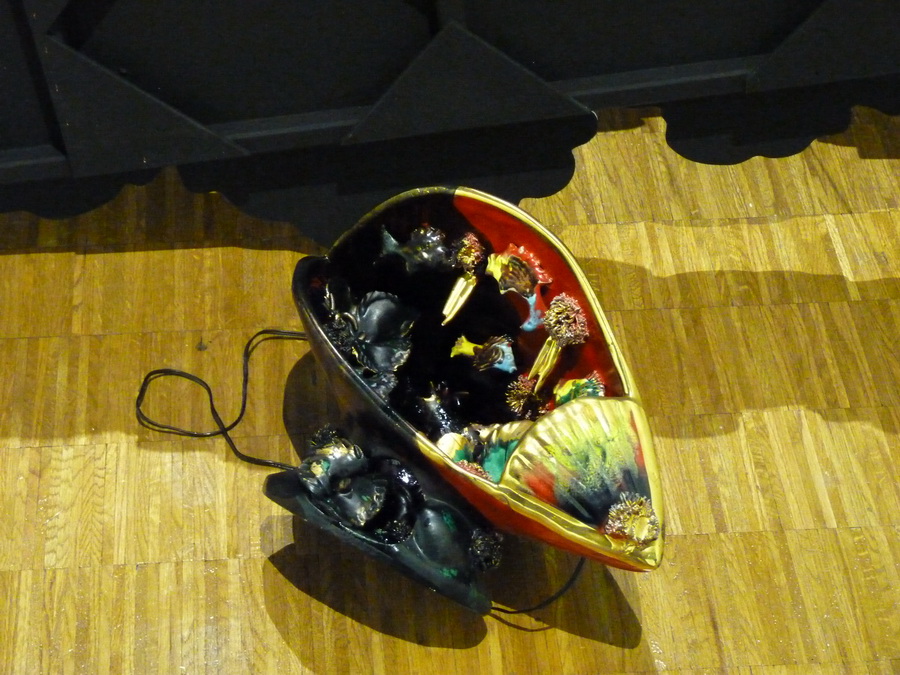
Under each group of clouds, various metaphorical and referential objects are placed. Large objects include black suitcases or speakers; small objects include pebbles, coal, vases, books, photo albums, ceramic pots, or Chinese landscape monuments, etc. These objects seem to be painted black, overturned beside the cloud groups, as if after a tragic and violent event, disrupting the original order. The artist wrote: "Black, like a filter, simultaneously transfers the concept of the past and stopped action time. This whole becomes a powerful behavioral force, making it more solid and suspenseful." (Note 2) Objects range from personal memory to collective family, clan, regional, and human geography, etc. The artist wrote: "Ordinary and discordant, these objects displayed here are consistently old. This carrier is both personal memory and collective memory. Perfume bottles are an example of this narrative. Objects exist between personal intimacy and the collective. These objects are childhood memories for the artist, like a little girl fascinated by continuing through promises: carrying this scent, thus becoming a woman, a mature person. Creating those from the 1950s, symbolizing the fragrance of the parents' generation: the post-war era, where attempts were made to regain dignity, elegance, and coquetry. The artist said, 'Scent remains with people after sorrow.'" (Note 3)
The "L'air du temps" spatial installation constructs painting, sculpture, and objects into a unique landscape, poetically and dramatically presenting the pains and nerves of the times. Within this consciousness of life, it critiques the current political and economic situation and serves as a stepping stone for the artist's resistance. As an immigrant artist, she wrote: "I have the right to say I really don't know who I am, nor where I come from. Sincerely, I can only define myself, but I see many people defining me based on my position, defining me for me. For this reason, I resist. I immigrated too young, with no choice. Not educated in my place of origin, losing my mother tongue, vague little memories, rare images, a strong sense of strangeness makes things more complex than a simple mix. I have a very strong impression in everything grand, sometimes drawing inspiration from it, and carefully choosing not to determine my own identity. This may be a basic free space reserved for oneself." (Note 4)
Notes: From the press release for Latifa Echakhch – "L'air du temps" Solo Exhibition at the Centre Pompidou.