"The Myth of Cargo" (Le mythe du cargo) Thematic Exhibition
Tue Greenfort 07 Taillefine 125x97x60 cm
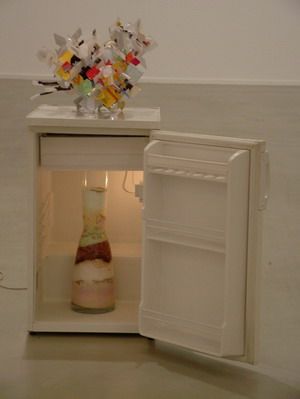
Tue Greenfort 07 Taillefine 125x97x60 cm
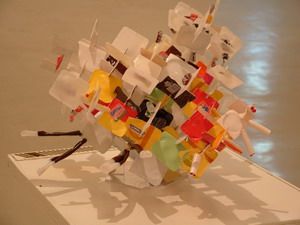
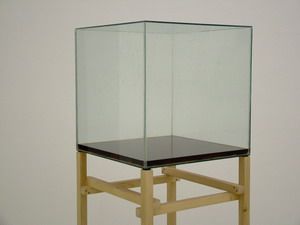
Tue Greenfort 07 Taillefine 125x97x60 detail - Tue Greenfort 06

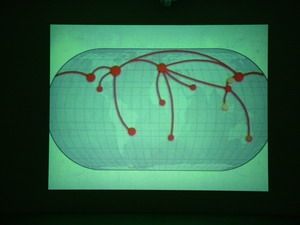


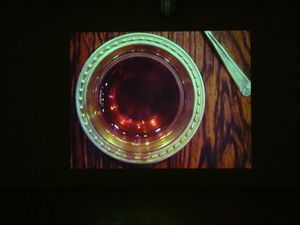
The above six images are from the 2004 work "Paris" by Swiss artist Daniel Pflumm, based in Berlin, Germany — a 32-minute video art piece, music by the customers.
The thematic exhibition "The Myth of Cargo" (Le mythe du cargo) was curated by German curator Bettina Klein for the Fernand Léger Gallery at the IVRY Art Center in the suburbs of Paris, running from January 26 to March 11. It is a contemporary art exploration of the omnipresent commercial and industrial advertising image media in today's consumer society.
A total of 7 artists were invited: two painters belonging to European narrative realism — Gérard Fromanges (born 1939) and Bernard Rancillac (born 1931) — and a younger generation including Iren Stehli (born 1953), Franck Scurti (born 1965), Daniel Pflumm (born 1968), Christine Wurmell (born 1972), and Tue Greenfort (born 1973).
Advertising in today's consumer society permeates the entire urban environment, and its degree of visual pollution seems to have encroached upon our daily lives. Everywhere one looks, from large and small billboards in the city to audiovisual advertisements on television, newspapers and magazines, supermarket promotional ads, radio, and the Internet world — all have polluted our living and social environment. Under the ceaseless and ever-increasing hypnosis of advertising media today, it seems to have taken root deep in people's subconscious, or people have become numb or turn a blind eye to it. No wonder the mayor of São Paulo, Gilberto Kassab, declared last autumn that he would create a new law to sanction these aggressive advertisements flooding the city, sparking resonance among major cities worldwide, especially in this era of environmental awareness.
Clearly, American Pop Art of the 1960s had already addressed the conditions of American consumer society, in a rather ambiguous situation of simultaneous satire, critique, and celebration — the most representative figure being, of course, Andy Warhol. Through the 1990s, Neo-Pop artist Jeff Koons even more wildly twisted advertising imagery and the world of objects, manipulating mass media objects under consumer art and art consumption. Today, some young artists carry on this legacy, continuing to explore the manipulation and transformation of mass advertising media, more effectively manipulating the symptomatic images and signs of consumer society.
Swiss young artist Daniel Pflumm quite cleverly transforms and appropriates numerous consumer society signs and images from television advertisements, through the visual playback of video art combined with intense, repetitive, monosyllabic rhythmic music. Danish young artist Tue Greenfort transforms consumer objects to construct a more conceptual art object. German young artist Christine Wurmell constructs advertising totem images, hovering between art and non-art, advertising and non-advertising, all becoming myths of contemporary art. French young artist Franck Scurti presents mythic advertising objects. Swiss artist Iren Stehli exhibits photographs of shop windows in the capital of Prague (a series of black-and-white photographs from the 1970s to the present), presenting extraordinary images of socialist consumption.