Lee U-Fan
Pre- Relatum - Counterpoint Object Installation 2004 Post- Dialogue 218x291cm Oil Painting 2009
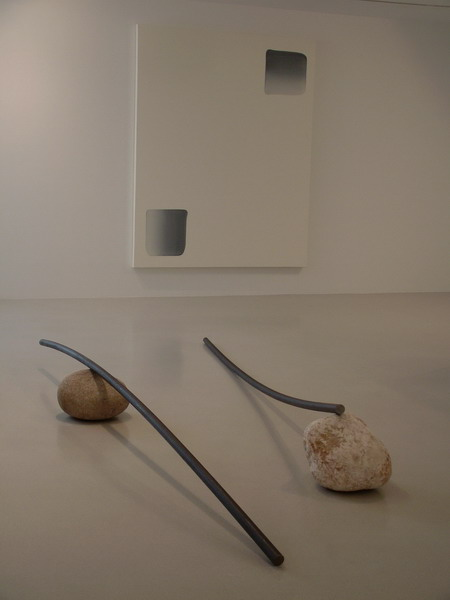
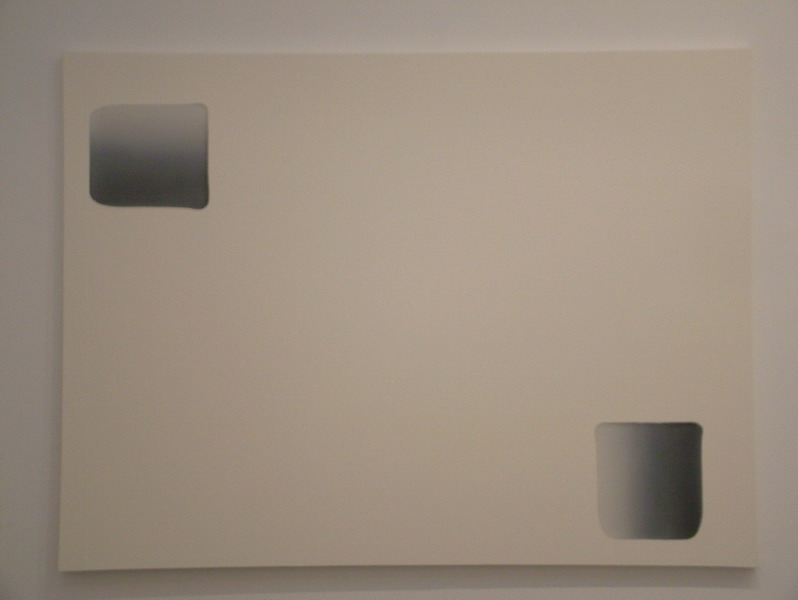
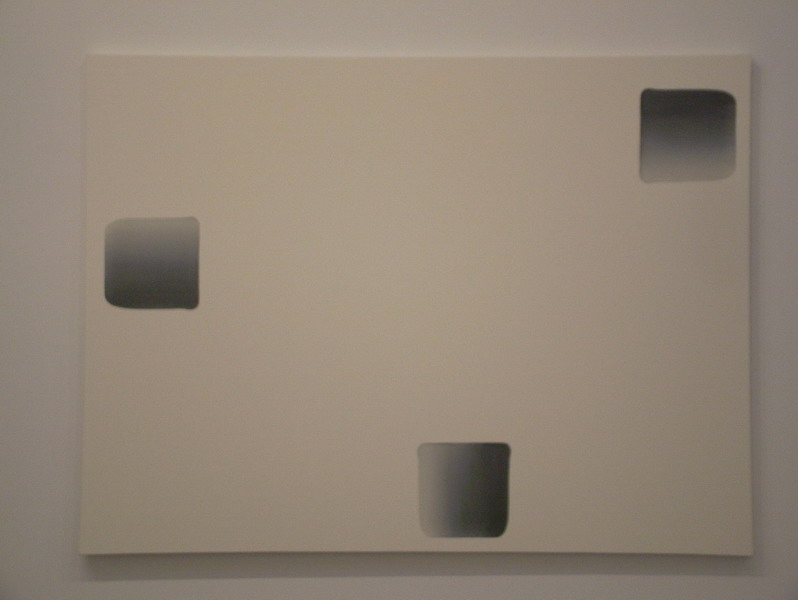
Dialogue 218x291cm Oil Painting 2009 Lee U-Fan's solo exhibition "Painting and Sculpture" was on display from September 3 to October 2 at the Thaddaeus Ropac gallery. Born in 1936, Lee U-Fan is Korea's most famous contemporary artist and a founder and theorist of Japan's Mono-ha (School of Things) movement in the 1960s; more precisely, he is its spiritual figurehead. Amidst the storms of Pop Art, Neo-Dadaism, and Minimalism in the 1960s, a new art movement emerged in Tokyo, Japan, around 1969–1970: the Mono-ha art group. For them, the subject matter of "things" was not just any random object, but rather the essential characteristics of objects themselves—meaning that things are simply things, nothing else, neither depicted nor serving as conceptual scaffolding. They returned to the fundamental values of human essence, combining primitivism, organic qualities, and an attention to the originality of materials. Theorist of Mono-ha, Lee U-Fan wrote: "We must understand observing the world as it is (or as it originally is), not through the medium of general representational transformation, for it increasingly goes against humanity" (Note 1).
The Japanese Mono-ha group was essentially a broad term; they had no formal manifesto or joint statement and can be described as an informal team. They revolved around the common theme of "matter," each exploring their own unique perspective. Their close relationship was built upon original environments and the basic qualities of used materials. They prioritized natural materials: stones, earth, wood, cotton, marble, neon lights, mirrors, ropes, etc. These materials were sometimes modified, but mostly displayed in their original state to reveal material energy.
Their focus was not on the representation of matter. Mono-ha works first offered symbolic critique. Artists, through acts of appropriation of nature under the allowance of completely external forms, established aesthetics based on Zen and Daoist relationships, according to Lee U-Fan's theory. Artists had to follow the essence of East and West, their pure elements. Art came to praise the environment, starting from this natural fact, thus generating all things. In Lee U-Fan's "Relativity" series beginning in 1969, natural elements and man-made objects are combined within unchanging elements: stones and glass, soil and iron plates, etc. Mono-ha artists did not claim the rights of a creator; instead, they developed self-forms within a non-creative creativity, viewing fragments of the world as wholes.
Invited as a guest lecturer at the École des Beaux-Arts de Paris in 1997, and holding a retrospective at the Jeu de Paume museum in Paris, Lee formed ties with Paris and began shuttling between Paris and Tokyo. He became active in the European art scene. In 2005, the Saint Etienne Museum of Modern Art held another grand retrospective for him, followed by the Royal Museums of Fine Arts of Belgium in Brussels last year, which also affirmed his lifelong artistic achievements. Lee U-Fan's artistic exploration of Eastern Zen and Daoism represents one of the most extraordinary artistic styles in contemporary Europe.
In this new solo exhibition, two monumental minimalist sculptures occupy the large hall. "Relatum - Silence" features a three-meter-high iron plate leaning against a wall, with a natural stone placed directly in front, solemn like an altar. Another work, "Relatum - Response," consists of an almost 1.5-meter square iron plate lying flat on the ground, with a smooth stone in front, resembling the arrangement of a Japanese garden. Under this simple and rigorous metaphor, filled with Eastern spiritual states and philosophical perspectives, objects in their original essence convey an aesthetic value far beyond the ordinary. On two white walls facing each other, four huge white paintings titled "Dialogue" are presented. They rigorously display bold brushstrokes full of energy and light, numbered one, two, and three. Under a condensed, minimalist vocabulary, they reveal the natural and true face of painting itself, arousing a profound resonance of consciousness.
In the square underground exhibition space, the artist painted a single large, energetic brushstroke directly in the center of one wall. The entire space is filled with energy and ethereal quality, highlighting the invisible yet tangible Zen intent. It constructs a resonance of the mind within a frozen state of being "not Dao, not very Dao," which cannot be imagined.
Lee U-Fan's internal mechanistic painting combines extremely minimalist and spiritually charged bold brushstrokes into an aesthetic vibration. Within a deep and quiet echo, one feels concrete, visible substantial energy. The artist said: "If people strike a bell, the sound echoes in the interval. Similarly, even if points full of spiritual energy are painted on canvas (or walls), their energy still echoes and vibrates in the environment space without painting (...) An artwork is a landscape where formed and unformed, painted and unpainted places are intimately connected as types of mutual resonance."
Note 1: "Factions and Movements since 1945," by Hervé Gauville, published by Hazan Press, Paris, 1999, p. 146.