Paris "Children of Don Quixote"
From Christmas to New Year's Day, the whole society is immersed in festive joy. Flashing shop windows and crowded streets filled with shoppers and tourists...
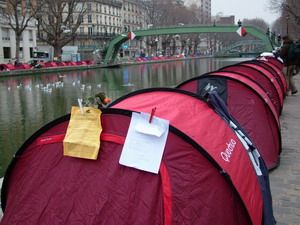
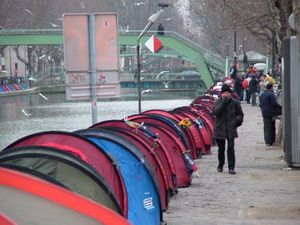
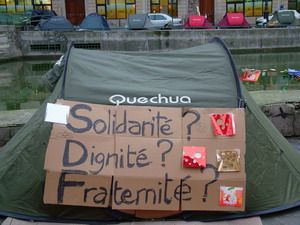
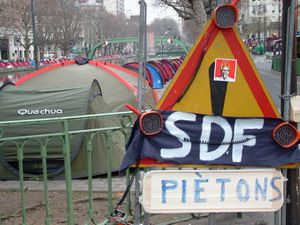
From Christmas to New Year's Day, the whole society is immersed in festive joy. Flashing shop windows and crowded streets filled with shoppers and tourists almost make everyone forget the homeless people scattered in every corner of this bustling metropolis during this cold winter. According to an assessment by the Paris Social Affairs Bureau, there are nearly 7,000 homeless individuals in Paris, mostly due to unemployment, family accidents, or being foreign economic migrants from Eastern Europe or the Third World, or political refugees seeking asylum. Among them are also lower-class workers who cannot find shelter; unable to afford housing in Paris, they have become the greatest sufferers in today's capitalist society. According to a social survey, 60% of French people believe they could end up homeless at any time. It is hard to imagine that most French people live with a sense of insecurity in the face of globalization. The number of people relying on "charity kitchens" to survive each winter continues to grow, which sufficiently proves the current social situation in France.
This year, on the eve of these holidays, a group fighting for social justice appeared: "Les enfants de Don Quichotte" (The Children of Don Quixote). Don Quixote, the representative work of Spanish writer Cervantes, is well-known as a symbol of a folk hero fighting alone for justice. This group urged those in power and the general public to open their eyes to social realities. They announced that, like the homeless, they would set up simple tents on the banks of the Canal Saint-Martin to live among the homeless and experience their lives, encouraging public participation in this social struggle. The banks of the Canal Saint-Martin suddenly became a unique camping area, with rows of tents highlighting the problem of homeless people in the Paris metropolitan area. Since Paris shelters are fundamentally insufficient and the government has no replacement or solution, this stirred up attention from domestic and international media and sparked social debate. With the upcoming French presidential election, it attracted the attention of presidential candidates from all parties, who sent special envoys to show concern and make proposals, and obtained an audience with the Minister of Social Affairs, thereby initiating negotiations with the government.
Under the social struggle of "The Children of Don Quixote," an extraordinary dawn appeared. They bravely moved forward, starting to camp collectively in various provinces and cities across France, because homelessness is not just a problem of the Paris metropolitan area but the most serious humanitarian issue in French society as a whole. During his last New Year's Eve address of his term, French President Chirac specifically pointed out the right to housing, signaling that the Prime Minister should draft legislation to solve this problem. Taking advantage of the situation with "The Children of Don Quixote," on New Year's Day holiday, the "Paris Union for Housing" forcibly occupied a six-story building belonging to CIC Bank, located opposite the Paris Stock Exchange, and declared demands for the government or the Paris City Hall to expropriate empty houses in Paris to solve the housing shortage problem in the metropolitan area. Clearly, constructing a social system requires the macroscopic foresight of the government; otherwise, socially progressive figures must actively participate in struggles through organizations and the masses to fight for its establishment.