Louise Bourgeois Retrospective
Woman-House Marble 1994



Sketch - Tension Series - Detail 148.5x165.7 cm 2007 Private Collection Image from Photo-Benjamin Shiff-L Bourgois courtesy Osiris.N Y ADAGP.Paris 2008 Louise Bourgeois Retrospective: On view from March 5 to June 2 at Le plateau Centre Pompidou, this is Paris's most important exhibition of the spring. Louise Bourgeois (born 1911) was an American-born Frenchwoman (from a family restoring antique carpets and silk in Paris), currently one of the art world's most unique artists. Her creative vitality remains strong in her later years; what is rare is not only the diversity of her work, but her lifelong challenge of herself and reinvention of style. She is undoubtedly one of the most subversive and forward-looking female artists today. Her entire artistic exploration is built on unapologetic female bodies and situations, and the treatment of gendered edges. She said: "I have a high interest in what women do." All of Louise Bourgeois's creations pass through complex symbolic forms. In emotional and deeply internal sexual vitality, "the woman's mysterious veil" and "sexuality" become the core of her extraordinary imagination and idealized exploration. Guided by inner instinctual surrealist vitality touching all senses, she uses diverse materials (wood, marble, steel, copper, fabric, fiber, objects, etc.) and diverse media: oil painting, drawing, printmaking, sculpture, textiles, objects, multimedia, installation, etc., revolving around major themes: women and family, body and sexuality, maternity and childhood, memory and dreams, etc. The retrospective works are not complete, but it is rare to get a glimpse of her full creative scope.
Louise Bourgeois grew up immersed in a family restoring antique carpets and silk, raised in a world of knitted fabrics. Influenced since childhood, she loved drawing and knitting. From age 11, she began drawing carpet patterns in her parents' restoration studio, continuing until today at age 96 with her most familiar and intimate knitting craft and readily available materials for drawing. Bourgeois's creative source stems from childhood personal experiences and feelings, revolving around intimate family relationships. Her mother was practical and feminist, managing the shop and studio. Her father, an antique dealer, was more flirtatious and lustful, employing a young British maid as his mistress and housekeeper. This blatant behavior upset the family balance, deeply disturbing the teenage Louise. She felt manipulated by adults, sensing an irreparable rift. This extraordinary situation became the dream satisfaction of her creation. She said, "My childhood never lost its magic, its mysterious veil, and its drama." Later, Louise worked in her father's new small gallery, where she met American art historian Robert Goldwater (an expert in primitive art). On the eve of World War II, in 1938, she moved to New York with her American husband to settle there. Leaving her dream-like family, she began dedicating herself to artistic creation.
The Louise Bourgeois Retrospective started at Tate Modern in London, passed through Centre Pompidou in Paris, and will continue to tour to the Guggenheim Museum in New York. This retrospective is divided into seven themes, systematically presented like a chronicle.
"Woman-House" Woman Personal Experience Series: Starting with early (1940s) paintings, drawings, and prints, revolving around themes of birth, childhood, maternal love, and self-portraits. Notable is the "Woman-House" series, combining body and architecture. Under organic and geometric, soft and hard contrasts, it shows home as the responsibility and heavy burden a woman bears throughout her life—a tangible or intangible psychological and physiological oppression. Philosopher Gaston Bachelard wrote: "The house is the body and soul." Through the "Woman-House" series, the artist intends subconscious self-liberation. Throughout her long artistic career, this has remained a theme of interest. For example, the 1998 object-environment installation series "Room-Cell VII," referencing her personal story, is an extended development of her house works.
"Primitive Figures" Sculpture Series: In the 1950s, a strong nostalgia enveloped the New York expatriate Louise Bourgeois. Under these thoughts and feelings, she completed this series of "Figure" totem wood carvings on the rooftop balcony of her home. Powerful hieroglyphic sculptures, under the simple and unadorned symbol of primitivism, strongly express emotion, transferring homesickness and projecting all unease. Sculpture became Louise Bourgeois's way of dispelling nostalgia. The artist explained: "Each totem-like wooden product represents friends and family left behind, far across the Atlantic." These figure statues fall into two types: sometimes carved directly, sometimes constructed through repeated overlapping. Some are figurative with heads and arms, others completely abstract, oscillating between Giacometti and Brancusi, or approaching Minimal Art. She quickly found a vital expression of "sexual" worship consciousness. Especially in 1955's Dependence, quite sensual and fleshly, composed of two concentric molds, showing a magical black hole sculpture of overall internal rupture under the surreal appearance of female genitalia, poetic and full of illusion. Bourgeois pointed out: "This work [Dependence] is the relationship between the individual and their environment. With resolute focus, it can be insignificant or very intimate, simple or complex, substantial or rough. Particularly, it can be real and imaginary. It is from this field that I developed all my works."
"Symbolic Nest, Home, Shelter" Series: Also derived from the concept of home. "Home" is people's shelter. Wherever one lives, home-nest is the most private place for the individual, whether luxurious or humble, it is where one is most at ease. Starting in 1960, Louise Bourgeois abandoned hard and rotting wood, beginning to use more plastic plaster and latex. Early plaster works were organic spiral towers, nests, and hives—primitive homes. Within these nests, the form of eggs was strengthened because constructing a home is the body as body. For example, the 1963 work Fée couturier. The earliest human shelter is naturally in the womb. The supreme value and radiance of maternity are evident. The relationship between "daughter" and "mother" holds undeniable value in Louise Bourgeois's creation. Late metaphors praising or satirizing mothers and maternal love became her creation, completing many notable masterpieces such as 1985's Vixen, 1997's Spider, 1999's Mother and Doll series, 2002's Weaver, 2003's Silent Child, 2005's Curled Spider, etc.
"Extraordinary Body and Sexuality": In the mid-1960s, Louise Bourgeois developed anatomical pathology from vortex forms, boldly constructing "sexual" totems, creating an unprecedented new balanced volume. Using various unusual materials like marble, rubber, and latex, she boldly and fearlessly displayed eroticism full of expressiveness and imagination, thereby showing strong emotions. For example, the stunning 1968 sculpture Fillette, quite subversively displaying a man's large penis and two huge testicles, or the "Hermaphrodite" sculpture. Its bizarre shape combines male and female organs, with a walnut- or flower-like open female organ in the middle, and a penis growing from each side. An extraordinary imaginative form, both primitive and vigorously suspended in mid-air, truly unimaginable. That same year, the sensual Cumul I white marble sculpture placed on rough wood presents smooth, sexy semi-circular shapes of various sizes, bizarrely resembling a male glans, quite bewitching and full of infinite metaphor. The 1969-1970 pink marble sculpture Woman Knife is quite sensual, formed by slender smooth marble into a knife shape, clearly revealing walnut-shaped female genitalia, teasing and bewitching, manifesting a woman's sexual hallucination. In reality and imagination, figuration and abstraction, symbolism and metaphor, it becomes the core of human life's driving force and creative imagination, while also being a satire and critique of patriarchal chauvinism. The artist wrote: "One way women always explore is to become women themselves. Their anxiety comes from never being able to become accepted sex. This all begins with extreme struggle coming from: all sexuality." She also said: "Art is a guarantee of mental health." All these types of sexuality bring a soothing therapy for the soul.
Under bold new feminism, she does not claim feminism for herself, stating: "I do not believe in the existence of feminist aesthetics. My works express overflowing abundant emotions unrelated to gender. Fortunately, I was raised by a feminist mother, fortunately I married a feminist husband, and I raised my sons to be feminists."
In 1970, she pioneered combined environmental space installations. In complex images, all expressing ingenious sociological-psychological situations, such as the vertically assembled To Be With. She explained this work: "It doesn't need to be sexual, nor is it an intimate metaphor. It is used to answer others, like a timeless, though unable to express true feelings. But it reflects an exceptionally intimate mode of expression." In 1973, a sudden dream occurred: her beloved husband died suddenly. Under the severe blow and life test, the following year, contrasting the past and reaching a settlement of the father's image, she completed this stage's most dramatic, violent, and monumental environmental space installation The Destruction of the Father. In a dramatic intimate home setting, within an eerie ambiguous red space, horizontal semi-circles (resembling glans) adorn the floor and ceiling. Various sized organ objects are arranged on the central table like an extraordinary feast. The artist explained: "This work presents the scene of a terrible family dinner. The father, proud as the head of the household, sits at the main seat, with the mother and children surrounding him. How do they resist such a macho-patriarch? In rage, we dismembered him, threw him on the dining table, and ate him in one gulp." Thus liberating oneself from the past patriarchal society and the love-hate feelings toward the father.
"Places of Memory": In the 1980s, Louise Bourgeois continued exploring vibrant sexual and bodily symbols, revolving around diverse memories and places, intertwined with the charm and imagination of the body. For example, 1983's The Curved House, full of symbolism in dual recording, endowing a unique shape and space. The artist said: "Those symbols are necessary because they allow deeper communication." Further developing all methods of marble, in excellent rich images like the notable 1984 sculpture Nature Study. Ingeniously digging out two large eyes on square rough marble, the humorous and lively image invites reverie, between figuration and abstraction, reality and imagination. Soon she entered environmental space installations, such as the ingenious 1986 memory-place work Articulated Lair. Black folded iron plates stand to construct curved almost closed spaces, with black long strips of rubber hanging on the panels, forming an intimate geometric mysterious illusion space, between reality and surrealism, symbolism and imagination.
The 1990s were Louise Bourgeois's most mature and abundant creative period, featuring many large-scale object installations. Dramatic "House Room" scenes became the core exploration of this period. Structural organization, metaphorical bodies, dialogue between inner and outer ingenuity. In the "Bedroom," a private space, a place of memory, secret rituals are performed inside as art to exorcise past sorrows and unease. The 1992 monumental Precious Fluid (a masterpiece participating in Documenta, now collected by Centre Pompidou Modern Art Museum, not exhibited here) is one of Louise Bourgeois's grandest and most mysterious representative works. Inside a huge circular wooden barrel, using objects as the main scene installation: an iron bed, worn men's and women's clothes, glass vessels, etc. Under subtle light atmosphere, these codes signify intimate and private memories. The artist explained: "This work interprets a little girl growing up, forgetting fear, finding passion... (……) Those glass vessels resemble muscles; when relaxed, they secrete precious fluid... (……) Like tears, they represent the end of pain."
Outstanding installations of this period also include the ingenious 1992 Bullet Hole. In a symmetrical octagonal iron gate form, two sides are iron window-style, one side becomes a door. Inside, three large round log balls are displayed on the ground. Under ambiguous light, in a symbolic world, peeping into women's psychological and physiological states. That same year, the notable Challenge object sculpture, on a rectangular iron frame, displays various forms of glass vessels from small to large, metaphorically representing the ambiguity of female genitalia (as vessels are receiving containers). Then the Weight object sculpture, via sensitive iron brackets, sometimes suspending disc vessels, or hanging women's clothes. Perfectly balancing on hollow linear lines, symbolizing the "genitals" and "body" of both genders. Between object and form, reality and imagination, symbolism and metaphor, time and space, psychology and physics, it invites reverie. These are Bourgeois's outstanding explorations of sex and spirit, blood and flesh, matter and spirit (note: these three works were not exhibited here).
In the Centre Pompidou retrospective, two object installation works themed parent-child relationships, Red Room-Master Bedroom and Red Room-Child's Room, come from the exploration results of Precious Fluid-Bedroom. Via numerous household bedroom objects (e.g., Master Bedroom: double bed, lamp, wardrobe, dressing table, mirror, etc. Child's Room is messier: single bed, sewing roller, candle, glass vessels, etc.) and old doors/windows in a swirling dramatic scene installation, under symbolic red and black tones and dim light, creating a unique dreamlike and tragic atmosphere. The audience can only peek and imagine this hidden mystery from the doorway. Obviously, the Master Bedroom orderly presents intimate and private space; the Child's Room is somewhat messy but reveals children's innocent autonomy and dream world. The artist explained: "They are like cell systems in blood... (……), relying on each other yet having differences, sometimes blending, sometimes resisting." Expressing childhood memories and imagination under consciousness and subconsciousness.
Most notable here is the Spider-House (1997) object sculpture installation series, resulting from the development of home. This extraordinary spider symbolizes the mother's image. Although home is a woman's soul and tomb, managing the household becomes a woman's duty. Playing multiple roles at home (woman, mother, wife, lover, and family's most loyal friend), witty and capable, gentle yet fierce. In Taiwanese dialect, "Beware of bears and tigers, best not to provoke crazy women." One can imagine women's ferocity and viciousness. Louise Bourgeois's Spider-House: an octagonal home constructed from huge iron mesh. In a closed space inside, an old leather chair (used for many years in the artist's studio), and rugs or tapestries are displayed. On the iron mesh roof, an extraordinary large spider guards the home. Strongly demonstrating another side of her mother: protecting the home, supporting the husband, sheltering the children, managing everything wholeheartedly for the family, sacrificing herself without hesitation. The mother becomes the pillar and spiritual core of the home. The artist explained: "My dearest friend (why spider?), because my best friend was my mother. She was so smart, patient, noble, useful, rational, and responsible like a spider."
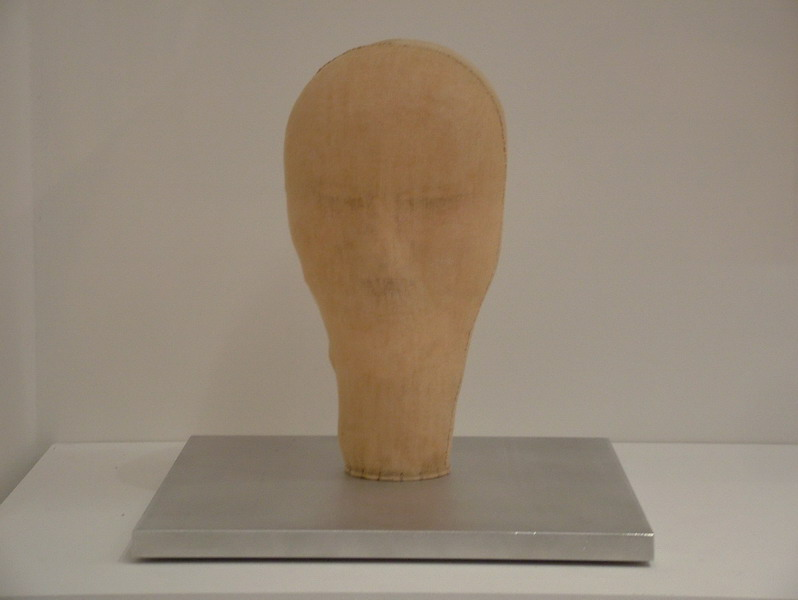
"Fabric Sculpture and Drawing" Series: The elderly artist (now 97) continues to break new ground in recent years, choosing her most skilled and intimate knitting and fabric creation. Using this soft and light material, returning to the traditional craft of restoring carpets and silk. Proficient and adept, she creates small and large figures, heads, bodies, group portraits, and family series fabric sculptures. In humor and satire, she displays the complex relationships of birth, aging, sickness, death, sex, and family. Most notable is the 2001 work Seven in Bed, humorously displaying the intimate friendship of seven siblings, presenting a group portrait of seven figures embracing each other (quite erotic). But ingeniously, there are nine heads connected together, full of imaginative metaphor for the eternal sibling bond. In 2003's The Reticent Child fertility work, the wonderful relationship between children and mother and father is displayed. Recently, large amounts of drawing and print works, using readily available paper and pen materials, through her sharp brushstrokes and organic forms, present two major series: repetitive linear and conceptual abstract drawings, and continuing figurative body realistic drawings. Louise Bourgeois calls this series "Insomnia Drawings," because she suffered from insomnia for years. Drawing became her method of self-soothing and self-healing process. She said: "Artists are afraid at night... (……) And the meaning of art is to transcend fear, etc." Obviously, her lifelong creation is built on personal past memories and body imagination. The artist said: "One must discard the past every day, otherwise accept it. If people cannot do it, then become a sculptor."
Art critic Luce Irigaray concluded about Louise Bourgeois's works: "Obviously from a female standpoint, there are only some fragments of her own life experience. Obviously starting from these fragments, Louise Bourgeois's works construct a uniquely female and particularly gentle imaginative world, combining this structure of instinct and awareness, which means 'human.' Women are often complex, yet they boldly disguise it, because the other half has become her, she becomes the family's automatic-erotic. At the plotted location, this ambiguous thing's state becomes an art of imagined harmonious sexes, or simply rethinking adding a 'female perspective' to male aesthetics. People question themselves or rather come to overall culture, including masculine feeling and image itself. This re-determination stands on the favorable position of women... Louise Bourgeois's works are still divided into partial-such fragments in the overall style, abundantly proving her continuous efforts... Revealing a unique female aesthetics, which means facing subjective consistent idealism and objective harmony, predicting today: what pattern is ultimately, an activity reflected in body and complex spiritual state, all obviously in her unique painting and sculpture forms."
May 2008 in Paris