Lucio Fontana - "Spatialist"
Spatial Symphony (T-104) 1958 Collection of the Centre Pompidou, National Museum of Modern Art
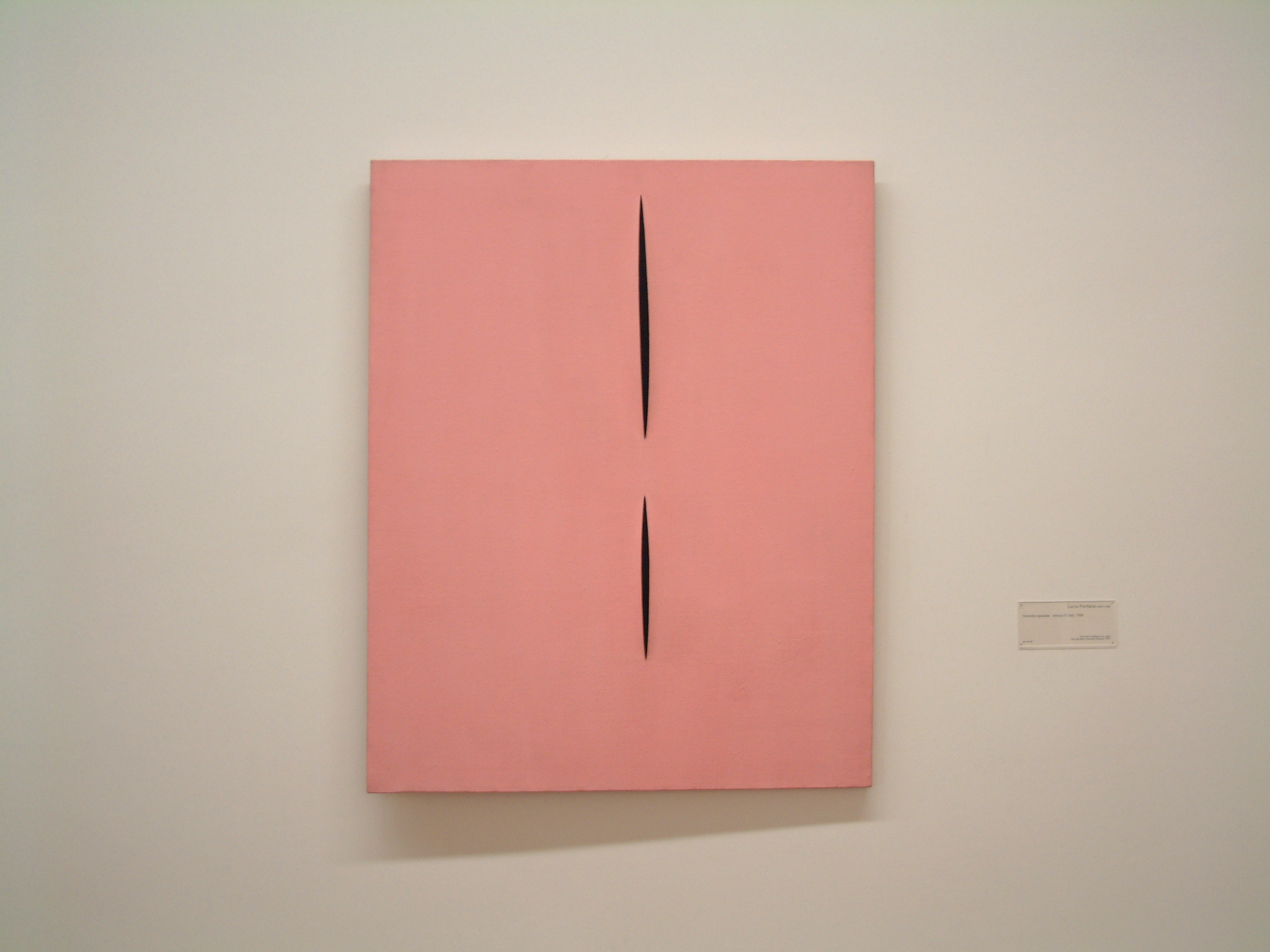
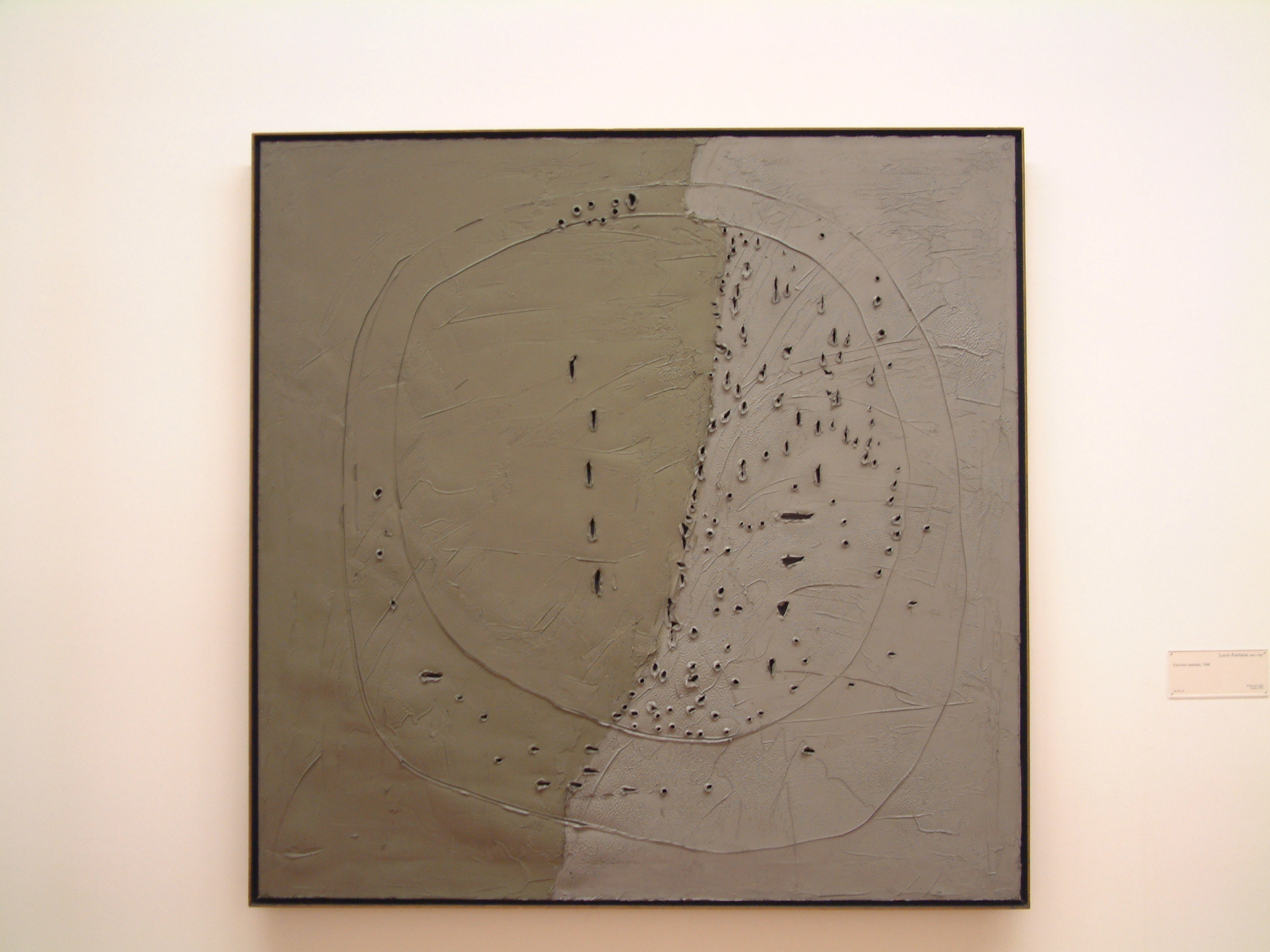
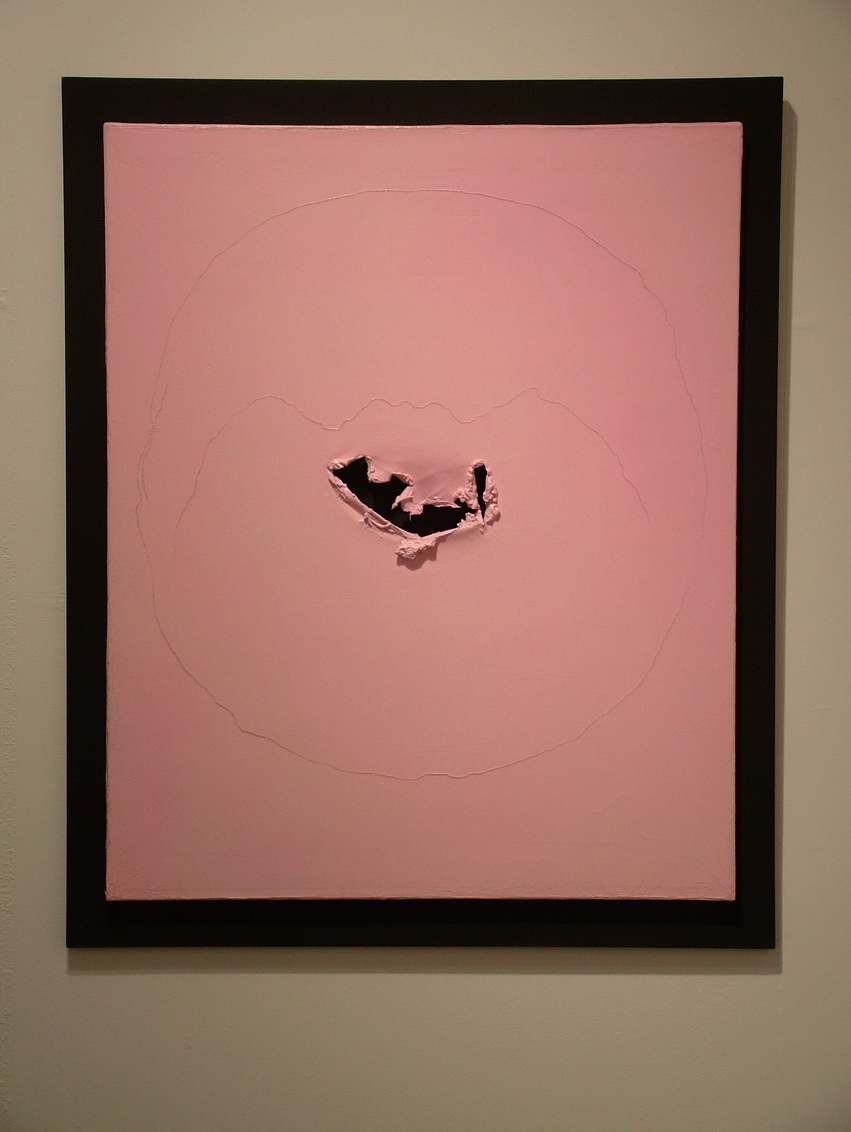
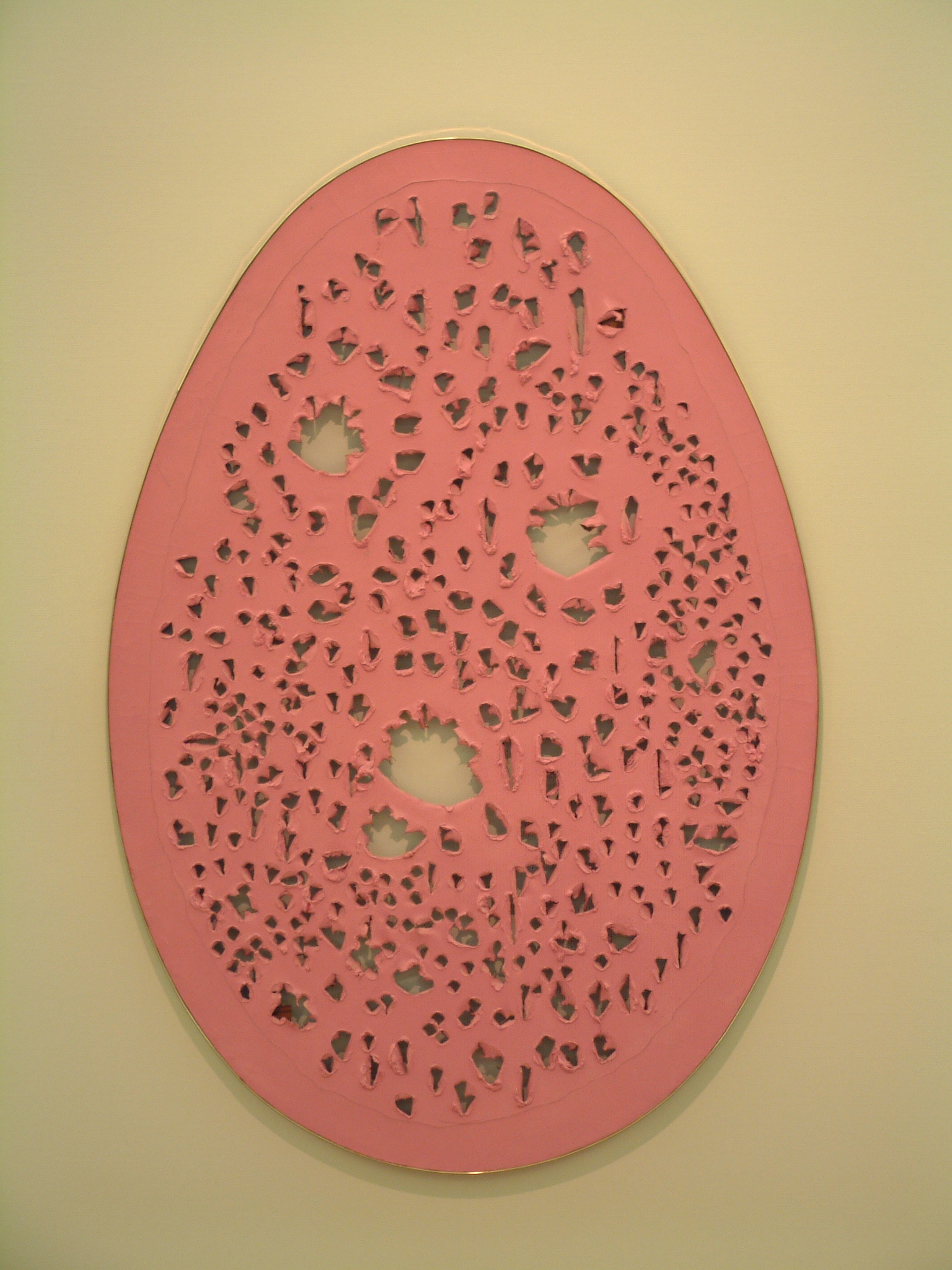
Born in Argentina to an Italian father and Argentine mother, Lucio Fontana (1899–1968) studied under symbolist sculptor Adolfo Wildt in Milan in 1928. In 1938, he participated in a Futurist exhibition; from an Expressionist perspective, Marinetti described his work as "cosmic abstraction." In 1946, he published the "White Manifesto" in Buenos Aires, adopting a polemical stance and utopian volume. After settling in Milan in 1947, he presented "Spatial Symphonies" in clay and bronze sculptures, opening a spiritual space with utopian characteristics; thereafter, his works revolved around the concept of space.
In 1949, he published the "Second Spatial Manifesto," exploring the relationship between works, environments, and locations, and began using neon lights. He declared: "We continue the renewal of art"; "For us born in the mechanical age, painted canvases and plaster no longer have any meaning"; "Art is abandoning established forms, dedicating itself to the development of art that unifies time and space"; or "Thinking about metaphysical elements such as color, sound, movement, time, and space, art unfolding in time and space is the most basic form of new era art. New art includes four-dimensional existence, time and space."
In 1950, his first pierced "Spatial Symphony" appeared within idealistic and celestial imagery. The concept of "Spatialism" became the main theme of Fontana's work. Its literary understanding was like a famous conquest of space and atomic discovery, akin to summoning a contemporary and cosmic work. This "scientistic" element formed an alternative volume. Within Surrealism, Fontana connected the body with the unconscious. Notably, he participated in the last two exhibitions of the Surrealists in Paris, where he specially exhibited a black-light environment, inviting visitors into an oval for a cosmic journey.
In 1951, he published the "Technical Manifesto" regarding interdisciplinary relations, approaching Jan Van der Marck, who called it "transition from tradition to utopia." Regarding Fontana's work, Van der Marck wrote: "Creating space, light, and (unspoken) movement, partially incorporated into his spatial creations, he opposes reality through illusionary substitution." That same year, he experimented with breaking physical volume limits, inlaying various colored glass and small stones on the canvas.
In 1952 and 1956, presenting "Spatial Symphonies," Fontana accurately demonstrated environmental installation techniques. Viewed from a distance, the works revealed an illusionistic space, showing a red and blue spaceship floating in the starry sky. Up close, the scene was distinct, inlaid with yellow glass; at the location of the spaceship, the canvas featured holes of varying sizes. These holes and cuts altered the illusionistic plan of the painting, accurately celebrating through cosmic symbols like stars or meteors. In the 1956 "Spatial Symphony," Fontana cut and pierced the painting's body in the most sensual and violent manner, becoming the artist's display of "painting as action." Instantly, painting became a substantial object, moving from surface to object, dissolving past illusions from two-dimensional space to three-dimensional space and four-dimensional time.
Fontana stated: "As a painter, when I pierce holes in those surfaces, I am no longer creating paintings: I intend to open up space, creating a new volume for art, connecting the universe in its continuous expansion beyond the limited picture. My innovative recurring theme of pierced paintings is not an attempt to decorate the surface, but rather an effort to break their volumetric boundaries. Beyond the holes, a new freedom of interpretation awaits us, and inevitably, art also ends." Thus, Fontana opened up an extreme space.
Fontana radically explored formless art, bearing the violence between spontaneous hand completion and objects in his works, consistently pushing toward extreme results leading to pure cuts on the picture surface. Destroying the deceptive painting surface, entering volume, and achieving metaphysical excellence in spiritual and mystical art. This invasion of the painting, its tearing like skin, suggests sexual simulation; this elucidation is like a negative attitude.
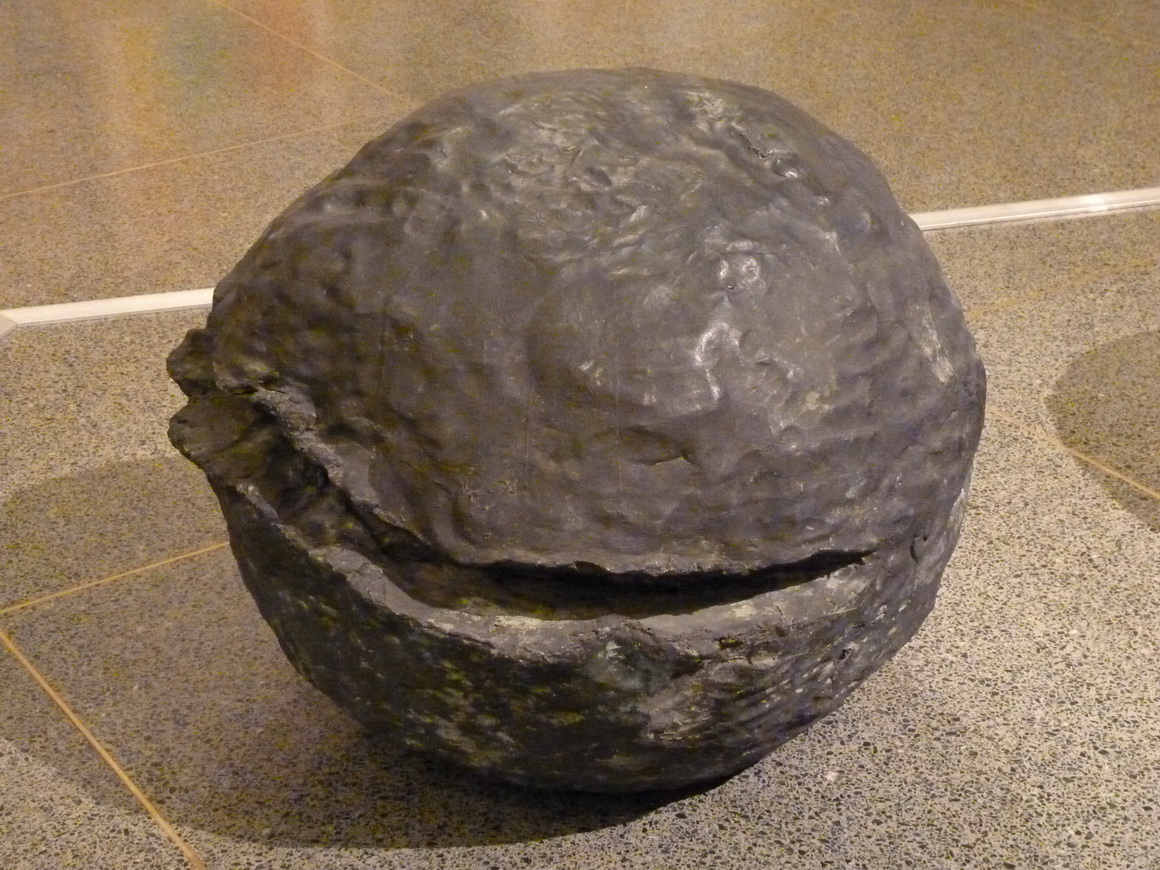
From 1959 to 1960, the "Nature" sculpture series consisted of clay spheres with large holes resembling volcanic eruptions on rough surfaces, displaying time and space, celestial and geological, imagination and magic under strong material forms. In his later years, in "Spatial Symphony" works titled "Little Theater," he re-employed arguments of his internal processes (holes, light, and space), reaching an extreme aesthetic, such as in the 1965 "Space of Space," resembling a magical cosmic world.
Fontana constantly questioned the expansion of possibilities in the realm of plastic arts, involving painting and sculpture, and transcending them, thereby making plastic art practice a problem and conceptual expression. Regarding the exploration of matter, time, and space, Fontana believed: "Dissolving the illusion of painting itself, letting space become the substance of painting."