Duchamp (M. Duchamp) - "Bottle Rack" and "Fountain"
Bottle Rack 64.2×42cm 1914 Centre Pompidou Collection
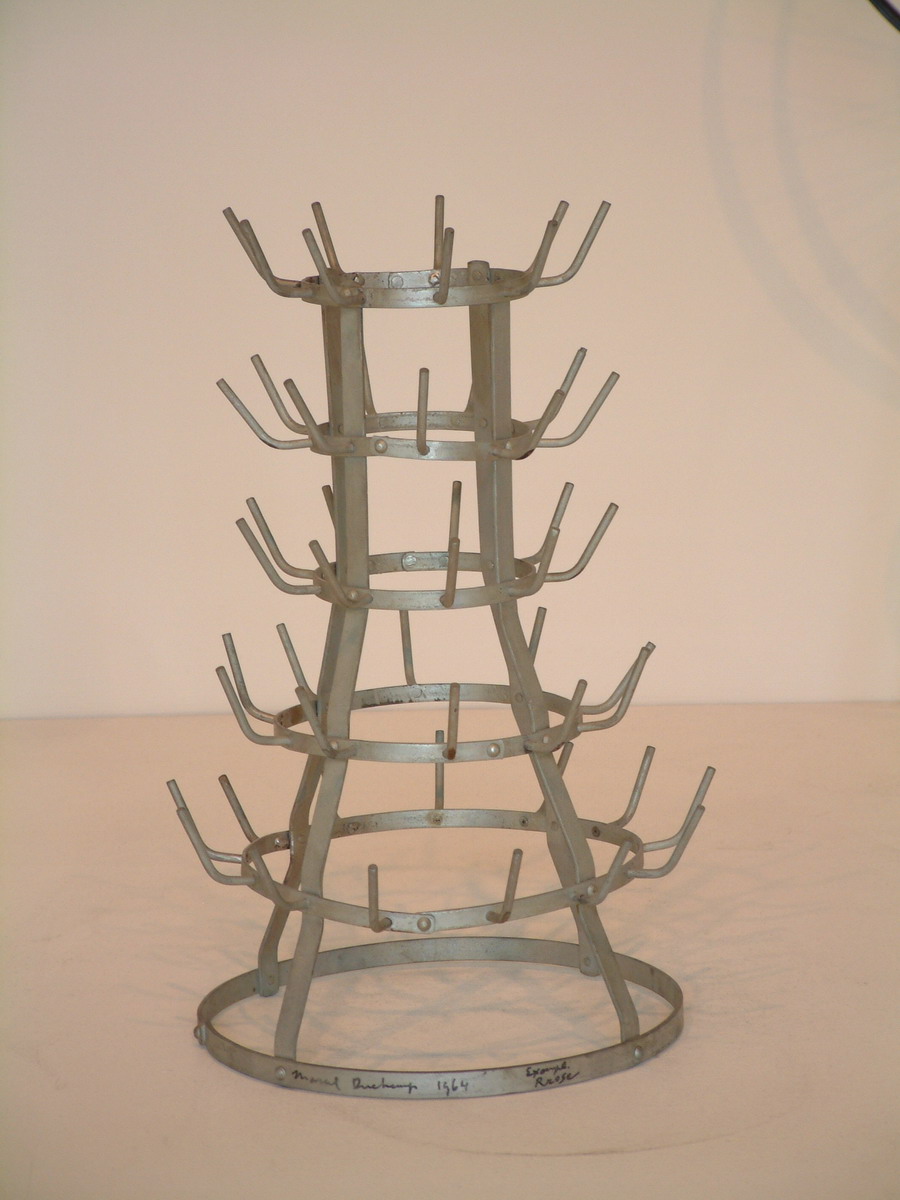
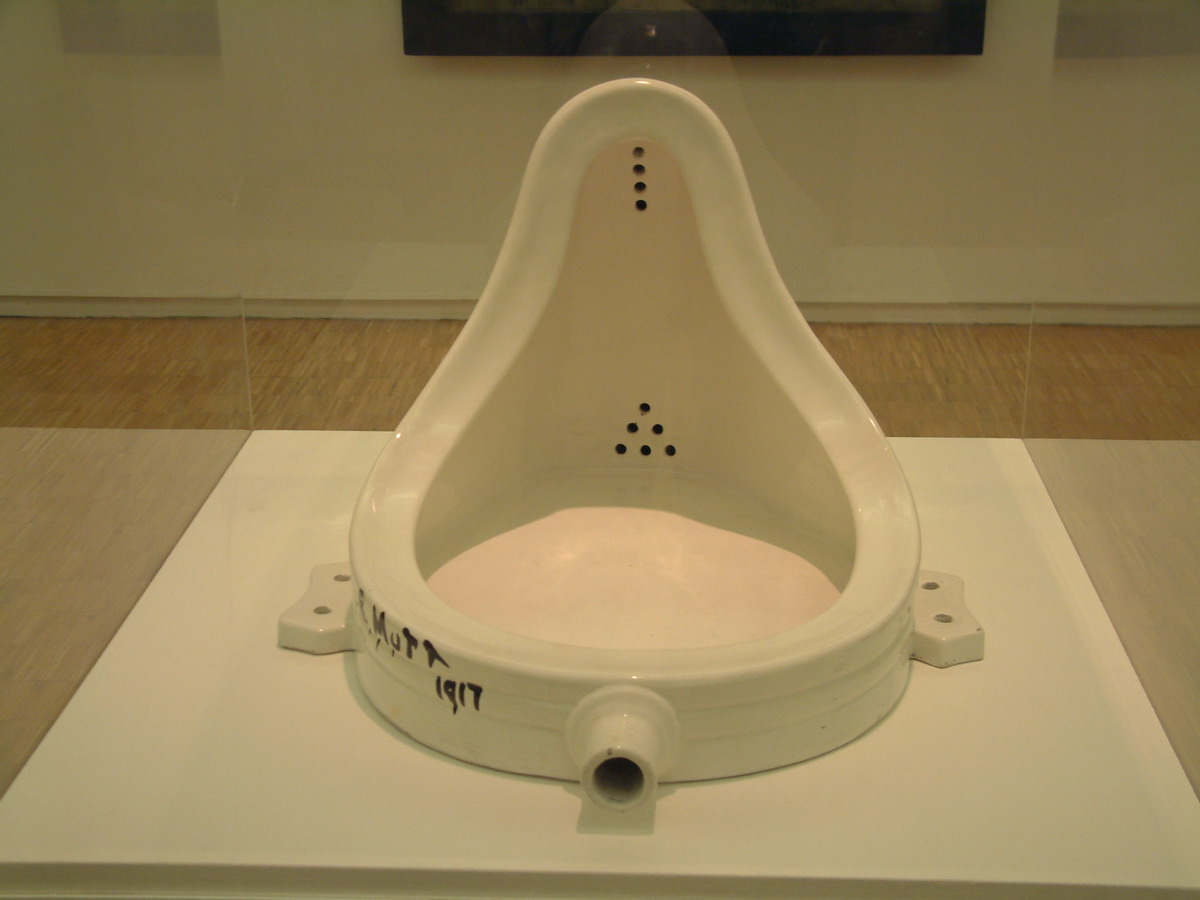
Is this art? What should art look like? Is anything art? These questions seem profound, yet perhaps not. As Duchamp said, "Anything can be art." He also stated, "It is the viewer who makes the art," and "You see it, you are also an artist." Art is constituted through your act of viewing; you become the best co-creator of the artwork.
Every object has its form, color, and function. If we strip away the object's background, invert its order, and appreciate it as a visual art piece through sensibility and intellect, why not? Consider these two readymades: under Duchamp's indifferent transformation, the bottle rack is hung (like an object thrown into the sky), and the urinal is placed upside down on a white pedestal (like an elevated object possessing artistic dignity). They become a new form, a new way of perceiving space. Especially the latter, which Duchamp endowed with a poetic theme: "Fountain." Its unstable relationship resonates between language and vision, literature and object, where sensation alters the object's content. Harold Rosenberg called these readymades "an object of hesitation" or "an uneasy object," because until now, we do not know if they are true objects of art or not.
These readymades became the best examples of non-art and anti-art at the time, and currently serve as the finest models for non-art adopted by art institutions. This kind of indifference may be Duchamp's feint to draw attention elsewhere, reminding us to focus on our surroundings. With a keen and open mind, let us develop human imagination in the spirit that "one beauty is all beauty." By abandoning the rhetoric of painting, transcending traditional aesthetics, and expanding the examples of avant-garde art, he opened up a new era of art.