Ernst
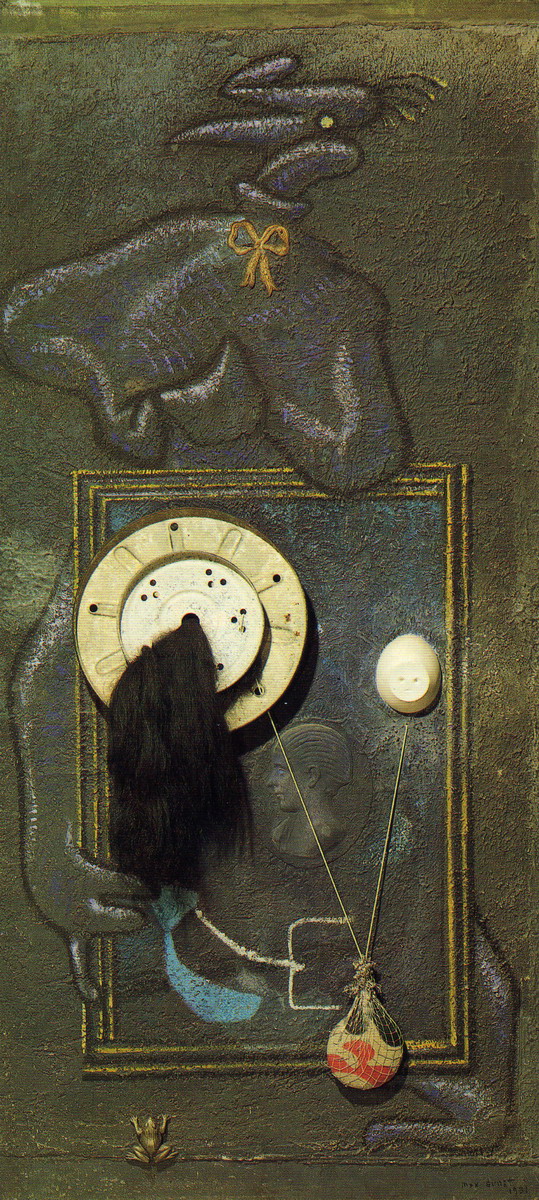
M. Ernst Loplop Introduces a Young Girl 195x89x10 1930-36-66 Collection of the Centre Pompidou, Paris
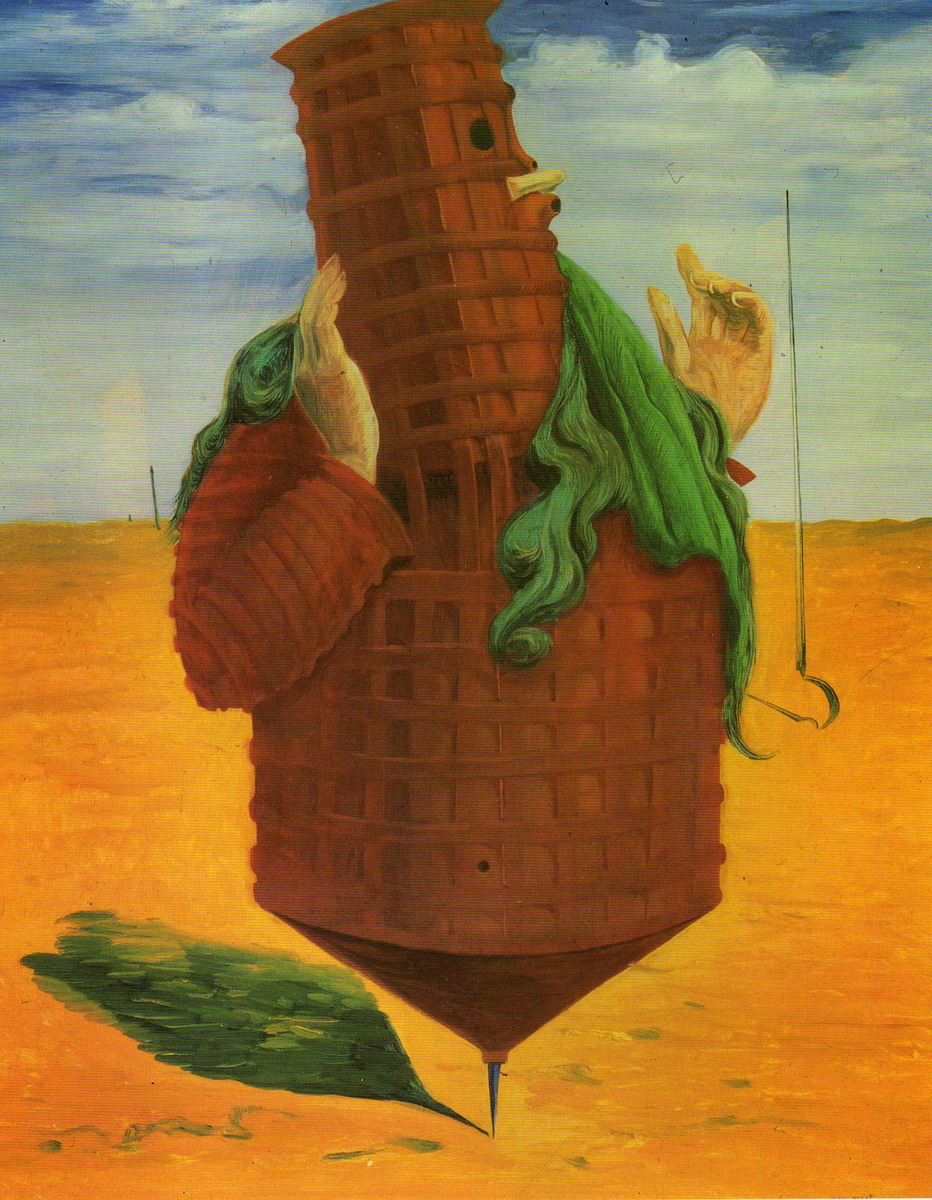
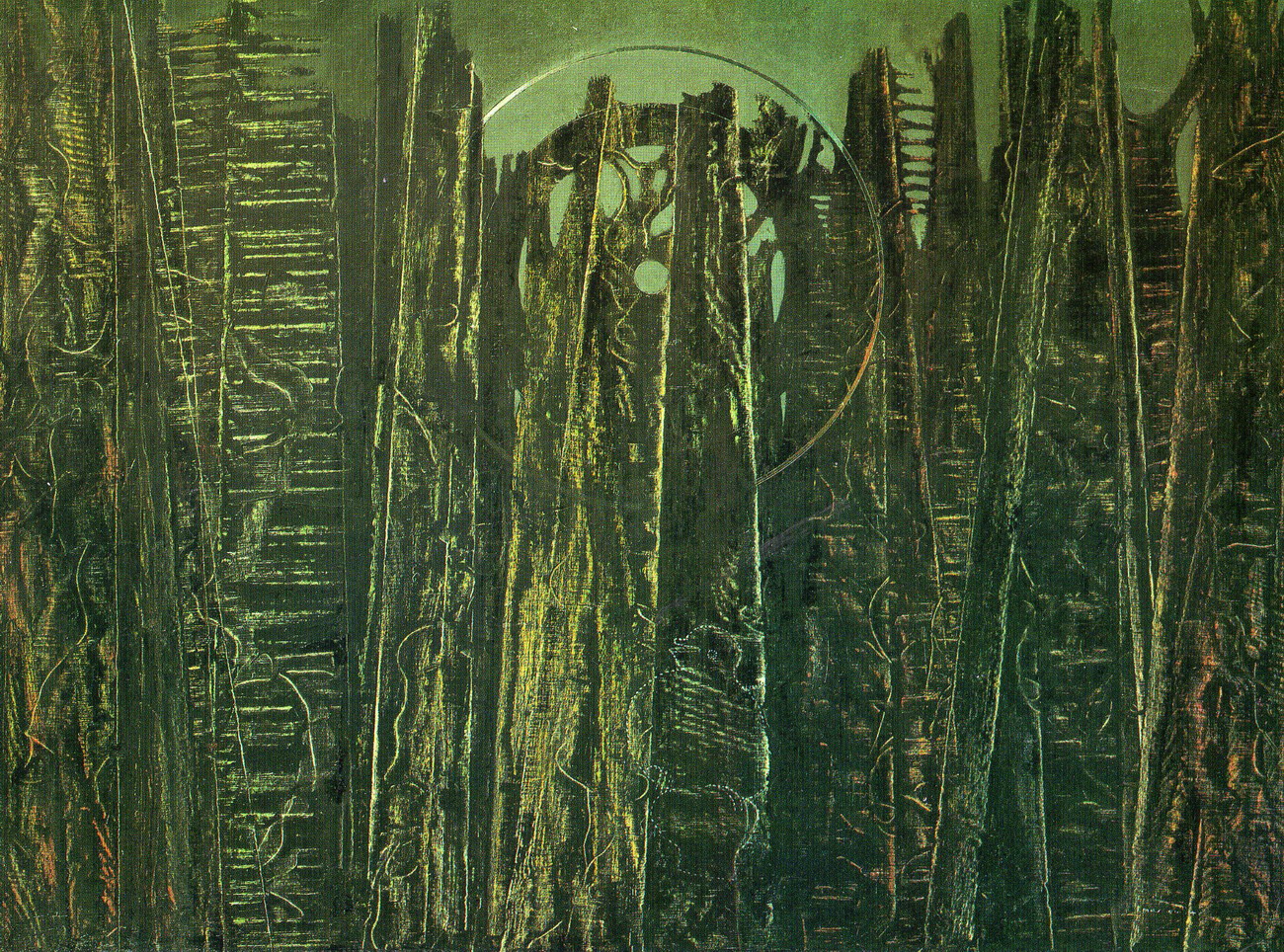
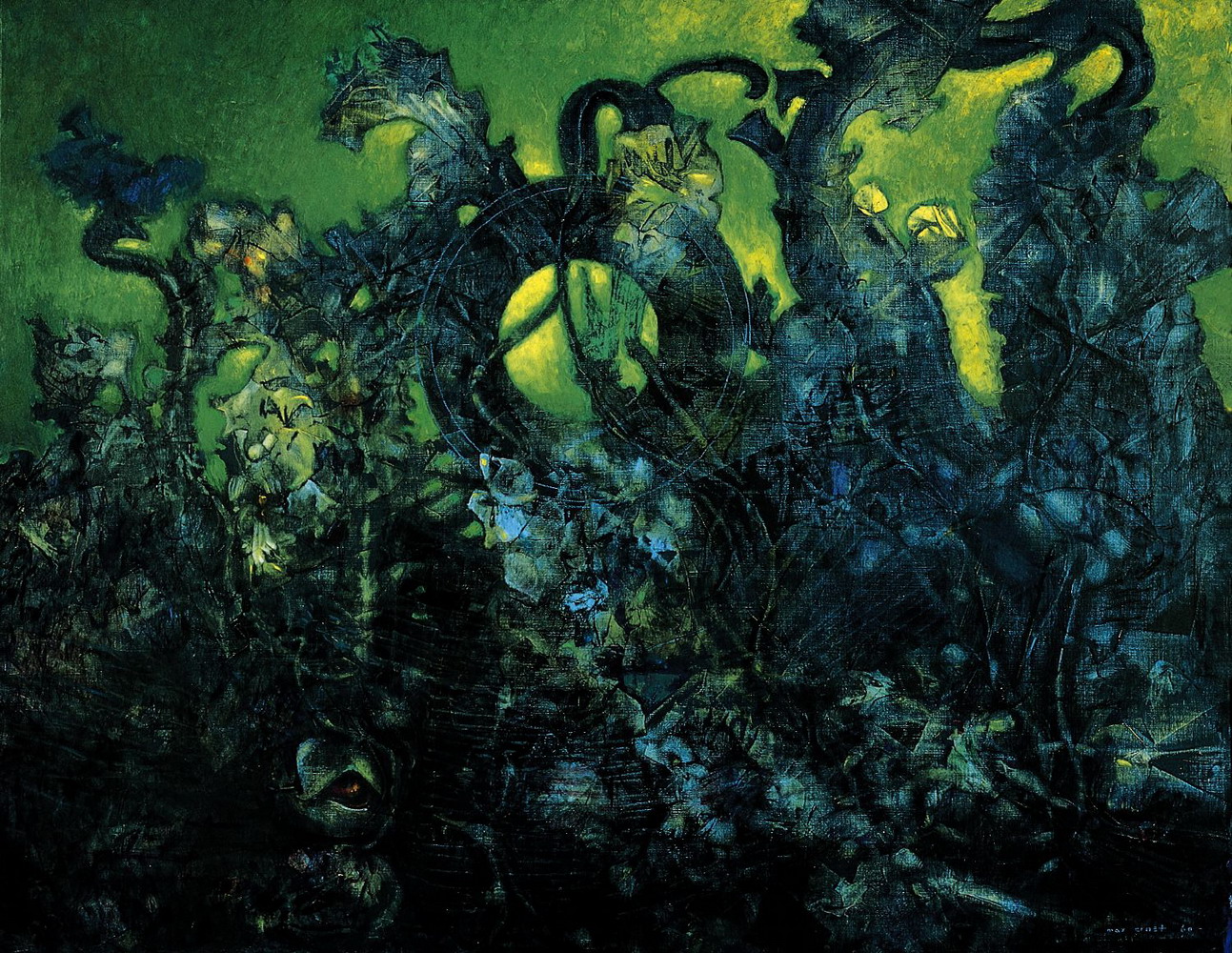
Ernst (M. Ernst 1891–1976), a German painter and founder of Cologne Dadaism, is one of the most representative artists of Surrealism. His works, through subconscious techniques such as frottage and grattage, reveal an inner landscape and a magnificent, wondrous realm. From 1920 onward, Ernst was recognized by Breton: "The meeting of wills in his discredited, predetermined mastery of chance, yet without excluding the possibility of an inner meeting of reality." The accidental triggering of unexpected conjunctions gives rise to new forms, as in The Garden Swallowing an Airplane (1935): flowers and tuberous roots mingle on the fuselages of these airplanes, creating a super-illusory, bizarre space, imposing the unique creativity of objects and unveiling an inner, true world.
In this intensely impactful Strange Creature (1928), the painter delves into the subconscious. Various animal limbs, through their wondrous mixing and splicing—an arrogant bird's head, plus a voluptuous woman's chest, two magnificent fan-like wings—seem like a chimera, a hermaphroditic monster, akin to the mythical creatures of Greek legend. Within its uniform, flatly applied colors (a pitch-black background suggesting deep night; blue shadows enhancing the sculptural quality and mysterious atmosphere), it fully manifests a visually incredible image.
French Garden (1962): In his later years, Ernst settled in Thouars, France, a place of clear waters and bright mountains renowned as the "French Garden" (or Rose Garden), where the famous Loire and Indre rivers flow. With a Romantic sensibility, Ernst depicts these two melodic rivers embracing a sensual nude (a goddess). At this source, her body, like the riverbed's geology, is hidden within the earth, yet her lower body and voluptuous breasts are revealed, with a snake coiled around her sensual thigh. The goddess and the snake seem to symbolize fertile land, and within the gentle, sweet colors, they evoke the artist's most lyrical "visual poetry."
In his Shell Flowers (1929), we see various imagined plants and creatures generated by frottage and grattage, or through collage and other montages, such as Loplop Introduces a Young Girl (1931).