Martin Barré Limitless Infinity - "91" Solo Exhibition
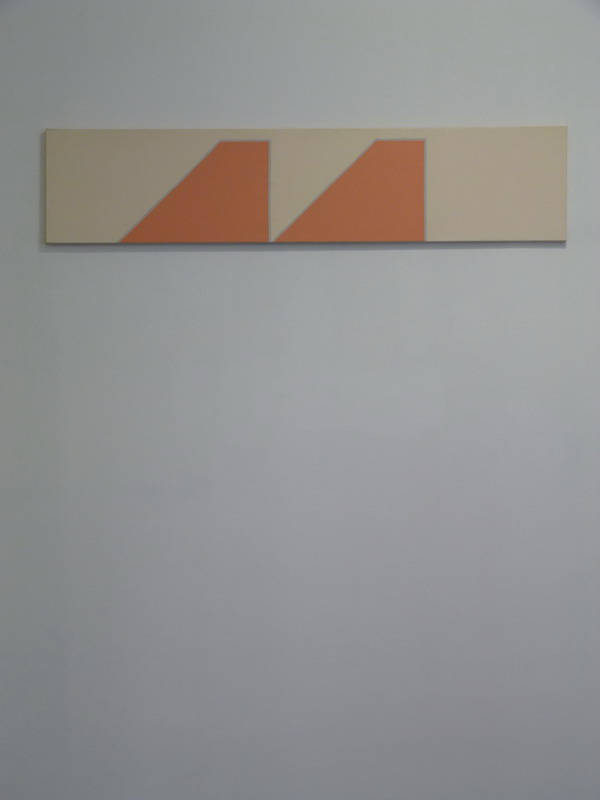
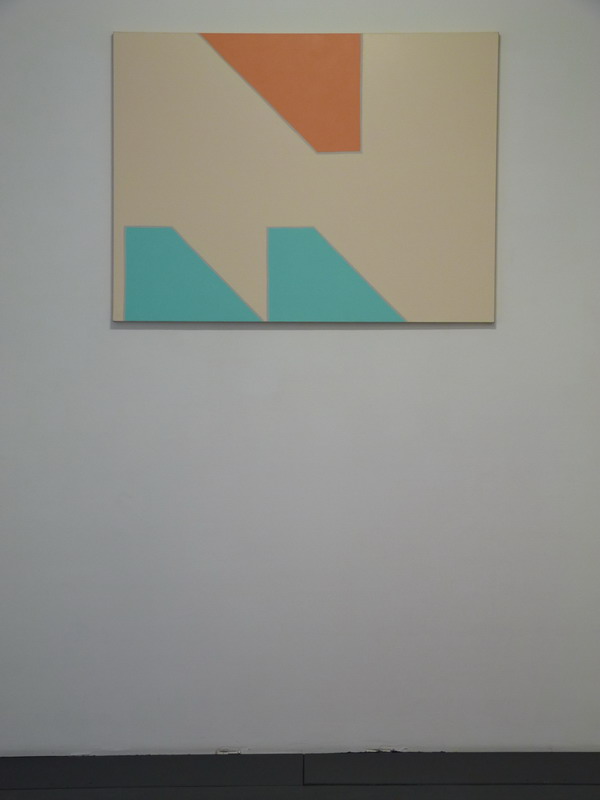
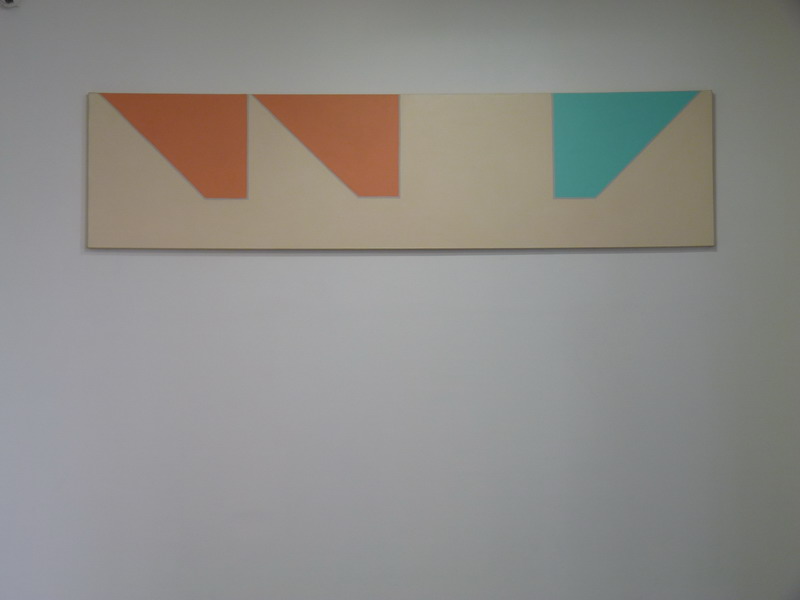
Martin Barré 91-44x200-B 44x200 cm 1991
Martin Barré Limitless Infinity - "91":
Exhibited from September 4 to October 9 at the Nathalie Obadia Gallery. Martin Barré (1924–1993) was one of the most representative and rarest Minimalist abstract painters in France during the 1970s, producing work with a similar effect to that of American artists Robert Ryman and Agnes Martin. His overall painting practice explores the most essential aspects of painting: form, brushstroke, series, spatial hanging, etc. Lines and shapes are his most basic syntactic elements, serving as possible structural arrangements within pictorial and environmental spaces. The artist carefully explained: "My paintings do not aim to convey a spiritual state; I use a rule, a rule of display..."
Early studies in architecture deeply influenced his subsequent artistic creation. As early as 1948, he pondered the core artistic issues brought by modernists Mondrian and Malevich, which guided Barré to explore the mysteries of modernism—abstract art, particularly space, form, area, and background—from 1954 onward. In the late 1950s, he visited Mondrian’s homeland, the Netherlands, gradually simplifying his canvases to minimal forms, leaving only black-and-white contrasting linear symbols. He began leaving white space on the canvas, establishing the relationship between painting and space. For example, in 1962, he combined four paintings of unequal size and form like a composite diagram, using an incomplete black flowing curve to penetrate the white space and unify the whole into a single painting. This filled the work with imaginative space, imbuing its rigorous vertical and parallel structures with lyricism and sensibility.
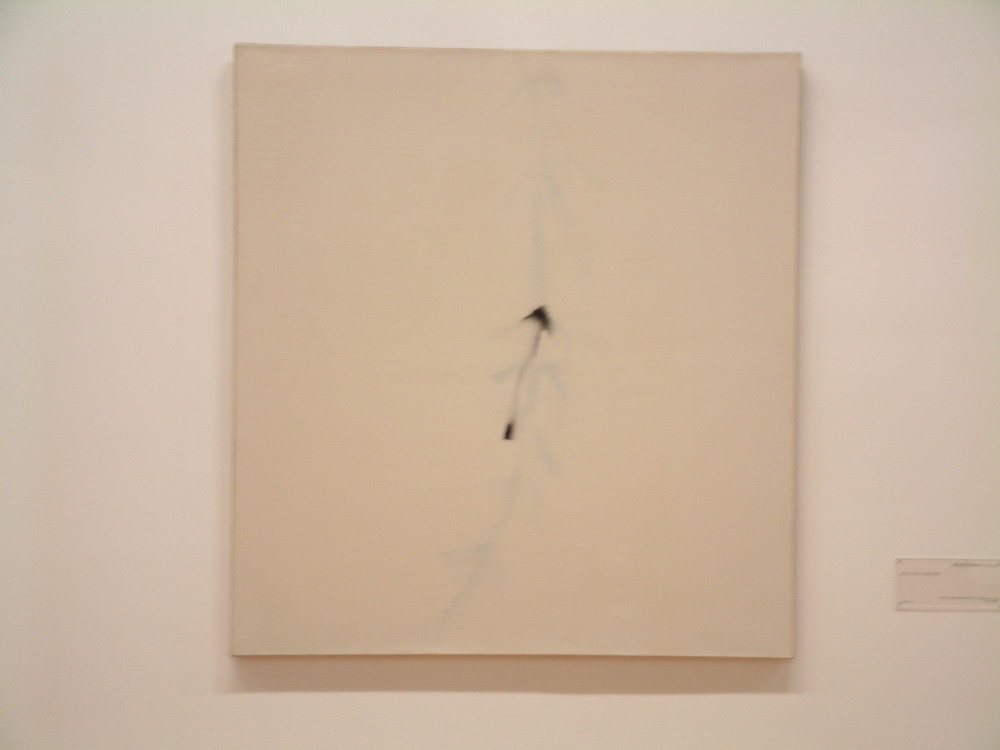
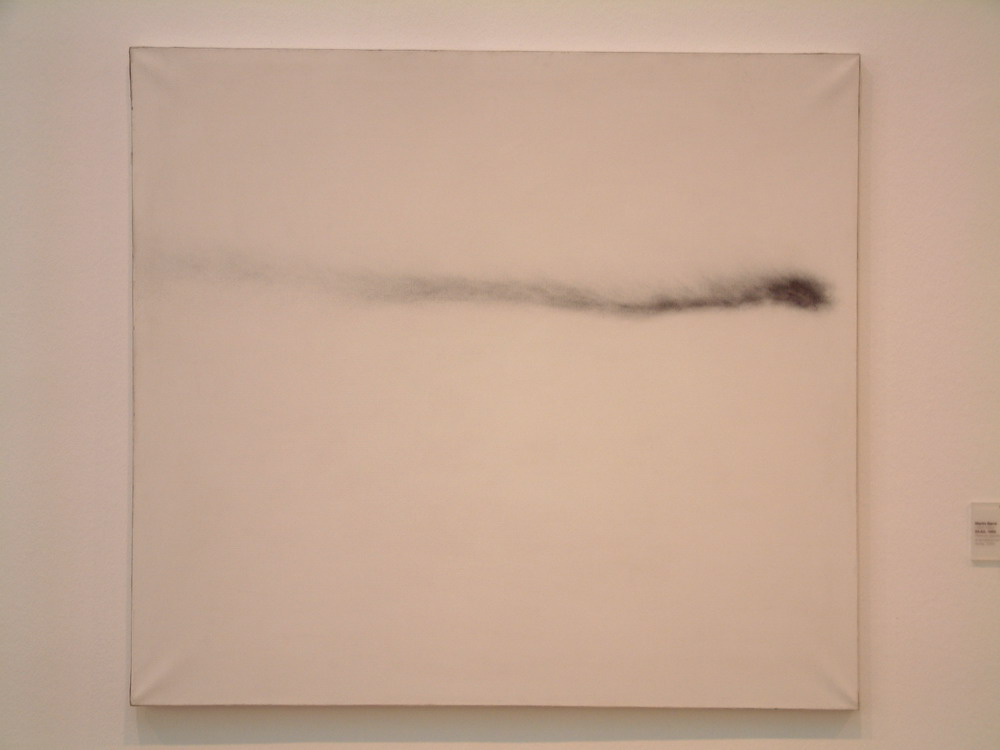
From 1963, he more radically sought neutrality and objectivity in painting, directly spraying sensitive curves or parallel lines with black paint on the white canvas. Barré stated: "When I paint directly with spray paint, it is not because I am interested in the medium itself, but to erase the traces of the palette knife and brush I previously used. Spray paint best reduces density." Indeed, sprayed lines are more flexible and expressive, especially around the edges where they brim with vitality and tension. The "Streaks" series followed in 1967, then the "Arrows" series. These less lyrical symbols acted like rigorous painting experiments. He said: "Painting is a manifestation of this moment; the painter's work is for this present instant: a brilliant or unremarkable manifestation... In this manifestation, air, light, and some uncondensed things (cold-hot, light-dark) appear; the picture must oppose the solid, crystallizing in its instant." All these traits reside within minimalist aesthetics.
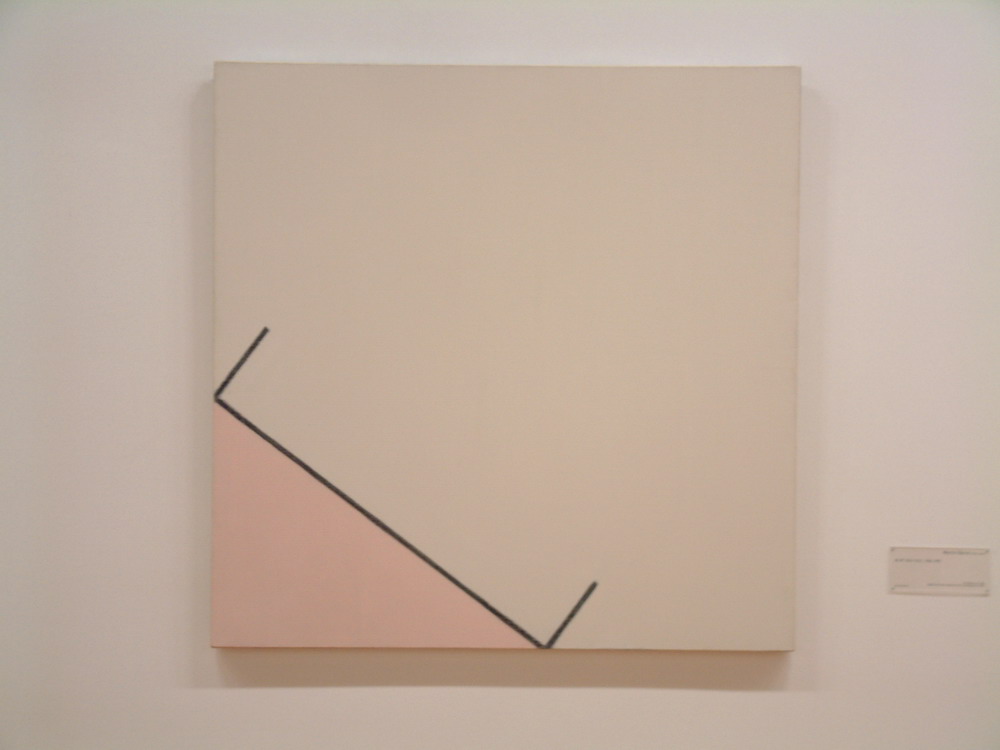
Since the 1970s, he explored geometric square series constructed from vertical and parallel lines seeking suggestion. Continuing with square white canvases as the main structure, his early period (1972–1973) remained within black-and-white contrasting forms. From 1974, poetic colored lines gradually replaced them, expressing sensibility through blue and brown hues. Geometric parallel or diagonal lines divided areas, forming a rigorous structure and space with the square format—harmonious and perfect, yet the diagonal structure carried a subversive visual energy. In the "Reno" series (1977–1978), sensitive geometric lines expanded into geometric color blocks. The series continued within diagonal structures, with the canvas format becoming the main construction of the whole image, continuing the architectural construction of vertical and parallel lines.
In the 1980s, he more confidently moved from color dots and lines to color planes, creating variations of triangles or squares with warm colors added to painted lines. On square or rectangular canvas series, he deeply explored vertical and parallel lines, constructing geometric forms (squares, triangles, rectangles) through imaginative extension. These works possessed a contemplative space, revealing a distinct French elegance and metaphysical beauty, building another paradigm of French Minimalist art between rationality and sensibility.
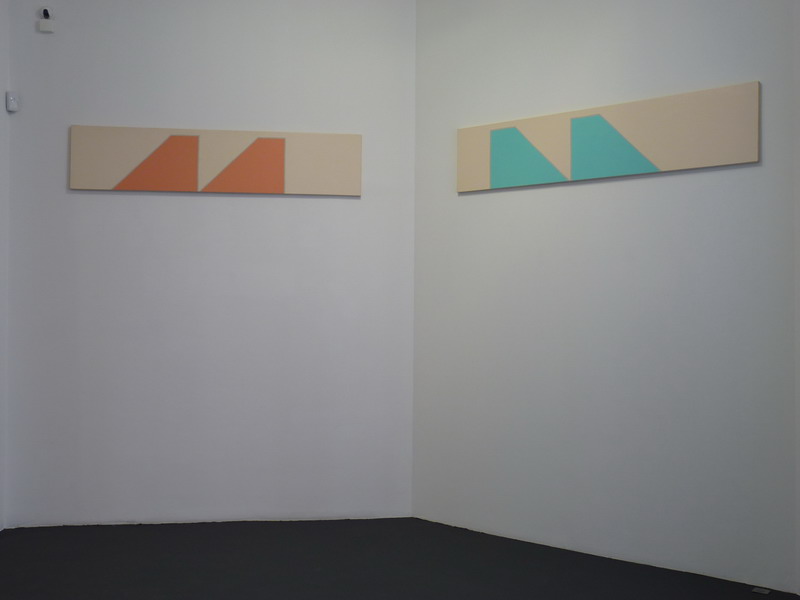
The "91" series represents Barré's late masterpieces. This pinnacle series has never been fully exhibited since its debut at the first Lyon Biennale in 1991. Comprising ten works, it establishes a unique intimate relationship among color, edge lines, and space. Since the 1980s, color had become more refined and contrasting, with painted color blocks more precise. In this "91" series, he used so-called sand colors as the main carrier; the colors were more substantial and tender, with painted color planes more affirmative and poetic. Gray lines outlined the periphery of the color fields. Here, square canvases were replaced by horizontal formats. Works were hung from a standpoint of establishing painting as space (higher than typical eye level). Painting became an object; the form of the painting and the geometric imagery of the surface complemented each other. Through form and imagery, the overall exhibition space was extended, making the painting the primary carrier of ideal and actual architectural space.