Michel Blazy's Ecological and Natural Art
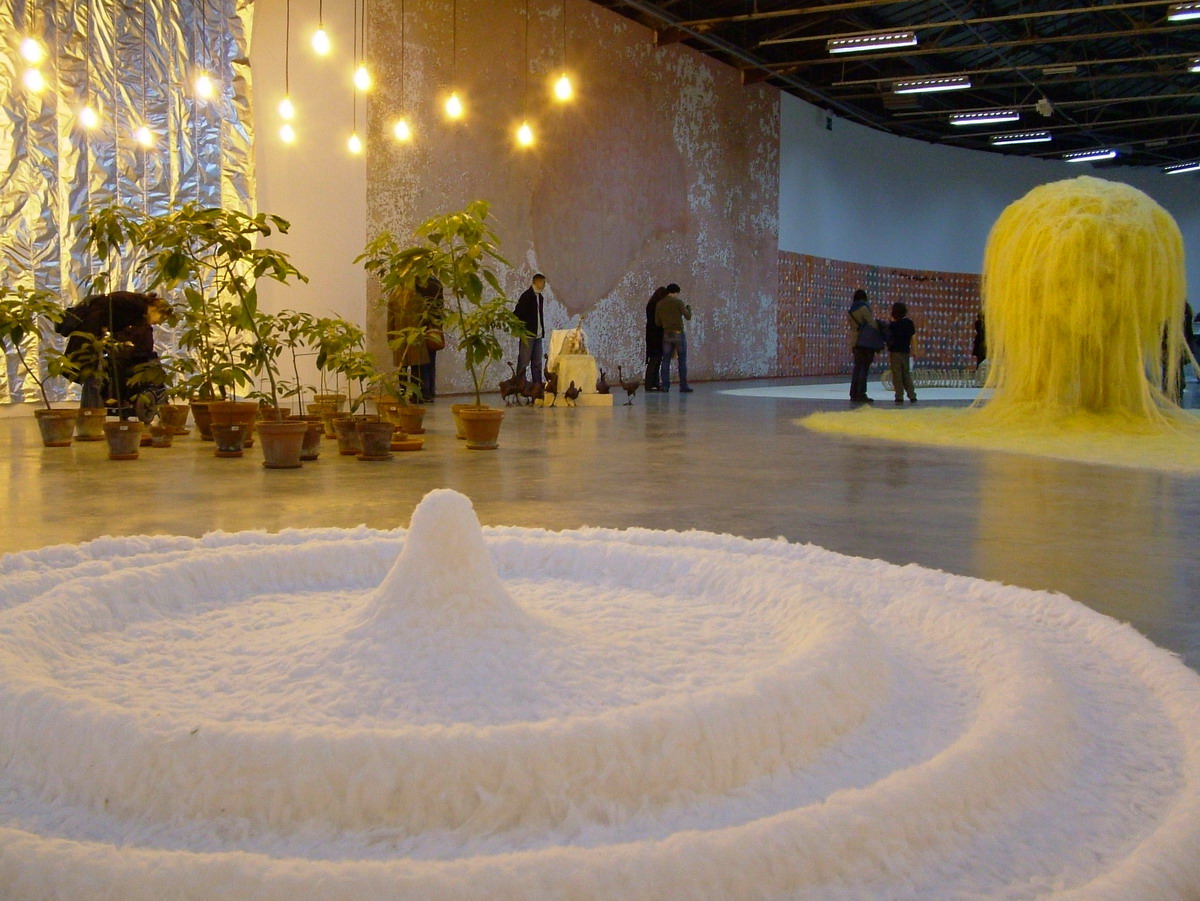
The most poetic "White Drip" (1995)
Michel Blazy (born 1966 in Monaco) is one of France’s most distinctive contemporary artists, having won the prestigious Duchamp Prize in 2008. His art develops an organic, living practice that observes phenomena changing moment by moment in daily life. It relies on natural evolution, the ecological decomposition of matter itself, and extraordinary states emerging through temporal transformation. The artist keenly observes the decay and rebirth of natural objects and organisms surrounding our lives, constructing a fleeting, uncertain world with alchemical skill. This reveals the infinite metamorphosis of material science and the eternal ecological cycle, metaphorically illustrating the principle of life’s perpetual existence amidst birth and death. Blazy’s art of instantaneous change and vitality once again poses questions about art itself. As an observer of life, he uses artistic sensitivity and intuition to watch the constantly shifting materials and ecology around us, transforming between the poles of life and death. He experiences life through the birth and decay of matter, attempting to construct unique artistic explorations from ecological evolution and transformation. Under diverse forms and appearances, he verifies that while all things change, they ultimately cannot escape the essential law of the "conservation of matter." Through narrative, storytelling, metaphor, and symbolism, he explores the construction of nature and humanity, life and death, the visible and invisible, the abstract and concrete, signs and allegories, and the past, present, and future.
Natural Organic Materials: Michel Blazy is not only fascinated by organic natural materials but prefers those that are perishable and alive. His elements are mundane yet unusual, consisting of indispensable consumer goods and even foodstuffs like carrot puree, mashed potatoes, beet puree, vegetable puree, oranges, pears, apples, wheat, cucumbers, black and white chocolate, butter, rice noodles or glass noodles, spaghetti, yogurt, raw beef ham, bacon, dog biscuits, flour, lentils, cotton, wire, filters, blankets, various flower and grass seeds, plants, toilet paper, plastic bags, cleaning agents, feathers, foam, acrylic, and kitchen aluminum foil. The artist knows the ecology of everyday materials as well as the back of his hand, adeptly manipulating their natural attributes to transform under spatial and temporal conditions into evolving states: sprouting, molding, drying, rotting, damage, mutation, decay, conversion, deterioration, and metamorphosis. The artist becomes the master or creator of this fragile, randomly transforming world of works, converting ordinary daily life into extraordinary magic like an alchemist, activating the energy of material ecology and the profound beauty of art. This is among the most original creations in current globalized art, constructed across time-based objects, sculpture, video, photography, and environmental installations.
Analysis of Important Works: Michel Blazy’s works are complex and flexible, emphasizing instinct, subjectivity, sensibility, and lyricism. In these abnormal, ambiguous non-formalist images, he highlights life experience, evoking environmental awareness and attitudes toward life. All works evolve vividly through time, allowing living matter to reproduce and expand uncontrollable micro-organisms, magically transforming their shapes into an active natural ecology full of imagination and extraordinary sensation, creating a world of chance and surprise. He clearly excels at dominating and manipulating matter, unfolding biochemical processes between growth and decline: intentional or unintentional sprouting, drying, accidental matter, molding, rotting, area reduction, conversion, and formal decay. All this vibrant energy transforms; conversion is the main process emphasized by the artist, but accident and chance make the works more natural.
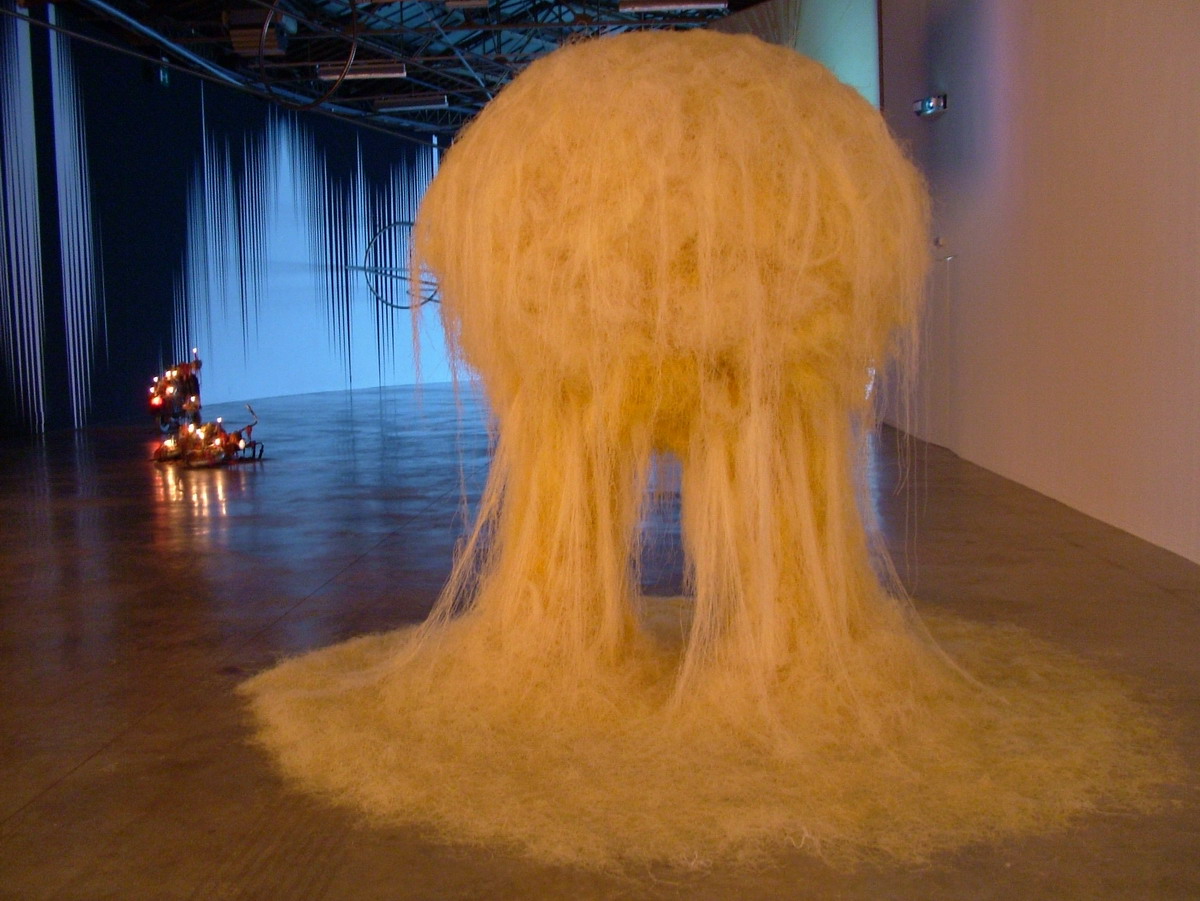
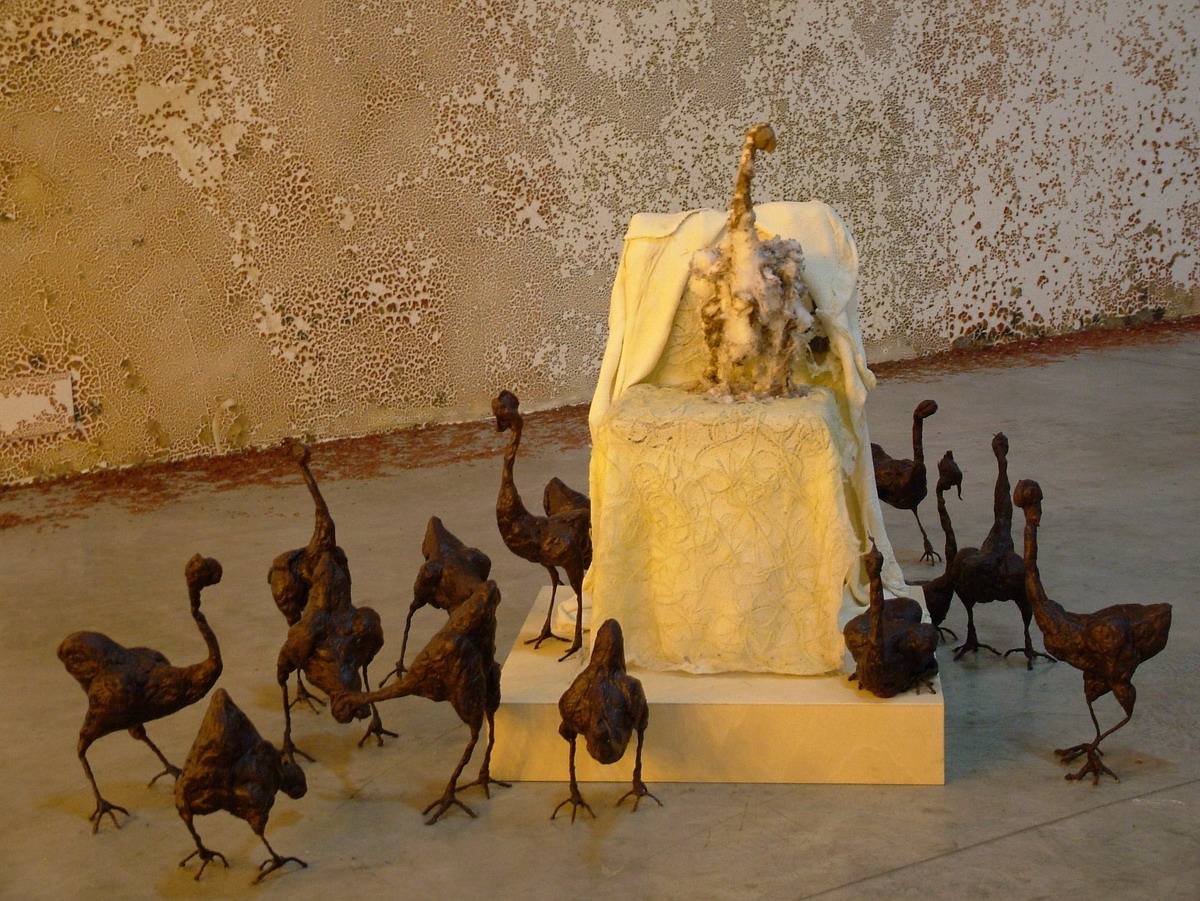
Blazy’s works assemble living and diverse energies of decay, highlighting not just material texture but also color, which oxidizes and decays over time, constructing a temporal nature. They present multiple concrete or abstract forms and material situations. In ambiguous and unsettling imagery, such as the monumental "Patman II" (2006), resembling mushroom clouds from atomic bomb explosions, it is a familiar space installation of rice noodles dyed pale yellow. Several lifelike, cute "Long-Haired Dogs" (2008) are realistically modeled from rice noodles. More bewitching is the series "Bubble Dogs" (2009), shaped from liquid bubbles formed by cream and chalk mixed with water. The bizarre "Big Spider" (2005) is molded from moldy cotton, wire, and vegetable dough. The most poetic "White Drip" (1995) is constructed layer by layer from soft cotton wound in circles. Unique "Black Bear Carpet" (2004) and "White Bear Carpet" (2007) feature thick layers of black or white chocolate covering cotton. A group of clever "Chocolate Chickens" (2006) is made of dark chocolate and cream. The "Chocolate Sofa Bed" (2007) hangs in mid-air, another rare masterpiece of dark chocolate.
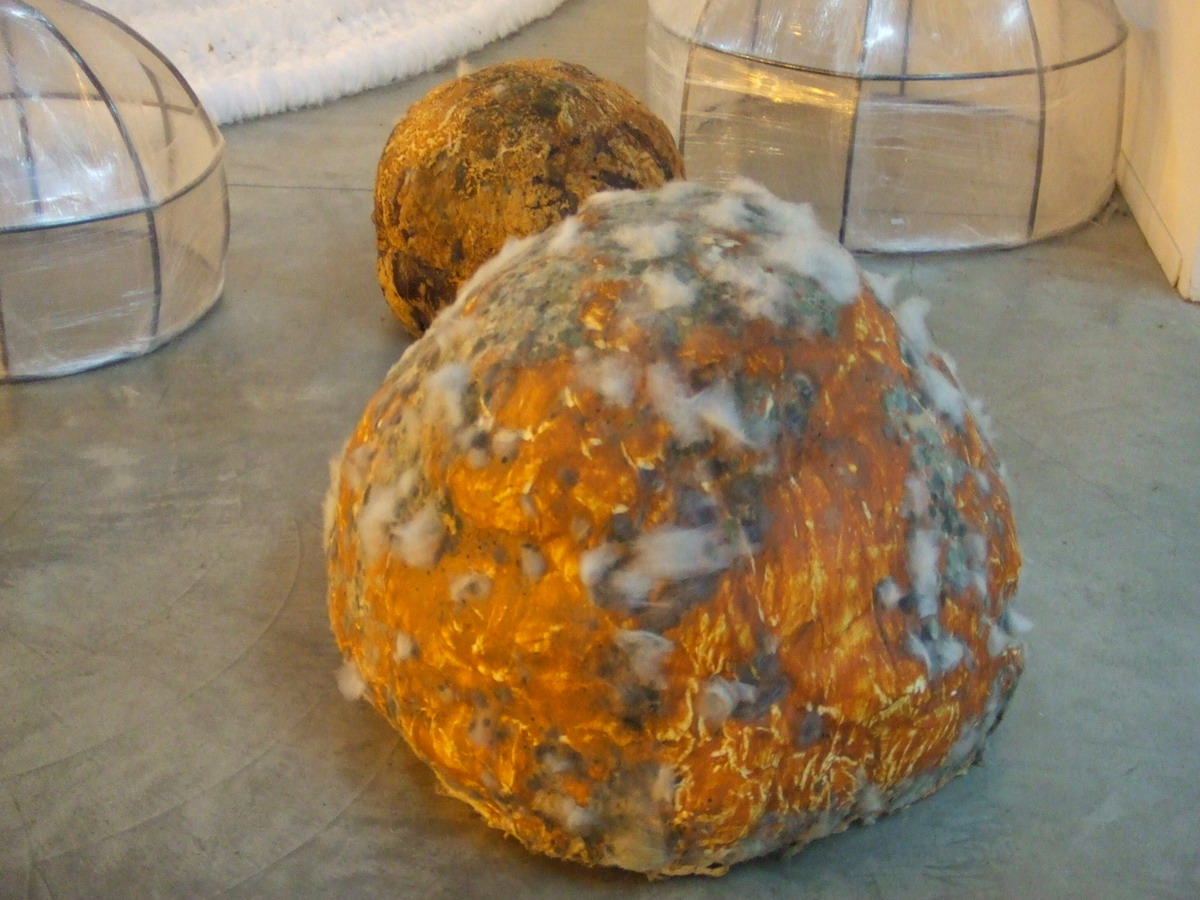
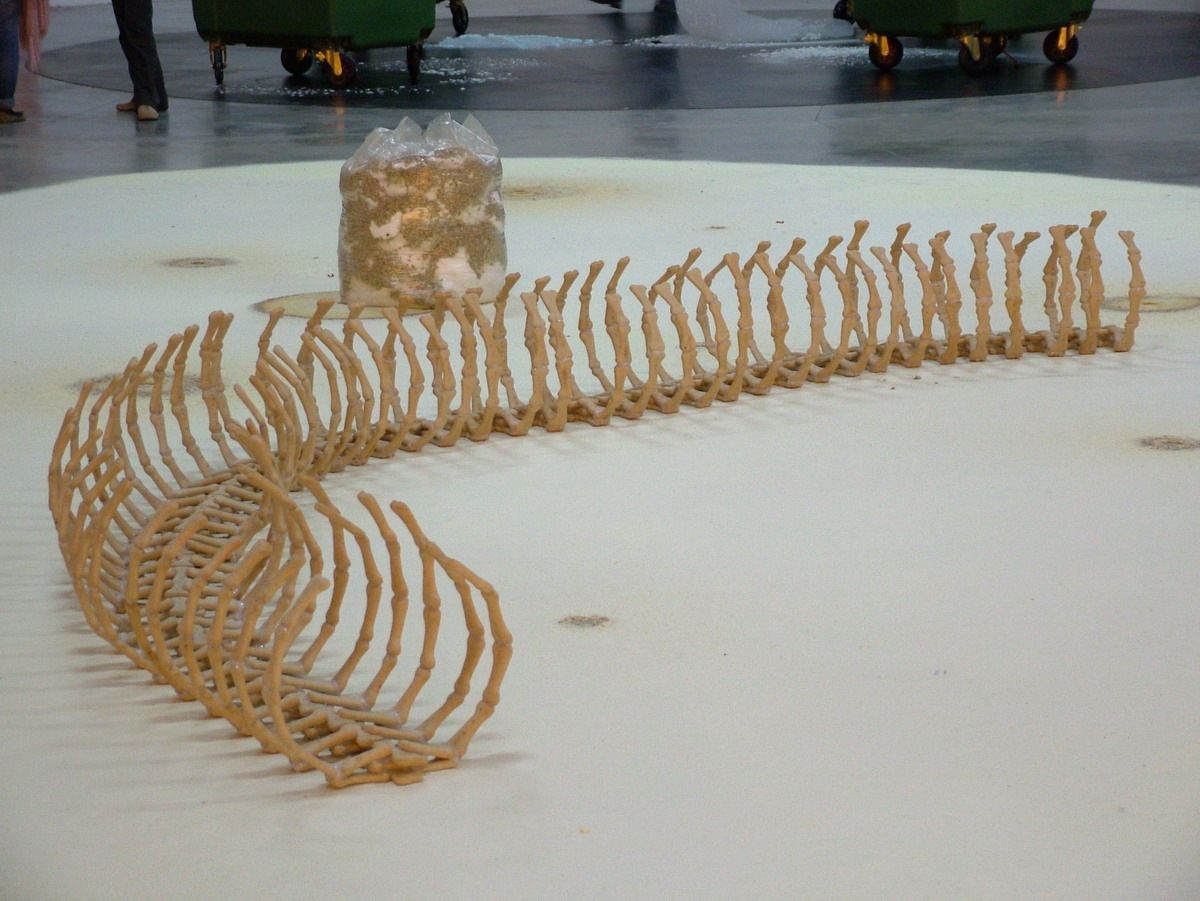
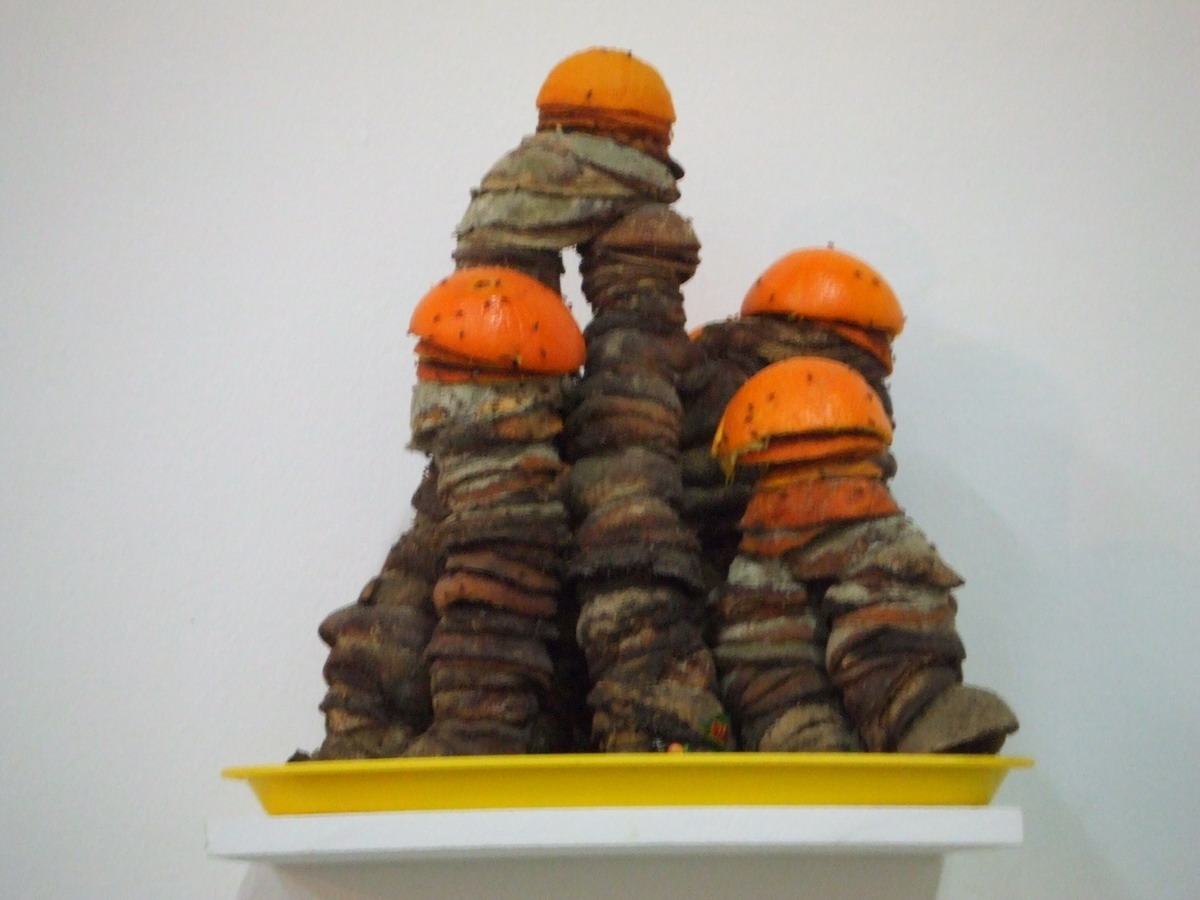
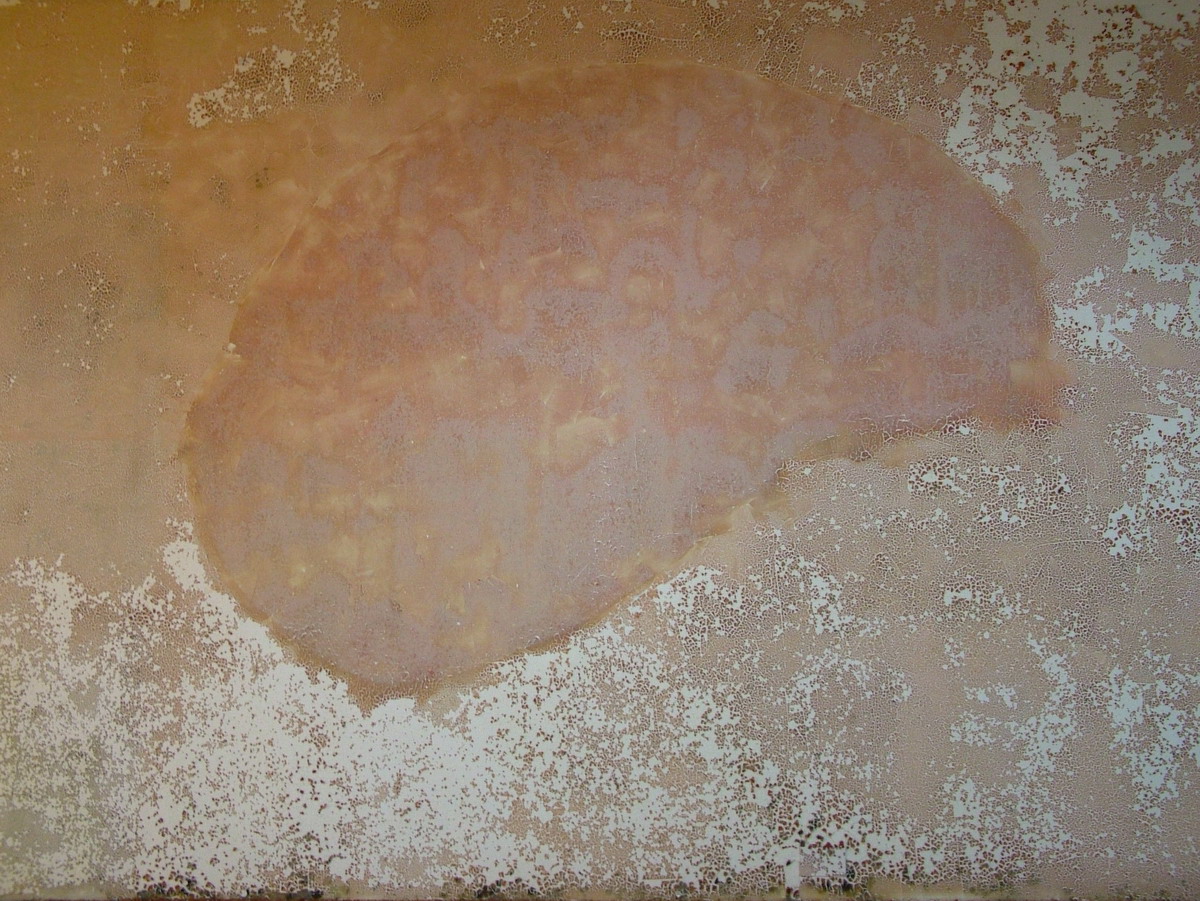
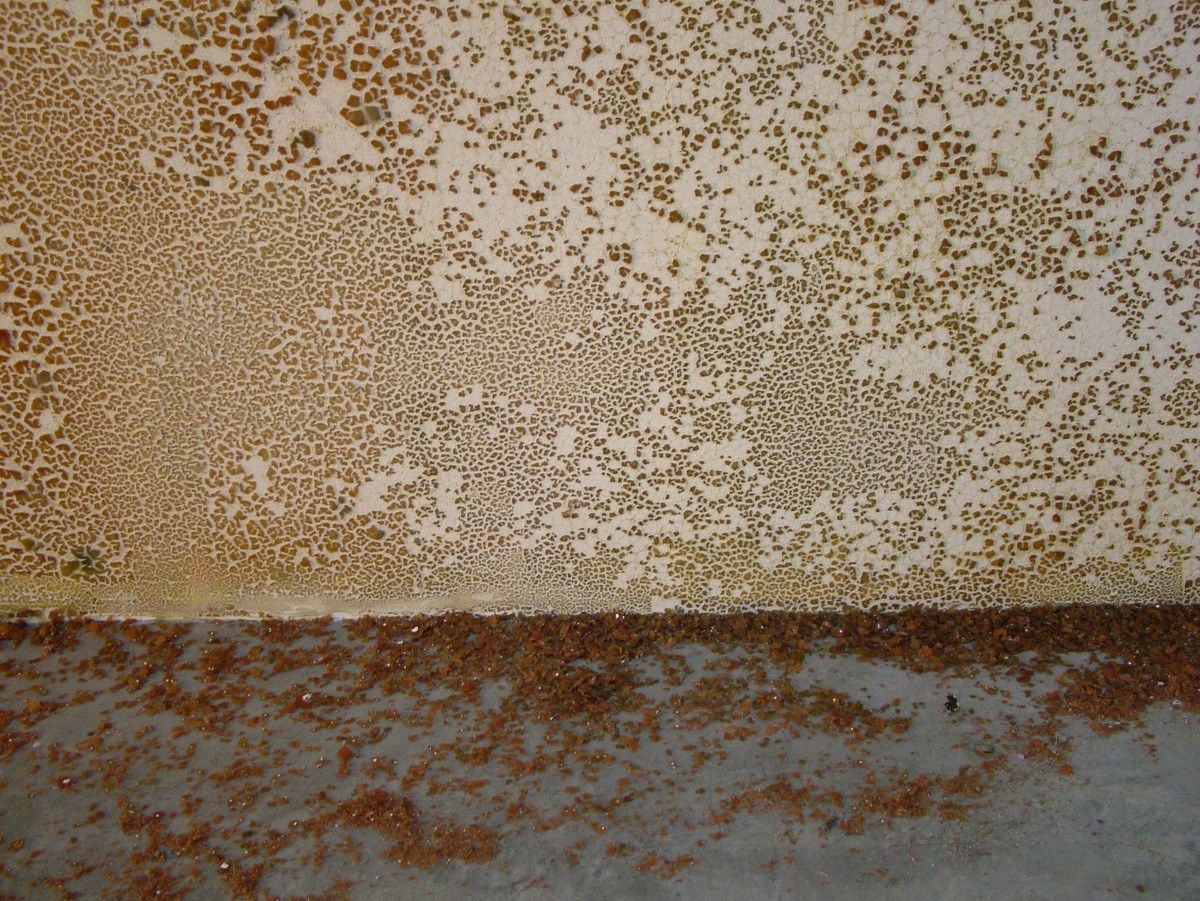
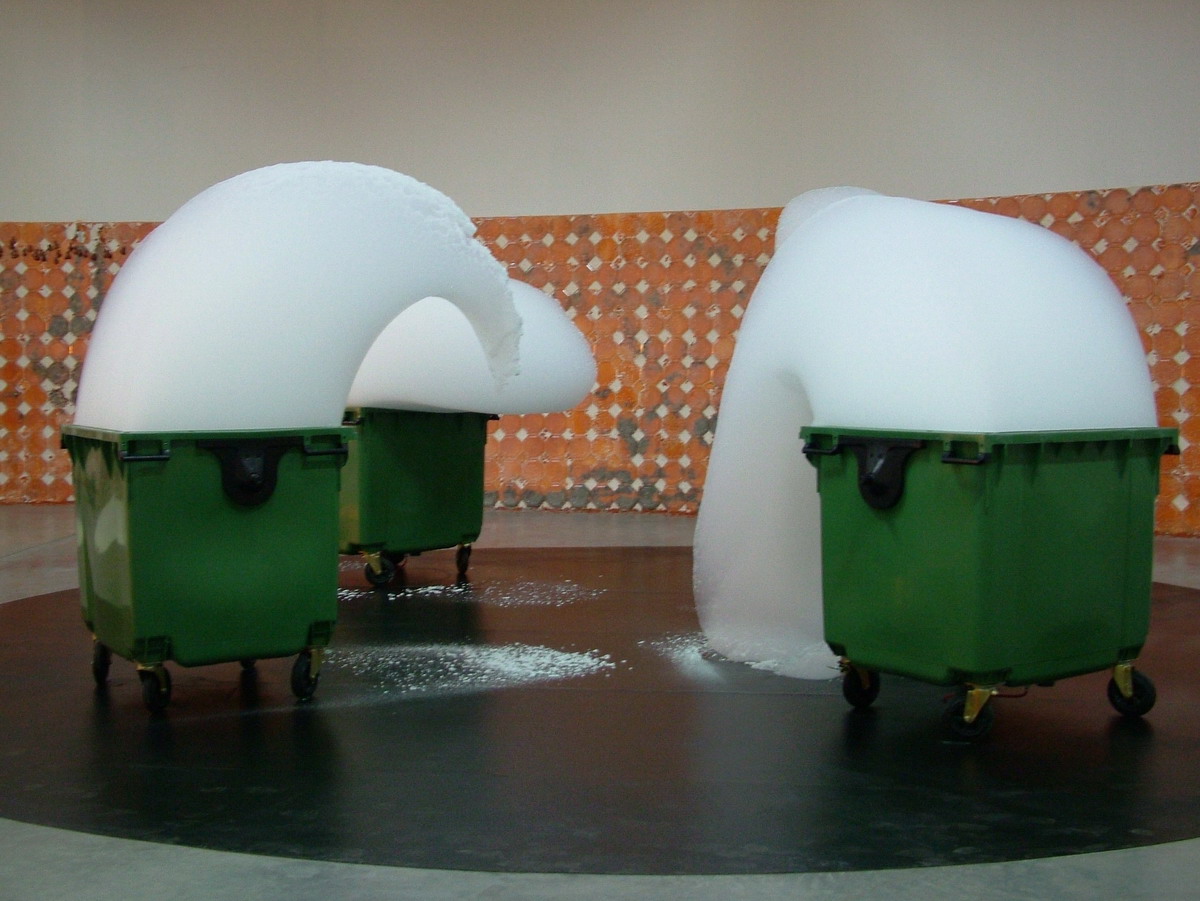
The dramatic "Dinosaur Giant Vertebrae Skeleton" (2002) is constructed by connecting dog biscuits piece by piece. Even more ingenious is the video work "Disappearing," where the artist films with ultraviolet light as mice steal food from the stacked "Dinosaur Giant Spine" in the warehouse at night, until the work is unrecognizable and eventually vanishes, eaten clean by the mice. "Orange Peel Sculpture" (2003–07) is composed of orange peels pressed daily, layered one by one, playing a tune of temporal transformation (from orange-yellow turning black, then molding and rotting). The inventive "Foam Bath" (2007) consists of five large Paris green garbage cans filled with compressor components, from which white foam (chalk mixed with water) slowly and continuously flows out, poetically resembling several waterfalls. Several giant, moldy "Big Red Balls" (1998) covered in carrot puree dough extend their charm over time, growing tufts of white mold on their surfaces. "A Ball of Lentils" (2007), referring to time and memory, slowly sprouts emerald green lentil shoots from a ball of white cotton, becoming dense before wilting after a few days. Another notable work is the magnificent mural installation "Mashed Potato - Field" and "Carrot Puree and Beet Puree - Field" (2002). The former involves casually smearing mashed potato on a large wall, presenting a casually lyrical abstract image; the latter resembles wallpaper with standardized geometric patterns. Over time, not only do the wall colors evolve, but they eventually dry, crack, and naturally peel off in small pieces. Form and color become variations of time, playing out the natural scenery of space and time, offering contemplative space and allowing viewers to witness the landscape of a time tunnel.
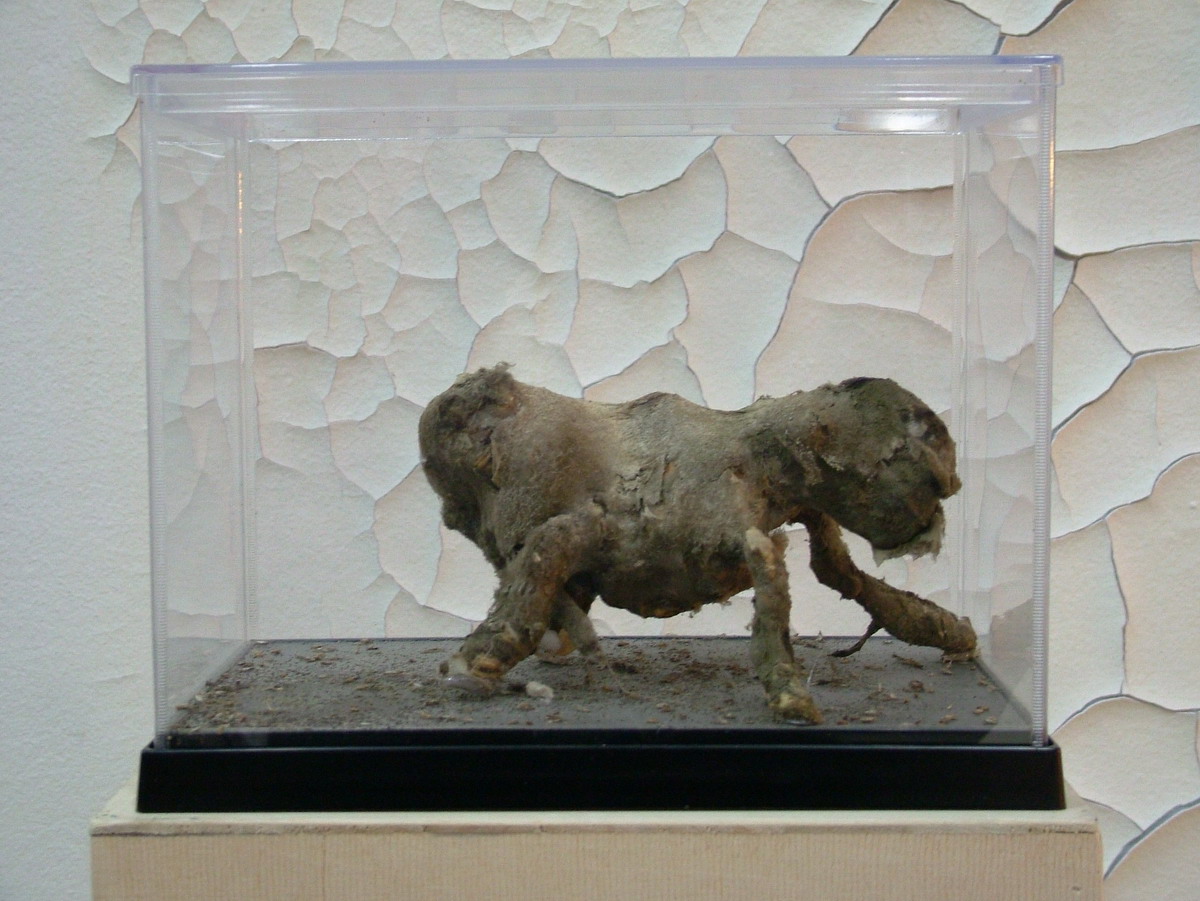
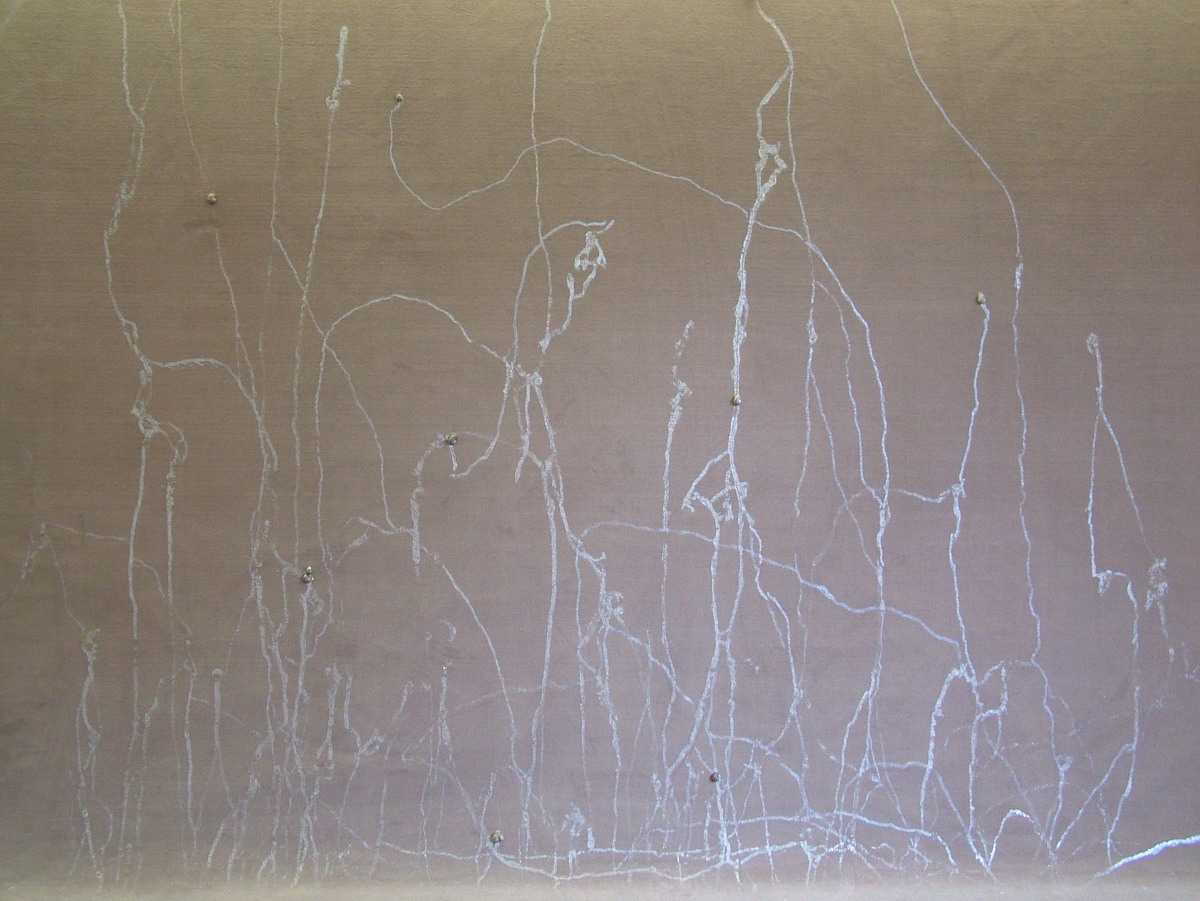
Recent works tend toward exploring natural ecological art, as seen in the exhibition theme "Creating with Ants, Beetles, Lizards, Snails, Birds, and Mice" (2009). Returning to various existing forms of natural ecology, environmental installations turn galleries into experimental spaces for natural organisms. For example, a mound of dirt in the space features an object resembling a dinosaur corpse (constructed from bubble wrap covered with carrot puree and some tomatoes), with spiderwebs growing on the dinosaur, presenting memories of prehistoric history and surreal, desolate decay. On another striking black wall, a group of snails crawls freely, leaving obvious irregular liquid traces, constructing a lyrical abstract image, as if a live improvisational performance by snails. On the ceiling, a French baguette shows the marks of ants’ work—holes bitten through, recording their path. An irregular, giant wisdom tooth (bubble wrap covered with egg and white chocolate dessert) is a masterpiece of free creation involving mice. The video film "The Party" (2009) presents scenes from a garden where the artist set up bird feeders, attracting numerous birds for an impromptu concert. These works exist between matter and form, color and imagination, poetry and time, space and process, evolution and qualitative change, sensibility and rationality, ecology and signs, rebirth and decay, nature and humanity, improvisation and coincidence, vision and smell, reference and metaphor. Of course, these random and fragile works also challenge the contemporary art market and question today’s commercialized art.
Artist’s Insights and Views: Regarding "Chocolate Chickens," which elucidates modern civilization—humans and nature—the artist says: "It is chaotic, a flock of chocolate chickens in a pure white living room... This image is so absurd, evoking the feeling of emptiness in the living room, suggesting human absence or death. Such a daily living room scene is occupied by a flock of chocolate chickens. These chickens have a living feel, but simultaneously look boiled or like roast duck. Chocolate chickens seem roasted or dead. Chocolate connects to the pleasure of eating. This idea is exactly the opposite. What matters is that we use chickens. Because it is a domesticated poultry. That is, a modified animal. The true image conveyed is humanity’s terrifying domination over nature."
Regarding organic natural materials, he sighs: "My interest in this matter is multi-layered, extensive; they all possess a distant naturalness. Take chickens: originally wild birds, now people only want their meat. Though close at hand, they are ignored; their sense of smell is destroyed, using red lights to stop their squabbles. Crowded together, placed under artificial light, constantly fed, slaughtered after six weeks. This is an extremely violent, living relationship. What people see in supermarkets has feathers, looking lively, but who knows the background beneath this appearance? My exploration is not radical opposition to anything, because there are many things to counteract this aspect: perhaps a comedic effect or something both tragic and comic."
Regarding the monument installation "Patman II" in the Tokyo Palace Five Hundred Million Years Exhibition, Blazy explains: "It is constructed from rice noodles dyed with natural pigments. It evokes something alive, somewhat primitive, but it resembles plants more than animals or gas. It similarly evokes atomic bomb mushroom clouds. Additionally, there is a concept of disappearance, and being alive there, which interests me. It is something that comforts and threatens simultaneously."
Regarding humor in works, he says: "There is a humor that is tragic; I find it equally absurd. In relation to these materials, what attracts me is their liveliness, even within their fragility." "Again, regarding these daily consumer goods, when I say consumption, I really mean a relationship closer to the human body. That is, what people touch. I create with aluminum foil, toilet paper, American cauliflower puree, carrot puree; many of my works cannot be preserved. For example, chocolate chickens—I don’t know what they will become, perhaps they will mold."
Regarding the explanation of natural ecology, the artist says: "I am doing relic-oriented public art. Relics, simultaneously animal feces left behind, or animal carcasses found in forests, fallen leaves from trees, anything belonging to plants. Finally, finding daily items abandoned by humans, i.e., waste. It is interesting to see substances like feces or residues of energy production, carefully observing all these stages of transformation. This idea does not exist in nature, because excrement becomes earth’s nutrients, transforming. Waste becomes another kind of food; this is the endless cycle of the earth." (Note 1)
Metaphors and Signs of Existence: Michel Blazy uses these organic materials and perishable foods (such as fruits, vegetables, ham) to metaphorically explore the human condition: all transformations, life and death, qualitative change and decay. Nature is inevitably beautiful and magnificent, but ultimately cannot escape the growth and evolution of time, the brevity of existence, and sighs. Under the scientific law of the "conservation of matter," matter undergoes natural ecological transformation; humans are no exception. All rebirth and decay follow the natural principle of matter’s birth and death. All things change infinitely, representing the way of cosmic existence phenomena. The impermanence of life, the waxing and waning of matter, and the endless vitality of cosmic existence are all landscapes of the sentient and insentient worlds of endless life transformation. Birth, aging, sickness, and death, youth and years, tell of life’s continuous growth and evolution in space and time, non-accidental landscapes. The end of life is the beginning of another life; without history or end, life’s illusory existence philosophy reveals the Buddhist doctrine of "formation, assistance, destruction, emptiness." The shifting worldly scenes, instantaneous changes, morning births and evening deaths, day and night are all ways of natural existence. Besides, the metaphors or references displayed here by Michel Blazy target the extraordinary beauty of instantaneous material transformation and the impermanent situation of life.
Note 1: Referencing excerpts from Boris Daireau’s interview on Evene.fr, 2006-10.