Monet - Impression, Sunrise
Impression, Sunrise 48×62 cm, 1872, collection of the Musée Marmottan, Paris. This world-renowned "Impression, Sunrise" is the work that gave the Impressionist movement its name and is Monet's most famous painting, brilliantly capturing natural impressions, atmosphere, and radiant light.
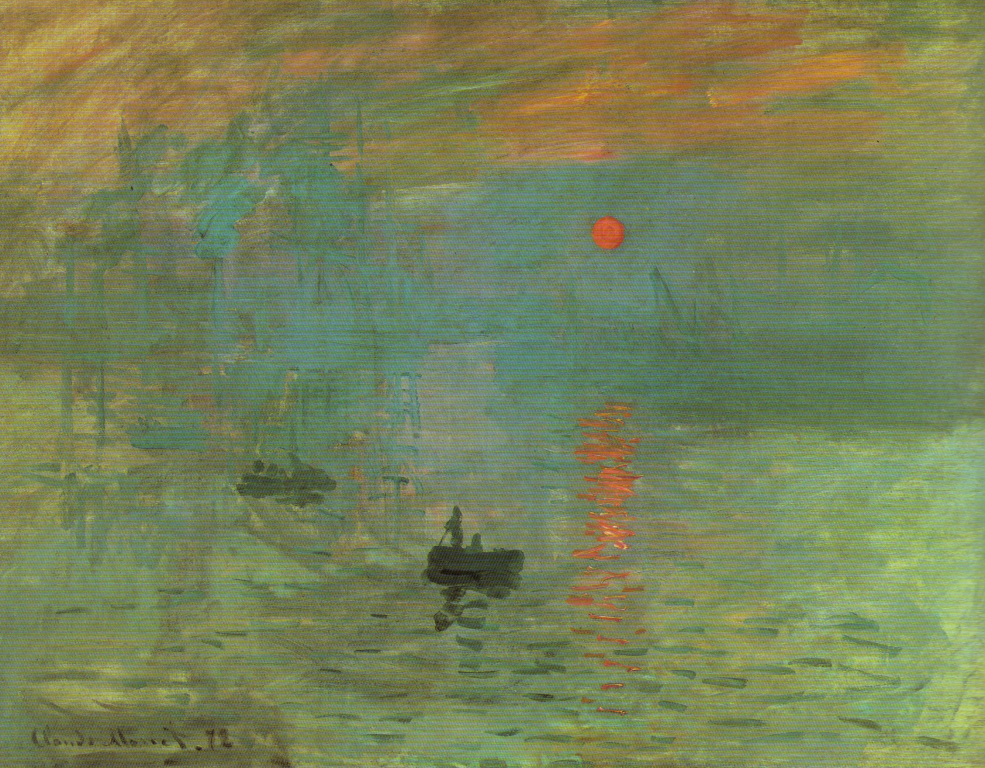
Impression, Sunrise 48×62 cm, 1872, collection of the Musée Marmottan, Paris. This world-renowned "Impression, Sunrise" is the work that gave the Impressionist movement its name and is Monet's most famous painting, brilliantly capturing natural impressions, atmosphere, and radiant light. This is a novel seascape impression painted in his hometown facing the familiar port of Le Havre: the vast, boundless harbor, a crimson sun on the horizon, the radiant glow tinting the sea and sky the same color, and the boats rendered with a few simple strokes. In Monet's uniquely bold brushwork and sensitive colors, it brims with natural imagery, shimmering and radiant light, and the hazy atmosphere of dawn, creating a unique visual effect that pointed the way for modern painting and, through the Neo-Impressionists, developed sunlight.
Clearly, this transformation of natural imagery in painting was influenced by the British painter Turner. In 1870, Monet and Pissarro, avoiding political turmoil in France, came to London and both saw Turner's masterpieces in person, being particularly moved by the light in the paintings and the atmosphere created through color.
An anecdote about this painting is that during an exhibition, when people asked the artist about the painting's subject, he replied "Impression." Edmond Renoir (the elder brother of the painter Renoir), who was in charge of the exhibition catalog, more concretely added the words "Sunrise" in the catalog's layout. But no one knows whether it is the sun slowly rising or the sun setting with a sky full of evening glow? Of course, guided by the title, people would unquestionably say "Sunrise." The famous writer Zola was also attentive to the new Impressionist trend and wrote with particular appreciation for Monet: "Among the Impressionist painters, I consider Monet to be the most important. He captures the essence of our time, he has grown and continues to grow, and is appreciated by those around him."