Neo-Impressionism
Sisley, The Dance of Bacchantes, 171.5x140.5 cm, 1888-89, Kroller-Müller Museum, Otterlo

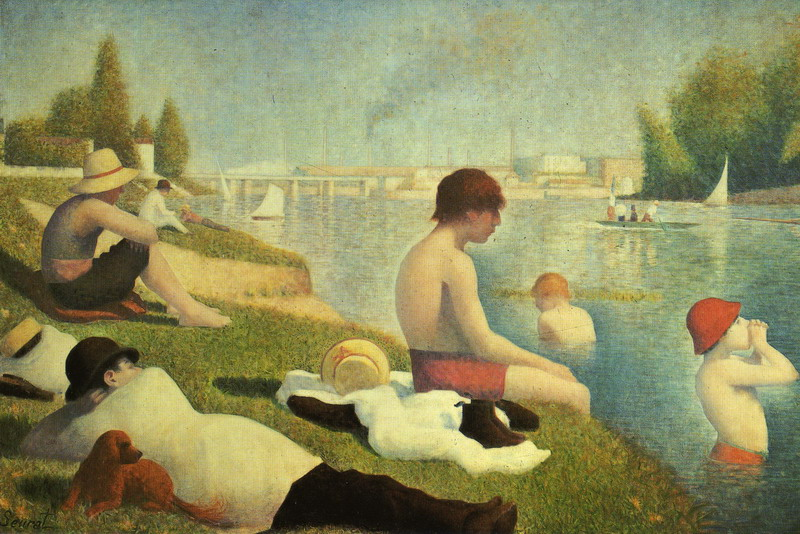
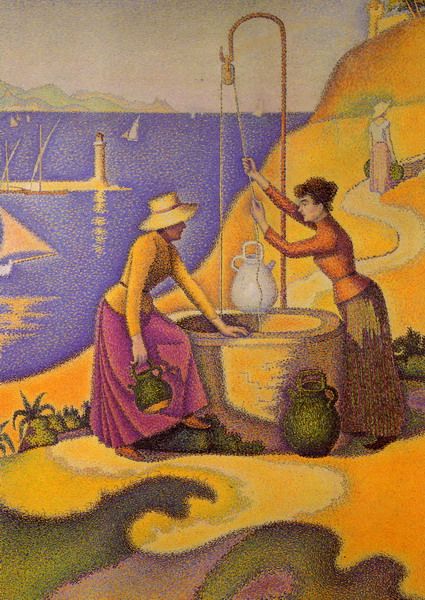

Signac, Entrance to the Port of Marseille, 117x162 cm, c. 1919, Musée de la Vie Romantique, Marseille. Neo-Impressionism is the result of Impressionism's development; it handles color based on rational and scientific optical principles, specifically according to Eugène Chevreul’s scientific treatise "On the Simultaneous Contrast of Colors," dividing light into its constituent color theories. Seurat, based on this theoretical foundation, applied pure primary colors in dots on the canvas, allowing the viewer's retina to reconstitute "optical mixtures" through complementary color relationships. Like modern halftone printing dots, they pioneered what is known as Pointillism.
At the Eighth (and final) Impressionist Exhibition in May 1886, painter Stevens incited his friends to turn their paintings upside down to protest Seurat's work. The art critic Félix Fénéon stepped forward to support the new generation, recognizing the arrival of a new era in art, and named this movement "Neo-Impressionism," as it directly resulted from Impressionism's pursuit of light and color. Seurat and Neo-Impressionism's contribution to Western modern art was not merely aesthetic but addressed dialectical principles within the artistic process, opening up a new realm for modern art. Picasso, Braque, and Duchamp were pioneers continuing this artistic exploration. Key members included Seurat, Signac, and Cross.