"French New Realism" (Nouveau Réalisme) Special Exhibition
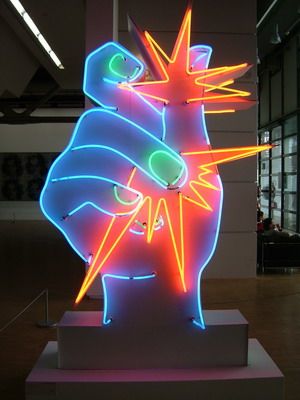
(Left) Cesar (1921-98) Ricard Car Compression 1962. (Right) Martial Raysse American America 1964. (Left) Niki de Saint-Phalle (1930-2002) The Groom 1963. (Right) Villegle (b. 1926) Ledru Rollin Avenue...
_Compression_Ricard_1962.jpg "00312_cesar1921-98_compression_ricard_1962")
_La_mariee_1963.jpg "00305_niki_de_saint-phalle_1930-2002_la_mariee_1963")
_Moto_avenue_Ledru_Rollin_65.jpg "29_j_villeglene_1926_moto_avenue_ledru_rollin_65")
_La_Gitane_1960-68.jpg "26_r_hains_ne_1926_la_gitane_1960-68")
Medaille_de_la_Resistan_65.jpg "24-1_g_deschamp37medaille_de_la_resistan_65")
_Le_Murex_1967.jpg "27_arman_ne_1928_le_murex_1967")
(Left) Cesar (1921-98) Ricard Car Compression 1962. (Right) Martial Raysse American America 1964. (Left) Niki de Saint-Phalle (1930-2002) The Groom 1963. (Right) Villegle (b. 1926) Ledru Rollin Avenue One Motorcycle 1965. (Left) Hains Gypsy 1960-68. (Right) Deschamps Resistance Medal 1965. (Bottom) Arman Car Window Plate 1967.
The "French New Realism" (Nouveau Réalisme) special exhibition was held from March 22 to July 2 at the Grand Palais National Gallery in Paris. French New Realism was an artistic trend of the 1960s, contemporary with American Pop Art, which did not abandon figurative painting when lyrical abstraction was interrupted. The movement was founded in 1960 by renowned art critic Pierre Restany and artist Yves Klein as an avant-garde group. Initially including Yves Klein, Arman, Cesar, Raymond Hains, François Dufrêne, Martial Raysse, Daniel Spoerri, Jean Tinguely, Mimmo Rotella, and Jacques de La Villegle, artists such as Niki de Saint-Phalle, Christo, and Gérard Deschamps joined rapidly between 1961 and 1962.
This movement proposed an open attitude, firmly rejecting the constraints and romanticism of the Paris School of abstract painting. It was built on the new sense of reality arising from the rising "industrial and consumer society" of the 1960s, specifically focusing on objects and their semiotic signs. Directly continuing Dadaism—particularly Schwitters' use of waste materials and Duchamp's radical readymades—it naturally provided the historical background for the French New Realist movement. This was certainly closely related to American artists like Rauschenberg or those pioneers of Pop Art.
French New Realists not only appropriated objects but also laid them bare in their entirety: Klein's famous indigo monochromes and body measurements, Arman's accumulations of various everyday objects, Cesar's car compressions as signs of industrial society, Christo's mysterious wrapped objects, Spoerri's extraordinary trap-paintings, Tinguely's dramatic self-destructing machines, Niki de Saint-Phalle's innovative air-gun shooting paintings and sensual Nana painted statues, and the posterists Hains, Villegle, and Rotella who extracted urban advertising imagery to transform and elevate it into realistic paintings. At the core of this magical and extraordinary artistic activity, what they sought was a process of confronting and appropriating objects that went far beyond pure creation. For these artists, it involved facing the world of objects with an optimistic attitude before total affirmation, dissolving the distinction between life and art, and freeing works from the object's own charter, allowing the object's destiny to unfold.
Art critic Restany concluded that New Realism could be divided into three families: The first family tends to emphasize a method of perceptual understanding, a language structure of sensibility, pushing language toward its unique nature (including Klein, Arman, Cesar, and Christo). The second family's modern character is displayed in the useless appearance of Tinguely's machines, yet purposefully ensuring machine behavior and characteristics. Niki de Saint-Phalle's vivid relief-target works, Spoerri's trap-paintings, etc., are enduring transformations and talented assemblies. The third family belongs to practitioners of modern collage operations, traveler-poets, who view the urban street world as a continuously transforming and produced painting (including artists such as Hains, Villegle, Dufrêne, Deschamps, and Rotella).