Op Art (also known as Visual Art)
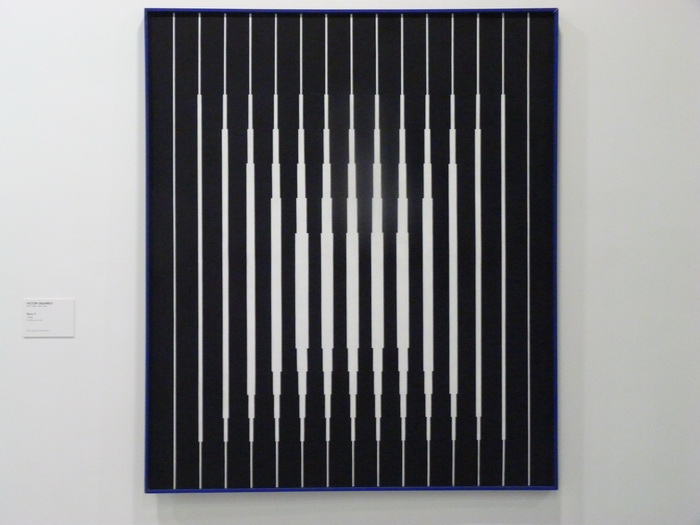
Victor Vasarely bora II 1964 acrylic on canvas
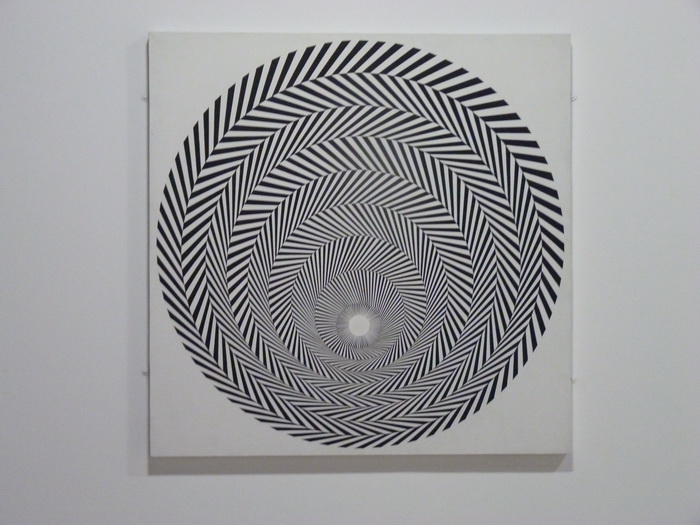
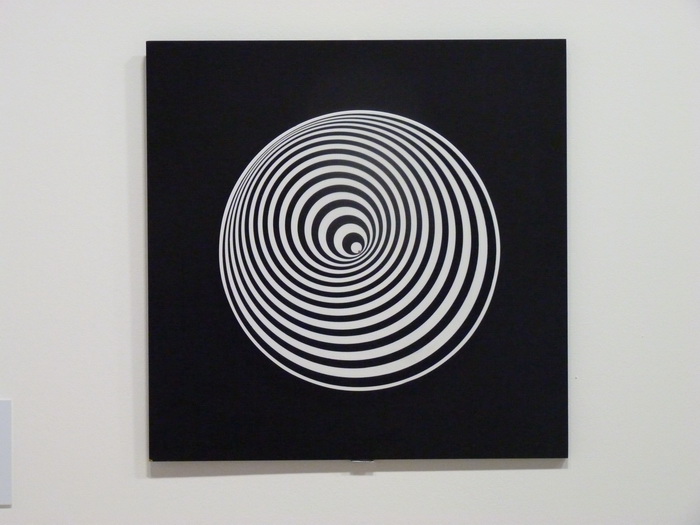
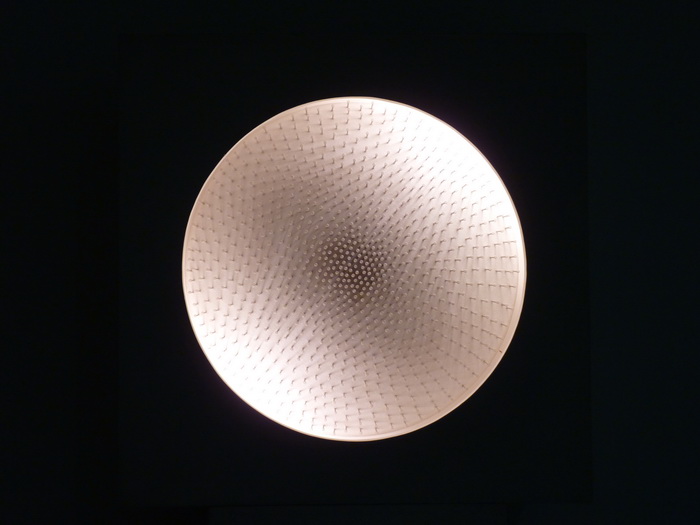
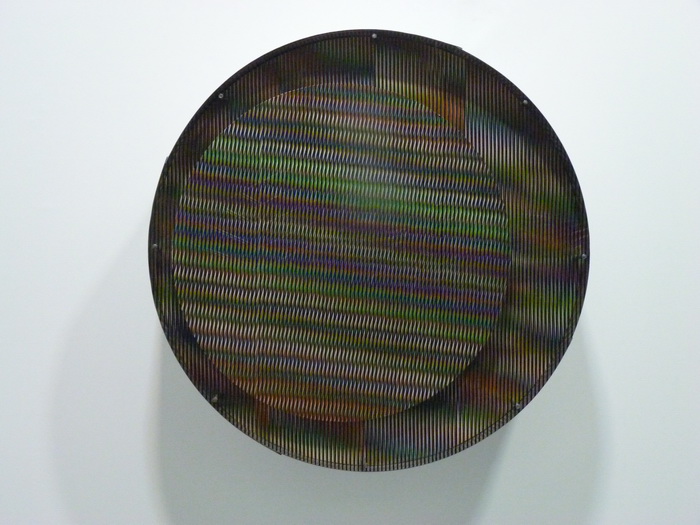
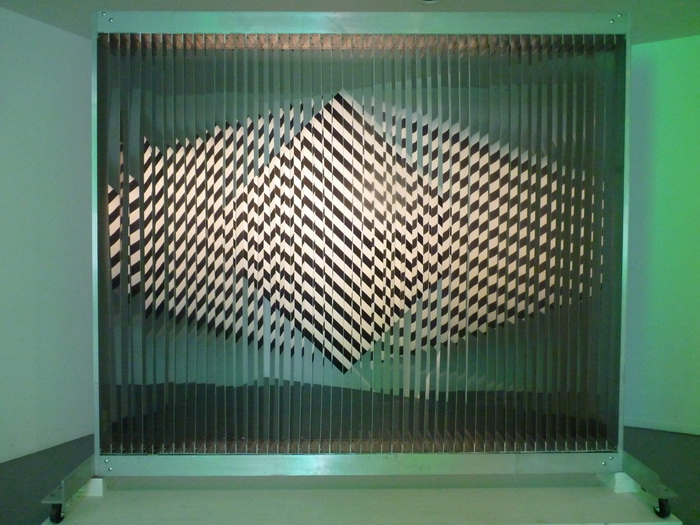
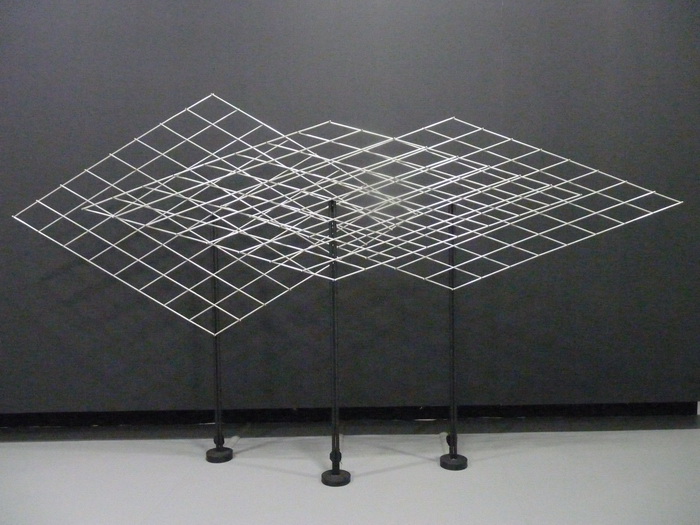
Text and images / Chen Chi-Hsiang. Op Art remains deeply rooted in the Bauhaus tradition, and is even more so the result of the experiments encouraged by Bauhaus. Broadly speaking, it stems from Post-Impressionism (Pointillism) to Delaunay’s Orphism, or Italian Futurism, Soviet Absolutism, and Constructivism. Of course, through explorations and developments by Bauhaus and Duchamp, among others, this led to a specific outcome. Also known as Visual Art, Op Art treats art as a scientific experiment, exploring various possibilities of visual fields and effects, expanding the realm of art into the industrial and technological era: kinetic sculpture evolved into video art, computer art, photocopy art, comprehensive art of the 1990s, and contemporary digital art, and so on.
The most representative artists of this movement include: Victor Vasarely (1908–1997), Peter Sedgley (1930), Bridget Riley (1931), J.R. Soto (1923–2005), Julio Le Parc (1928), Carlo Cruz-Diez (1923), L. Poons (1937), Piero Dorazio (1927–2005), Richard Anuszkiewicz (1930), Gunther Uecker (1930), Karl Gerstner (1930), Narina Apollonio (1940), J-Pierre Yvaral (1934–2002), Grazia Varisco (1937), Gregorio Vardanega (1927–2007), Martha Boto (1925–2005), Horacio Garcia Rossi (1929–2012), Toni Costa (1935), Davide Boriani (1936), Loui Tomasello (1915), Frederick Eversley (1941), Yaacov Agam (1928), the GRAV group (F. Morelet, F. Sobrino, J. Stein, J-P N Yvaral), and the Zero group—Heinz Mack (1931), Otto Piene (1928), Gunther Uecker (1930), and others.
Op Art is also one of the abstract styles, seeking another kind of “formal mathematics” as Mondrian called it, or as a result of formal field experiments at Bauhaus. Adding the fun of visual energy, examples are found in later abstract art, such as Ellsworth Kelly’s painting forms or the energy between colors, or Kenneth Noland’s effect of visual vibration between long color lines, or Frank Stella’s early single interpretation of black lines; all seem like Op Art, most directly influenced by Josef Albers’ exploration of form and color.
Through a creative “prototype,” continuously reproduced and repeated, constructing unity of form or color, calling forth the “characteristics of formal action,” through the single prototype of color and color or line and line, continuous rhythmic systematic construction, focusing on the development of visual energy (the illusion of vision itself, i.e., on the retina) and dynamic effects, this is the most creative source of Op Art. Vasarely wrote about Op Art: “Feeling the work is more important than understanding it, especially for art that acts physiologically on the viewer; bringing intellectual common sense is highly inappropriate. The artwork should be impersonal, producing the same feeling for all viewers, and uniqueness should be avoided.” His art consists of the repetition of geometric single-prototype abstract shapes, arranged in various ways to pursue illusions of vibration, motion, or deformation.
Note: This text quotes from Li Chang-Jun’s translation of Post-WWII Visual Art (published by Dalu Bookstore)—the chapter on Op Art and Kinetic Art. All images come from the grand Op Art exhibition 1913–2013 at the Grand Palais in Paris, titled “Dynamo.”