Park of the Château de Chantilly
(Top) Panoramic view of the magnificent and charming entrance to Chantilly Castle. (Middle 1) The exquisite Chantilly Castle is one of the most representative Renaissance-style castles in the Greater Paris region. (Middle 2) The unique entrance pavilion of the Chantilly Castle Museum. (Bottom) The e
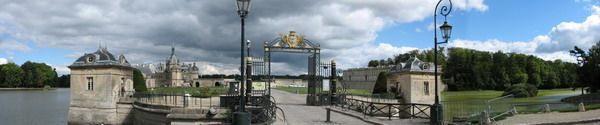
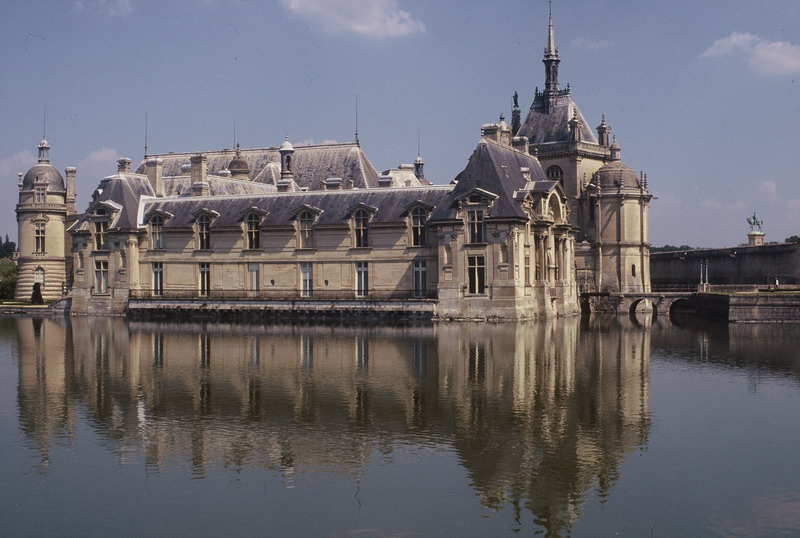
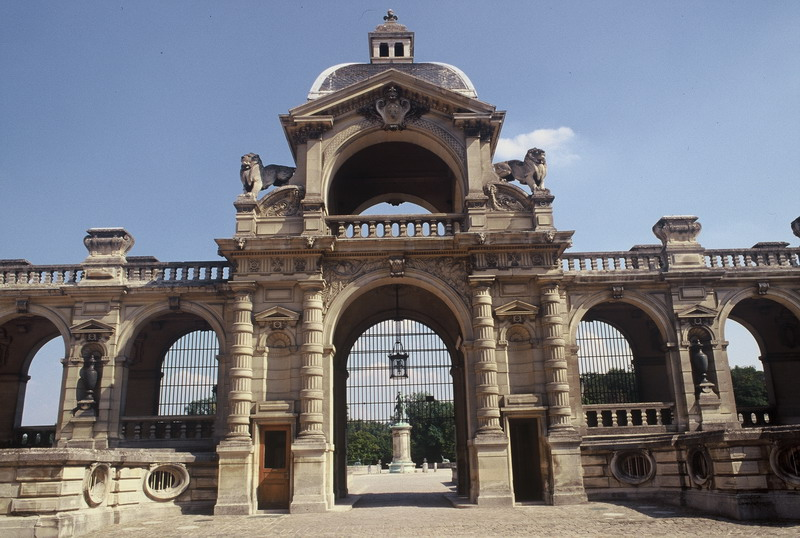
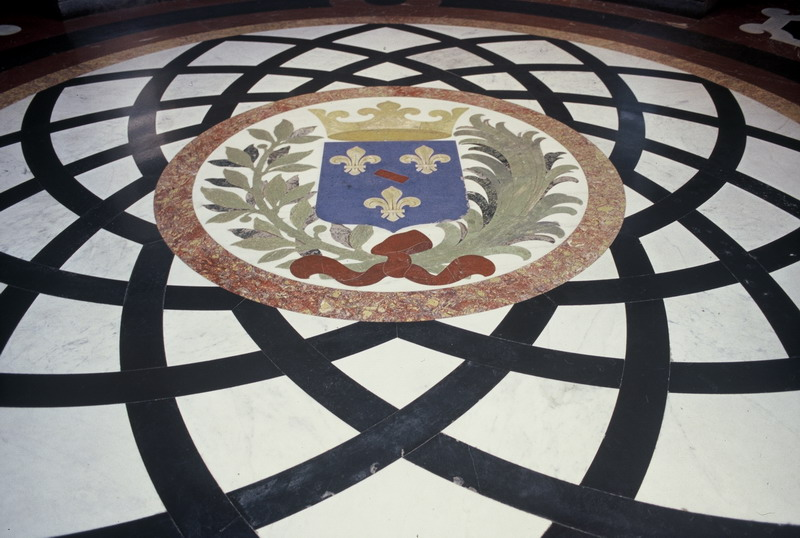
(Top) Panoramic view of the magnificent and charming entrance to Chantilly Castle. (Middle 1) The exquisite Chantilly Castle is one of the most representative Renaissance-style castles in the Greater Paris region. (Middle 2) The unique entrance pavilion of the Chantilly Castle Museum. (Bottom) The elegant marble royal emblem pattern on the museum floor.
The exquisite Chantilly Castle is one of the most representative Renaissance-style castles in the Greater Paris region, and also the most perfect and captivating castle near the capital. Thus! Chantilly’s distinctive, elegant, and beautiful water mirror garden is not only the most original masterpiece among French gardens but also the proudest work of gardening master Le Nôtre, who even drew admiration from the Sun King, Louis XIV.
The elegant Renaissance castle sits on a rocky island, surrounded by a moat with poetic reflections full of French historical sentiment. This castle belonged to the prominent family of Anne de Montmorency, the Great Constable, who served six French kings—from Louis XII to Charles IV—and was one of the most influential figures in the court at that time. This poetic castle and garden were built in 1560 under the invitation of the famous Great Constable Anne de Montmorency, who commissioned the renowned architect Jean Bullant to construct it in the finest Renaissance style. In 1569, the Great Constable died in the Wars of Religion, and Chantilly was inherited by his son; King Henry IV was a frequent visitor then. When it passed to his grandson, the Montmorency, he rebelled against Prime Minister Richelieu under the conspiracy of Gaston d'Orléans, brother of Louis XIII. After the failure of the rebellion, the last Montmorency was beheaded in Toulouse in 1632. Chantilly Castle was then inherited by the exiled Grand Condé (Charlotte de Montmorency and her husband, the Bourbon-Condé).
Grand Condé returned to the castle in 1662, fully renovating and beautifying the castle courtyard, and invited the era's most famous royal gardener, Le Nôtre, to plan the gardens and forests. Completed after two years of construction, this poetic water mirror garden became the most admired French garden of its time, attracting all major literary figures of the 17th century—such as Molière, Racine, La Fontaine, Fénelon, La Bruyère, Bossuet, and Madame de Sévigné—to admire this poetic garden and castle. Upon Grand Condé's death in 1686, Chantilly Castle was inherited by his grandson, the Duke, becoming lively and vibrant again, serving as a venue for royal hunting and lavish banquets. A grand stable was added by the renowned architect Jean Aubert, becoming one of the most monumental buildings of the 18th century, which marks the origin of the Chantilly racecourse. To the right of the entrance lies the Enghien Castle, built by Louis Philippe de Condé in 1769. During the French Revolution, Chantilly Castle was razed to the ground. During the French Empire, Louis Philippe de Condé and his children returned to Chantilly, deciding to rebuild the castle and gardens to restore their former glory. His son died in 1818, and the Duke of Bourbon continued the unfinished work. When the monarchy was restored in 1830, the Duke of Bourbon yielded the throne to his cousin Louis Philippe and gifted Chantilly Castle to his nephew, the Duke of Orléans, who was the fifth son of Louis Philippe. When the revolution broke out in 1848 (during the Second French Empire), the Duke went into exile, returning to the castle only in 1870. Between 1875 and 1885, the renowned architect Daumet rebuilt the noble castle, restoring its past Renaissance splendor. In 1886, the Duke donated his life collection of artifacts and the castle to the French Academy, forming today's famous Musée Condé and its poetic gardens.