Dialogue between East and West - "Paris
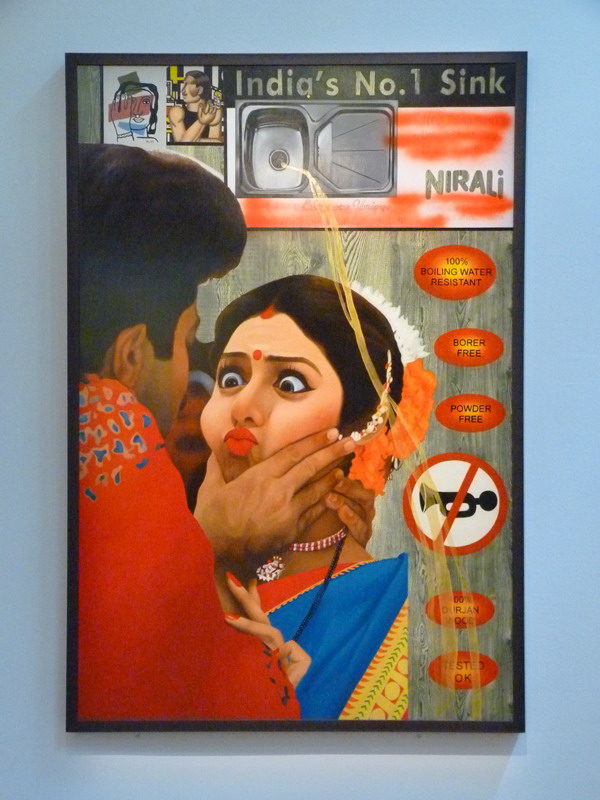
Thukral & Tagra, "Couple" paintings and object space installation detail 188x188x9cm 2011

Text and images / Chen Chi-Hsiang. The special exhibition is divided into six major themes. The entire exhibition presents the current spiritual state of India, its temporal context, and reflection on its own environment. Under a society that is inclusive, diverse, and open, it features cross-boundary fusion and rejects restricted multiple hybrids. Art critic Sanjay Kumar states: "In India, we do not doubt coexistence; we praise diversity. We do not believe that a country's territory must be a boundary line, even if borders are coated with superglue, trying to trap us." Curator Sophie Duplaix says: "This generation of Indian artists carries an active, passionate critique of the dizzying, rapidly changing society in which they live." Artist Lochan Upadyay reminds us: "India is a heavy country, and it continues to grow; artists play a role in this growth so as not to suffocate us. Our traditions, family scenes, and associated responsibilities are all under threat," adding, "India is an aggregation; it needs to feel." Indian art explores various issues surrounding history within diversity, disorder, and hybridity—such as post-colonial memory, historical interpretations of the India-Pakistan border, daily struggles of Indian women and minorities, wealth disparity, urban and environmental issues, natural ecology and environmental protection, philosophical inquiries into existence, tradition versus modernity, conflict between modernization and industrialization, East-West cultural issues, global versus local, and more.
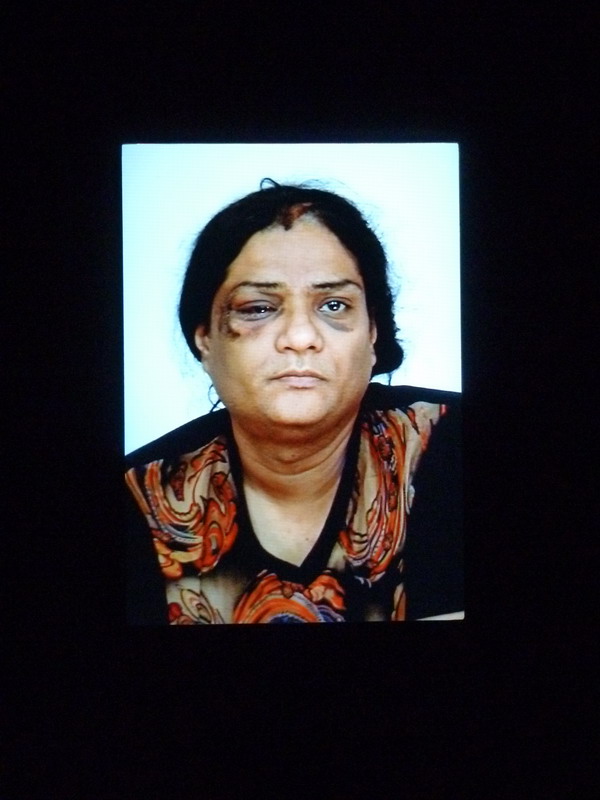
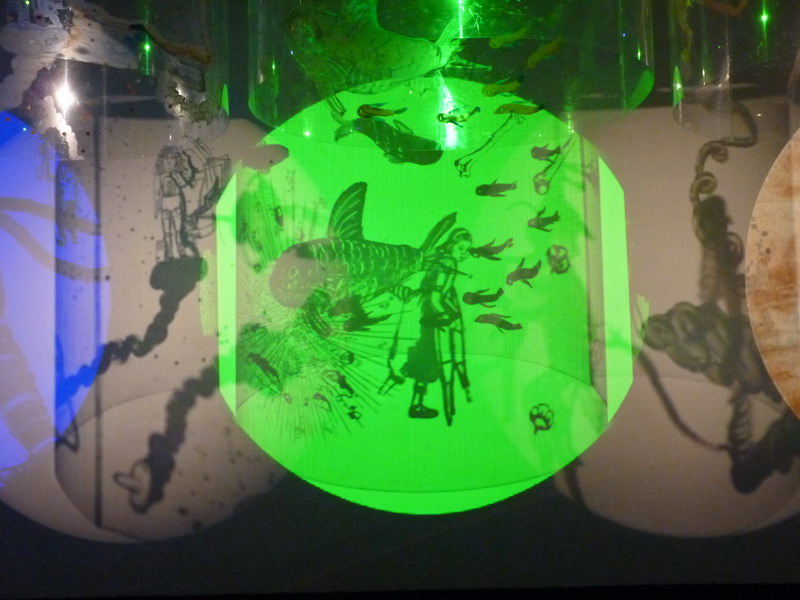
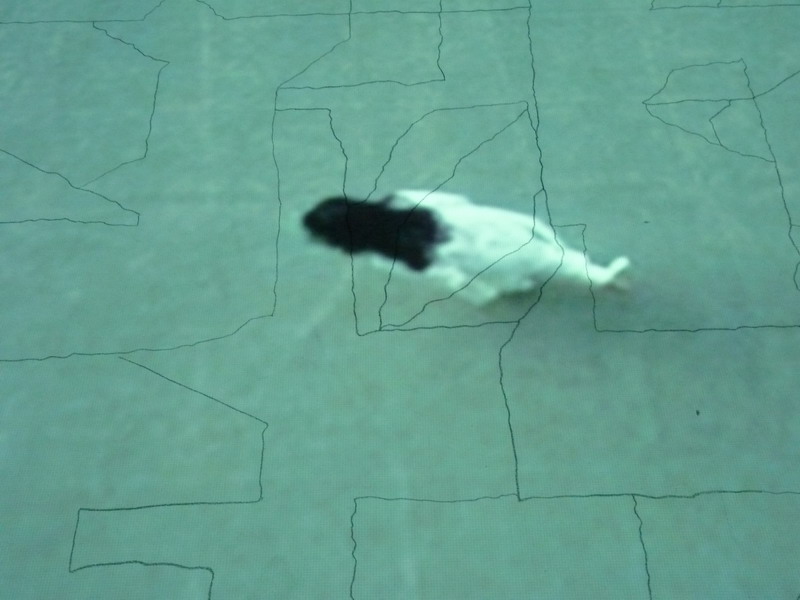
Politics: Under globalization, politics is often a major concern for many artists, linked to historical and contemporary events, becoming the core of various aspects of daily life. Amar Kanwar (born 1964) uses the video installation "Crime Scene" (2011) to explore contemporary environmental issues in India, criticizing industrial speculation in Orissa Province that threatens local survival and destroys the natural environment. Through excellent imagery of grand natural pastoral landscapes, forests, and memories, he exposes the scene of this disaster. The artist says: "Every blade of grass and tree in this region is crying." Shilpa Gupta (born 1976), a prominent Indian artist and feminist, explores diversity, focusing on issues around the India-Pakistan Kashmir border, particularly regarding women. In her video "Half Widow" (2006), a woman dressed in white like a mourning widow plays hopscotch; the sound of her throwing stones on the ground signifies a shattered state of mind. It pays tribute to the other halves of soldiers conscripted to defend the borders at the front lines, who wait endlessly for husbands whose fate—dead or alive—is unknown. Nalini Malani (born 1946) presents the dramatic "Memories of a Madcap Woman" (2007-2011), an innovative shadow puppetry video space installation depicting Indian women's political and religious tragic struggles for their identity, as their rights are often mocked or ignored. Sunil Gawde (born 1960) creates the extraordinary "Almost Untouchable - III," three strands of bright red garlands, exquisitely crafted. Flower offerings are a special ritual and sign of respect in Indian society; upon close inspection, these garlands are strung from numerous red razor blades. They serve as wreaths for three dramatic political assassinations in modern Indian history: Gandhi in 1948, Indira Gandhi in 1984, and Rajiv Gandhi in 1991. N.S. Harsha (born 1969) uses two large paintings, "We Don't Know Why We Sew Trousers" and "Identifying an Innocent Civilian" (2009), resembling intricate Indian folk paintings, vividly depicting diverse scenes of daily life. The former surrounds the magical myriad postures of sewing trousers; the latter depicts the various states of Indian people, presenting the sinister effects of politics on citizens. French artist Alain Declercq (born 1969) created the huge painting "Pakistan / Border" (2010). On a black background, the artist shot 12,500 rubber bullets to create a drawing effect resembling a sketch, showing an observation post, barbed wire, soldiers, military vehicles, etc., manifesting the tense atmosphere across the India-Pakistan border.
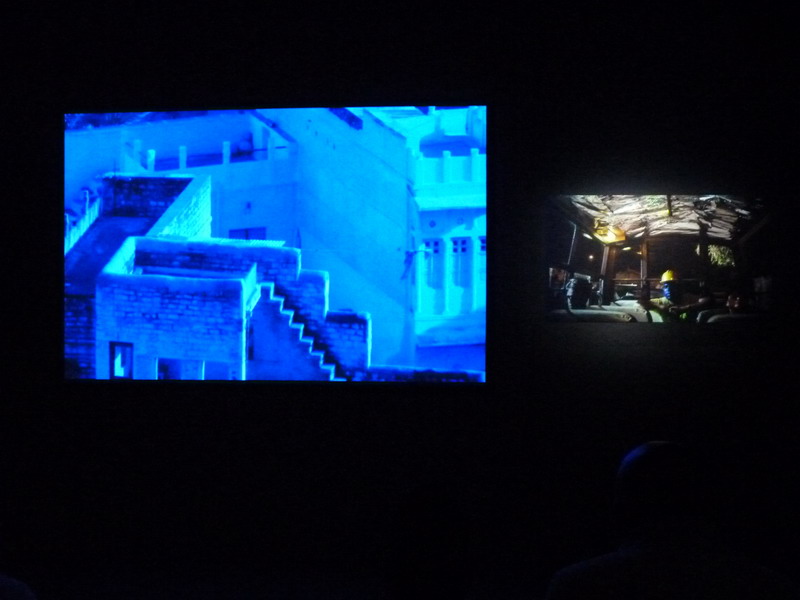
Urban and Environmental Issues: Globalization also clearly trends toward urbanization. Cities become hubs for commerce and industry and cores of politics and economy. Population concentration expands outward. Urban and environmental issues have become another important topic of globalization. Current Indian society is undergoing rapid change; nearly 30 percent of the population gathers in India's three major metropolitan areas—the capital Delhi, Bollywood Mumbai, and the commercial city Kolkata. Accelerated urbanization brings not just housing problems but overall social issues. Around these large cities lie over twenty slums with populations exceeding 200,000 each. A polarized society constitutes major problems for urban living environments. Most striking is Mumbai artist Hema Upadhyay (born 1972), who explores urban ecology in "Think Left, Think Right, Think Down and Think Narrow" (2010). Using recycled tin sheets, she shapes a model landscape of Dharavi, Asia's largest slum. It is dazzling, colorful, densely packed, and overcrowded, installed in a narrow corridor, presenting the atmosphere of the slum and harsh living conditions. Raqs Media Group uses a double video installation of one large and one small screen, "Interrupted Time" (2011). Guided poetically and mysteriously by meditative music, it presents the transforming city and imagined disillusionment, hovering between reality and virtuality. Dayanita Singh (born 1961) presents the series "House of Love" (2010), featuring fantasy-filled urban night photographs, exploring the volume and magic of the city as lights come on, the atmosphere of figures under neon lights, expressing an unreal dream and hallucination. Vivan Sundaram (born 1946) constructs an imagined city using categorized urban waste in his dramatic series "Roadblock" (2008), bridging concrete and abstract to evoke avant-garde architecture or urban utopian projects. Jitish Kallat (born 1974) presents "Ignitaurus" (2008), a motorcycle mixed with bull skeletons, showing violence and death through humor and satire. French artist Alain Bublex (born 1961) conceptually presents the series "Markings and Hypotheses (Work)" (2010-11) through photographs of the Indian capital, developing thoughts on urban architecture, transportation methods, urban landscapes, and the relationship between public space and people.
Religion: In today's globally changing society and material consumer culture, religion and traditional culture are declining. Daily life is submerged by matter; spirit is emptied out; commerce dominates; everything is measured by economic value. Faith wavers; what remains of religion to soothe the human heart? The miraculous veil of life's existence is replaced by real life. Eastern and Western sentiments and understandings of religion are vastly different. Religion becomes the artist's imagination and spiritual perception. Facing birth, aging, sickness, and death, experiencing life's situations, and consciousness of existence. Art becomes the artist's passionate religion, existing between tradition and modernity, spirit and matter, perception and imagination, reality and transcendence, philosophy and psychology, meaning and symbol.
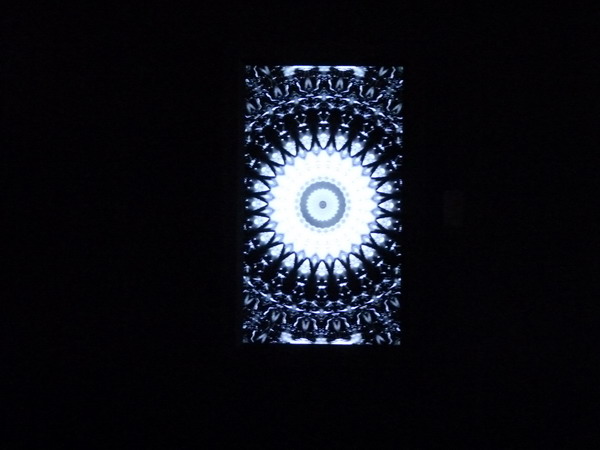
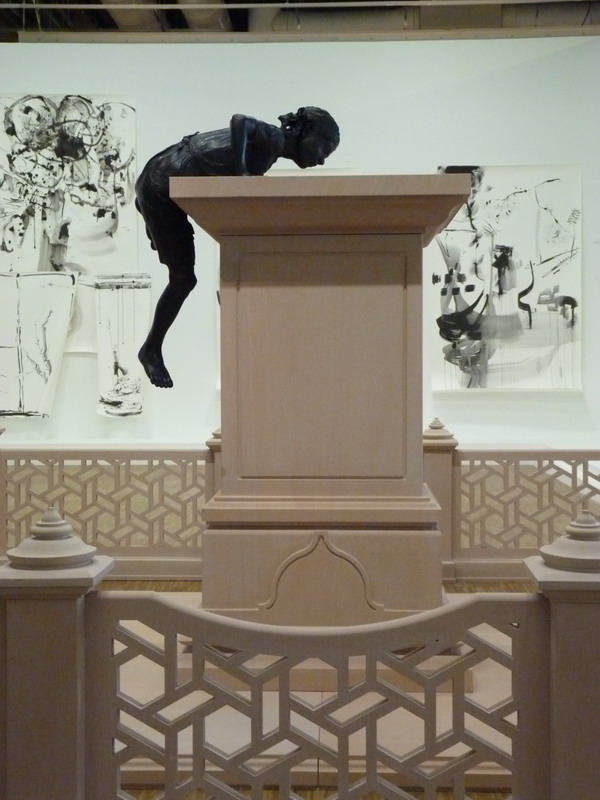
French Artists: Pierre (born 1950) and Gilles (born 1953) investigate typical "Indian" elements of Indian popular culture in their "Indians" series. Exotic depictions present Hindu deities such as the "Extraordinary Hanuman - Monkey God," the "Transcendent Rama," and the "Stunning Sita" as portraits, visualized and allegorical within a Western fantasy world. Jean-Luc Moulene (born 1955) attempts to imagine the current state of India in "Modeling" (2007-11). Through sketches, 3D models, and multi-faceted painted metal oval carvings, within the concept of object construction, he presents spiritual states. Stephane Calais (born 1967) expresses emotion lyrically, imaginatively, and abstractly in his large-scale ink wash and sensitive floral line composition series "Black India" (2008-11). The painter says: "My Orientalism is also a mutated strain of cold. I must lock myself in a room, isolated, to battle the high fever of my Black India." Camille Henrot (born 1976) uses excellent video in "Educated Dream" (2011) to explore deep consciousness of existence, elucidating Eastern and Western views on snakes and humanity's relationship with fear. Young artist Loris Greaud (born 1979) uses advanced digital 3D technology for the spatial installation "Bragdon Pavilion" (2011). Through eight vertically and horizontally arranged screens, it continuously projects ornate patterns like mandalas, dazzling illusions, exploring the limitations of body and consciousness. Gilles Barbier (born 1965) presents humorous large-object sculpture installations, "The Game of Life" (2010-11). Through several imagined small islands and costumes worn by dwarfs, it presents various material desires of existence and pleasure in consumption, elucidating the situation of today's materialist society, fetishes, and idol worship symbols. Philippe Ramette (born 1961) constructs "Inner Republic Square - Installation" (2011) simulating the image of large public statues in India. However, here it shows a little girl about to climb onto a public pedestal, like a metaphor for future power, because in India women continue to fight for their rights in daily life.
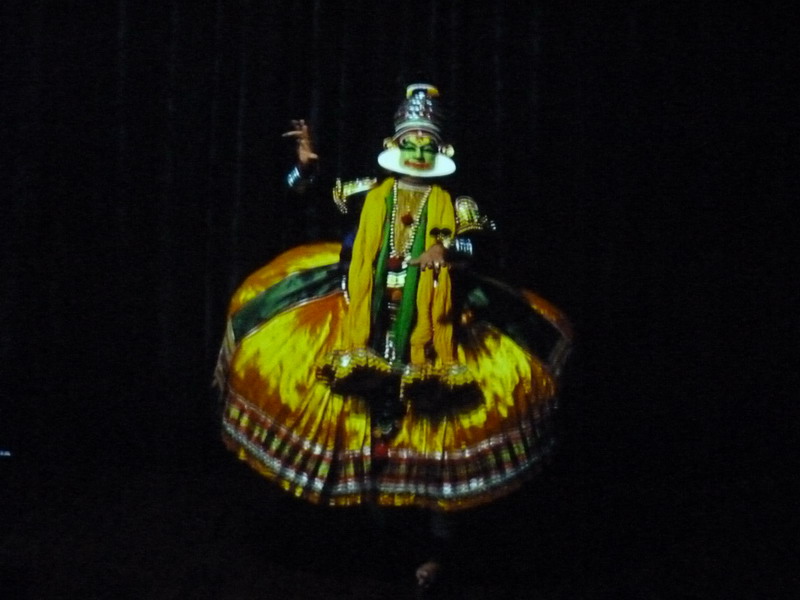
Under this religious theme, Indian artists are comparatively deeper and heavier. Sudarshan Shetty (born 1961) uses "Six Cages" (2010) to symbolize six internal harmful things of existence, akin to Western original sins: lust, anger, gluttony, blindness, pride, jealousy. Inside the cages, sets of black suits float and hang front and back, implying absence. The whole exudes a sense of emptiness, questioning the mechanization of existence, the feeling of life, and human absurdity. Anita Dube (born 1958) presents the series "Silence (Marital Bloodline)" (1997), consisting of 13 objects-sculptures constructed from blood-red velvet, hinting at social violence and death. Nikhil Chopra (born 1974), an innovative artist spanning theater, painting, performance, and installation, presents "Hidden White II" (2011), the most special work in this exhibition. It is a painting-space installation completed through the artist's live performance. Philosopher Maurice Merleau-Ponty wrote: "It lends its body to the world; the painter transforms into a painted world." Riyas Komu (born 1971) satirizes today's idol worship of star football players in "Outside God" (2011).
Family: Family is deeply rooted as the core in traditional Indian society. A clan's glory and disgrace coexist; males are valued over females, so there are more men than women. Several generations live under the same roof. The family constructs the overall economy; many professions and crafts are often hereditary. Individuals share and bear the burden and pressure of the family. Most marriages are arranged, especially with parents' approval. Within the same social caste system, religion, and status, most choose religious marriage; love is unimaginable to Indians. At marriage, the bride's family is responsible for all dowry. Often, dowries cause social tragedies or burden the bride's family with debt. Once married, women must live in their husband's family and handle all daily household affairs. If the husband dies unexpectedly, divorce is even more difficult; widows are left in a dilemma, becoming marginalized members of the husband's family. Of course, facing the current situation of globalization and the drastic changes in Indian society, the rise of the middle class, and the awakening consciousness of the new generation, the necessity of small families directly impacts traditional family concepts and forms. Indian family structures are currently undergoing transformation between tradition and modernity.
Most notable under this theme is painter Atul Dodiya (born 1959). Especially the "Mahalaxmi Goddess" series, works painted by shopkeepers on iron doors, decorative, hoping the goddess would bring prosperity to the shop. This piece "Suicide" (2002) depicts the social tragedy of three sisters choosing to hang themselves due to inability to bear dowry debts. More dramatically, "Life Scenes of a Couple" (2004) evokes humorous Bollywood film scenarios. Thukral (born 1976) and Tagra (born 1979) present "Couple" (2011), using images of sculptures from the Khajuraho temples (collectively known as sex temples) as installations. They elucidate traditional social taboos, providing the new generation with information that there is no need to feel ashamed of sexual pleasure for body and mind, assuming responsibility. Kiran Subbaiah (born 1971) presents the video "Still Mouth Full" (1997), contrasting lifestyle and dietary habits to show cultural differences between East and West. Writer and filmmaker Sarnath Banerjee (born 1972) constructs the video "1943" (2011) using cartoons, collages, and photographs. He humorously presents India's transforming economy and culture, narrating perspectives of local versus global or global versus local, involving major issues of food security. Ayisha Abraham (born 1963) presents "Enroute or Of a Thousand Moons" (2010-11) using film footage, showing dining scenes of the Indian middle class between 1950 and 1970. India's currently most popular artist, Subodh Gupta (born 1964), reconstructs Delhi Rathna's largest brassware market—"Ali Baba" (2011). Like a shopkeeper, he neatly stacks various brassware from floor to ceiling, metaphorically representing consumption, including wealth and prosperity.
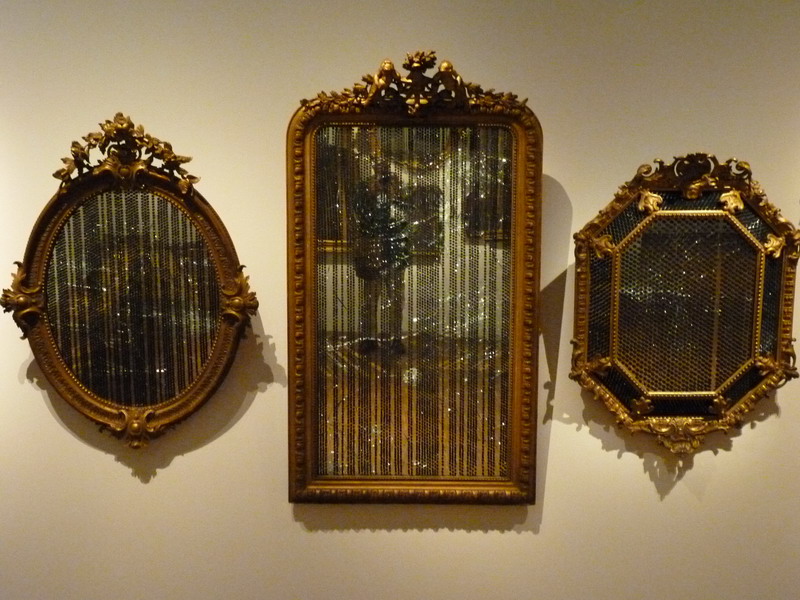
Identity: Identity generally comes from objective geographical environments, cultural customs, and realistic political contexts. Additionally, subjective consciousness, preferences, and interests all constitute natural identity. In the traditional caste system, religion, and male-preference society of India, women are naturally discriminated against, consciously or unconsciously. Equality of identity is a satire and contradiction for the world's largest democracy. After years of feminist struggle and liberation during Indira Gandhi's administration, women in modern Indian society have achieved various equal identities and freedoms. Yet, many women remain victims of discrimination in daily life today. As for the current situation of women, what about homosexuals attracted to the same gender? It is even harder to imagine. Exposing this hidden identity on the edge of society has become a publicly explored issue for many contemporary artists, aiming to gain recognition for this identity and social tolerance. Pushpamala N (born 1956) collaborates with Paris Harcourt Studio on photographs "Post-Delacroix Liberty" and "Female Slave" (2009). In postmodern simulacrum images, she liberates Indian feminism through a historical perspective. Sonia Khurana (born 1968) presents video works "A Lonely Woman Does Not Lie" (1999) and "Hands and Head" (2004), extraordinarily developing relationships between self and others. The artist says: "Participating in or gazing at self and body—reaching a certain degree, there must be a direct intervention: touching and personally touching." Bharti Kher (born 1969) presents mirror object installation "Reveal Your Dream Secrets" (2011). Through broken mirrors, she elucidates women's traumatic hearts and untouchable dreams. Tejal Shah (born 1979) explores the third gender in society through photo series "Fantasia" (2006) and video/photo series "Violence" (2010). The artist says: "I am equally interested in female-male, or shifting sexuality to both genders. My intention is to confuse these categories, show an acceptable limitation, and normalize them." Sunil Gupta (born 1953) presents the "Sun City" series (2010-11), using novel-like photographs to narrate intimacy and taboos in Paris's homosexual community. French artist Kader Attia (born 1970) presents video installation "Collage" (2011), investigating gay men in three regional societies (France, Algeria, and India). Under different cultural and social conditions, it presents ambiguous relationships between East and West, tradition and modernity.
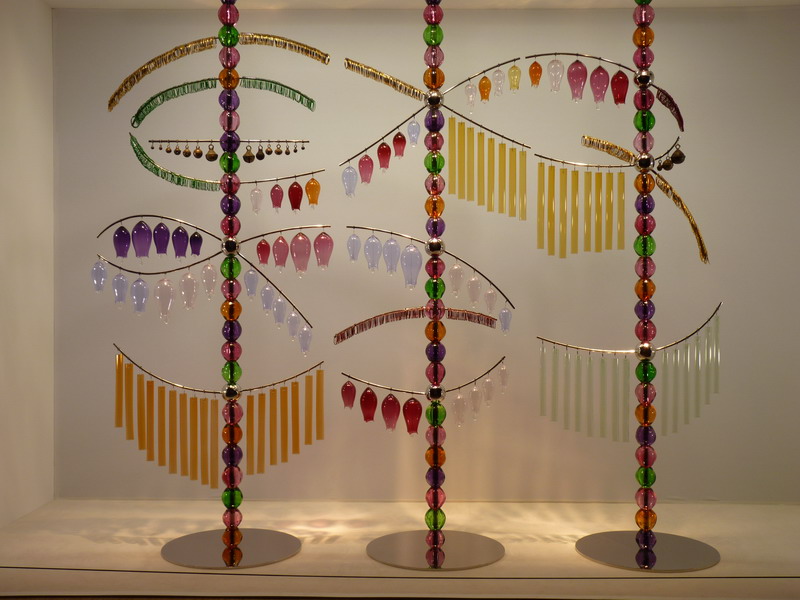
Craftsmanship: In this era of advanced computer technology and biochemistry, traditional skills are slowly disappearing. The more advanced the place, the more traditional crafts decline. In this mass, popular, and cheapened super-consumer society, everything is replaced by technology and machines. Speed becomes economic cost; handmade goods do not fit economic value. Contemporary global art is no exception, impacting artistic reflection and creation. Some artists attempt to construct their own identity by seeking roots and sources, exploring possibilities from local folk skills and materials. Skilled craftsmanship not only creates an irreplaceable sense of local reality but also establishes a unique paradigm. Sakshi Gupta (born 1979) constructs a geometric decorative carpet from car parts in "Freedom is Primary" (2007), symbolizing India's industrialization. Sheela Gowda (born 1957) presents object installation "Elegant Heart" (1996). The artist collects sacred cow dung, dries it, and strings it into a giant necklace, intending to expose violence suffered by women in Indian society. Gyan Panchal (born 1973) presents "Untitled" painting-object (2011), resembling French 1970s surface-support painting-object exploration. Composed of an 8-meter long women's floral cloth, immersed in pink in the middle and folded in half with dark blue below, under a rigorous form/color structure, it exists abstractly between painting-object-sculpture. Krishnaraj Chonat (born 1973) presents "Your Scent is on My Hands" (2010-11), divided into two major environmental installations. The front wall is covered with all computer cables and mice, piled with numerous keyboards, resembling a computer world landscape. The back is a wall of soap made from wood essence, emitting a natural scent in earthy yellow tones. Under tension, it constructs two opposing worlds (industrial and natural). Ravinder Reddy constructs huge Indian female head sculptures like "Tara" using traditional wood carving. Typical and gentle Indian women, entirely covered in gold leaf, with large eyes, sexy lips, and beautiful hairstyles, present a pop art aesthetic, close to Indian folk art. French artist Jean-Michel Othoniel (born 1964) presents glass vessel-sculpture "Sound Sculpture" (2010). Neatly arranged in various colors and sizes, it forms an extraordinary instrument-sculpture, quite decorative. At the opening, three percussionists were invited to perform pieces by composer Mauro Lanza on site. Fabrice Hyber (born 1961) presents the series "Magical Beasts" (2011), series painting installations, presenting India's magic through sensibility and imagination. Orlan (born 1947), French body performance artist, presents object installation "Flag-Skin-Hybrid" (2011). She mixes the French and Indian flags together. France's three colors: red, white, and blue overlap with India's bright green, white, and earthy yellow. On the central white section is an Indian Dharma wheel, studded with shiny sequins, poetically shimmering and swaying in the breeze.