Paul Gauguin's "Arearea (Joyous Ones)"
Arearea (Joyous Ones) 75×94 cm 1892, held in the Musée d'Orsay, Paris. Arearea is a Tahitian vernacular term, meaning joyous ones. Gauguin used this exotic language to convey local sentiment and depth. It is also one of the masterpieces from his first trip to Tahiti. From the theme "Joyous Ones," on
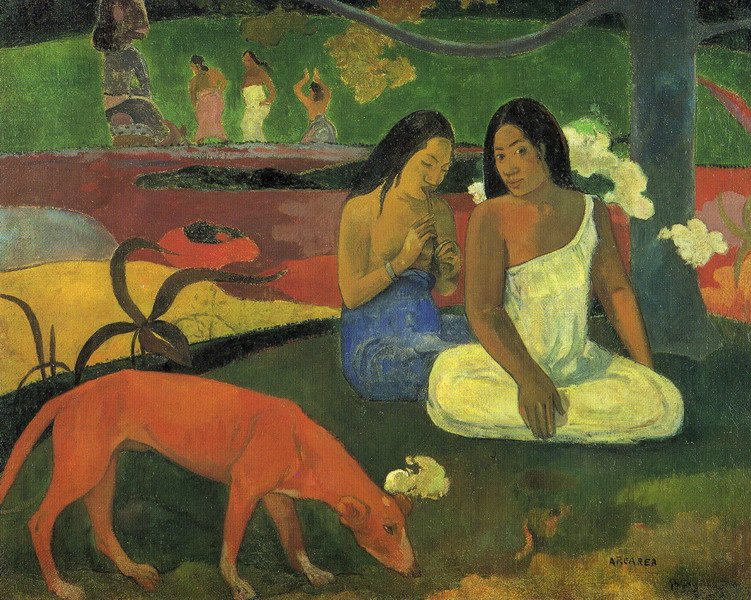
Arearea (Joyous Ones), 75×94 cm, 1892, held in the Musée d'Orsay, Paris. Arearea is a Tahitian vernacular term, meaning joyous ones. Gauguin used this exotic language to convey local sentiment and depth. It is also one of the masterpieces from his first trip to Tahiti. From the theme "Joyous Ones," one can see Gauguin's heart blossoming upon arriving in Tahiti. In this earthly paradise, he found the source of his creativity—an unrestrained, passionate sensibility, bursting forth in a riot of colors, presenting Tahiti's dreamlike and joyous state of mind.
Upon arriving in Tahiti, Gauguin was immediately moved by the unique, primal beauty of Tahitian women, which became the main source of inspiration for his Tahitian paintings. This idyllic scene of joyous ones is no exception. In the pastoral landscape, two relaxed women sit under a large tree; one looks at the viewer, while the other plays a short flute, with the melody of the color planes drifting throughout the picture. In the foreground, a dog; in the background, three women worship a large stone idol (this idol is an image created by Gauguin—inspired by the legendary stone statues of Easter Island). Through the contrast of sensual color planes and forms, he evokes the beauty of primitive nature and a kind of happiness and joy found in a simple, cheerful life, something seemingly unimaginable for those who call themselves civilized or urbanites. Gauguin wrote: "Art is an abstraction; derive this abstraction from nature while dreaming before it."