Paul Klee "The Mockery of Works" Retrospective
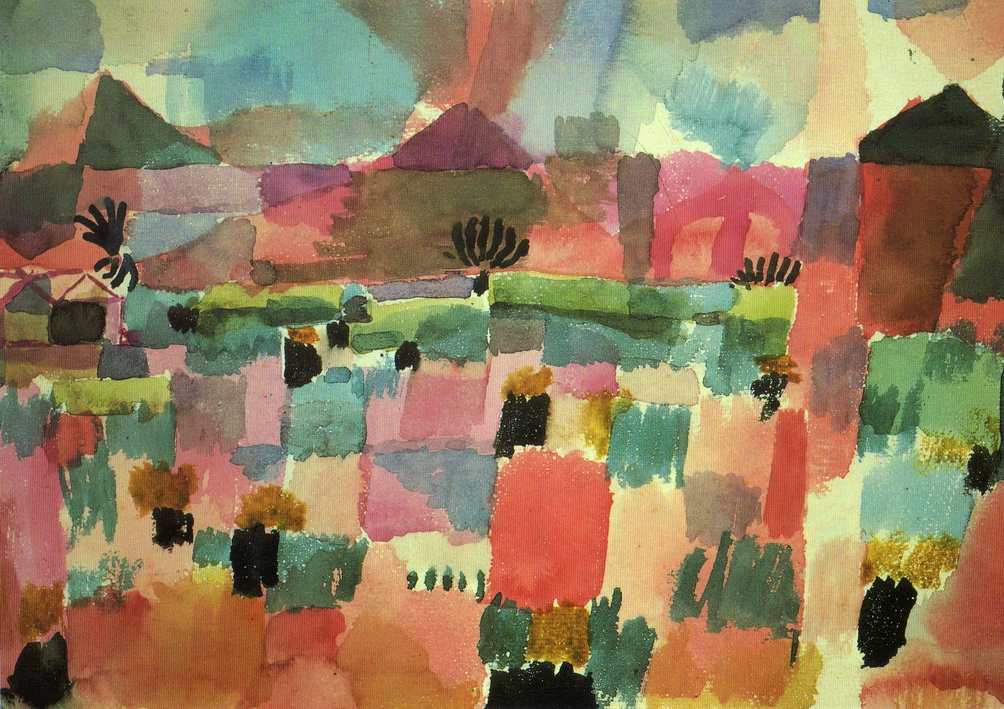
Tunis Saint-Germain 21.8x31.5cm 1914 Watercolor Collection of the Musée national d'art moderne, Centre Pompidou
Text/Photos by Chen Chi-Hsiang | Dates: April 6 to August 1 | Location: Grand Exhibition Hall, 6th Floor, Centre Pompidou
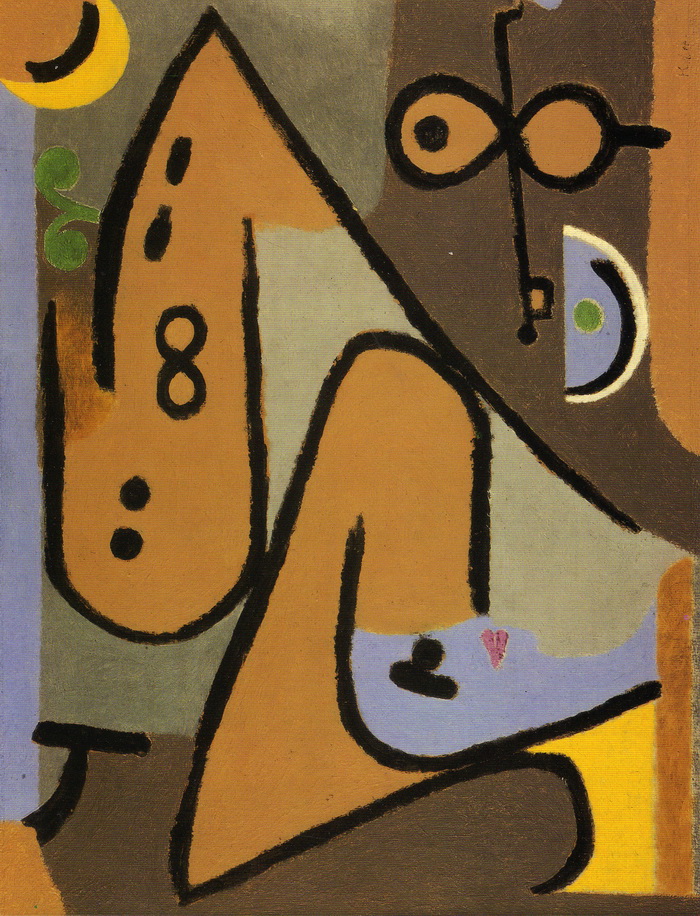
Paul Klee (1879-1940) is one of the greatest and most mysterious artists of the 20th century. Famous for his small paintings, he excelled in drawing, watercolor, printmaking, and oil painting. His work represents a continuous experience and renewal; naive and lively, unrepeated and unconstrained, simple in form yet full of extreme complexity. Picasso humorously remarked, "Klee is the master of small pictures in modern art, while he himself is the king of large pictures." Duchamp stated, "Klee's works never show signs of repetition; as is generally the case, this Klee is unlike that Klee." His works are diverse and difficult to categorize, spanning from figurative to non-figurative and abstract. The Paul Klee "The Mockery of Works" retrospective is the grandest and most complete since 1969.
Klee was both a musician and a painter. Born in Switzerland to a German music professor father and a Swiss singer mother, he was immersed in musical arts from childhood, trained as a first violinist, and supported himself through music. Painting was innate; rejected by the Munich Academy of Fine Arts due to weak drawing skills, this frustrated artist could not have predicted his tortuous fate. He possessed high artistic sensitivity, integrating all contemporary art trends and styles, breaking away from sectarian and ideological teachings, and resolutely severing ties with tradition. Through these orthodox modernisms, he participated in his century through painting. Like musical notes playing symphonic movements, his style was uniquely personal. At age 23, he wrote in his diary, "I have my own style."
Witnessing his era (the political and social atmosphere before WWI and WWII), Klee created with a ironically romantic attitude. The artist said, "Idealism in plastic arts is completely non-contemporary... On the other hand, I take a step closer to irony... resulting in some interesting types." Starting with Symbolism, he became Kandinsky's artistic partner in Munich in the early 20th century, actively participating in the "Der Blaue Reiter" group, entering expressive instinctualism, unleashing forms to achieve non-figurative painting. In 1912, a trip to Paris revealed Cubism, nurturing Klee's pictorial exploration. Ironically deconstructing Cubist imagery with prismatic vocabulary within a naive childlike style, he felt the exploration within the Cubist framework lacked vitality.
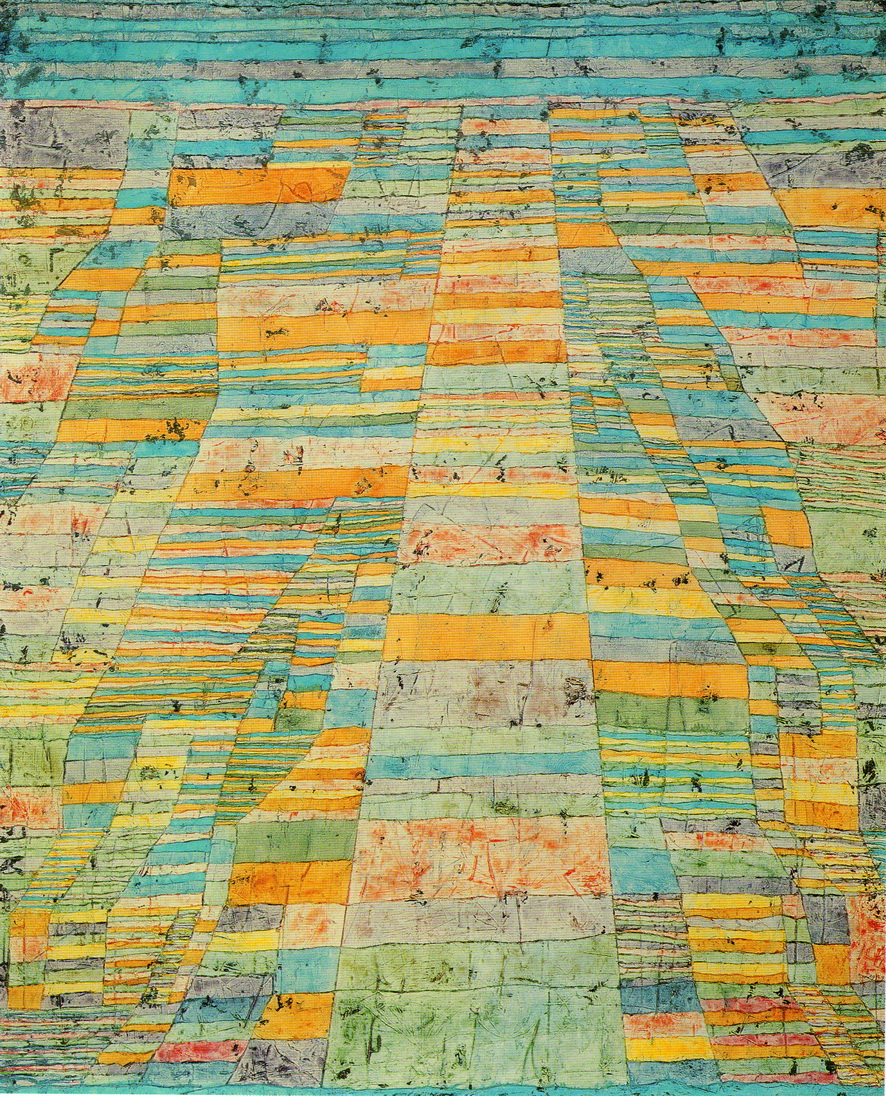
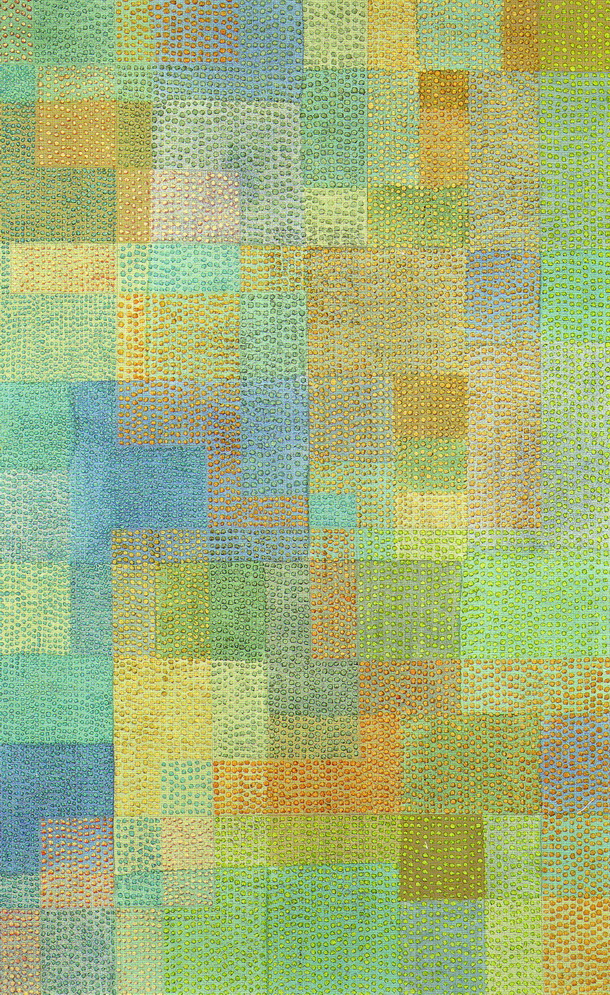
His 1914 mysterious journey to Tunisia pioneered new grid-pattern series like "Tunis Saint-Germain" (1914). Simplifying flat color planes approaching abstraction, color became the soul of his painting—full of sensuality, often passionate, warm, soft, and dreamy. He declared, "Color and I are one, I am the painter," continuing to develop into pure abstraction with "Harmonies" (1932). During his 1928 Egypt trip, Klee drew inspiration for a pictorial concept of "decorative" space, dividing canvases into organic chessboards or parallel stripes. This presented a spatial reading instantly graspable yet progressively recognizable over time, like reading a book. Works like "Florentine Villa" (1926) and "Main Stem and Side Branches" (1934) connect painting and music: adding rhythm to unstable aerial images, those "stripes" seem like staves on a musical score.
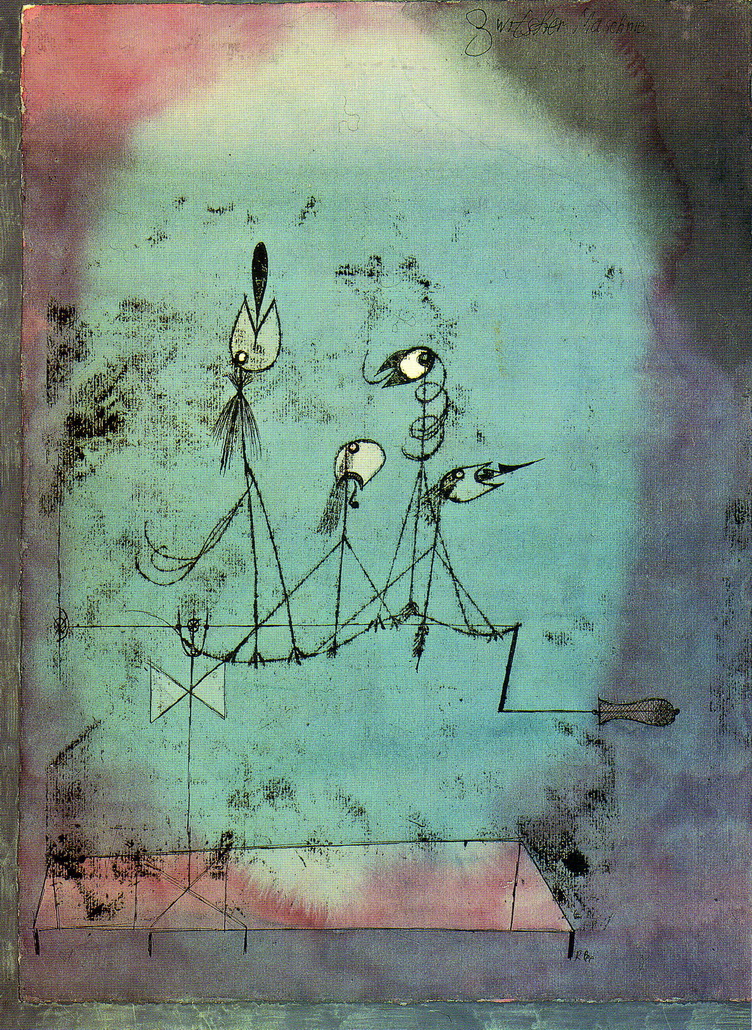
After the outbreak of WWI, baptized by Dadaism, Klee radically used unsettling mechanical imagery as irony, reflecting the bleak times and his unease. Between 1921 and 1931 during the German Bauhaus period, he became a teacher of color theory. His artistic ideals approached Russian Constructivism; his creations mixed dynamics, being both figures and objects, becoming midwives to Surrealism. In his pursuit of modernism, maintaining a purely personal face, he often kept distance from trends, stating, "To understand the past, the artist must preserve a fresh and spasmodic exploration, which depends on nature."
His art, in casual improvisation, renews the freshness of every morning through literary forms and varying creative methods. Constantly evolving, it maintains initial states and infinite deformation. Preferring energetic lines, sometimes casually sensual, sometimes organically geometric, existing between mystery, science, mathematics, poetry, and dreams.
"The Mockery of Works" retrospective is divided into seven themes: starting with youthful humorous satire; Klee and Cubism: entering modernist Cubism; Klee and Constructivism: mechanical theater in the German Bauhaus era; Klee and Picasso: Klee visited Picasso's studio in Paris in 1933; Picasso visited Klee's home in Switzerland in 1937. The two artists admired, opposed, and dialogued with each other, most charmingly through dialogue with Picasso's works; to the crisis years: after Hitler came to power in 1933, amidst political and social turmoil in Germany, plus his scleroderma illness, he returned to his old home in Berne, Switzerland.
Notes:
- Centre Pompidou Klee explanatory card.
- Centre Pompidou Klee retrospective wall text.
- Centre Pompidou Klee retrospective press release.
- Ibid.
- Ibid.
- Centre Pompidou Klee explanatory card.