Peter Halley – “Below/Above” Solo Exhibition
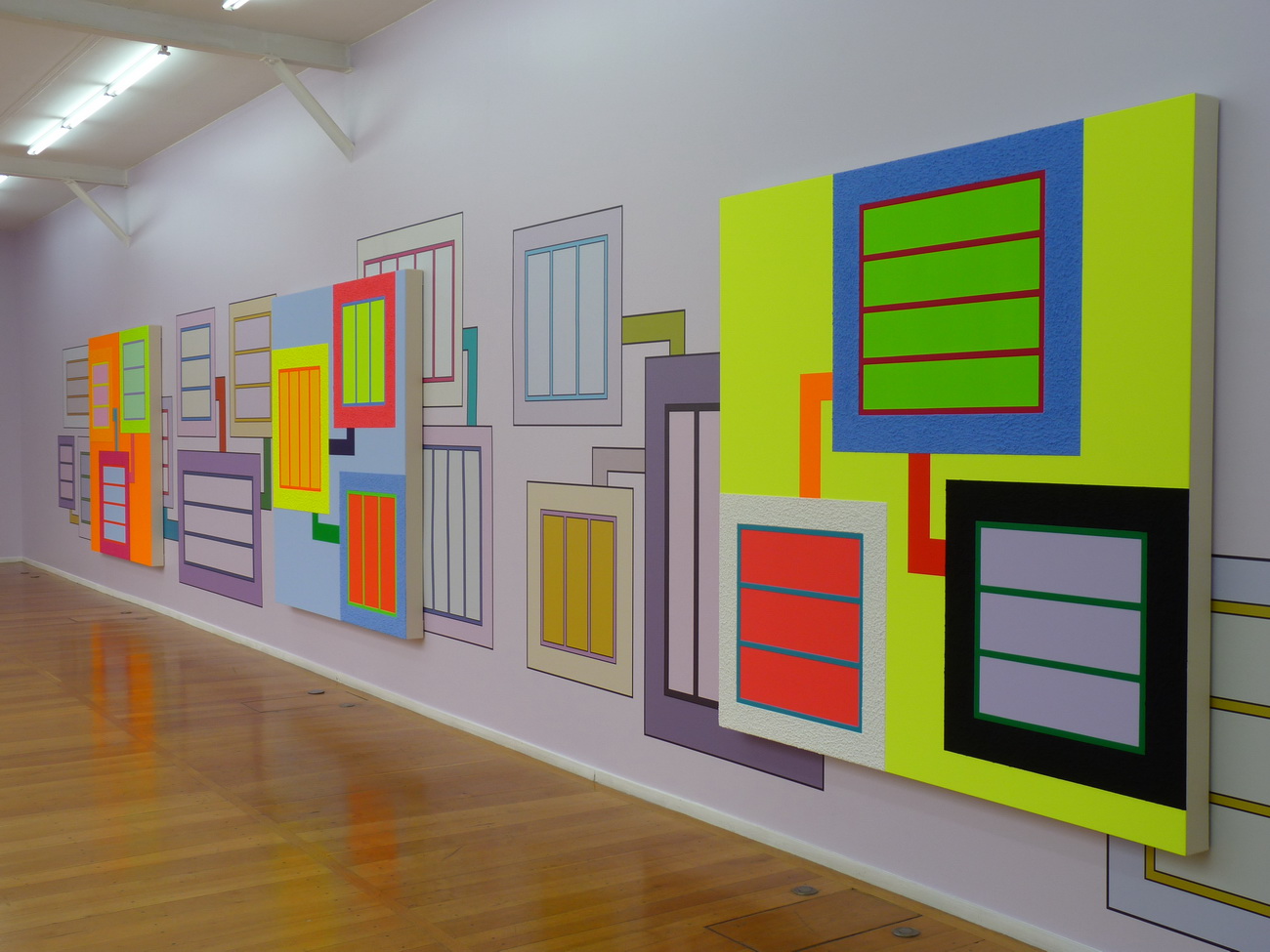
Peter Halley – “Below/Above” Solo Exhibition: First-floor gallery scene
Text/Photos by Chen Chi-Hsiang. Dates: June 9 to July 28. Venue: Xippas Gallery. Peter Halley is one of the key figures of late-20th-century Neo-Geometric or Abstract Geometric art. Born in New York, he lived and grew up in this vertical, magnificent, giant urban architectural forest, where urban architectural geometry became the main element of his geometric abstraction. In 1991, the artist described the New York where he grew up as a "huge and abstract structure of indifferent squares" (Note 1). Modern cities and industrial development have become prototypes and creative sources for modernism, deeply influencing many early-20th-century abstract painters. Geometric abstraction seems to be a product of modern cities; the Cubist master Braque said, "Modern life increasingly exists within a dominant geometric order," or "Every mechanical and industrial human being relies on geometric will" (Note 2).
Halley’s work is closely related to the New York metropolis. His works respond to Mondrian’s rational geometric abstraction and find models in American Pop Art and Minimalism, especially Newman, Stella, and Andy Warhol. An ideal of geometric cycles creates tension between abstraction and figuration; rigorous geometry becomes part of objective reality, losing its purity and approaching real society through reference or metaphor. In the 1980s, Peter Halley often said, "I have always believed my work is an image of something" (Note 3). Early works interlinked square façade structures, alluding to realities such as "hidden structures within architecture" or "prisons." In this postmodern narrative literary exposition, Halley’s works became storytelling geometric abstraction, also known as Social Abstraction. The painter intended to reverse Western modern abstract formalism, seeking evidence for abstract geometry from various geometric structures in modern society, referencing existing frameworks like windows, pipes, wires, or the geometric architectural structures of modern skyscrapers, resembling Mondrian’s precision combined with Newman’s vertical parallel lines. This social abstraction aligns with Collins and Milazzo’s explanation of the New York Neo-Geo movement: "The convergence of geometry and psychoanalysis is the core of our confusion, manifested minimally" (Note 4).
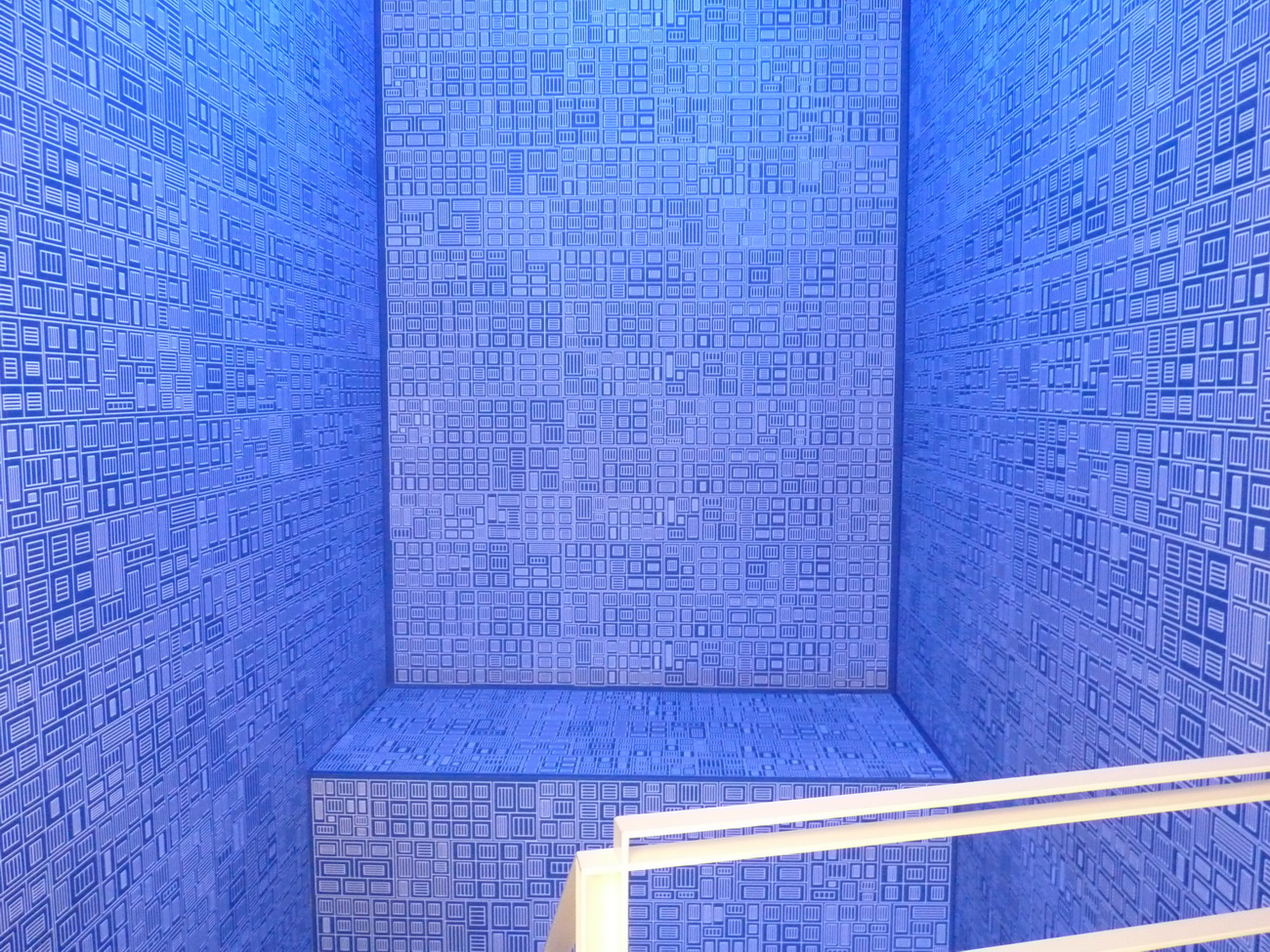
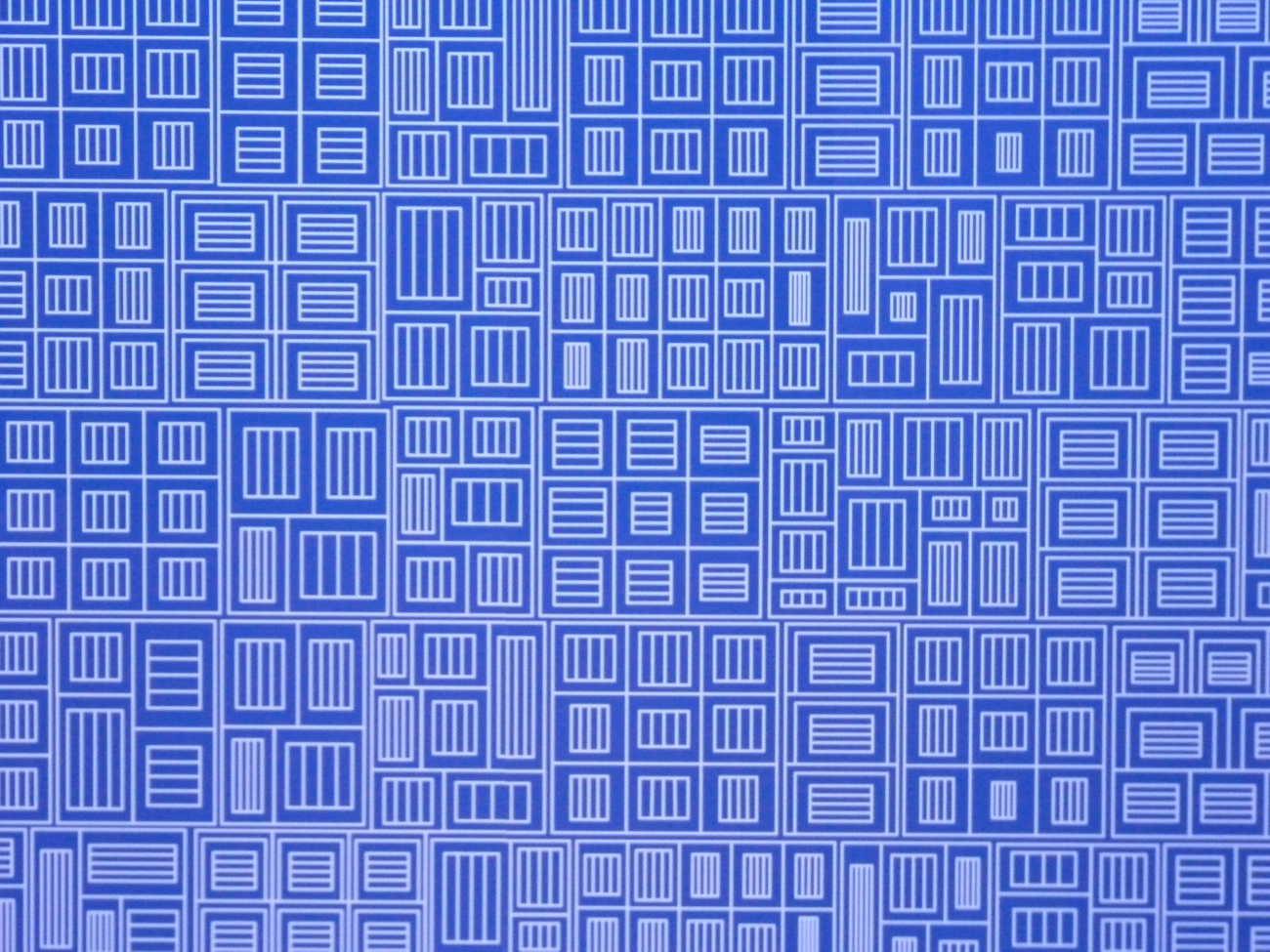
Since the 1990s, Peter Halley has broken the frame of painting, opening the concept of overall space through spatial installations. He hangs new murals (paintings, texts, charts, or digital image outputs derived from his archive charts, sketchbook texts, or design drafts, sometimes collaborating with designers) on walls. For this Paris solo exhibition “Below/Above,” he not only planned the entire first floor and basement gallery but also integrated corridors and entrances into the overall spatial planning. At the first-floor entrance, stairwells, and corridors, he used the gallery’s architectural spatial forms (digital output images) to create thresholds and passage effects, guiding viewers into the architectural space. In the basement gallery entrance and stairwell, blue-toned stylized square and rectangular thumbnails of his style (digital output images) presented the overall space.
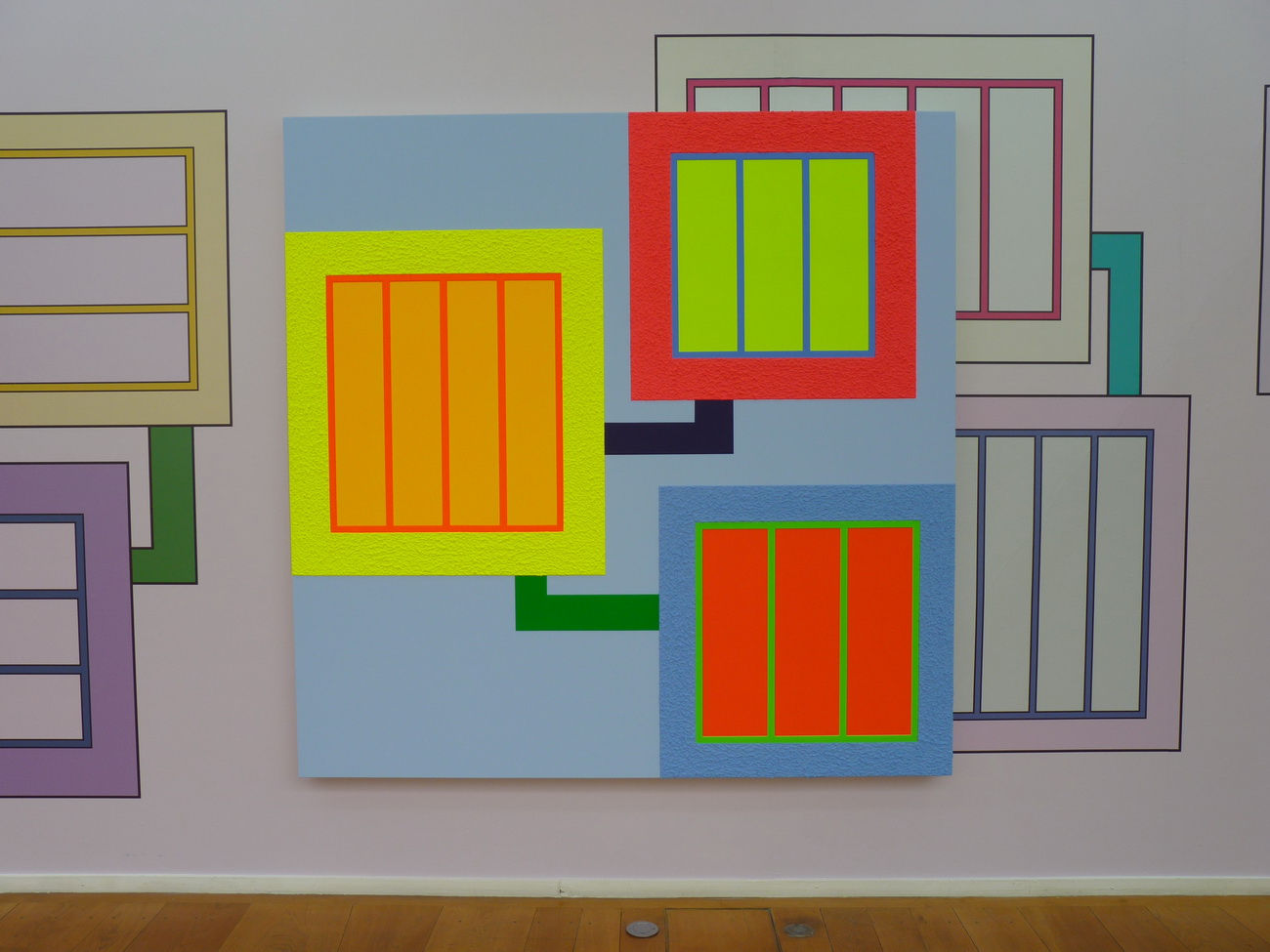
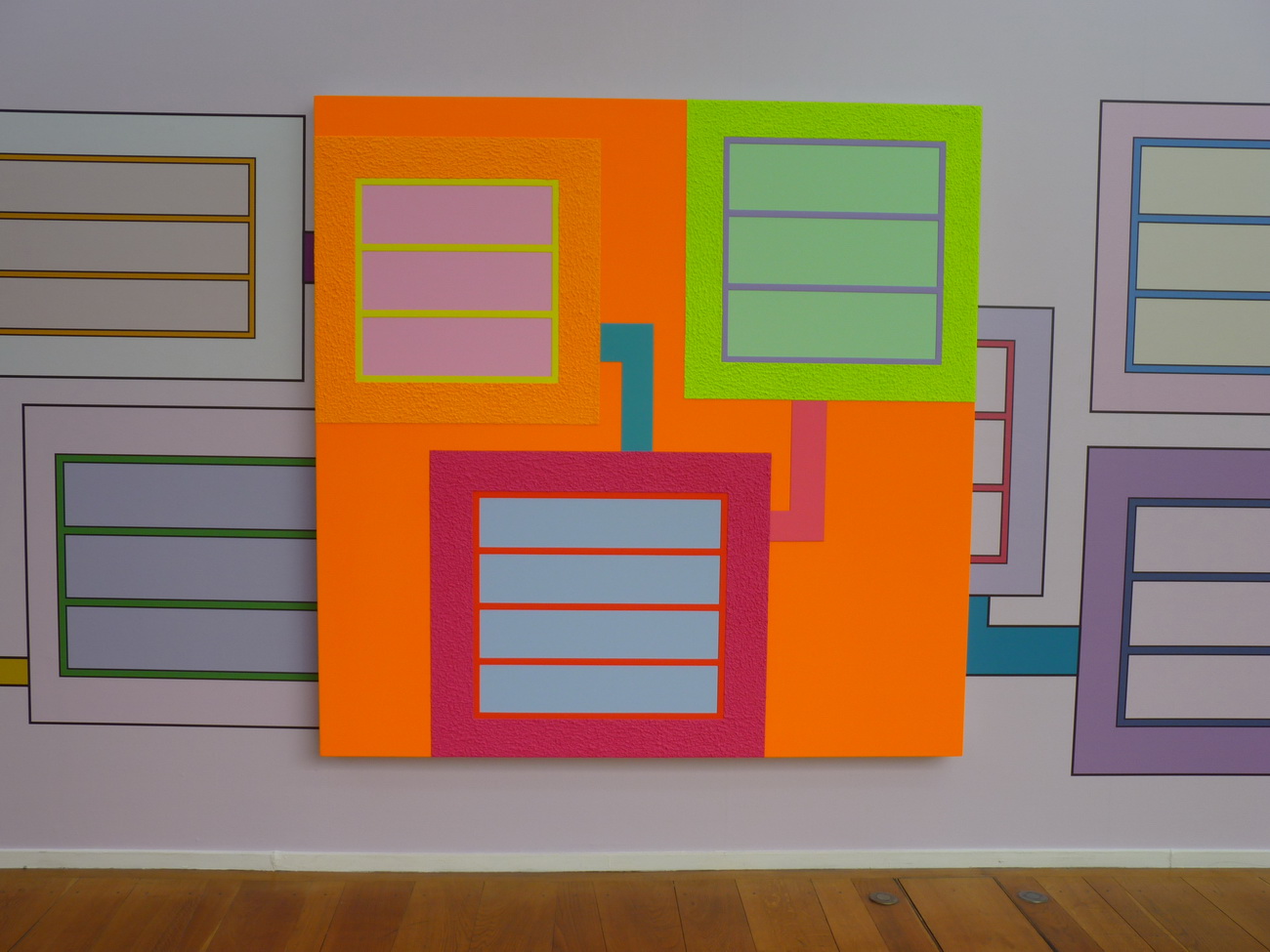
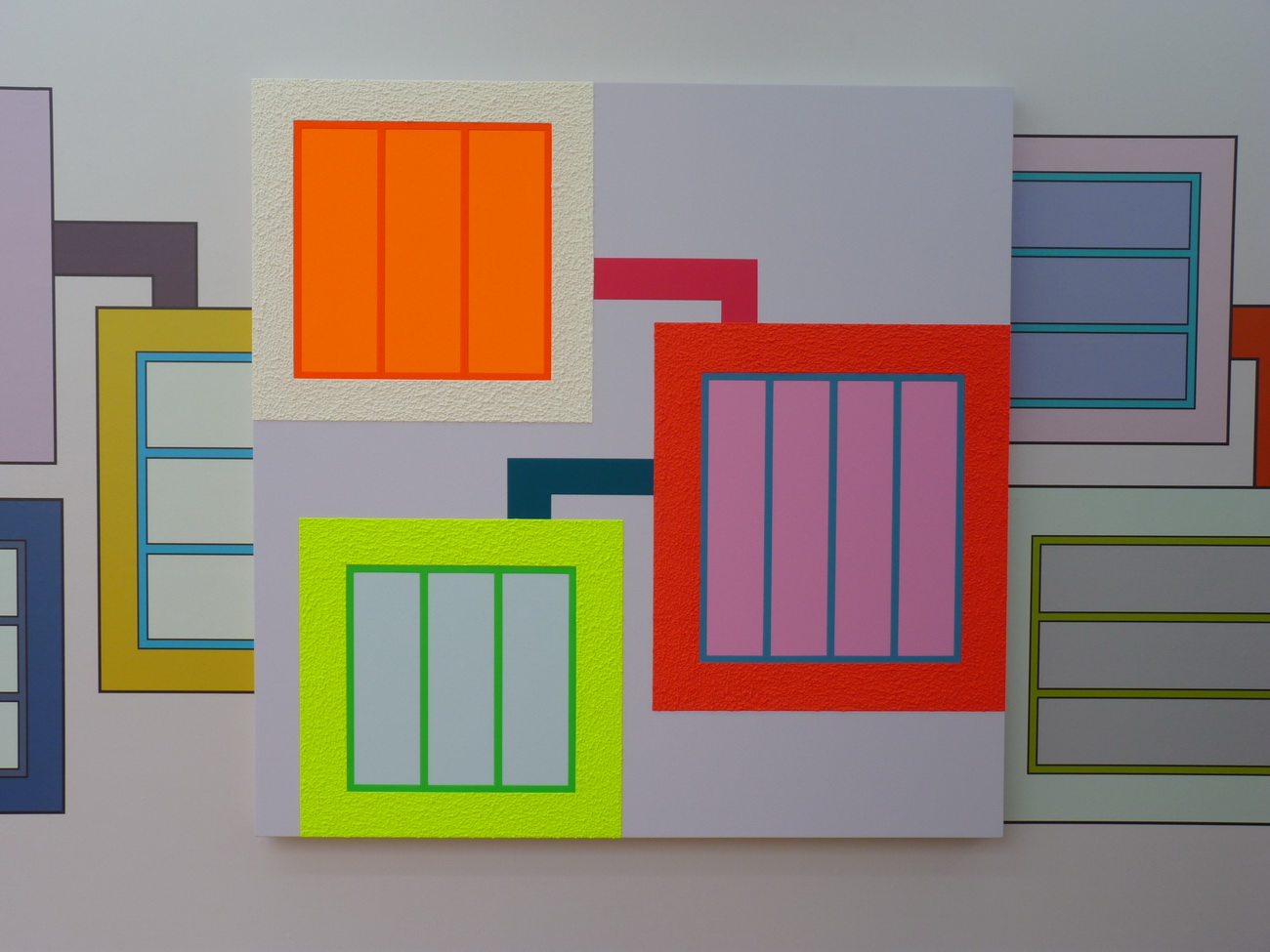
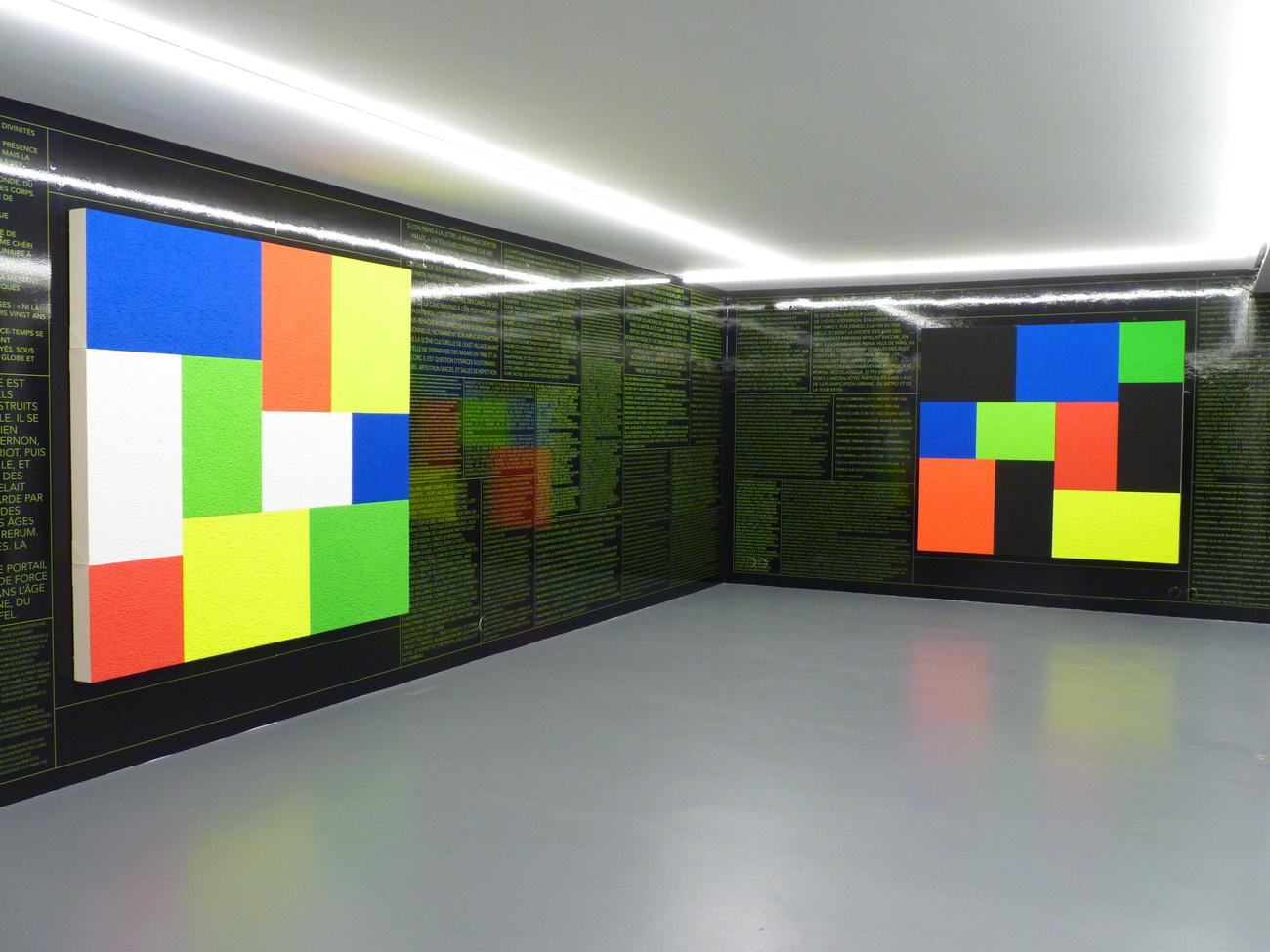
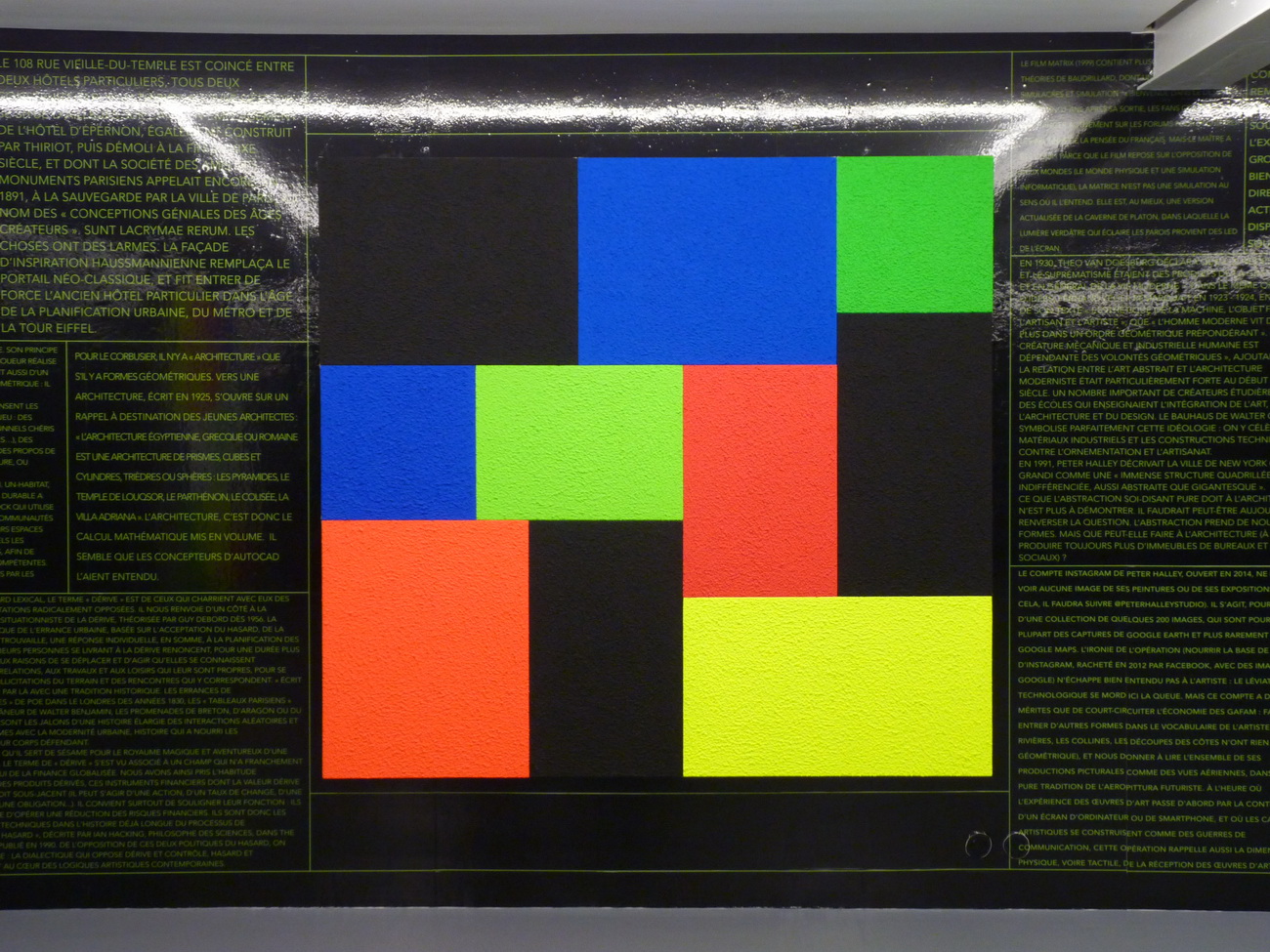
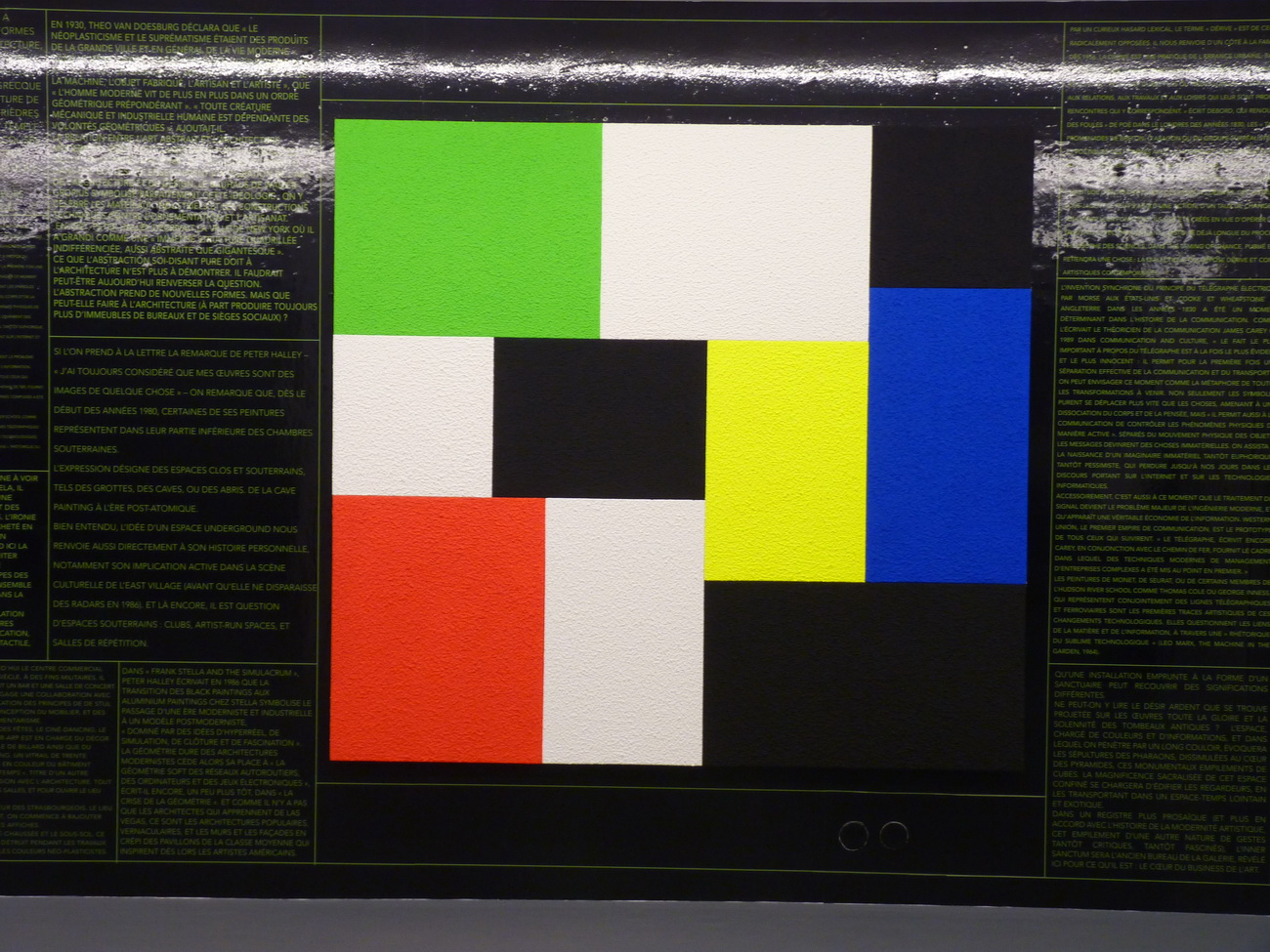
The main exhibition is on the first floor, featuring four large yellow-and-blue panels with railings, three interconnected square-form windows specially created for this exhibition. Titled: Boundary, Downspout, Action Point, Obligation, they bring Neo-Geometric concepts into daily life. The artist explained this new series: "Transforming the language of geometric abstraction into a dictionary of prisons and isolated units" (Note 5). Paintings are hung according to yellow-blue rhythms on series of rectangular blue walls with railings (digital image outputs), reinforcing geometric form and dialogue, highlighting the tension of his works. The basement gallery features three square color-block series titled: Choice, Plaza, and Solace, offering a humanistic exposition. This series emphasizes unique textures, displayed on black-background green-text art criticism texts by Jill Gasparina, allowing not just viewing but detailed reading of the author’s perspectives on the painter. Peter Halley believes: "Painting is a unique medium because it can stimulate the brain as both an image and tactile experience. A good painting has an attractive texture like Van Gogh or De Kooning; if it doesn’t move you, she uses this tactile part of the brain to feel" (Note 6).
His paintings, like his texts, state: "Urban planning, the rise of digital technology, video games, and synthetic spaces of architectural renderings, connections between European and American abstract traditions, and links between modernism and postmodernism, thus transforming space into immersive installation." Peter Halley’s painting creation continues to highlight modern life within those architectural or technical forms (Note 7).
Note 1: Block by Block -4 underground chambers by Jill Gasparina. Note 2: Block by Block -4 underground chambers by Jill Gasparina. Note 3: Block by Block -4 underground chambers by Jill Gasparina. Note 4: France Artstudio Issue 6, Minimalism Special Topic, Second Article, Art Critic Nicolas Bourriaud. Note 5: Peter Halley – “Below/Above (au-dessous/au-dessus)” Solo Exhibition Press Release. Note 6: Block by Block -16 Tactilisme Tactile by Jill Gasparina. Note 7: Peter Halley – “Below/Above (au-dessous/au-dessus)” Solo Exhibition Press Release.