Philippe Mayaux – The Art of Paradox and Contradiction
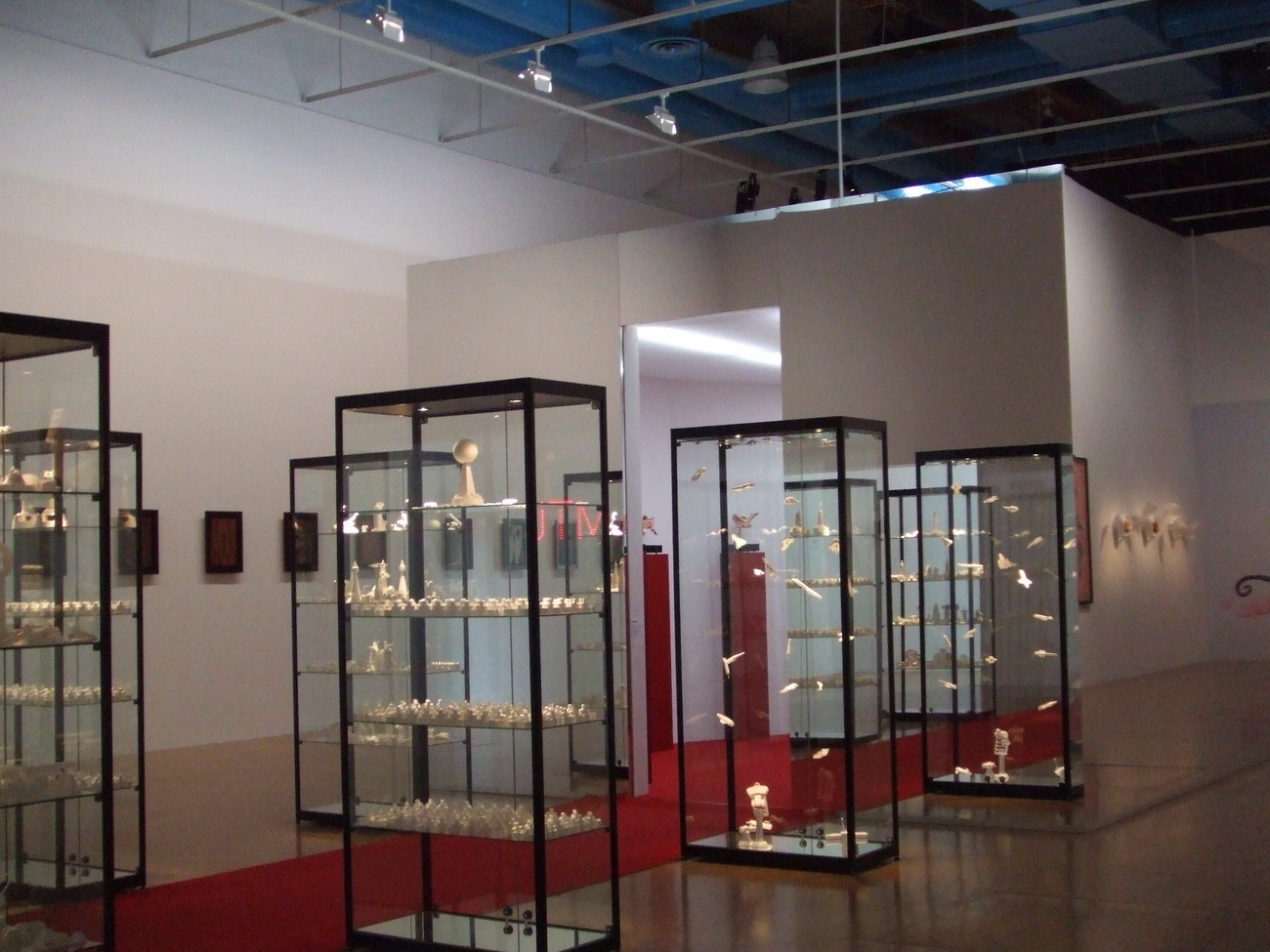
Partial view of 8 glass display cases from the "Cruel War" series, 2005.
Philippe Mayaux (born 1961) is a recipient of France's sixth Marcel Duchamp Prize for contemporary art and one of France's most representative contemporary artists. Operating within a post-Duchampian and surrealist framework, he consistently rejects modernity beyond the retinal. His provocative social attitude surpasses purely visual concerns, intending to propose a post-conceptual viewpoint.
Like many contemporary artists in this post-postmodern situation, Mayaux excels at appropriation, borrowing, alteration, and even forgery and imitation, wittily strategizing ambiguous puns. "Nobility" becomes the originality of his work; within ambiguity and polysemy, he creates an extremely rich and refined vulgar and indecent taste. Full of citations and ironic critique of the current hyper-consumer society and popular culture, he targets the confusion of appearances and the mockery of ignorance, simultaneously turning to satirize the social value of artworks.
Philippe Mayaux is deeply influenced by Duchamp and Magritte. He considers himself a conceptual artist, stating: "What I get from Surrealism is their writing, because that becomes the content of painting, but they overused illusory effects. As for this effect, I keep it appropriately." However, regarding his works' ambiguity and polysemy, the artist says: "A painting is something; when looking, there are many discrepancies. Thus, I now begin to write the subject in the painting to reinforce a type of discrepancy, a dual viewing, forcing the viewer to interpret."
Philippe Mayaux's creations are a composite exploration of plurality: two-dimensional painting and images, sculpture-objects, audiovisual works, and spatial installations. Across this diverse manifestation, he uses all possible media and materials. Through shocking visual imagery of paradox and contradiction, within whimsy or virtual sci-fi, ambiguous and absurdly situated between disturbing reality and idealistic humor, he presents surreal and dreamlike scenarios. Through symbolic allegory and metaphor, he extraordinarily interprets today's bewildering, supernatural, crazy, dreamy, and grotesque world.
Metaphorical Sculpture-Objects
Philippe Mayaux's sculptures are very delicate, like today's cultural and creative products; elegance and nobility become the artist's most original cold objects. The overall exploration revolves around the absurd world of human behavior. Through the "Cruel War" series, the mouth-watering yet nauseatingly sweet French pastries – alluding to the "Food and Sex Are Human Nature" series – and the erotically sensual flower-butterfly dancing "French Can-Can" series, and the surrealistically alienated female masks of the "Trickster" series, he elucidates humanity's obsessions with sex, love, anxiety, war, greed, disillusionment, and death through metaphor, mockery, and satire.
For example, in the 2007 "Infinite Death" exhibition, the 8 glass display cases of the "Cruel War" series (2005) were arranged like shop windows. They neatly displayed large and small war weapons – guns, cannons, planes, warships, and missiles – cast in white plaster, along with rows of small soldiers in formation. Another case displayed a large, uniformly arranged series of white cross graves, metaphorically representing human ignorance and merciless war. Death is an inevitable human phenomenon, but dying innocently in mutual slaughter is an absurd and cruel fact of humanity. The artist explained this work: "In my work, contrasts are often mixed; white is a neutral color, the color of peace. White becomes anti-superficial... These weapons come from molds of simple plastic toys... Visually, they emit a fragile peace. Like many of my works, it tries to express something opposite to itself; there is a kind of serenity in this belligerent display... Similarly, a feeling of unease seeing these weapons as if about to be commanded for slaughter... Guns, cannons, and missiles are all erectile; all these metaphors point to visible male sexuality condensed into the decorative display of domestic knick-knacks in a window. Also, an erotic connotation exists in the casting technique, as Duchamp showed us. When the empty becomes full, female becomes male and vice versa, and the fragile plaster material prevents these objects from being eternal."
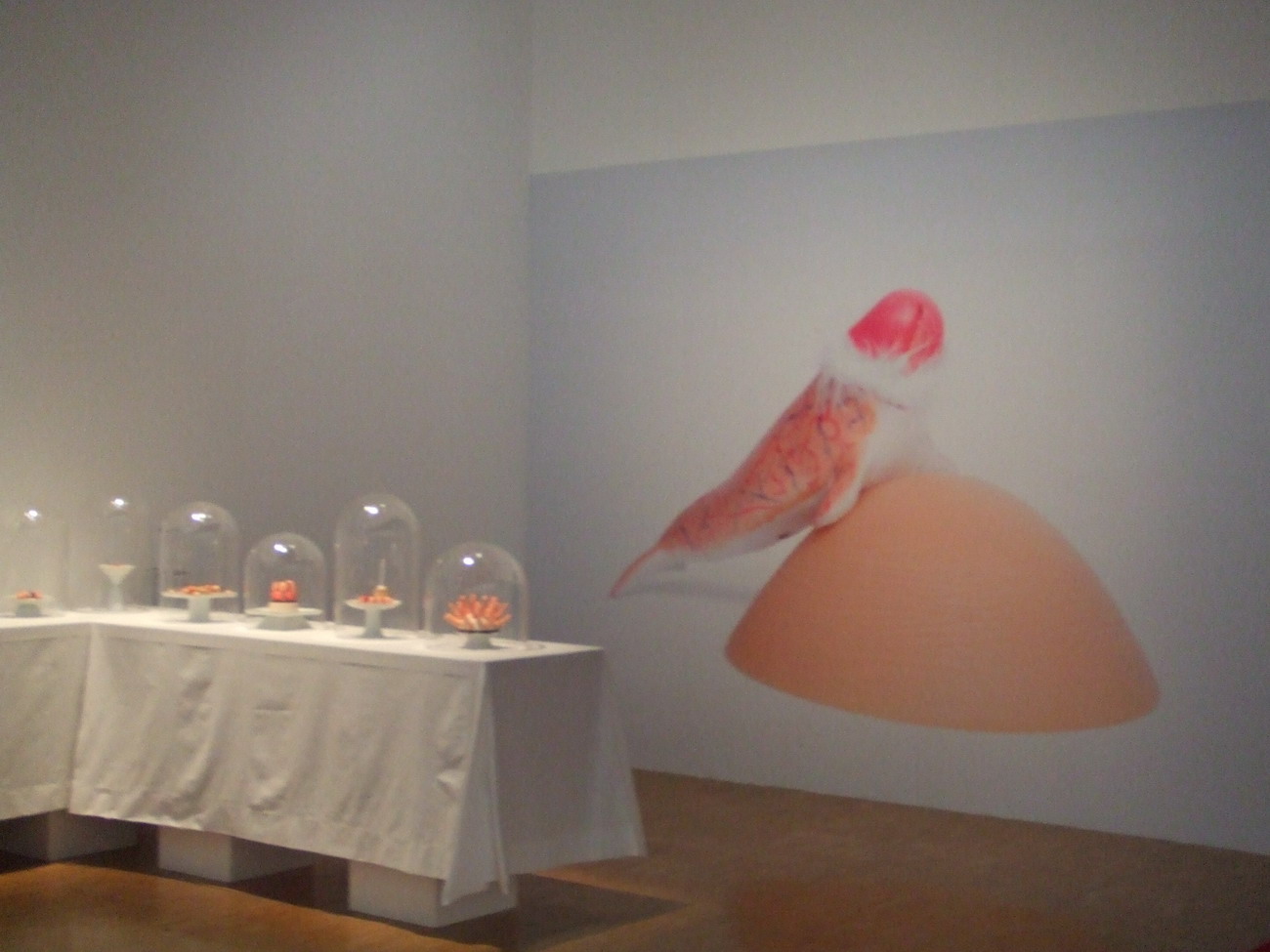
The "French Pastries" (2007) sculpture-object series, served on exquisite white plates and dishes, appear delicious and mouth-watering with their varied forms and bright colors. Upon closer inspection, they are composed of female sexual organs and viscera, metaphorically representing "food and sex are human nature." They liberate social morality and modern aesthetics through vulgar and indecent taste.
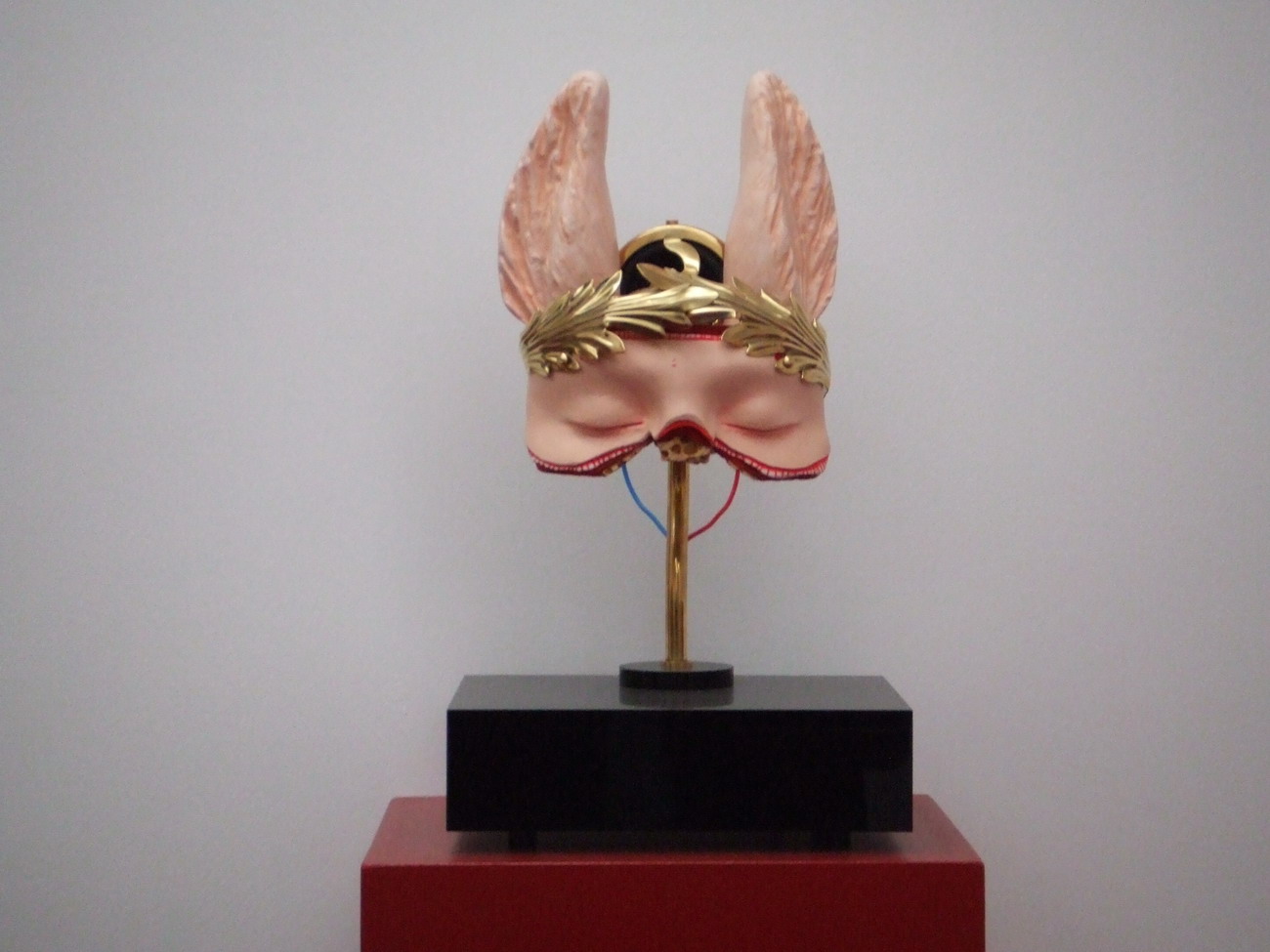
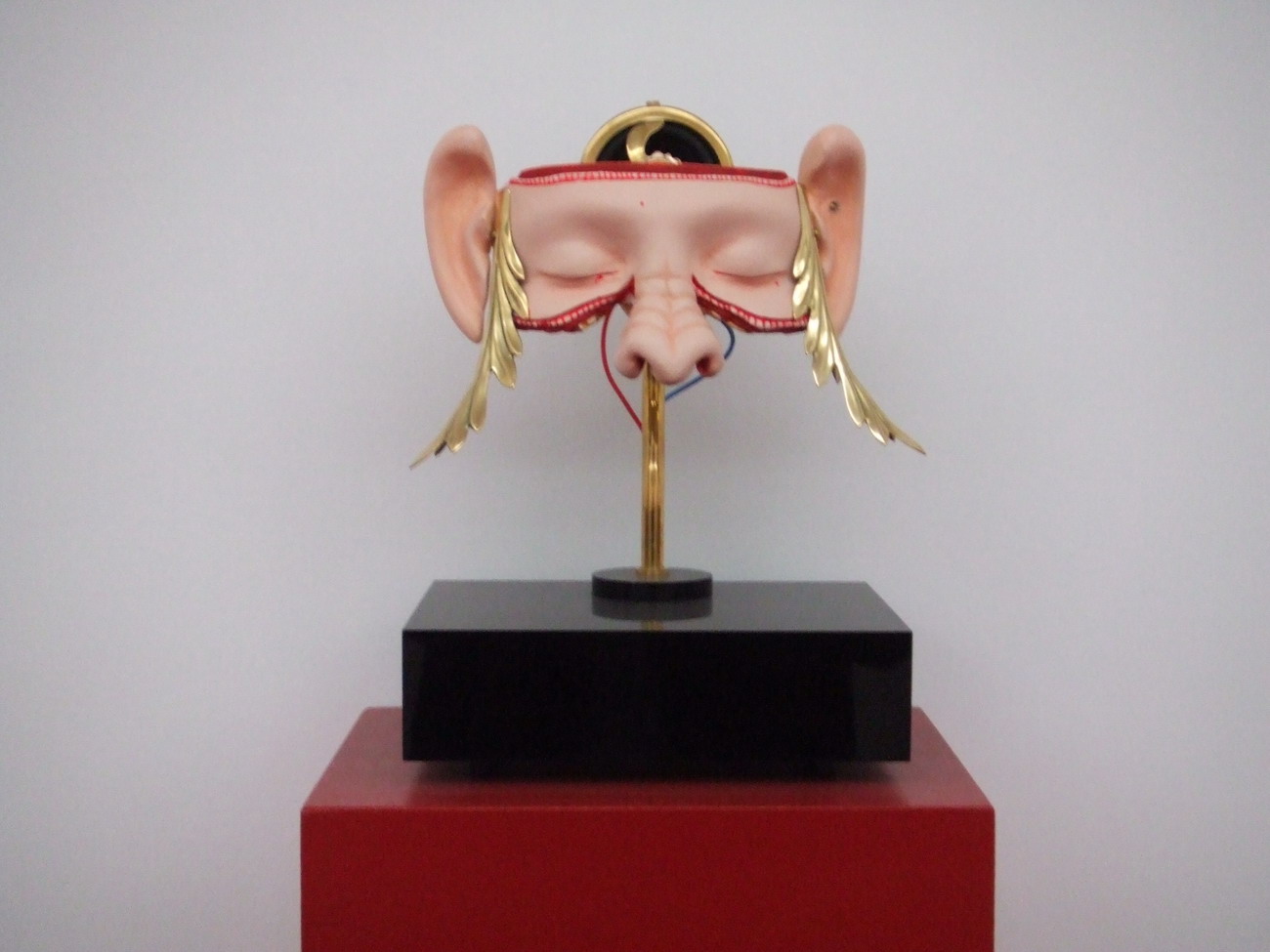
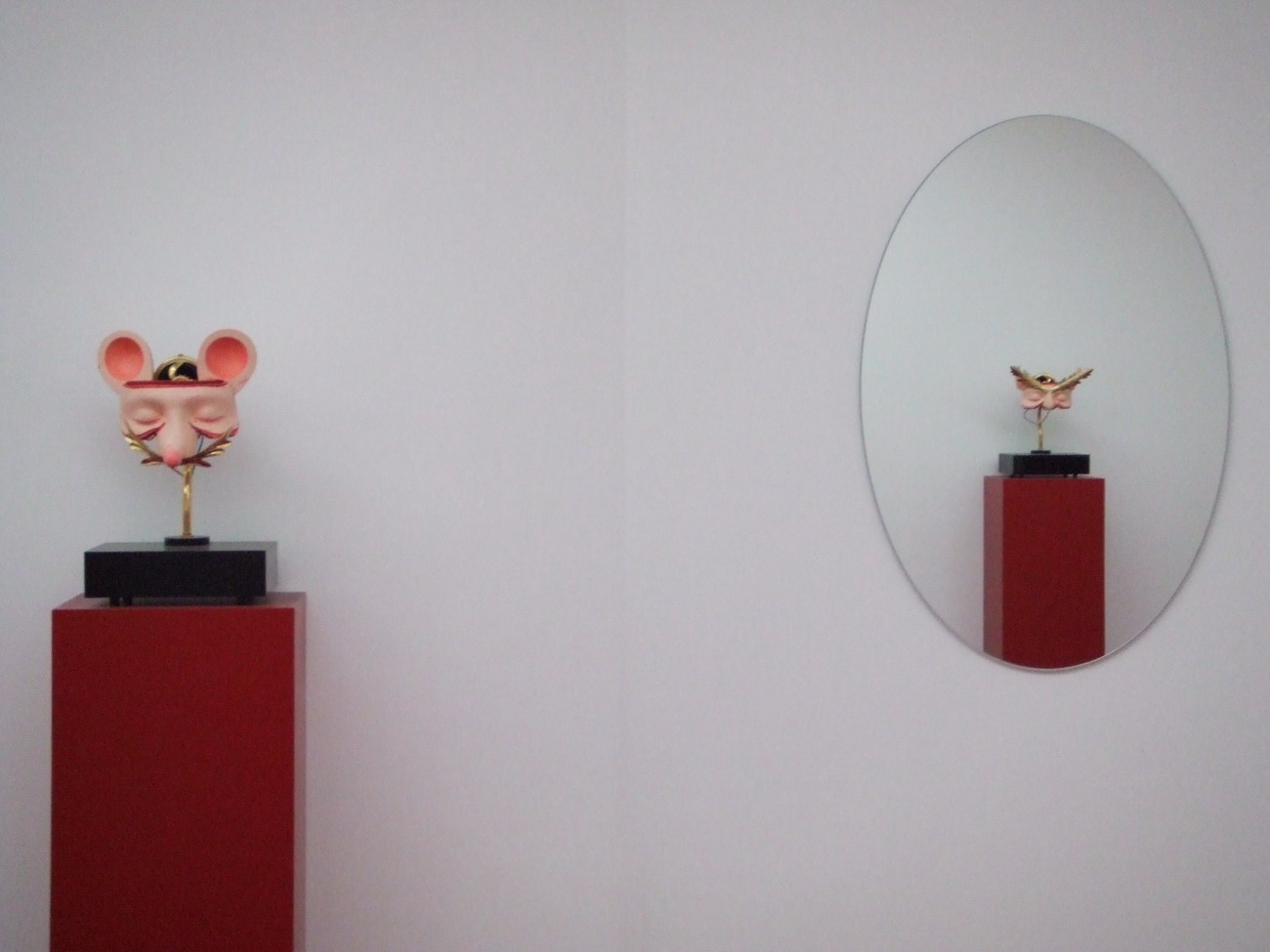
The "Trickster" audiovisual installation series presents a series of female head masks with male phallic noses, alienated into something resembling Zhu Bajie (four on each side). Behind the masks are speakers that incessantly narrate endless romantic love stories between men and women in a cacophony. Sweet nothings and romantic talk always stir the heart and cause infatuation, sentimentally drawing one into a sea of love or a bitter sea of confusion. The poetic and pictorial work alludes to the context of men's and women's love.
Flirtatious Kinetic Sculpture
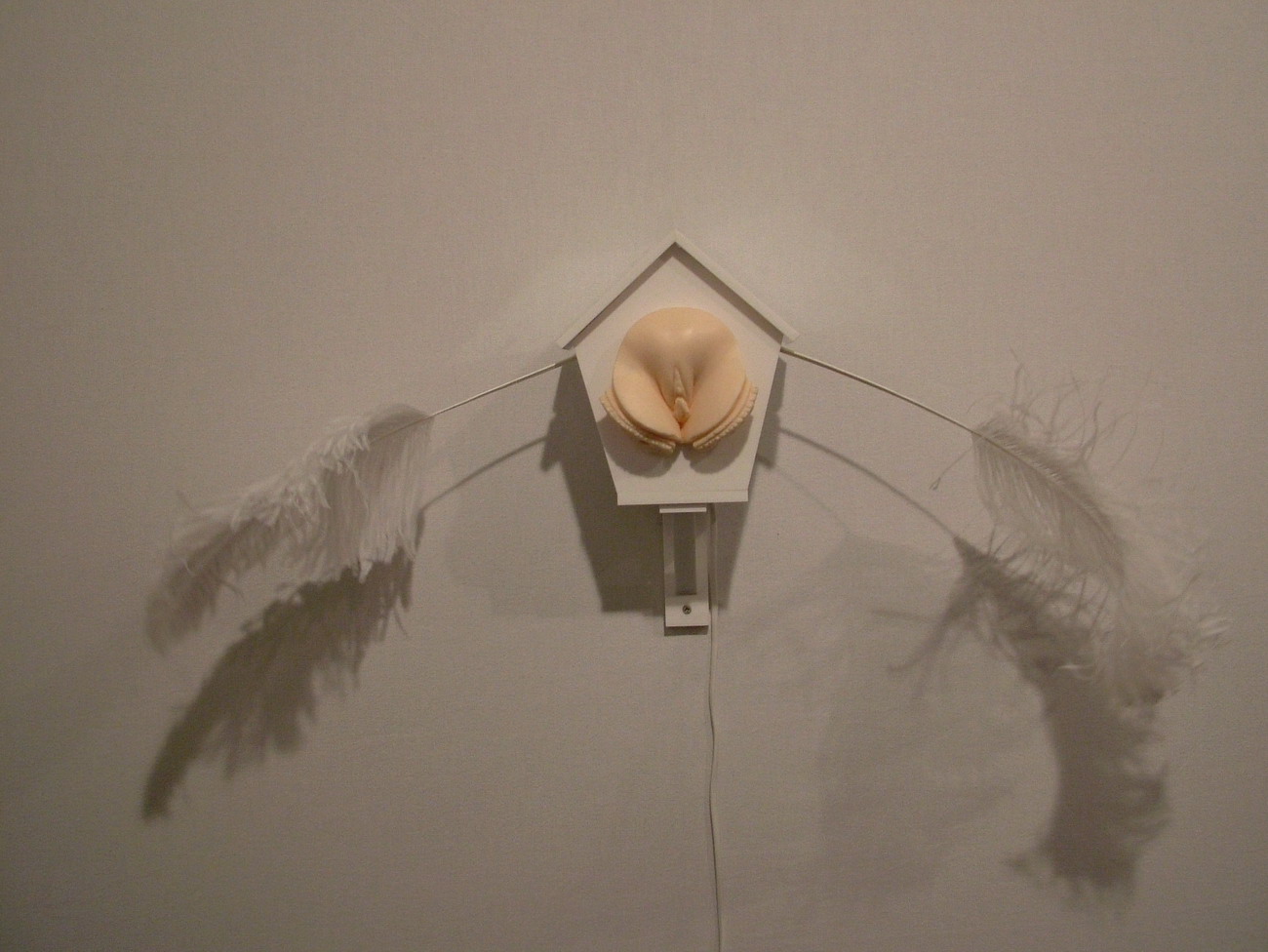
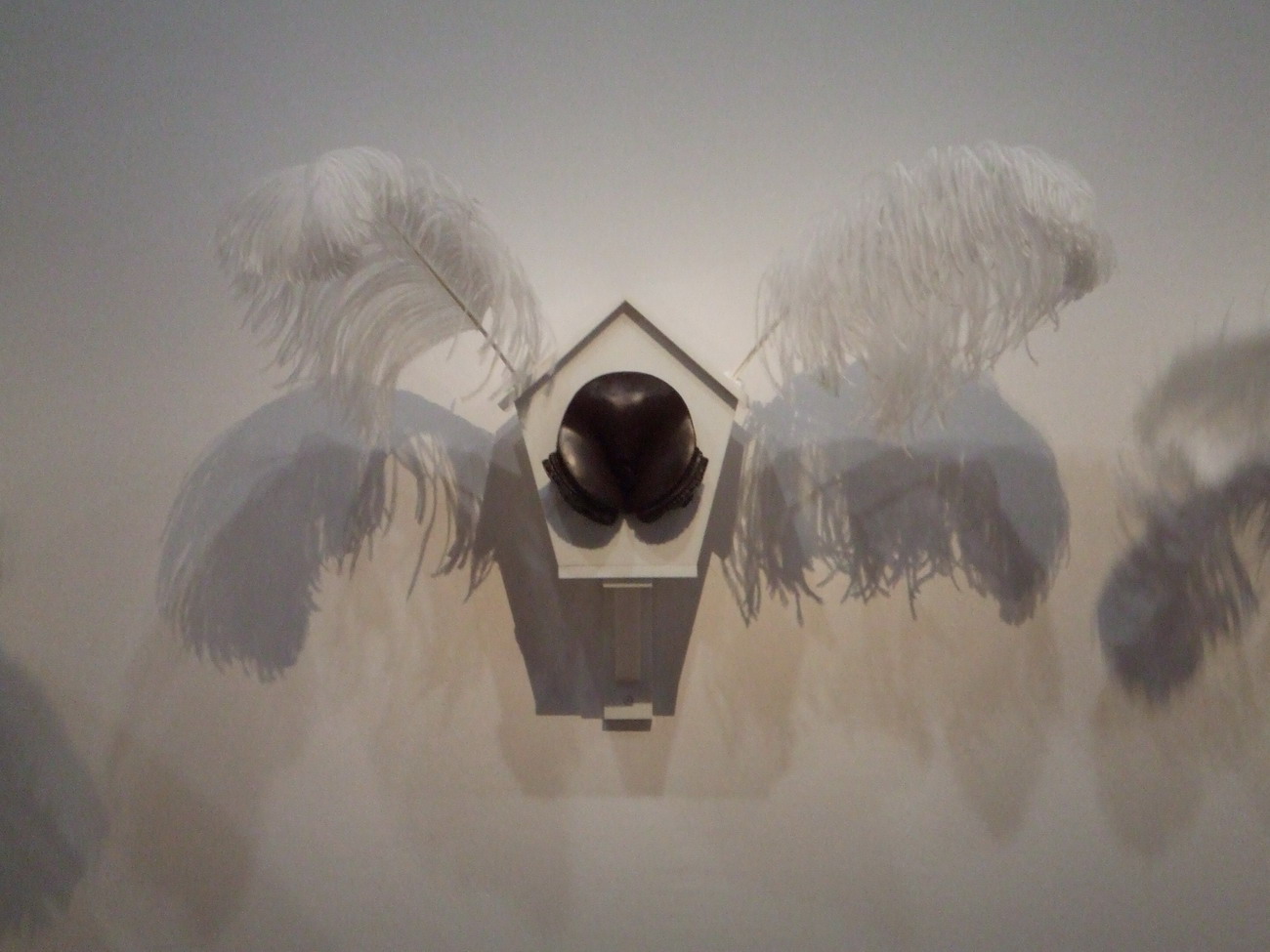
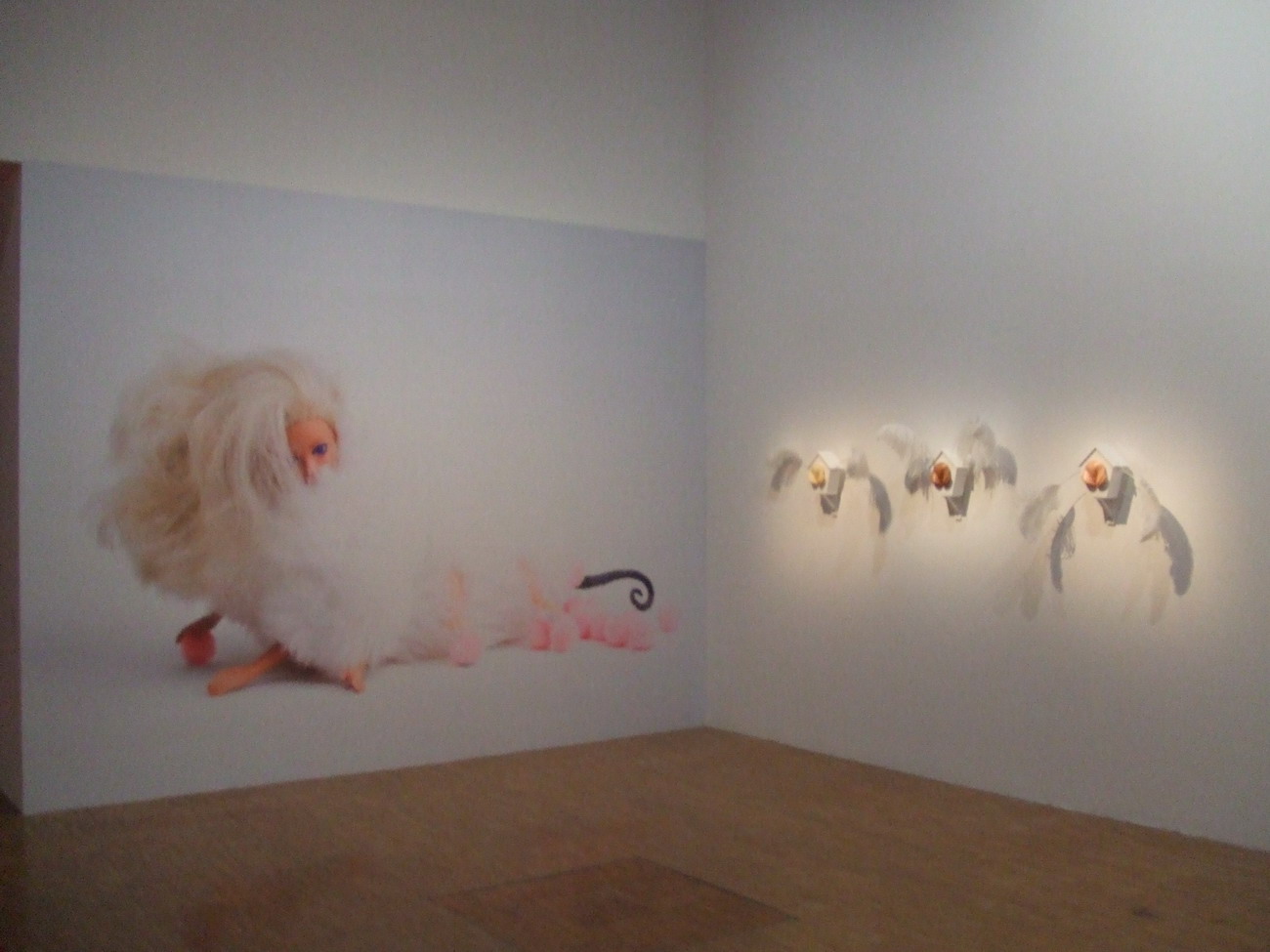
The "French Can-Can" kinetic object sculpture installation series (2006) is Philippe Mayaux's most mesmerizing representative work. This series is utterly gentle and sensual, presenting the mesmerizing female lower body – sexual organs resembling walnuts – adorned with a pair of warm, soft, pure white feathers. Under mechanical kinetic power, they flutter constantly like butterflies, quite poetic and sensual, even provoking fantasy, evoking the French unique romantic sentiment. Within humor and joy lies a mocking consumption and sexual anxiety.
The "Agitator" (18 pieces) series (2009) features various anthropomorphic figures of different sizes, each holding various black-on-white or white-on-black inflammatory slogans. Mechanical kinetic devices cause them to wave flags and shout slogans left and right at timed intervals. In this democratized society, demonstrations are like a common daily occurrence for the French. Despite their collective efforts, they futilely attempt to turn utopia into reality, humorously implying the collective hysteria of French society.
Symbolic Spatial Installation
In the 2007 "Infinite Death" solo exhibition, a rectangular fake granite slab (plywood imitating marble veining) was presented on a pedestal, clearly inscribed with the words "Infinite Death," like an extraordinary monument. Two benches were placed beside the monument, inviting viewers to sit and look through a peephole at each end. Looking from one end to the other, one actually sees nothing at all, feeling somewhat deceived; death seems utterly undetectable. A somewhat romantic sentiment, a mysterious gaze toward the depths of the human heart. Of course, since existence is infinite death, there is also infinite rebirth; nature itself is inherently ever-renewing. Under polysemy, the artist says: "My work is based on interpretation. I don't want viewers to treat me like a child, demanding how a work must be interpreted. Instead, I hope viewers themselves have the responsibility to interpret the work."
Dreamlike Paintings and Images
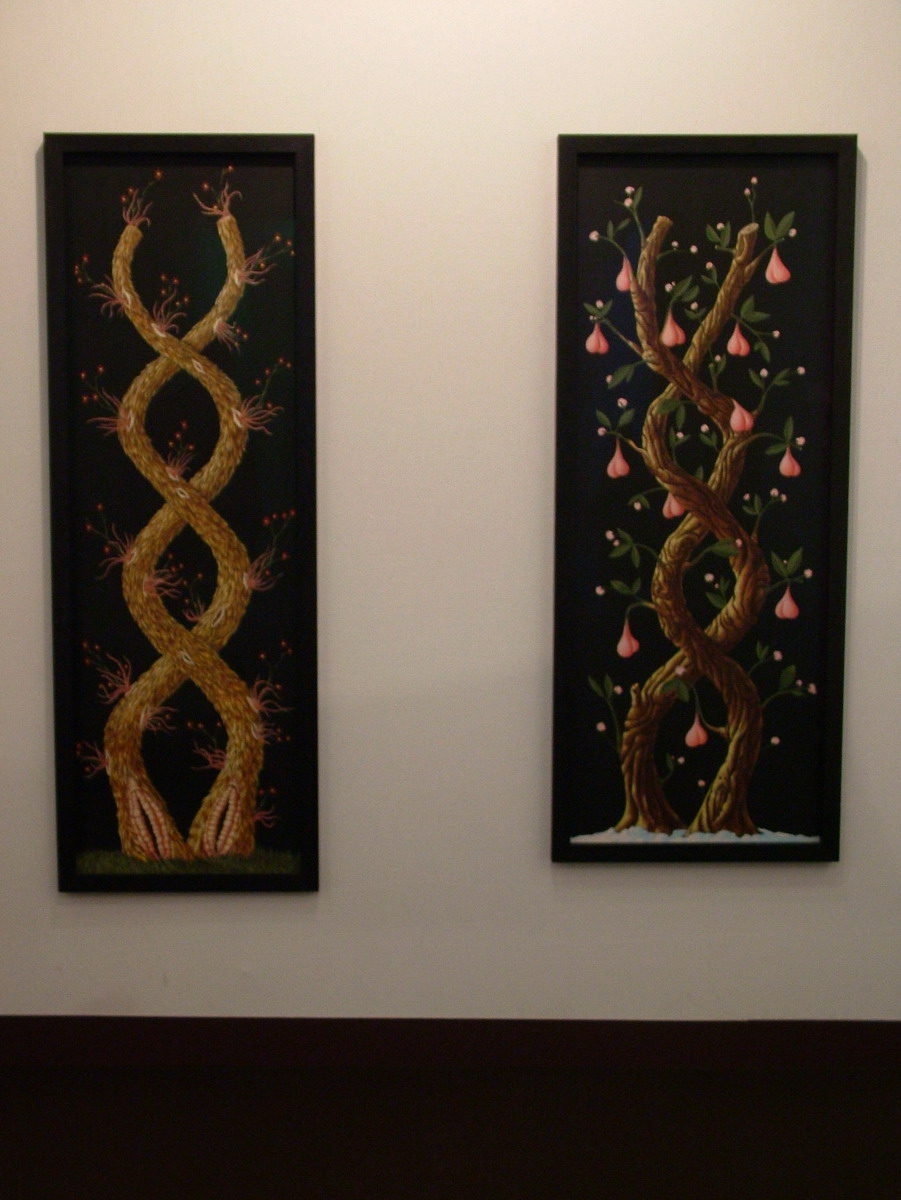
Philippe Mayaux's paintings carry a strong surreal dreamlike quality, quite color-field oriented, graphic, and imagistic, literary and narrative, navigating between Pop art and popular comics/cartoons. The images are appropriated from art history and popular commercial advertisements, encompassing portraits, landscapes, and still lifes. The artist considers himself an anti-gesture painter, trying to show that he can create an alternative feeling and a new type of work. The artist says: "It's no use now to raise questions about painting, neither beauty nor other issues. When people talk about painting well, painting badly, it reminds me of the professional art salon, and old-fashioned ashes or something else." Through unexpected combinations constructing the work, he manifests an extraordinary illusion, creating a new feeling and new vision through paradoxical contradiction.
The "Tree Bark" (13 pieces) painting series (2005-07) is quite abstract within decorative depictions of bark surfaces, adding expressive, intensely glaring colors. On each different type of bark, the painted tree species is written neatly, like an advertisement, reinforcing not just the painting's form but also its theme. For example, "houx" (holly) is written as "ou", "bouleau" (birch) as "boulot", etc. The artist uses tree bark to metaphorically represent the human body, how the body changes so obviously and rapidly over time. The artist believes "the tree is the origin of modern thought because trees provide fire for our survival and protect our animals, and we arrogantly inscribe upon them our human actions."
At the second "The Force of Art" exhibition in 2009, Philippe Mayaux presented large and small paintings that mock and imply the absurd and ridiculous human condition. For example, flies changing flight formations symbolize idleness. Continuously using viscera to represent the native family, contained within three portrait formats: father ("Come on Daddy"), mother ("Kiss me Mommy"), son ("Play with me Fredy") portraits, with mirrors placed beside the paintings, attempting to point out the viewer's own vanity.
Advertisement-like Images
In today's digital age, images become an excellent medium for transmitting artistic ideas and viewpoints. Philippe Mayaux is no exception, unexpectedly reversing various images and combining disparate elements; paradox and contradiction are the best embodiment of assembled imagination. He uses large-scale advertising poster outputs, approaching painting forms and styles. Directly pasted on walls, they are full of surreal dream tunes, attempting to break free from various aesthetic and moral prejudices: such as "Strange Monster - Focbit" (2007), an animal of unknown origin – a sexy fish with a fish head that is a mesmerizing man's pink glans penis, standing on a woman's large pink nipple. Another, "Strange Monster: De-Tampering" (2007), a Barbie doll wearing a luxurious feather coat, hands clawing at the ground, without feet, a rat's tail protruding from the feather coat, like a contemporary mythical human-headed beast-bodied strange monster, poetic and pictorial, full of metaphor and extraordinary imaginative space.
Metaphoring Today's Human Condition
In Philippe Mayaux's world full of absurdity, paradox, and contradiction, all possibilities and unparalleled fantasy spaces are opened. The artist establishes a disordered assemblage, coordinating different elements, constructing impossible body fragments, piled labia, phallic Lilliputians, breast lanterns, pink-glans fish heads, merging phallus and nipple to create strange yin-yang monsters and topsy-turvy super-illusory paintings and images, all equally shocking and magical. His wonderful dream is elusive, even incomprehensible; behind the humor there is crying, beneath the wit there are tears, within the paradox there is truth, beneath this splendor there is anxiety and unease, beneath this glossy surface exists decay and death. Everything suggests the impossibility of contemporary human society and its unimaginably abnormal context. Thus, Philippe Mayaux's serious and humorous works bring out the sum of human fears, but the artist is never pessimistic, because "the world has never been so interesting; today, a rich flow of information constantly surrounds us."