Manzoni
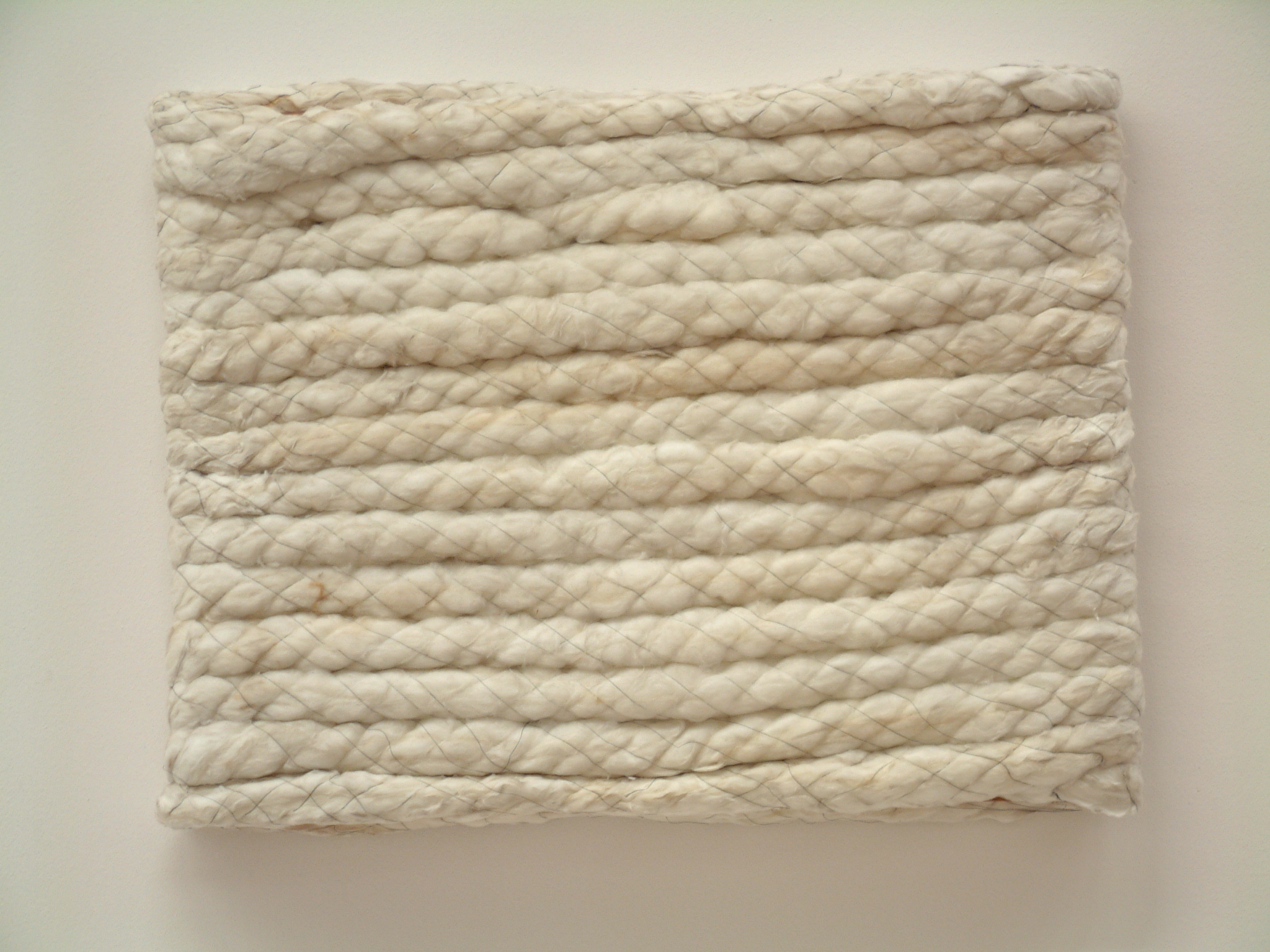
One of the Achromes series, Object-Painting 1961, Paris Centre Pompidou collection
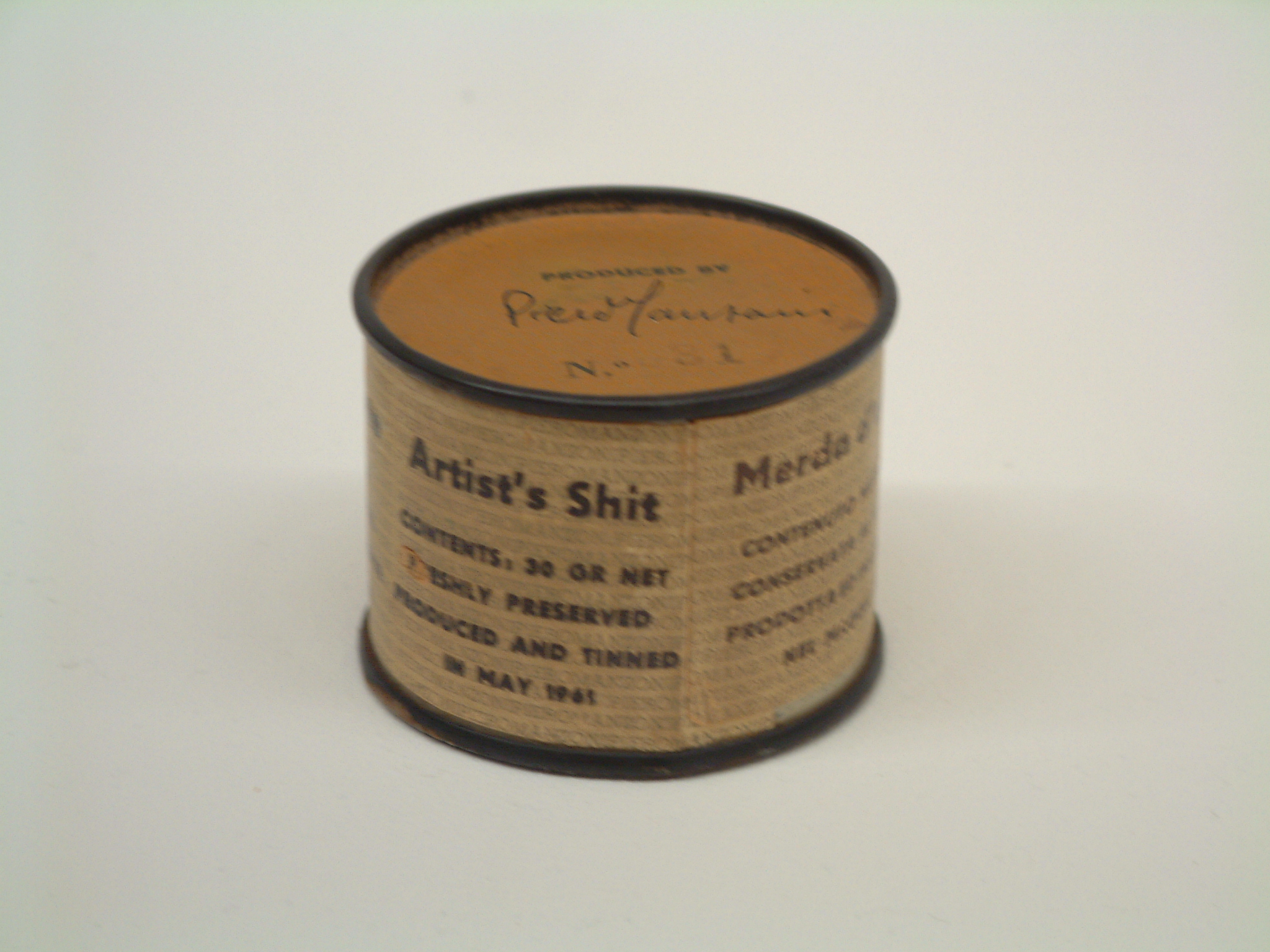
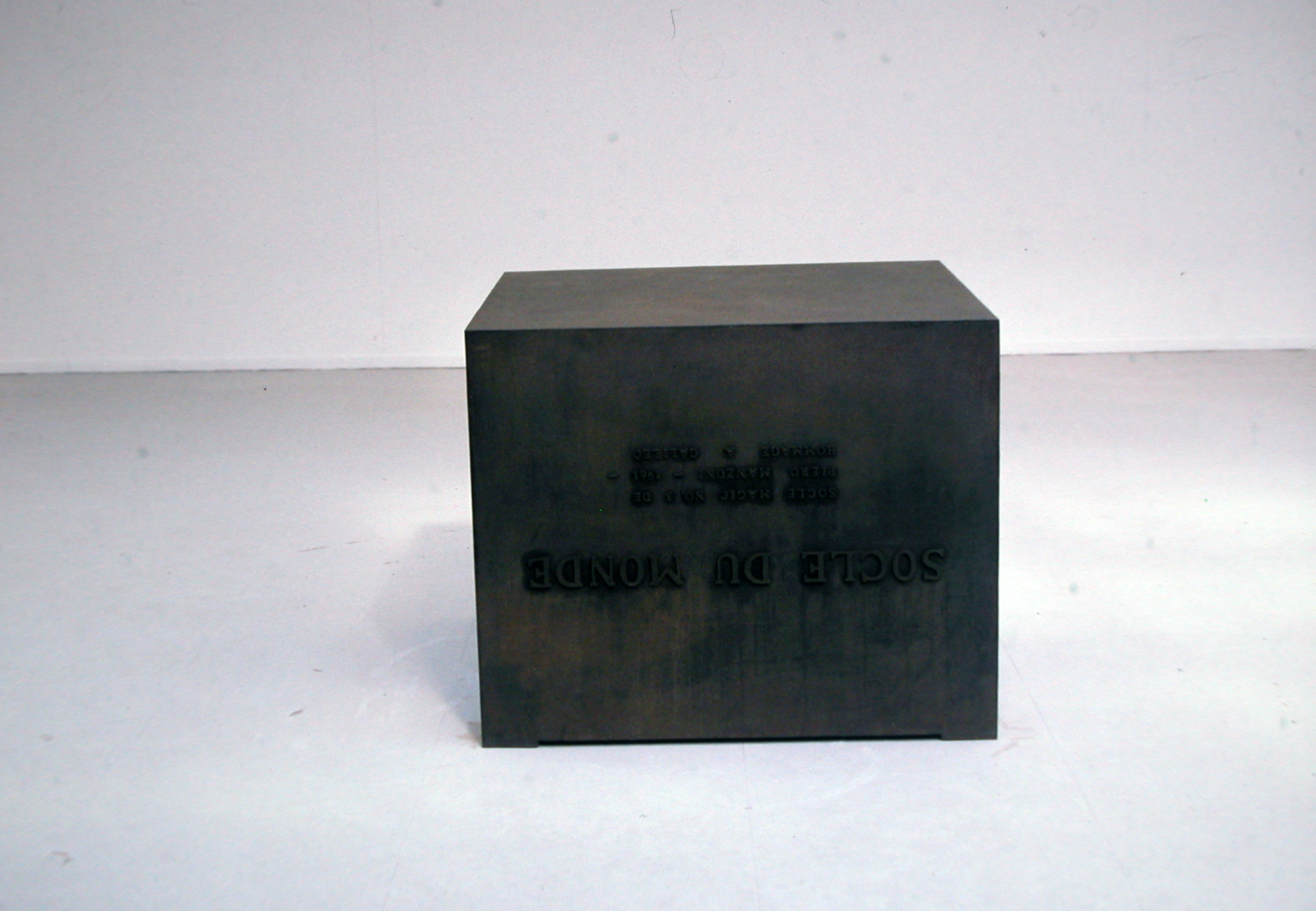
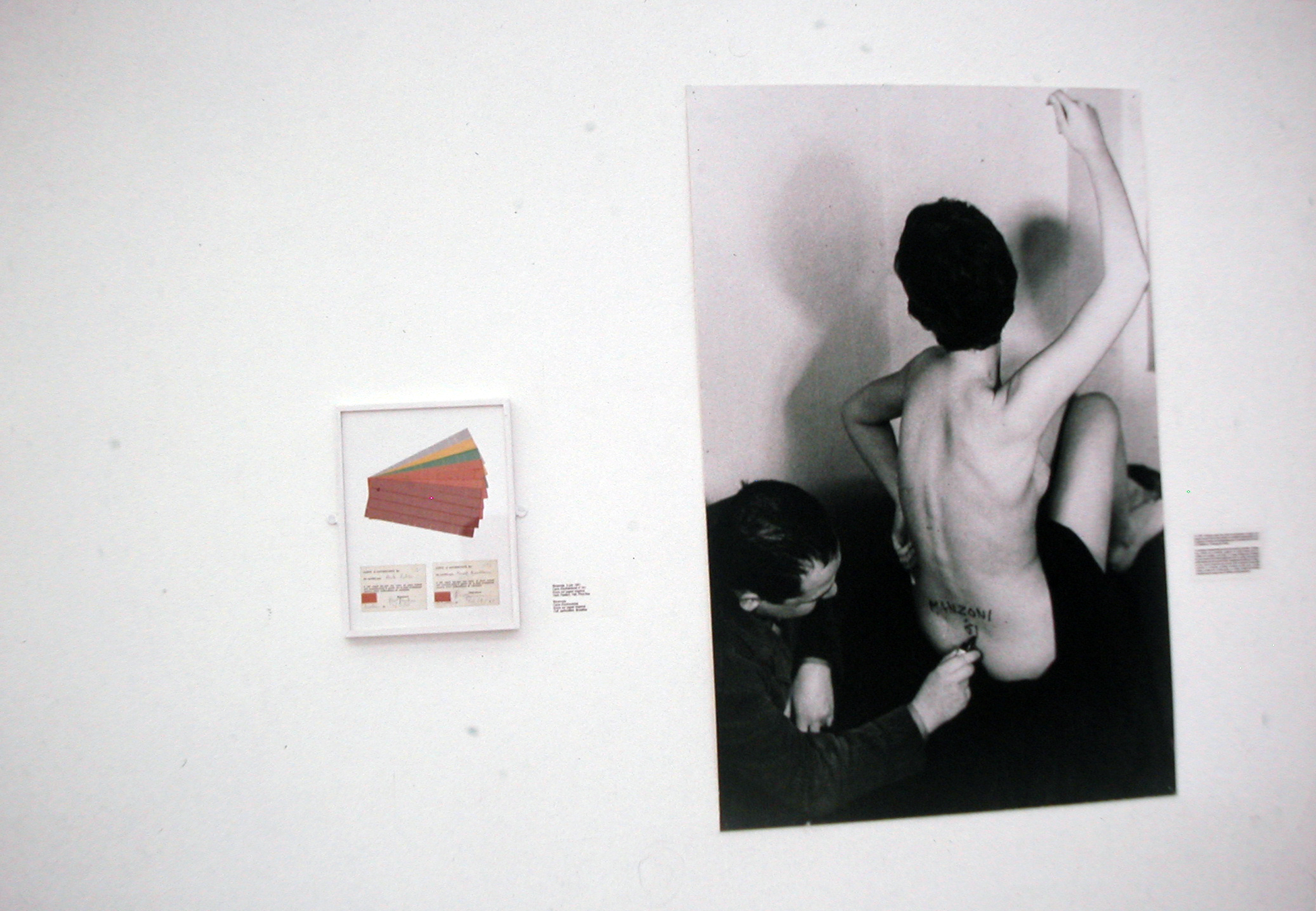
Text and images / Chen Chi-Hsiang. Manzoni (Piero Manzoni 1933-1963) is Italy’s most nihilistic and avant-garde artist, the most negative and radical in Western art history. He pushed Western modernist art to its extreme abyss, ending formalist-less art and affirming the value of material energy—not as depiction, but as direct expression. This quickly led painting beyond inherent categories, such as infinitely extending lines, living sculptures, cans of the artist’s excrement, pedestals for the world, and more.
In 1957, a decisive meeting with Klein at Milan’s Apollinaire Gallery, along with his work on material forms, established his radical creative consciousness. He declared: “Art is not a true creation… and what concerns us is not just consistent style, because what we care about can only be a continuous exploration.” That same year, he began radically affirming this in his groundbreaking Achromes series, which ended Italian informal art and the era of pictorial representation. Manzoni zeroed out painting, deconstructing form and color while maintaining distributed energy. Images lost their formal, vital, and expressive functions, revealing themselves as allegories of physical processes and affirming the visual body: space-painting surface and painting-object charter. Manzoni wrote: “(…) In the overall space, form, color, and volume have no feeling; objectively it is a convergent area where I found originality.”
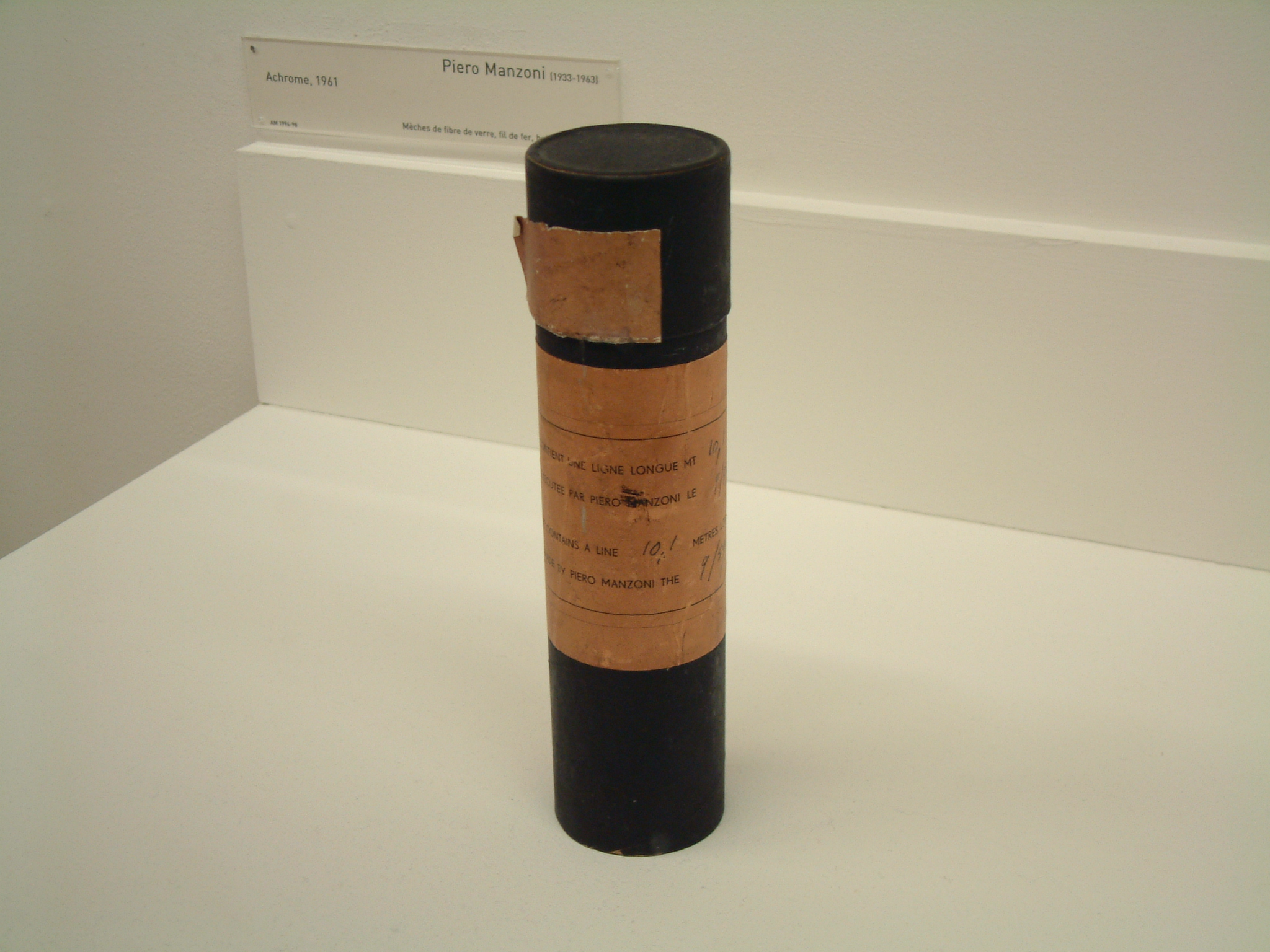
Starting in September 1959, the Linea Infinita (Infinite Line) series involved mechanical actions without special techniques—anyone could draw them, even blind people. This series formed a mysterious type of originality: he rolled up line drawings into paper cylinders, then copper tubes, labeling each with length, author, and date. Here, all formal or stylistic explorations maintained the development of contemplative objects, which were useless to Manzoni henceforth. This became an intellectual, linguistic dialectic of art, replacing substantial line drawings and ending imagery. Arriving at Duchamp’s concept of the impossibility of painting, art was no longer a matter of viewing; it was lost in the entity of the object, shedding all allegory and exposing art as absolute selfhood. It existed in tautological presentation, paving the way for the feces cans and becoming a pioneer of conceptual art.
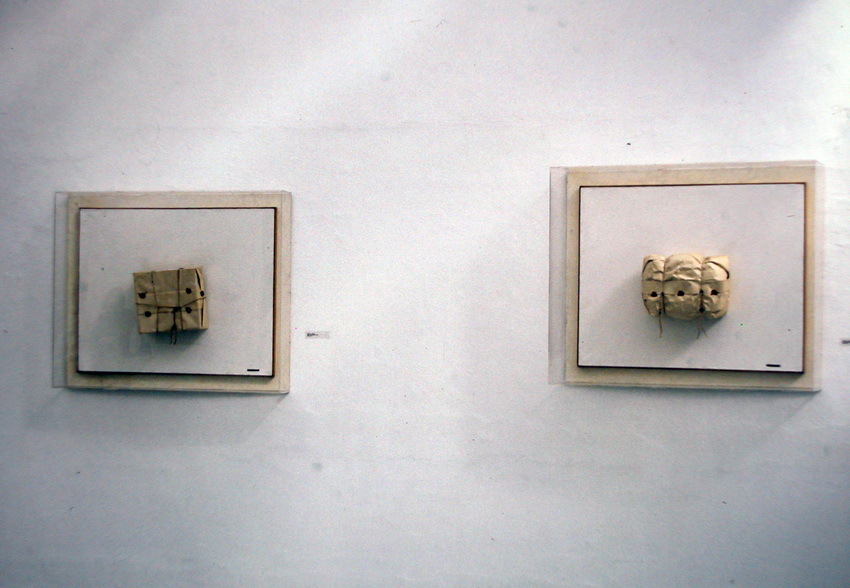
On July 12, 1960, at Milan’s Azimut Gallery, he exhibited Consumption Art of Optimism, Consumed by the Audience. Eggs were boiled on-site, sanctifying them as artworks through simple action, and viewers were invited to eat them. He also created the Fingerprints on Eggshells series, where eggs became artistic bodies housed in wooden boxes like exquisite gifts—transforming the mundane into the miraculous! That same year, he realized Air Sculptures, blowing up red balloons and fixing them onto pedestals.
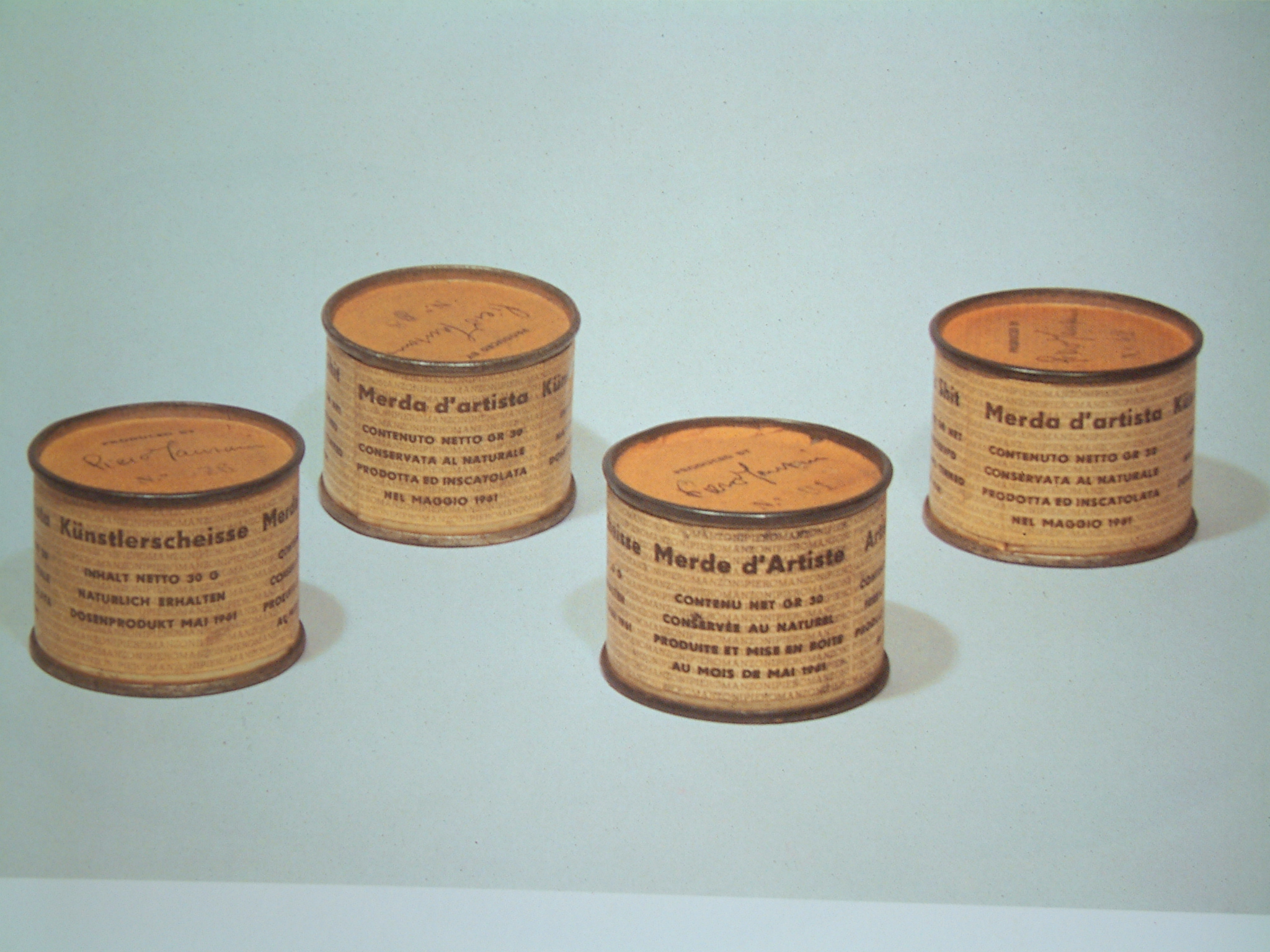
In 1961, Manzoni expanded Duchamp’s idea that “anything can become art,” pushing Western modernism to its limit. If everything the artist does becomes magical art, then isn’t the artist’s innermost excrement more artistic than anything else? He produced Artist’s Shit cans, each containing 30 grams, with a series of 90 cans. Labels indicated the artist’s production, weight, date, number, and signature, identical to quantified consumer goods. This most degraded substance was transformed into unimaginably noble artistic objects, sold at gold prices under the superior “Art Brand.” This was clearly an attempt to mock the artist and the art mechanism, echoing Frankfurt School philosopher Adorno’s essay At Least Morality, Thinking of Diverse Lives: “Art is magical, freeing us from the lie of true existence.”
Thus, Manzoni’s finger-printed eggs, air sculptures, artist’s excrement, and blood-filled bottles all involve the artist’s inherent body. In tautological characteristics, Italian critic Serlan stated: “His Achromes are all like feces cans, eggs, or blown balloons, equally abandoning symbols before all creation. All products directly project the unknown, reflecting art in its most primary and constitutive elements: spirit and body, empty and solid, psychological and physical. In its most basic appearance, it is reality itself—the alteration and corruption of those elements.” The artist’s body thus became an artwork. This creative logic developed the Magic Pedestal works: a pair of shoe prints on a pedestal, metaphorically representing the absent body, marked with the creator’s name and subject, acting as a dialectic of visual perception and linguistics. Simultaneously, Living Sculpture works directly appropriated ready-mades like Duchamp; here, Manzoni signed directly on living models, creating unprecedented living sculpture art. In his essay Free Volume, Manzoni concluded: “There is nothing to say; it only exists, only lives as living being.”
Following the Magic Pedestal, another groundbreaking work was Pedestal for the World: Homage to Galileo. On a rigorous geometric iron pedestal, the theme “Pedestal for the World” was engraved in large letters, with small text indicating the creator and date. Rooted in conceptual art, critic Serlan wrote: “The Pedestal for the World transcends and touches the boundary of the earth’s surface, and all that is animal, plant, and mineral is clearly converted into art.” Viewing Manzoni’s exploration as abstract art would lead him to exclude reality and guide him toward a mystical and religious manifestation, belonging to “liberating these bizarre facts, useless behaviors… shedding all that adds to it. And on the most difficult-to-accept subjects, regaining contact in the most human way possible, with his unique originality.”