Pop Art
Andy Warhol Electric Chair 1967 Collection of the Centre Pompidou, Paris
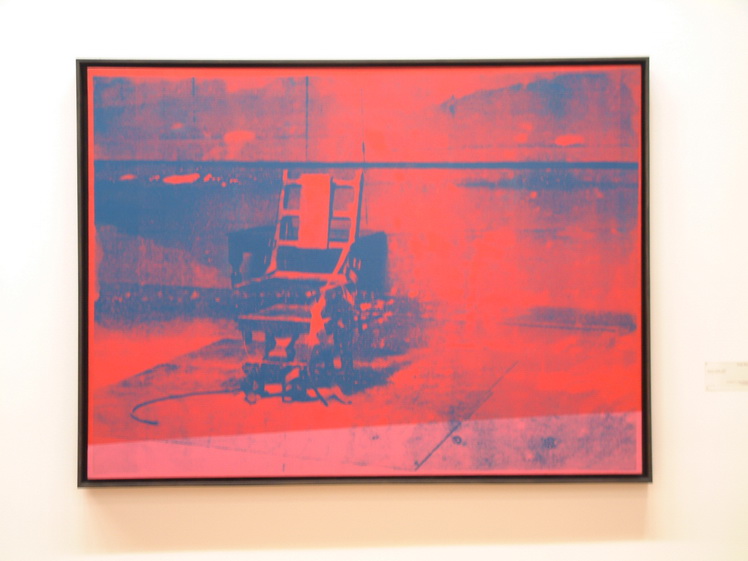
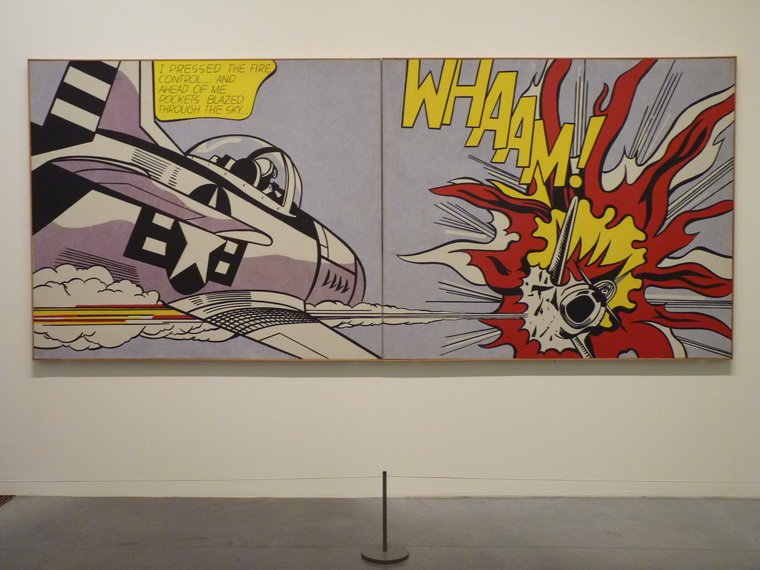
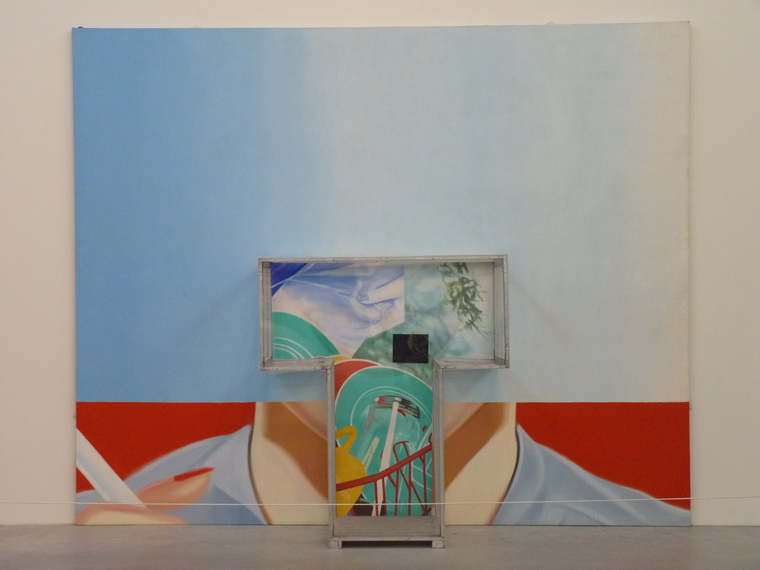
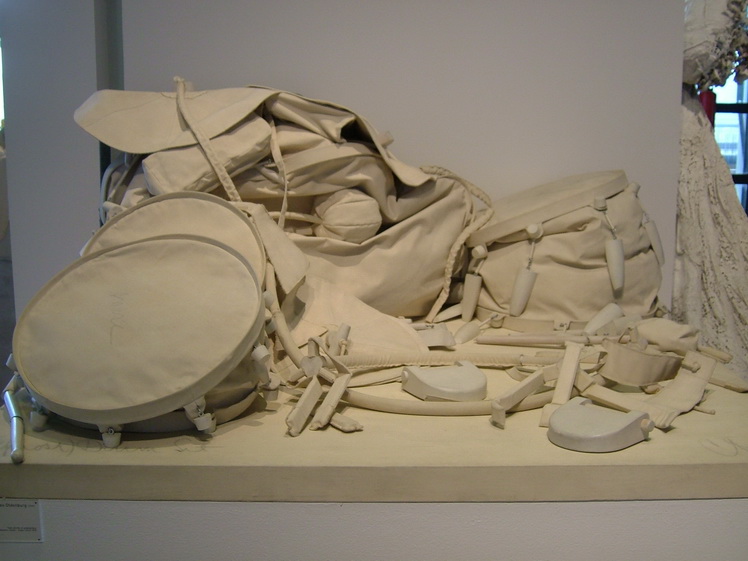
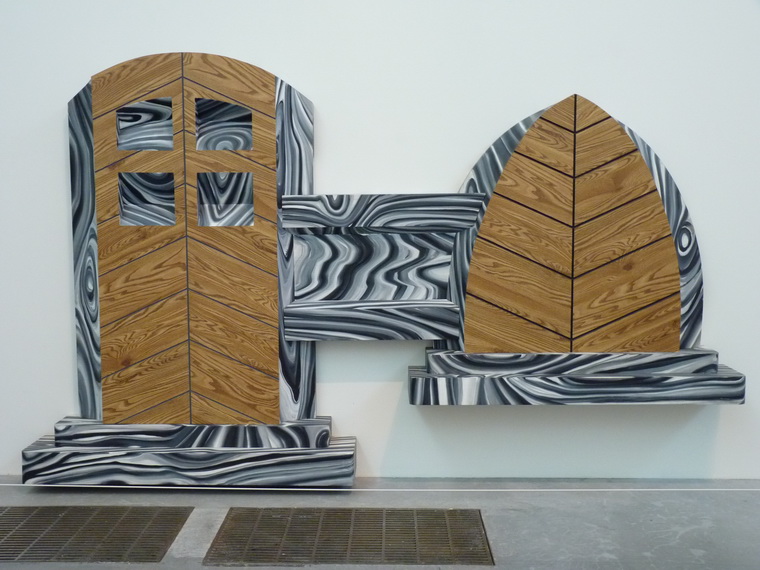
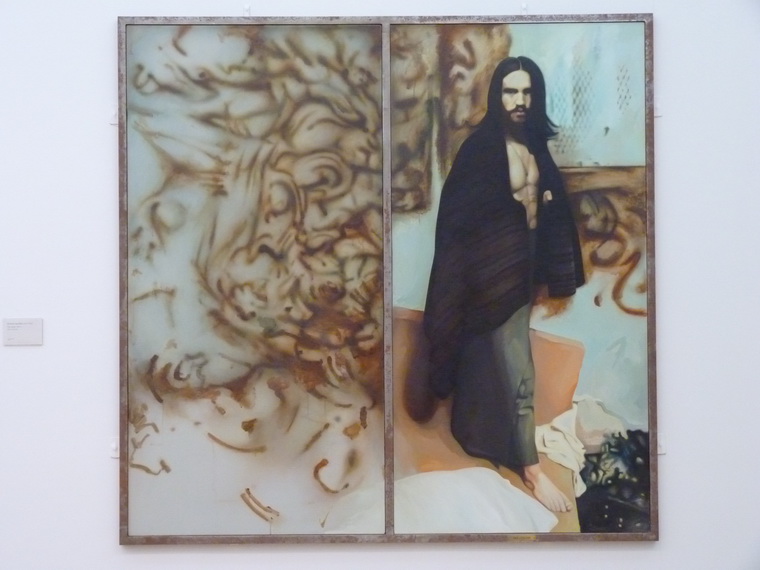
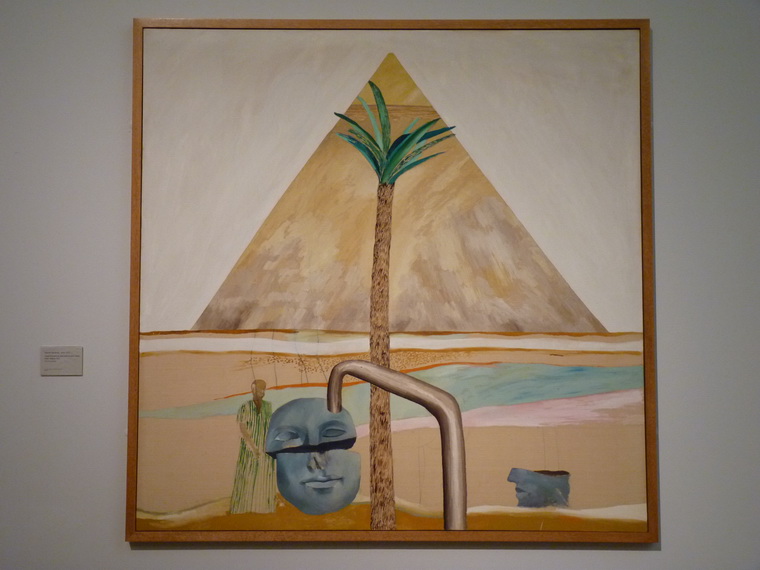
Pop art emerged as a challenge to Abstract Expressionism—or appeared to provoke it. This can be viewed in three ways: first, Pop art is figurative, whereas Abstract Expressionism is almost entirely abstract; second, Pop art is an update of Abstract Expressionism; third, Pop art is more "American" than Abstract Expressionism.
Its main artists include Americans such as Andy Warhol (1930–1987), Jim Dine (1935), Claes Oldenburg (1929), Roy Lichtenstein (1923–1997), James Rosenquist (1933), Larry Rivers (1923–2002), George Segal (1924–2000), Tom Wesselmann (1931–2004), Richard Artschwager (1924–2013), Robert Indiana (1928), and Edward Ruscha (1937). British artists included Richard Hamilton (1922–2010), David Hockney (1937), Peter Blake (1932), Clive Barker (1940), Patrick Caulfield (1936), Derek Boshier (1937), Peter Phillips (1939), and Joe Tilson (1928).
In 1957, Richard Hamilton described the qualities he sought as: "popular, transient, expendable, low-cost, mass-produced, young, witty, sexy, gimmicky, glamorous, and big business." Such art could not be made by individuals because it was not folk art, but rather what Hamilton called "a new landscape of filtered secondary matter."
The origins of Pop art lie in Anglo-Saxon culture, with similar consumer imagery appearing in both Britain and America. The term "Pop" first appeared in Britain, arising from debates among British Pop artists like John McHale, writers like Banham, and Hamilton starting in 1952. In 1956, this group held a joint exhibition at the Whitechapel Art Gallery, London Institute of Contemporary Arts, titled This Is Tomorrow, a semi-archaeological, semi-satirical, dramatic show. Hamilton’s entry at the entrance, a collage painting titled What makes today's homes so different, so appealing?, attracted much attention. It depicted a muscular man holding a giant lollipop with the word "Pop" on it. This work led to many conventions of Pop art, including the use of ready-made imagery.
British critic Lawrence Alloway stated in 1959: "Mass production techniques (including reproducible words, pictures, and music) form a vast array of symbols and signs. To understand this still-exploratory field using the Renaissance concept of artistic uniqueness would undoubtedly be inappropriate. Accepting that mass media helps us understand the true face of culture, we should use language more to describe 'this social appearance' rather than solely serving the top ten ideas of history and high art."