Chang Chin-Lien – Let the Flower of Your Own Life Bloom
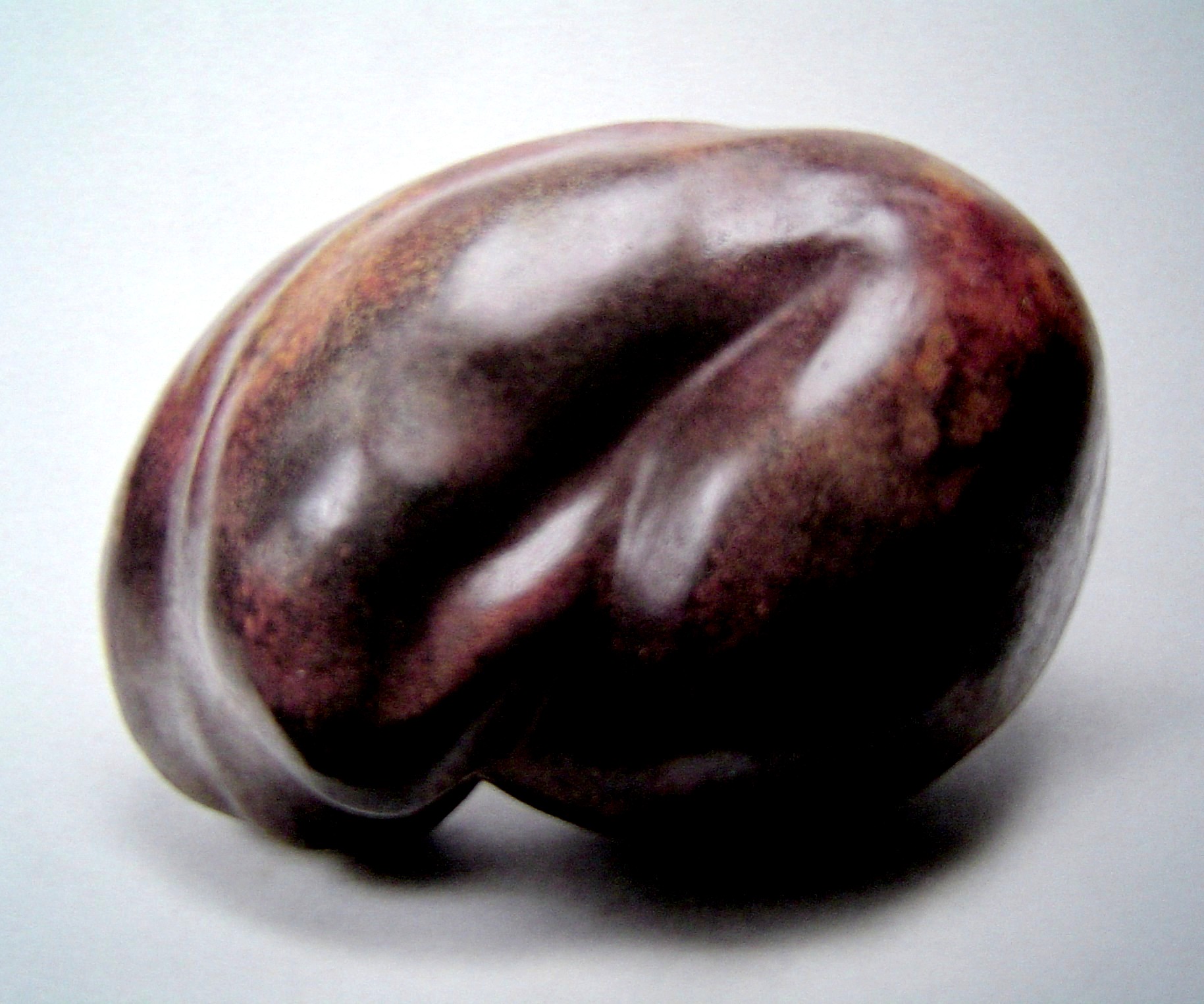
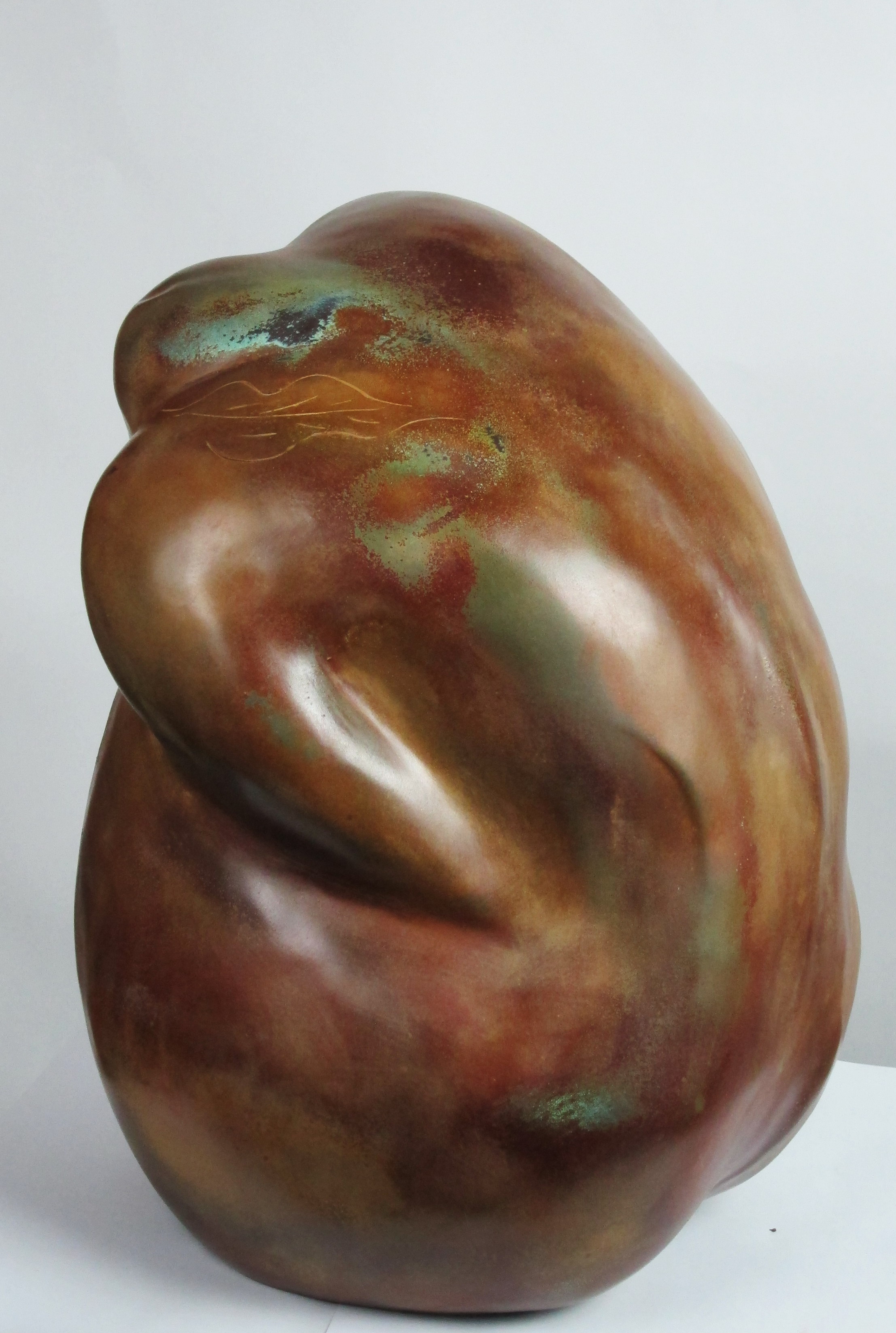
From a Seed 35x23x22cm 2002 Bronze
"Life is the process of blooming; let your own flower bloom."
Chang Chin-Lien
Text by Chen Chi-Hsiang
Preface: Existence itself is the universe's mystery. Why does it exist? What is its meaning? This concerns every life form. Throughout their lives, people search for the meaning and essence of existence, constructing personal philosophies based on their individual consciousness to create a life uniquely their own. As the Seth Books of the New Age state, "Everyone creates their own reality." With absolute trust in existence, existence itself becomes a meaning. Master Osho said, "There is no religion other than living," and "Truth is ineffable, but one can feel its presence." Few art creators adhere to organized religion, because art itself is a religion. Artists sense existence and manifest its meaning through creation, exploring its essence and glimpsing life's profundities.
Chang Chin-Lien states: "Art led me into the religion of art. I feel that art creators are translators of the material, natural, and spiritual realms. We see what others do not see, feel what they do not feel, then internalize it into text or images. Whether figurative or abstract, we express our observations truthfully. It is a fascinating world with no end, where we constantly build and create new worlds, presenting them. This is the important significance of art to me: I see, I discover, I create, I disappear..." (Note 1).
She uses flowers she loves as a metaphor for life's existence: "Flowers, the state of a life process." A flower's life mirrors a human's—sprouting, growing, half-bloomed, flourishing, fully open, then gradually stabilizing and fading. "Life is the process of blooming; let your own flower bloom" (Note 2).
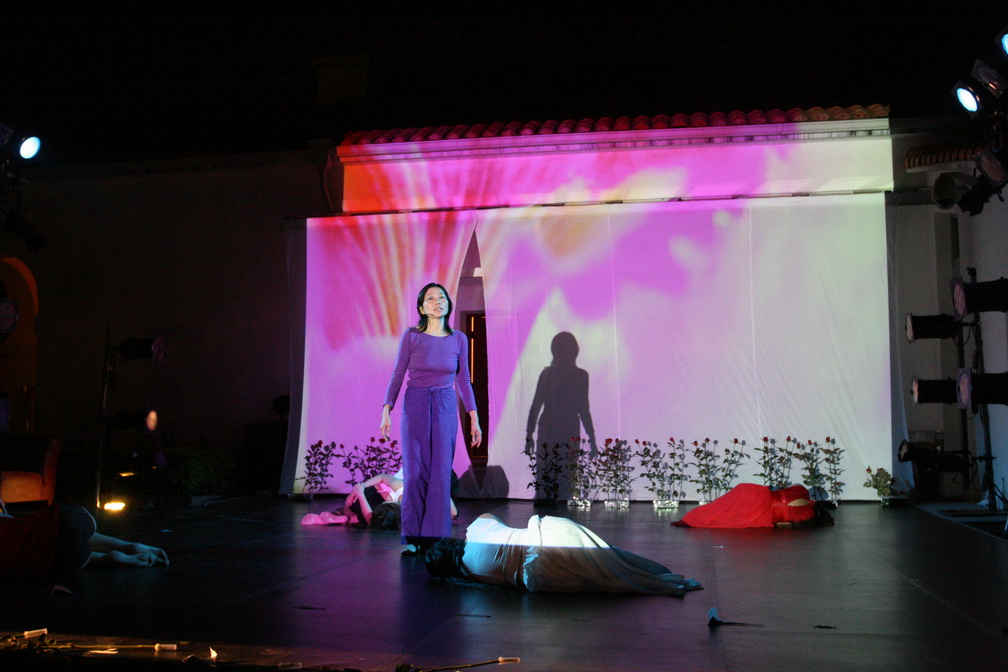
A Beautiful Accident: Born in 1958, Chang Chin-Lien is the daughter-in-law of Tainan's Yanshen area (the partner of painter Hsu Yu-Jen). Versatile and talented, she excels in writing, martial arts, singing, dancing, poetry, and painting, exploring all possibilities of existence. Art excavates hidden emotions and expressions, allowing one to live a broad life freely. Her comprehensive creative pursuits include ceramics, sculpture, oil painting, ink wash, photography, installation, and drama. Her cross-disciplinary diversity ignores formal or medium constraints; her creations stem from a single theme: the innate instinct and creativity within life. In the mid-1980s, she was an excellent, sensitive modern dancer (a member of the Halo Dance Company). Physicality became dance language, and bodily realization merged into plastic art vocabulary, joyfully blooming the flower of her own life.
Actually, Jin Lian loved artistic creation. She liked drawing since childhood and once vowed to become a painter. In high school, to apply for the Fine Arts Department of the Taiwan College of Arts, she studied under Chen Ching-Jung, Liang Tan-Mei, and Wu Hao. She says, "Because I failed admission to several fine arts departments, I decided to apply for the Dance Department." Unable to enter the fine arts department, she saw neighbors offering dance classes, learned out of curiosity for a month, and classmates said she danced well, inviting her to take the exam together. Curious about dance, she unexpectedly passed, fulfilling her wish to enter the Dance Department at the Taiwan College of Arts (graduated 1983). Under artistic training, this beautiful accident made her a dancer. The twists and turns of her life journey were unimaginable. After this beautiful encounter as a dancer, her deep meditation and perception of the graceful curves of the female body opened various possibilities for her plastic art creation.
Life always moves toward the unknown. From dancer to sculptor, another "beautiful encounter" in her life journey brought infinite surprises and adventures to existence. Existence is open, having its own paths and arrangements, blooming sparks of life and unfolding human free will under all possibilities, calmly accepting life's guidance. Naturally, Jin Lian married Hsu Yu-Jen, a painter engaged in artistic creation. Immersed in the art circle, a certain opportunity led her back to her beloved path of plastic art creation. Leaving the stage, she unimaginably reclaimed her youthful dream of being an artist passionate about creation, retrieving the infinite energy of life's original source through art. The artist says, "I never thought I would pursue sculpture. When young, I failed the fine arts exam but entered the dance department and joined a dance troupe. Looking back now, it seems like a mysterious arrangement. Dance training allowed me to see the flow and beauty of inner life in the body, deeply captivating me. I always enlarged my eyes to watch dancing bodies, thinking I would follow this path" (Note 3). "After entering marriage and having children, I was confused. Was I just going to cook and raise kids? Did I have direction? After evaluation, I felt I couldn't do the choreography I loved, as it required space, manpower, and finances, which I lacked. Once the child entered school, I pondered my path. Then a good friend suggested I learn ceramics, at least something I could complete alone. Who knew that upon holding the clay, I impulsively made many human figures. How joyful that my beloved body could be presented in clay! Thus, I formed a bond with sculpture. Fortunately, my friends around me were creators who gave timely technical guidance. I held my first solo sculpture exhibition in 1992 and have created ever since. Dance training was meant to help my later sculpture work. I often dream of sculpture, setting up large works on mountain tops. Perhaps it means sculpture chose me" (Note 4), thus destined to dance with sculpture.
Clearly, sculpture and painting are nature, while dance is instinct. Joyfully, "beauty" blooms with fragrance in life. Chang Chin-Lien wrote on her blog: "From 1977 to 2012, I simply did what made me happy. For over thirty years, I silently completed myself. Completed what? Completed my creation from nothing, my ideals and joys from within. What a joyful thing" (Note 5). Indeed, in life's journey, those who happily do themselves are the happiest.
The Tempering of Life: Chang Chin-Lien is a confident, romantic woman, independent and unconventional. She enjoys imaginative wandering and meditation, overflowing with emotion and abundant creativity. Full of curiosity about existence, she dares to try and adventure, attempting to comprehensively develop all infinite energies and possibilities of life. Artistic creation is deeply rooted in daily life. She showed artistic talent early on; in 1980, she won the first prize in the world selection design for the "Asia-Pacific Girl Scout Badge," forming a bond with plastic art. In the 1980s, she continued to develop her dance skills. From 1984 to 1985, she joined Liu Shao-Lu's Halo Modern Dance Company for performances. Two years later, she married Yu Zai, became pregnant, and had a child, becoming a full-time housewife. Home was her center and base. Yu Zai went to New York, USA, to pursue his artistic dream. Following her husband, Jin Lian accompanied him and cared for the child, traveling in the US for three years. This alternative life experience became a mark on her life journey. In 1990, the family, feeling lost, returned to the starting point—their hometown in Taiwan, settling in Wusha Creek, Taipei, working as a community manager, living a frugal life. The child grew up and started kindergarten. As a full-time mother, Jin Lian could finally breathe a sigh of relief. She said, "After the child went to school, everything came back." She reclaimed her own time and space, igniting the fire of creation, picking up the paintbrush again, starting to mold clay and sculpt, attempting to slowly piece together a complete self. The most intimate soft curves of the female body naturally emerged for a dancer. Ceramic sculpture echoed dance, and dance shaped sculpture. Two years later, Chang Chin-Lien finally realized her artistic dream, holding her first solo sculpture and oil painting exhibition. She said, "One must create one's own life garden, must bloom, reaching directly to the sky to converse with the stars" (Note 6). She threw herself into her beloved artistic creation, moving forward bravely to explore, expanding awareness of existence, joyfully dancing with art and embracing life's most beautiful dreams.
Interludes of Life: Every accident and interlude in life is not only a test but also shapes personal existential meaning and life consciousness. Jin Lian's life, coming from dance, is like a movement full of climaxes. When a child from an artistic family (in third grade) comes home from school saying art class is boring, how would parents who are artists feel? Unexpectedly, this inspired her to lead by example and engage in aesthetic education actions, volunteering to teach children at school for free. Primary school art class should be the most important starting point of aesthetic education, concerning children's future interest in aesthetics and aesthetic experiences. Unfortunately, in our art education, young students' imagination is often stifled. She stopped all her creations, fully dedicating herself to pioneering aesthetic education, thinking about how to discover potential energy and instincts in people. She developed a lively, creative, and open teaching method, integrating diverse arts such as drama, dance, music, and painting, using relaxed games to let children learn naturally, guiding and inspiring rich creativity from multiple aspects, entering natural observation and thinking. Art class became a vivid and interesting integration of artistic humanities knowledge, explaining art deeply rooted in daily life, letting children realize the inseparability of art and life. Thus, she compiled her creative aesthetic education methods into a book: The Sky of Games – Playing Art with Children (published by Lion Art Magazine, 2003). The Taipei Fine Arts Museum repeatedly invited Teacher Chang to give guided tours and design art-play activities for young students, thus playing her way into becoming a creative aesthetic educator.
Family life is created by women. Home is the core and world of women. The effortless dedication, sacrifice, and care for children are the nature and instinct of being a mother. All worldly affairs operate amidst flux and impermanence, described as "Heaven's Way is constant motion, all dharmas are impermanent." In 2007, Jin Lian's beloved son died unexpectedly, causing her and her husband deep sorrow. Quickly turning grief into strength, to mourn her beloved son, "we must live out the parts he did not live," Jin Lian initiated and planned the "Shining Light Project," sponsoring and encouraging public welfare activities for talented youth aged 13–21, annually promoting artistic creation plans for teenagers. She believes, "Everyone is light. If you showcase yourself well, you become a luminous body. The more light there is, the less darkness in the world." Setbacks and frustrations made Zhang Jin Lian more courageous, finding greater strength to support herself. Jin Lian said, "People, because of difficulties, actually enrich their lives and expand their inner vision. Like hardships given by heaven, they are only to forge your gem-like radiance; otherwise, you cannot see your own possibilities" (Note 7). Responding to the needs of her inner soul, nourishing and discovering various possibilities, then sharing them with others, fragrant like flower scent.
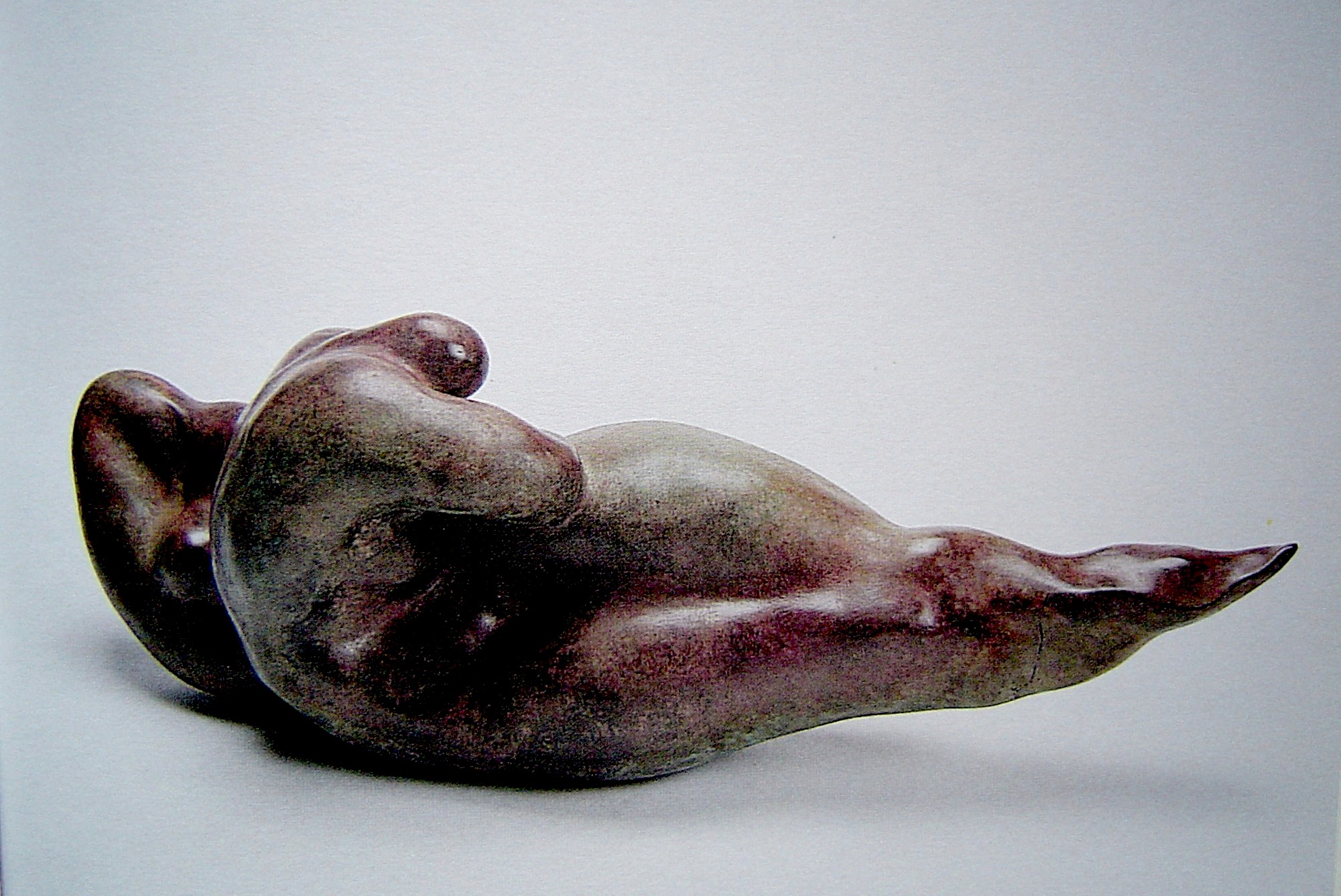
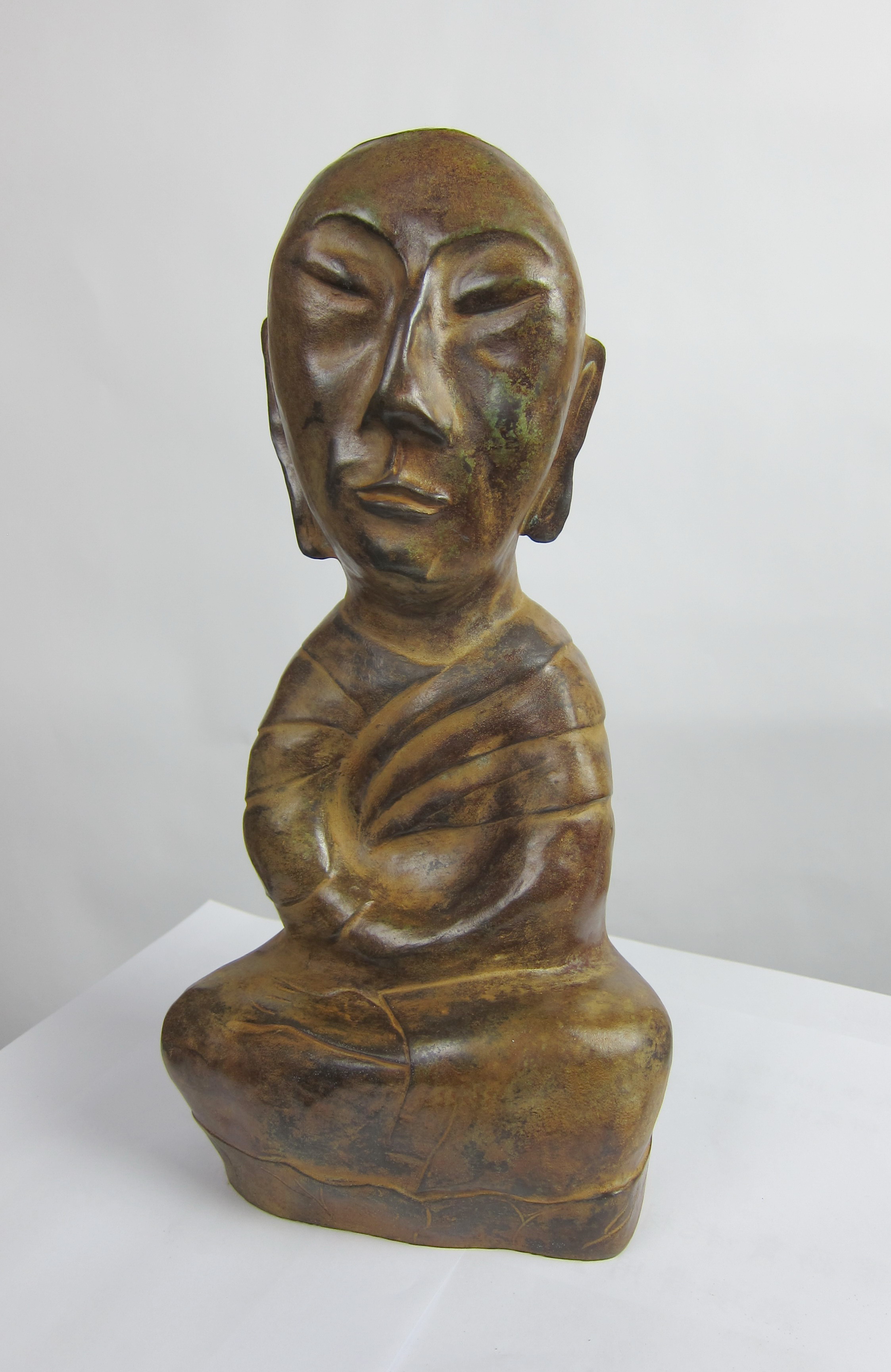
Dancing with Sculpture: Painting and sculpture are two sides of the same coin, because sculpture is a real three-dimensional painting, and painting is a two-dimensional flat sculpture. Chang Chin-Lien, a sculptor coming from dance, has the physical imprint of dance as a natural source of creation. The graceful curves of the female nude body became the main axis of Jin Lian's sculptural creation. Externalized and internalized subjective sculpture relies purely on bodily realization and perception rather than depiction. Early works were figurative and concrete, incarnations and imaginations of the dancer's body, focusing on female body language and symbols, emphasizing the curves of soft rhythm and beat, suggesting an upward pulsating energy, such as Mountain (1996) and Listening to the Sea (2002). In the following years, a series emphasized the plump and robust bodies of dancers, the magnificent power of muscle movement and line beauty, such as Riding the Wind (1993), Soulmate (2012), and A Song on the Tree. Between depression and constraint, magnificence and thickness, it displays the modern sculptural symbol of strength and beauty.
Zhang Jin Lian says, "Early sculptures only expressed limbs. With life understanding, I later began adding my thoughts in nature. How does suppressed life transform into spring buds and flowing water? Even if days have shadows followed since childhood, sticky bitter darkness, life always faces the sun! How to relax in difficult situations—that is what nature taught me. So my human figures have spring!! There is natural philosophy; I want to share and express this feeling of life" (Note 8).
With the maturation of awareness of existence, life experience, and creative experience, she likes to probe nature through the human body, internalizing the female nude, purifying forms, mixing natural elements, moving from figurative to abstract. Streamlined nude works reveal natural aura, condensing introverted energy like plant seeds, transforming into clouds, flowing water, or mountains. Such as From a Seed (2002)—the human body curls inward, becoming seed-like, simplified and introverted into a centripetal force, containing infinite energy. A Dream in Nanke (2002)—the female curved body shrinks and bows, connecting in a circle, surrounded by rocks, metaphorically hinting at nature's magic. White Clouds and Flowing Water (2002)—abundant landscape-human figure streamlined energy, both cloud and water, implying the impermanence and vitality of all things. Hypnotism of White Clouds and Contemplative White Clouds (2002)—overlapping female legs, condensing feminine gentleness and energy, transforming into a cloud shape, free and easy, etc. This series is Jin Lian's most brilliant work. Full of power, soft curves, and transcendent beauty, between light and shadow, imagery and abstraction, perception and imagination, volume and texture, strength and lines, nature and the human body, heaven and earth, and all things.
Incarnation of the Soul—Painting: Painting is the incarnation of Jin Lian's soul. She likes wearing colorful and brilliant colors, dancing with formal bodies. She is completely free, thus unrestricted, enjoying the situation of painting, entering the present moment of quietness. The painter says, "The joy of creation comes from the old dying, rebelling against the dry and tasteless reality and system, letting life show off fully, breaking time and emotional constraints in the moment, wandering and floating brilliantly in a spacetime" (Note 9). She paints anything, just as she can dance any dance. When she feels it, she flirts with oil or acrylic on canvas, and speaks love with ink on paper. The moments that can be clearly explained are figurative, or when they cannot be explained clearly, they are abstract. Entering the unknown, it is completely formless. She paints what she sees and what she doesn't see, perceptions and imaginations, or inspirations under certain conditions of existence. Nothing is more important than painting, because this is a bright mirror of existence, reflecting the moment of each creation. Nothing is more beautiful than existence itself.
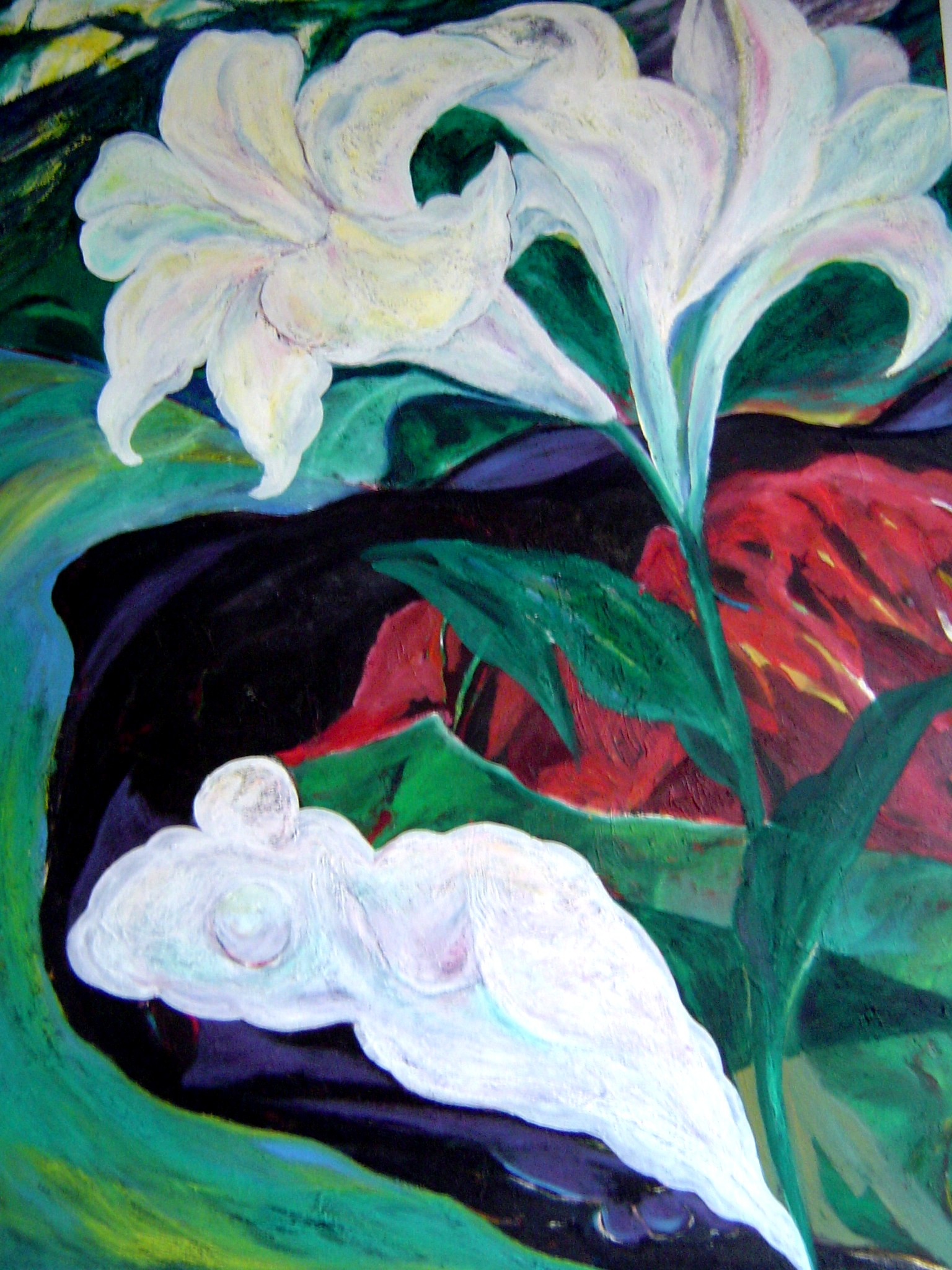
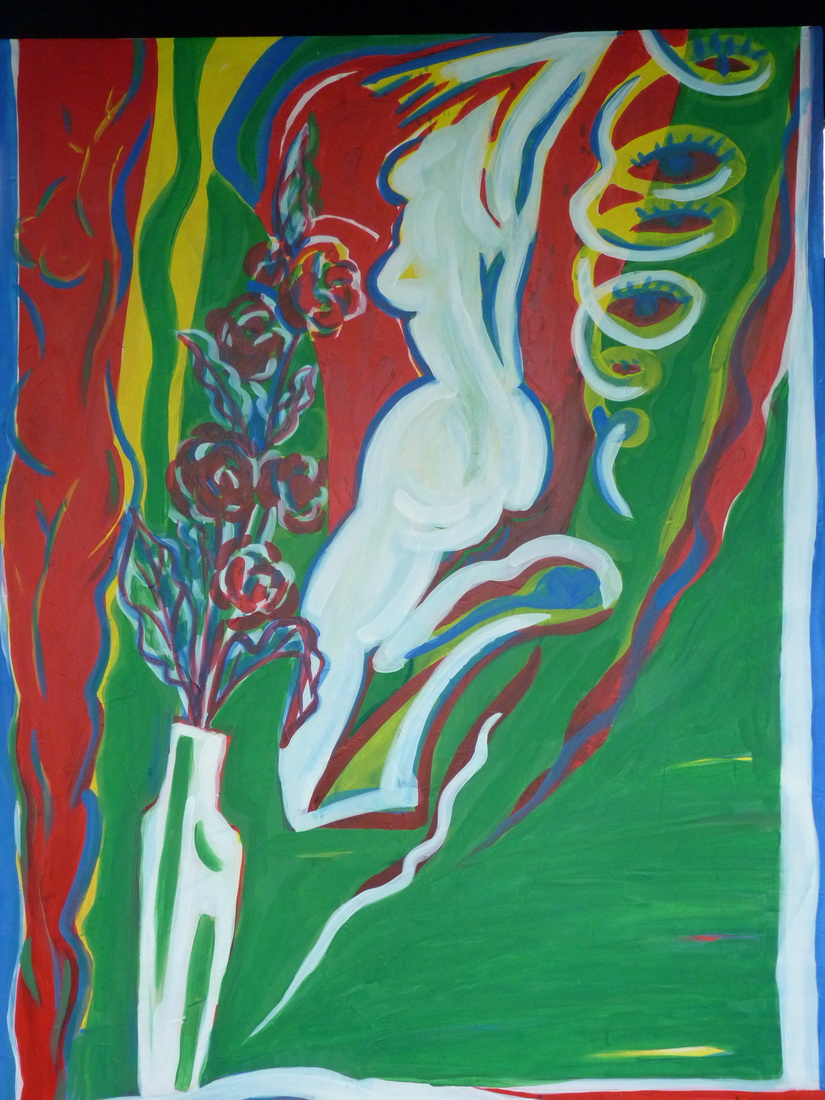
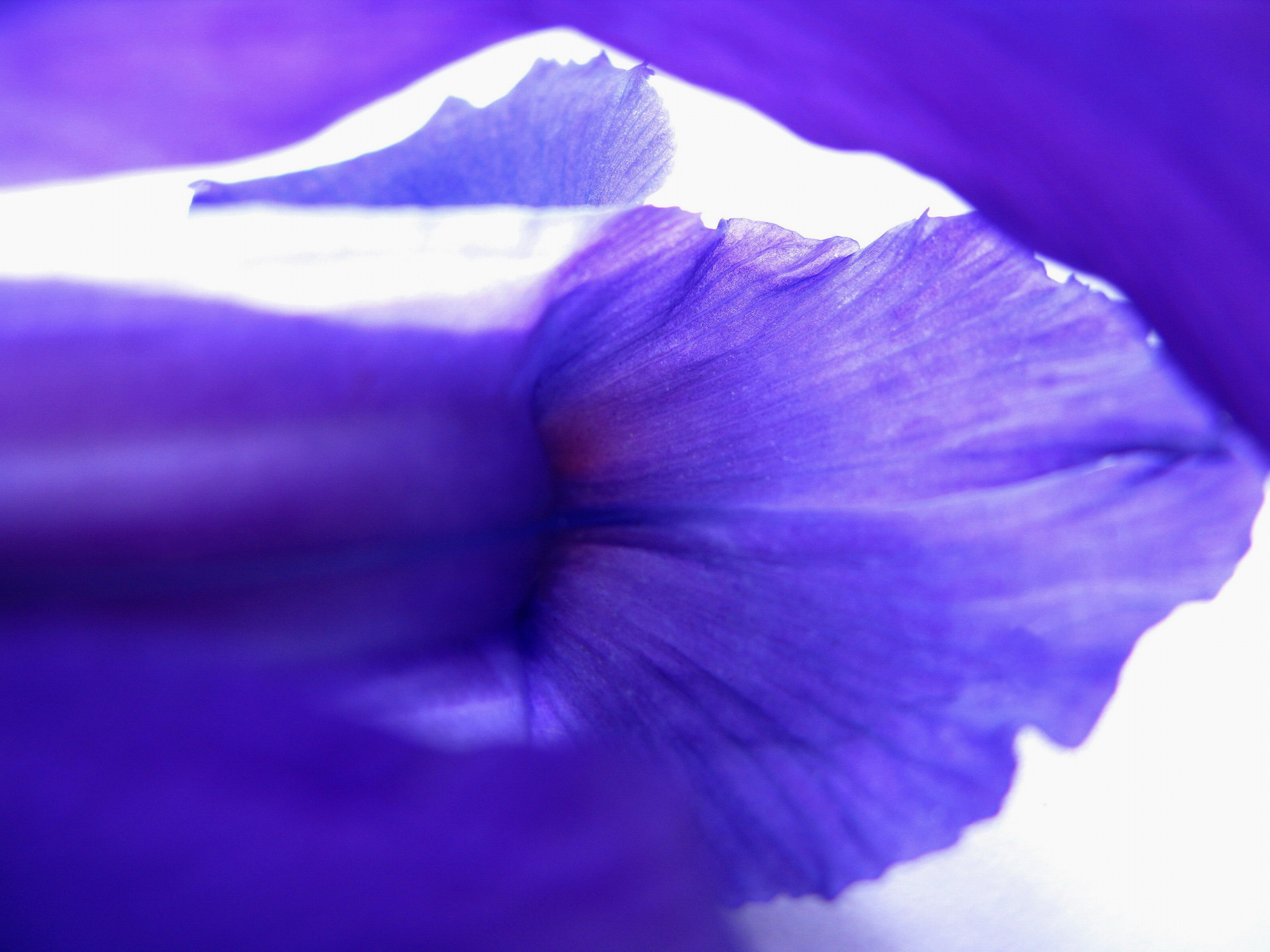
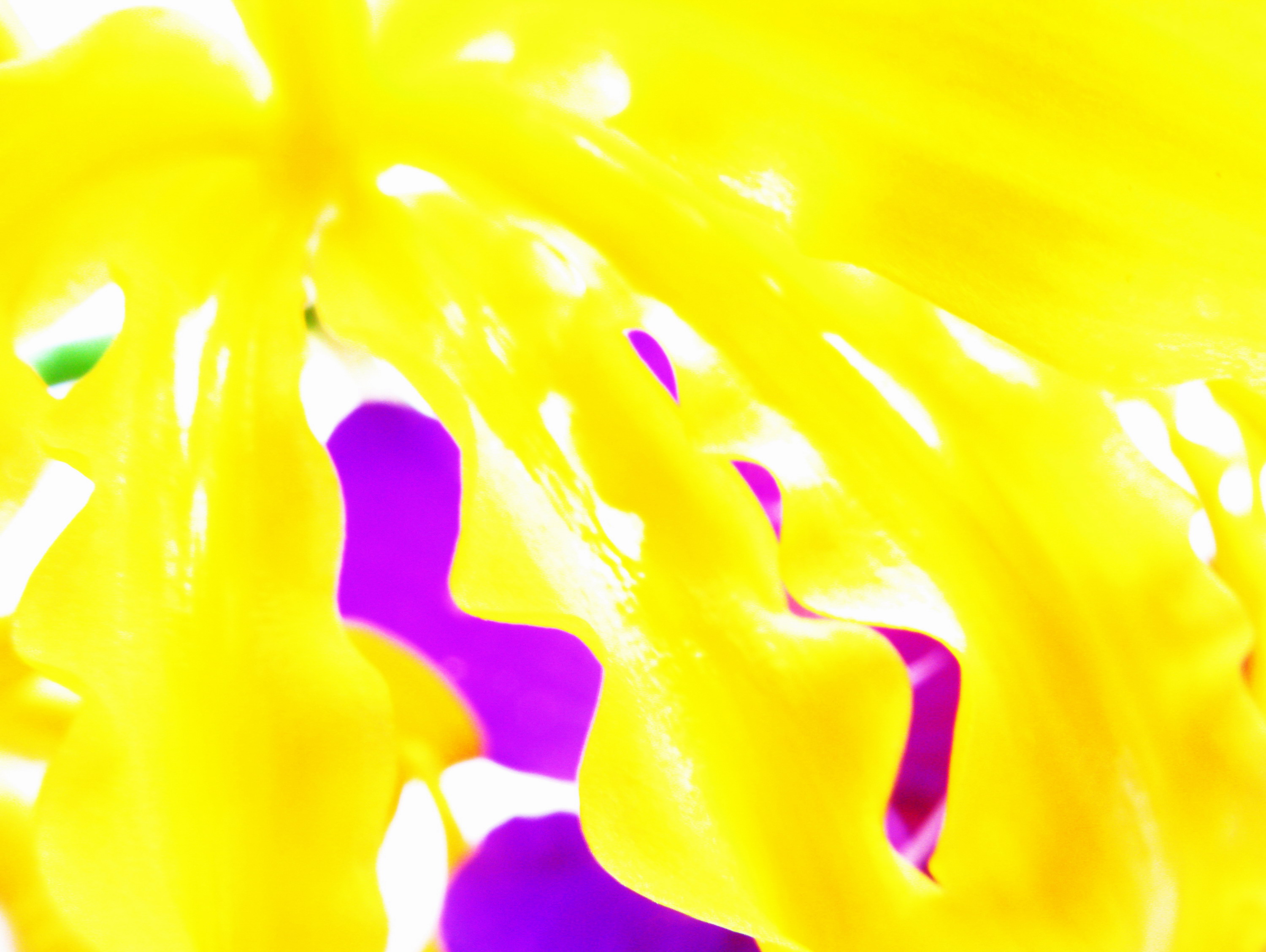
With unique devotion and sincere love for flowers, she painted many flowers and photographed only flowers. No matter what kind of flower, as long as there are flowers, she is intoxicated; she is a big flower addict. She likes to communicate and merge with flowers alone. When the mood strikes, she sings to the woman talking to a lizard (Note 10). The painter states, "The flowers I see fit my pure philosophy, sometimes figurative, sometimes abstract spiritual aspects." Her oil or acrylic paintings are very expressive, subjective forms, bold colors, full of sensibility, lyrical and sexy, romantic and joyful, between Expressionism and Fauvism. Her paintings are full of literary quality because flowers contain poetry, landscapes, moods, dreams, and life's predicaments, such as the pure Voice of Flowers, Gaze from a Flower - Sunset Sings like a Canary, and Song of Flowers and Flowing Water (all 2002). Flowers and human figures together constitute the landscape Dream Flower (2001). Recent works approach lyrical abstraction, Heart Flowers Bloom and New Green and Bright Red (2011).
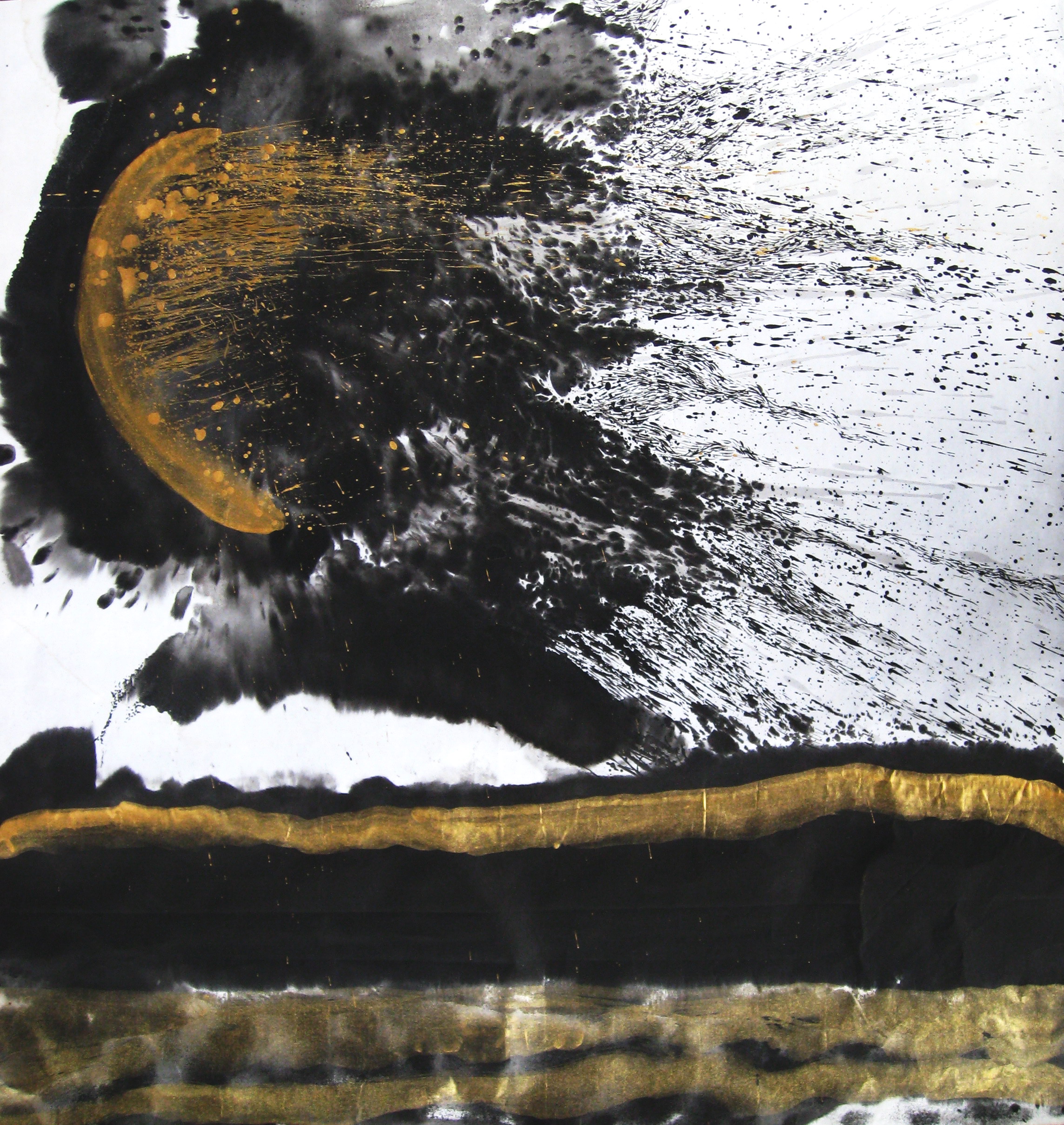
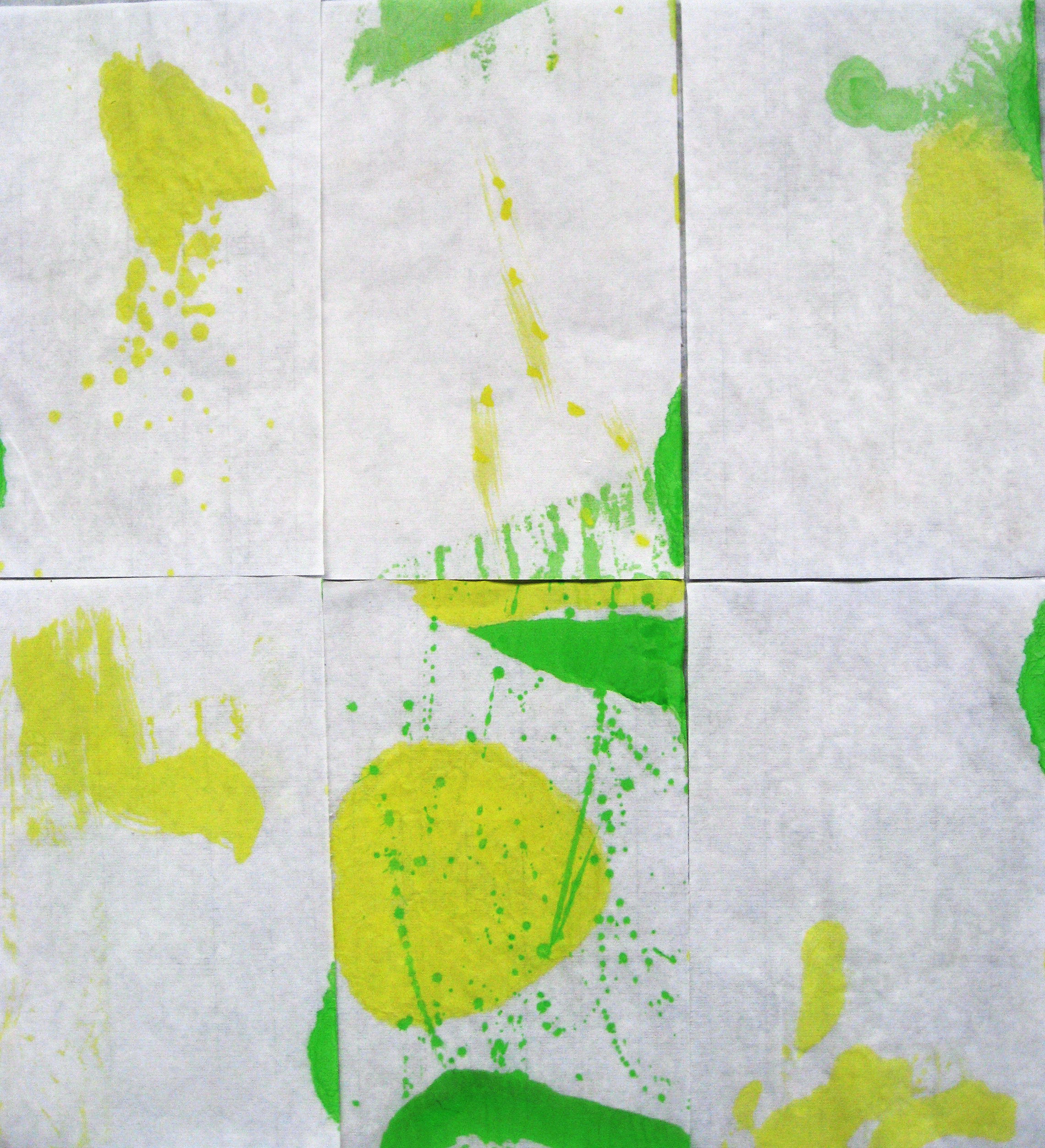
Her ink wash paintings are completely abstract. Borrowing the subconscious to express emotions under improvisation and sensibility, attempting to explore those transcendent, imperceptible possibilities, presenting a state and consciousness of existence. The painter says, "Painting ink wash is the consciousness of knowing and the unknown, and the novelty and joy of the world." Her ink wash is divided into two major systems of exploration. Abstract landscape imagery constructed mainly with ink tones, under the experimentation of modern ink wash, such as Belonging to Spring's Night and Day, Can't See Mountains, Can't See Myself, Disappearing and Appearing in Pitch Black, Seeing and Not Seeing the Rising and Fading Belonging to Night (2008), and Moonlight and White Water (2009). Another series of brilliant color combinations, lyrical and joyful, such as Bottomless Blue Night, I Transform into a Body of Bright Red, Watching the Green Mountains. There is also a series of small-scale compositions Spring (2008). Zhang Jin Lian says, "One stone, one landscape; one stone, one human figure. Nothing is not scenery. From small things, I can always discover the landscapes, human figures, and nature I like. Imagining the scenery on the calligraphy and painting desk, where one can read, meditate, write, and paint, etc. On the desk are small mountains, small waters, and small nudes accompanying. I hope to create a leisurely humanistic lyricism, just like we compose poetry and paintings" (Note 11).
Flirting with Photography—Speaking Love to Flowers: Jin Lian is full of romantic sentiment and dances with photography, entangled for decades. The love is so deep, having its own charm. Photographer Wu Zi-Jian wrote in an article about Jin Lian photographing flowers: "I carry my camera everywhere when traveling... Actually, the art of photography lies in the aesthetic expression of the moment, and changes in light and shadow, capturing that fleeting instant, whether moving objects, people, or scenes of nature and heaven and earth. Every minute presents different poses... This is the charm of photography" (Note 12). All of Jin Lian's photography revolves around flowers and plants around her life, expressing female tenderness, mood, reference, and metaphor through flowers. Images are poetic and picturesque. She says, "Rather than say I photograph flowers, say I write flowers or create flowers. Photography has become my tool for creating scenes and writing poetry" (Note 13), extraordinarily displaying her overflowing perception and emotion, thereby pouring out her affection and love, intending to elucidate the context and consciousness of every present existence.
She has unique devotion and sincere love for flowers. Loving beauty and flowers is a woman's nature. Flowers open to the external world, but Jin Lian's scene-creating and intent-expressing flower words go inward to grow to the essence, until heart-flowers bloom, both lyrical and abstract, full of associative spaces of various contexts, under a new thinking context, displaying her pure, elegant, and natural self. The artist writes, "Focused eyes, listening to flowers speak poetically, merging with flowers in the moment, time passes in silence. Flowers are no longer just flowers. Inside flowers are poetry, landscapes, moods, dreams, and life's predicaments. One cannot help but feel that the universe's essence embodies through flowers. God looks at His works through your eyes. Through the tranquility of this present moment, we change from mortal eyes to divine eyes. The world looked out is beautiful in all things, and that restless soul seems to calm down, connecting to that vast and endless behind-the-scenes essence" (Note 14).
Praising the Present Context—Impromptu Poetry: Jin Lian's life and existence dance elegantly and freely, following her whims, emitting from her will, transforming life into artistic factors. Existence is full of images, pictures, and visuals everywhere, constructed into poetry and prose through language and words, creating Jin Lian's unique spiritual aesthetics. Master Zheng Yan said, "Each of us lives in an artistic environment, whether or not we realize that our environment itself is art" (Note 15). Indeed, every state of awareness of existence at the present moment could be a poem, song, or painting, depending on how one views, understands, experiences, and creates. Zen opportunities lie within.
Jin Lian's impromptu poems mostly come from the inspiration triggered by works and present perception. Day is the artistic conception, Words are the thoughts. Painting and poetry mutually construct and resonate, poetic and picturesque, praising the present context of life and feelings of life, between spontaneity and lyricism, experience and insight, figurative and abstract, reference and metaphor. Such as from sculpture: "< From a Seed >: A seed is good at waiting. Waiting indefinitely is the future of several lifetimes. Stubbornly guarding this point, always in the present so small it can be invisible, so casual, yet transforming into infinite vitality... The beginning of all things comes from that point, like a small seed buried in soil quietly waiting to sprout... Humans are the same. That seed in the mother's womb has already prophesied the first ray of life's dawn." "< Brilliant Floating >: All human endeavors ultimately submit to nature. A person's accidental mood, walking in the stream of time, like a butterfly flying past..." "< Hearing Moonlight >: Night is very lonely. Only lonely people hear it. The faint sound of the zither softly tells the night's whispers. What is heard is the heart, and the sound of colliding with dead leaves outside the window," etc. (Note 16).
Such as feelings from flower images: "< Forget Flowers >: Looking at flowers... that pure natural essence, I forgot flowers, flowers forgot me. Only light remains, only shadows remain, time passes in silence. From a flower's smile, the world awakens." "< Stage >: There is no stage as colorful as the stage of life. There is no actor who plays so many roles simultaneously on stage. Everyone is both protagonist and supporting character. The incredible appearance of the life stage, the intertwining and collision between people, constantly opening new horizons, like a kaleidoscope. This unbearable process, the self-torture of aging, death, sickness, and birth, must grind people to shine like diamonds before seeing the illusion of life" (Note 17).
Present perception such as: "< The Solitary Walker in Endless Night >: Don't ask who I am, because I don't know who I am either. Memory forgotten, desolate darkness transforms into various forms, those are just floating symbols. Who was whom, disguised faces. What is loneliness? I am loneliness, the god ruling all. Put away the brilliance without light, transform into spirits and demons of light, return to the primal instinct of birth, walking alone on silent dark sandbars. Today your food, tomorrow my continuation. No past or future between us, merely stored light. Endless death rituals night after night, endless solemnity of death night after night. Endless endlessness night after night" (Note 18). Art is the accumulation and fermentation of life realization and existential experience. Jin Lian has published three illustrated poetry and prose collections: Slow Words of Paint (Teacher Chang Publishing, 1977), Flowers Fly, Flowers Are Not Flowers (Chang Jin Lian Poetry Collection, Mis Stone Culture Publishing, 2002), and Brilliant Floating (Chang Jin Lian Poetry Collection, Taipei Mulan Art Company, 2002).
Conclusion—Arrival of Spring: Sculpture presents space and volume that painting cannot; painting presents imagery and color that sculpture cannot highlight; photography is a convenient medium and sensibility that neither sculpture nor painting can replace. Painting is text that poetry cannot express; poetry is graphics that painting cannot form. In the dance of life, there is poetry in painting, and painting in poetry. Jin Lian's photography can be seen as image poetry, because each image is a poem that lyrical text cannot compare or depict, and each poem constructs such beautiful images. Sculpture, painting, photography, and poetry are like Jin Lian's sweetest and most intimate lovers, hugging left and right spontaneously in tranquility, singing out their feelings within. Forms are unconstrained, exploring diversely "like a large tree with many branches." She says, "My various creations have different consciousnesses flowing out, intertwining and alternating within them. Regarding photographic works, I just use the camera as a paintbrush, spending a lot of time quietly communicating and merging with flowers. It is my pure philosophy, sometimes figurative, sometimes abstract spiritual aspects. Painting ink wash is the consciousness of knowing and the unknown, and the novelty and joy of the world. Doing sculpture is to display the childlike unconstrained and resilient flow of life. These constitute a real me" (Note 19).
Creation is her favorite, stemming from bodily realization and nature's response, continuous and vigorous. Opening different aesthetic experiences, attempting to excavate the expression of people's deep inner emotions. Creation naturally unfolds and breathes freely in the daily actions of the dancer-artist. Art critic Lu Rong-Zhi wrote, "Zhang Jin Lian's creation is like an artistic attitude towards life, the breath exhaled naturally from breathing with nature every day, elegant and natural," "Zhang Jin Lian's painting and sculpture are movements constructed by mind and body, showing tension between extension and contraction in texture" (Note 20). The artist says, "When the weary body falls silent, is where the soul awakens. White nights, black days, flying separately / continuing separately. I like to probe nature through the human body in creation, landscapes and flowers growing out of the body" (Note 21). The beauty of the world, the richness of life, the arrival of spring, grass and trees grow on their own. Jin Lian's life radiance and artistic sparks joyfully bloom covering the mountain tops.
Note 1: From author's interview, July 2012. Note 2: Art Life Magazine Behind Curtain / A Book of Art Classics, Text by Zhou Qian-Yi, 2010. Note 3: From author's interview, July 2012. Note 4: From author's interview, July 2012. Note 5: From Chang Jin Lian's Spiritual Aesthetics - Blog http://www.wretch.cc/blog/FISH3333333. Note 6: From Chang Jin Lian's Spiritual Aesthetics - Blog. Note 7: From author's interview, July 2012. Note 8: Ibid. Note 9: From Chang Jin Lian's Spiritual Aesthetics - Blog. Note 10: The Woman Who Sings to Lizards, Text by Zheng Nai-Ming. Note 11: From Chang Jin Lian's Spiritual Aesthetics - Blog. Note 12: From Wu Zi-Jian - Article on Zhang Jin Lian Photographing Flowers. Note 13: From Chang Jin Lian's Spiritual Aesthetics - Facebook. Note 14: From author's interview, July 2012. Note 15: From Zen and Art Blog ccc198.blogspot.com. Note 16: Zhang Jin Lian / Work Texts. Note 17: Ibid. Note 18: Ibid. Note 19: From author's interview, July 2012. Note 20: Zhang Jin Lian's World of Flowers Fly, Flowers Are Not Flowers, Text by Lu Rong-Zhi. Note 21: From Chang Jin Lian's Self-Created Narrative - Blog.