This Month: Residency at Kaohsiung Qiaotou Art Village
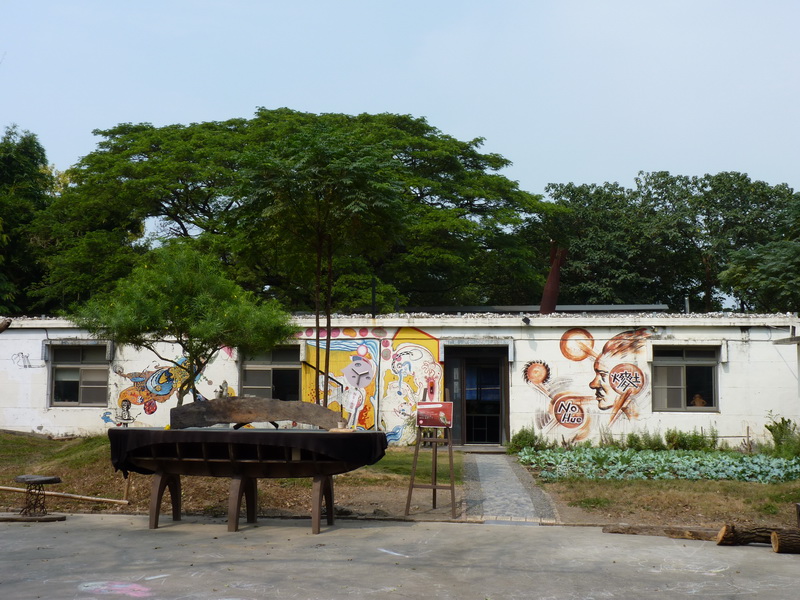
Qiaotou White House is a pioneering collective artistic initiative and development platform for Austronesian artists.
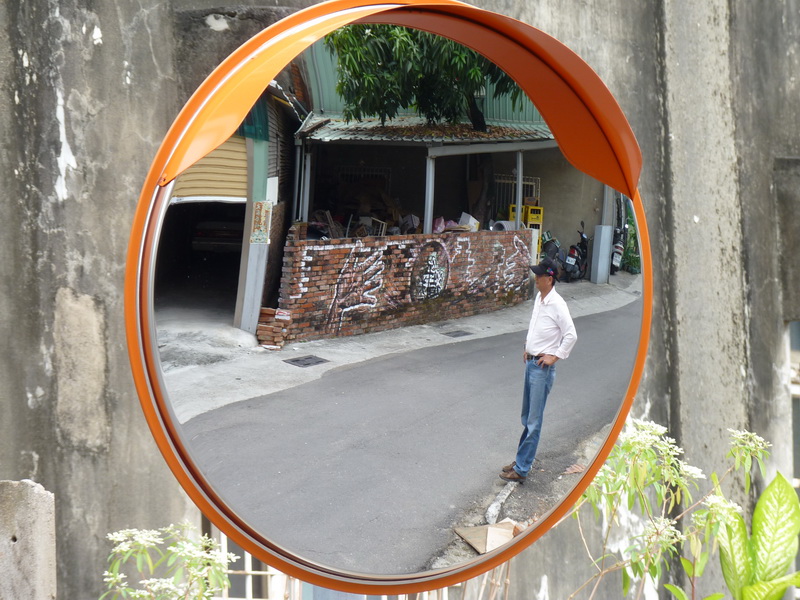
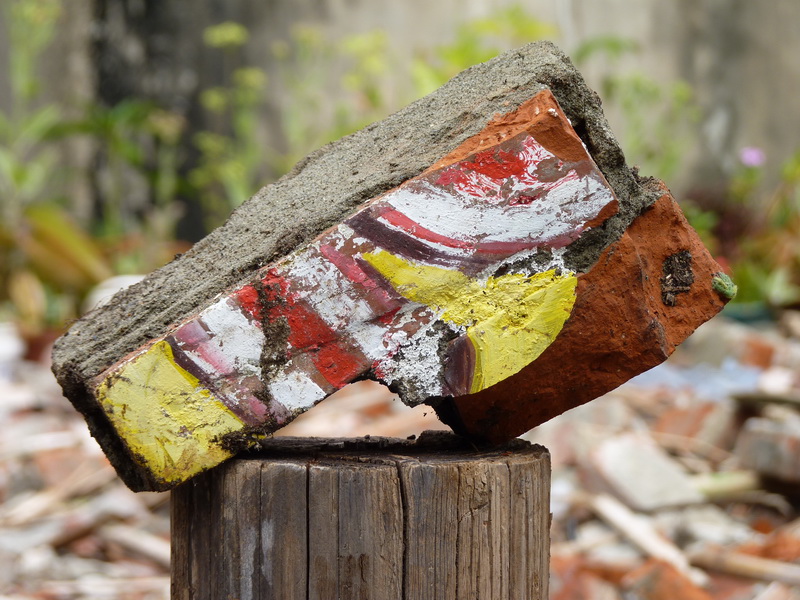
This month is not that month; this month, every month could be this month. This month, of course, refers to the activities, perceptions, and experiences within the current temporal and spatial domains—living in the tunnel of time, encompassing what has just passed, what is now, and what is yet to come. Where to go, what to do upon arrival, living in the present—there is nowhere else. Being here means not being there; here is everything. To continue breathing is to be; everything is where it is, and there is more, but not much more. Humans have their limits, yet also their boundlessness. Of course, there are choices, free will, still roaming within time and space. The world can be large or small, but it is neither large nor small; depth, width, breadth—all exist within measurements, under standards, each finding its place, being as it is, as it should be.
This month, of course, is this present moment. I left my warm home in Paris and returned to the embrace of my Austronesian homeland. The farther I am from home, the closer home feels—close in heart, feeling the call of kinship and love in a spaceless, timeless realm. Homeland is the native land of the wanderer; homeland exists in dreams and in embrace. Dreams contain the homeland, the homeland contains dreams; homeland holds my love and deep emotions, the origin of life, revisiting the past to understand the heart. In recent years, I have been like a migratory bird: when autumn arrives in Paris, Europe, the bird crosses oceans to return to its native land. In recent times, living across the straits—Paris, London, and Taiwan—by heaven's grace, I am honored and satisfied to live in a realm of art and kinship, fully expressing life's ultimate energy and savoring and experiencing life.
This month, I came to Kaohsiung Qiaotou Art Village for a residency. I embrace this land where I was born, absorbing the energy of the brilliant sunlight, experiencing local consciousness. Homeland, I have returned. This month, it is precious to deeply immerse in the Austronesian realm, wholeheartedly plunging into its context, profoundly feeling the warmth and love of my homeland. With love, everything is beautiful; homeland is the kindest, purest, most emotional place on earth. Taiwan not only has the beauty of natural mountains and rivers—in truth, the most beautiful is its human landscape.
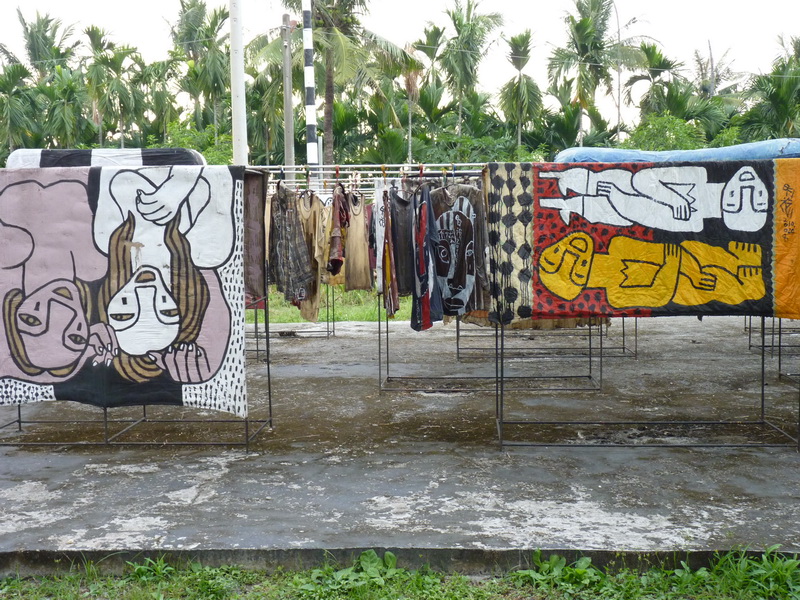
This month, during my residency at Kaohsiung Qiaotou Art Village, in just a short month, the multifaceted exchanges and experiences with artists from distant Italy and Japan were invaluable. Of course, the diversity and variety of exchanges in Paris have already become my deepest life experience in cross-cultural contexts. Whether local or elsewhere, both are spaces for my personal learning. In the world, within time and space, being sensitive, there are constant revelations about life and artistic insights. Certainly, local exchanges in Taiwan become my necessary learning from the native soil. Coming to Qiaotou Art Village, intervening as an art critic, of course, is to experience and learn—especially the community building practices implemented locally at the White House, or the Taiwan New Mural Team realizing local aesthetics, all of which are subjects of my in-depth exploration and face-to-face observation this time.
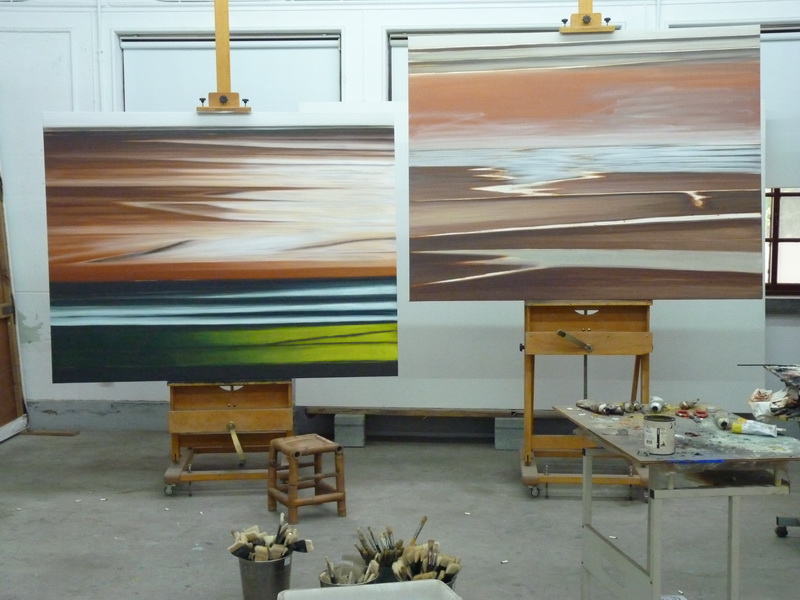
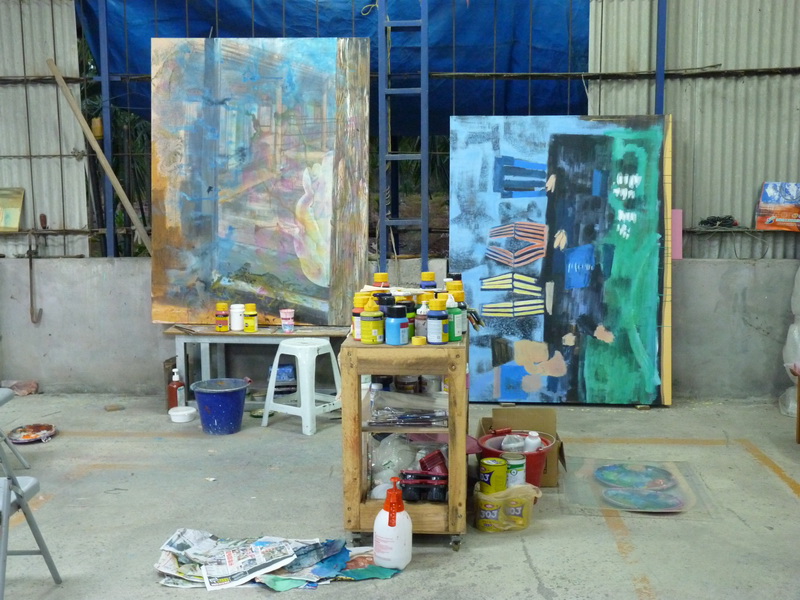
This month, delving into the artistic realm of Qiaotou, in truth, there aren't many studios here. The only one is Chen Sheng-Song's studio. Chen, known as the art village chief, is a painter I greatly admire, a substantial artist, and he became my most frequent art conversation partner during the residency—almost every other day. He even became the artist I truly had the chance to observe carefully and engage in deep discussions with, viewing all the paintings in his studio, drinking plenty of Italian coffee, and even enjoying first-class pasta he personally cooked. I was honored to share his artworks and artistic perspectives. Of course, I took this opportunity to conduct interviews and make records (photographing many works and the artist), as material for the next two issues of Tainan Salt Zone literature writing, or for potential curatorial ideas. Thanks to the village chief for sharing.
Additionally, I made a special trip to visit my Pingtung painter, Zhuang Ming-Qi, whom I knew earlier on Facebook. He also appeared during this residency period. I very much wanted to further glimpse his art and understand the key transition from academic to non-academic creation in his work. Another is my long-time friend, painter Zhang Xin-Pi from Neipu. I am grateful he took me to see the newly built community development in Neipu Old Street, showing how art is implemented in society. Unfortunately, that day, due to stomach issues and physical discomfort, I couldn't focus on discussing art. In the end, he even took me to see a doctor. Carrying full artistic emotions, I experienced the warmth and camaraderie of an art family. Art makes the world more complete, doesn't it? This month's story is particularly long; I'll pause here for now.