Chen Chia-Jen Solo Exhibition "The Golden Cicada Sheds Its Shell"
One brush in hand, invincible - I paint for you to see 52.3x39.2x5.8cm 2012
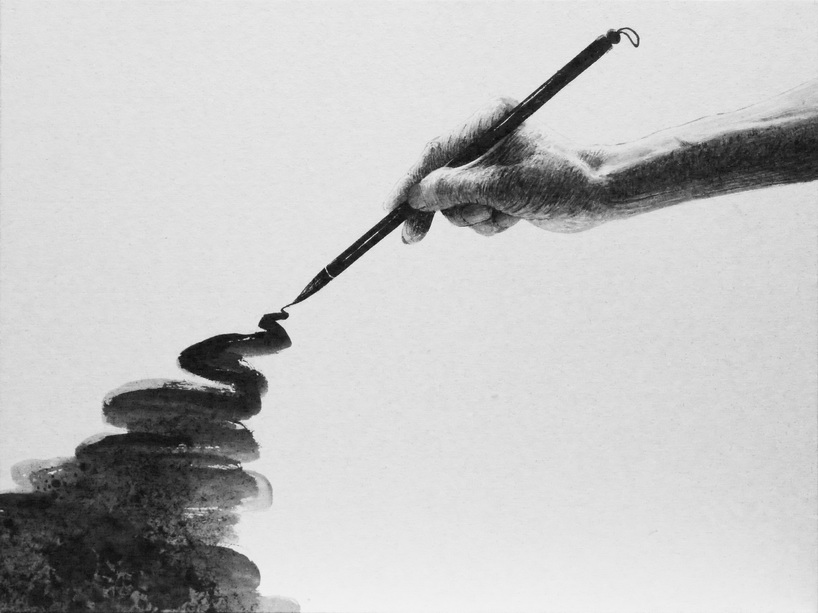
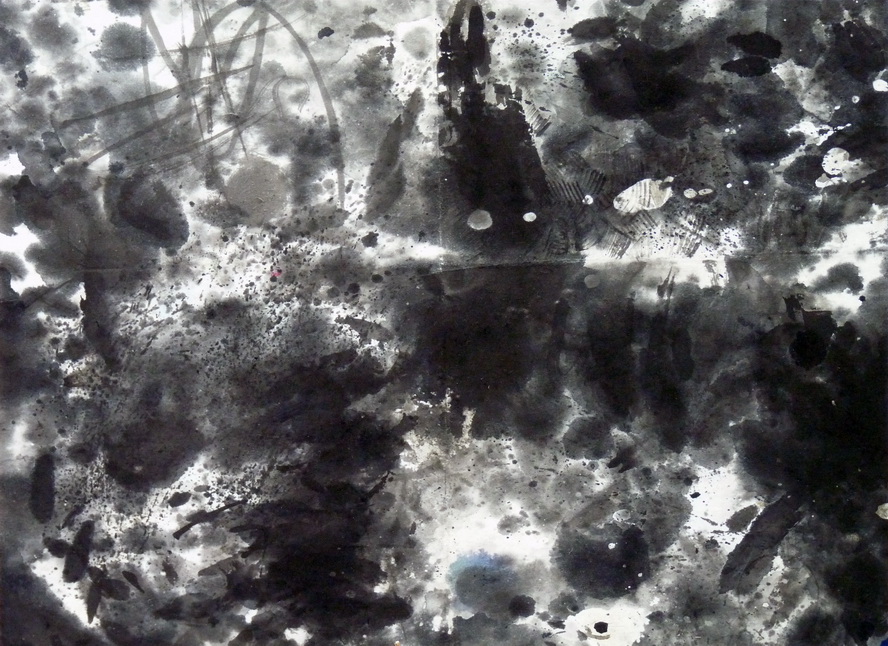
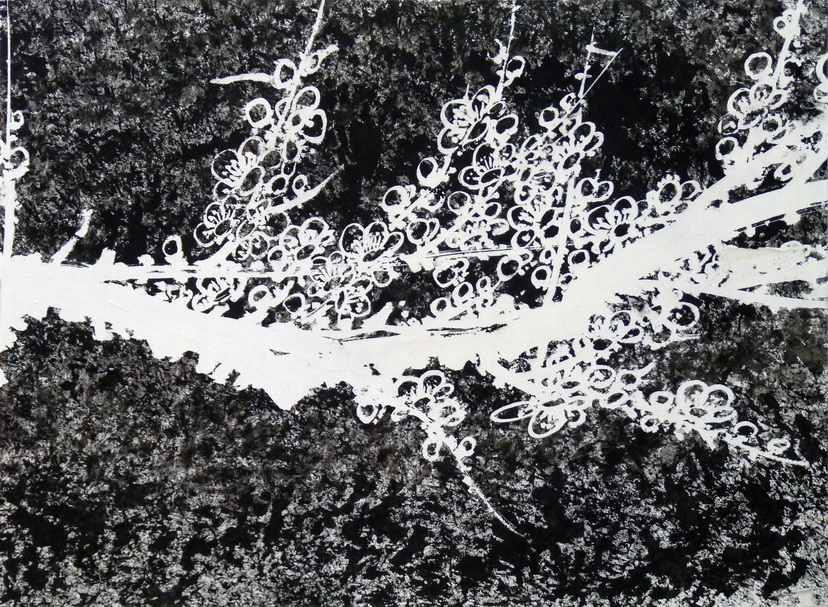
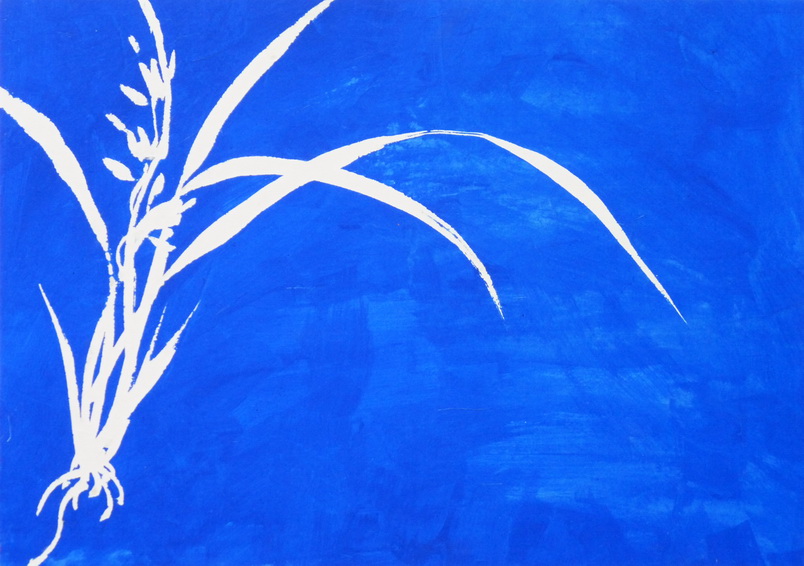
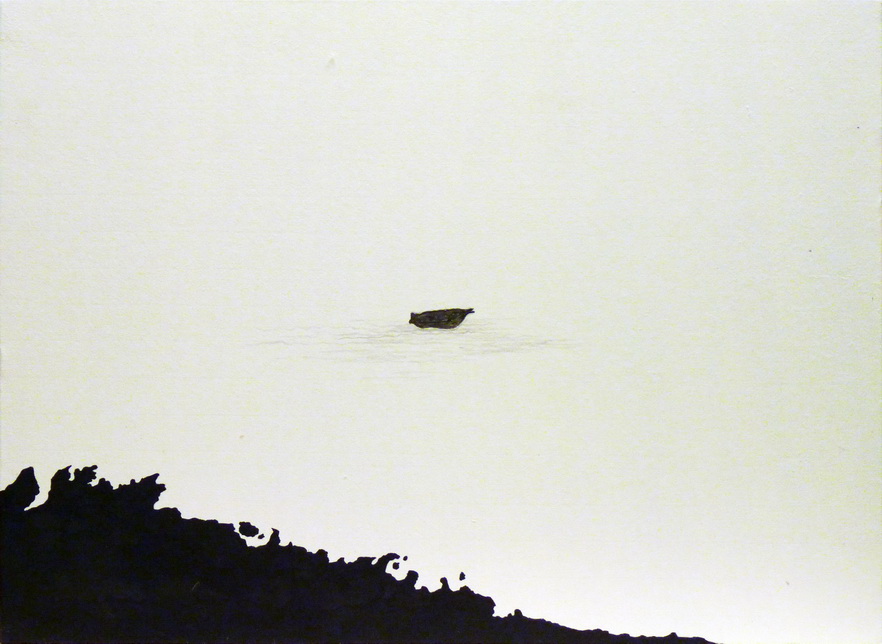
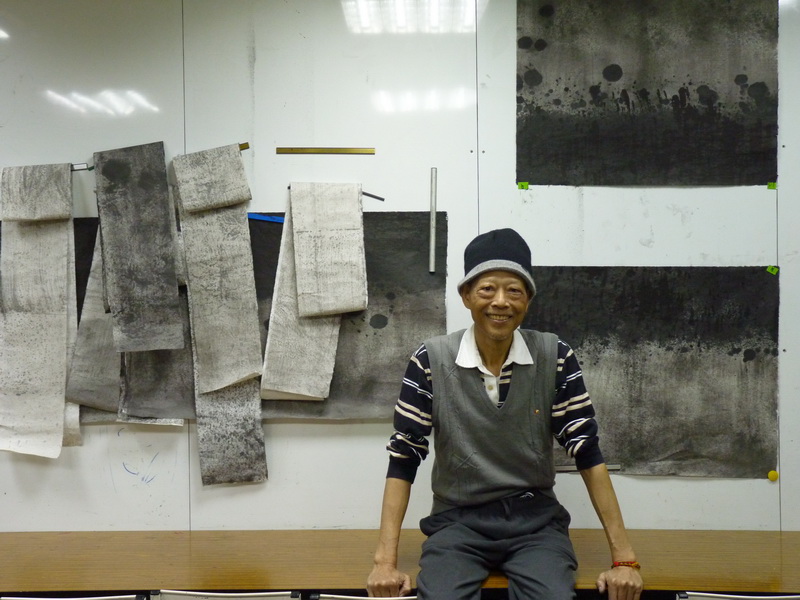
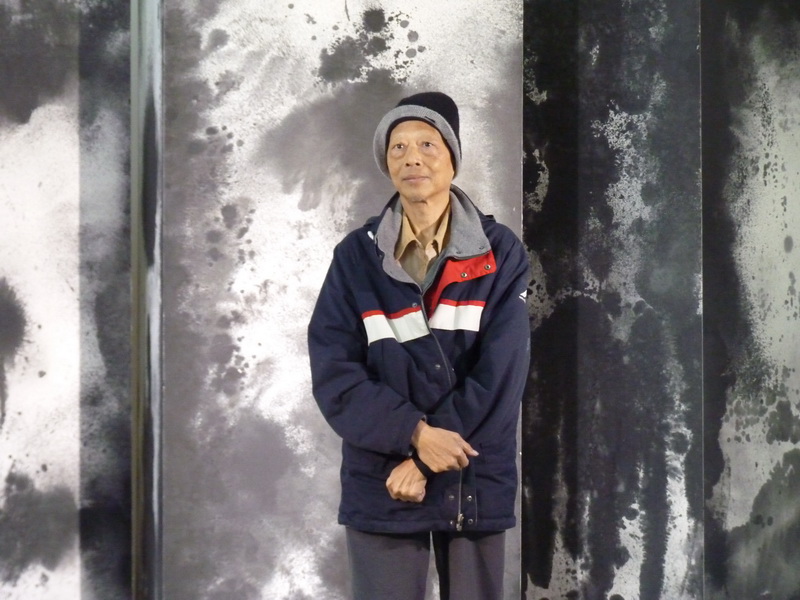
Chen Chia-Jen's solo exhibition "The Golden Cicada Sheds Its Shell" is held at Taipei Bama Gallery from December 29, 2012, to February 23, 2013. Text and curation by Chen Chi-Hsiang.
"How life happens, so accept it; because living—every day is a miracle." — Chen Chia-Jen
Preface: Teacher Chen Chia-Jen is always energetic, with a loud voice, full of vitality and perseverance. His life is incredibly rich and exciting, hardly resembling that of a patient battling cancer. As the famous writer Dickens said: "Stubborn perseverance can conquer any peak in the world." He is knowledgeable and perceptive, possessing sharp insight into worldly affairs and clear analytical skills. Severe life tests could not break him. Always maintaining a positive attitude, he has experienced various aspects of society and life, forging an unyielding will. He explored existential consciousness and expanded the dimensions of infinite life experience, as Madame Curie realized: "There are no things to fear in life, only things to understand." His lifelong passion for art and curiosity about new things remain undimmed. Passionate about art education, he was tireless with his students, becoming a successful pioneer in artistic enlightenment. A talented avant-garde figure in Taiwan's new ink painting, he is an early-maturing painter, a good teacher, a beneficial friend, and indeed a man of iron spirit.
Last year, Teacher Chen unfortunately contracted stomach cancer. With resolute determination, he underwent total removal, but it metastasized to liver cancer. From fighting for life to accepting the facts, his transformative consciousness and profound insights regarding the threshold between life and death—whether dying leads to rebirth or being born leads to death—allowed him to realize the mysteries and possibilities of life. This brought a physical and spiritual renewal. The Indian spiritual master Bhagavan Sri Amma stated: "Unless experienced personally, truth remains false" (Note 1). Understanding his fate, under the grace of existence, he said: "How life happens, so accept it; because living—every day is a miracle" (Note 2). Grateful for existence's gifts, he gained insight into a completely new life experience. Fortunately, turning back to his greatest love, art—which belongs purely to self-challenge and self-conquest—he entered the dimension of transformed life, diving directly into new creative realms, singing out his feelings, aiming to reach new artistic peaks.
Life's Touchstone – Educational Experience: Chen Chia-Jen (born 1952 in Xizhou, Changhua) is a pioneer of Taiwan's new ink painting and an art education mentor. He is widely known as the founder of the Jia Ren Studio, Taiwan's oldest and most authoritative studio for fine arts department entrance exams, which has influenced Taiwanese art significantly and now has students everywhere. Teacher Chen dedicated himself to the studio's mission, contributing his expertise to young students. He was a prominent figure in the early local-style painting era, one of the most debated artists, and a catalyst for the 1970s local-style painting debates.
Chen Chia-Jen's educational journey was bumpy and dramatic, forging an iron-like will that became the touchstone of his unyielding life. After junior high, he smoothly entered Douliu (Xiluo) High School, where he quickly fell in love with art classes. Under the guidance of art teacher Chen Cheng (younger brother of Chen Zhe), he first revealed his painting talent, happily learning from Chen Cheng. A year later, due to educational system changes, he was transferred to Huwei High School, which was eventually merged into Xiluo Agricultural School. Unlucky, he flipped three times in one year, drifting between schools, becoming a wandering student, transforming from a refined high schooler to a marginalized agricultural school delinquent.
Chen Chia-Jen was not diligent in his studies, hanging around in the "cow head class," but clearly, the art classes at Douliu (Xiluo) High School enlightened him, and he was deeply influenced by his older brother Chen Shih-Ming (then studying at the National College of Arts). He has always been keenly observant, with agile and particularly skillful hands, liking to doodle spontaneously; his instinct for painting seemed innate. After Xiluo High School, he did not encounter any other art teachers, and no one knew of his talent. Fate worked unintentionally; his painting gift was discovered by a music teacher who also taught art. Since art and music were often marginalized by the curriculum, the music teacher reasoned that since music is art, art is like music: "Art is like music, music is like art; art is harmonious like music." This modern view, akin to Kandinsky's abstract art theory, was fascinating. Starting with art in music class, which required drawing on grid-lined staff paper, Chen Chia-Jen thought this was absurd and questioned the teacher on the spot. He then casually drew for the teacher to show, and his talent was highly praised by the music teacher (Note 3).
There is another charming anecdote. Chen Chia-Jen often skipped classes he disliked, sleeping during lessons, which was typical for the "cow head class." One day, during math class, he lay down to sleep as usual. When woken up, he was called "idiot," scolded, and made to stand. While the teacher was furious, he quickly picked up a pen and sketched the teacher's angry expression, showing it to him to reveal his demeanor. Unexpectedly, the teacher said, "It looks super similar," and added, "You're really good at painting." Chen replied, "Show some respect; everyone has their specialty, why insult others?" (Note 4).
Curiosity About Art's Profound Mysteries: Chen Chia-Jen couldn't continue in high school and achieved nothing, but fortunately, he liked painting. He finally applied to art departments with equivalent academic qualifications but failed. The following year, his older brother Chen Shih-Ming took him north to live near the College of Arts. Guided by Chen Shih-Ming (who was studying there), they visited the college, encountering what "art" meant. Visiting art departments, he saw beautiful white plaster casts for the first time, observed students taking sketching and oil painting classes, and witnessed the teaching style of Chen Ching-Jung, who had just returned from Tokyo. Excited and curious, this gave him great imaginative space, making painting seem promising. He also met classmates of his brother, such as Ye Chu-Sheng and Tu Tsan-Lin. Chen Shih-Ming took him to Chen Ching-Jung's studio to take preparatory classes, strengthening his sketching and watercolor skills. He painted his first ink wash painting. Finally, heaven rewarded his hard work, and he was admitted to the Fine Arts Department of Wen Li University. This opened the profound mysteries of art. In 1971 (Republic of China Year 60), carrying young people's dreams, he came to Taipei to strive, never leaving since, passionately embracing the art he loved for life.
Artistic Formation and Creative Experience: When "Tian Zhuang" (Older Brother Chen) went to Taipei, he arrived vaguely on Yangming Mountain, beginning a new stage and challenge in life. He quickly got into the groove. Chen Shih-Ming introduced him to advanced artists. They visited Master Li Mei-Shu in Shulin. Excited, seeing paintings with his own eyes moved him to tears, opening the young man's wisdom eye and entering the realm of painting. He formed a deep artistic bond with Li Mei-Shu. Whenever free, "Older Brother" would visit him, sometimes accompanying the elder outdoors for plein air sketching, which greatly inspired Chen Chia-Jen's art.
In his sophomore year, Tu Tsan-Lin transferred to the Fine Arts Department of Wen Li University and lived with Chen Chia-Jen. Tu specialized in Chinese painting. Learning from Tu, Chen quickly displayed his artistic talent. Under Tu's guidance, he painted his first ink wash debut piece. After Tu's revisions, unexpectedly, it won First Prize in the National Youth Art Competition (Chinese Painting Category). At that time, he had just turned twenty. For this child from a remote area, who didn't even fully understand what Chinese painting was, winning the championship against all odds was like hitting the lottery jackpot. He joyfully received many prizes and was personally summoned by Chiang Ching-kuo, then Chairman of the Youth Conservation Corps, recognizing him as a national outstanding youth talent. He appeared on the front pages of all major newspapers' arts sections. Simultaneously, his watercolor painting (retouched by Chen Shih-Ming) also won First Prize. Since two first prizes couldn't be awarded simultaneously, it became an Excellence Award, which greatly encouraged him, who wished to become a professional painter. That same year, he won an Honorable Mention in Oil Painting at the 27th National Exhibition. This once again affirmed his artistic talent. By his second year at Wen Li University, he had swept national awards in both Chinese and Western painting. It is unimaginable that a future star of the Taiwanese art scene was thus born.
Studying in bustling Taipei, facing realistic life, he lived a simple, independent, and self-reliant existence. Starting in 1972 (Republic of China Year 61), while still a sophomore at Wen Li University, he began teaching at Chen Ching-Jung's studio. Although he won First Prize in Chinese painting, he remained quite unfamiliar with ink wash painting. To teach Chinese painting at Chen Ching-Jung's studio, constrained by poverty, he couldn't afford paper and ink. He said he had to practice plum blossoms, orchids, bamboo, chrysanthemums, and various landscape textures using only a brush dipped in water on floor tiles. Through self-taught hardship, he mastered these skills to make a living. Thus, the following year, he won First Prize in Chinese Painting at the 5th Taipei City Fine Arts Exhibition and Third Prize in Oil Painting at the International Women's Association Exhibition. In his junior year, in 1974 (Republic of China Year 63), he won First Prize again in Chinese Painting at the Taipei Ten Major Construction Projects and Historical Sites Exhibition.
His older brother Chen Shih-Ming went to study in Spain, sending many Western art books, which excitedly exposed Chen Chia-Jen to modern art and broadened his horizons. This fueled his dream of going abroad, so he chose Western painting. He followed three mentors: Liao Chi-Chun, Yang San-Lang, and Li Mei-Shu. These elders paid special attention to this diligent and eager student. Teacher Li taught many traditional techniques; from Teacher Liao, he learned a set of color theories. He was deeply influenced throughout his life by the elders' attitudes toward art, their persistence and love for painting, and their character. In his senior year, he won First Prize in Oil Painting at the Wen Li University Fine Arts Exhibition. Invited by the National Museum of Art, he held his first solo exhibition in Chinese painting, becoming the youngest artist invited for a solo show. Although he won championships every time he exhibited Chinese painting, he ultimately graduated from the Western Painting Department of Wen Li University. Worldly affairs are impermanent; his father died unexpectedly, shattering his dream of studying abroad. Not going abroad became a regret for life.
The Swan Song of the Spring Art Gallery Solo Exhibition: During military service in 1976, he won the Bronze Medal in Oil Painting at the 12th National Armed Forces Literary and Art Awards. After retiring in 1978, he was invited by his hometown to hold a touring solo exhibition in Changhua, Yuanlin, and Lukang. The following year, with improved skills, he won the Fourth Lion New Artist Award, receiving a generous prize money, allowing his artistic career to expand grandly with boundless prospects. That same year, as the youngest and most talented painter, he held a solo exhibition at the then-popular Spring Art Gallery. He exhibited the "My Land, My People" series of ink wash paintings, which was his most challenging and forward-looking work. It caused a stir in the art world and attracted political attention. Notably, then-Vice President Hsieh Dong-min specially visited the exhibition.
The "My Land, My People" ink wash series subverted traditional concepts, methods, and themes of ink painting, completely breaking away from orthodox traditional Chinese painting. Using precise sketching realism techniques, he fully exploited traditional ink media (deeply influenced by his brother Chen Shih-Ming's detailed sketches, reminding one of 1970s New York Photorealism). In that deeply entrenched, conservative, and stagnant era, it immediately sparked debate, quickly igniting the fire of the local-style art debate. Questions arose about new ink painting; some even argued it wasn't ink painting at all. This ignited a fierce battle of pens regarding artistic concepts, tradition vs. modernity, local vs. pan-Chinese discourse. The local-style painting debate arose accordingly, shaking mainstream values and planting seeds for subsequent liberation trends in politics, society, and artistic humanistic concepts, along with various possibilities. Chen Chia-Jen's solo exhibition at Spring Art Gallery became the swan song of his artistic creation peak. After this sensational exhibition, he drew a period to his art and bravely crossed into another layer and stage of life.
Inside and Outside the Studio's Realm: On November 19, 1978, Chen Chia-Jen officially established the now-famous Jia Ren Studio at the intersection of Peace East Road and Roosevelt Road. When erecting the studio sign, almost the whole street laughed at the situation. Unexpectedly, although the "Jia Ren Studio" sign has become mottled, it has stood firm to this day. In a blink of an eye, thirty-plus years have passed, and it has become Taipei's oldest studio. The following year, the studio entered normal operation, its reputation spreading widely, gathering friends from the arts and media. Today, it continues to nurture countless outstanding artists, art teachers, architects, designers, and even young dentists.
Starting from scratch, Jia Ren Studio bought a house on Nanjing East Road in 1985 (directly opposite the Leba Hotel), attempting to expand alternative visions and territories by establishing "Jia Ren Gallery," a purely experimental space for artistic exploration, marked by a decisive knife. Later, Lin Ju's performance art "Closed Observation" attracted media attention, followed by renowned sculptor Liang Ping-Zheng's installation exhibition in the gallery. However, due to poor management, it soon closed. At this time, on the eve of Taiwan's social and political liberalization, Chen Chia-Jen led a group of young students to walk through the pedestrian zone in Ximending, Taipei's bustling commercial district, spray-painting walls and performing street dance late at night. This released the vitality and energy of social youth and attempted to liberate the closed and conservative society. It was quickly adopted by the city government as a legitimate activity in the Ximending pedestrian zone.
This period was also the peak era of Jia Ren Studio. Naturally, when fortune favors you, nothing can stop it. Public Television wanted to film a long-form educational program and approached Chen Chia-Jen, producing nearly a hundred episodes over four years titled "Simple Beauty." Variety shows like "Social Panorama" also featured him. Overnight, Teacher Chen became a "big shot" celebrity in arts and entertainment circles.
The Art World is Like a Battlefield: After the crazy years, in 1989–1990, Chen Chia-Jen wanted to calm down and settle. He only began slowly distancing himself from these friends in 1995, as it was unbearable, especially since middle-aged people should consider the second peak of life. Chen believed that the first peak of heroes created by the times was not what he created. Fame and wealth aroused jealousy among others. He felt his artistic talent was not fully utilized; his art was more than that, because creation was his greatest love and irreplaceable in life.
For nearly forty years, he almost disappeared from the art scene. Where did Chen Chia-Jen go? Indeed, the art world is like a battlefield. Those who disappear from the battlefield are either casualties or deserters. Did he just exit the game? Artistic creation is purely a private act and an attitude toward life. Disappearing might mean continuing to survive elsewhere in other forms of life, or refusing to compromise with the artistic environment, carving a new path to seek broader artistic realms and existential perspectives. Of course, there is plenty of time ahead. Should one fight for a moment or fulfill a lifetime? Art is a lifelong vocation, not temporary fame and wealth. Waiting for the right opportunity to create new artistic peaks.
Life's Transformation – The Golden Cicada Sheds Its Shell: "The Golden Cicada Sheds Its Shell" solo exhibition is the first release of works by painter Chen Chia-Jen after nearly forty years of seclusion. After forty-plus years of art education and reflection on the process of ink creation, he inventoried all "themes," "brushwork," "forms," and "perceptions" of traditional ink painting. This represents a sudden clarity in the dimensional "thinking" and "realization" of life experience. It is a summary of forty-plus years of creation and teaching, intending to summarize all possibilities of brushes, paper, ink, materials, and techniques of traditional ink painting, thereby shedding the shell. Guided by macro-life philosophy and creative consciousness, he enters tradition, goes deep into tradition, and finally walks out of tradition. Under the monologue of tradition or the tradition of monologue, the French modern sculptor Rodin said: "I have no invention, only rediscovery." Actually, inspiration and wonder are around us; the missing switch is the freedom of the heart or the openness of new senses.
"The Golden Cicada Sheds Its Shell" explores diverse imagery and multiple writings: realistic, expressive, environmental, and mental. Within the myriad phenomena of figurative, non-figurative, imagistic, abstract, and mental images.
The Golden Cicada Sheds Its Shell is divided into ten major series: starting from classic traditional ink, deeply rooted Four Gentlemen, Adding Feet to a Snake, From Beginning to End, Boundary Painting – Court Painting, Opportunity Arises, Achieving Nothing, Maintaining Success is Difficult, Having Eyes but No Pearls, and All Mouths Mourn, Perfection. Inventoring a hundred themes, all things of traditional essence, starting from plum, orchid, bamboo, chrysanthemum, flowers and birds, landscapes, entering splashed ink and accumulated ink techniques, expressing feelings and perceptions of various situations and fields: loneliness, everything goes well, accumulation over time, Tai Chi, all things, rubbing skin, leaving blank, black, stagnation, shadows, Return to Taiwan, reading white, discovery, chaos, contemplation, quiet, line drawing, lost, adding feet to a snake, cleverness, sweetness, gathering, branding, conflict, letting nature take its course, having a beginning and end, instant, clever dots, golden boy, multi-point perspective, reclining tour of landscapes, copying, aestheticism, lost, fantasy, appearance and spirit separated, thought, one stroke, wind clouds and emptiness, etc.
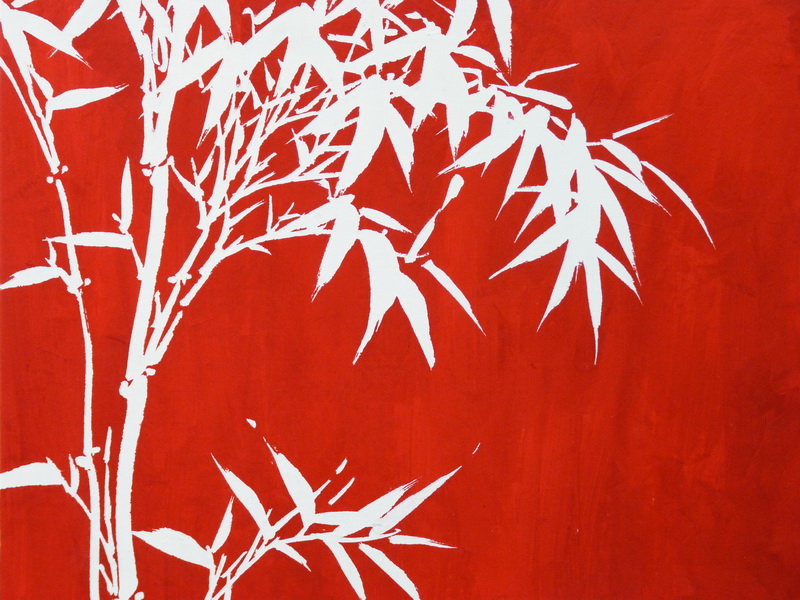
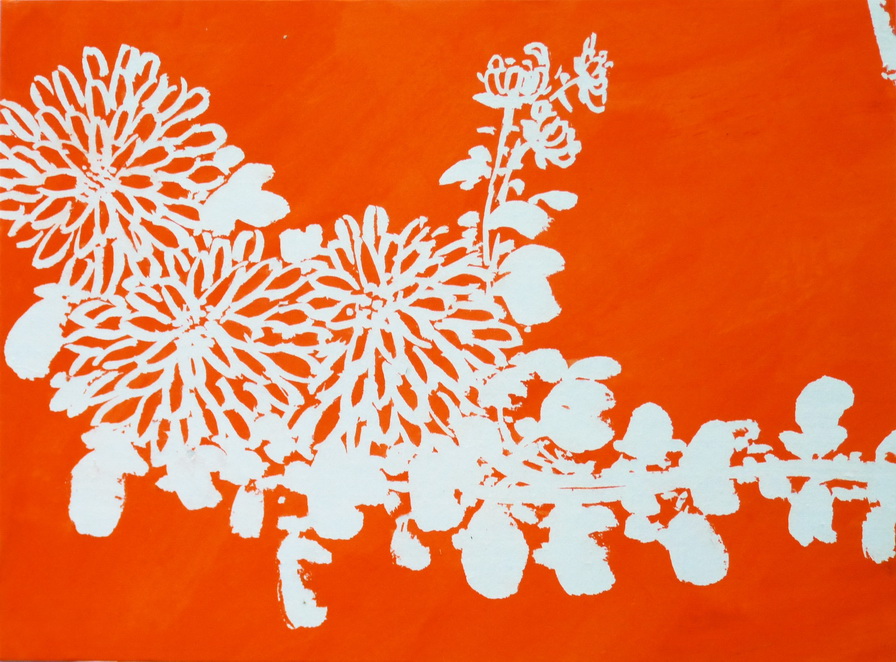
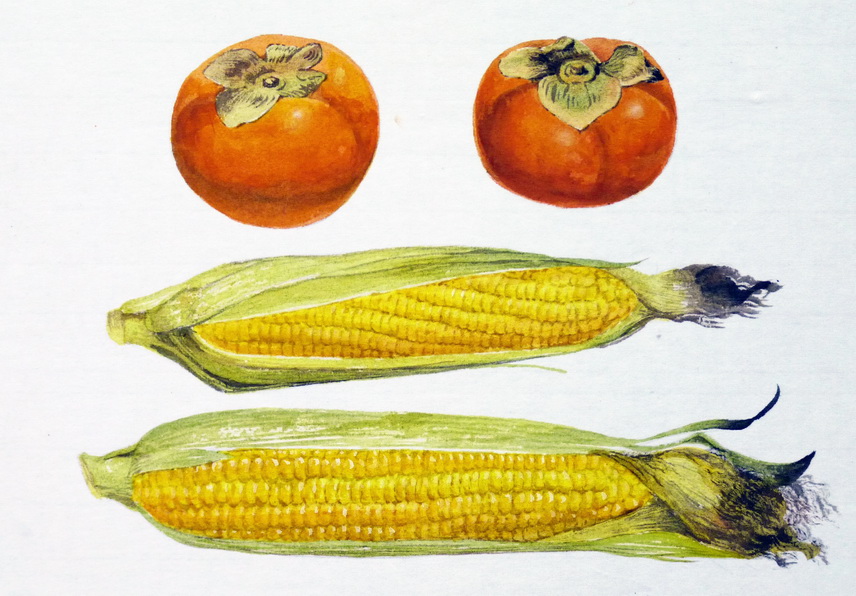
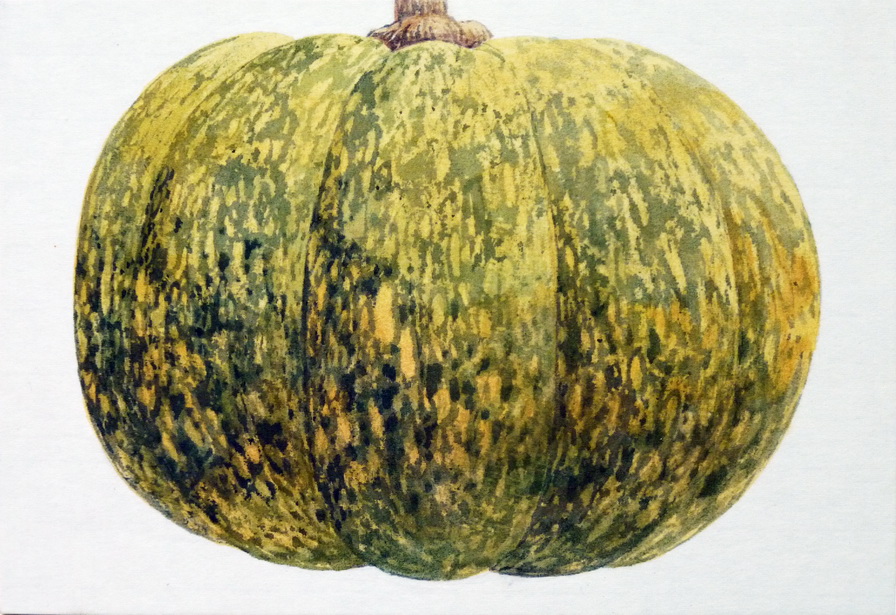
These ten series are under sharp and wise double meanings, irony, metaphor, and allegory, borrowing the most beautiful and classic language symbols of tradition to critique conservatism, literati cunning, and social hypocrisy regarding society, politics, culture, and human nature. Each series has six to eight pictures, all traditional classics requiring deep, wise, and repeated interpretation. For example, the Deeply Rooted series uses a "pumpkin" to illustrate the difficulty of "hard to do" in "easy to know, hard to do." Most people are attracted by the image but fail to grasp the difficulty of "rooted," pointing out how the high formality of traditional painting affects its deep roots. Or using a "persimmon" to metaphorize achieving nothing (shi wu cheng). "Plum, Orchid, Bamboo, Chrysanthemum" are presented via rubbing methods, with symbolic colors indicating climate and feeling: white "plum" in early spring, blue "orchid," auspicious vermilion "bamboo," and orange "chrysanthemum."
Adding Feet to a Snake series: Using Zhang Daqian's poetic splashed-ink landscape dotted with sailboats as an example, questioning the superfluous, exaggerating the Chinese literati painting realm, yet falling back into tradition. Using the deep, high, and level distance methods of traditional landscapes for a reclining tour of landscapes. From Beginning to End: Using paper wiped by the artist's brush and ink to form a painting, implying the possibility of natural formation, illustrating the ancient story of cherishing ink like gold. Boundary Painting – Court Painting: Satirizing the traditional ten years of effort for one stroke, the literati playing with artisan crafts in Chinese culture, and belittling the tradition of artisans. No wonder no artisan names appear on all classic Chinese buildings and decorations; under the tradition of "the payer is greatest," only the payer's name is engraved. Maintaining Success is Difficult: Implying success is not easy; besides hard work, divine grace is needed. Inventor Cai Zhong-Liang said: "Hardworking people are not necessarily successful, but successful people must have worked hard." Eye and Mouth Series: Having Eyes but No Pearls and All Mouths Mourn. Have you seen it? Have you spoken it? Have you felt it? Telling lies with open eyes, where is the truth? The future prospect of Taiwan "Return to Taiwan," or using text painting "Return to Nation," peeping into Taiwan's identity, elaborating on the combination of national strife and territory. Or appropriating Qi Baishi's composition of chicks and spiders as "Opportunity Arises," borrowing the motif of watching crabsrun rampant with sleeves folded "See how long you canrun rampant," critiquing contemporary Taiwanese society. Painter Shi Tao painted the universe; Chen Chia-Jen constructs personal existential consciousness, borrowing Song Huizong's calligraphy to paint heaven and earth. "I Paint for You to See – Look at the Boundaries of My Painting," starting over, one brush in hand, invincible. Finally, the Black and White Yin-Yang series of Perfection: From the transformed life of the golden cicada shedding its shell to exiting the border.
The Spiritual Field of "The Golden Cicada Sheds Its Shell": Space is the carrier of works; works are the content of space. But through spatial construction, what is embodied is not just the content of the works, but the spirituality of the spatial field. "The Golden Cicada Sheds Its Shell" is presented by Chen Chia-Jen in Bama Gallery using a small space with large layout, specifically utilizing paintings to elaborate on spatial installation expressions. Clearly, paintings are visual guides, but space is the subject of the exhibition.
A hundred paintings of six different sizes are consciously arranged through space, walls, or floors, forming two overall rotating systems. (Entrance Hall) forms an inward-aggregating honeycomb; (Back Hall) presents an exiting the nestemerge from the realm, full of explosive-absorbing, absorbing-explosive energy, referring to the unchanging cosmic energy. Visually and spatially, the inner and outer yin-yang rotation reveals the unique Eastern worldview of Wuji generating Tai Chi. The front hall is "Black," with works tightly combined into "Full," and a "Pure White" painting placed on the ground in the exact center, bringing out a subtle Eastern mystery. Connecting to the back exhibition hall, responding to the gallery reception space, constructed with rhythmic dispersion forms, shaped as "Loose," contrasting with the previous Fullness. On the glass table of the reception space, a "Black" painting is placed, accurately reflecting the white dimension, embodying the Daoist thinking of "reality within emptiness, emptiness within reality, extreme emptiness becomes real, extreme reality becomes empty," reaching an extraordinary state and referring to the cosmos.
The "Golden Cicada Sheds Its Shell" solo exhibition points to the painter's transformed life, existential consciousness, the practice of artistic action, and love for this land. The entire exhibition begins with the painting "Chen Chia-Jen's Hand" (hung diagonally on the wall of the front hall). Viewing follows the musical rhythm of the yin-yang Tai Chi rotation forward. The body slowly follows the Tai Chi energy melody, acting and appreciating consciousness in the endless beginning and end of time and space. Finally arriving at the diagonal wall between the back exhibition areas, below eye level is a small painting of "Taiwan." Viewers must bend down to carefully observe this painting, symbolizing paying highest respect to Taiwan and expressing the painter's sincere love and care for this land and its people.
From Golden Cicada Shedding Its Shell to Exiting the Border: The Taipei "Golden Cicada Sheds Its Shell" exhibition was simultaneously held at the Contemporary Art Museum of the Chinese Millennium Monument in Beijing, China, featuring the solo exhibition "Heavenly Pillar" (Note 5). Using contemporary ink spatial installation techniques, this series consists entirely of majestic, thick, pure abstract ink imagery, mental images, and abstractions. A total of 17 magnificent pillars were exhibited, displaying the vast universe and the heavenly stems and earthly branches of cosmic energy. A series of geometrically magnificent and majestic arrangements, with 12 cylindrical columns representing months and solar terms on the outside, and four square columns representing the four seasons inside. In the exact center, standing from heaven to earth, is the great round "Heavenly Pillar," elaborating on the spiritual connotation of cosmic unity and the unity of heaven and humanity. Seventeen huge and magnificent pillars, seventeen or more ink brush methods, seventeen distinctive rhythmic compositions, seventeen types of cosmic "aura" states and situations. There are thousands of "heaven-earth-human" mindsets and realizations, all monumental works under Teacher Chen's life transformation. Thus, from the golden cicada shedding its shell to exiting the border. He said: "'Heaven' is the source of human life energy, so close to humans, almost indistinguishable. However, although humans originate from heaven and exist in the world, they neither understand 'human' nor know 'heaven.' Therefore, there is what is called 'human affairs are hard to know' and 'heavenly dao is hard to measure,' so elusive, yet so desirable." (Note 6)
Note 1: Teachings of Sri Amma Bhagavan, published by Taiwan Unity Foundation, December 2010. Note 2: Interview in April 2012. Note 3: Interview in April 2012. Note 4: Interview in April 2012. Note 5: "Heavenly Pillar" solo exhibition at the Contemporary Art Museum of the Chinese Millennium Monument, Beijing, China, from December 26, 2012, to January 6, 2013. Note 6: Professor Wu Li-Xing's collected essays from the Department of Art and Design, Nankai University, Tianjin, China.
Appendix: This article cites interviews from April 2012 regarding Chen Chia-Jen's personal biography.