Kinship from Afar
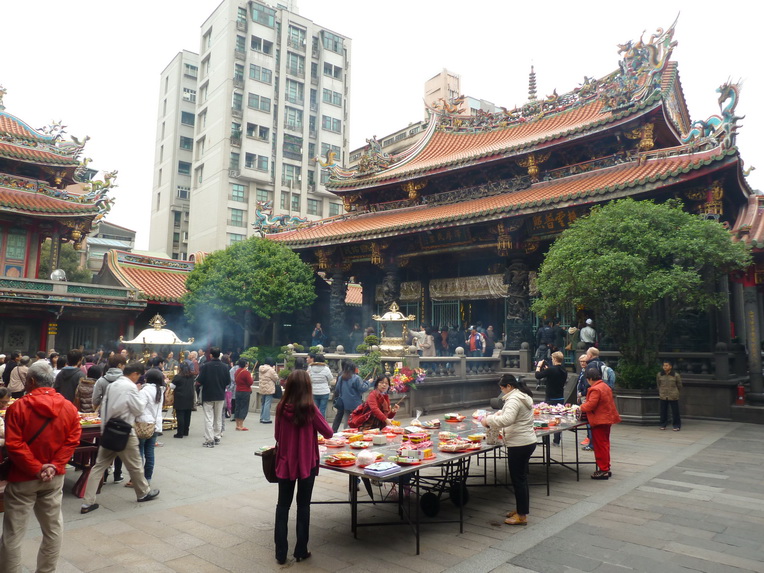
Taipei Longshan Temple was the first stop on my daughter’s journey to her Taiwanese roots.
Deeply happy, my daughter Emilie traveled all the way from London through Paris to visit her father’s hometown in Taiwan. As a descendant of Taiwanese heritage, she is not only familiar with Taiwan but also consciously identifies as a French-Taiwanese. Having grown up and studied in France and worked in London, a global metropolis, she possesses a global consciousness and worldview characteristic of this era. Taking advantage of a two-week holiday at the turn of the year, she came to this country that is both familiar and strange to her. The word "Taiwan" is engraved in her body and mind. Although it has been 12 years since her last visit, when she was in middle school, she should remember everything and everyone in Taiwan, including her family. She also remembers that during that previous visit, I had two solo exhibitions in Taiwan: "Rice's Shared Memory: Intuition and Imagination" at Taipei Zhuwei Studio and "Crossing the Horizon" at Jiayi Railway Alternative Space. Twelve years after her youth, she finally had the opportunity to travel to her father’s homeland, filled with emotion and curiosity. Here lies her root; roots are indelible mental imprints that nurture culture and consciousness throughout life. As a mixed-race individual, under their depth and breadth, she possesses two crossing nations and broad cultural awareness, having cross-cultural life experiences, which is the most unique and beautiful scenery in life. Her father’s hometown, her father’s nation, language, culture, consciousness, and example all create another meaning and value of existence. A Taiwanese daughter returning home brings deep feelings and significance, not just for herself, but especially for the entire family.
The trip to Taiwan to visit relatives involved visiting all family members and friends in Taiwan. After 12 years, changes in people and things were still vividly remembered, awakening impressions from blurry memories. Family affection lasts a lifetime. The first stop in Taipei was staying in Aunt’s new apartment in Neihu (my sister had just moved into a new apartment). The entrance lobby was so magnificent that Emilie asked, "Is this a luxury hotel?" Large apartments in Taiwan are indeed built to such specifications, no wonder she called it a luxury hotel; perhaps this is a cultural difference. She communicated with her aunt and cousins using Chinese with a French accent, and everything went smoothly amidst laughter. On the first day, due to gallery setup, she went out with Cuiyun and Weilun to stroll near the 101 Building in the East District and ate a big meal at "Shang Ge Wu," which is unavoidable in Taiwan. Curious about boutique shop windows and advertisements, this was her specialty, providing her with another perspective and viewpoint in Taipei. The next day, she accompanied me to the gallery setup. Around three o'clock, I took her to Longshan Temple in Wanhua to pray and visit, witnessing Taiwanese religious beliefs, and we stopped by the old street Beipiliao to learn about the past and architectural styles of Taipei City. On the way back, Emily and I walked in the Taipei Botanical Garden, a tradition we often followed when walking in parks in London. In the evening, Aunt cooked cut vegetables with fish and meat, resembling a prayer feast; the enthusiasm and deep affection were visible and deeply felt.
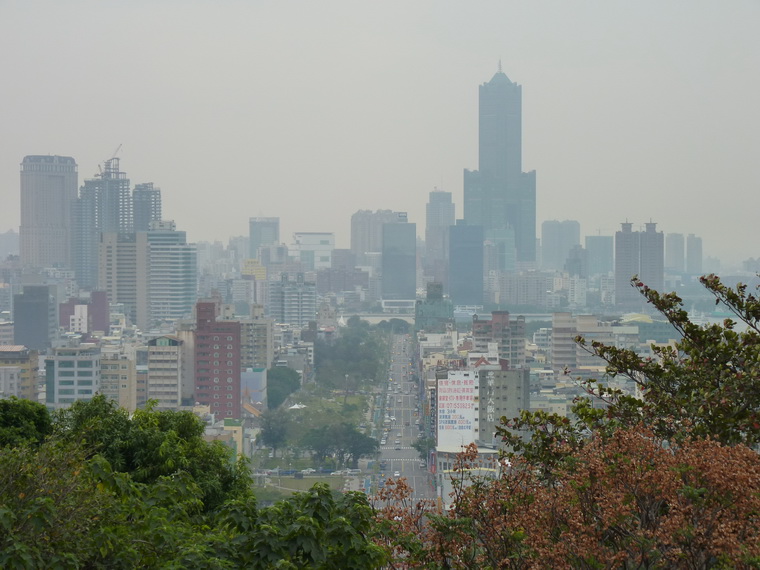
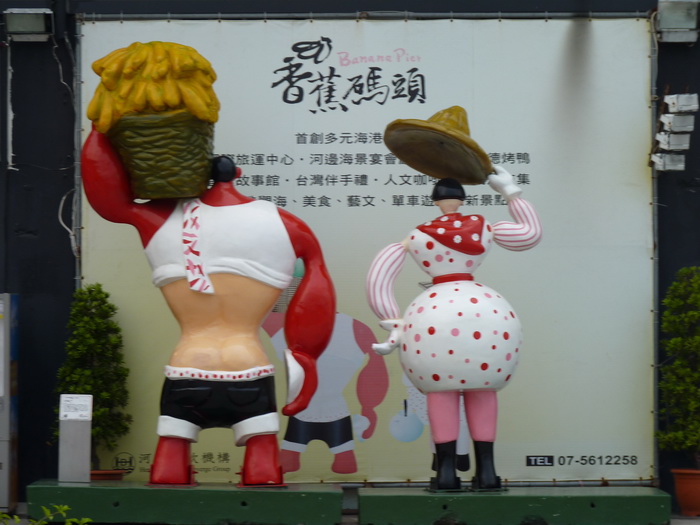
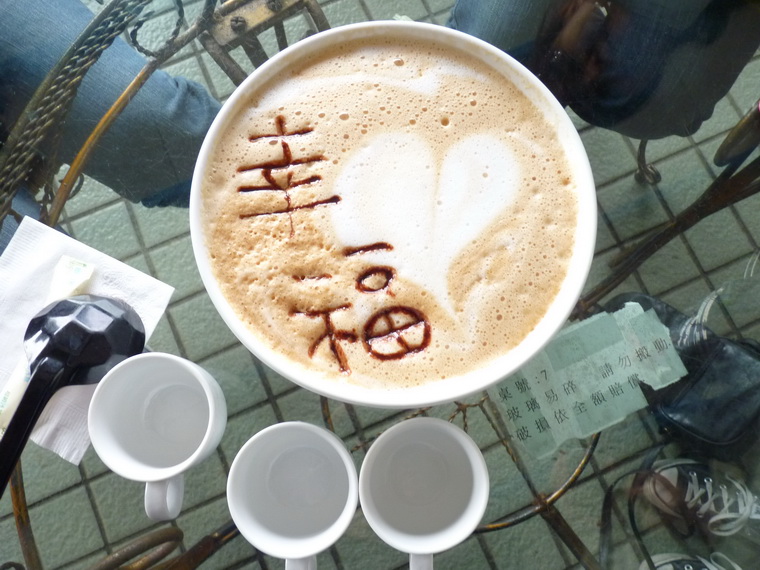
During Emilie’s trip to Taiwan to visit relatives, we used all modes of transportation. We took the Kuo-Kwang bus down to Kaohsiung, taking in the scenery along the highway, rode the Taiwan Railways train from Kaohsiung to Chiayi, took a ferry to Qijin, and finally took the High-Speed Rail north. Taiwan’s transportation is so convenient and cheap, incomparable to other countries. Traveling from north to south, appreciating Taiwan’s scenery, the temperature difference increased as we went south. After long anticipation, under the warm welcome of my brother-in-law and sister-in-law, we arrived at the southern island realm—Eldest Brother’s home in Fengshan. Aunt Zhen and Aunt Hui specially took leave to accompany their cousin from afar, starting a warm family journey. Arriving in Kaohsiung at noon, in the afternoon, Aunt Hui and Aunt Zhen drove us to Chashan to walk, overlooking the panoramic view of Kaohsiung Port from a high vantage point, and visited a coastal café for afternoon tea. We ordered the most charming and unique large bowl coffee and desserts here, comfortably drinking coffee while watching ships coming and going outside the port. In the evening, we went to the Banana Pier Cultural and Creative Space in Kaohsiung News Creation Space. The huge banana sculpture and the idol of banana carriers in the form of a cultural monument marked this port, which was the dock for banana exports in the 1960s and 70s. Emilie bought some authentic small gifts. In the evening, Aunt Hui treated us and her parents to an exotic dinner at a Thai restaurant, chatting with Emilie late into the night like three sisters.
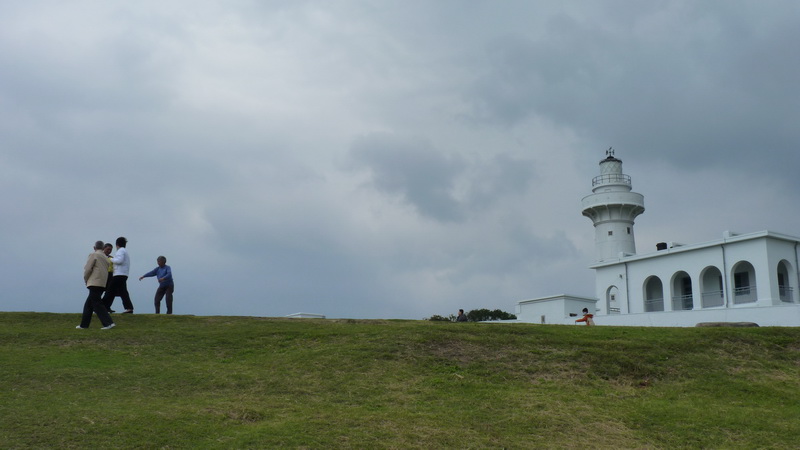
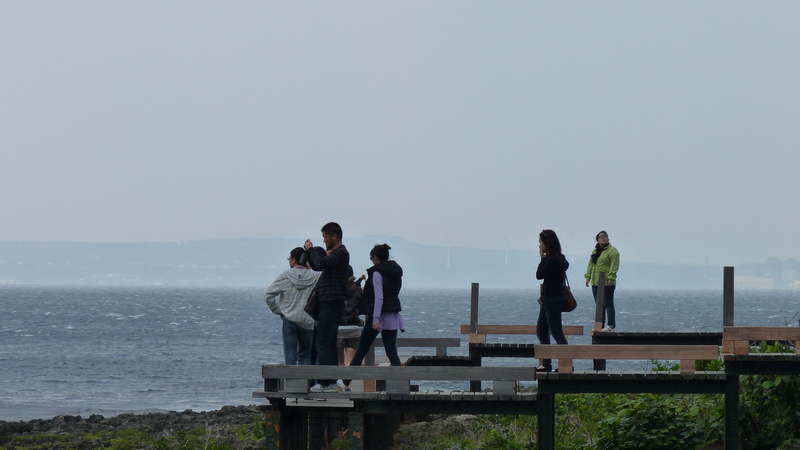
The next day, Aunt Hui decided to drive us to Eluanbi, at the tip of Taiwan, to visit one of the most distinctive landscapes of the southern island. Early in the morning, we drove straight down from Kaohsiung to the southernmost end of Taiwan, passing through Fangliao, our hometown with mountains and water, along the bright southern coastal mountain road to Eluanbi. We visited the white lighthouse and strolled along the coastline, admiring the boundless ocean and lush subtropical plants. After 2 PM, we arrived in Hengchun for lunch and strolled around Hengchun Old Street to eat local desserts. In the evening, we experienced the scenery of the Luoshan Wind in Pingtung County, watching the magnificent Pacific Ocean where clouds gathered and surged, a special natural landscape before our eyes. Passing Shuidiliao, Aunt Hui specially detoured into the village, coming to the place where I was born and grew up. This is my original hometown—home and all my childhood memories, now turned into an unremarkable green space. I became a stranger in my hometown; people and things have changed. Only my emotions and memories remain, telling my daughter of the indelible mental imprint of my life, right here and now. The journey to the southern island, full of hospitality and memories, also experienced the consciousness of existence and the changing scenery of life.
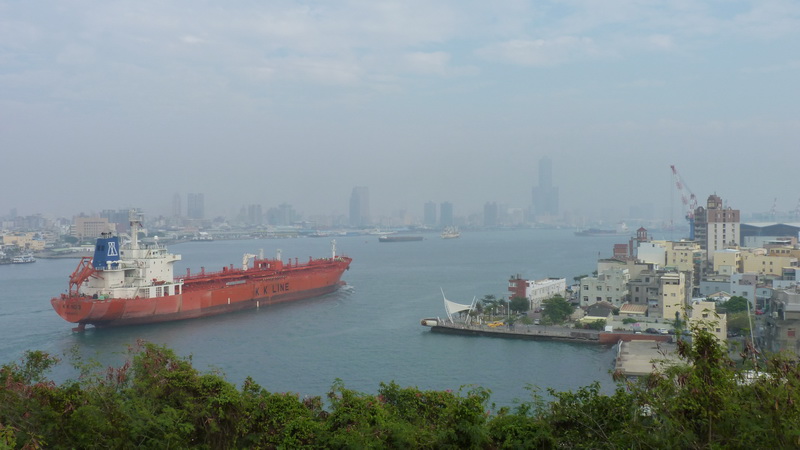
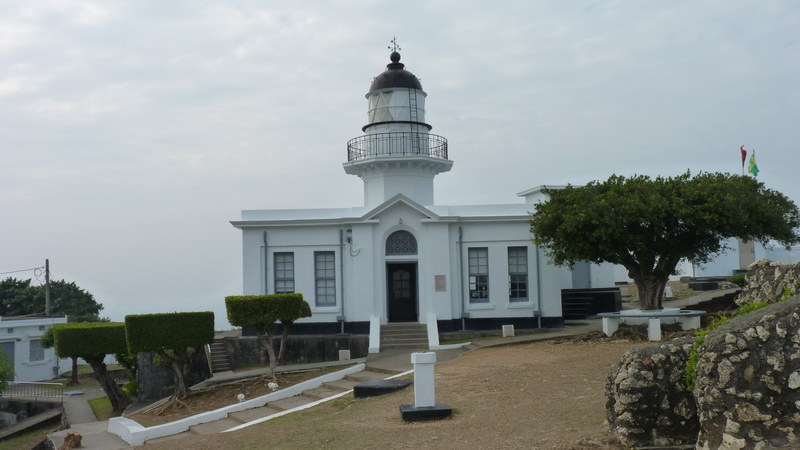
Aunt Hui and Aunt Zhen accompanied us enthusiastically for two days. On the third day, they went to work, and I took my daughter to Qijin in Kaohsiung. With the MRT, Kaohsiung is truly convenient; we took a boat across to Qijin. In just a few minutes, we crossed from one shore to the other. Qijin feels like a small island, surrounded by sea on three sides. Inside, we looked out at the magnificent panoramic view of the Kaohsiung metropolis and the port where large ships enter and exit; outside is the Taiwan Strait, where many large ships waiting to enter the port are anchored. In the winter of this southern island, the weather was so gentle and sunny, with brilliant sunshine and a gentle sea breeze. Emily and I came to the beach in Qijin, somewhat like a summer seaside vacation scenario. The two of us lazily lay under coconut trees watching the sea and meditating. The beach and sea were empty; perhaps Taiwanese people do not have the habit or culture of playing in the water. Of course, for Taiwanese hearts, the sea holds complex knots (a people who look at the sea but do not see the sea; the sea is a blocked boundary or imprisoned under martial law). We walked leisurely along the Qijin seaside early in the morning. In the afternoon, we strolled along the inner coastline of Qijin, watching the unique scenery of large ships entering the port, and met two experts in driftwood from Qijin who specialize in creating sculptures with driftwood, and we visited their studio. Along the hilltop Qijin Lighthouse, the pure white building was extremely beautiful. From a high vantage point, we viewed the panoramic view of Kaohsiung, the Water Capital, and watched large ships (petrochemical tankers and container ships) entering and exiting the port. Then we followed the slope to the trench platform to overlook the magnificent panoramic view of the Qijin coastline. Thus passed a wonderful day.
On the 26th and 27th, I was invited by the Tainan City Government to participate in the "Guandong Cultural Journey" held to promote local industries in Guanziling and Dongshan. On the morning of the 26th, Emilie and I took the train from Kaohsiung to Chiayi, meeting at Qiuxiang’s house. The Tainan City Government arranged a meeting at 2:30 PM at Daxian Temple in Guanziling with writers and poets from northern and southern Taiwan. I brought my daughter to join the day’s activities. Upon arriving in Chiayi, we split into two cars to go to the appointment location. Emilie and Xiao P were in one car, and I was with Qiuxiang in another. First, we met at Daqian Temple, a Buddhist sanctuary surrounded by mountains, to visit, then went to Biyun Temple to pay respects to Guanyin Bodhisattva. Afterwards, we joined the tour to Guanziling Hot Spring Township to visit the special geographical landscape here—Water and Fire from the Same Source. Afterwards, the city government hosted the writers to wash in hot springs. We strolled around this famous hot spring town and hosted a banquet for the writers. Under the enthusiastic hospitality of the Tainan City Government Culture Bureau, we ate local dishes from the inner mountains, quite distinctive in flavor. Afterwards, my daughter and Xiao P returned to Chiayi, and I stayed at Xianhu Farm B&B with the tour group, with another day of visits scheduled for tomorrow. Emilie was left to Xiao P to arrange her itinerary in Chiayi; on the 28th, we would take her to Alishan together.
On the 27th, I continued the Guandong Cultural Journey, mainly visiting the local coffee industry in Dongshan. Our group of writers and poets visited several representative cafes in the green and bright inner mountains: Yanding Cafe, Gaofeng Coffee, Dachu Huajian Coffee, etc., eating and drinking, tasting authentic Dongshan coffee and specialty dining, visiting the coffee ecological park, and gaining a deeper understanding of coffee planting and the operation of inner mountain cafes. In the evening, we returned to the city center to visit the Taiwan Literature Museum and the museum of famous writer Ye Shitao. At night, the Director of the Culture Bureau entertained the writers with a sumptuous feast featuring specialties of the ancient city, ending this literary journey.
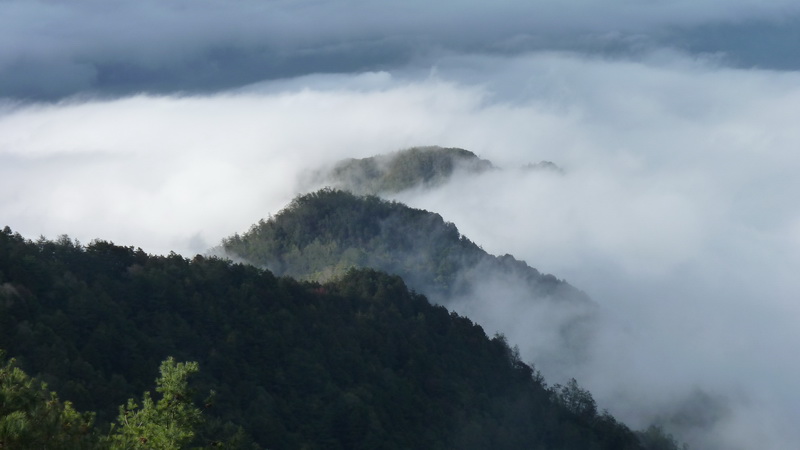
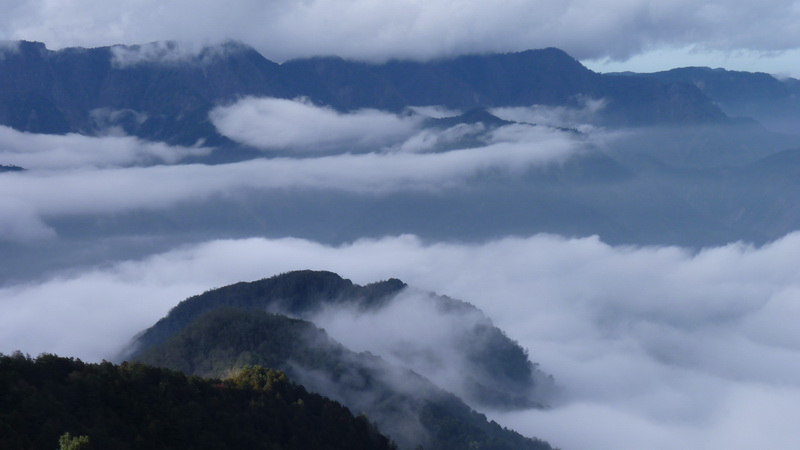
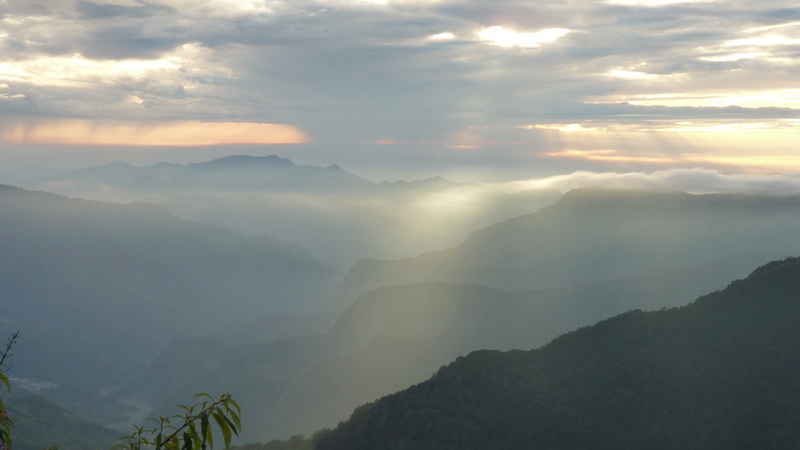
On the 28th, Emilie and four others went to Alishan. We originally wanted to visit the tea garden scenery on the Er Yanping Trail and stop by the restaurant of the Tsou tribe member Youbasidote to taste the unique meals of Taiwan’s indigenous peoples. On this sunny and brilliant winter day, we impulsively decided not to go to Alishan Forest National Park, but went directly to Tatashan. After eating at Shizhao, we visited nearby Tsou tourist tea gardens and took photos with the handsome Tsou men and the beautiful Alishan girls. Driving to the highest point of Alishan, Tatashan, the sea of clouds was even more charming. If the weather permitted, we might even see Taiwan’s sacred mountain, Yushan. Climbing up along the way, the latitude increased to nearly 3,000 meters, arriving at Taiwan’s highest Yushan National Forest Park. Looking out at the magnificent Alishan mountains, the ever-changing sea of clouds, too beautiful to describe. Everywhere were dense native forests, with macaques coming and going, forming natural poems and painting scenes.
High mountains are unbeatable against the cold; it was a bit chilly. Watching the illusory sea of clouds and ethereal mountain mists, coming and going, multiple changing natural beauties were all before our eyes. The great beauty of nature cannot be replaced. Walking forward along the trail, step by step. Midway, Emilie caught a cold and had difficulty breathing. Yushan was hidden behind deep clouds and fog. So, we returned to the starting point. Driving forward, we went to see the unique Couple Trees, two dead giant trees standing side by side on the roadside, relying on each other for life. Named very humanely and poetically, after taking photos, the highway administrator informed us that the road closure time had arrived, and night was about to fall on the mountain. We drove down the mountain, all the way to Shizhao. Having walked all day, cold, tired, and hungry, we entered a lamb hotpot restaurant to drink ginger-boiled lamb hotpot to ward off the cold and fill our stomachs before going down the mountain. My daughter and I went directly to Chiayi Railway Station to take the Ziqiang Hao train south to Kaohsiung. By God’s grace, it was another wonderful day.
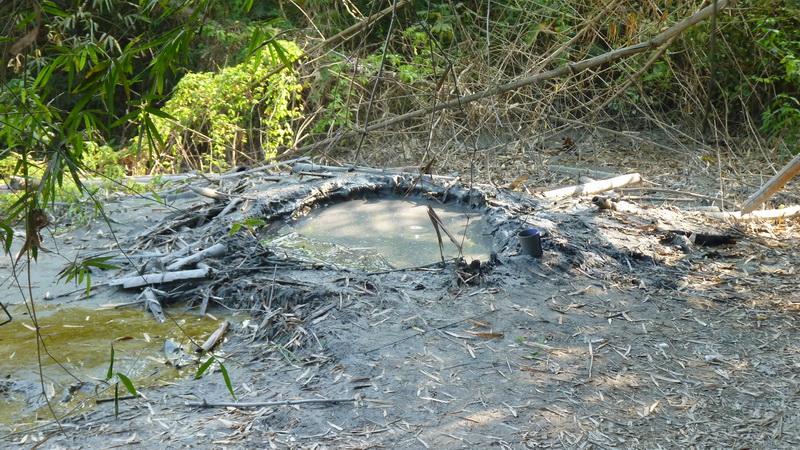
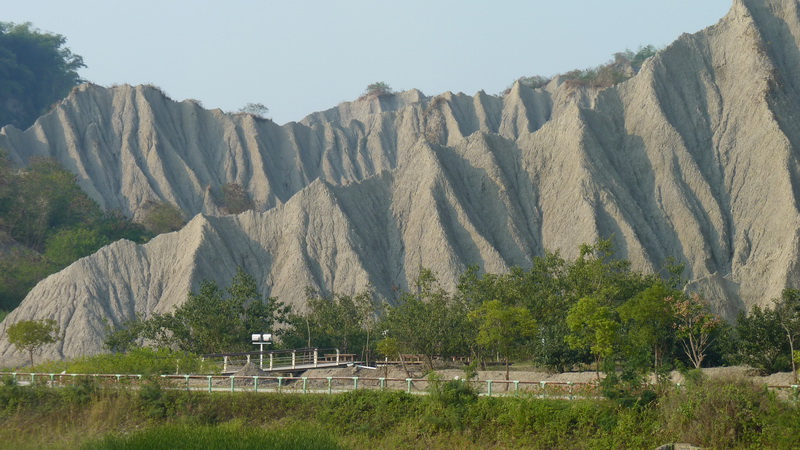
On the morning of the 29th, Aunt Zhen and Aunt Hui were not on leave. I took Emilie to visit the Qiaotou Art Village and stroll around the sugar factory, because I had just been a resident there last month. Aunt Hui drove her father’s car. On holidays, many people came to the sugar factory to stroll and relax, making it a recreational space closest to the Kaohsiung urban area. We first visited the Qiaotou Sugar Factory, newly restored Japanese-style old dormitories, Guanyin statues, narrow-gauge trains, carriages, rails, agricultural machinery, the sugar museum, old sugar factories still standing, series warehouses, Conglong’s dense old camphor trees and Jiadong trees providing shade, and the chimney symbolizing the sugar factory. Our group of nearly ten people went to the art village warehouse exhibition room to visit the Taiwan New Mural Team’s exhibition on the theme of Taiwan’s new banknotes. I told my daughter that I had been a resident here last month and participated in leaf rubbing creation for White House environmental education, making greeting cards. At noon, I had an appointment with Aunt Cui’e, who lives in Qiaotou and came directly to meet us. We went together to Yanchao for lunch, eating tofu curd chicken with a unique flavor and local vegetables. Afterwards, our group of five went to visit Yanchao’s unique geographical landscape—the active volcano, hidden in fine bamboo forests, bubbling magma slowly flowing, forming unique terrain. Then we came to the unique mud mountain, Moon World, resembling the surface of the moon, surrounded by mountains, barren plains with no plants or flowers. The world’s natural landscapes are truly wonderful and mysterious, like entering another geographical scene in lunar space-time. Now we walk on planned trails; the feeling of past desert plains is gone, becoming a new tourist attraction. After visiting, we returned to Qiaotou Sugar Factory to eat Taiwan Sugar Company’s most famous ice cream, enjoying food, drink, play, and fun—a wonderful day. In the evening, Emilie, Aunt Zhen, and Aunt Hui went to stroll around Liuhe Night Market and Xinxing Night Market.
On the 30th, the family gathered for a meal, meeting at my second sister’s house in Donggang, Pingtung. We drove down to Donggang in one car from Kaohsiung. Naturally, those living farthest arrive early. Arriving with some time to spare, the whole family went to Donggang’s famous Wangye Temple to pray for blessings, blessing family and all beings. Taiwan’s folk temples and monasteries attracted Emilie; seeing her eagerly taking photos everywhere, afraid of missing out, opening her heart, embarking on her journey to find roots in her father’s nation and family. Then, family members came from all directions to the gathering. Donggang is an important fishing port in southern Taiwan. People here make a living from the sea, holding a tuna season every year, so local seafood is famous. There were over ten family members of various ages, divided into two tables for adults and teenagers. Donggang’s seafood was abundant: raw fish, cooked fish, shrimp, crabs, sea cucumbers, vegetables, etc., fried, boiled, stewed, and deep-fried, with sour, sweet, bitter, and spicy flavors—all present. A sumptuous meal, the family took this opportunity to gather, chatting about family, children, studies, careers, prospects, and recent situations, feeling the growth of the family and the peace and health of each household under a harmonious atmosphere. Of course, there is no banquet that does not end; saying goodbye is inevitable, going separate ways, only hoping to meet again. In the evening, at Aunt Hui’s invitation, I went with Aunt Zhen and Emilie to visit her new apartment. Drinking afternoon tea and chatting, we spent a wonderful afternoon. In the evening, after Emilie packed her luggage, the three of them went out to stroll the night markets again.
On the 31st, Emilie and I took Taiwan’s High-Speed Rail north, letting her experience the short-distance time-space High-Speed Rail experience in Taiwan. We had an appointment with Teacher Wang and his wife in Taipei, meeting at the Education Building of National Taiwan Normal University, to have lunch together on Yongkang Street. Teacher Wang, who had lost contact, was a friend from when we studied in Paris, often visiting our home. Although retired from NTNU, he now teaches at Nan-Hwa University in Chiayi. There are many professors or teachers in Taiwan who retire but do not stop working, truly a strange phenomenon in Taiwan. We went together to Yongkang Street, a Japanese restaurant, to eat, chatting about the past and present. Retired Taiwanese are busier than those not retired; I don’t know why? After lunch, I made an appointment with my third sister at the gallery, hoping she would bring Emilie to the gallery. Dragging our luggage to the gallery, everything was being arranged. My third sister, niece Ruolan, and Meihong drove to pick her up, allowing me to work with peace of mind. Entering the gallery, the overall setup was almost complete, a quite generous and complete field. Working with setup expert Achao, carefully and patiently arranging the last few new paintings, carefully determining positions and heights, until the lights came on, the work was finally done. Today was New Year’s Eve. All gallery staff and manager Lianhua went together to Teacher Chen’s house to gather around the stove and eat hotpot, reporting the setup and showing him exhibition pictures for review. It was heard that after returning from Beijing, Jiaren’s health had been poor, resting state. Under Cuiyun’s careful care, we ate hotpot first; Jiaren did not appear. Lianhua and Achao left first, and I was preparing to leave. When other friends came to have a drink and wish Happy New Year, Jiaren finally stumbled out of the room. I showed him the gallery setup status and venue space to reassure him about this exhibition and wished him well for the new year. Afterwards, I withdrew and left, taking the bus back to my third sister’s house in Neihu.
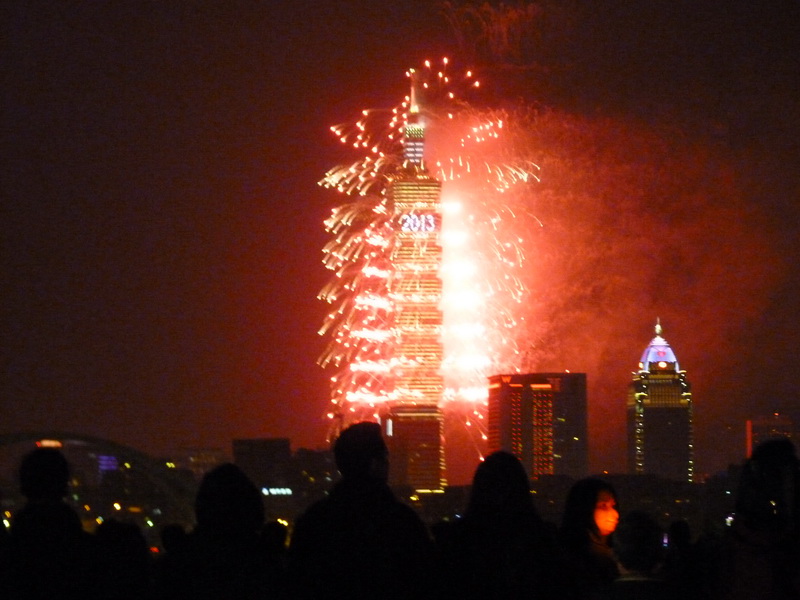
Returning to Neihu was late at night, nearly eleven o’clock. Passing the Minquan Bridge in Neihu, I saw crowds gathering on the bridge looking down at the New Year’s fireworks show. After getting home, I suggested to Emilie that we go out together to watch Taipei’s fireworks show. She agreed, and we immediately got ready to go out. Going up Minquan Bridge, Taipei’s tallest building was right in front of us. Amidst the crowd, we fully felt the atmosphere of New Year’s Eve. Everyone looked up at the tall building, watching the 101 New Year’s fireworks show, how excited! Finally, the distant countdown from the building, 6, 5, 4, 3, 2, 1, colorful and brilliant sparks burst out from the building, painting a magnificent Taipei starry sky. The continuous patterned fireworks show reached its climax in just a few minutes, opening the new year, and sincerely wishing for peace in Taiwan for the new year. Taipei 101’s fireworks show has become the memory of my encounter with my daughter Emilie in Taipei, sincerely wishing my daughter peace and happiness.
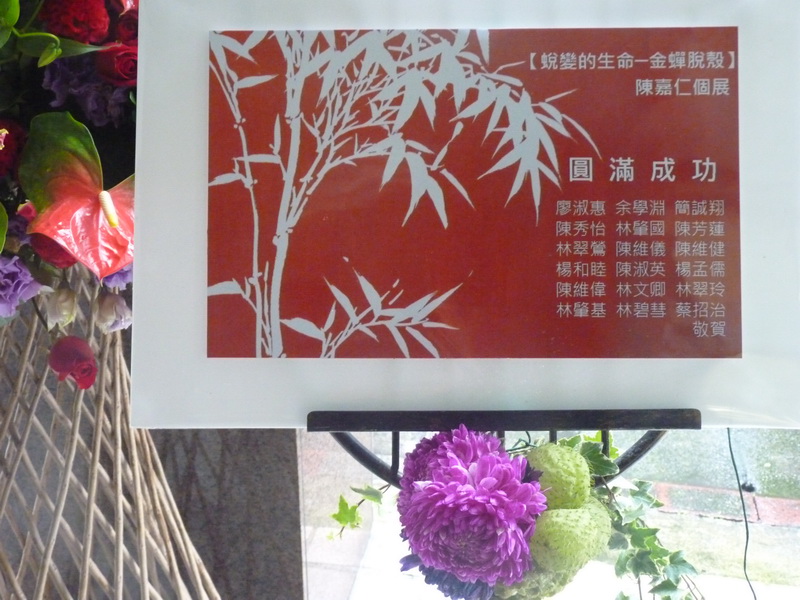
Year after year, everything renews. January 1st, the new year brings new atmosphere. Today is the opening of Chen Jiaren’s "Golden Cicada Sheds Its Shell" painting exhibition. As the curator of this exhibition, I must be present on site. The exhibition is handed over to the gallery; the press conference is undertaken by the artist himself, or he personally accepts interviews. If needed, I am always on standby. So, I and my daughter Emilie arrived at the gallery early, buying two bento boxes near our home first, bringing them to the gallery to eat first, in order to conduct the entire day’s opening reception or guided tours. Jiaren arrived at the venue accompanied by his family. After taking a few photos with us, the press conference began. Although Teacher Chen was not feeling well, when talking about art and creation, he was full of spirit and extraordinary energy, radiant. Indeed, a person who illuminates every day’s life with painting, art becomes the most important spiritual pillar and energy of life. Long live art.
Many students from the studio and distinguished guests came to participate in the opening and bless Teacher Chen. My daughter had no role in this exhibition opening, mostly accompanying her dad and friends to take photos, so she requested her niece Meihong to take her out to chat, drink afternoon tea, or go shopping. Besides helping the gallery or Teacher Chen entertain art world friends, I also accepted invitations from audiences to give guided tours or explain works to them. Of course, these classic paintings by Jiaren not only need to be appreciated well but also have deeper metaphors and references. As long as the audience is curious, I am happy to share my insights with everyone. The climax of the opening was when everyone (under the design of gallery Lianhua) celebrated Teacher Chen’s birthday. When we brought the birthday cake to him, there was a sense of emotion and surprise at the profound mystery of the iron man experience of life and the warmth of the human world. We all carried a heart of gratitude, sincerely blessing Teacher Chen. A moving scene, the gratitude existence of this moment and place, unforgettable forever. The exhibition opening entered its tail end following Teacher Chen’s departure, and the exhibition prologue began. During the New Year, we did not forget that Lianhua invited us to eat hotpot together to warm up and bless the new year.
Emilie’s holiday of nearly two weeks, visiting her father’s hometown and relatives, leaving traces wherever she walked, ended this rich journey full of emotion and kinship on January 2nd. Carrying full memories and energy, engraving the mental consciousness of Taiwanese people, the end is also a new beginning. As a father, I feel very happy. In this short two weeks, having the opportunity to accompany my daughter is the happiest thing in life, the most complete in a world where hearts are connected. How lucky and happy it is to live in the human world. Cherish this moment and place; love in the human world is the most beautiful, happiness becomes the synonym for my existence. Sincerely blessing everything in beauty, and welcoming the arrival of the new year.