Art is Everywhere - But Has Nothing to Do with Beauty
In this upside-down world, 'ugly' can sometimes be very 'beautiful'.
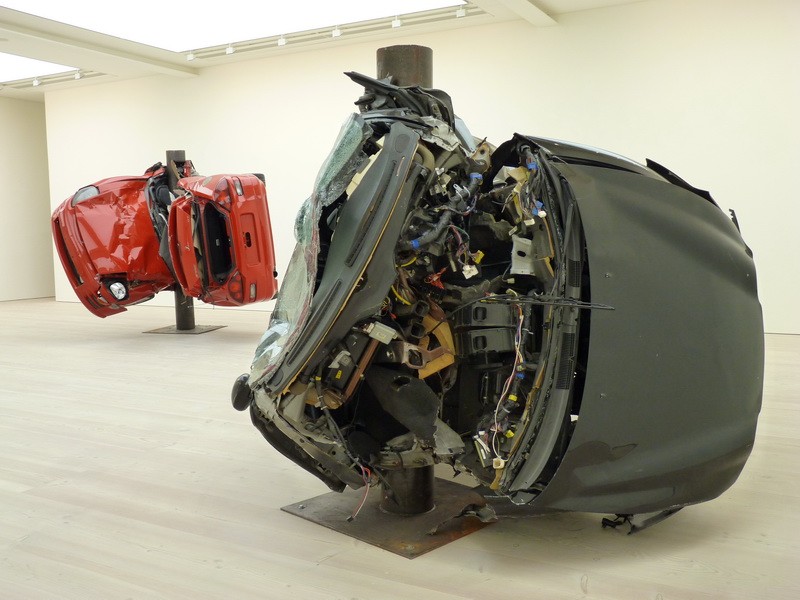
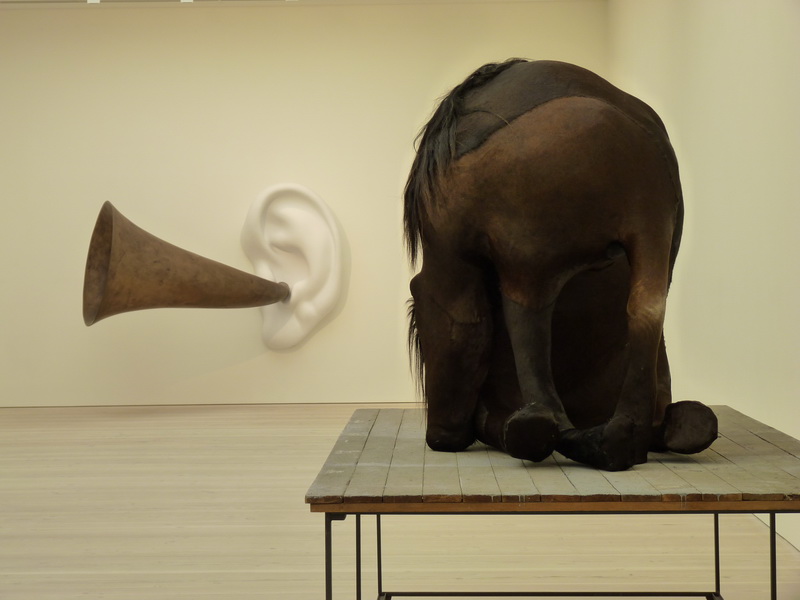
Behind—John Baldessari (b. 1931, USA) Beethoven’s Trumpet-With Ear-Opus-133, 186x183x267 cm, 2007. Front—Berlinde de Bruyckere K36-the black horse, polyurethane foam, horse hide, wood, iron. Overall size: 295x286x158 cm, 2003. Saatchi Gallery.
Creativity is everywhere in life; it is the driving force of human civilization. Creative power is the most vital energy and vitality of existence. Continuous creativity is the living source of life, shaping everyone’s life and creating a harmonious society and a beautiful new world. Creativity does not necessarily need to wear the name of "art." Thus, art does not have to exist solely within the institutional framework of art (museums, galleries, art centers). Broadly speaking, art is ubiquitous in living spaces. With sensitivity, one can see and feel it. It does not necessarily need to be called beauty, nor does it necessarily concern beauty itself. Clearly, art is wonderfully ubiquitous and has nothing to do with beauty. Beauty is not the standard or measure of human affairs and art, because goodness and truth are also involved. "Beauty" varies by region, time, space, culture, and tradition, as well as its material and spiritual aesthetic qualities and the state of mind at the moment, becoming the primary origin of aesthetic perception and experience. If everything is beautiful, yet unrelated to art, clearly beauty is incomplete. In the relative dualistic mind, without ugliness, how would beauty manifest? Is beauty comparative? Or experiential? Letting go of opposition under the premise that "all is beautiful," one can encounter the inner world of joy.
Looking back at modern Western art history, every era expanded its territory; their creations had nothing to do with beauty. Beauty was despised, even cursed. Kitsch art is easily abandoned by "beauty." No wonder the French Romantic poet Charles Baudelaire said: "Beauty is always strange." The saying "the later wave pushes the earlier wave" is not without reason. Under this wave and that wave lie different outlooks on life and art, raising doubts about values, including aesthetic experience. For example, Courbet’s nude women were mocked: "If the naked woman he painted fell into a ditch, even a crocodile wouldn’t bite her." This shows contempt for beauty and a challenge to the public. Starting anew requires considerable courage and insight. How do you view her today?
Modern art offers many interesting examples. Fauvism was named after being scolded; such adjectives like "beast" challenged secular aesthetics and contemporary values. More radical Dadaism opposed everything, opposing the mechanization of the world, claiming art could be evil, boring, rude, sweet, dangerous, pleasing, ugly, or a feast for the eyes, etc. Did the marginal wall graffiti of the 1980s or Neo-Expressionist "bad paintings" not do the same? They cursed and despised traditional aesthetic experiences; creation had nothing to do with beauty. The French contemporary art team Presence Panchounette wrote: "In this upside-down reality, 'ugly' can sometimes be very 'beautiful'." Like this, art is everywhere—but has nothing to do with beauty. However, clearly, the truth of art is gripping and seems more moving than aesthetic experience. Though heavy and tragic, it reflects the hypocritical social situation of the present. Truth is always hard to accept and face; truth is often unspoken, yet as charming as beauty. Truth not only changes art but also changes the world. Philosopher Nietzsche said: "We create art so that truth may not perish."