Cheng Sheng-Sung: Explorer of Taiwan’s Landscapes
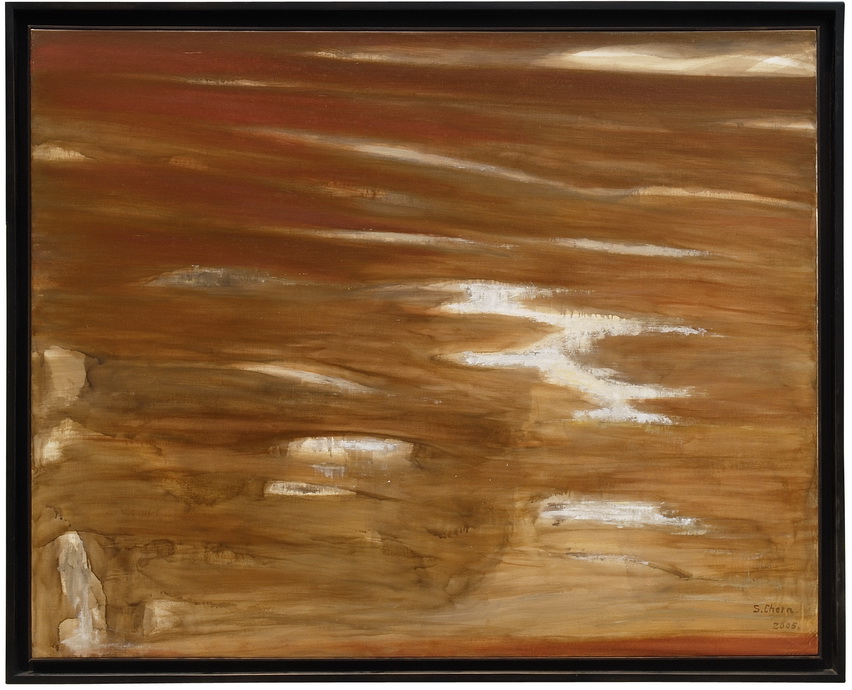
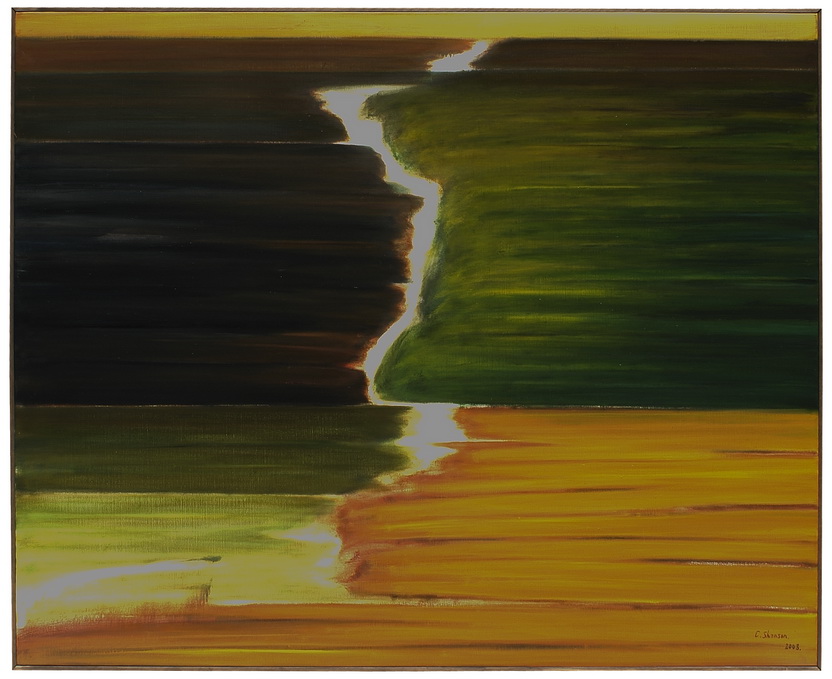
Salt Ponds-2 Gully No. 100 Oil on canvas 2005
By Chen Chi-Hsiang
"Painting is like a tool for understanding nature, and even more so, an expression of inner spirit."
Leonardo da Vinci
Preface: Contemporary Taiwanese art has always treated Western artistic trends as golden rules, dancing to the rhythm of these influences. It seems that when others sneeze, we catch a cold; following the lessons of the past guarantees (pseudo-) avant-garde status. Not appearing pretentious seems to mean falling out of fashion. In this frantic chase for "trendiness," historical arguments leave only skin-allergy-like slogans. Art creators who pick up bargains (or those unmentionable opportunists) bow and scrape before the market, forcing smiles to flatter the art market mechanism. Is seeking profit after seeing gain the habit of people on this land? What kind of creation is this? Where are Taiwan's artistic passion, personality, and viewpoints? Like politics, which way should Taiwanese art go? Who can tell me? The Taiwanese art market? What kind of market is it? With painting dominating collecting, the most popular works are best if they are kitschy figurative realism, understandable by anyone, featuring local flavors or powerful vulgarity, or women exposing three points as you please. Imagery and abstraction have almost no market; conceptual art is even worse. Three-dimensional stereoscopic works can only be used for engineering (called public art? Where is the art?). No wonder Taiwanese art development is so chicken-shit, so self-satisfied. Yet paradoxically, in the auction market, the abstract paintings of Chu Teh-Chun and Zao Wou-Ki are most favored. Does this mean collectors like abstraction? Of course, when art price surpasses value, under the Chinese cultural system where "rich people" are great, blindness doesn't matter; money is greatest, everything can be hyped (it seems contemporary Chinese cuisine is the most flavorful). The Taiwanese art market is simply taking off one's pants to fart. Flattering art, of course, has reason to take off pants (not farting is already enough to be wrong), art thus falls, alas.
Taiwanese art criticism today is more diverse and richer than before; diverse discourse is unprecedented. Art criticism in Taiwan is high-profile and high-standard (not bending for five pecks of rice), mostly erudite scholars, not only studying abroad but also PhDs and university professors (noisy beasts), with eyes on top of their heads, treating Western (faded or not) profound philosophy and aesthetics as golden rules. Eloquent and brilliant in discourse, naturally logical under grand theories and small knowledge, leading people into the Western Ulysses journey of life, compiling knowledge sleepwalking records, constructing knowledge barriers, missing the itch, trapping people in word traps, making resonance difficult. How can hollowed-out content touch hearts? Magnificent Western dishes but with soy sauce flavor; though beautiful, hard to absorb flavor. International art writing says: "Say less nonsense, especially great and profound nonsense, do more empirical work, face works truly, face sites truly, then we may possess more credible art criticism." (Note 1)
Looking at the art scene, there are three types of art creators. First, those following trends, dancing to Western waves, often catching colds, feeling good, receiving attention, having better chances to be selected for exhibitions, but no one can guarantee youth forever. Second, those walking the art system path, such as Taipei Award or Kaohsiung Award competitions; winning offers a chance to step onto the stage, wearing the title of award winner, but like past National Exhibition and Provincial Exhibition winners, many become painters of a single painting. Finally, those exploring themselves, discussing themselves, affirming themselves, proving who they are, without any applause, challenging themselves regardless, affirming the meaning of existence through artistic creation, displaying their unique life value.
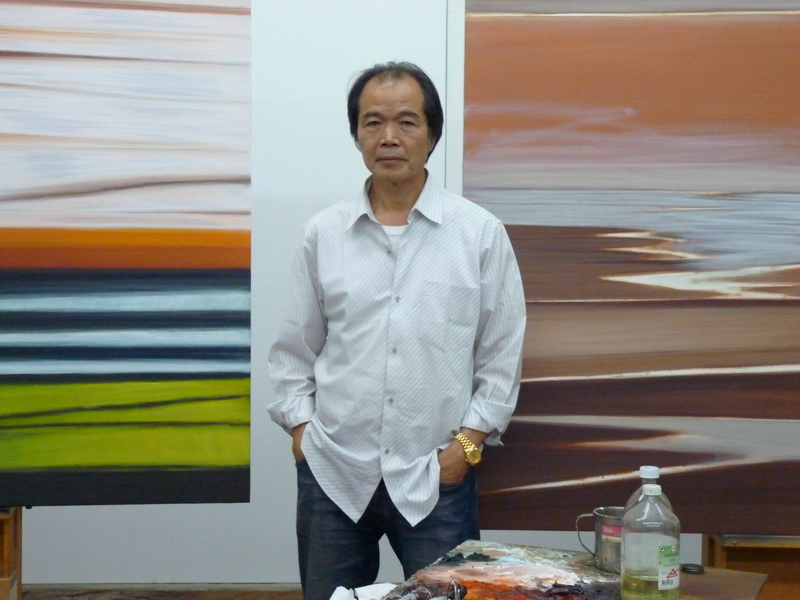
Explorer of Taiwan’s Landscapes: Cheng Sheng-Sung, titled Village Chief of Qiaozitou Sugar Factory Art Village (Note 2), is a mid-generation painter who has made significant explorations in abstract painting. In recent years, he has developed deep emotional connection and awareness of the land he inhabits, can be called an explorer of the landscapes of Taiwan's southern island lands. He has clear beliefs and persistence in art, knowing who he is, caring about his personal creation. He dreams of being a great painter, passionately embracing art, pouring all his energy into creation. Under art's self-reflection, through self-validation, realization, and affirmation of his existence's value and meaning. Thus, driven by spiritual will, gathering courage to act again and again, creating again and again, enduring the bitterness of creation, risking material scarcity in life. Of course, the art dream is beautiful, painting is enjoyable, creation serves as the driving force for consciousness elevation, not only soothing the soul but also savoring existence. Baudelaire wrote: "The special element of every beautiful thing comes from passion; since we each have our own special passion, we possess our own beauty."
Origins of Art: Cheng Sheng-Sung's (born 1954 in Beigang, Yunlin) aesthetic education was discovered accidentally. Enlightenment did not come from school, but from his father. Recalling this, he laughs heartily: "One day, when I brought school art homework home to work on, my father found me painting, proactively guided me, and personally demonstrated painting for me. Unexpectedly, I painted prettier than the primary school art textbook, better than our art teacher" (Note 3). Deeply moved, proud of his father's two strokes, this unlocked his existential consciousness. With his father's blessing, he began to fully exert his imagination wildly, boldly displaying his graffiti skills in textbooks, soothing his small heart through painting. His father was a sugar factory accountant, often bringing him unused office papers, stack by stack. Treating them as treasures, as if the greatest gift in life, he forgot pillow and food, working day and night, happily doodling book after book with confidence. Thus, he became the sketching team member in primary and junior high schools, participating in countless intra- and extra-school painting competitions.
When his father transferred to Qiaotou Sugar Factory, the family moved to Kaohsiung. On the day he entered Kaohsiung High School, his father advised: "Son, your greatest wish is to enter National Cheng Kung University's Architecture Department" (Note 4), becoming his father's expectation of dragon-rising son. But things didn't go as wished; science became a nightmare. In sophomore year, he switched to humanities/social sciences, making art department his goal. He entered Kaohsiung High School's art teacher Luo Qingyun's studio to study art. Applying for art department disappointed his father extremely; father and son ignored each other for a whole month. Successfully admitted to Taiwan's highest institution—National Taiwan Normal University's Art Department, his father's final advice: "Being an art teacher is not worth it, being a painter will be a lifetime of destitution" (Note 5).
Guidance and Influence of Two Teachers: During NTNU, Cheng Sheng-Sung, under the guidance of old-generation famous painters Li Mei-Shu, Li Shi-Qiao, Liao Ji-Chun, etc., worked hard to explore the essence of art. The one who enlightened him was his junior year oil painting teacher, Sieh De-Jin, who had just returned from France, bringing new artistic trends, concepts, and creative experiences. Sieh said: "No matter what art you engage in, whether realistic, figurative, surreal, or abstract, you are pursuing the realm of classical art" (Note 6). This touched his creative heart. So, what is the realm of classical art? It became the indicator or puzzle for Cheng Sheng-Sung's lifelong artistic pursuit. Sieh's novel approach to color also opened his sense of color. Talented Cheng Sheng-Sung graduated first in sculpture from NTNU.
After graduating from NTNU, Cheng Sheng-Sung was assigned to serve at a school in Changhua. Conveniently, he studied under Li Zhong-Sheng (who lived in Changhua), intending to deeply construct his personal artistic thoughts and find his personal creative direction. Li Zhong-Sheng was the enlightenment mentor of Taiwanese modern painting; both the Oriental and May Groups were profoundly influenced by him. His most famous teaching method was "automatic technique" based on psychoanalytic subconscious behavior, far away from any control of rationality, liberating inner consciousness. Cheng Sheng-Sung believed "automatic technique" was not merely the galloping unconscious doodling everyone thinks, but most importantly, a training of thought and abstract thinking. What you paint doesn't matter, whether figurative or abstract; continue breaking all stereotypical images, starting from viewing, hands, head, thinking, liberating all possible forms, exploring human deep consciousness and essence. Thus, deeply influencing him, opening the door to Cheng Sheng-Sung's creation.
All Roads Lead to Rome: After graduation, Cheng Sheng-Sung served at a school in Changhua. At that time, art study abroad in Europe focused mainly on Spain and France. Classmate Qu De-Yi had already gone to Paris, France. Just learning French in Taichung, supplementing half a year of French, he applied for European exams. The road going abroad was harder than climbing to heaven; French was not only hard to learn but hard to test. Encouraged by missionaries, he learned Italian. Over a year of mixed-up circumstances, he passed the Italian study exam. Of course, he had no impression of Italy, but the Paris dream was right before his eyes. After passing, his grandmother and father died successively, causing some frustration with life. In 1983, he finally stepped onto the European path, arriving at the desired art capital. The shock brought by visiting galleries for the first time was branded in his heart. Considering whether to stay in Paris to gamble, he played for a month, but finally came to the unparalleled Italian capital Rome. His artistic heart unfolded thus.
Rome—Revelation of Great Italian Art: All roads lead to Rome. In 1984, Cheng Sheng-Sung entered the Painting Department of the Academy of Fine Arts of Rome for further study. At that time, it was the post-modern situation after Western modernism surged, especially the rise of Italian Transavanguardia era. In the crazy years of returning to tradition, history, and myth in painting art, he experienced the vitality, toughness, passion, and atmosphere of new art. Following Italian Arte Povera, painting became the mainstream of post-modernism, cultural consciousness trend. He witnessed it firsthand, reflecting on his personal cultural background and artistic viewpoints, not confused by fashion, thinking inversely, diving into the spiritual homeland, intending to find the essence of art. Against the figurative trend of anti-transavantgarde and neo-expressionism, utilizing Li Zhong-Sheng's thoughts and abstract thinking development, he pioneered a new style of abstract expressionist painting.
Rome allowed Cheng Sheng-Sung to witness the true face of Italians' great humanistic art, favoring classical (Renaissance art and Baroque), modern (Futurism), and contemporary (Arte Povera). Actively participating in various art activities, witnessing the painting shock, energy, consciousness, and essence of the three "C"s of Italian Transavantgarde (S. Chia, E. Cucchi, and Clemente), feeling the unprecedented intensity, power, passion, and atmosphere of painting. Cross-cultural experience and deep understanding and revelation of Western humanities and art. The greatest influence of Rome, Italy on Cheng Sheng-Sung was the attitude of being an artist, and the persistence in painting, the magnificent experience of cultural context and existential consciousness. Dreaming of being a great painter, passionately embracing creation, Rome became the beginning of Cheng Sheng-Sung's artistic career.
Hardship and Rebirth Returning to Taiwan Homeland: Cheng Sheng-Sung returned to Taiwan with his wife in 1996 to settle down, retreating to the countryside of Qiaotou, Kaohsiung on the southern island. With the change of creative background, under the conflict of climate and humanities, the source of creation suddenly lost its pillar, making it hard to develop with regional space, facing bottlenecks in life and creation. He recalled: "In 1996, I returned to settle in my hometown, the Taiwan Sugar Corporation dormitory in Qiaotou, Kaohsiung. By then, Taiwan Sugar had become idle. I converted the old dormitory home into a studio. Only my room remained as a studio in the entire area. I remember telling my wife I was going to the studio to paint, locking myself in the studio. Then one day passed, two days passed. Strange, couldn't paint. A month passed, two months passed, years passed. You know the psychological anxiety, like a fisherman opening the boat to go out to sea every day, but returning to find the boat empty. I felt huge frustration because of this. I was accustomed to the rich culture in Rome. After returning to Taiwan, the driving force that shocked me disappeared, making me very anxious. Later, I rode a motorcycle out, went to see fish ponds, saw the sea, saw straw... walked outside the mountains, into nature, looking at sky, sea, clouds, changes in sunlight, etc." (Note 7)
During this hardship in life and creation, in 1999, Taiwan faced the unprecedented earth-shattering Jiji Earthquake. The Taiwanese art market fell into a deadlock. In pain, loneliness, despair, struggle, and tragedy, it became the lowest point of his life, yet he still tightly embraced his lifelong love—painting. Cheng Sheng-Sung was born in the pure coastal town of Beigang, Yunlin, growing up under the grace and protection of Taiwan's Holy Mother—Mazu, possessing a unique emotion and belief in religion. In 2000, religious experience, returning home to worship Mazu and participate in processions, making wishes to Mazu. Under the widespread faith and protection of divine grace, he re-experienced the power of religion, soothing hearts, revitalizing body and mind, not fearing life's hardships and difficulties, transforming and sublimating, strongly meeting life's challenges. In 2002, Mazu's grace showed power, miracles appeared, help from noble people, overcoming life's hardships. Establishing existential belief, expanding consciousness, confidently meeting creative challenges and new prospects. During Taiwan's SARS period (2003), under persistence and religious belief, psychological construction helped overcome difficulties, experiencing life experience dimensions, spanning art and religious persistent belief, reborn from fire, facing his own life challenges, setting out in the transformation and sublimation role of art.
Time-Space Nostalgia of a Traveler: Time-space travelers, studying abroad and residing in foreign lands, always form a layer of invisible yet palpable nostalgia with time. Seeing scenery evokes emotion, longing and recalling hometown, especially in late-night quietness or in dreams, the call of hometown, the soul also singing mother's song. When Cheng Sheng-Sung resided in Rome, Italy, he hid a deep voice of nostalgia. The farther from hometown, the closer psychologically. The constantly thinking hometown, though not the theme of his creation, is the source and consciousness of his art. Time-space nostalgia creates psychological distance and thick emotion, far away yet close at hand. Hometown has my love and my affection.
In Rome, he had a profound inexplicable spatial nostalgia for Taiwan. After returning to Taiwan, especially now entering middle age, he has strong temporal nostalgia for the land. Rejecting the present time-space reality, returning to personal childhood memories, intending to find back past emotions and pure consciousness. Thus, hometown calls the artist who left home, returning to Beigang to seek roots and sources. Through the flourishing incense of Beigang Mazu Temple, experiencing authentic religious sentiment, finding back the shock of existence and vitality of the land. And re-entering childhood regions, delving into local contexts, from Tainan Qigu salt wetlands and Yancheng, Chiayi Budai Xihu and fish ponds, until the estuary of Beigang River between river and sea tides, seeking creative inspiration, realizing the vitality of natural origins and the moist belt nurturing life. The painter said: "Streams are places full of vitality. They are an important element in the development of Taiwanese culture. Therefore, I seek such subjects. Now I am fascinated... I am fascinated by such subjects, I praise them tirelessly" (Note 8).
Chief Oil Painting Expert in Taiwan Art Scene: Cheng Sheng-Sung is the most outstanding oil painter I have seen in Taiwan, skilled at mastering Western traditional oil painting materials, playing oil painting to the fullest, having a special affection for oil painting, especially the uniqueness of texture, volume, and chroma: thickness, thin coating, hazy, transparent, smudging, chiaroscuro, overlapping sense, volumetric sense, weight sense, diverse textures, etc. His oil paintings have incomparable richness of texture and imaginative space, which is rare. General oil painting only involves using pigments, simplifying to flat coating, rarely using oil or painting texture, quality, and volume sense, rarely conveying the emotion and consciousness of picture material feelings. For example, oil painting thickness is not thick coating, but the visual volume sense caused by oil.
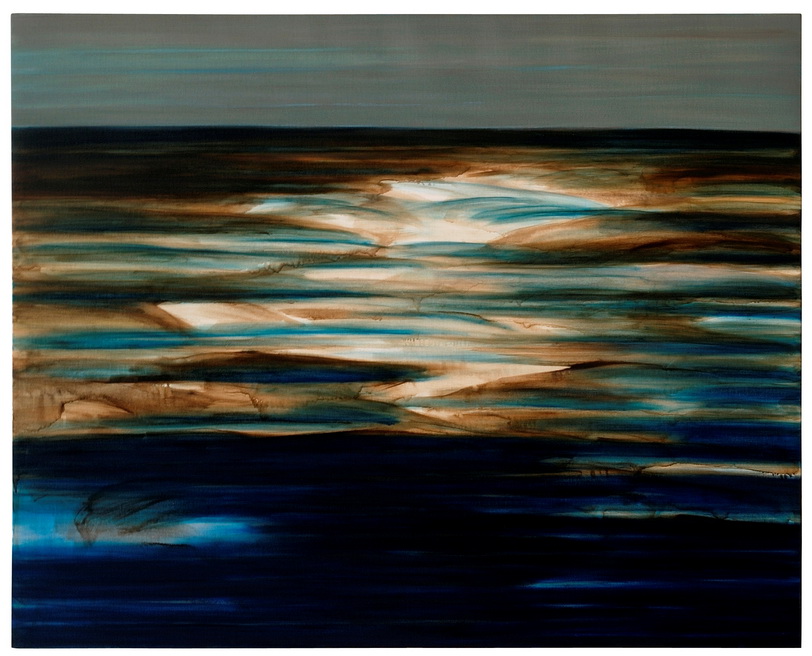
He spent much time and effort in his early days researching Western traditional painting, seeing all Western classic masterpieces, having a set of processing methods for oil painting and canvas. Western traditional oil painting techniques are what Cheng Sheng-Sung is most proud of. These are the results of his painstaking exploration, trial, experience, and exploration in Rome. The benefit of (linseed oil and turpentine) oil is exerted to the extreme imagination. Especially the proportion of oil to pigment (if more linseed oil, the picture is brighter, turpentine is not) will affect the handling and effect of picture texture. From the 2005 Stream-Moistened Heaven and Earth series, liberating all colors on the palette, and conversely exploring oil painting texture, original oil painting techniques, heavily using oil, and smudging layer by layer with soft flat brushes, reminding me of Leonardo da Vinci's most famous sfumato, revealing nature's mysteries, brilliantly presenting the hazy water vapor and air feel between streams.
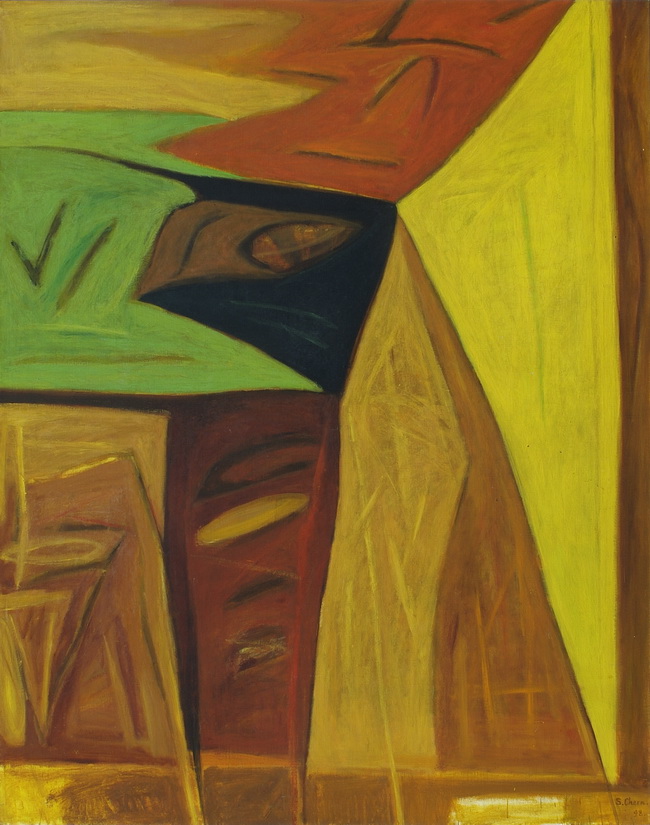
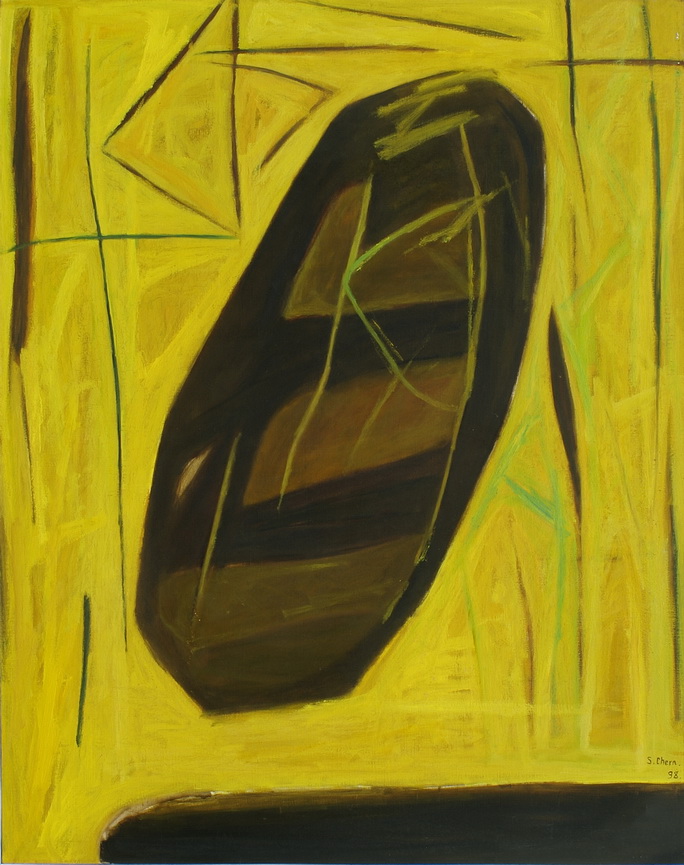
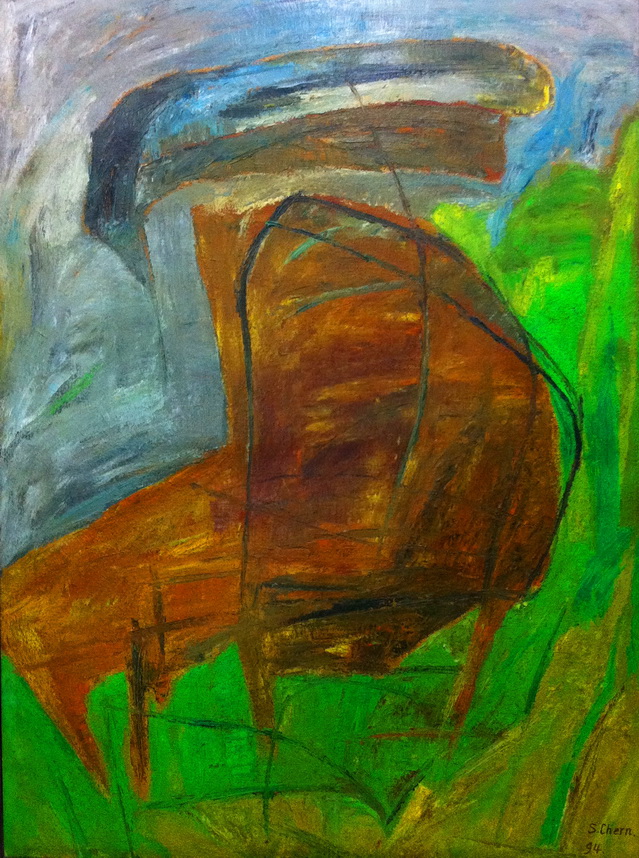
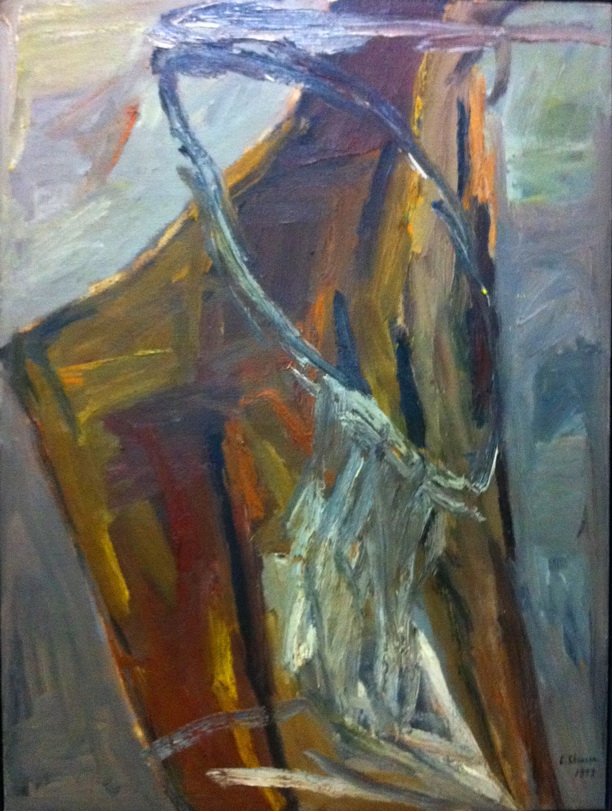
Finding Back Spiritual Homeland—Rome "Abstract Expression" Series: Cheng Sheng-Sung practices Li Zhong-Sheng's abstract thinking. Abstract expression of inner mental images during the Rome period, under the automatic technique of subconscious, splash/dash, galloping inner mental images or subconscious images, roaming the world of original human appearances. With energetic and instinctive rough lines, free brushstrokes, and thick layers of pigment stacked to create rich textures, overlapping and entangling into structural abstraction, subtle and profound space, under warm tones of deep brown and golden yellow with sensual and passionate freedom, carrying the intense earthy breath/atmosphere of muddy faces, full of temperature, heat, brightness, optimism, referring to imagery of subtropical hometown land, implying spatial nostalgia, presenting spiritual reality, finding back spiritual homeland.
Early 1987-1989 "Deconstruction and Reconstruction of Nature Series," full of young people's passion and drive, presenting a surge of passionate energy and existential consciousness through improvised irregular lines. Expressed through pure elements of dots, lines, planes, and space. Cheng Sheng-Sung believes: "Color, line, plane, etc., are important elements in artistic creation. Using these elements to express feelings can produce a persuasive force, further moving others" (Note 9). In the 90s, continuing to expand the mental image world, pictures became brighter and clearer, transforming free rough lines into structural form imagery, overflowing with sensual and lyrical colors, under subtle light and shadow rhythms, revealing nature's mysteries—confession of imagery and phenomena, expressing the abstract essence of mental image consciousness. Klee said: "Art does not lie in reproducing the visible, but rather in making visible" (Note 10).
After returning to Taiwan in 1993, continuing and developing unremittingly to extend his abstract painting vocabulary, intending to find new possibilities. 1994-95 "Primitive Belt Series," lines gradually fading traces, colorful shapes and plane structures, poetic and picturesque, displaying rustic faces of the homeland. Time waits for no one, emptiness of painting thinking, dry inspiration, emotionless creation, reaching a bottleneck of dead end? Longingly gazing at "Love for Yellow Dust" (1996), lyrical "Golden Years" (1998), and standing color forms in "Shore" (1999) put a period to the Rome abstract expression series. Dilemma is opportunity, accumulating diverse energies in hardship, transforming consciousness, nurturing new life.
Reflecting on Life Philosophy "Heaven Round Earth Square" Series: Around the millennium, Cheng Sheng-Sung's life was dim, life troubled and uneasy, plus frustration and anxiety of creation. When struggling, people often break through and transcend themselves, containing an extraordinary undercurrent energy, the acute pain before new perception is born. He realized Rome had long gone without a trace, knowledge cannot replace bodily perception, must truly stand on the mother promised land, feeling the shock and energy of the land from life, starting to drive the body, walking out of the studio imprisoning the soul, starting to observe the natural environment he inhabits, opening his heart to embrace every scene and thing on the beautiful island, accepting nature's baptism, experiencing nature's magnificent seasons, breathing to feel existence, intending to find back Taiwan's land faces and the rondo of cosmic Yin-Yang and Five Elements.
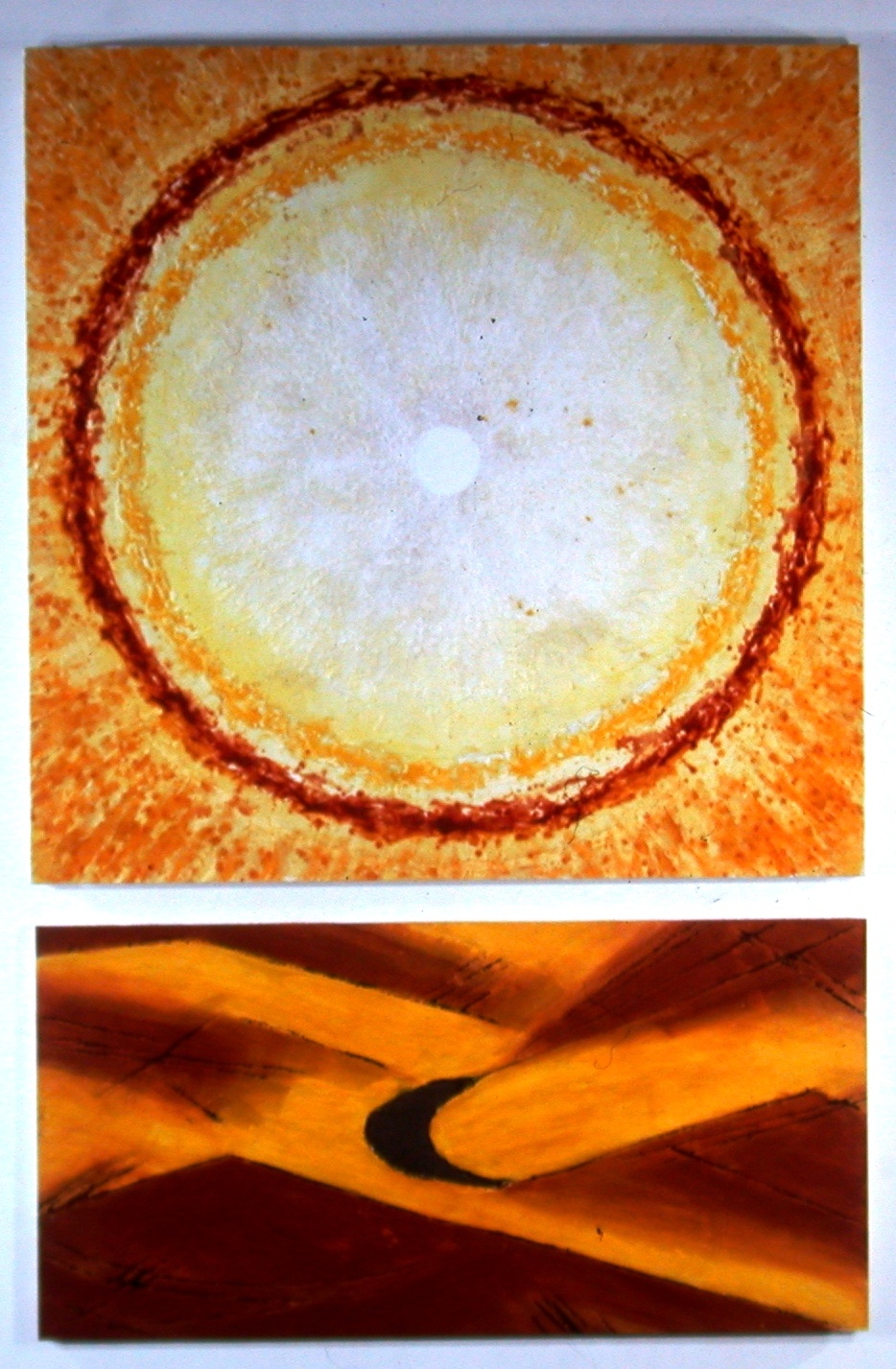
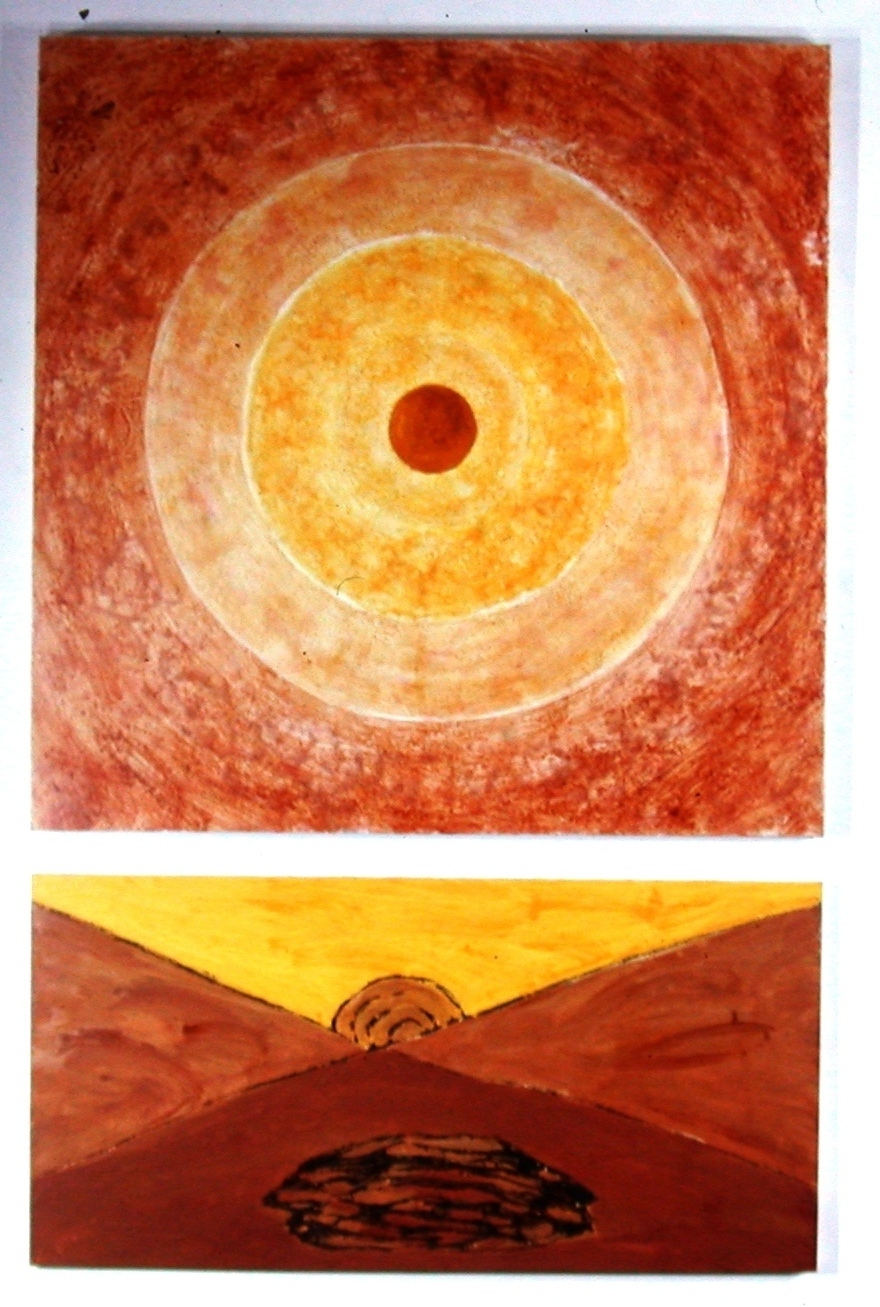
Cheng Sheng-Sung, through personal family changes/accidents experience, witnessed Taiwan's earth-shattering Jiji Earthquake, and the panicked SARS disaster, witnessing the impermanence of life. Under human powerlessness, ignorance, and inability, can only silently ask the heavens, intending to reflect on the life philosophy of heaven, earth, and humans through dialogue with the universe, constructing the meaning and value of existence. Starting from 2002, "Heaven and Earth" conceptual exploration of the mysteries of cosmic existence. Monumental "Heaven Round Earth Square" upright form series, utilizing Chinese metal, wood, water, fire, earth, Yin-Yang, Five Elements, sun, and moon, expounding the natural principles of operation and tension between existence. In various circular forms, depicting the scorching light of "Sun" or the gentle implicit energy of "Moon," etc., referring to metal, wood, water, fire, earth through color temperature and hue, such as fiery red "Fire," blocky "Earth," shining gold "Gold," etc. Heaven symbolizes context, earth refers to field. All existences in the universe rely on, generate, and clash with each other between heaven and earth's creation, perishing and being reborn.
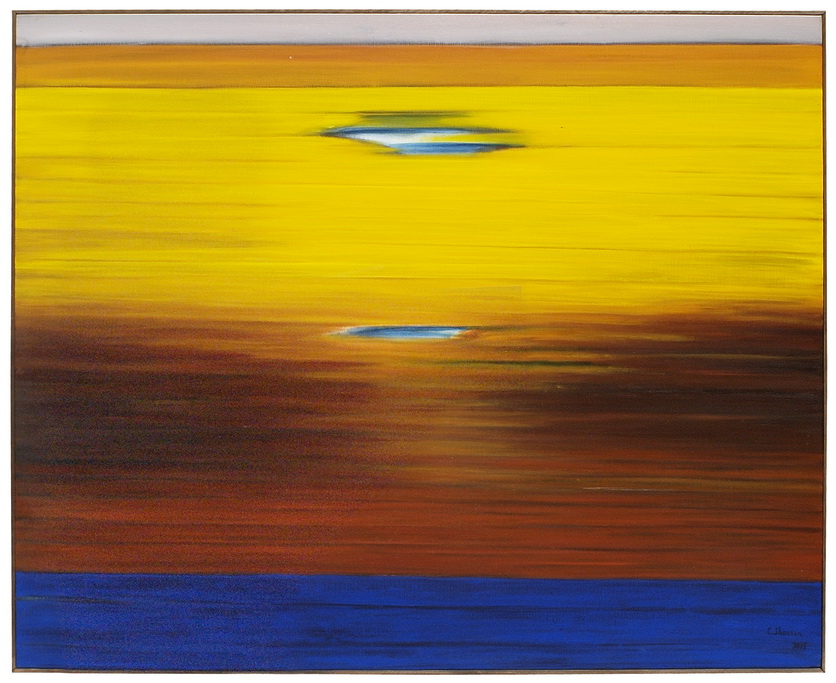
Besides, "Glazed Sky" horizontal form series, exploring the warm, saturated humidity after typhoon rain clears the sky in the southern island, crystal-clear sky scenery. Subjectively and sensorially constructed colors, in yellow boundary, orange boundary, purple boundary, earth tone boundary color planes, full of color energy and sensual brushstrokes. Utilizing the image of Heaven Round Earth Square, couplet-style paintings, expounding macroscopic cosmic heaven and earth and all things, intending to witness personal existential consciousness. Internalized, fully expressing color energy and feeling, decorative nature similar to stained glass, and religious sublimation after disaster. These two series both expound the faces and energy of colors, between color temperature and color hue, lyricism and expression, implicit and hidden, imagery and abstraction, imagination and metaphor. The Heaven Square Earth Round series discussion ended at the "Between Heaven and Earth" creative forum at Kaohsiung Museum of Fine Arts and the solo exhibition "Sky Color" at National Cheng Kung University, Tainan (2003).
"Stream-Moistened Heaven and Earth" Series of Taiwan Land Faces: In 2005, Cheng Sheng-Sung was unintentionally shocked by the ever-changing colorful hues of dusk in Qigu Salt Ponds, Tainan, becoming an explorer of Taiwan's land faces, starting to enter the Stream-Moistened Heaven and Earth series, dialoguing with Taiwan's land. For the first time witnessing the beauty of the southern island sky, especially whenever Taiwan's typhoon season arrives, particularly moved by the appearance of nature and sea-sky unity. He remembers abstract master Kandinsky once said: "When human culture development produces crisis, must return to nature, seek strength." The painter said: "I think my personal creation is also viewed thus. I re-seek personal creative concepts from nature, constructing creative aesthetics." Then said: "I am the same now, when I have time, I drive to the suburbs, search inspiration and enlightenment in nature" (Note 11).
After 2005, personally standing firmly on the soil, strong feeling and awareness, letting go of concepts and knowledge, opening the heart's eye, deconstructing old forms and structures and oil painting methods, liberating the painter's sensibility and consciousness, facing self-challenge and artistic growth leap, passion continuously heating and burning, from past pure abstraction, finding local soil/mud imagery vocabulary, lyrical transformation of Tainan Qigu Salt Pond area, via Chiayi Budai Xihu and fish ponds, all the way to the imagery between Beigang Stream-Moistened Heaven and Earth. An abstract painter believes: "The endpoint of nature is the starting point of art. We cannot paint over nature itself, but we can express nature." Reorganizing and constructing new painting, entering the Stream-Moistened Heaven and Earth series, dialoguing with Taiwan's land.
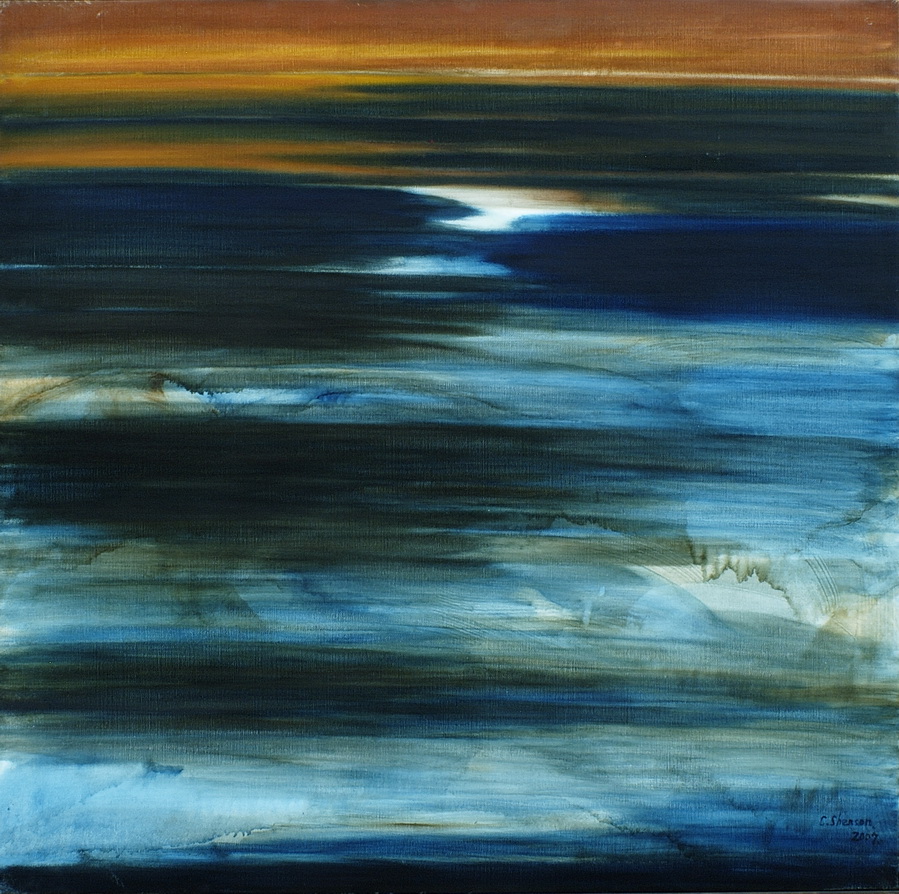
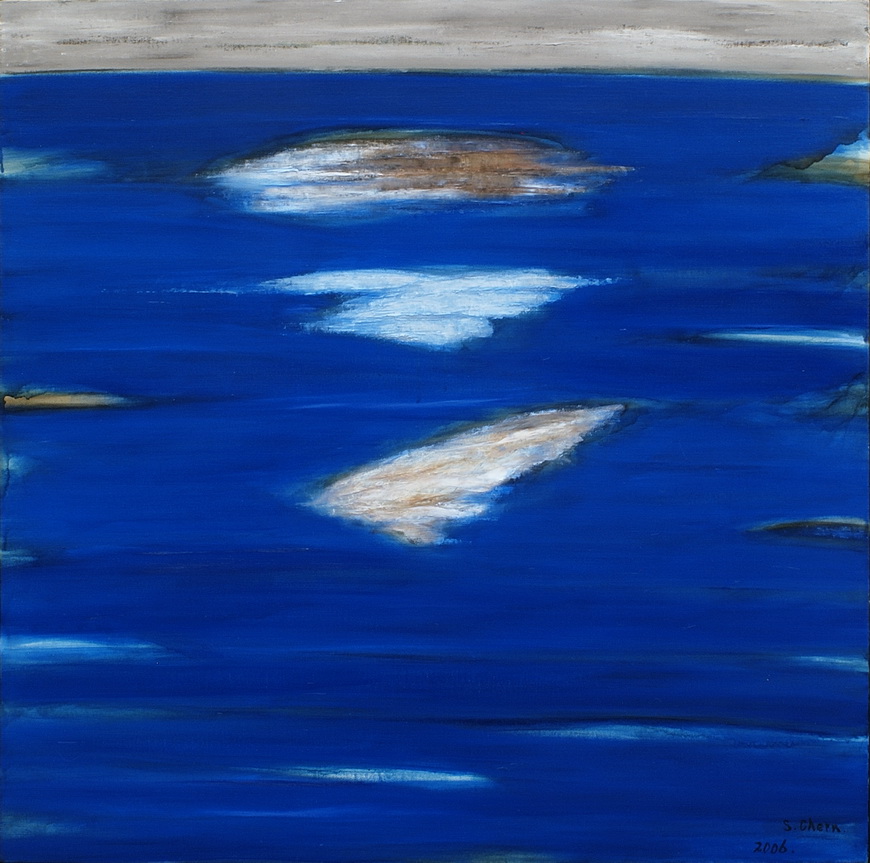
The Stream-Moistened Heaven and Earth series comes from the land's shock, fragrance, atmosphere, form, and light. With natural imagery and bright, subjective, sensual color feelings, displaying the rustic faces of Taiwan's southern island lands. Starting from the dazzling "Salt Ponds-Gully" (2005), rough brushstrokes, rich thick textures interweaving smudging effects, borrowing white to become light and forming floating lines, presenting the flowing and humid atmosphere of Salt Ponds. Quickly entering warm colorful or single-color planes, caressing light and shadow "Orange" (2006), colorful rhythm composed of indigo blue, red, yellow, and orange horizontal lines from bottom to top, or sexy charming "Blue" and "Green" (2007), white as light and pointing out natural imagery, horizontal lines in the distance, presenting fresh sensibility and consciousness of colors. Through division of color planes, combination of parallel lines "Domain-2" (2008), resembling river domains wandering through countryside fields context and site.
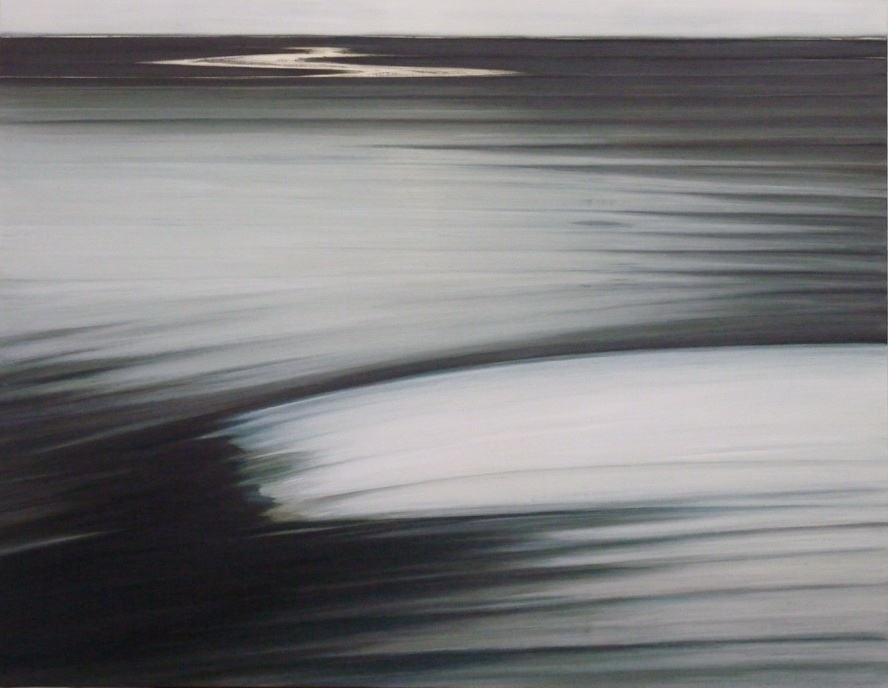
Full of passion and energy "Yard-One and Two" (2008), "Blue-One and Two" (2010), clear heaven and earth horizontal lines, sensual brushstrokes and free colors converge to spark unpredictable light/shadow and energy, like turbulent situations where two river basins merge. "Yard-One and Two Blue Series" (2009) is more abstract and more planar, on horizontal color planes with some dynamic irregular brushstrokes, forming sunset westward, smudging evening glow transformation. "Blue-One and Two" and "Phantom Blue Shadow" (2011) diagonal combinations appear on horizontal lines, full of rhythmic pulse, poetic moist belt like concerto's transformation light/shadow, implying profound field space. Poetic "Fur" (2011), combination of golden yellow planes, resembling Taiwan's patchwork golden rice field wave countryside scenery. "Tide," "Pan," and "Ting" (2012) between river mouth tides, in parallel lines, through diagonal or curved angle wrestling, constructing picture rhythm and energy, further through chiaroscuro light and overhead scenes, presenting this distant profound broad vision.
Cheng Sheng-Sung soars between southern island heaven and earth, quietly perceiving the shock, energy, and emotion between stream-moistened areas and tides, displaying the rustic faces of Taiwan's land, finding back simple beauty and power, realizing natural origin vitality. Cheng Sheng-Sung said: "Simple changes are not big, but are things worth watching and lasting" (Note 12). Isn't this the classical art realm referred to by Sieh De-Jin? Between geometry and non-geometry, rationality and sensibility, lyricism and expression, perception and imagination, color and form, imagery and abstraction. What Cheng Sheng-Sung explores in art is the effect of understanding nature, using thought-painting established methods to grasp nature's mysterious wonders. Leonardo da Vinci wrote: "Painting is like a tool for understanding nature, and even more so, an expression of inner spirit."
Note 1: Reference China Art International website 2013-01. Note 2: Title of Village Chief of Qiaozitou Sugar Factory Art Village, derived from respect for Cheng Sheng-Sung's long-term residency in Qiaotou Sugar Factory Art Village and management and creation of the art village. Note 3: Record of interview with Cheng Sheng-Sung when residing in Qiaotou Art Village in November 2012. Note 4: Record of interview with Cheng Sheng-Sung when residing in Qiaotou Art Village in November 2012. Note 5: Record of interview with Cheng Sheng-Sung when residing in Qiaotou Art Village in November 2012. Note 6: Record of interview with Cheng Sheng-Sung when residing in Qiaotou Art Village in November 2012. Note 7: Record of interview with Cheng Sheng-Sung when residing in Qiaotou Art Village in November 2012. Note 8: Cheng Sheng-Sung's creative statement. Note 9: From Baiwu Art Village Cheng Sheng-Sung's creative statement data. Note 10: Reference Modern Painting History page 114, written by Herbert Read, translated by Li Chang-Jun, published by Dalu Bookstore. Note 11: Cheng Sheng-Sung's creative statement. Note 12: Cheng Sheng-Sung's creative statement.