Meiping Liang – The Narrative of Existential Relations
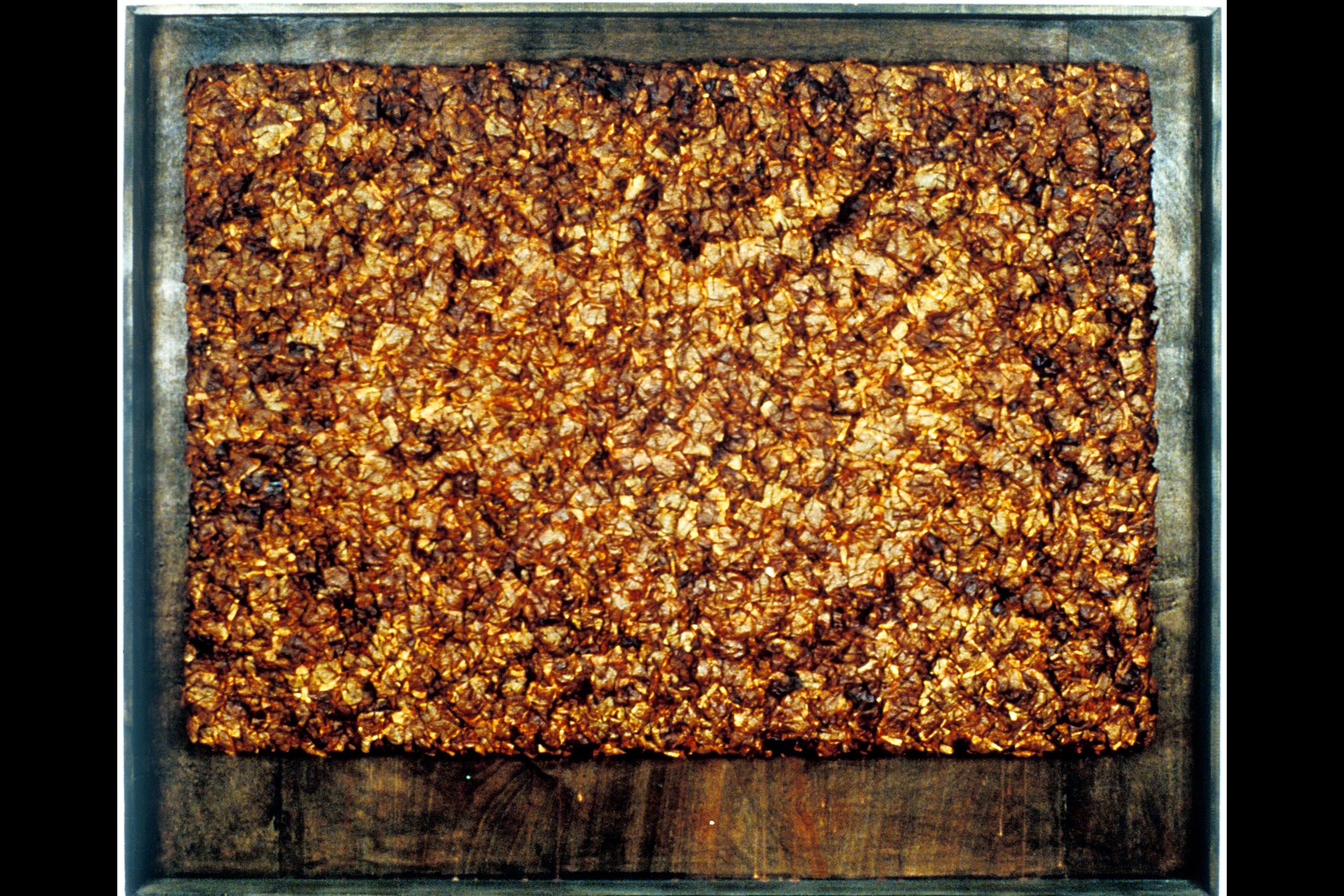
Tea Bag Painting "The Other Side - Homage to Kafka" (125x150cm, 1991-92) is Meiping's representative graduation work from the École des Beaux-Arts de Paris.
"Art is magical, freeing us from the lie of true existence." — Adorno
Text / Chen Chi-Hsiang
Preface: Existence is a relationship—the relationship between heaven, earth, and humanity; matter and spirit; self and other; events and objects; void and reality; life and death; relationships within relationships... Existence involves relational conditions, shaping life situations and consciousness within those relations. Existence becomes a narrative of relations, and art becomes an aesthetics of relations. Artist Meiping says: "I am a creator who speaks of the 'relations' between things. I attempt to interpret a kind of 'uncertainty' through my works, and the symptoms triggered by this 'uncertainty.'" (Note 1)
Meiping’s exploration of deep inner consciousness transcends the category of feminism while remaining distinctly female. She integrates diverse cross-disciplinary forms, examining daily life itself through perceptions of everyday experience. As artist Louise Bourgeois believed: "Art is not just art; life itself is the subject of art." From personal existential reflection to probing contemporary globalization, she directs broad sensations toward the mysterious aspects of human experience. Her diverse creations include mixed media, video, multimedia installations, and site-specific projects. Touching upon the diversity of life, her work encompasses everything from individual, family, collective, social, political, cultural, religious, material, spiritual, conscious, local, and global perspectives. Frankfurt School philosopher Theodor W. Adorno wrote in his essay At Least One Morality: Thinking About Diverse Lives: "Art is magical, freeing us from the lie of true existence" (Note 2). French poet Paul Eluard said: "The artist is not merely a reflection, but a predictor of reality" (Note 3).
Artistic Philosophy: Meiping is not only a forward-thinking artist but also an Alibaba-like collector (collecting for creation), focusing on objects and concepts of creative consciousness. She excels at manipulating everyday items, creating extraordinary meanings from them. The artist states: "My obsession with truth stems from the pursuit of life’s substantiality. Without truth, life loses its foundation and reference point; I firmly believe my creative journey is no different" (Note 4). Clearly, everyone creates reactions to the external world based on practical reasons; people’s reactions constitute their reality (Note 5). Thus, everyone experiences themselves through their creation and transcends themselves.
She excels at alienating everyday phenomena and objects, performing unusual interventions in reality, and emphasizes interactive creation with the audience. Therefore, her work does not rely on any single conventional medium, but rather focuses on the characteristic of "the ongoing event." Her recent works do not focus on revealing or reflecting anything specific, but instead create events through "relations" and conduct reading through those events. She also warns against dominance in her works, as this produces ordered symbols; thus, she considers ambiguity a crucial part of creation, resulting in artistic gestures that resist classification. Simultaneously, she values the spatiotemporal context when her works are read, establishing inter-contextual relationships with the local time and place, especially connections to community culture. In her works, she constantly hopes to maintain the ability to ask questions (Note 6). Writer and filmmaker Oscar Wilde said: "The real secret of the world is what is visible and what is invisible."
Cultural Context: "Tea Bags" (1991-92): The Tea Bag Painting "The Other Side - Homage to Kafka" was Meiping’s representative graduation work from the École des Beaux-Arts de Paris. It originated from the consecutive accidental deaths of two friends during her junior year, which deeply shocked her regarding the fragility and impermanence of life, changing her consistent view of art. During this period, she secluded herself to ponder the meaning of existence, carefully savoring tea, and observing the color changes seeping from tea bags. She realized the natural narrative itself and mastered material techniques, learning how to integrate attitudes toward life into her work, opening up her artistic exploration of narratives of relations.
Tea is a medium symbolizing Eastern culture, while tea bags carry cross-cultural connotations. Choosing tea bags unconsciously indirectly references Hong Kong’s post-colonial cultural context; the tea bag medium attempts to present root cultural identity through the consciousness of a foreign land. The tea bag paintings possess a plain geological texture and tension; they are active materials. Because all tea bags were wet when sewn, the natural colors continued to bleed into each other until dry, creating powerful visual effects and tactile sensations. The tea stains evoke a subtle scent of material freshness, presenting memories of time and recording the artist’s state of mind at that moment.
Meiping used twenty thousand soaked tea bags to create two tea bag painting objects, handcrafting two thick, large wooden frames. After soaking the tea bags, while still wet, she meticulously stitched them together one by one using black thread with feminine delicacy and patience. Every hundred tea bags were sun-dried; waiting for them to dry completely, they presented varying shades of color depending on the level of infusion, shifting from light brown to dark black-brown. This intriguing natural color rhythm presents a sense of aged bitterness, melancholy, and sentimentality. Under the perception of narrative, the object-body reveals an unmasked silhouette of death, demonstrating a compassionate emotion, manifesting feminine delicate yet resilient willpower and determination.
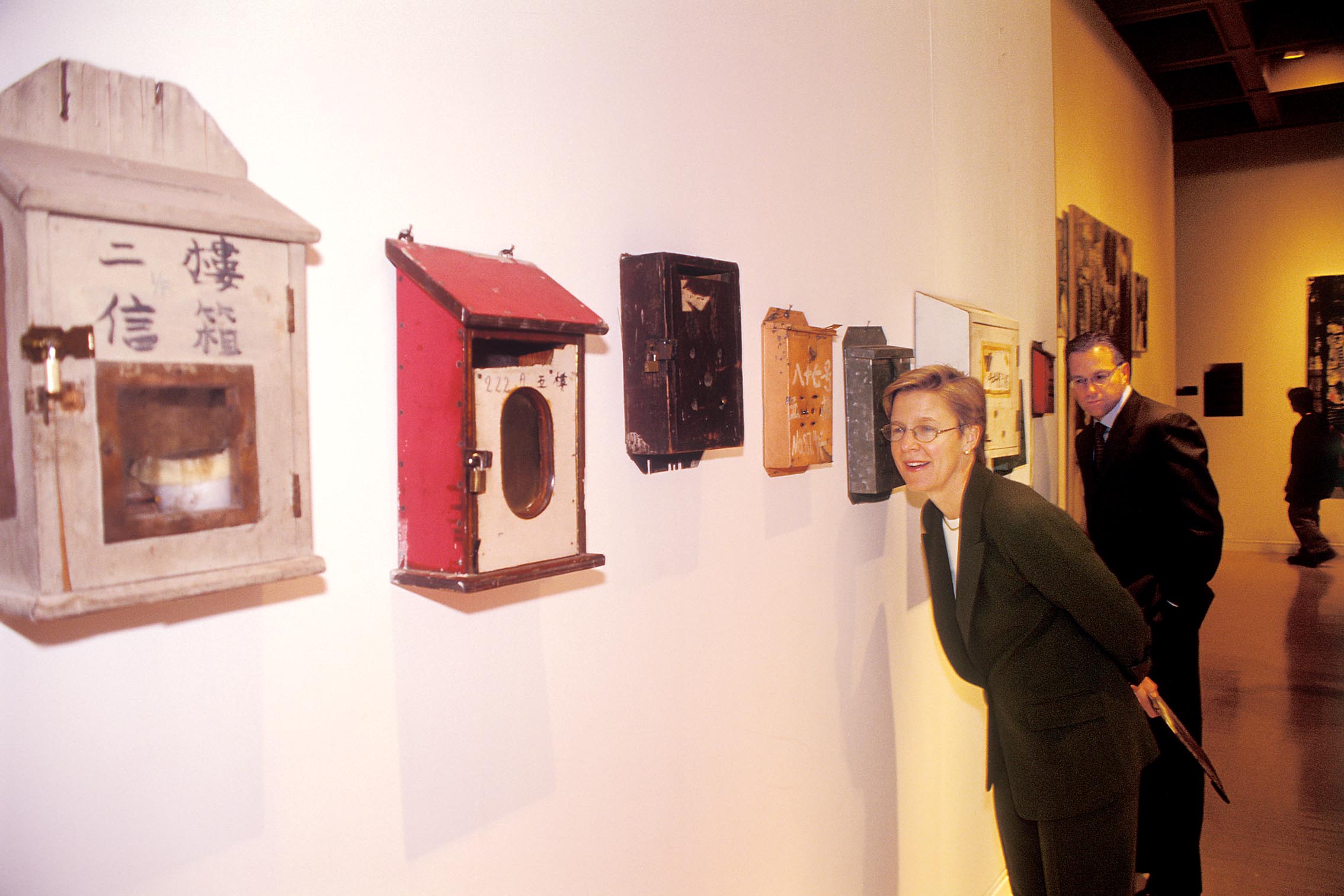
Alienation Reflection: "Hong Kong Here and Now - Close Yet Far" (1995-96): After the tea bag works, Meiping deeply explored narrative relations, beginning to extensively and diversely collect all possible material media, from flat photographs to physical mailboxes and audio-video recordings and sounds. "Hong Kong Here and Now - Close Yet Far" is an installation combining objects and sound interaction, representing the most socially significant portrait of individuals and collectives moving from home to nation on the eve of Hong Kong’s return. The various sizes and ages of mailboxes in the work were collected by her throughout Hong Kong’s bustling metropolis and remote outlying islands (even stolen out of impatience). A hundred different mailboxes connected by wires hid environmental sounds and life interviews within, containing dialogues and appeals of various languages, people, and things. She installed sensors; when viewers approached and blocked the light, specific sounds (voices, traffic noise, clamor, foreign workers, new immigrants, nuns speaking and murmuring) would automatically play, restoring the scene of the mailbox site for the viewer, embodying the contexts of various environments, presenting a sociological portrait of the multitude of appearances of Hong Kong’s metropolitan areas, ethnic groups, environments, and races, reflecting surrounding urban psychological states and metropolitan consciousness.
Mailboxes represent the individual face of society and metaphorize urban lifestyles and consciousness. They reflect the alienation, indifference, and alienation existing in the concrete forest metropolis. The metropolis narrows individual existence, revealing life’s fragility and loneliness, the solitude amidst crowds—a psychological state and life situation where things are close at hand yet far away, reflecting the current portrait of prosperity in developing countries’ metropolises. Hong Kong’s gradually disappearing family and regional structures, the alienation of spatiotemporal distance, the indifference, alienation, confusion, loneliness, helplessness, and unease in urban co-living expand into emotional entanglements between home and nation, and facing future uncertainty. Especially after a century of British colonial rule, approaching return to the motherland, the political reality of China-Hong Kong / Nation-City, the question of where the Special Administrative Region belongs, under feelings of love and hate, the motherland is close by yet feels like "close yet far," depicting Hong Kong’s here-and-now state of displacement and unease.
In 2001, Meiping moved to the bustling Mong Kok area, collecting 21 mailboxes from this district, thus constituting the Mong Kok version of "Hong Kong Here and Now - Close Yet Far" (2001-08). After returning to the motherland, have individuals and families (collectives) become more integrated, or are they drifting further apart, becoming "close yet far"?
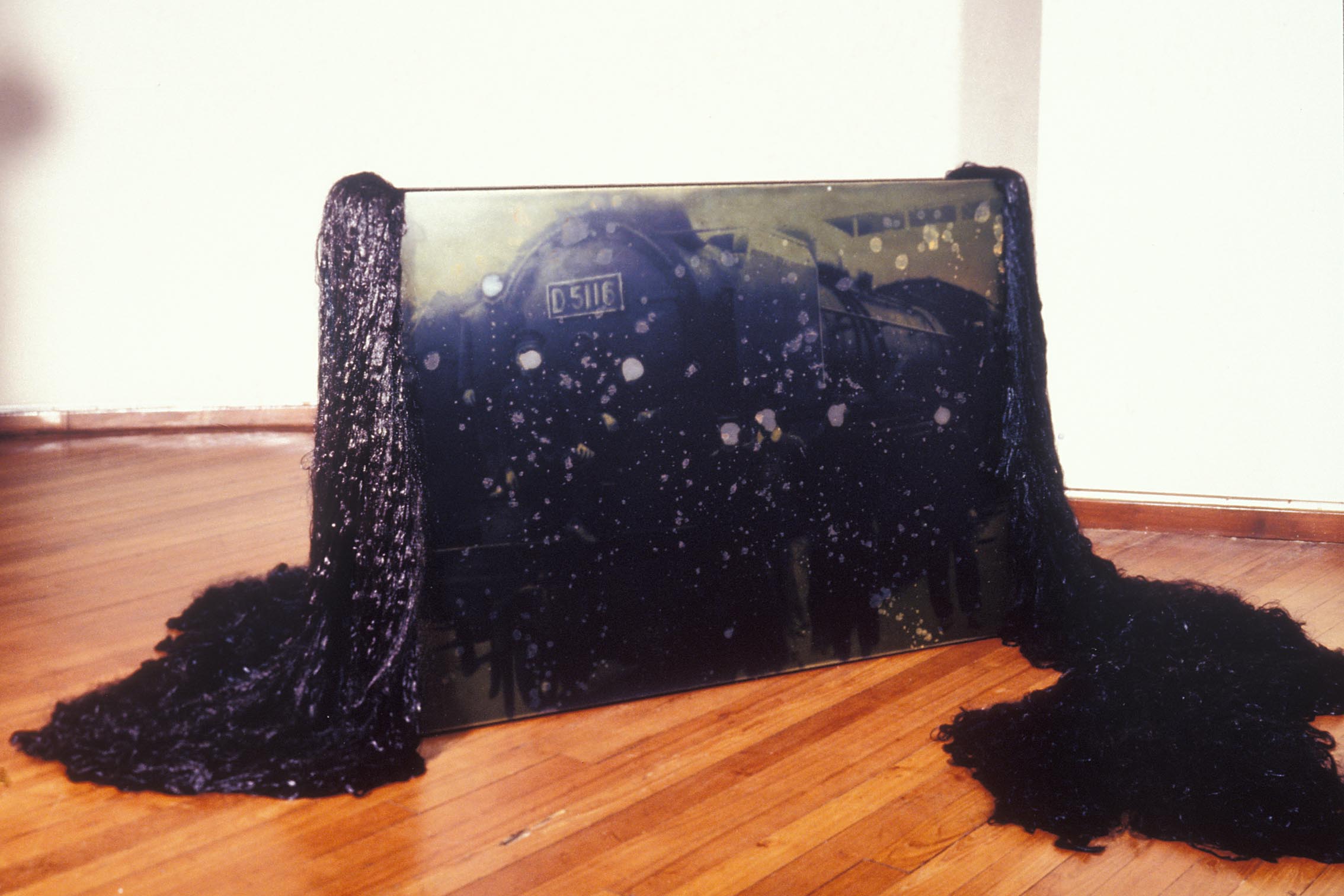
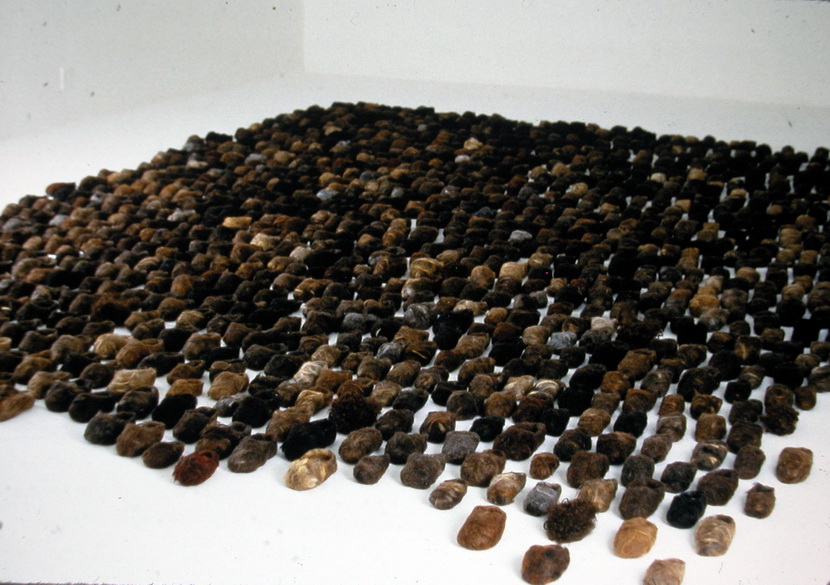
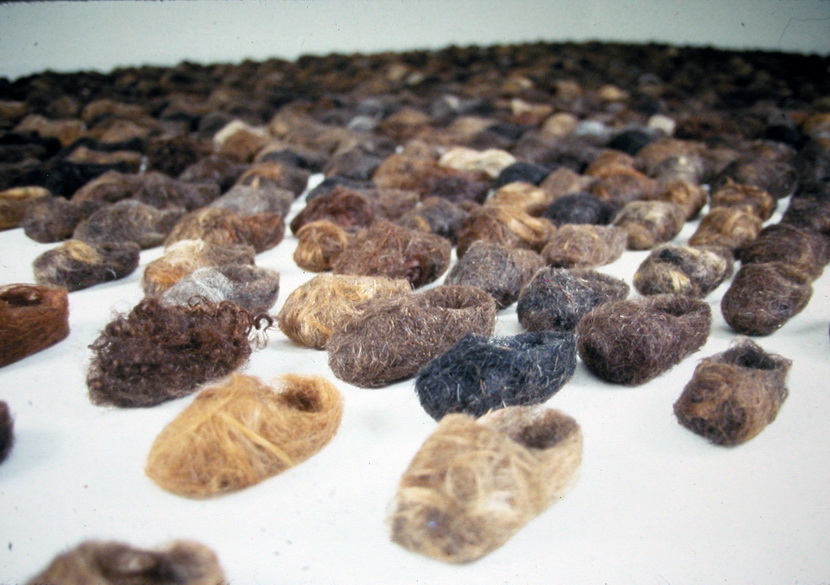
Mystery of Life: "Memory Future" (1998-2002): Hair materials have always attracted Meiping’s attention and curiosity. She began collecting and using hair as a material medium as early as 1995. Hair metaphorizes the personal body and consciousness. Subsequently, in the 1998 work "Where is the Train Going?", she again used wigs as installation media. "Memory Future," in the form of a monument, is her most representative and dramatic work. This piece was explored during her graduate studies at the California Institute of the Arts in the US, delving into human consciousness. Continuous creation lasted four years until it was truly completed in 2002. Meiping began collecting hair from different races and regions around the world when she came to the US to study, starting with friends nearby, then through university barbershops, city dump collection points, and requests via the internet. Regardless of gender or age, hair from hundreds of races from every corner of the world was personally braided by the artist into ten thousand children-sized hair shoes (each 2 to 4 inches small). The quantity and arrangement were determined by the field size and space, often facing the exhibition entrance to welcome viewers. Shoes symbolize bodies, action, progress, protection, innovation, and existential consciousness. The lightweight hair shoes form a dramatic and bewitching "hair language" scene. Gathered, they resemble a compassionate and heroic human monument; spread out, they resemble the magnificent imagery of thousands walking on site. The hair shoes are full of life symbolism and signs, handling heavy matters lightly. "Memory Future" also reveals where humanity stands under today’s technological bureaucratic system.
The inspiration for the hair shoes comes from the exploration of humanity’s common essential nature. Hair is a very personal identity material; hair colors differ by race worldwide, but the common phenomenon is that after aging, all turn gray or white. Although humans differ in race and culture, essentially they are identical. "Memory Future" touches upon time and space, condensing past, present, and future into the now, within the ambiguous "symptoms of uncertainty" among the known, unknown, and unknowable. Memory belongs to the past; the future has not yet arrived. Hair is a signifier of human existence; genes become the code memory of personal existence. The future is unreachable, in an unclear state of unknown uncertainty. Life thus operates in a mysterious and unknowable world. "Memory Future" signifies the mystery of existence, a consciousness far broader than existence itself. The disappearing body and eternal presence contain a metaphysical extraordinary volume, transcendently constructing an atemporal "Memory Future." Under the premise that the past may be understood as the possibility of the future, existence possesses a compassionate consciousness of shared suffering.
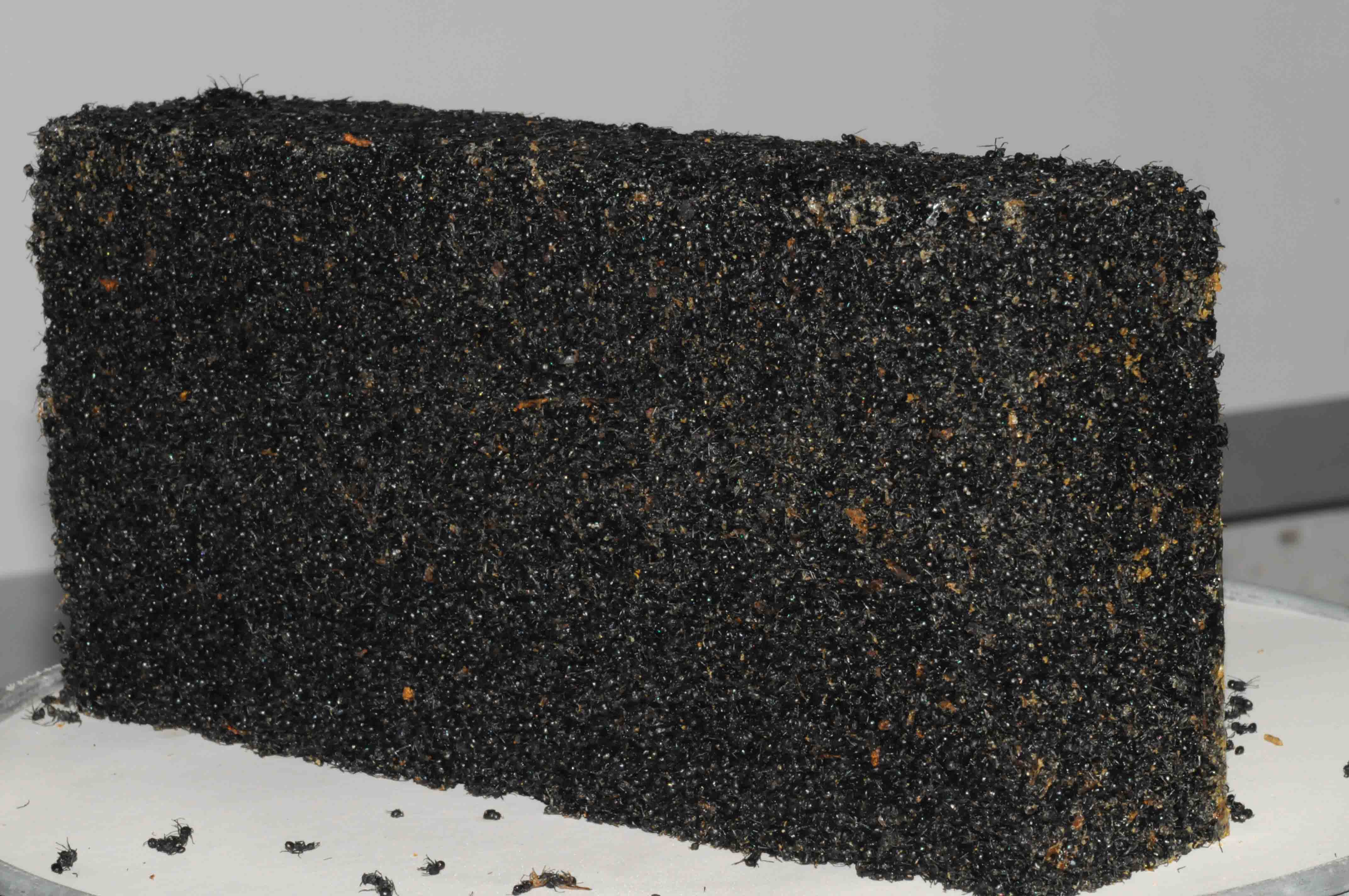
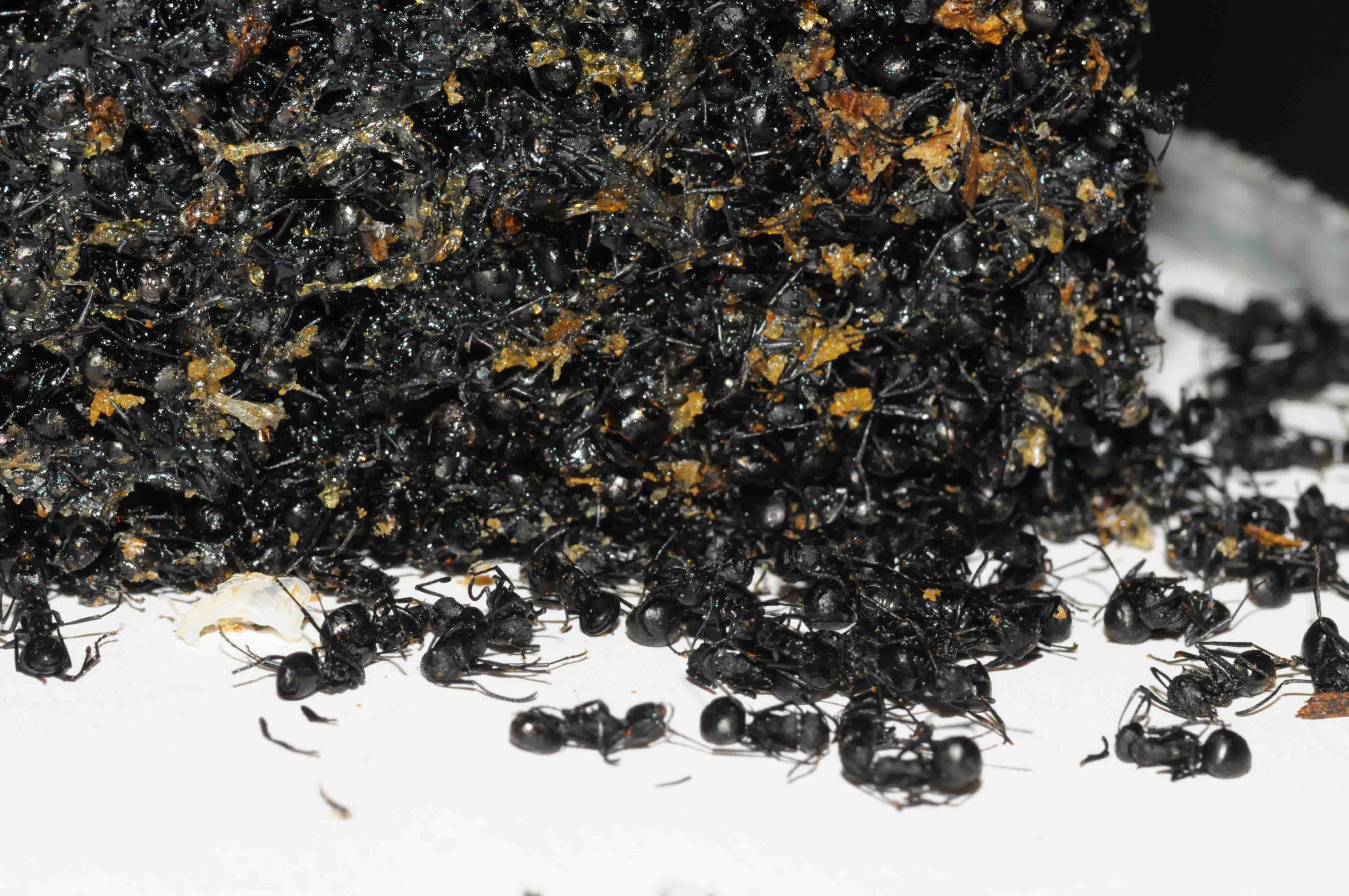
Metaphor of Reality: "Ant Brick - Below Feet, Is Earth" (2008): Meiping is crazy; she collects everything, including ants (collected by hired hands in Wuhan, China), and even unknown HIV blood samples. Ants became materials and media, appearing in Meiping’s millennium-era live installation work "Record of Dead Ants." She placed live ants directly into projector slides, brilliantly performing the scene of anxious ants fleeing and running in a closed, hot space, until the ants died one by one in a dramatic realistic play. This elucidated the millennial end-of-the-world discourse, metaphorically referencing the current situation of global illegal immigration waves, particularly the incident of Chinese illegal immigrants dying inside closed container trucks in France. Ants became a metaphor for reality.
"Below Feet, Is Earth" stages ants again, consisting of pieces of magical black "ant bricks." There are two sizes, totaling four blocks: two are sized according to Hong Kong bricks (200mm x 100mm x 60mm), and two are sized according to Chinese standard clay bricks (240 x 115 x 53mm). It is said there were two Taiwanese bricks, but they failed to compress successfully. Meiping said: "This work was created for an exhibition about public housing. It concerns some thoughts or intuitive insights about human existence. Originally, I wanted to make several hundred such ant bricks and build a wall out of them" (Note 7). Indeed, using ants to metaphorically describe the living environment of densely populated modern metropolises is apt, especially in Hong Kong, a metropolis built on reclaimed land, perfectly portraying the oppressive, crowded, suffocating concrete forest metropolis.
"Below Feet, Is Earth" emphasizes bodily perception, directly pointing to the core of survival conditions in modern metropolises. In densely populated Hong Kong (like many global metropolises), living spaces and existential environmental conditions continue to deteriorate due to urbanization. With the vertical development of concrete forest metropolises, it seems increasingly difficult for high-rise living spaces to "step on the earth." Secondly, the work elaborates on the relationships and conditions between people living in metropolises, individuals, or attached groups, saturating the oppression felt in urban co-living societies and the pressure of individual existence. Besides living spaces and environmental conditions, combined with current societal wealth inequality, it is hard to imagine. Unless constructing an ant social organizational structure, but on a single brick, is "One World, One Dream" possible? Would that not be utopia, given that Hong Kong’s own development has already surpassed utopia? From an artistic perspective, this triggers biological and physical, psychological and physiological, social and human, structural and organizational dimensions, pointing directly to the core of political metrology. Although small, this work proposes macroscopic urban spatial conditions and the dilemmas and horizons of human existence, revealing Meiping’s courage and depth of inquiry.
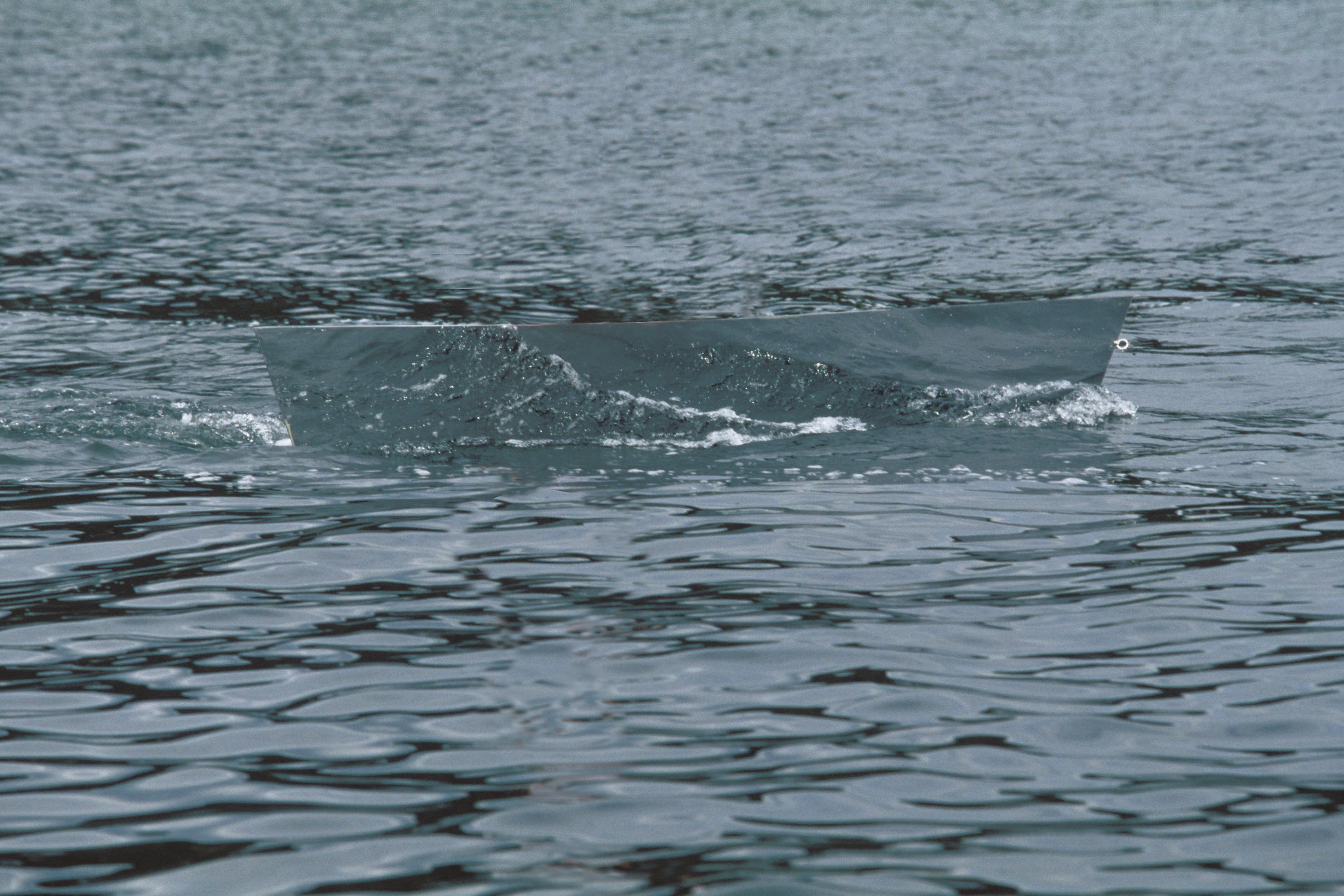
Consciousness of Mind: "Mirror Boat - Searching for Insomnia Sheep" (2005-07): Meiping is proactive, possessing sharp vision and extraordinary imagination. Between 2005 and 2007, a nearly invisible boat appeared along the coast of Sai Kung, Hong Kong—the Mirror Boat. The entire boat was wrapped inside and out with plastic mirrors, hiding inside and outside its environment. The mirror surface domain constructs consciousness of mind, practically elucidating the boundary of emptiness. The reflective mirror boat seems illusory yet real; existence becomes reality. Between reality and illusion, she constructs the "Insomnia Sheep." In which layer of consciousness can one find the "Insomnia Sheep"? Though the boat hides, it is there; and the sheep, exactly, where is it? It seems she explores the essence of personal life, extending to whether the Hong Kong SAR or current humanity faces where to go.
"Mirror Boat - Searching for Insomnia Sheep" is an interactive public art installation-object. An active mirror boat invites viewers to board alone to experience the awareness of drifting on the sea, lasting about 15 minutes per trip. Another larger boat carrying 35 viewers sets sail opposite the mirror boat. For the safety of the mirror boat or if it drifts too far, a five-hundred-foot rope connects the two boats. Viewers on the large boat can watch the dramatic scenes of the mirror boat floating and sinking day and night on the sea. Floating between the boundless sky and sea, the mirror boat hides into the vast ocean. Viewers on the mirror boat can use designed radios to transmit their situation and reflections to the large boat viewers via speakers. This carefully designed interactive mode elucidates the world inside and outside the mirror of reality and illusion. In the magic and mystery of life, it searches for the existential insomnia sheep (metaphor for essence).
Postscript - Identity as Belonging: Meiping is highly sensitive and intuitive, curious about the world, passionately exploring new art, possessing sharp vision, clear analytical power, and insight. Using postmodern identity as a sense of belonging, she operates under globalized local consciousness. Taking culture as memory, object, context, and linguistic context, she looks back and forward as the anchor for creation. She says: "My works are about 'belonging.' Questioning the lack of 'inner' space-home" (Note 8). Her works possess unique feminine qualities: intuition, sensibility, delicacy, sincerity, patience, tolerance, humanity, focus, and meticulous observation. They transcend the category of feminism while remaining distinctly female, focusing on human existential consciousness. Her art carries delicate thinking structures and rich poetic atmosphere, abundant emotion, coldness, sharpness, and rational critical power of penetration. Through the narrative of existential relations, across individual and collective, matter and spirit, medium and consciousness, concrete and abstract, time and space, narrative and concept, psychological and physical, philosophy and religion, anthropology and sociology, known-unknown and unknowable, she explores the consciousness and essence of existence.
Notes: Note 1: Meiping Liang’s statement on her creation. Note 2: Piero Manzoni catalog, published by Paris Municipal Modern Art Museum, 1991, pp. 15-16. Note 3: Reality is Like Art by Antoni Tàpies, published by Daniel Lelong Gallery, Paris, 1972, p. 184. Note 4: Autonomous Ethnic Groups - Ten New Generation Female Visual Workers in Hong Kong, written by Man Kit-wah, published by Commercial Press, Hong Kong, p. 37. Note 5: Letting Go of Opposition, Meeting the Joyful Inner World by Richard Rohr, translated by Wang Shumei, published by Qishi Publishing, 2013. Note 6: Meiping Liang’s statement on her creative philosophy. Note 7: Email from Meiping Liang to me, 2008. Note 8: Autonomous Ethnic Groups - Ten New Generation Female Visual Workers in Hong Kong, written by Man Kit-wah, published by Commercial Press, Hong Kong, p. 46.