Viewing Exhibitions in Paris
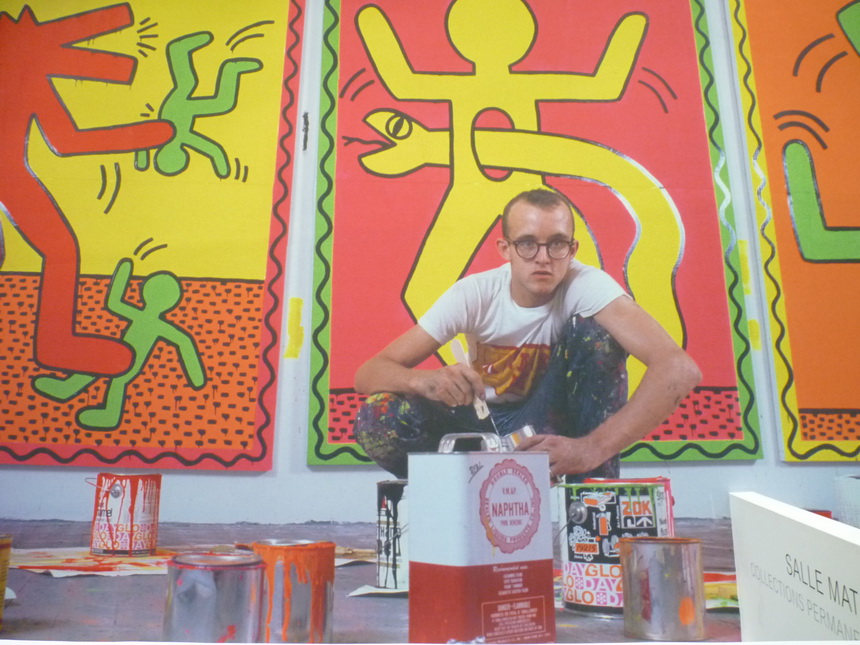
The largest exhibition at Printemps, the retrospective of American graffiti master Keith Haring at the Musée Municipal d'Art Moderne de la Ville de Paris.
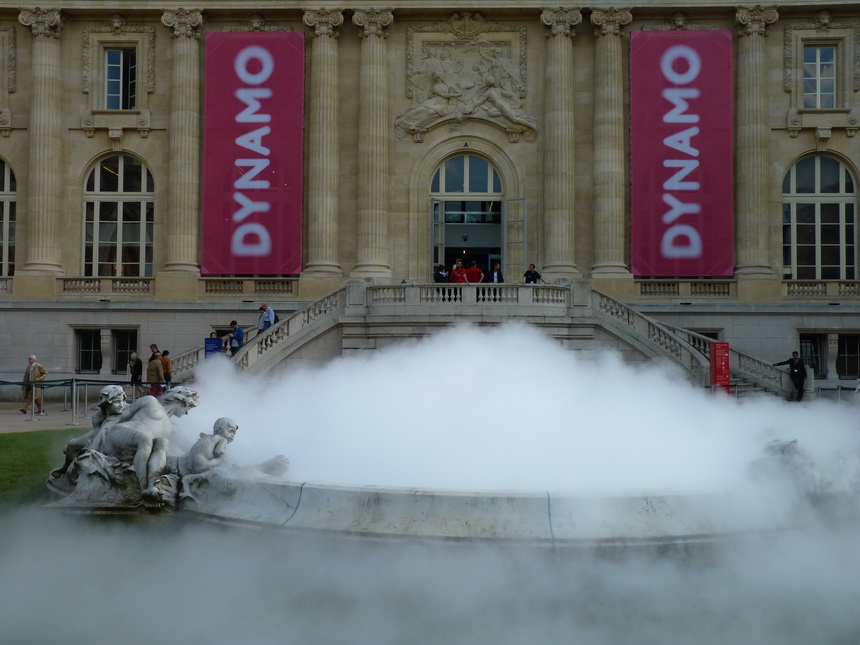
Every time I return to Paris from Taiwan, my first priority is to immediately immerse myself in the contemporary art scene here. This has been a thirty-year routine of artistic observation, experience, and data collection. As an ardent contemporary art enthusiast, I construct my artistic vision and engage with current trends like a farmer tilling fields. The flow of consciousness constantly bewilders me; articulating the true essence is difficult, but carefully savoring each stream of existence reveals that life’s totality lies not in everything, but in persistently holding onto certain existences throughout one’s lifetime—that is fulfillment. Life is thus.
I enjoy viewing, intending to see all beautiful things in the world, or to receive messages of human creativity. Viewing becomes my life ritual, opening the window of the soul and leaving indelible marks on life. Returning to Paris to view all exhibitions is not difficult; it has become my lifestyle, though I wouldn’t call it work, as that would be too heavy. Viewing exhibitions is an extraordinary physical and mental enjoyment. Facing the site directly, contacting works firsthand, and opening my eyes to the present moment—even for just a few minutes—becomes a state of being, experiencing profound messages, touching my visual and spiritual self, and elucidating the consciousness of existence.
Gathering information is not difficult; action follows suit, and the aesthetics of farming require diligent cultivation. I always start my visits at the Palais de Tokyo, the climate station for understanding contemporary art in Paris or Europe. Opposite it is the Musée Municipal d’Art Moderne de la Ville de Paris, allowing me to achieve two goals at once. However, this time I started at Mac-Val Contemporary Art Museum in the suburbs near my home, which was hosting the special exhibition "Emoi-moi." This title revolves around the French word moi (me), adding an e before it to mean agitation. The artists’ agitation stems from the "Id," with works referencing tension, unease, agitation, and violence, mostly consisting of object and spatial installations.
Next, I went to the Palais de Tokyo to see what was showing at the Musée Municipal d’Art Moderne. I saw that ARC was exhibiting Linda Mulvey (born 1954), an American new female artist, in her exhibition "Woman-Object." Today was the last day, so I decided to start with the Modern Art Museum’s exhibition. Naturally, I viewed "Woman-Object" first, presented through photography and collage techniques. From the perspective of new female artists, it used photos and spatial installations to strongly critique the situation of women in today’s consumerist society, where they are consumed like objects.
On the lower floor, the most noteworthy exhibition at Printemps had just opened: the retrospective of Keinth Haring (1958–1990), the most representative New York street graffiti artist of the 1980s, attracting many visitors. Haring and Basquiat were two bright comets that flashed across the global art scene and vanished, yet their light still shines today. Just two years ago, we saw a Basquiat retrospective in this hall; now it is Haring’s turn, with the theme "The political line." In fact, Haring’s entire street graffiti creation was built on resisting systems, exposing regimes, capitalism, mass media, and racial discrimination, and finally fighting for his AIDS struggle. Within humorous, witty, exaggerated forms and brilliant colors, he articulated his artistic-political stance and views. The Haring retrospective is shown in two locations; the other is at the 104 Art Center north of Paris, displaying large-scale paintings and sculptures of Haring monuments.
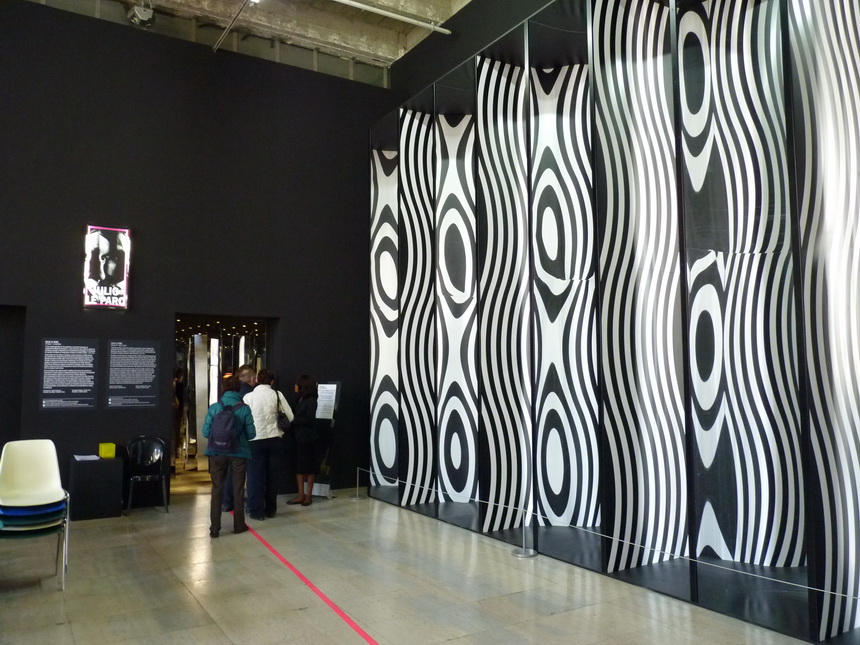
Polish your eyes and enjoy feast after feast of visuals. Under the resonance of body and mind, you perceive how existential energy and consciousness penetrate the soul. Stepping out of the Modern Art Museum and entering the Palais de Tokyo, another visual feast awaits: the retrospective of Op Art veteran Julio le Parc. A Venezuelan artist from South America, he works in painting, objects, spatial environmental installations, and interactive art. Exploring all possibilities of vision through mechanical and light effects, he constructs a rich, magical visual field. Through mirrors and light reflections creating illusions, he allows audiences to personally experience a psychological and physical visual feast.
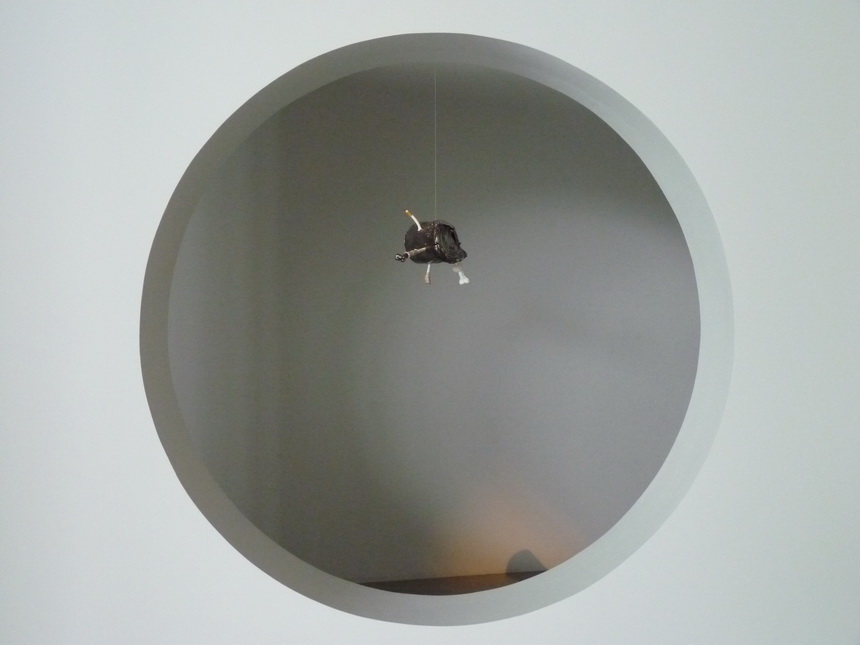
In the Palais de Tokyo’s foyer, an exhibition space dedicated to promoting and encouraging young contemporary artists, there is a solo exhibition by young artist Gauthier Leroy titled "Smokin," featuring object installations. Also showing is Richer Evariste’s solo exhibition "Le grand elastique," both reflecting current trends in object, photo, and video installations. The basement houses exhibitions by contemporary artists, including solo and thematic shows by Francois Curlet, Mark Manders, Julius Von, Marcos Avila Forero, Joachim Koeste, Daniel Dewar, Gregori Gicquel, and others.