London Exhibitions, More Exhibitions
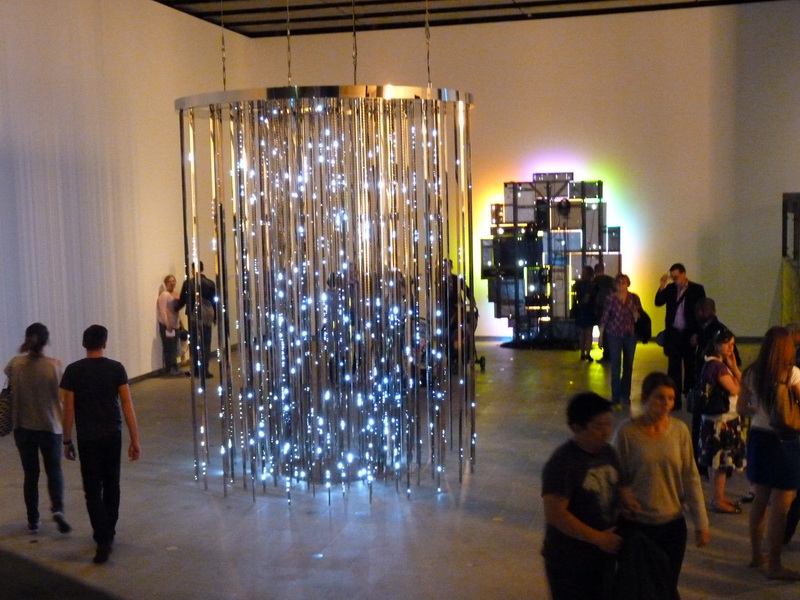
Front: American artist Leo Villareal's "cylinder II" (2012); Back: David Batchelor's "magic hour" (2004)
Text and images / Chen Chi-Hsiang. Both Paris and London are excellent places for leisurely strolls, offering endless exhibitions and standing as capitals of museums and art galleries. Their cultural activities are diverse and well-developed. The greatest difference between London and Paris is that London’s museums and galleries offer free admission to their permanent collections; special exhibitions, however, require payment. Many special exhibitions must be booked online in advance with specific time slots—neither too early nor too late, punctuality is best. Before arriving in London, my daughter recommended two exhibitions: the British Museum’s special exhibition “Ica age art arrival of the modein mind” and the Edward Gallery’s current special exhibition “Light show.”
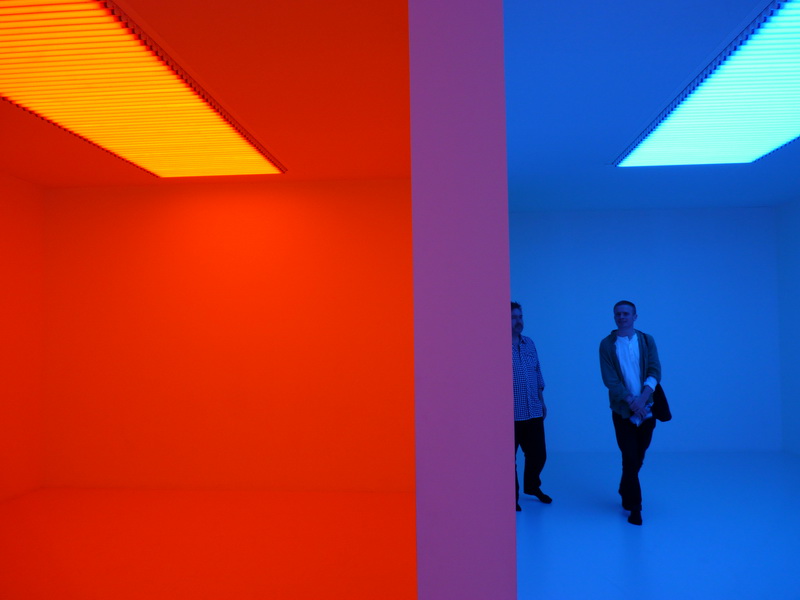
In the morning, I visited the New Tate Gallery. After dining outdoors at the gallery, I took a stroll along the pleasant Thames riverside, where artists were performing sand sculpture demonstrations on the beach. Eager to see London’s most favored special exhibition, “Light show,” which had been extended, allowing me to witness its spectacle firsthand. As the name suggests, this light show special exhibition explores contemporary art related to lighting. New materials continue to captivate contemporary artists, bringing new possibilities to new art. Since the second half of the twentieth century, art has had an absolute relationship with new materials. Starting from the 1960s with the mass introduction of industrial materials like lighting, Op Art explored kinetic art, such as that by Op Art artist Carlos Cruz-Diez, or particularly American Minimalist artists like Dan Flavin and James Turrell. Each generation of artists has had different perspectives and methods for handling light. Today, younger artists are even more diverse, not only using industrial light tubes, bulbs, neon tubes, projectors, and film projectors, but also employing today’s LEDs and digitalization. This engaging exhibition gathers representative works by the most iconic artists of the 20th and 21st centuries, presenting a highly diverse array that leaves one dazzled. Much of this exhibition seems to dialogue with the “Dynamo” exhibition at the Grand Palais in Paris; compared to the large-scale exhibition at the Grand Palais, it is indeed small potatoes, featuring many overlapping artists and works.
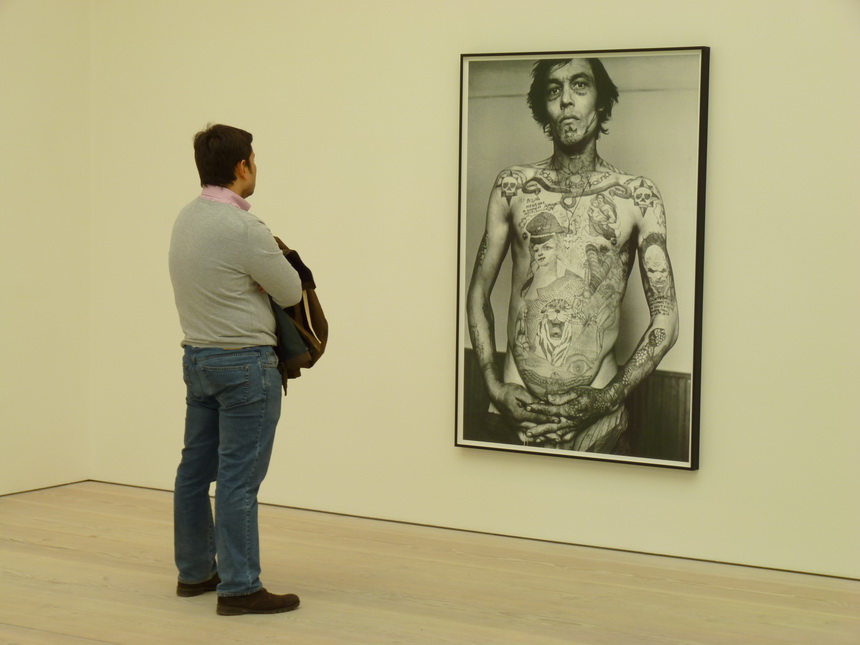
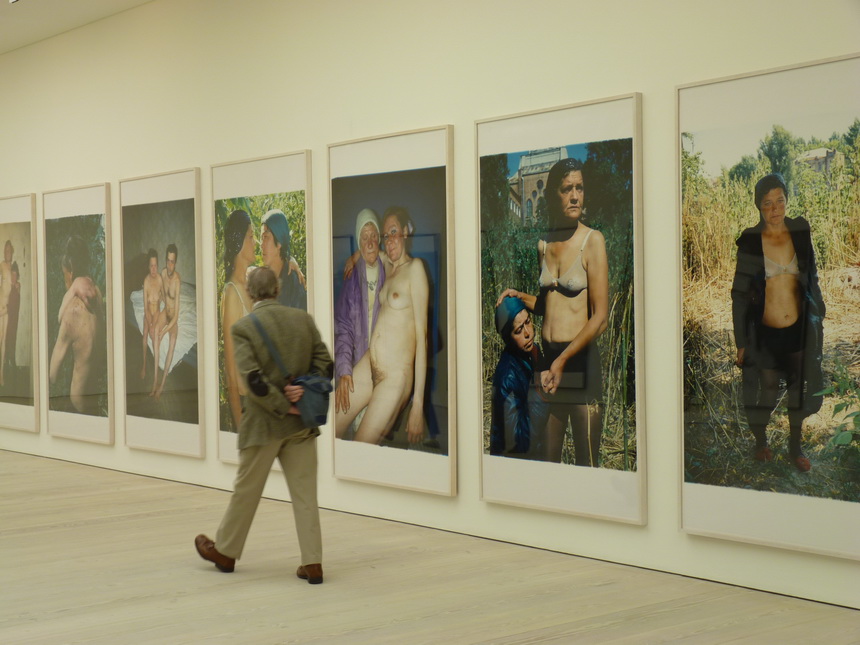
Every time I come to London, I make it a point to visit the world’s largest and most famous Saatchi Gallery for a pilgrimage. This gallery serves as a barometer for British contemporary art; trends and dynamics of future art can be sensed here to some extent. It is a museum-level gallery with an unimaginable scale, capable of hosting sixteen solo exhibitions at once. Every time, I go there to smell the scent of contemporary art and feel the shock of the works, always making records. Currently, it is exhibiting “New art Russia,” a shocking exhibition. Russia is on the edge of Europe; we find it both unfamiliar and out of reach. After the dissolution of Eastern Europe, Russian art was hyped for a while, but nowadays it seems quiet. I am glad to see contemporary Russian art. The entire exhibition presents an extraordinary sense of violence and unease, which is incredibly shocking on site. This reflects the social context of Russia during its current transition, conveyed through the artists’ keen eyes and sharp criticism.
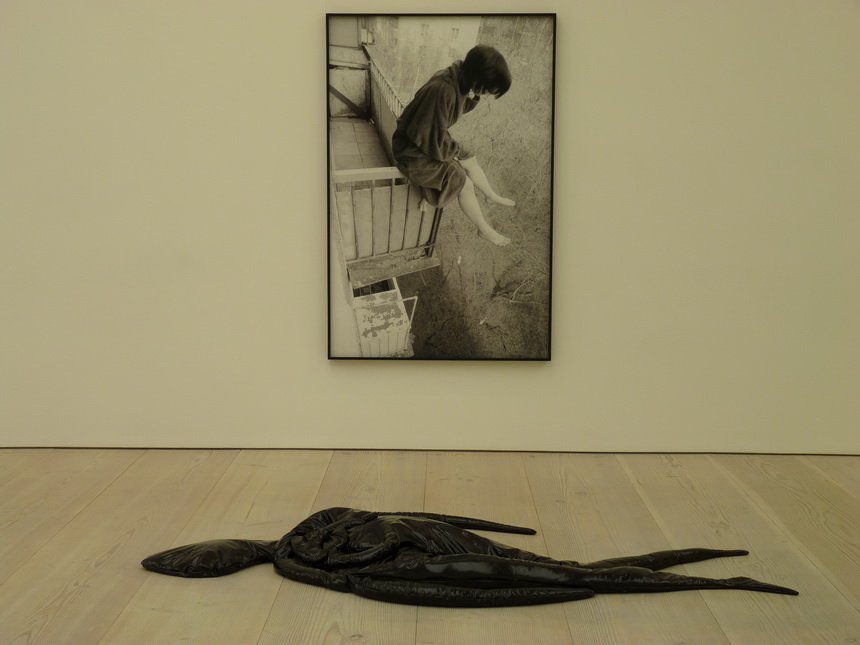
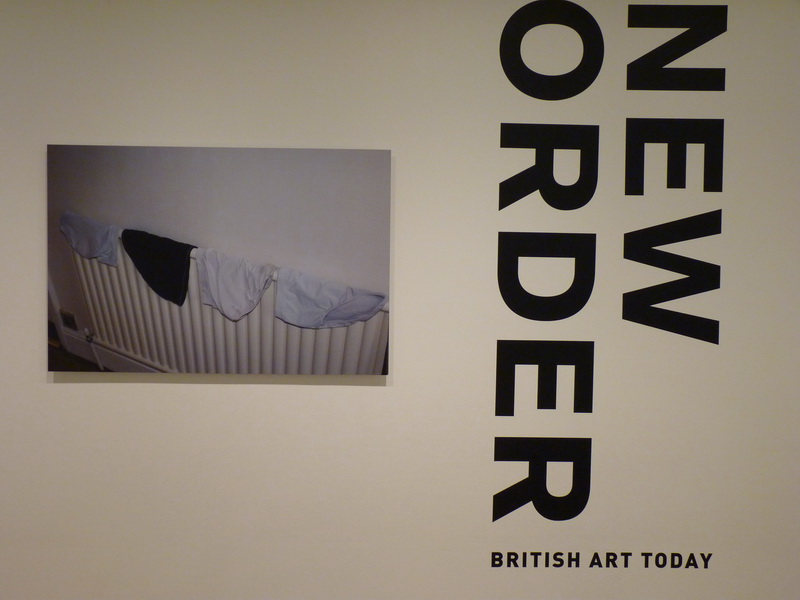
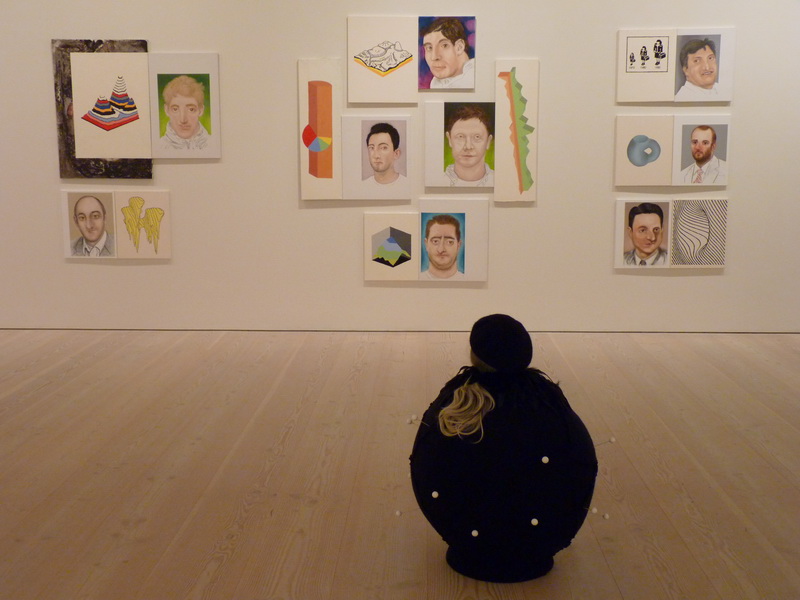
On the fourth floor of the Saatchi Gallery, in two exhibition spaces, is “New order British art today.” It is truly rare to see an exhibition on the new order of British art today: painting, sculpture, objects, new figurative painting, and abstraction coexist. Sculpture appears in new forms, existing between the figurative and the abstract, with objects constructed on anecdotal and narrative bases. The new is always strange; the new is always fragile; the new requires careful observation. Under today’s globalization, British art injects local consciousness and emotion. How the new generation faces the historical and social environment they inhabit can be tasted in this new order. The new represents expectations for the future.
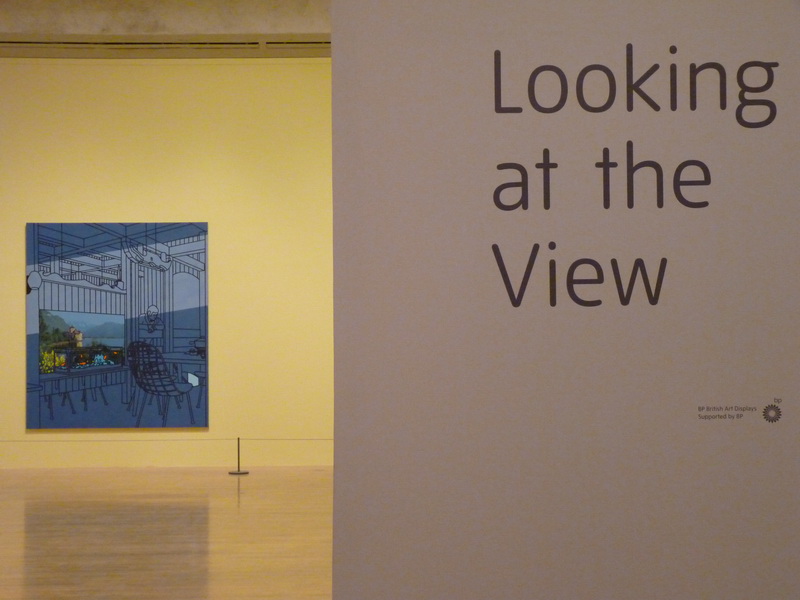
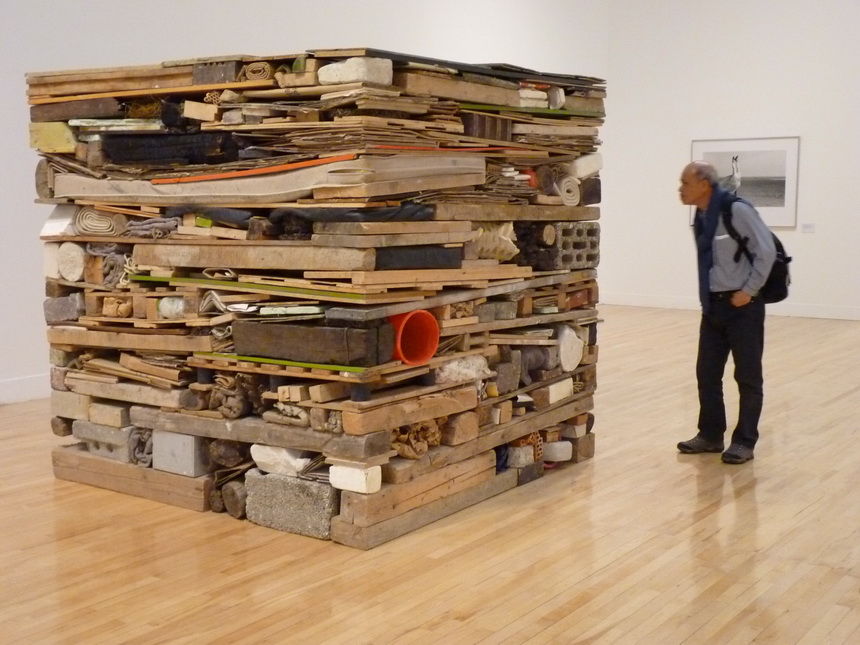
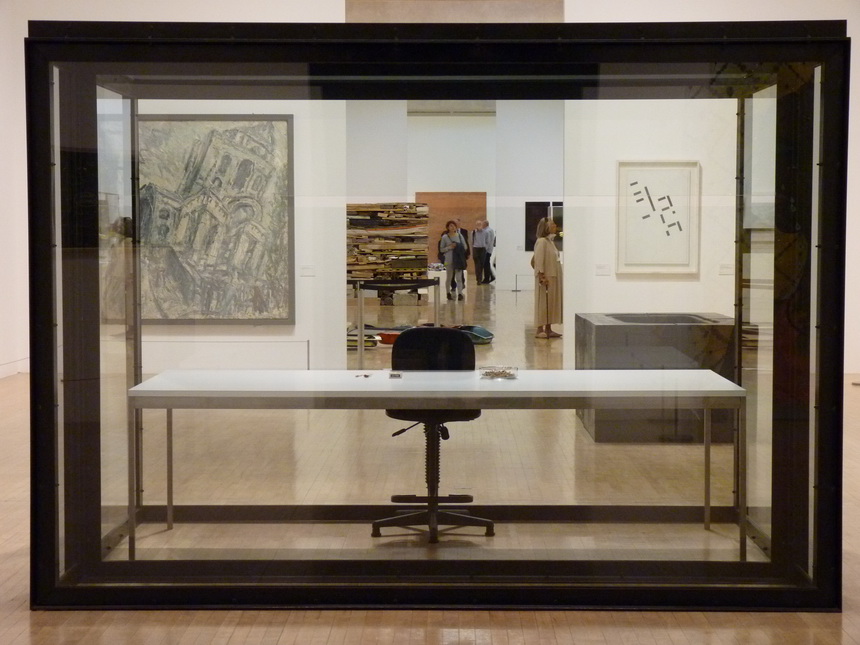
I spent half a day visiting the British Tate Gallery, currently exhibiting “Looking at the view.” This is a thematic exhibition mixing British classical and modern art. Looking at the view is an exhibition where artists explore existential consciousness through natural landscapes. I focused more on the exploration of works by contemporary artists, such as Gilbert & George’s “the nature of our looking,” where the artist probes the roots of his own existence in nature. Julian Opie’s “there are hills the distance” presents the horizon in the form of mural installations. Tracey Emin’s “monument valley grand scale” photographs seek the soul deep within the inner heart. Richard Long uses photographs to narrate his walking routes and distances, etc. Another special exhibition is “Schwitters in Britain.” I did not visit it because I had seen a grand retrospective of Schwitters in Paris a few years ago. Meanwhile, the British Tate collection exhibition is undergoing changes and updates, featuring a series showcasing British contemporary art from the 1960s to the present. Starting with Anthony Caro’s red abstract sculptures, moving through British Pop Art figures like David Hockney and Richard Hamilton. Unique realist painter Lucian Freud, sculptor Barry Flanagan from the 1970s, British neo-sculptors Tony Cragg and Bill Woodrow from the 1980s. New sculptors Mar Wallinger and Rachel Whiteread. Object and conceptual artists Mona Hatoum, today’s most famous Briton Damien Hirst, representative painters of 1990s painting like Peter Doig, up to the bad-taste object sculptors Jake and Dinos Chapman brothers, among others. These works allow the audience to get a comprehensive view of the face of British modern to contemporary art.