Wang Zi-Yun: Ode to Body and Soul
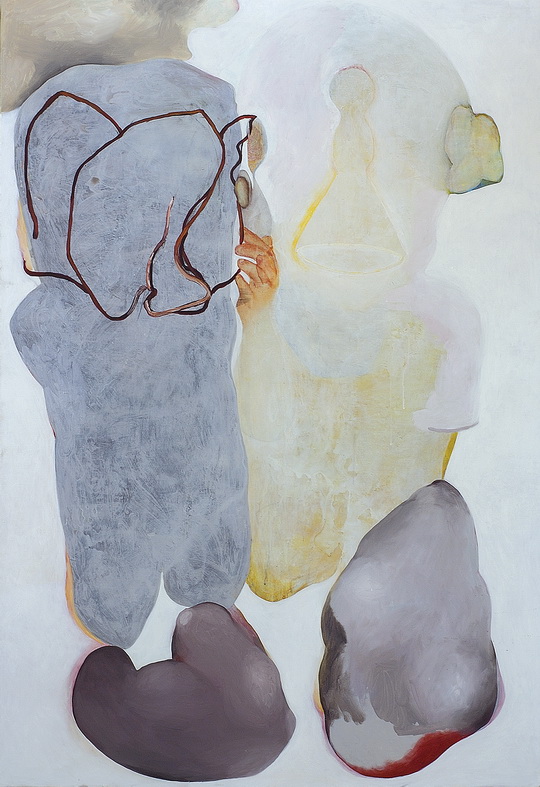
Bougainvillea 112x163cm mixed media 2003
"If I... ask if everything is right, mirror after mirror, without the vain face of arrogance: I am looking for the face I once had, before the universe was created."
Poet Yeats (A woman is young and old) (Note 1)
Text / Chen Chi-Hsiang
Preface: Paris, known both as the City of Light and the City of Art, possesses its unique charm and influence. For lovers of art and beauty, and those who pursue freedom and romance, Paris holds a strong attraction, becoming the dream destination for art enthusiasts and a field to witness artistic humanities. It is an idyllic retreat for flower lovers, and a paradise for shopping, enjoying boutique goods, and fine dining. Paris has always been a place for artists' creation and education, and for the growth of humanistic arts and life transformation. In 1950, the famous American writer Ernest Hemingway wrote: "If you are lucky enough to have lived in Paris when you were young, then Paris will stay with you forever, because Paris is a moveable feast."
Paris, the city of art, has shaped many artists from around the world and exerts a unique influence on global artistic humanities. Taiwan's development of modern art, recent modern art discourse, and cinema (influenced by the French New Wave) are no exceptions. The development of Taiwan's modern art began during the Japanese colonial era through indirect translation, and directly received enlightenment and influence after the Republic of China era. Early artists who studied in France included Liu Qi-Xiang and Zhang Yi-Xiong; the middle generation included Xie Li-Fa, Liao Xiu-Ping, and Chen Jin-Fang, who passed through Paris to New York, or stayed in Paris like Chen Ying-De and Peng Wan-Chi; the younger generation includes You Zheng-Feng and Chen Chi-Hsiang; and the young generation includes Wei Zhen-Hong and Lin Li-Ling, professional artists who continue to live and create in the city of art.
In today's globalization, where the earth is flat and time-space distance is compressed into tablet internet, the rise of autonomous consciousness marks an era of chasing dreams. With visa-free travel to Europe, it has become the preferred destination for Taiwanese tourism, study abroad, study tours, and pilgrimage, invisibly expanding the international vision and diverse experiences of Taiwanese people. The city of art, Paris, has become the dream capital for many engaged in art work and art lovers. Waves of students studying in France continue, and more Taiwanese artists are studying in France. In this enlightened, free, and democratic society, under cultural and social edification, it is impossible not to be influenced by French trends and consciousness (though there are exceptions). Those who study in France possess independent character and strong autonomous consciousness. Artists are no exception; starting from self-reflection, they awaken to political and social consciousness. Under cross-cultural experience, they go deep into the global local, actively opening up new perspectives in art. They bring a moveable cultural feast to their homeland, enriching local culture, and open up grand horizons and foresight for Taiwan, becoming a new force for Taiwan's advancement in globalized art, and providing new vitality and energy for local society, politics, and modernization.
Paris - The Hall of Artist Cultivation: Wang Zi-Yun (born 1966 in Changhua) is one of the representative female artists studying in France currently active in the Taiwanese art scene. She graduated from the Department of Fine Arts at Tunghai University in 1988, studied in France in the 1990s, and graduated from the École Nationale Supérieure des Beaux-Arts in 1995. She is a typical artist trained in the rigorous and formal French academy system. Her creation revolves around feminist issues of feminine writing. I noticed her work early on, and she was one of the invited artists for my 2010 curatorial exhibition Each Other at Taipei Bernheim Gallery, focusing on women's themes.
Other Taiwanese female artists studying in Paris at the same time as Wang Zi-Yun include Zhang Hui-Lan and Cai Hai-Ru. Their creations are deeply influenced by the views of Annette Messager, a heroine of the French art scene, and Louise Bourgeois, the most influential figure of the late 20th century. They revolve around female autonomous consciousness, exploring unhidden female self-intimate bodies and situations. Zi-Yun's work is very French, directly inheriting A. Messager's body consciousness of daily life: body fragments, image collage replacement, scenes, stacking, delicate craftsmanship (sewing), and spatial installation, presented in series. The works interweave and often develop new feelings from internal elements. Their distinctive language is directly based on ordinary daily life environments. Furthermore, she delves into the questioning of traditional aesthetic forms by surface/support painting in the 1970s, and the exploration of truth hidden behind form and subject matter. Thus, works such as Creator, Medium, and Concept can stand on stage directly, viewing the world directly. Therefore, the content, form, and medium expression of artistic creation are full of various possibilities.
Artist L. Bourgeois wrote: "One way women always explore is to become women themselves. Their anxiety comes from never being able to become receptive. All this beginning stems from extreme struggle coming from: all sexuality." She also said: "Art is a guarantee of mental health. All these types of sexuality bring a soothing therapy for the soul" (Note 2). They are all under bold feminism, but they do not claim to be "New" feminists. Bourgeois continues: "I don't believe in the existence of feminist aesthetics. I have created works expressing overflowing abundant emotions that have nothing to do with gender" (Note 3).
Ode to Body and Soul: Wang Zi-Yun's creation revolves around her own female body and soul. The subjectivity of an individual metaphorically represents the artist's own subjective consciousness, making the self an existential consciousness. Her creation starts from "I," originating from observations of daily life phenomena, digging out true feelings related to the inner and outer worlds. The body is the initial gaze of "Self"; the body constructs the world, meeting the soul deep within the body. Going deep into "I" approaches cosmic consciousness. All her creations use complex symbolic and metaphorical forms, in sensibility and vitality from the bottom of the heart, to sing praises of "women's mysterious bodies" and "souls," becoming the core of her extraordinary imagination and idealized exploration. As a female artist, she naturally builds upon women's sensitivity, delicacy, capability, and sensibility. She is good at mastering various media materials, from two-dimensional painting to three-dimensional sculpture or objects, developing various possibilities. Sometimes through spatial installation construction, her creation takes diverse forms: alternating creation, wandering between painting, objects, sculpture, sketch, or photos. Zi-Yun says: "Artistic creation is like facing mirror after mirror. I look at myself and also see the scene behind" (Note 4).
In recent years, the themes she explores and focuses on are Daily Sounds and Daily Faces. They sometimes become the subject of a certain period or individual, sometimes sinking into the edges of time and space, light as dust, seemingly present yet absent, unable to be clearly described, yet so explicitly existing. Like Maurice Blanchot said: "Here, distance and proximity—the forgotten proximity and waiting distance—draw closer and yet drift infinitely apart..." (Note 5).
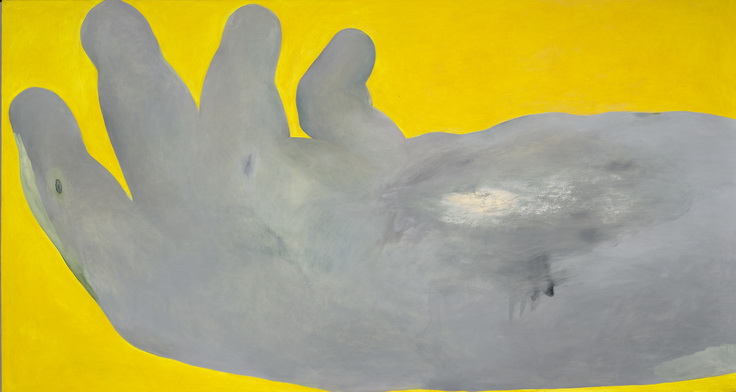
The Gaze of Self - Body: The world begins with the personal "I." The relationship between object and self constitutes autonomous consciousness. The world is in the self's gaze. I depend on the tangible body. The body refers to the flesh and blood body, the carrier of life existence. Looking inward involves not just the body but also the spiritual body of mind consciousness. Humans are spiritual beings, also referring to the unknowable soul of existence, which becomes human spiritual consciousness. The body becomes the dwelling place of the soul. Zi-Yun's entire creation is founded on her intimate body fragments (parts), observing and gazing at herself, rediscovering the imagery of the body among daily things, attempting to peek into human existential consciousness through fragments. Starting from 1993, through the observation of Hands, she uses human limb vocabulary to convey current situations and emotional faces. White unified praying hands "Like" (1995-98) show piety; red double hands "Red Portrait" (1997-99) metaphorize will; hands with rich emotions "Self-Portrait" (1997) indicate current situations; yellow background thick and powerful (gray) palms "Landscape 60150102 - Death of a Soldier" (2010) imply tragedy, etc. All are Hands but contain inclusive situations and rich meanings. From self-contemplation, she realizes common human existence emotions and consciousness.
The artist wrote: "The concept of portrait comes from my gaze, the observation of everything about myself, observing and rediscovering the imagery of all things related to oneself. This imagery means the presentation of the self, but after the painting is completed, 'I' disappears, not in it: this highlights the multiple meanings in portraiture between the subject, the represented subject, and the painter. In my works, personal private emotions, stories, or psychological states cannot be directly explained through the gaze of facial features, but are transformed from the image of the person's face to a neutral and highly metaphorical field—hands" (Note 6).
Trilogy of Body Appearance and Imagery Face: She observes herself critically, attempting to explain or metaphorize the pain, joy, and sorrow of human flesh and inner spirit through the concept of volume from painting, sculpture, and object material media. Volume is discovering memory hidden in the body, yearning for the utopian body. Zi-Yun's creation wanders between the appearance and imagery world of Body. Alternating creation evolves into the Object Face Trilogy: One, Body Replacement: Body mutation, replacement, or self-becoming something else. Two, Floating Surface: Expressed through the membrane and wrapping appearance of the surface. Three, Fictional Pleasure: From inside the body to the fabricated epidermis, shuttling back and forth through decorative appropriation, creating passionate imagination of body, space, and time (Note 7).
One, Body Replacement: Single presentation is depiction; replacement is expression. Replacement is using collage reconstruction techniques to intervene unrelated things and images to produce connections, alienating familiar images, awakening hidden and invisible memories, and peeking into deep consciousness. Replacement becomes mutation and regeneration, connecting time or memory fragments to construct imagery or visions. Unexpectedly, like French poet Comte de Lautréamont said: "Beautiful as the chance encounter of a sewing machine and an umbrella on a dissecting table!"
Replacement becomes Zi-Yun's unique technique. Alternating creation, from two-dimensional painting to three-dimensional sculpture-objects, the artist says: "Through this technique, I gather objects full of memory or cultural meaning in daily life, penetrating media together to produce new imagery. In the works, I don't collage images, but objects and materials with different meanings. These heterogeneous objects, through gathering and collaging, form volumetric blocks with a sense of flesh. Intervening and replacing each other transmits imagination back and forth endlessly from inside to outside" (Note 8).
Zi-Yun uses body fragments as carriers of memory hidden in the body's depths. Repeatedly exploring and digging these time fragments and consciousness in daily life, through clever collage, collection, repetition, and stacking construction, the works are in a state of transformation, mutation, and metamorphosis replacement. Contradictorily turning the familiar into ambiguous or elusive, between imagery-abstract-visions, intending to evoke subconscious situations and ambiguous meanings: Between resembling and not resembling "Body Four" (1998) is an early example of body replacement. Block-shaped image combinations in abstract imagery "Bougainvillea" (2003); the most representative example of body replacement-mutation "Imaginings of Respirator" (2002-2005), heterogeneous intervention in the head causes distorted bodies to naturally generate visions. Replacement-mutation "Spore Garden" series (2005), indescribable ambiguous surreal objects-sculptures, like proliferating plant seeds or grotesque block organisms, the body full of vitality in metamorphosis, transformation, and mutation. Thus, in the Monster Examination it is written: "The grotesque body is a flesh always in formation," "The grotesque image expresses stages of death and birth, growth and formation. It is in change, an unfinished deformation state characteristic, with only a blurry boundary line with the material world." Original bodies are reborn through mutation, transformation, and heterogeneous intervention, attempting to extend time endlessly in the process of disappearance. (Note 8)
Two, Floating Surface - Skin Series: Skin and Membrane are the floating surfaces of the body. Skin and Membrane are the results of Zi-Yun's subtle observation of the body and creation. Skin is the inside and outside of the flesh and blood body, organically sweating and breathing; membrane is the fruit of layers of painting pigment laid down. Skin and membrane are both thin substances. The skin layer is a protective film against external invasion; the membrane constructs the texture of painting and anti-dust protective lacquer. Skin color carries ethnic history and consciousness; the membrane carries the factors of the painting. The surface Skin and Membrane are in the liminal space between inside/outside and surface/interior. Skin is very abstract, having no fixed shape or form, with its skin color attributes. Where there is skin, there must be pores; where there are pores, there must be exchange and permeation. It wraps subjective consciousness and internal structure, changing with the form of the subject, floating shapeless. In short, "the ambiguity of skin as a suspicious interface, the uncertainty of permeability boundaries" (Note 9). Skin is physiological, physical, psychological, historical, etc. Obviously, all depth comes from the surface. The vibrant floating surface shows life and serves as a metaphor for body imagination.
The Skin series appeared in 2002's Puberty and Volcanic Landscape, both concrete and abstract. In the semiotics of the body, it refers to physiological signs, indicating life energy and consciousness. 2004's Family Portrait-1984 carries autobiography and collective memory. 2006-07 Skin Appearance and Skin Membrane Imaginings series explore these two major series, quite sensitive and sensual, strongly expressing feminine soft characteristics. The Skin Appearance series uses digital images of skin and body hair taken close-up with a microscope lens, computer-output onto canvas, stuffed with cotton wadding inside the painting. According to each moment's creation situation, there are various objects on the surface: hair, oil, transparent empty capsules, thumbtacks, etc., alienated into ambiguous painting-objects, between imagery and abstraction, sensation and consciousness, physiology and psychology, conveying an indescribable emotion and awareness. The abstract Skin Membrane Imaginings series is an imagination of skin. She uses semi-transparent gray-white tracing paper as a metaphor for the inside-outside imagery of the skin layer, leaving spots randomly with pencil, or using paint printing mottled marks as traces of time. This series is particularly poetic, delicate, and elegant. To emphasize the thin imagery of skin/membrane and imagination inside reality, the works participate in part of the content by hanging.
Three, Fictional Pleasure: Fictional pleasure refers to the extensive extension and expansion of the body in daily life and imaginings, targeting fantasies of space and the meaning and decorative appropriation of fields. Zi-Yun uses Body as the carrier for the series creation Between Body. Heterogeneous Object. Suspension. Exploring memory hidden in the body, yearning for the body's utopia. Intending to convey unease and fantasy regarding people's unknown, rapidly changing contemporary life, genes, material mutation, and copying technology. Expanding from personal experience, presenting the realism of current life (Note 10).
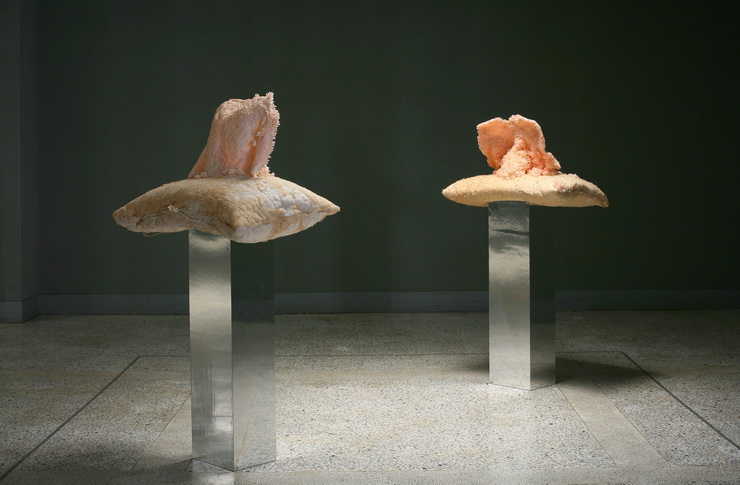
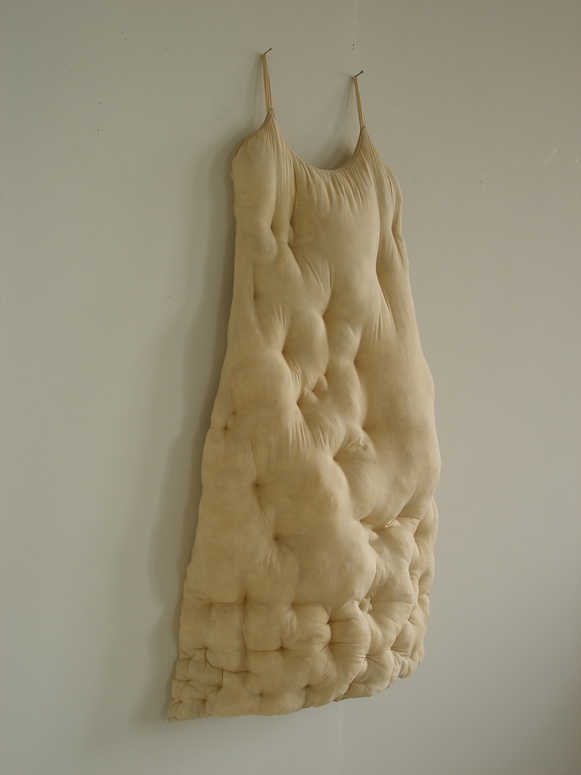
The After 241920 Minutes series marks time scales, starting from 2002, totaling 21 object-sculpture works. It is a specific total amount of time, but neither has year/month/day nor seasonality. In the latitude of abstract time, it records the artist's personal autobiographical daily life body memory and existential consciousness. The first piece After 241920 Minutes (2002-05), four pillows object-sculptures, Zi-Yun directly appropriates the intimate object-she shares sleep with every day—pillows—as an extension or projection of the body, showing not just objects, but recording personal body odor and time memory. After 241920 Minutes - Blurred (2005), Chest (2006), Back (2006), piling and combining symbolic objects on pillows like empty capsules, medicine, cotton swabs, and hair, creating a confusing situation, revealing elusive anxiety and unease beneath its gorgeous appearance. Through related associations, allowing the body full of desire, memory, surprise, feeling, and fantasy to extend and expand infinitely, thereby expressing the body diary of a certain period's individual (Note 11). After 241920 Minutes - Clothes (2007) is a garment filled with cotton wadding and sewn, metaphorizing soft sculpture of the flesh, a specific yet nameless fragment memory in daily life, between sensation and metaphor.
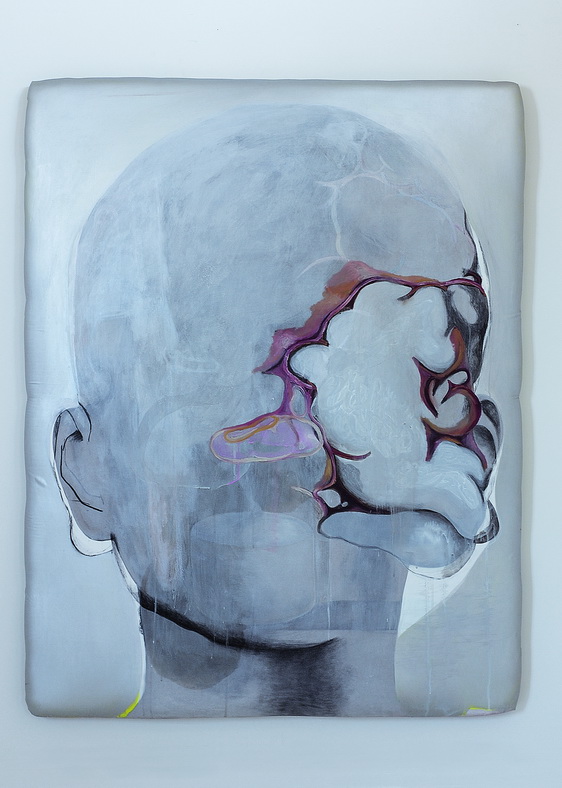
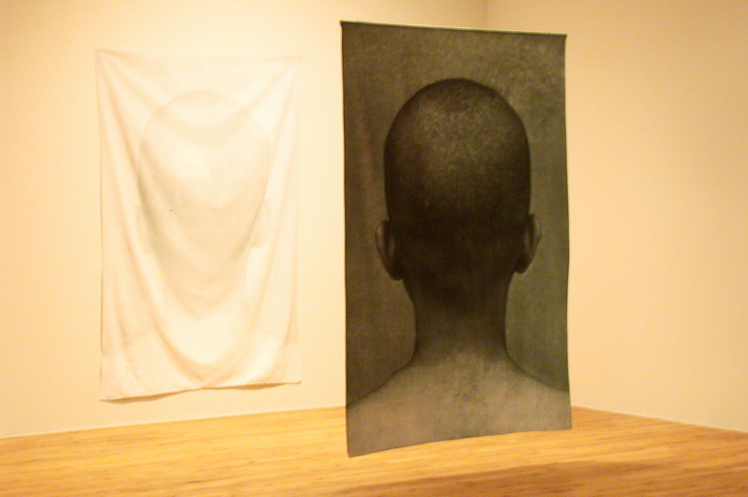
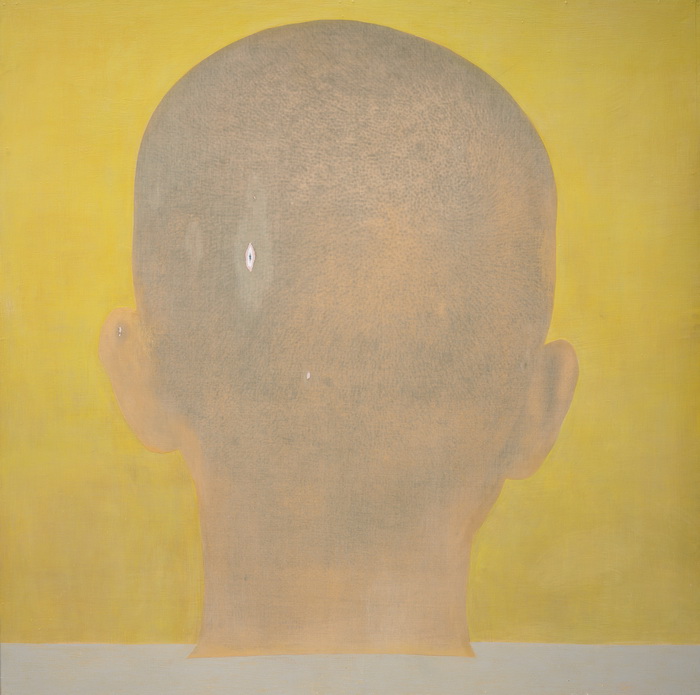
Seeking positivity Own Room has Not Present, Hidden, Extension series, Portrait with Walnut (2005) and Portrait without Face series (2009), etc., all originating from the same bald image facing away from the audience, processed in different situations. Own Room series black-and-white images output on bedsheets; Portrait with Walnut images output on quilts; Portrait without Face painting series. Then, the head image first appeared in Disturbance in Tranquility (2004) spatial installation (white, gold, black) bedsheet works.
The most striking Own Room series, using the attribute of bedsheets, directly hangs spatial installation. Not Present contrasts black and white; white blends into the wall, indicating simultaneity of not being present, verifying that time is not only timeless but also simultaneous. Philosopher B. Pascal depicted in Pensées: "This small space I occupy is swallowed by infinite time, yet I know nothing, and this space does not know my existence..." "I coexist with another time and space without knowing it" (Note 12). Hidden places one black piece in the corner of the wall, facing a suspended spatial head image, presenting a hidden disturbing and uneasy situation under spatial sense and distance, as Blanchot stated: "Here, distance and proximity—the forgotten proximity and waiting distance—draw closer and yet drift infinitely apart" (Note 13). Extension is image output stretched as a painting, standing in the center of the exhibition hall. The picture is a black-and-white back-facing head image, with a bare frame behind. Through the viewer's spatial metaphor of "seeking frontality," it expresses fear of "simultaneity of absence" and imaginative flights of the body unable to land on the "unknown."
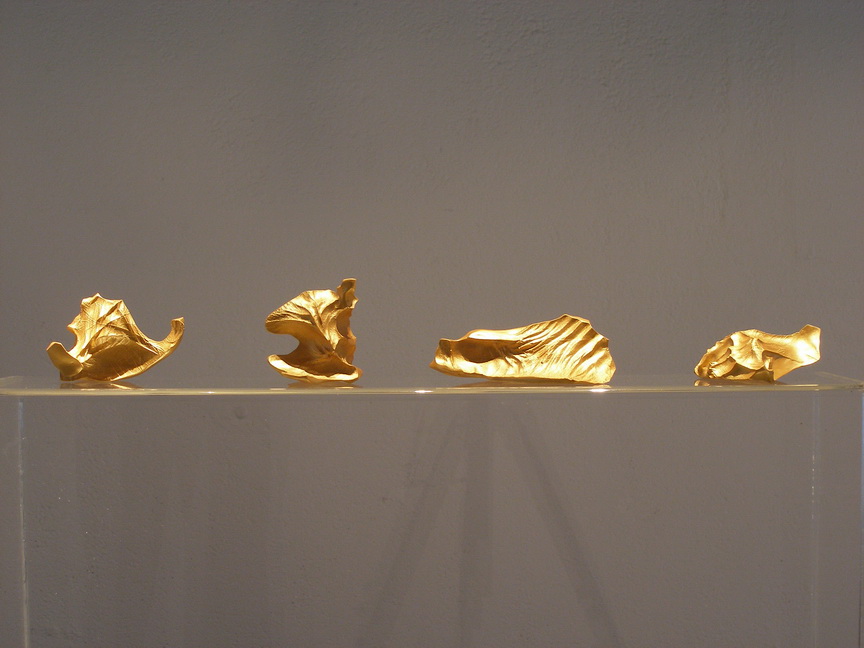
The Jewelry series (2006-07) of woman's body extension and expansion comes from the mutation of the Spore Garden series. Jewelry is a symbol of wealth and power, a fantasy object of women adorning themselves with makeup, and certainly also women's pursuit of beauty, the whimsy of body utopia. This series extensively uses colorful capsules, pills, hair, paint, glue, etc., from daily life. Using readily available items (like gloves, clothes, fabric, and folds) as prototypes of the body, cleverly creating beautiful objects until the prototype proliferates and mutates, giving birth to bewildering fantastical objects, between matter and form, poetry and sensation, physiology and physics, nature and craftsmanship.
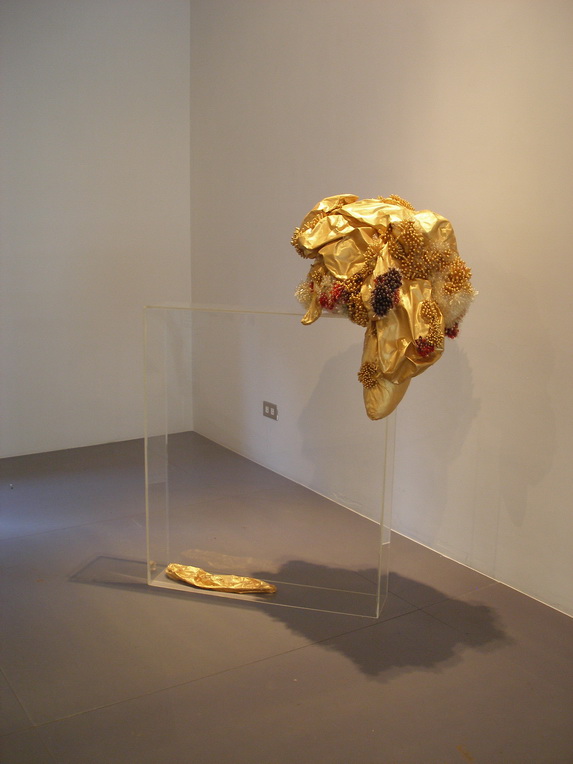
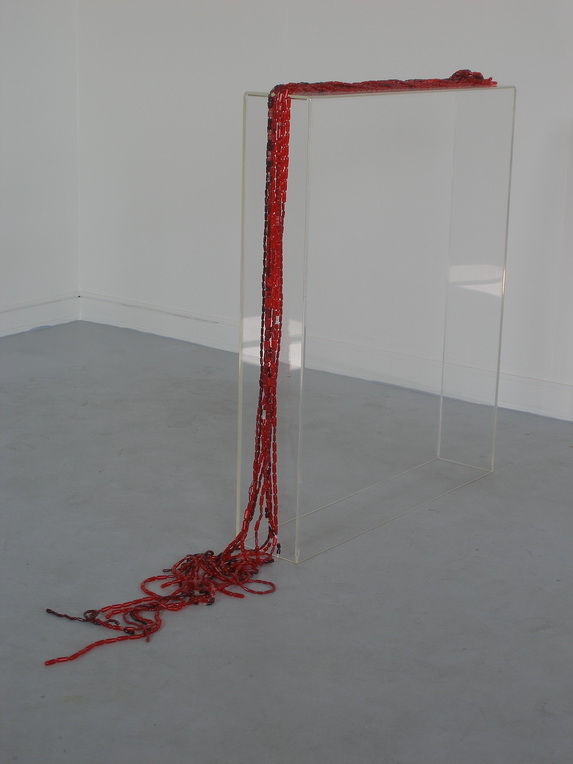
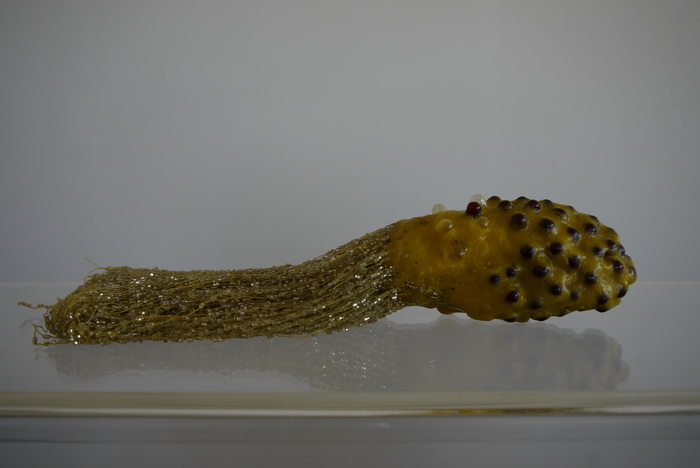
The Fictional Pleasure series (2009) is an extended exploration of the Jewelry series. From small jewelry to weighty objects, more exquisite and perfect, closer to real objects. Naturally formed forms are painted with brilliant colors. Block objects decorated with golden capsules form gorgeous golden coats, a large string of rubies hanging to the ground, a long silver object resembling slender floral fruits, dramatically expanding and connecting daily thoughts and feelings, becoming a gorgeous fictional stage. The expansion of the Fictional Pleasure series to date has become the organic Trivial Objects series (2012), continuing to deeply explore the heteromorphic bodies hidden in people's hearts.
Time-Space Journey - Landscape Series: Slowly flowing Landscape meditates on the state and situation of existence. In the illusion of virtual and real, void and formless, ever-changing, even "virtual contains real, real contains virtual. Virtual reaches extreme becomes real, real reaches extreme becomes virtual." Silent and vast, soundless and endless. Stream of consciousness flows through spatial fields, slowly flowing speed indicates the passage of time, or riding the wings of time, as an unconstrained fantasy journey, wandering in the unknown inner world, entering metaphysical realms. Fleeting light and shadow, unpredictable, transforming and appearing mental images, intending to deconstruct consciousness and delve into the subconscious. Between time and space, external and internal, sensation and consciousness, mental image and imagery, dream and reality, matter and spirit, abstract and concrete, visible and imaginable, fixed and unfixed, existing and non-existing, seen and unseen, fantasizing the magic and mystery of existence. The artist wrote: "Endless rambling notes became rustling indistinguishable sounds, opening a journey of time and fantasy" (Note 14).
Note 1: Between Body. Heterogeneous Object. Suspension. - Wang Zi-Yun Creation Discourse, 2007 Dayeh University Publishing p3. Note 2: Louise Bourgeois Retrospective Paris Centre Pompidou Press Release, Spring 2008. Note 3: Louise Bourgeois Retrospective Paris Centre Pompidou Press Release, Spring 2008. Note 4: Between Body. Heterogeneous Object. Suspension. - Wang Zi-Yun Creation Discourse, 2007 Dayeh University Publishing p2. Note 5: Taipei Bernheim Gallery Each Other Women's Theme Exhibition, Artist-provided data 2010. Note 6: Zhang Hui-Lan and Joan Pomero Joint Exhibition Catalog, Xinbin Wharf Art Space Publishing, 1999. Note 7: Between Body. Heterogeneous Object. Suspension. - Wang Zi-Yun Creation Discourse, 2007 Dayeh University Publishing p12. Note 7: Between Body. Heterogeneous Object. Suspension. - Wang Zi-Yun Creation Discourse, 2007 Dayeh University Publishing p30. Note 8: Between Body. Heterogeneous Object. Suspension. - Wang Zi-Yun Creation Discourse, 2007 Dayeh University Publishing p13. Note 9: Between Body. Heterogeneous Object. Suspension. - Wang Zi-Yun Creation Discourse, 2007 Dayeh University Publishing p14. Note 10: Between Body. Heterogeneous Object. Suspension. - Wang Zi-Yun Creation Discourse, 2007 Dayeh University Publishing p20. Note 11: Between Body. Heterogeneous Object. Suspension. - Wang Zi-Yun Creation Discourse, 2007 Dayeh University Publishing p32. Note 12: Between Body. Heterogeneous Object. Suspension. - Wang Zi-Yun Creation Discourse, 2007 Dayeh University Publishing p16. Note 13: Between Body. Heterogeneous Object. Suspension. - Wang Zi-Yun Creation Discourse, 2007 Dayeh University Publishing p23. Note 14: Slowly Flowing Landscape Solo Exhibition Press Release, Taichung 107 Gallery, 2011.