Pan Hsiao-Hsia - "Turtle Eggs, Fire" Are You the "Taiwanese Knight"?
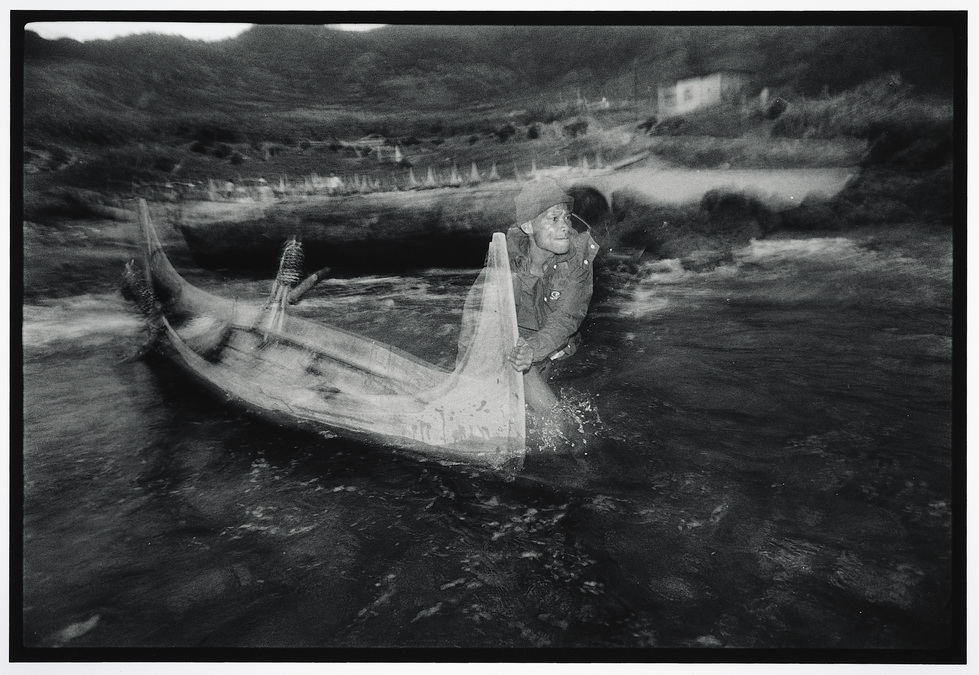
Fishing off Lanyu 1987 Provided by Hsiao-Hsia
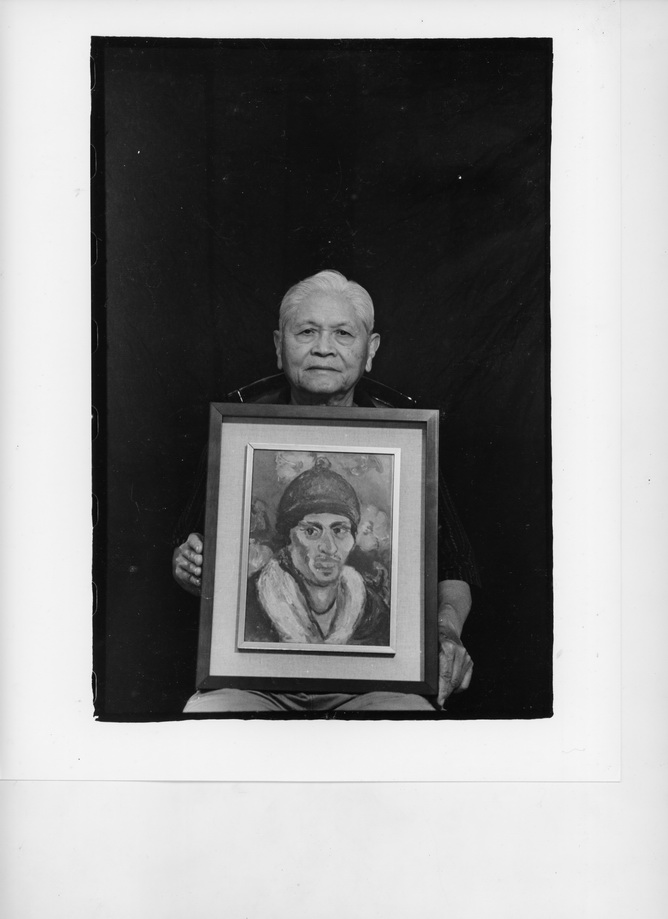
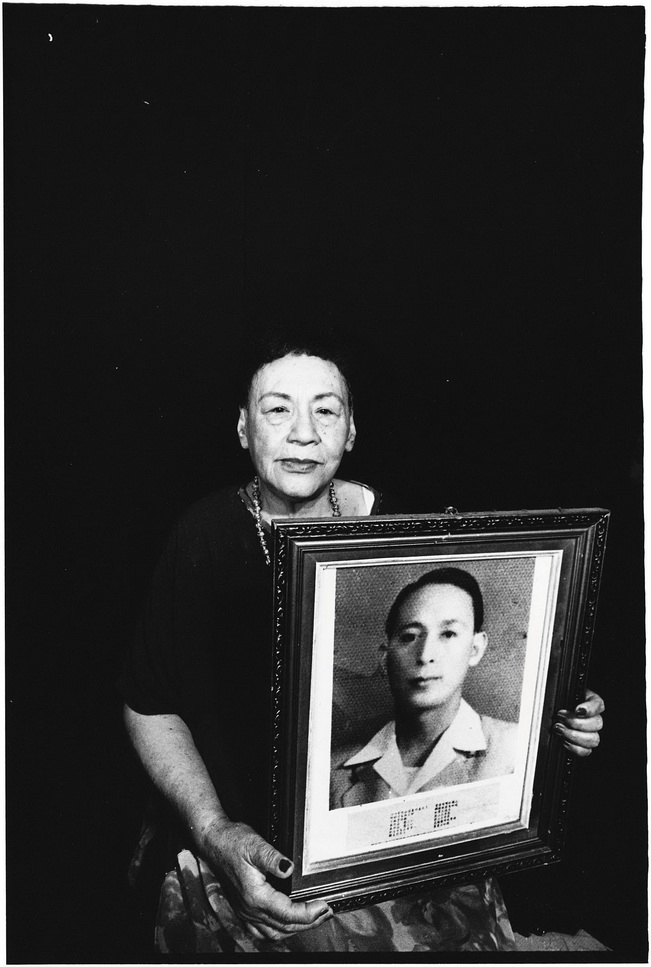
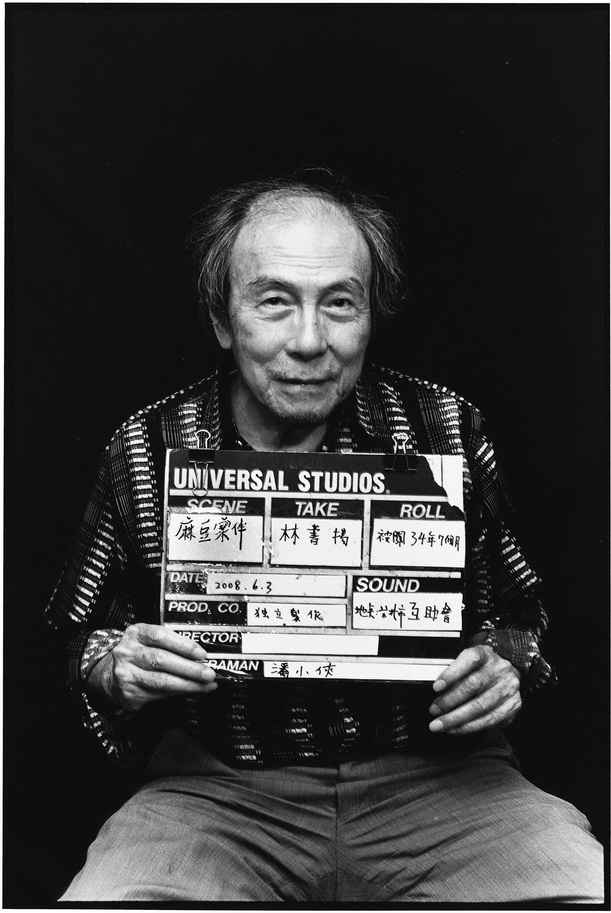
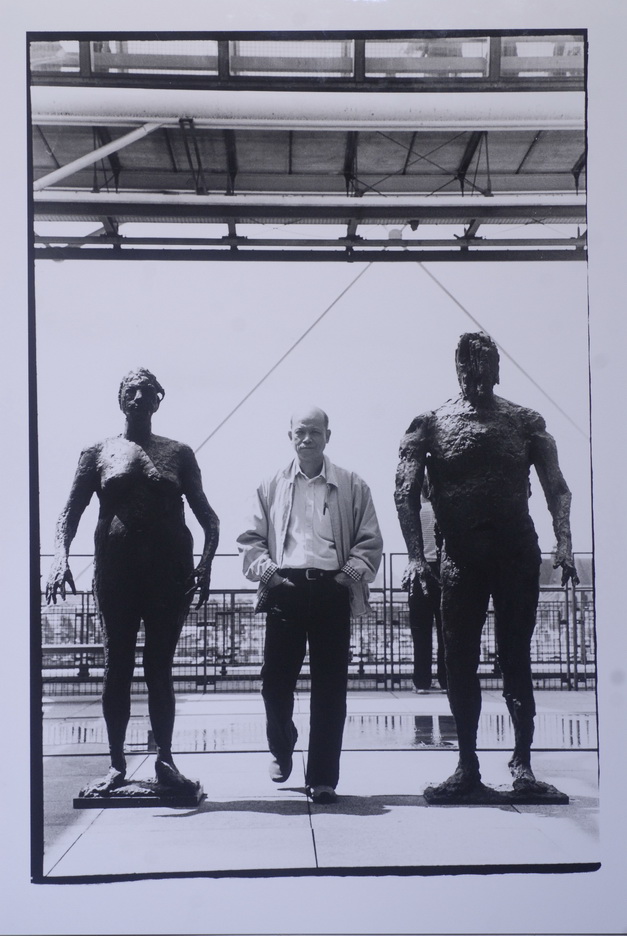
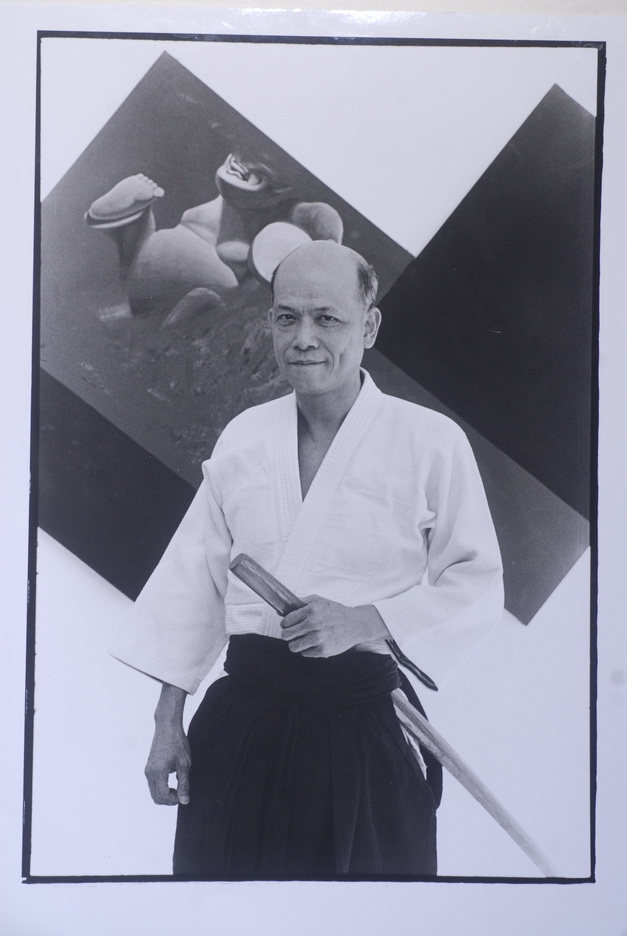
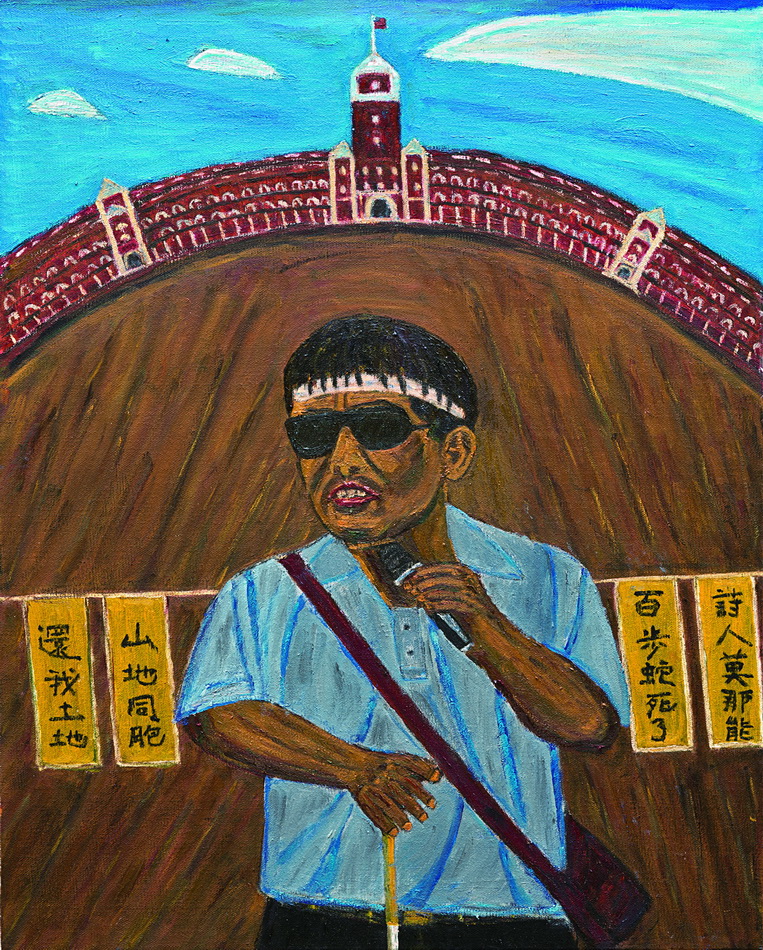
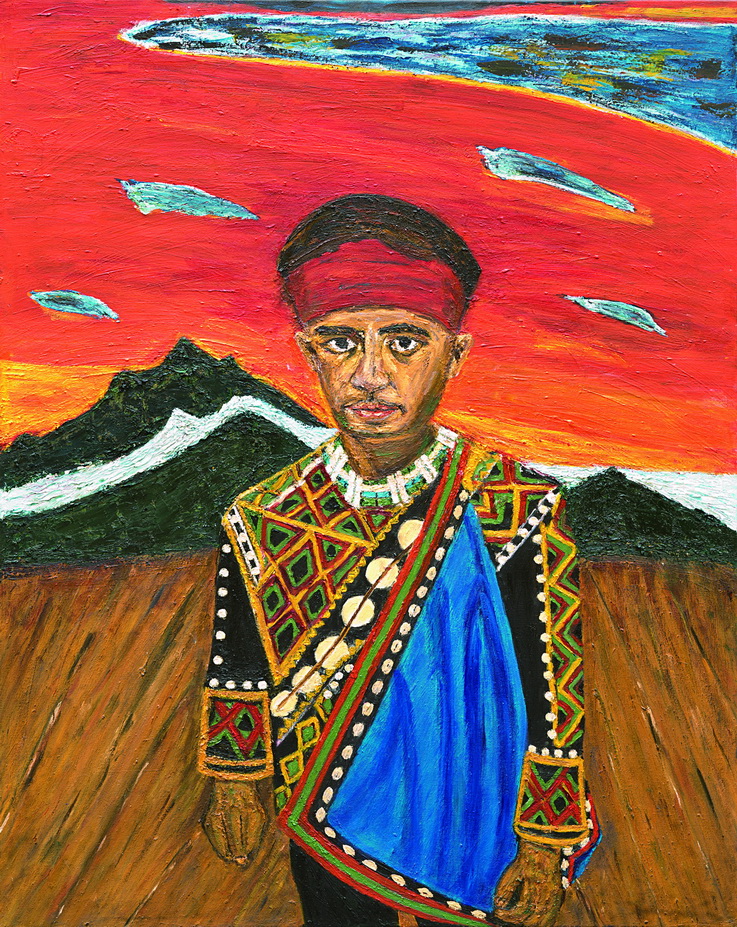
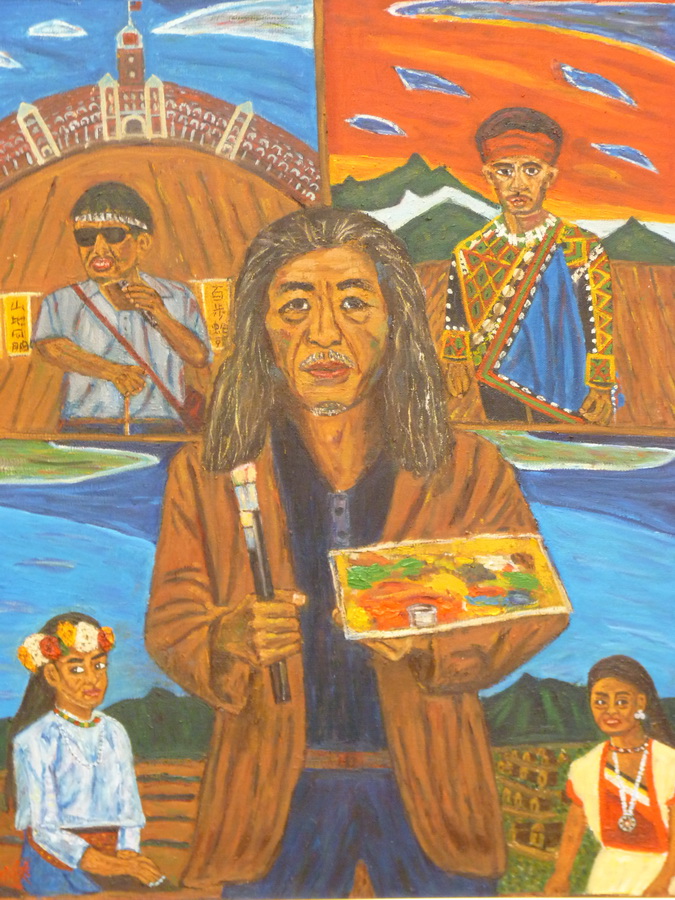
"The only way to deal with an unfree world is to become so absolutely free that your very existence is an act of rebellion." — Albert Camus, Existentialist Writer
Text / Chen Chi-Hsiang
Preface: I have a "brother" named Pan Hsiao-Hsia. This brother is not that brother; we are all equals regardless of age. If fate allows, we gather together, share a cup of liquor, and let it go down to the "rotten guava" (Note 1). Indeed, among the noisy friends at the art world's drinking tables, most are "rotten guavas." When the liquor flows, the harsh criticisms come out. Strange enough, I neither drink nor smoke, yet I insist on hanging out with these close brothers who don't drink or die easily. It seems like drinking buddies praise each other. I have artistic friends with whom I share bonds in both north and south Taiwan. Many enjoy drinks, using alcohol as a medium for heartfelt conversation, discussing art and life, or criticizing politics and society. These friends often meet at noisy dining tables.
I met Hsiao-Hsia at the drinking table of the old Jia Ren Art Studio in Taipei. Our drinking companions indulged in venting, from red wine, white wine, sweet wine to strong spirits, from late night until dawn, partying endlessly, often getting dead drunk, stumbling and lying on the ground. Hsiao-Hsia is a heavy-drinking immortal. When he drinks, he feels far from worldly concerns. No matter what, he floats freely like the Eight Immortals crossing the sea. Drinking brings him great joy and pleasure. He said: "Life is actually quite easy; as long as there is wine to drink and cigarettes to smoke." His existence is so free and elegant.
Hsiao-Hsia's real name is Pan Wen-Chu. He said: "I am a person with no reservations. Once I drink, I become Hsiao-Hsia" (Note 2). The humble "Hsiao-Hsia" reflects his personality: rebellious and righteous. He appears cool, not good at talking, always saying "gan lai, gan qu" (do this, do that), followed by a silly laugh. He usually has messy hair, wears a khaki cap, has a rough build, and is unkempt. He often wears T-shirts and khaki pants, cloth shoes, and carries a backpack, seemingly ready to strike. Clearly, this is the personality of a street photographer. He gives people the impression of being straightforward, simple, sincere, valuing friendship, somewhat romantic and chivalrous, cherishing human bonds, with a touch of Jianghu spirit and a sense of justice.
My friendship with Hsiao-Hsia began in 2009 when he came to Paris to photograph Taiwanese artists living in France for the "Revised Edition of Taiwanese Artists." I was also one of his subjects. I accompanied him to visit artists Chu Teh-Chun, Peng Wan-Chi, and Li Po-Yuan. Thus, I witnessed firsthand how Master Photographer Hsiao-Hsia captures the studio environment and seizes the spiritual essence of figures in the "moment," bringing artists to life with their proper character, vitality, and demeanor, jumping out of the flat plane into an imaginative space, activating the image context and portrait consciousness.
The Righteous "Taiwanese Knight": Pan Hsiao-Hsia (born 1954 in Taipei) is an artist who deeply loves this land. After graduating from Fuxing High School of Arts, he was passionate about painting. Fate brought him to photography, and he chose to replace the paintbrush with a camera. Hsiao-Hsia documents and witnesses the vitality of Taiwan. What stands out is the people and events within the scenery. The photographer said: "Photography is wonderful; it feels like intervening in the other person's soul at the moment the shutter clicks... So, the connection with people at the moment of the shutter click attracts me" (Note 3). In 1986, he worked as a photojournalist for the Independent Daily News. Although he lacked martial arts skills, having no knife or gun, only a camera, a pair of sharp eagle eyes, a sensitive mind, and a consciousness defending social justice, he used the camera as a weapon to maintain social justice. His impactful images not only carry and witness the reality of events but also uphold righteousness, constructing the forgotten, obscure collective consciousness of Taiwanese people, transcending time and space to become historical fact.
At his core, Hsiao-Hsia cares for vulnerable groups, the oppressed, and indigenous peoples, standing with the masses. Using the camera as a tool to practice social justice, he documented and depicted the small figures around him who were ignored or even discriminated against, presenting the obscure social consciousness underlying them. He recorded the tattered fate and history of Taiwan, witnessing the enduring energy and tremors of the land, constructing the historical imagery of the "sweet potato" (native Taiwanese). He demonstrated the spirit of chivalry and tenderness, disregarding personal gain, enthusiastically helping the weak and suppressing the strong, acting righteously. His actions can be called those of a "Taiwanese Knight."
Hsiao-Hsia's Moments in Taiwanese History: Hsiao-Hsia witnessed the historical moment of the awakening of local consciousness. During the peak of social movements in Taiwan after the Formosa Incident, when Taiwanese people bravely pursued democracy and constructed subjectivity, his figure appeared in all major protest events. On the front lines, he recorded and witnessed the bumpy and tattered democratic journey of Taiwanese people, turning moments into eternity. For example, the May 20, 1988 farmer protests, the self-immolation of Zhan Yihua during Zheng Nanrong's funeral on May 19, 1989, and the shared sorrow and destiny of indigenous peoples involved in the indigenous rights movement. Hsiao-Hsia was never absent. From Lanyu to all over Taiwan, he left the most sincere portraits and records of the lives of indigenous tribes, expressing sympathy for the disasters and hardships of the villages. Using his most skilled tool, he told a powerful narrative of Taiwanese visual history, lighting the lamp of consciousness and calling forth the collective memory of Taiwan. Maurice Halbwachs, who pioneered the study of collective memory in modern social sciences, said: "Collective memory is essentially a reconstruction of the past, adopting images of historical events to meet the faith and spiritual needs of the present" (Note 4).
Hsiao-Hsia's photographic lens acts like a spotlight, focusing our vision, delving into the tremors of social and historical depths, reminding us not to forget the tragedies of the era, and focusing on excavating facts that were forgotten or deliberately dropped. It demonstrates the great reality of the local spirit of transitional justice. All of this is continuously practiced through time under meticulous planning, such as the 25-year chronicle of Lanyu, the 18 years of photography for Taiwanese artists spanning a century, and the ten years of "White Imprint," etc. Amidst the shifting stars and changing times, he recorded and witnessed the changes in local people, things, and environments.
His care for this land is divided into three main parts: First, for over thirty years, he has consistently placed indigenous peoples as a key focus in his lens. With chivalrous bones and tender feelings, he powerfully depicts the visual narrative of indigenous peoples, writing a blood-and-tear record for Taiwan's indigenous ethnic groups. Second, he has long tracked and photographed issues that touch Taiwan's nerves, including the political persecution and historical ailments of the White Terror, and witnessed the suffering of victims and their families of the February 28 Incident, serving as a requiem for Formosa, narrating the forgotten, obscure, and painful historical memories, intending to awaken the local collective consciousness. Third, the portraits of Taiwanese artists over a hundred years of artistic development show the creative energy of the land. Using images and people, he constructs a Taiwanese art history with subjectivity. He records the imprint of Taiwan, which is more than just the context and historical scenes of people, events, and things; images become the collective memory, soul-calling song, historical imprint, and existential consciousness of Taiwan. Of course, his cherished painting creation soothes his personal existential consciousness. Writers write history with pens, painters paint history with colored brushes, but photographer Hsiao-Hsia records and witnesses the history he lived in with his camera.
Chivalrous Bones and Tender Feelings – Lanyu Chronicle: Young Hsiao-Hsia, chasing dreams, read Liu Ch'i-Wei's book "Indigenous People and Cultural Arts of Taiwan" in 1979. He was deeply attracted by the loincloths and flying fish of Lanyu, igniting a fire to find the rainbow life. Smelling a breath of freedom from the distant wind and waves, he rushed straight to his dreamland – Lanyu, just like Gauguin leaving Paris to find the original homeland of life – Tahiti. Summoned by freedom, Hsiao-Hsia put on a loincloth and transformed into a Tao tribe member, opening his lifelong passion for the land and people, writing his life context and expressing strong emotions.
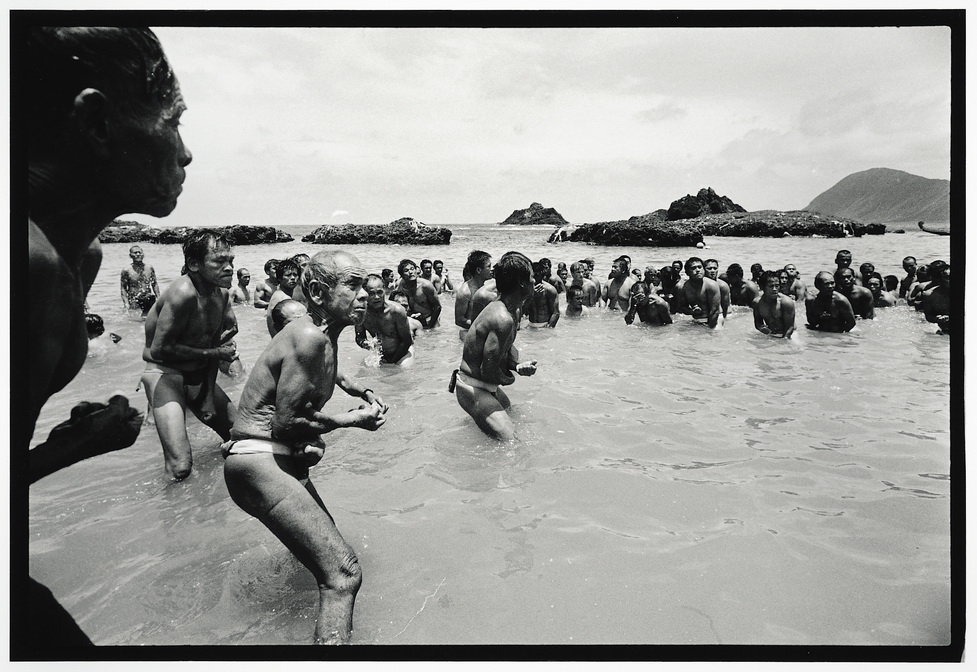
Lanyu became his "heavenly tribe." Under the bond of fate, he became family with the locals, delving into the island's ecology and culture, portraying the Tao people, and using his lens to record and witness the people, events, and things of Lanyu, and the gradually disappearing scenery with the passage of time: such as plank boats, early morning fishing trips, sheep on the island, portraits of men in loincloths, innocent naked boys, centenarian grandmothers, catching flying fish at sea, fish summoning rituals, boat landing rituals, war dances, cries against nuclear power and driving away evil spirits, etc. From the primitive beauty and innocence of Lanyu to melancholy, confusion, and bewilderment, the dreamland gradually became the true hometown in Hsiao-Hsia's heart. He believed: "In Lanyu, a place far from civilization, people have a truth very close to the essence of existence" (Note 5).
From Lanyu to Indigenous Peoples Across Taiwan: Hsiao-Hsia is a brother to indigenous peoples, having unique emotions towards them. He continues to care for and document the lives of ethnic groups, going up mountains and down seas, traveling all over Formosa, photographing every marginal tribe. His visual footprints are everywhere: from the Tao people of Lanyu, the Rukai people of Shanshimen, the Tsou people of Alishan, the Bunun, Paiwan, Pingtung, Atayal, etc. He documents the character, existence, contemporary faces, and life energy of each group, telling a powerful visual historical narrative for indigenous peoples. In 1997, he held his first solo exhibition of tribal images. In 2002, he completed filming the Takasago Volunteers, and the next year, the tattooed elders of the Atayal tribe. During the 1999 earthquake and the 2009 Morakot flood, he actively recorded and witnessed, and unhesitatingly expressed sympathy for the hardships of the tribes.
Touching Taiwan's Nerves – White Imprint: The deep memory of the White Terror is imprinted on every "sweet potato" soul in Taiwan. The Chiang regime's tyranny – the 38-year Martial Law order in Taiwan – long imprisoned the treasure island, turning it into a lonely island. It was despicable and shameful, becoming the country with the longest martial law in the world. More ironically, no despotic ruling power in the world could continue to govern without showing emotion after democratization; it is unique internationally. Under transitional justice, in 2008, a spy was elected president. This is definitely not a comedy, but a tragedy. The KMT [barrel] system flowed back, strange forces and chaotic gods diluted Taiwanese subjectivity. It is a sad dilemma. Cursed Formosa has become the ghost island of the present. Alas.
Is this the destiny of Taiwanese people? Making people "turtle eggs, fire" (a Hokkien idiom meaning helpless/angry). Under the long-term high-pressure rule of the Nationalist Government, ignorant education, suppression of thought, brainwashing, value confusion, moral decay, unclear right and wrong, Taiwanese people were lost. Former State Policy Advisor Li Qiao mentioned the ugly Taiwanese when he said: "Taiwanese people have been in a dilemma of historical development for a long time, with uncertain destination and difficulty in self-affirmation. Long oppressed and ruled by various regimes, the hearts of the people are twisted, confidence is lost, and it is difficult to gather a common ideal" (Note 6). After democratization, the Taiwanese government did not, like other emerging democracies, actively take responsibility for handling the legacy of nearly forty years of martial law. It focused only on material financial compensation, and almost failed in pursuing historical truth and justice (Note 7).
The White Terror that touched Taiwan's nerves started from the April 6 Student Incident in 1949 until the lifting of Martial Law in 1987, and continued until the amendment of Article 100 of the Criminal Code. Under the iron-fisted rule of the Nationalist Government, settling accounts and suppression of dissidents, the chronic ailments and worries caused by tyranny created a terrifying atmosphere. In the silenced era, even the air was suffocating. Countless innocent citizens disappeared, were arrested, and shot. Political prisoner Ke Chi-Hua described it in his memoirs as "Taiwan Prison Island." Writer Li Ao also believed: "Under blue rule, the White Terror made Taiwan's small island look like a prison" (Note 8). Writer Bo Yang believed: "The White Terror is a disaster for the nation and the era, not just a disaster for individuals. The long-term White Terror in Taiwan since the February 28 Incident is like a long-term storm, having a very profound impact on all residents living in the Taiwan region" (Note 9).
The lifting of Martial Law and the move towards democratization brought new opportunities. The launch of the February 28 rehabilitation movement was followed by the promotion of rehabilitation by White Terror victims. In 2000, with the change of regime, Taiwan underwent transitional justice. The DPP governed for the first time, actively deepening democracy, localization, and human rights protection. For the first time, files of White Terror political cases were made public, embedding democracy and human rights into the hearts of the people. Local consciousness awakened. The revelation and excavation of historical materials, seeking roots and sources, diverse research on Taiwanese history, clarified the truth of distorted collective historical memory and the beautiful lies of the rulers, intending to construct the subject consciousness of Taiwanese people and find back the truth of local existence.
Although Hsiao-Hsia's "White Imprint" only realistically records the group portraits of ninety-nine victims, precious as it is, the helpless expressions and desolate, helpless demeanors of each innocent political victim are enough to accuse the cruel facts of dictators. It leaves an indelible figure for the victims, allowing us to feel the pulse of the era and their suffering. He witnessed this eye-popping and heart-stirring truth with blood and tears through images, depicting the suffering of the era and the perception of existence. Like a soul-calling song for the treasure island, it soothes the spirits of the deceased artists, comforts the families of victims and the living on this land, witnesses Taiwanese history, and systematically constructs an image monument for Taiwanese people, deepening local consciousness, arousing local awareness, and imprinting the indelible collective memory of history, leaving detailed visual records for human rights in Taiwan and important puzzles in Taiwanese history.
Photographic Records Witnessing the Victims of the February 28 Incident in Taiwanese History: The earth-shattering February 28 Incident in 1947 caused heavy casualties and missing persons across Taiwan, with approximately tens of thousands affected. The numerous innocent grievances in prison are a shame of the Republic of China and the most serious human rights violation in post-war