Lu Renyang – The Explorer Who Constructs "Realm" Through "Form"
Mirage Universe, Work No. A-0183, Dimensions vary by space, 2010, Photographic image
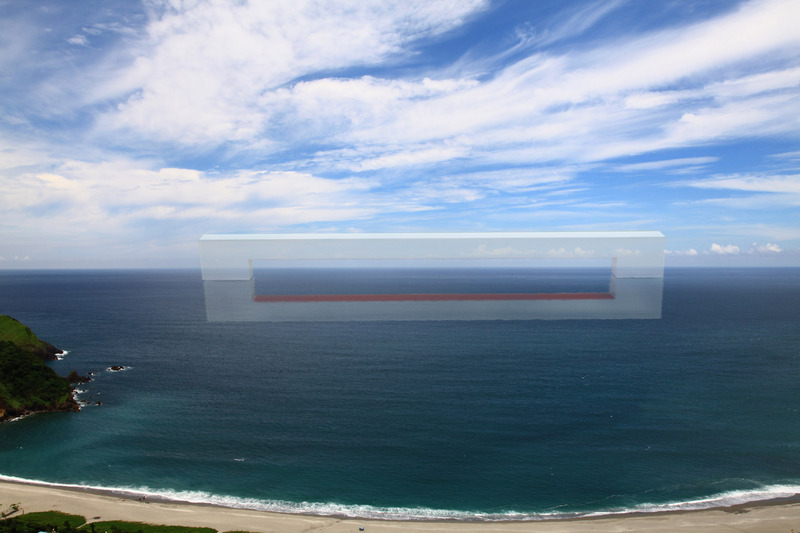
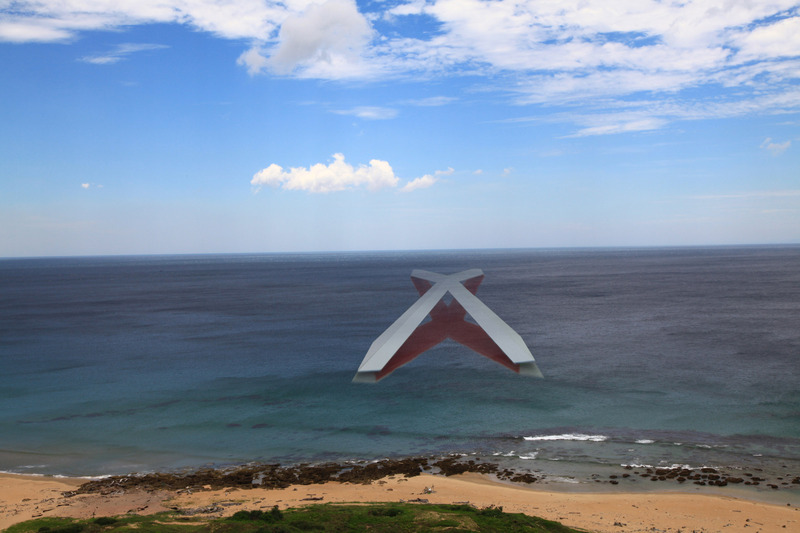
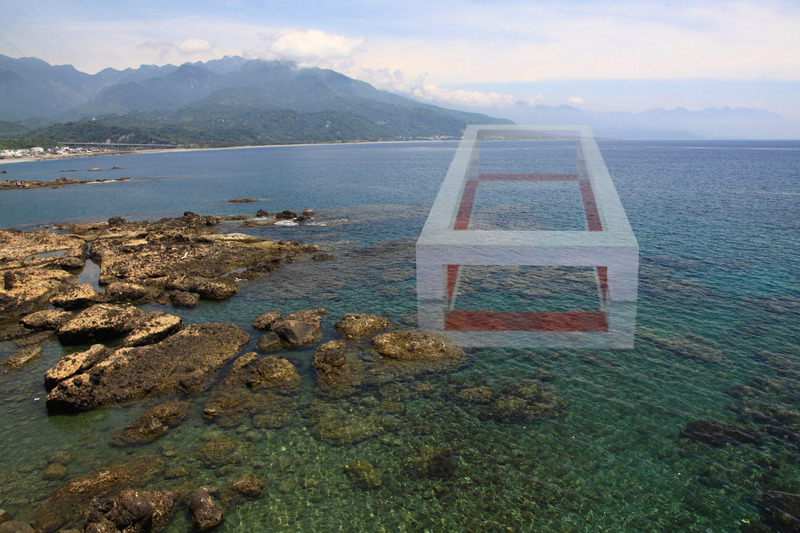
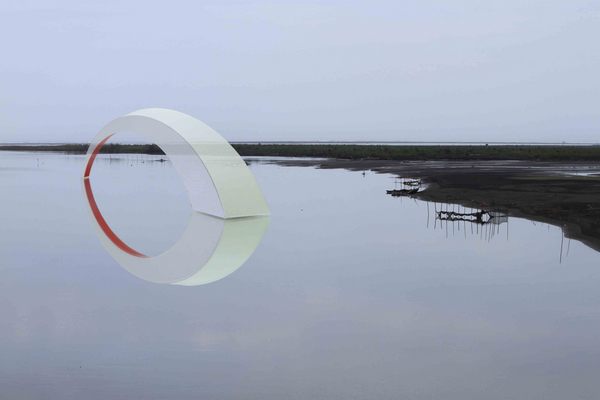
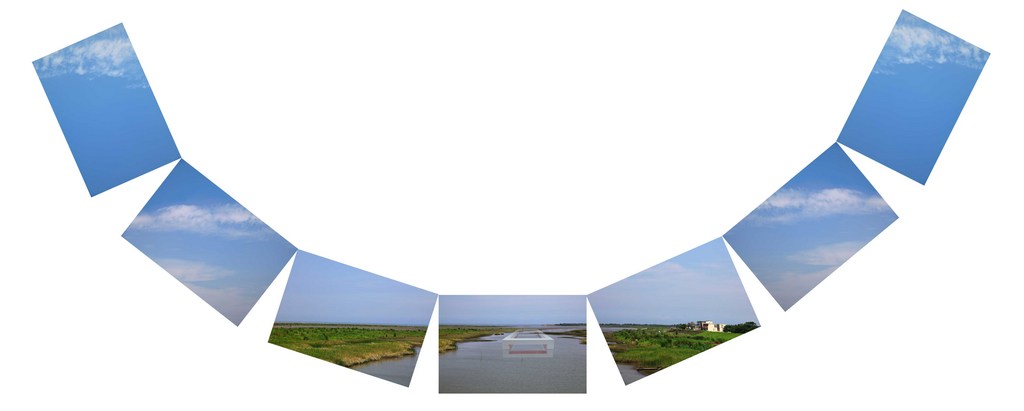
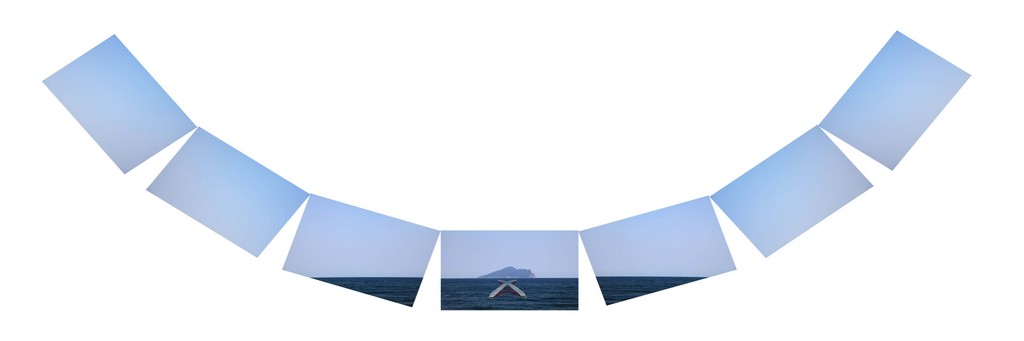
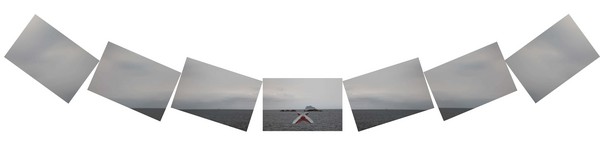
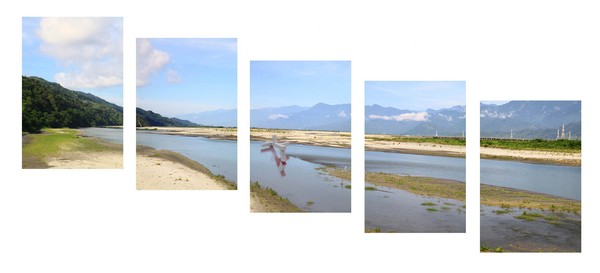
"— I am like a composer conceiving a plan —
— I am like a performer realizing that plan —"
Ren Yang (Note 1)
Text / Chen Chi-Hsiang
Foreword: In every era, regardless of their conditions and environment, humans explore the possibilities of their present to improve life and ensure sustainability. Creativity is ubiquitous, serving as the driving force of civilization. Thus, new vocabulary, imagery, concepts, and appearances emerge with evolutionary progress. All creativity and innovative consciousness correspond to time and space, dialogue with culture and existence, and participate in the co-construction of human civilization. Arthur C. Danto stated: "All artists are contemporaries; it is only in things unrelated to art that they differ between ancient and modern" (Note 2). In this digital age of images, everyone carries a device, shooting anywhere at any time. Popularized imagery, updated constantly through camera and phone pixels, has expanded creative horizons and imagination through imaging technology, changing how people view the world. Digital innovation, combined with the recent development of post-production techniques (such as Photoshop compositing), has brought new opportunities and possibilities for contemporary art, becoming tools for daily documentation and expression. Current image art is a result of new technology, divided into moving images (video) and static images (photography).
Wandering freely between heaven and earth: Modern spiritual wandering. The mystery of existence is magical and incredible. People enjoy daydreaming or spiritual wandering, non-conscious fantasies that liberate the human mind and daily consciousness from physical and spatiotemporal limits, allowing one to roam effortlessly in extraordinary situations and fields. People drift into a realm of fantasy along with what they see—objects, scenery, images, ideas, and thoughts. One might be moved by the scene, become entranced, cross through a tunnel of time and space, and escape into an unreachable world, going back and forth between past and future, ancient and modern, Chinese and foreign, exploring unknown realms. As Jung believed: "The incredible power manifested by the collective unconscious can cross the tunnel of historical time, break down geographical and cultural barriers, soar like a bird spreading its wings in the sky, and swim like a fish in the ocean" (Note 3).
Lu Renyang traverses mountains and seas in his "Mirage Universe" series, opening a realm yearned for and desired for spiritual wandering. In his 2010 solo exhibition, he titled this proposition: "Mirage Universe — A Vast Modern Spiritual Wandering." Under profound, vast, and silent conditions, filled with situational, artistic conception, and imaginative spatial fields, he attempts to reinterpret the ancient concept of "spiritual wandering" from a modern perspective. Through lenses and simple digital technology, he not only achieves the mirror's ability to surpass the brush but even pursues the mirror's realm surpassing both (Note 4).
Ren Yang – The Explorer Constructing "Realm" Through "Form": Born in Taipei in 1959, Ren Yang is an explorer who constructs "realm" through "form" in Taiwan. He is one of Taiwan's earliest artists to use photography as a medium (starting in 1987). His imagery exploration has obvious experimental nature. American film critic Youngblood wrote: "All art is experimental, otherwise it is not art" (Note 5). Amidst the stormy trend of emotional excess in Neo-Expressionism in the 1980s, he persisted in rational, rigorous, and geometric modernist spirit exploration. Ren Yang studied in Paris, France, starting in 1988, consistently persisting in exploring "form" research (Master's thesis: Mutual Entry of Void and Reality; Doctoral preparatory class: Rebirth of Form after Geometric Repetitive Structures; Doctoral dissertation: Fusion of Form - Regarding Repetition of Potential and Real Images). Starting in the 1990s, he became obsessed with classical music (understanding fugue), crossing architecture and music fields, continuing to deepen the pursuit of exploring various possibilities of "form" fusion.
The Core of Exploration – "Fusion of Form": The core of Ren Yang's exploration is "archetype" and "fusion of form." He focuses wholeheartedly on creating and thinking about visual plasticity, continuously constructing "realm" through "form," exploring "fusion of form." Like a composer conceiving and a performer practicing through rhythm, through the practice of plastic materials, he continuously explores potential and real images of repetitive geometric forms through the fusion of homogeneous, heterogeneous, intermediate, and composite qualities, from rationality, rigor, geometry, and lyricism. He fuses and co-constructs a systematic, innovative new vocabulary. He summarized the ideal formal aesthetic beauty of "order" and "rhythm," attempting to pursue a "classic" within. The artist said: "In my creation, I also seek and summarize some rules and laws. They must not only possess unique personal artistic language and propositions but also serve as a means for people to reach a consensus on aesthetic beauty and mutual understanding" (Note 6).
Digital Art Vocabulary: Tools determine the form of artistic vocabulary. The era of digital innovation and the refinement of post-production techniques have also changed current artistic creation. Ren Yang's photographic image creation is divided into two processes: First, using traditional 135 cameras, film, and slides. Starting from his photo series in 1987, through three-dimensional modeling and light and shadow, he explored the "Void" Setting Same "Form" and "Monochrome Fugue" series. Using the logical structure of positive and negative photo processing, arranged sequentially and symmetrically, he explored the possibilities of "form" to discover a new vocabulary of "natural perfection."
In 2009, driven by the necessity of creation, Ren Yang replaced traditional cameras with a full-frame digital camera 5DII, supported by relevant post-production imaging technologies. He freely constructed composites through all-around combinations, integrating the minimalist geometric forms of the mirror-image "archetype" into magnificent mountain and sea natural landscapes, creating images that seem naturally formed. Mirror reflections fuse to create new shapes, poetic and picturesque, forming a void illusion or deceptive mirage. The artist said: "The chosen creative tools, besides natural suitability, also pursue expansion through new vocabulary and methods, creating connections and dialogues with some traditional values of the past, attempting to activate and regenerate visual experience and connotation" (Note 7).
The Core Body of the Works – "Archetype": The "archetype" (prototype) is the core body in Ren Yang's works. In his creative process, he first creates various three-dimensional geometric "archetypes," then performs "fusion of form" photography according to the angle of light. These are all basic geometric forms: such as triangles, squares, rectangles, ellipses, and double crosses. Minimalist, architectural, and design-oriented forms, full of modern implications and symbols. Early "Void" Setting Same "Form" archetypes were formed by light and shadow co-creation, where multiple displaced changes of form became the theme. Recently, "archetypes" are formed by fusion with mirrors; form becomes the core body and soul of the scene. The artist believes: "Archetypes" are divided into two: "Visible Archetype – Three-dimensional geometric bodies transformed through space (models with perspective illusions, placed on mirrors for reflection and fusion). Invisible Archetype – Universal mental patterns: 1. A yearning for spiritual wandering; 2. Every viewing is a kind of reading" (Note 8).
Meaning and Reference of Titles: Ren Yang conducts exploration based on series. All individual works outside the titles are numbered. Each major title hints at the series' meaning and reference, while individual numbered works (Note 9) allow for free interpretation or open imagination. "Void" Setting Same "Form" and "Monochrome Fugue" are monochrome series, purely used for metaphysical abstract type vocabulary exploration, all related to theme, repetition, and imitation. Systematically, they possess rhythmic and formal structures, co-constructed between light and shadow, void and reality, order and rhythm, seeing and hearing, rationality and sensibility, time and space, geometry and mathematics, playing out an ideal aesthetic of lyrical musicality. Kandinsky wrote: "Great works of plastic art are symphonic compositions of music" (Note 10).
The "Mirage Universe," "Mirage Wanderer Complete Form Record," "Mountain and Sea Longitude and Latitude Lines," and "See · Do Not See Mirage" series place mirror-image geometric form vocabulary into the coastlines of mountains and seas and the vast blue sea and sky. They enter the localized geopolitical context and geographical field of the (Taiwan) island nation (environment and climate, especially Taiwan's majestic sea areas and the northeast and eastern coastlines comparable to the azure coast of southern France, as well as the offshore islands of Lanyu and Penghu). They attempt to enter the great reality of the local spirit of the treasure island. The core body in the unity of mountain, sea, and sky—geometric forms—become mesmerizing mirages or phantom universes, referencing the mysterious/unclear transformation of the universe, metaphorically implying the incredible nature of existence. Between nature and humanities, rationality and sensibility, lyricism and consciousness, visible and invisible, fantasy and perception, they express the creator's state of mind, displaying grand demeanor and aesthetic beauty.
Naturally Perfect "Void" Setting Same "Form" Series: Ren Yang's "Void" Setting Same "Form" series (2008) was his debut work after returning from studies in France, bringing new academic thinking and perspectives, opening new experimental creative types. The fusion of form is the artistic exploration theme of Ren Yang's works over more than 20 years, and also the main title of his doctoral dissertation at the University of Paris I. This series shares a similar relationship with theme, repetition, and imitation, emphasizing the interaction between light and shadow (void) and three-dimensional modeling (form), creating new plastic vocabulary through the fusion and integration of form.
The creative process of the "Void" Setting Same "Form" series is special. First, "molds" are made, and shooting is constructed under diverse angular lighting, with photographs becoming elements of work construction. The "Void" Setting Same "Form" series draws from elements of old works, possessing imagery of daily life: such as doors, windows, stairs, and door handles. Through sequential and symmetrical arrangement up, down, left, and right, they form rhythmic and structural new visual plastic vocabulary, reinterpreting form, giving the works new horizons and perspectives. For example, No. HM-A002-2 (2008) was his debut work from 1987's "Void" Setting Same "Form," selected for that year's Taipei New Outlook Biennial. The window-opening three-dimensional model, same photograph with light and shadow, arranged and juxtaposed in four views up, down, left, and right, can be repeated endlessly according to space, possessing randomness, locality, situationality, and arbitrariness. The photographic images seem like a group of living chess pieces available for the artist to command again, able to continuously endow new modeling meanings. No. HM-A004-2 door construction, the same photograph of opening and closing, precisely connected from left to right inside and out according to up, down, left, and right, resembling the opening and closing of a door, implying whether it is: one moving, one still? Or both moving? Such a dual relationship (Note 11).
The "Monochrome Fugue" Series Between Seeing and Hearing: The "Monochrome Fugue" series (2009) between seeing and hearing is the result of evolution from "Void" Setting Same "Form." Both series share symbols with theme, repetition, and imitation. Fugue comes from music and is related to repetition. The three major elements constituting a fugue are: theme, imitation, and repetition. Fugue is a form of rhythm and structure, the most perfect musical form. In this project of "Monochrome Fugue," Lu Ren Yang continues the exploratory discussion of another project "Double Fugue" from his time studying in the doctoral preparatory class at the University of Paris I.
The evolution of "fugue" has always been related to "repetition," but its true structural form was determined at the peak of Bach's musical career. Regarding its structure, no other musical form can match its perfection. As stated in K. Hermann's book Bach's Well-Tempered Clavier: "Fugue is the most complex and rigorous contrapuntal form of composition in polyphonic music, yet it is also the freest form" (Note 12). Fugue originated from a chance encounter during Lu Ren Yang's stay in France. Starting in the early 90s, he became obsessed with classical music. Later, he surprisingly discovered that the contrapuntal structure of fugue in composition had many common intersections with his creative methods. He wrote about his creation of Monochrome Fugue: "I am like a composer conceiving this plan, I am like a performer realizing this plan" (Note 13).
The "Monochrome Fugue" series is divided into two major series. Black and white modeling photos like musical notes become elements for recreation. One, they can be randomly arranged and combined into independent works: from any original photo, through multiple combinations of positive and negative processing, forming a series similar to musical counterpoint "imitation." By exploring diverse compositions, it discusses the fascinating structure and variation forms of fugue, co-constructed under the rhythmic movements of "order" and "rhythm." Kandinsky wrote: "The inner world has its own inner harmony, its own needs and its own shaping procedures" (Note 14).
Two, through image playback software, it explores the possibility of fugue in plastic arts. Produced through three software programs to play repeatedly. Originally independent photos gain connection and musical dynamic movement. Klee said: "I am still groping; I want to explore something between vision and hearing. I hope to create fugues with color, just as Bach created music" (Note 15). Lu Ren Yang attempts to conduct a fugue dialogue with several masters in modern art history (Klee, Klee, Kandinsky, Delaunay) through the "Monochrome Fugue" series between seeing and hearing.
"Wandering Freely Between Heaven and Earth" "Mirage Universe" Series: The "Mirage Universe" series (2010) is a new milestone in Lu Ren Yang's creation, implementing localized practice, entering the localized geopolitical context and geographical field of the (Taiwan) island nation, crossing the exploration of "Void" Setting Same "Form," stepping into the magnificent cosmic world of nature. This is endowed by new tools (full-frame digital camera 5DII) and new imaging technologies, bringing new horizons. Traversing mountains and seas, wandering freely between heaven and earth enters a vast modern spiritual wandering situation. The Mirage Universe series comes from inspiration faced with the Azure Coast during a trip to southern France while studying in France. After returning home, colleagues helped complete the first piece of "Mirage Universe."
The vast "Mirage Universe" series possesses macroscopic vision and the great reality of local spirit. Using landscapes such as Taiwan's oceans, estuaries, or juxtaposition of mountains and sea areas as scenes, it places mirror-image three-dimensional geometric forms (some with perspective illusions) into the sea-sky and mountain-sea, attempting to find a magnificent situation, exploring the new aesthetic realm of digital synthesis. He independently created several mirror geometric vocabularies such as rectangles, triangles, long quadrangles, arches, etc., ingeniously integrating them into the seascape, constructing the "Mirage Universe" mysterious illusion, rich in poetry and inspiring fantasy. "Fusion of form" through accident and coincidence may burst out some unexpected surprises. Some seemingly ordinary scenes actually harbor much imagination and possibility, such as the subtlety and situational series of forms (perspective long quadrangles) in different scenic field spaces: Nos. D-0078, D-0687, E-0365, E-0924, E-0644 are examples. Or the perspective arched mirror reflection forming ellipse series: Nos. G-0922, G-0188, G-0688 (comparing pictures will show it). The artist wrote: "In the Mirage Universe series, it is a transgressive journey from here to there. It is in this spirit that I go and come; I come and I go. More enlightenment is like facing the vastness of the sea, naturally experiencing and arriving." (Note 16)
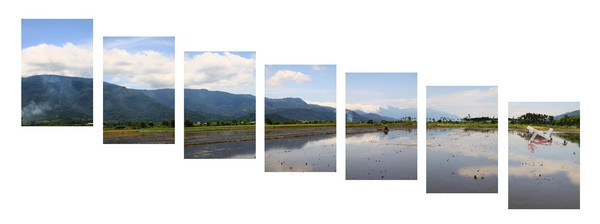
Panoramic Vision "Mirage Wanderer Complete Form Record" Series and "Mountain and Sea Longitude and Latitude Lines" Series (Note 17): The "Mirage Wanderer Complete Form Record" series (2010) and "Mountain and Sea Longitude and Latitude Lines" series (2011) extend the exploration from the "Mirage Universe" series. Both feature landscapes of sea-sky, estuaries, and juxtaposition of mountains and sea, liberated from single works of "Mirage Universe" to panoramic vision (continuous) installations. The two series share similar effects, playing a symphony of full-amplitude sea-sky and mountain-sea magnificence and vastness, and engaging in a series of dialogues with Taiwan's local natural landscapes. Ren Yang said: "For many years, I have maintained the habit of frequently dealing with mountains and waters. This series of works are presented as continuous pieces. I attempt through the horizontal layout of mountains and seas, the incremental or decremental development of stair structures. The gaps left between photos are not only visual connections but also an extension from the finite to the infinite, forming a weaving development between me and the places I have walked, between works and original landscapes, and even between the cosmos, like longitude and latitude lines, endlessly surrounding and expanding, exploring the text of mountains and waters" (Note 18).
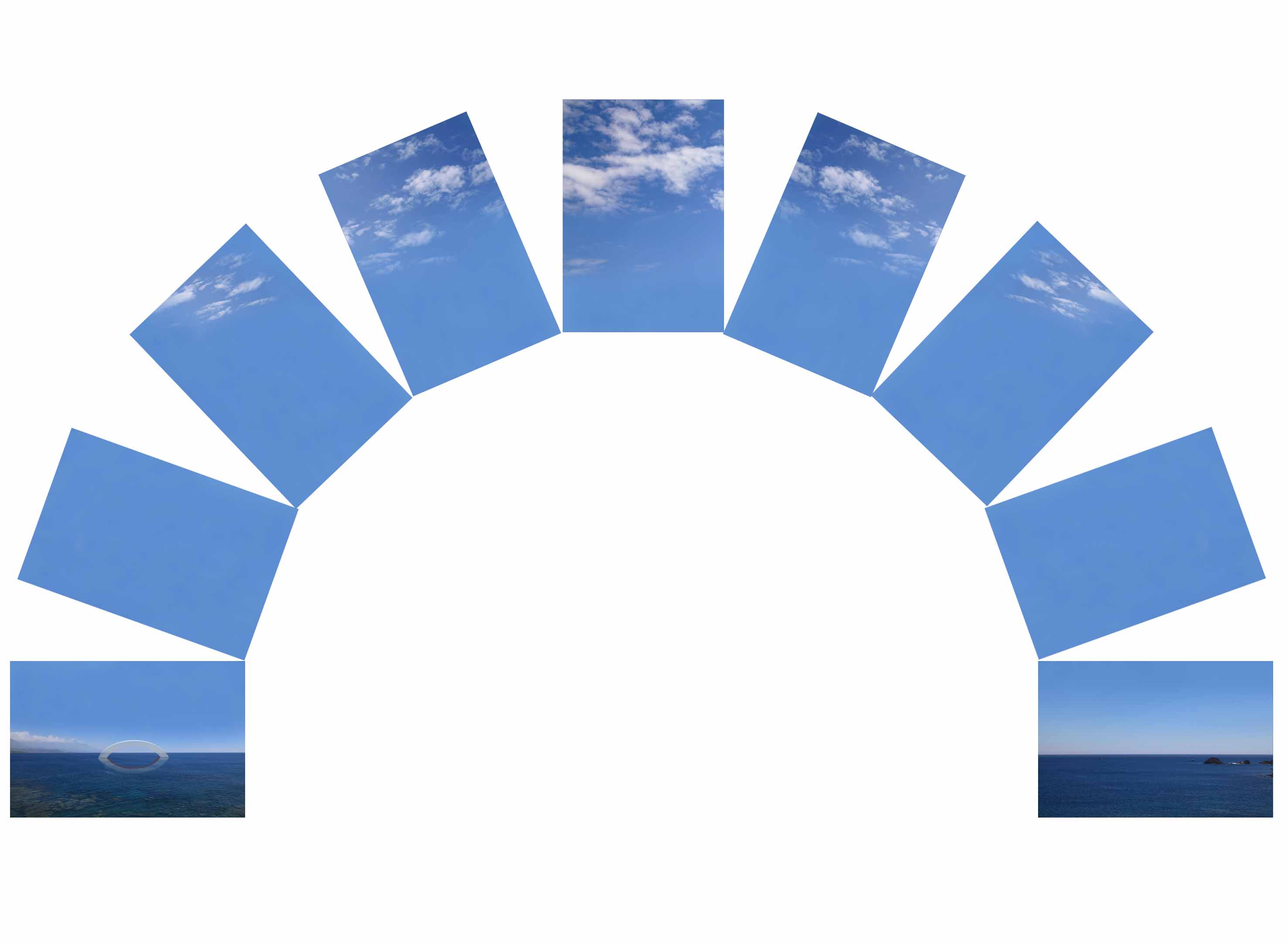
These two series highlight the beautiful mountain and sea scenery under sunny and gentle winds, showing Taiwan's natural geographical environment. Geometric vocabulary retreats into the bright panoramic scenery, constructing a mysterious tension and infinite imaginative space. The "Mirage Wanderer" series is full of musical diverse arrangements and combinations. Most striking is the horizon-crossing fan-shaped structure: such as No. C1478-80 (2010) and E2480-84. The "Mountain and Sea Series" shows the beauty of the treasure island's continuous mountain ranges and riverbeds, presenting the undulation rhythm of mountains through symbolic stair structures: Nos. P-2470-76, V6 3331-35, Xi1 4341-47. The structure and scenery of these two series have homogeneity and analogical rhythm. Whether diagonal layout or elongated structures spread out, they consistently use the sea horizon as a benchmark, sea and sky one color, displaying the boundless vastness of the ocean. Among them, such as Mirage Wanderer Complete Form Record No. C1478-80 (2010) and Mountain and Sea Longitude and Latitude Lines No. C3016-20, both depict the famous Turtle Island scenery on the east coast. The former is sunny and colorful, the latter is cloudy and pale. Different layouts construct different visual and perceptual experiences. Obviously, the same does not necessarily mean identical. Ren Yang said: "The charming seascape of Taiwan's east coast is deeply imprinted in my heart. I always feel it deserves repeated visits. Besides experiencing its myriad charms, I believe that frequent closeness can subtly cultivate the vast character of the ocean." (Note 19)
Ethereal and Illusory "See · Do Not See Mirage": The ethereal and illusory "See · Do Not See Mirage" series (2013) is a new creative milestone for Ren Yang, continuing to deepen "Mirage Universe," expanding panoramic vision (continuous) installations, opening new horizons and new scenes for new plastic arts in image art. Under the full-amplitude vision of wide sea and sky, geometric prototypes continue to play a mysterious role, becoming mesmerizing and ethereal between the visible and invisible mirages, mirage, illusion? Lu Ren Yang continues to wander in the romantic and vast realm of void and reality.
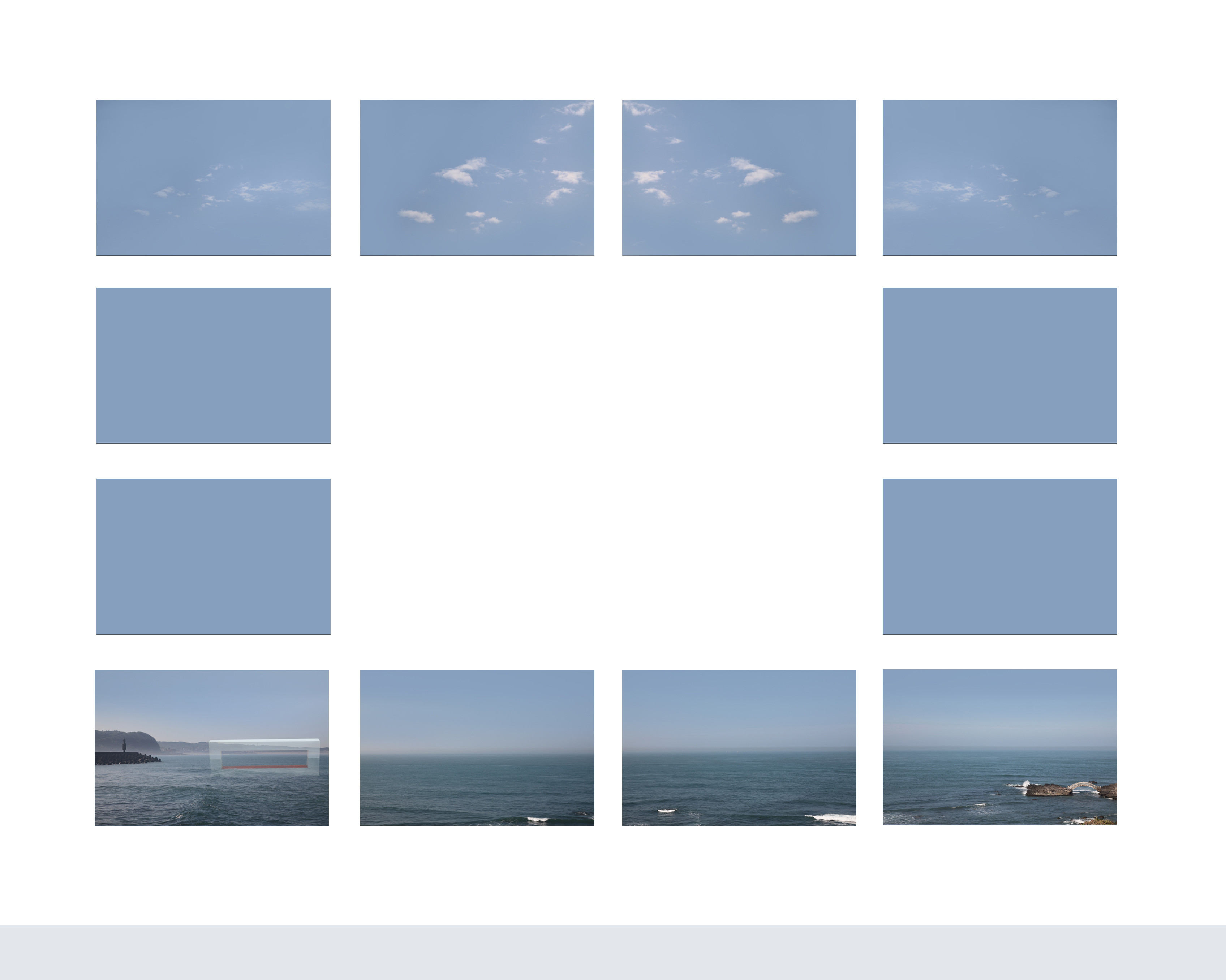
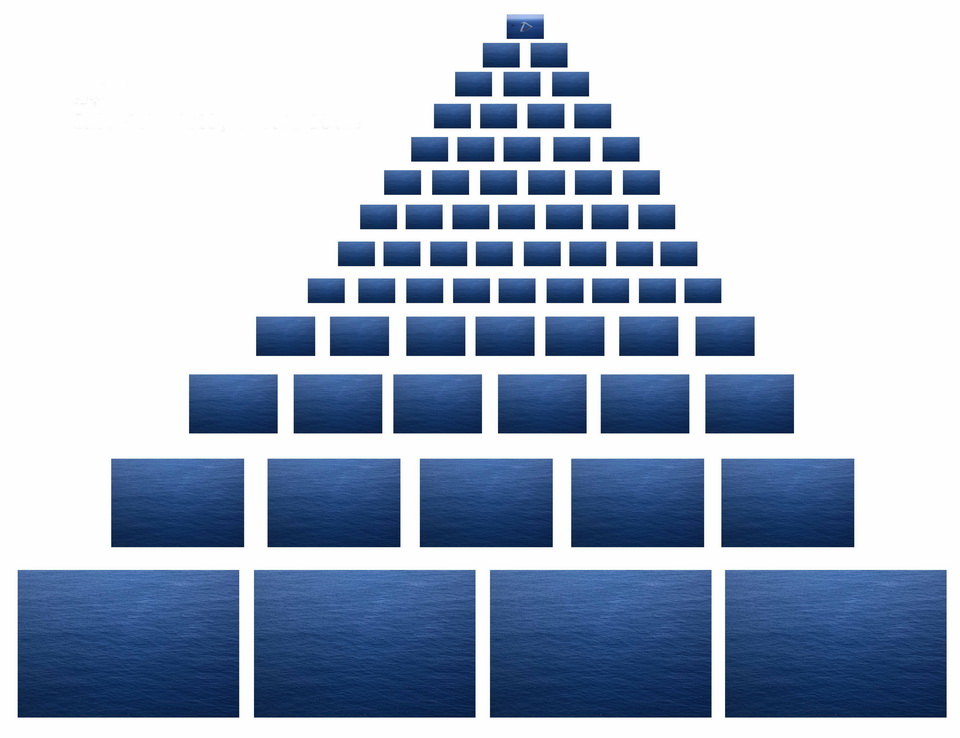
This series uses brand-new vision as a layout and weave. Under large geometric form structures, such as No. 6540 6586: a pyramid-structured azure sea surface scene. Photo layout progresses from (bottom) large to (top) small, advancing from top to bottom, constructing a perspective illusion. The azure sea horizon disappears at the furthest top, calling from far to near. Geometric prototypes between heaven and sky oscillate between seeing and not seeing, immersing people in the vast, boundless azure, endless imagination. No. 023-29 is a hollow rectangle (12 photos) laid out in sea-sky unity. No. 6740-45 is eight photos developed into a fan shape composing a vast sea-sky scene, constructing the rhythm of inner and outer semi-circles. All explore the meaning of "leaving blank" and spatial association. Leaving blank constructs "Gestalt," leading to a new concept—finding specific intermediary positions within "Gestalt." "Gestalt" points to the implication that "the existence of the whole precedes the part, and the whole is always more than and different from the sum of the parts" (Note 20).
Metaphor of Mirages: "Mirage Universe," "Mirage Wanderer Complete Form Record," "Mountain and Sea Longitude and Latitude Lines" series, and "See · Do Not See Mirage" all point to mirage (mirage, commonly known asMirage or Mirage). Mirage refers to those floating, ethereal, reachable in sight but unattainable, short-lived illusory things. Mirage also implies the void and reality of castles in the air, illusions are unreliable. Mirage has always been endowed with much mysterious color, possessing poetic and dreamlike realms, and unconstrained/fantastic imaginative space. According to science, "mirage" is a special scene reflected on the sea caused by light reflected from objects on Earth, under specific meteorological conditions in certain places at specific times, through the physical conditions of air density variations. The unpredictable mirage is a mysterious situation and secretive field, ethereal and illusory between phenomena of seeing and not seeing. Mirage references illusory and unreliable things,"The Way of Heaven is in constant motion,All phenomena are impermanent" - Heavenly Dao is constantly moving, all dharmas are impermanent, or metaphorically implying the void and destruction of life, like "flowers in a mirror, moon in water."
Note 1: From "Talking About My Creative Exploration in the 'Monochrome Fugue' Solo Exhibition" blog post, 2009/12/28. Note 2: Brief Description of Lu Ren Yang's Creation, Blog Post. Note 3: Mirage Universe — A Vast Modern Spiritual Wandering, 2010/12/25 Blog Post. Note 4: Mirage Universe — A Vast Modern Spiritual Wandering, 2010/12/25 Blog Post. Note 5: New Media Art, written by Michael Rush, Thames & Hudson Publishing, published in 2002, P7. Note 6: Guide for the Planar Installation Works of the 2009 "Void" Setting Same "Form" Solo Exhibition, Blog Post. Note 7: Mirage Universe — A Vast Modern Spiritual Wandering, 2010/12/25 Blog Post. Note 8: 2013 See · Do Not See Mirage — Lu Ren Yang Solo Exhibition Guide Outline, Blog Post. Note 9: Individual coding is coded by the artist myself based on the camera's records at the time, from Email dated 2014-02-13. Note 10: Kandinsky Work Interpretation Card, Centre Pompidou Modern Art Museum. Note 11: Guide for the Planar Installation Works of Lu Ren Yang's 2009 "Void" Setting Same "Form" Solo Exhibition. Note 12: From "Talking About My Creative Exploration in the 'Monochrome Fugue' Solo Exhibition" blog post, 2009/12/28. Note 13: From "Talking About My Creative Exploration in the 'Monochrome Fugue' Solo Exhibition" blog post, 2009/12/28. Note 14: The Spiritual in Art, by Kandinsky, translated by Wu Mali, Artists Publishing, published in 1985. Note 15: Klee Work Interpretation Card, Centre Pompidou Modern Art Museum. Note 16: Mirage Universe — A Vast Modern Spiritual Wandering, Postscript, 2010/12/25 Blog Post. Note 17: "Mountain and Sea Longitude and Latitude Lines" series, I refer to the work's sea horizon or blank line, extending to reflect the Earth's longitude and latitude lines (vertical and parallel lines). Since it extends infinitely, there is a spatial conversion back and forth. Additionally, I mentioned in the invitation and article that this series of works is also exploring the problem of the text of mountains and waters, so it is unrelated to the ancient Chinese "Classic of Mountains and Seas," from Email dated 2014-02-13. Note 18: Regarding Mountain and Sea Longitude and Latitude Lines, Lu Ren Yang's Solo Exhibition, 2011/12/11 Blog Post. Note 19: Ongoing "Mirage Universe" Series of Works, 2010/09/30 Blog Post. Note 20: 2013 See · Do Not See Mirage — Lu Ren Yang Solo Exhibition Guide Outline, Blog Post.
February 2014, Chiayi