Lin Taiping – The Imp of Taiwanese Photographic Imaging
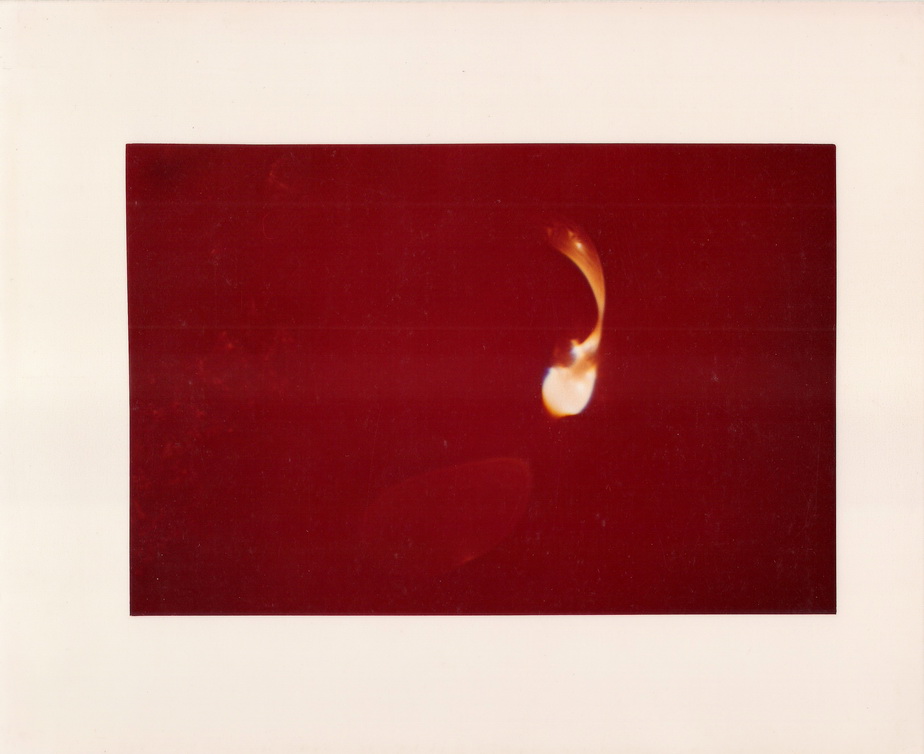
Alterity Series-14 40x60cm 1991-93
"Art is not about expressing the visible, but rather about creating the visible." Klee
Text / Chen Chi-Hsiang
Preface: Taiwanese photographic art divides into two parts. First, the photography salon route (such as the Taiwan Photography Association—a club for camera players), focusing on shooting objects like young women, nudes, and flowers, using secular beauty as a benchmark. These works possess shallow meaning and aestheticized surfaces, showing off technique and lenses to satisfy the personal thrill of pressing the shutter, rarely exploring any artistic essence; entertainment outweighs artistry, favoring mechanical cameras and lenses. Second, artistic exploration, probing photography’s possibilities where the camera is merely a tool for expression—subjective, emotional, spontaneous, and instinctual, pursuing deep formal vocabulary, strengthening form, concept, and consciousness, resulting in images with strong expressiveness. Lin Taiping’s photography belongs to this latter category. He is one of the rare few who, in today’s post-digital era of image production, insists on traditional methods. As tradition wanes, its value becomes even more precious. He continues to explore the possibilities of traditional photographic images with humility, standing out as an exceptional artist of photographic imaging.
The Imp of Photographic Imaging – Lin Taiping: Lin Taiping (born 1945), the imp of photographic imaging, is a mysterious figure. Small in stature with a mustache hanging from his mouth, he calls himself Lin (Bo) Tai (Shanghuang) Ping (Shen)—a play on words that makes him quite eccentric, known as No. 1 "weirdo" in Tainan. Public opinion is polarized: those who love him are close; those who dislike him say "damn it." He says, "It doesn’t matter, I just do myself" (Note 1). He also mocks himself as someone from the morgue, with heavy fate and boundless courage, having no taboos, so he fears nothing. He likes being funny yet critical, free-spirited, humorous, whimsical, unfiltered, and sharp-tongued. Though under six feet tall, his voice is particularly loud (his friend’s child Youyou gave him the nickname "loudspeaker"). His jests contain truths worth pondering. His personality is straightforward and genuine, blunt (which puts many off), loyal, informal, sensitive, emotional, intuitive, and strongly subjective. When talking about his beloved photography, he speaks passionately for days without end; when criticizing photos, he shows no mercy, hitting the nail on the head with keen insight.
Positioning himself as a pagan, Taiping has a unique attitude toward art, full of ideas and vigorous creativity. Near seventy, he still constantly challenges himself, innovating throughout his life. When people call him "Master," he retorts "Greatly Disappointed," displaying a different kind of "stubbornness," picking bones with partners who are left speechless, yet he is meticulous and serious in his work, never sloppy. Regarding photography, he does not show off skills but prefers to explore and research. No camera escapes his gaze; he knows traditional cameras and lenses inside out. As he says, "I grew up drinking developing chemicals! Black-and-white or color, nothing stumps him" (Note 2). Digital innovation overturns traditional photos. He believes that although traditional photography is declining, its value remains undiminished. Taiping recognizes the preciousness of manual craftsmanship, becoming the last master developer of traditional silver gelatin paper in the digital age. This straight-talking, "photo worker" approaches photography and development experimentally. Like the impish Taiping, who changed the idiom "Failure is the mother of success" to "Failure is the lover of success" (Note 3), he explains that one must patiently and persistently fall in love with it; only then can one taste the fruits of success. His perseverance is best exemplified by his proudest creation, the "Photo Paper Painting." Proudly stating, "He has no teachers; everything and everyone is a teacher" (Note 4), this reveals his life attitude and creative spirit.
From Apprentice to Artist: Taiping is a self-taught genius in the Taiwanese photography world, honing his skills through years of rigorous study as an apprentice. Born in Qiaoding, Kaohsiung, he lost his father at seven. His lonely mother, losing economic support, moved to Taipei to stay with her brother to raise five children, working as a maid while his grandmother and uncle raised him. He realized early on the brevity and hardship of life, shaping his unique life attitude and calm worldview. After elementary school in 1959 (age 14), he became an apprentice in photo developing and photography at Dongguang Photo Equipment Store in Taipei, completing his apprenticeship after six years. During this time, he freely experimented with cameras, falling in love with his favorite "lover (camera)" for life. He recalls, "Once I attached a slide projector lens to a camera body, turning it into a macro lens to photograph ants, discovering the magic of existence and the profundity of cameras" (Note 5).
In 1965, during the nascent jazz period, he entered black-and-white photo developing (the start of color photos). At 24, he served in the military; upon completion at 26, he became manager of the developing department. In 1974, he founded Yongzhen Printing Company. After four years of poor management, he returned to Jazz as manager. In 1980, he won Second Prize in the Times News Photography Award. Between 1984-85, invited by Tainan Meimu Li Photography Company, he moved south to settle in Fucheng (Tainan). There, he met renowned painter Lan Yunding, seeking advice on artistic style, which influenced his creative attitude. In 1989, he won Special Excellence in Breaking News at the Taipei News Photography Award, proving his keen observation and mature skills. In the early 1990s, he began exploring and actively entering photographic creation. In 1993, he held simultaneous solo exhibitions in the north and south: "Alterity" at the Taipei Fine Arts Museum and "Realm of Meaning, Realm of Art, Realm of Alterity" at Tainan Gao Gao Gallery, emerging as a rising force fully committed to photographic art.
"With determination, things will succeed," the path from apprentice to artist for Taiping can only be described as step-by-step. Besides solid hard work, his keen sensitivity and intelligent exploration yielded true results. He witnessed the peak and decline of black-and-white developing, the rise of color photos, and now the digital age, seeing the waning of traditional photos and the preciousness of traditional craft (irreplaceable by digital cameras and output). Starting in 1991 (age 45) with the "Alterity" series, he deeply explored the mysteries of photographic art, feeling carefully each year to shoot new themes with refinement, constantly breaking through without tiring.
Taiping’s advantage lies in his non-academic background, mastery of cameras, lenses, and superb developing techniques, sensitivity, intuition, flexibility, rich imagination, and extraordinary vision. His work dislikes the old and loves the new, using a style without style to deconstruct style, continuing to evolve and explore photography’s possibilities. Does traditional photography hit a dead end? Has the traditional photographer run dry? Taiping does not believe in evil, preferring to "grope in the dark" (in the darkroom). Vision determines perspective; how wide the heart, how wide the view. Xu Zigui wrote, "Some see a grain of sand and realize a universe; some see the whole world but cannot hold a grain of sand in their hearts" (Note 6). Lin Taiping’s works tell us another way to view the world, showing the diverse faces of "Where in life is there no scenery?" Vision surpasses machinery; possibility exists in the impossible. Entering the tiger’s mouth to get the cub reflects his adventurous creative spirit, uniquely creating his proud Photo Paper Paintings, combining high-difficulty darkroom skills with sensitive emotion between image formation and free-hand painting.
Photography Master and Developing "Photo Gong": The free-spirited Taiping considers the camera his most intimate "wife," joking, "My happiness is embracing three wives and six concubines (cameras of all brands worldwide)" (Note 7). Images are his most beloved "lover" (he has developed countless black-and-white and color photos). The darkroom is like his bridal chamber, intoxicated under the flower candle and bright moon, a place for romance, image alchemy, and refining. However, almost all artists or photography masters face the problem that shooting is one thing, and developing is another. In the digital age, this holds true; no one controls the result or quality of printed or output images. Satisfaction with hue and saturation is a major issue, a significant test for photographers and amateurs.
This camera player knows cameras like the back of his hand, collecting all models and lenses. With skillful ingenuity, he even manufactures cameras and lenses. Growing up drinking developing chemicals and groping in the darkroom, his developing technique is peerless, more professional than anyone else. Developing photos is top-tier among the top; practice makes perfect, whether black-and-white or color. He can even capture images without a camera. Photo Paper Paintings are his proudest darkroom invention. The photographic imp—Taiping—cannot be fooled by any camera or image developing tricks. He handles them with ease, an exceptionally authentic photography master and developing "Photo Gong" (fully controlling photo quality and taste through self-shooting, self-developing, and self-processing).
The "Alterity Series" Between Imagery and Abstraction: Since his apprenticeship, Taiping has photographed continuously, rarely letting go of the camera, constantly exploring photography without publishing, often offering sharp alternative viewpoints, as proven by his Special Excellence in Breaking News award. Long-term observation of photo development regarding Taiwanese photographic art progress, dissatisfied with the dogma and secular aesthetics of photography salons, he truly engaged in creation in 1990, when his mind was mature and vigorous. Taiping resolutely rose up to enter photographic creation. Clearly, vision determines perspective, state of mind determines imagery. He began (exploring) shooting a drop of water. What form or state is a drop of water? No one can imagine or know. Painter Klee said, "Art is not about expressing the visible, but rather about creating the visible" (Note 8).
Under Taiping’s extraordinary imagination, the imagery of a drop of water presents fifty diverse forms (form, color, composition), astonishing viewers. Innovative images between imagery and abstraction, realm of meaning and alterity, imagination and perception, form and light, reveal the spiritual artistic realm of consciousness. In 1993, simultaneous solo exhibitions at the Taipei Fine Arts Museum "Alterity" and Tainan Gao Gao Gallery "Realm of Meaning, Realm of Art, Realm of Alterity" made the photography world take notice. He hoped this exhibition would be educational, inspiring and elevating domestic photographic art. Thus, every year he whimsically explores photography’s macro vision with a theme, constantly breaking through, showcasing Lin Shang’s unique artistic aesthetics. Solo exhibitions included "Heart Painting" at Tainan City Cultural Center (1994) and "Picking Flowers and Grass" at Tainan Xiangcheng Academy (1996).
The "Years Color Painting Series" Between Imagination and Perception: Taiping’s "Years Color Painting Series" (1997) features square color photos, another representative work. Capturing local close-ups from walls with his sharp, eagle-like eye and alternative gaze, he intuitively captures urban wall expressions evolving naturally with time. The artist considers this God’s best masterpiece. Among myriad phenomena, searching and finding what is elusive and unforeseeable, Jonathan Swift wrote, "The mission of art is to see the unseen" (Note 9). This series resembles naturally formed image paintings: graphic "Years Color Painting -1", abstract "Years Color Painting -14", imagistic "Years Color Painting -13" presenting a couple in love, pictographic "Years Color Painting -30" outlining a male penis. Innocent and lively images are expressive, recording spatiotemporal traces and the creator’s immediate consciousness between imagery, figurative, and abstract, time and space, chance and coincidence, imagination and understanding.
God’s Mission – "Cloud Series": Taiping’s choice of subjects, under subjective consciousness, exceeds our imagination. He chooses coincidental subjects, telling people that inspiration and wonder are around you. From familiar yet strange drops of water, walls, lamp paintings to clouds, there is no fixed form. Fleeting and spatiotemporal, he discovers the magic of existence through chance encounters and serendipity. Image arises from the mind, realm from intent. Following the creator’s stream of consciousness, in a space full of fantasy, he captures immediate situational imagery through chance and coincidence, creating realms beyond visible objects, exploring the unknown and unknowable depths of inner spiritual vision.
Clouds change with time and weather, fleeting and unpredictable, arbitrary. Like God’s mission—"Black and White Cloud Series"—it is a scene that can be encountered but not sought. The artist believes, "This series relies not only on luck but also on God" (Note 10), shot intermittently over thirty-plus years. Dramatic "Cloud Series" are pictographic, abstract, and imagistic, capturing the tension and spatiotemporal imagery of clouds in an instant. Examples include a Santa Claus head captured in the airspace above Place des Vosges in Paris, France; wings captured on the statue of Shakyamuni Buddha in Thailand, a Buddhist country; a dazzling giant mackerel with eyes (sun) captured in the southern Taiwan airspace; and a dragon surging and appearing mysteriously by the highway near Tainan, etc. Freezing time and space, turning moments into eternity, they show the artist’s immediate conscious landscape.
Humble "Worship of the Earth Series" (2009): The artist’s visual depends on vision, and the camera lens determines the photo’s field of view (standard, telephoto, wide-angle, macro, fish-eye, etc.). Taiping excels at using lenses, avoiding shortcuts or mystification, creating his own realms and situations, pioneering perspectives and fields between macro and micro. The "Worship of the Earth Series" comes from small flowers and grass in nature, using macro lenses to capture imagination beyond vision, seeking extraordinary images bestowed by God. In the macro vision of "one flower, one world; one sand, one heaven" and introspective universe, he probes nature’s secrets.
Facing nature, humans must be humble. The grandeur and subtlety of the vast world require gratitude to discover, especially the insignificant small flowers and grass nearby, which must be approached closely to find their magic. This series is viewed through macro lenses, revealing the state of existence in the microcosm through coincidences. One must approach the subject, holding breath and observing quietly. For this iron-jawed, stubborn photographer Taiping, it is rare to be so humble, often crawling and kneeling, shooting as if in prayer, hence called "Worship of the Earth" (Note 11). This series captures local close-ups of grass, leaves, buds, pistils, corollas, and stamens. Concise and powerful, with vibrant and charming colors, between imagery, figurative, and abstract, imagination and understanding, under symbolism, reference, and metaphor, ambiguous pink resembling a sexy man’s glans ("Origin and Emptiness"), poetic "Zen Meditation", glove-like "Grasp", leaf-shaped "Hornbill", humorous stamen resembling whiskers "Alien". The series metaphorically uses buds, pistils, and corollas as propositions for "Pure Realm -7 Immovable" or "Pure Realm -15 Five Skandhas Empty", emitting extraordinary charm, constructing metaphysical artistic truth, highlighting his unique situation and consciousness, showing "Where in life is there no scenery?"
Whimsical "Photo Paper Painting Series": Taiping moved from photography to non-photography, breaking the limitations of cameras and lenses, creating original Photo Paper Paintings, the result of years of darkroom alchemy experiments and exploration. The Photo Paper Painting series is Taiping’s proudest masterpiece, the highest milestone of his lifelong photographic art creation. Using consummate photo developing skills to create images, these Photo Paper Paintings, created without lenses through darkroom alchemy, are photography? Free-hand painted developing Photo Paper Paintings overturn the mechanization, standardization, and reproduction system of photos. Purely handmade writing and drawing, boasting uncopyable singular originality, Photo Paper Paintings have qualities resembling painting, calligraphy, ink wash, watercolor, and printmaking. Whatever you think it is, it breaks the definition of traditional photography and overturns photography.
After the "Worship of the Earth Series," Taiping focused on experimenting with Photo Paper Paintings, exploring various possibilities of darkroom exposure and development, exerting potential consciousness and extraordinary creativity. Persevering again and again, stubbornly insisting to the end, constantly overcoming breakthroughs, Photo Paper Paintings went from color to black-and-white. He fully exploited going from no color to color (starting with color paper, to black-and-white paper), even gold, challenging the impossible, attempting to find the truth of art. In 2011, he held a solo exhibition "Universe Heart Image" at Tainan Dehong Gallery, sending voices to the universe through Photo Paper Paintings.
The old imp’s whimsical world—Photo Paper Paintings—restores intuition and emotion. Under intuitive, instinctive, casual, random, and serendipitous darkroom conditions, he creates freely, presenting a simple, innocent heart, light and lively free cartoon graffiti images,innocent, humorous, ironic, and exaggerated formal images. For example, 2010 exploration of color paper: Subjective character painting series "Soaring Heaven", pictographic anomaly series constructed by natural flowing lines, or poetic mountain imagery series.
2011’s black-and-white paper full of youthfulness: The most striking Paris Series (resulting from Taiping’s month-long stay in the Flower City, returning with keen observation and awareness). It directly and humorously expresses the romantic situation of the Flower City. For example, "Paris -006" depicts a dog lifting its leg to urinate? The dog looks back proudly at its little brother, with "Paris" written below. "Paris -009" exaggerates a vulgar Parisian noblewoman in cartoons. "Paris -10" features a wealthy man whose mouth is always full of "Money". "Paris -11" features a man full of romantic feelings—"Happiness Written on the Face". Most eye-catching is "Paris -13", a black Madonna Mazu with white teeth. Romantic poet Baudelaire said, "Beauty—is always strange" (Note 12). Creating a unique feeling, within whimsical anecdotes and narrative, he displays unparalleled imagination.
Note 1: Lin Taiping Interview Record 2014-02-01. Note 2: Lin Taiping Interview Record 2014-02-01. Note 3: Lin Taiping Interview Record 2014-02-01. Note 4: Lin Taiping Interview Record 2014-02-01. Note 5: Lin Taiping Interview Record 2014-02-01. Note 6: Worship of the Earth - Lin Taiping Photography Solo Exhibition Press Release, Xu Zigui, National Taiwan Museum of Fine Arts, June 2009. Note 7: Lin Taiping Interview Record 2014-02-01. Note 8: Paul Klee Work Interpretation Card, Centre Pompidou Modern Art Museum. Note 9: Quote - Question Forum Ben Vautier, Paris Centre Pompidou Modern Art Center, published November 1991. Note 10: Lin Taiping Interview Record 2014-02-01. Note 11: "Worship of the Earth" proposition from Xu Zigui, Lin Taiping Photography Solo Exhibition Press Release, National Taiwan Museum of Fine Arts, 2009. Note 12: Quote - Question Forum Ben Vautier, Paris Centre Pompidou Modern Art Center, published November 1991.
April 2, 2014, in Chiayi