Taiwan March Notes – Taichung Lecture Sharing
Critique of painter Wu Riwen's solo exhibition "The Clamor of All Beings" at Shuntian Art, Humanities and Architecture Space in Taichung. Image from Shi Shangting’s Facebook.
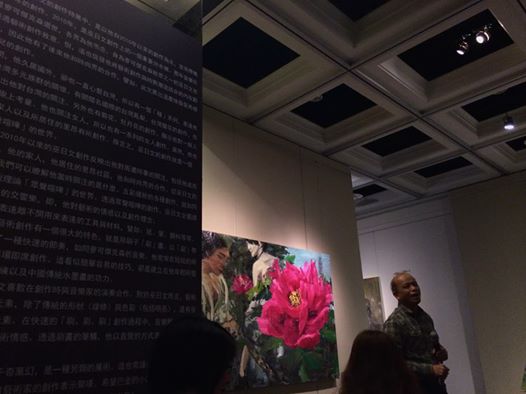
Text and images by Chen Chi-Hsiang. As part of the Taichung European Lifestyle Arts Festival, I had the honor of discussing his work with French-based painter Wu Riwen on the opening day of his solo exhibition The Clamor of All Beings at Shuntian Art, Humanities and Architecture Space in Taichung. Rather than a dialogue, it was essentially a critique of his works. Given that most pieces were imperfect and the painter was not eloquent, deep conversation was difficult; I could only guide and interpret the threads. Since everyone is responsible for their own perspective, I delivered a lecture that earned audience applause.
I rarely participate in art activities in Taichung. At the end of last year, I attended the opening of the group exhibition Lost-Found at Z Bookstore (specifically to see my friend Mao Mao from Hong Kong). The following week, I participated in the symposium for this special exhibition. It was not really my event; I attended as a substitute for my Hong Kong friend Liang Meiping, who was absent. Having curated one group and one solo exhibition titled Made in Hong Kong and written two articles about Meiping, and being her long-time art friend, Z Bookstore specifically invited me. It was another symposium of individual expressions, with cross-dialogue spaces and diverse discursive viewpoints. Approaching the core of the works from the periphery, collective consciousness became the background for individual creation. Under the context of local globalization, various possible arguments and consciousnesses were opened up. The exposition of viewpoints became clearer as we talked, ending naturally without conclusions.
In March, I returned to Z Bookstore, located within the National Palace Museum front market, to share my favorite topic: "Garden Art." The outline was as follows:
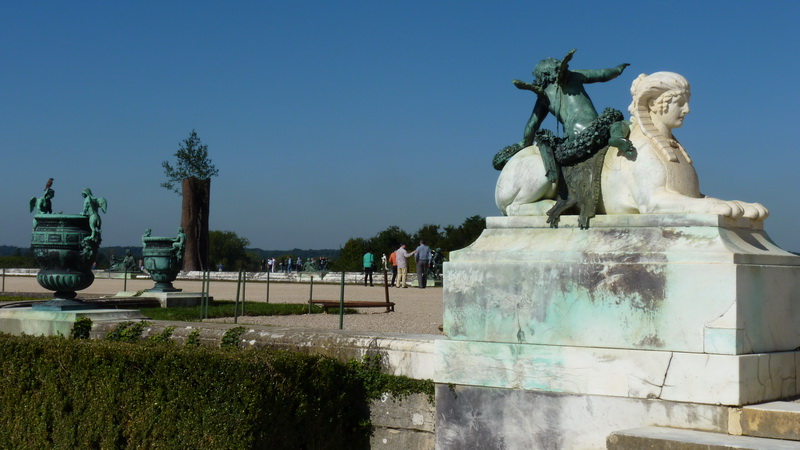
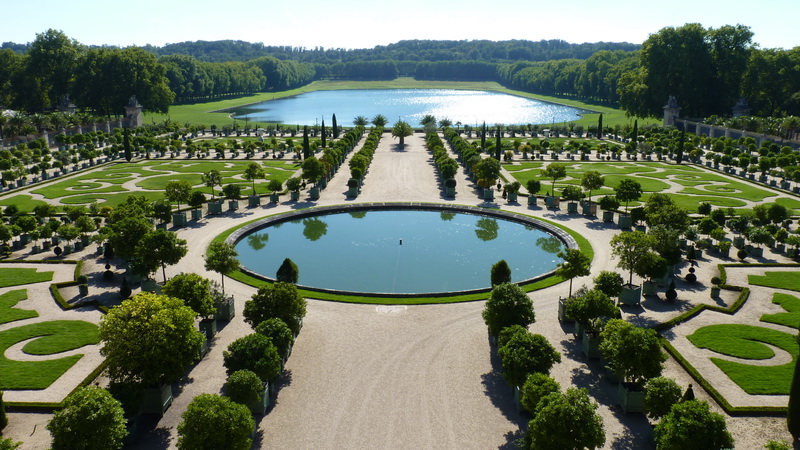
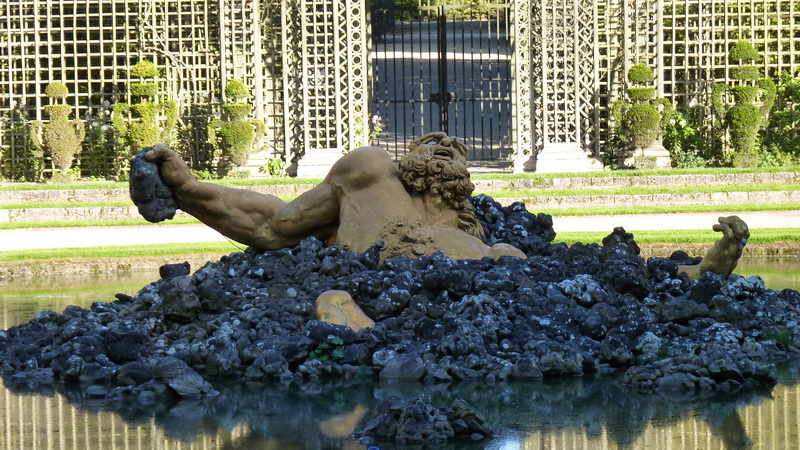
Western "gardens" and "art" are inseparable, representing an aesthetic realization truly embedded in life. Gardens are also part of art history; garden art is a synthesis of painting, sculpture, and installation art, as well as substantial architectural art.
Horticulture itself is "nature's architecture" or "architecture's nature." Italian Renaissance and French gardens are renowned for their intellectual and rigorous architectural structures. Leon Battista Alberti proposed at the end of the 15th century: "To view the garden as something between architectural structure and natural landscape, it must consider order, rigor, symmetry, and reason..." This illustrates that the architectural and horticultural views of that time took nature and rationality as supreme criteria, striving for balance between the two.
In the 19th century, the famous French landscape expert Alphand further commented on gardens: "A garden is a melody of form and color." The progress of garden art, like plastic arts, saw Impressionist painter Monet say: "My most perfect masterpiece is my garden." Indeed, in his colorful garden with sky and cloud reflections, one feels as if inside a painting; the garden is the embodiment of art.
20th-century garden art became a purely visual form and a discussion of substantial space and circulation, perfectly integrated into urban environments. Entering postmodern times, functional architecture fully exerted its efficacy, and the creation of facade spaces was outstanding, composing diverse thematic gardens and varied leisure spaces. Development moved from past flat layouts to today's vertical plant wall gardens and even rooftop gardens. The appeal of returning to natural ecology has always been the most highlighted theme in recent decades.