Chih-Hsien Tsai (Xiao Yu) – The Alchemy of Feeling
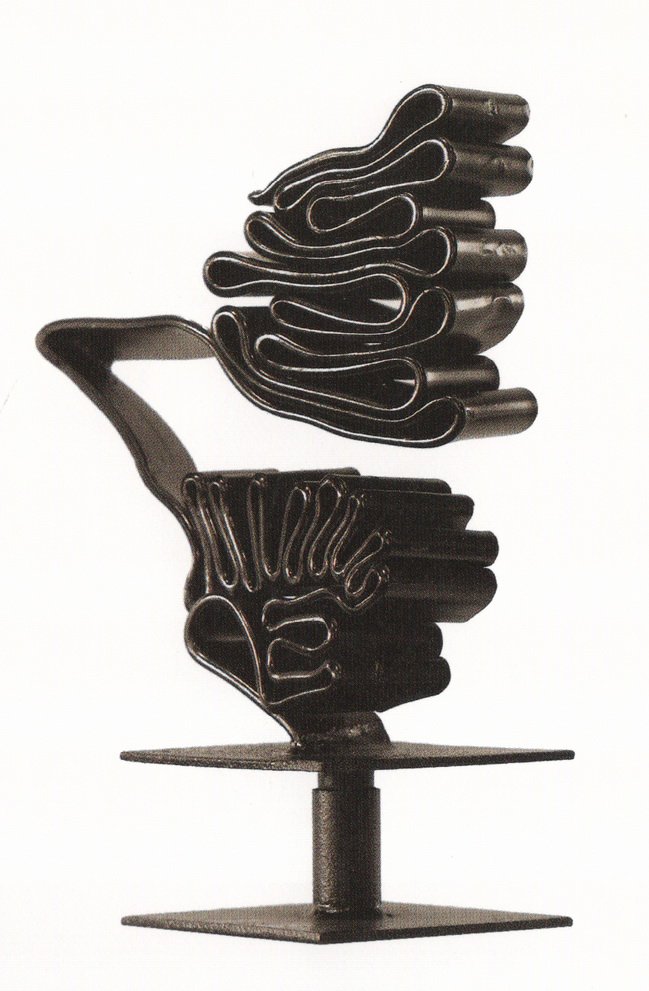
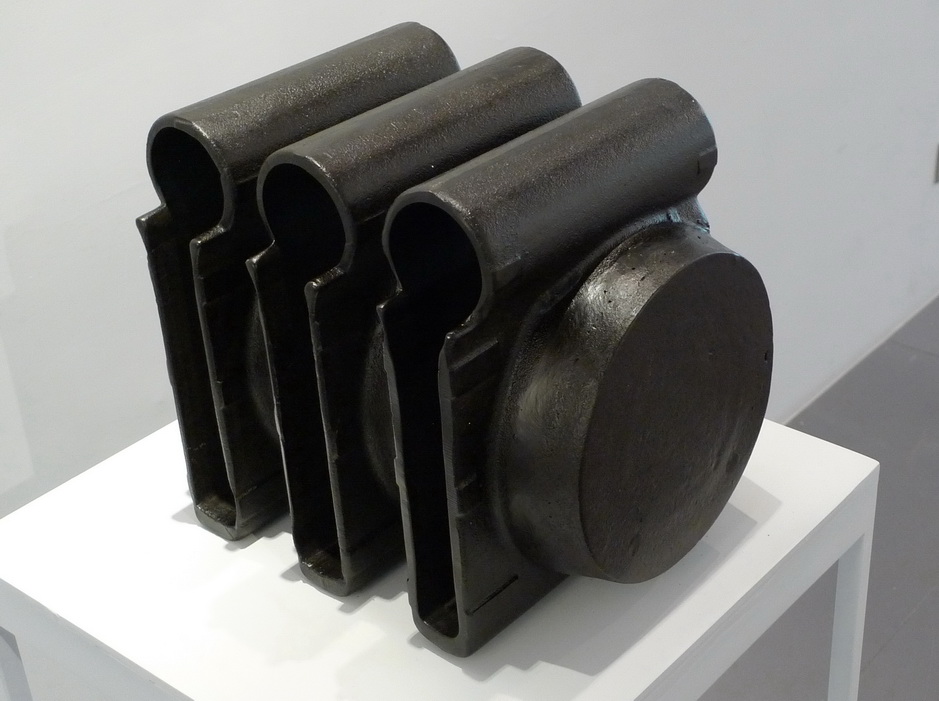
Savoring It, Iron 47x30x17cm 1999
"Creation is an occurrence, beginning with the fermentation of inner feelings."
Written by Chen Chi-Hsiang. Foreword: Looking at the development of art in Taiwan, sculpture is a niche field. It involves not just the market, but all conditions for creation (space, media, and tools). Local sculptural development has faced significant setbacks. In the past, older generations of sculptors had to create statues of great men and dignitaries to make a living. Today's sculptors naively invest in so-called public art, confused by their realistic living environment. Yet, within this creative dilemma, Taiwan has produced several outstanding traditional classic sculptors who are a source of pride, such as Hsu Shui-fa and Chen Hsia-yu, as well as modernist sculptors like Yang Ying-feng and Chu Ming.
Mid-generation sculptors have more media choices and explore modernity, falling into several categories. First, those continuing the tradition using sculptural media like clay, stone, or wood, expressing nature through refined craftsmanship, such as Li Chih-wen, skilled in stone carving. Second, Taiwan’s unique clay sculptors, who face challenges beyond shaping, including firing techniques; they find existential consciousness and soul in clay, pioneering new sculptural perspectives with distinctive supernatural forms, such as Yang Yuan-tai and Chen Cheng-hsun. Finally, iron sculptors directly express emotion and consciousness through material, notably Dong Zheng-ping, Gao Can-xing, Lin Hong-wen, Liu Bo-cun, and certainly Chih-Hsien Tsai.
Iron as a medium is a symbol of modernism. Twentieth-century sculpture was liberated from traditional materials like clay, wood, and stone. Iron sculpture transcends manual craft traditions, entering the industrial age, relying on factories for techniques like cutting, compressing, and casting. Modernist characteristics—simplification, flattening, geometrization, color-plane usage, abstraction, and subjectivity—mean artists no longer depict but directly express, following the creator’s awareness and feelings, conveying deep emotions and viewpoints through mental images and imagery.
Looking at the development of iron sculpture in Taiwan, there is almost no inheritance or academic foundation; it is immature. Iron sculptors seem to be self-taught. Recently, the Tung Ho Steel Plant of the Hou Family Group has actively promoted iron sculpture, annually selecting artists for residency programs and hosting an Iron Sculpture Festival with the Kaohsiung City Government, aiming to encourage the art form and await its grand development.
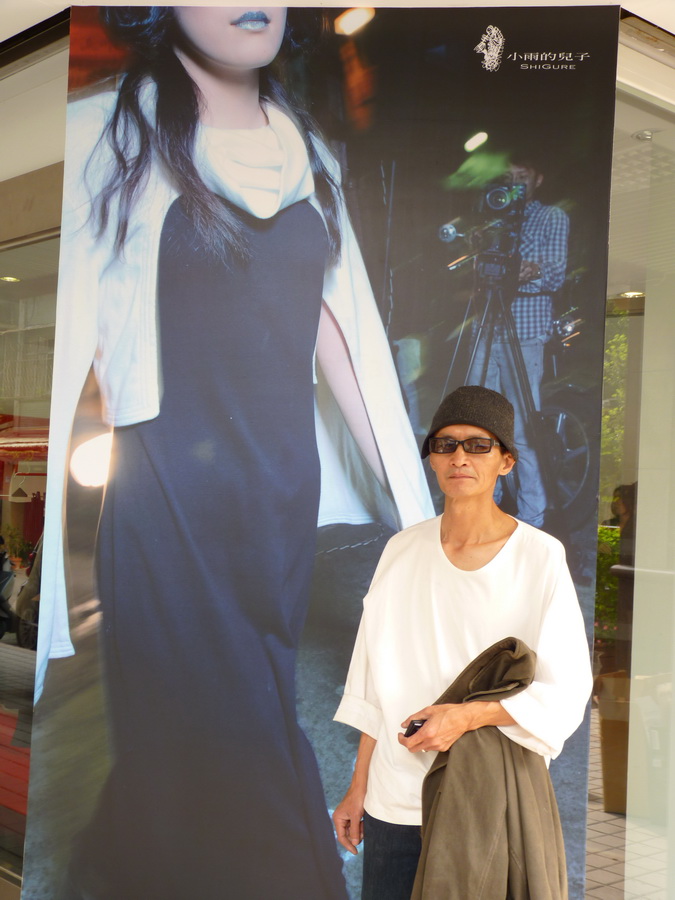
Xiao Yu’s Son – Chih-Hsien Tsai: Fashion enthusiasts know the unique style of Xiao Yu’s Son, a clothing brand. Like the Japanese brand MUJI, it acts as a "non-brand." Few know the poetic figure behind "Xiao Yu’s Son." "Xiao Yu" (short for Xiao Yu) is the alias, name, brand, and shop name of Chih-Hsien Tsai. Born in 1958 in Budai, Jiayi, a remote coastal area, he possesses the diligence and endurance typical of salt-field residents. He is a rare cross-disciplinary fashion designer, spatial designer, sculptor, and photographer in Taiwan, having carved his own path. He is also a scarce animal in the Taiwanese art scene: an iron sculptor. He has a keen sensitivity to space and unique taste in fashion, art, and spatial planning.
Quiet and taciturn, Xiao Yu hides a resilient and passionate artistic heart beneath a refined exterior. He showed artistic talent early on, watching his mother sew, becoming fascinated with crafts and art in elementary school, enjoying cutting, pasting, hammering, and tapping. His dexterity and attention to detail planted seeds for fashion design and art. Growing up in a family struggling to survive in Haikou, he helped with household finances from a young age. Art seemed unimaginable, let alone a career. Does existence hold all possibilities? Does life arrange its own course?
After junior high, considering his future in Taiwan’s booming industrial era, he followed his father’s advice and entered Kaohsiung Institute of Technology’s Electronics Department with excellent grades. During college, he joined literary clubs, edited the institute’s youth and literary quarterly, and developed design skills. Influenced by literary youth, he gained initial exposure to arts and culture. Starting in his second year, he played with cameras, became obsessed with photography through self-exploration, making it his lifelong love. Through the lens, he expanded his vision and observed people and things around him. After graduating from Kaohsiung Commercial College, he entered advertising design. After military service, he started his own advertising company with grand ambitions but soon gave up in disappointment.
Before age 25, Xiao Yu was in a stage of self-exploration. At a crucial moment, he gathered courage to go north to bustling Taipei, doing odd jobs to survive and briefly working as a photojournalist. By chance, scrap iron and farm tools from his hometown touched his heart. Cold, hard steel awakened his creative passion. Trying iron sculpture with no knowledge of the technique, he studied metalwork for half a year, as the processes were similar. To make a living, he worked as a tailor apprentice in Xindan for three years, rediscovering his mother’s sewing legacy. After completing his apprenticeship, he made clothes himself, set up a stall under the Roosevelt Road underpass, found outlets for his clothing, and quickly moved to consignment sales in Tamsui. Life stabilized, allowing him to begin iron sculpture creation.
The "Xiao Yu’s Son" brand was accidentally created during his Xindan period in 1986, forming a "non-brand." It signifies a self-mockery of Taipei’s damp, chilly autumn and winter rains. Chih-Hsien Tsai calmly explains: "For the first few years after the brand’s establishment, I lived in the Xindan area of Taipei. Because Xindan is near mountains, autumn often brings unexplained drizzles—rain that doesn’t soak you completely but is dense like cotton wool. I jokingly called this 'Rain Son.' Later, based on this imagery, I named the clothing brand 'Xiao Yu’s Son.' Unexpectedly, friends misunderstood, thinking I had given myself a new nickname. From then on, 'Xiao Yu' became another alias for Chih-Hsien Tsai. 'Actually, I hate rain.'" (Note 1)
At 30, due to limited space for iron sculpture and the complex environment of Taipei, along with various life considerations, he decided to leave Taipei and move to Taichung to seek new opportunities for fashion markets and iron sculpture. He opened a clothing store at Ideal State near Tunghai University, started a new tailoring studio, and found creative space. While making clothes, he did iron sculpture, and photography accompanied his growth regardless of how busy life was. His creation stems from a pure, simple original intention. With the flow of consciousness, feeling becomes Xiao Yu’s alchemy, and creation becomes an outlet for life energy. He devoted himself to iron sculpture, fashion, and photography. An artistmetaphored him: "He rides three steeds galloping across the vast wilderness of existence" (Note 2), which is also a concrete expression of Xiao Yu’s personal thoughts and actions.
Sculptures of Cloth – Xiao Yu’s Son Clothing: Quiet and at ease, Xiao Yu’s clothing designs are consistent with his sculptural work. Relying on intuition and imagination, he sculpts women’s body lines with soft fabric and creates line-based bodies with sturdy iron. He turns soft cloth into stiff shapes and transforms rigid iron into gentle, flowing lines like fabric. Chih-Hsien Tsai points out: "Artworks prioritize lines. If lines are smooth, thefacade will be beautiful" (Note 3). His clothing emphasizes nature and handcraft, focusing on texture and lines. For Xiao Yu, clothes are "Sculptures of Cloth" (Note 4). "Each unique handmade garment worn on a person is like a moving, living sculpture" (Note 5). Whether sculpture or clothing, they share a consistent Eastern style of natural, simple, and plain aesthetics.
Intervening in Public Space: Xiao Yu’s cross-disciplinary fusion includes not only being a fashion designer, iron sculptor, and photographer, but also an outstanding spatial designer. For him, creativity is everywhere. The artist says: "Clothing, sculpture, photos, and spatial design follow time, capturing my own feelings" (Note 6). He handles whatever needs to be done at any time with ease. He led two urban street-making movements. The first was at Ideal State near Tunghai University in Taichung, creating an artistic atmosphere. The second was at Zhongxin Market, currently the most confusing area in Taichung (in front of the Kaohsiung Museum of Fine Arts’ counterpart context, likely referring to a local museum or general cultural zone), updating idle spaces by injecting humanities and art. He created an alternative Z Bookstore (gallery), revolutionizing dilapidated spaces into a field for humanistic artistic thought. Along with two black-and-white exhibition spaces (Second Market and inside Zhongxin Market), both Z Bookstore and Black-and-White Cut are non-profit exhibition spaces providing exposure for young artists. This is a joint masterpiece of Xiao Yu and Qiu Bu Ji Er (Facebook pen name), subverting institutional art exhibitions. Xiao Yu says: "They don’t like formalized organizations, so theyopen uped new autonomous exhibition spaces" (Note 7). Because of these non-institutional and commercial spaces in Taichung (including Qiu Bu Ji Er’s 107 Gallery), central Taiwan’s artistic humanities appear more brilliant and diverse.
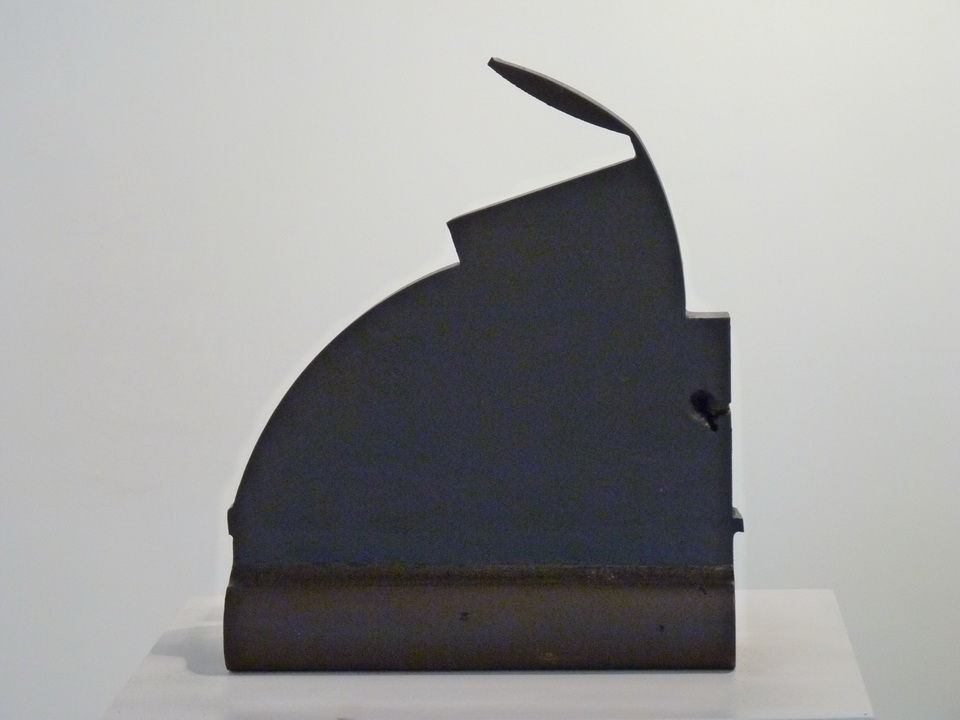
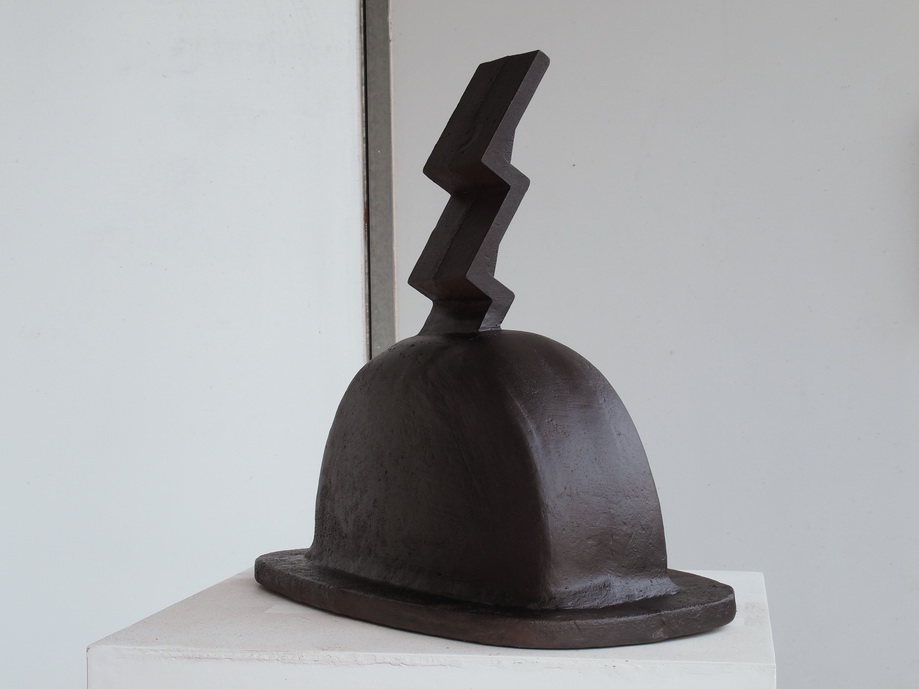
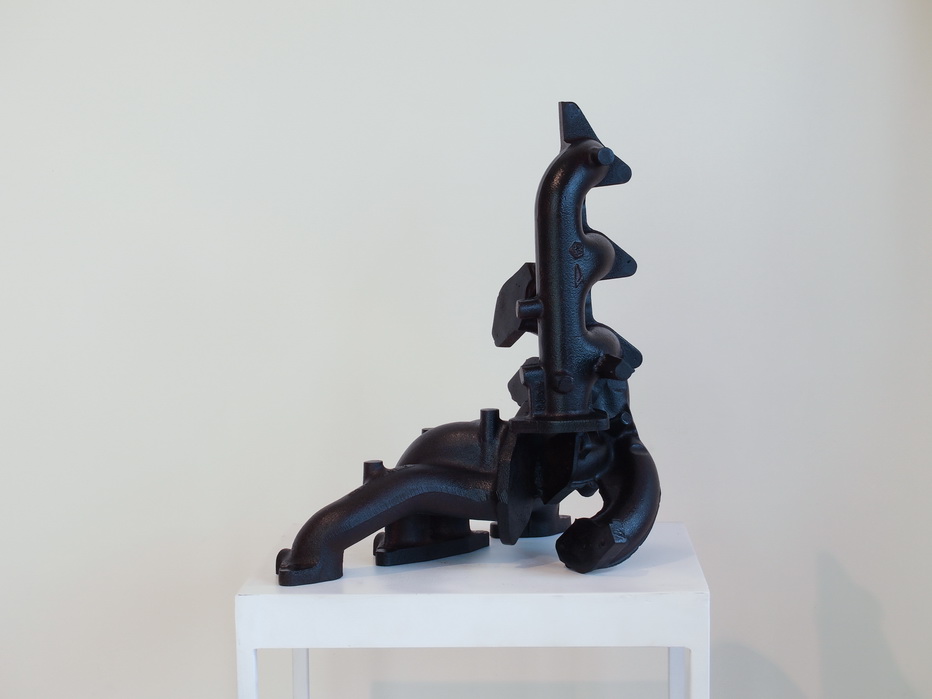
Forms of Existence – Iron Sculpture: Iron sculpture is the main body of Xiao Yu’s creation, freer and less restricted than clothing. Clothing’s three-dimensionality comes from imagination, while iron sculpture is entirely a three-dimensional product. Clothing involves color matching, whereas iron sculptureset foot ins space and form, allowing him to roam freely in the world of iron sculpture. His creations follow time, instinct, feeling, and consciousness, revealing natural, simple forms. They are concise and powerful, unpretentious and unadorned, with dynamic lines, dense volumetric planes, and spatial forms. With colors like iron ink, they possess a restrained, pure, and rustic vitality and strong emotion, unrestrainedly expressing natural mental images between imagery and abstraction, intellectuality and sensibility, imagination and poetry.
His iron sculptures fall into two types: first, constructing compositions from existing objects like scrap iron and farm tools; second, creating with newly cut and welded steel. Xiao Yu’s iron sculpture creation began in the early 1990s. Early works found inspiration in discarded farm tools (iron ready-mades), decomposing, deforming, compressing, and bending them to expand visual imagination. Through assembly and reorganization, he reconstructed internal forms and feelings, giving them new life and presenting extraordinary natural imagery, such as "Savoring It" (1999), where curvedspherical composition surface resembles flourishing potted plants on two platforms. After his solo exhibition at the US Information Service in 1999, he gradually liberated himself from assembling existing objects, incorporating new iron materials (including industrial waste iron), opening a new chapter in his creative journey.
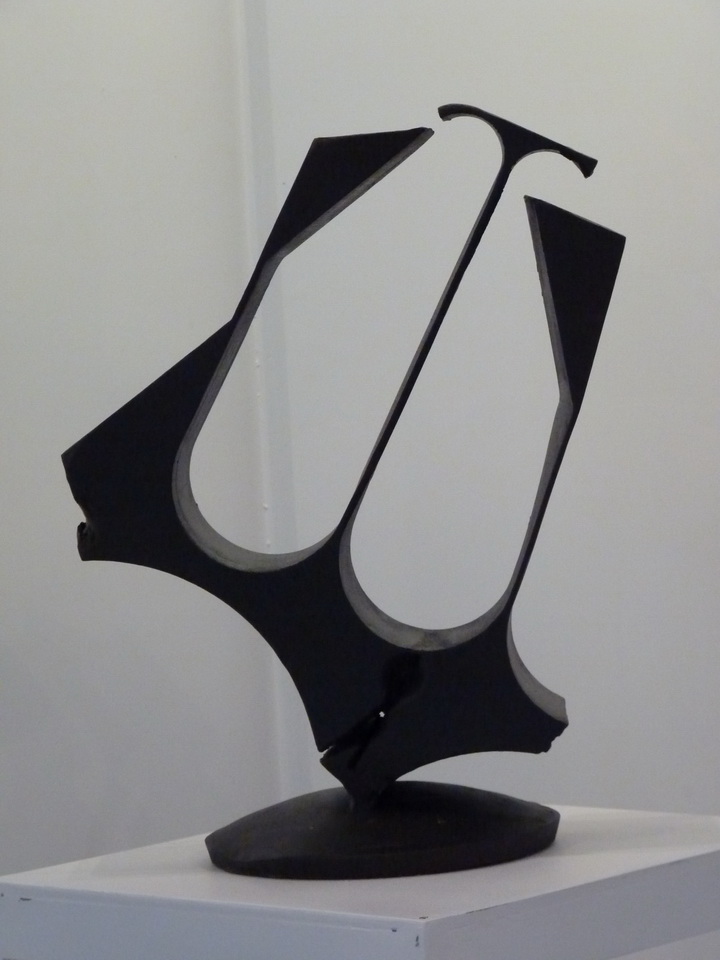
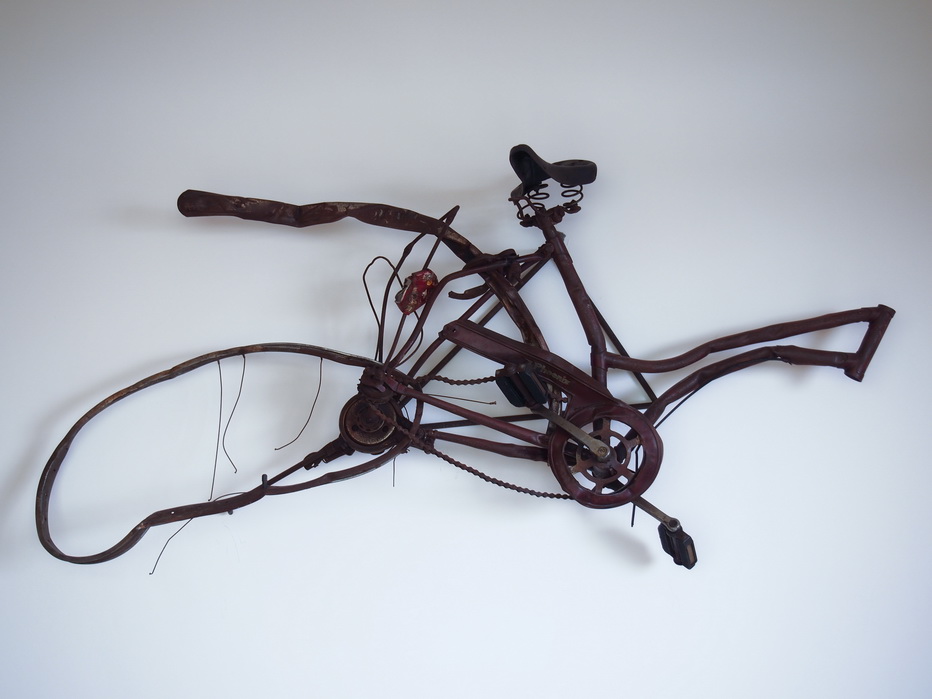
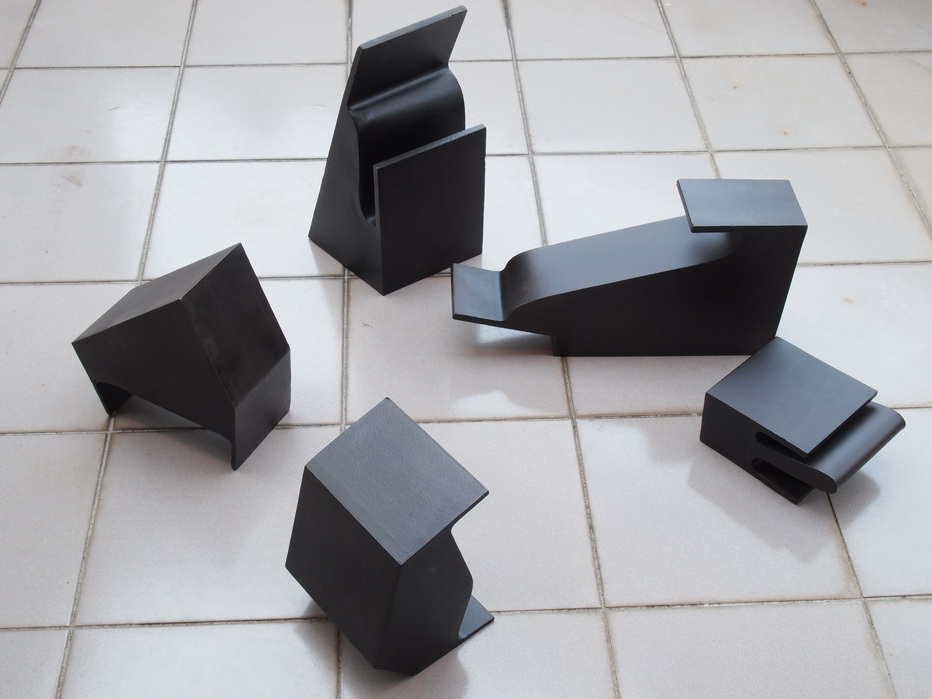
In recent years, Xiao Yu’s creation has become more restrained, pure, and rustic, with diverse and varied forms. Using simple welding, hot/cold working, and compression, his works are exquisite, with graceful lines and solid, concise, plain styles, possessing unique poetic taste favored by sculptors. Free-flowing lines are beloved by sculptors, as seen in "Abstracted" and "Joyful Heart" (2000), with gentle, jumping, dancing lines. He quickly delved into volumetric planes (light and shadow) and spatial forms, such as "It Was You Who Said to Open It" (2003), featuring a semi-circular existing iron piece spanning a scene resembling a pair of slippers. The humorous twisted bicycle "Up and Down" (2005) presents existing objects in their original state. The striking minimalist masterpiece "Chopin’s Laughter" (five components) (2007) features simple forms with profound meaning, full of musical geometric abstract rhythms. The dark blocky "Ultimately" (2008) initiates exploration of volumetric planes, resembling industrial artifacts. "At Least" (2009) features musicalmodeling with sharp triangles and hollow circles, emitting power and consciousness. In 2010, highly designed, paper-cut-like volumes, all under pure, dark, blocky styles, include "Early Morning," "Midnight," "Later," and "Of Course" (2011). The poetic, simple linear "Only Shadows" or the virtual-real linear construction "Heat" (2010) are sensibly light and free, the most unique. In 2012, breaking from design, embracing sensibility, nature, and organic forms, vivid little creatures (imagery) appear: "Half," "Return," "Rashly," "Behind," "Tilted," provokingreverie, full ofsense of movement and energy, displaying forms of spatiotemporal existence. Between intuition and intellect, body and spirit, imagination and poetry, heplasticizations consciousness andsolidifys emotion.
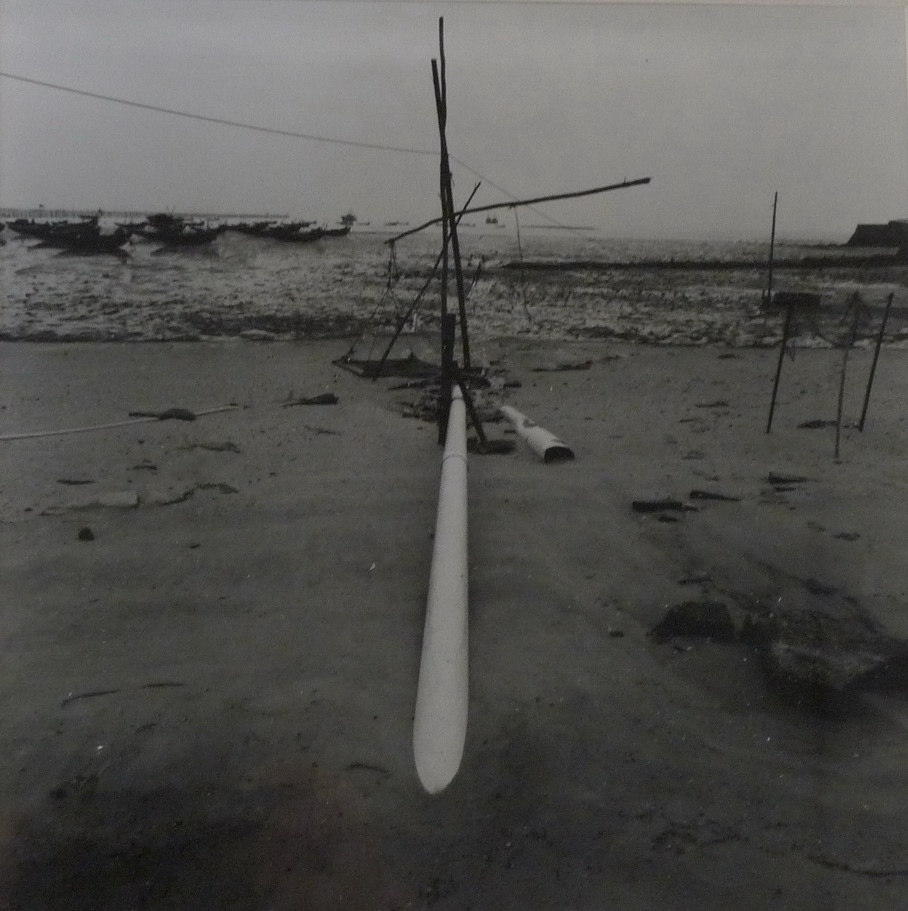
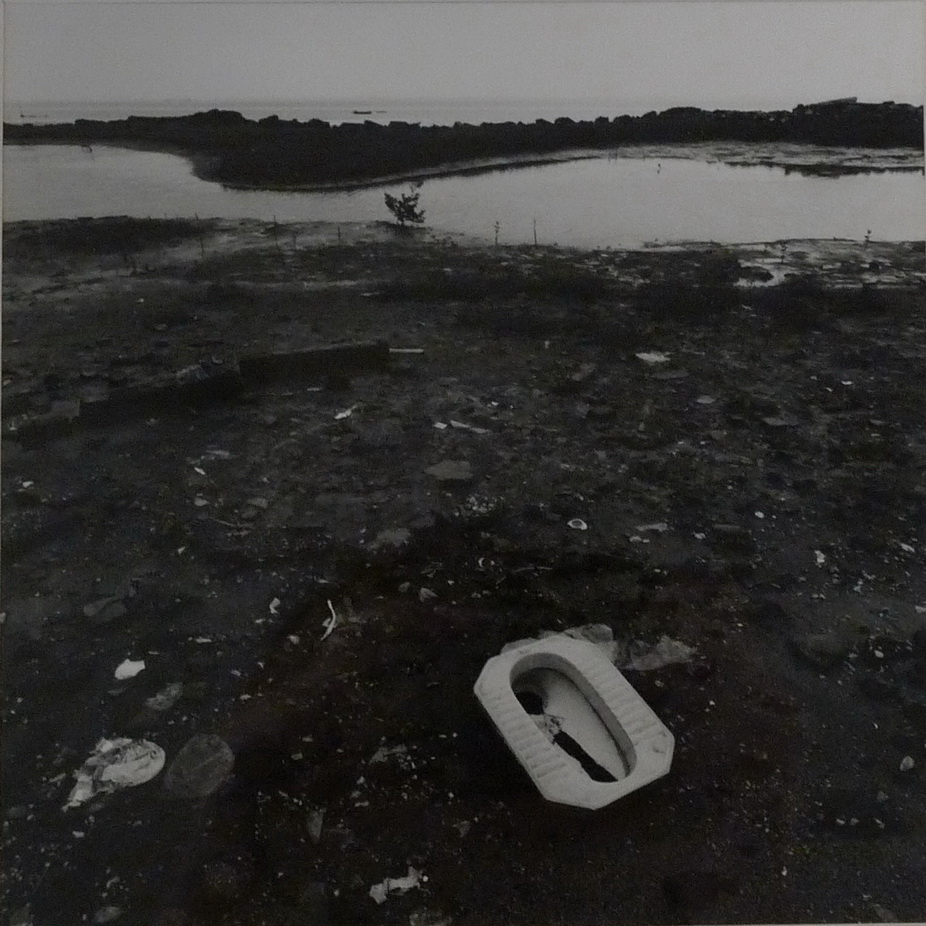
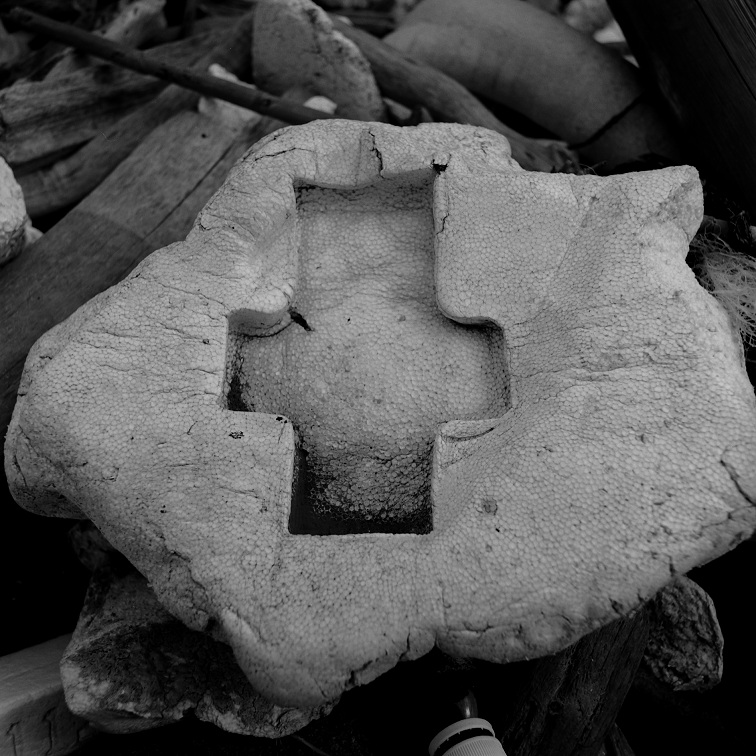
Exploring Spatiotemporal Contexts "Form is Emptiness" – Photography: Photography is the most convenient and popular tool, capable of instantly recording current situations, consciousness, and scenes. Images are media for transmitting thoughts and emotions. But why are photos taken by artists called "art," while those taken by ordinary people are "photos"? Clearly, artists persist in exploring beauty, truth, consciousness, and contexts, or constructing their imagination and poetic realms. Xiao Yu’s black-and-white photography intends to elucidate the desolate reality and object scenes washed by time, fromno one landscapes to naturally abandoned objects. It explores spatiotemporal marks and contexts, permeating a strong sense of desolation and vicissitudes, displaying metaphoricalimplication andaesthetics of imperfection, expressing human existential consciousness between the concrete and abstract, image and signifier, imagination and poetry.
Xiao Yu started playing with cameras in his second year of college. Early works focused on people. Gradually, from natural landscapes like mountains, he found shooting inspiration and topics in his familiar growing environment—objects. People disappeared from the environment; his environmental objects carry time and human memories of ruined ruins or discarded items, just like his sculptures created fromabandoned iron materials, intending to explore the spatiotemporal context of human existence and document human behavior and social changes. He chose plain black-and-white images to interpret the land he cares about. Famous "Landscape Objects": rural pastoral scenery, salt-field fish ponds, lagoons, dilapidated houses, waste disposal sites, mottled walls, waterfronts, and beaches—are his long-term observation and recording methods of his natural environment and land changes, also expressing his love for this land.
Earlyno one scenes featured objects within the frame, such as "Zengcheng" and "Longtou Sha" (2010), with the sea as background, emphasizing the natural environment. "Longtou Sha 1" (2010) uses rigorous structural framing on the water surface. "Zhi Gen," "Calm," "Non-Poetic," "Pause" (2012) feature objects as subjects, narrating the cold, alien contexts of discarded items. Xiao Yu’s photography starts from his hometown Budai Haikou, spreading across towns along Taiwan’s western coast. Ruined edge ruins witness the rise and fall of towns changing with the times. Landscapes shift with stars and objects. Driftwood on waterfronts and beaches, exposed to wind, sun, and rain over years, washes away faded mottledanomaly of time: chairs in grass, ropes floating on water, old blankets among weeds by the shore, a stone on fishing nets, polystyrene with cross patterns on beaches, flattened plastic bottles on black wood, a paint rag, a rain boot, or cloth shoes, etc. Familiar yet alien, vicissitude yet romantic.
Xiao Yu is like a scavenger of memory. Images become his life alchemy, revealing the truth of material existence, presenting introspective landscapes and witnessing the fragility, variability, and uncertainty of life. It elucidates that forms of existence are "form is emptiness." As the Buddhist sutra says, "All appearances are illusory." All appearances are empty in themselves, lacking inherent nature. Without inherent nature, form is not form. (Note 8)
Poetics and Aesthetics of Iron Sculpture and Photography: An "image" is worth a thousand words. "Beauty" can only be experienced personally, indescribable and hard to convey. Images are poetic, full ofimplication and fables, offering multi-faceted interpretations or subjective possibilities. Open and creative, they have more room forreverie than any text, with specific meanings varying by individual perception. Xiao Yu’s iron sculpture and photography write visual poems of mental consciousness. Silently perceived through form, posture, volume, mass, plane, space, and light, vivid images or photographs carry strong emotions and consciousness, irreplaceable by words. Beauty beyond words, metaphor, allegory, and reference can only be understood, not spoken.
Xiao Yu’s works stem from instinct and present awareness, capturing feelings from time. Like poets, his creation relies on inspiration, which is elusive, distilled from present feelings. Creation is an occurrence, starting with inner fermentation. Feeling becomes Xiao Yu’s alchemy. He creates without seeking external help, purely and naturally, writing the poetry and beauty of life, intending to touch the essence and consciousness of existence, seeking perfect aesthetics whether in the work itself or its given themes.
Xiao Yu’s works are visual, musical, and poetic. Another striking feature is the condensed, simplified, and poetic themes. Of course, titles are never the painting itself and cannot replace it. Poetic language can only describe itself or refer and metaphorize. Poetic titles perceptively search for new things, probing the unknown. They are fluid, liquid-like, full of rich imagery and imaginative space, guiding audiences into deep conscious awareness. Xiao Yu’s work naming stems from internal stirring feelings, constructing extraordinary dialogues between poetry and imagery. For example, a twisted bicycle malfunctioning in the corner of the studio, after observing and examining "up and down," was lightly titled "Up and Down." Humorous "Chopin’s Laughter," traversing existence "At Least," "That Is," "Is Not," mysterious "Nowhere," "Return," and "Behind," poetic "Only Shadows," "Non-Poetic," sensible and literary "It Was You Who Said to Open It," etc., intuitive themes with extra-musical intent intend to touch the real, entering the depths of existence.
Note 1: Landscape... Between Clothes and Body – Chih-Hsien Tsai’s Clothing Aesthetics, Written by Sun Xiao Tong. Note 2: Xiao Yu - Chih-Hsien Tsai Interview Record 2014-03-16. Note 3: Xiao Yu’s Son Blog. Note 4: Xiao Yu’s Son Blog rainhoe, Published July 17, 2008, "Clothes are Sculptures of Cloth." Note 5: Xiao Yu’s Son Blog rainhoe, Published December 9, 2009, "The Secret of Xiao Yu’s Son." Note 6: Xiao Yu - Chih-Hsien Tsai Interview Record 2014-03-16. Note 7: Xiao Yu - Chih-Hsien Tsai Interview Record 2014-03-16. Note 8: From Master Jing Kong’s lecture. August 11, 2014, Paris