Interview with a Kaohsiung Painter and Lecture at the Wu Yuan Reading Club
Kaohsiung painter Su Wangsheng’s Zuoying Senior Military Village Studio
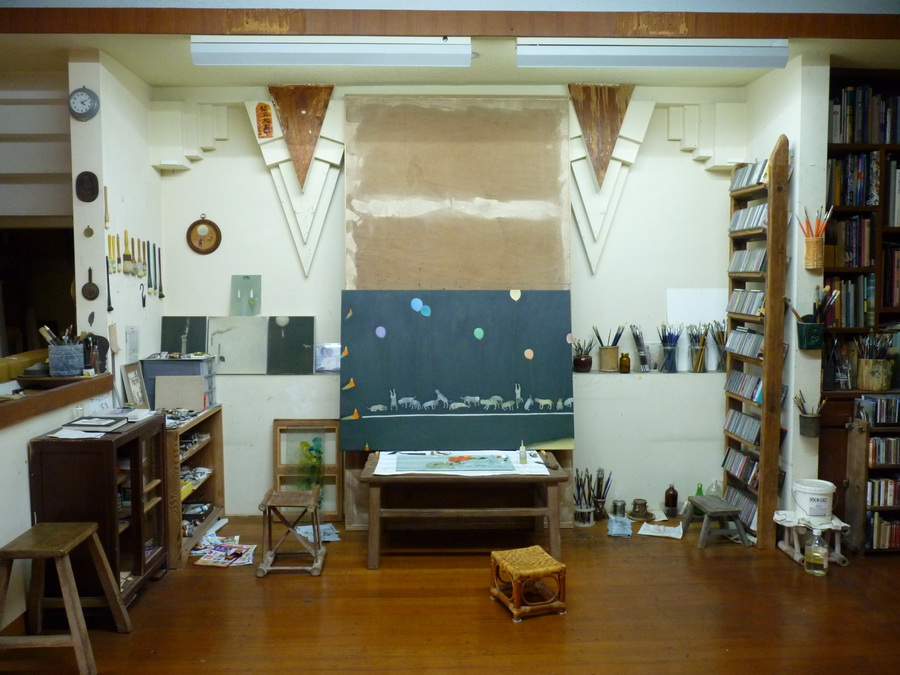
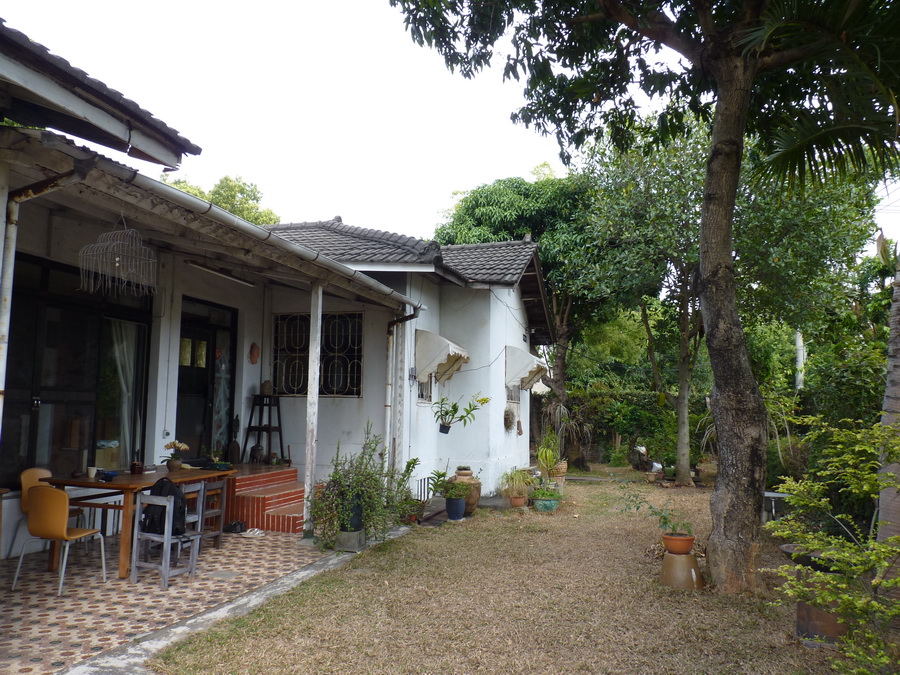
Text and photos by Chen Chi-Hsiang. Continuing to follow the art writing project (Special Exhibition of Taiwanese Artists), I had an appointment with painter Su Wangshen in Kaohsiung the next afternoon. Taking the Zi-Qiang Express to Xinzuo Ying Station, Su Wangshen came to pick me up and took me to his studio in the Zuoying Senior Military Village. It is an independent Japanese-style house located on the edge of the city near the naval base. The environment is lush, green, and beautiful; with few cars and many empty houses, it appears exceptionally quiet. This place was once a comfortable residence for naval officers.
I am not very familiar with Su Wangshen. Over the past two years, I have participated in the year-end gatherings or activities of Yan Dingsheng’s Taiyu Aesthetics School several times, meeting him on those occasions but never having a deep conversation or visiting any of his exhibitions, so I was naturally unfamiliar with his work. Under these circumstances, how could I conduct an interview? I adopted a passive approach, visiting his works and art books on-site, allowing inspiration and keen observations to flow with the atmosphere and feelings. I would start from the basics: Who is the painter? Understanding his life story and origins as an artist, the stages of his creation, his creative trajectory, and characteristic styles, etc. Other information and deeper insights could be provided by referring to other texts and image materials.
After drinking tea and touring the studio, I took a few documentary photos of the painter and the environment, then entered the interview context. I gave the artist ample time to express his thoughts and actions, listening carefully and observing, delving into his world through his paintings and materials. An articulate artist can fully express their artistic stance and viewpoints, while for one who is less talkative, I would provide prompts and guidance. The interviews always proceeded in a harmonious atmosphere, flowing deeper through emotional and instinctive speech and topics, listening to stories touching the heart from the depths of the artist's inner self. Each interview provides me with an opportunity to learn locally and experience the energy and consciousness of Taiwanese culture, understanding the creation and life of local artists.
Each year when returning to Taiwan, I am invited to share with the Wu Yuan Reading Club in Kaohsiung among a group of art and literature enthusiasts. Arranged for two consecutive Friday mornings, I always take this opportunity to go down to Kaohsiung early to visit a local Kaohsiung artist, preparing for the upcoming columns on Taiwanese artists in the Tainan Yandian Literature section. This year, these two sharing sessions were particularly dedicated to authentic local Kaohsiung artists: "The Austronesian Knight of the Taiwanese Art World" Li Junxian and "The Explorer of the Face of the Taiwanese Land" Chen Shengsong, both artists whom almost everyone knows and recognizes. Starting from Li Junxian, the painter with the deepest "Taiwanese flavor" without complaint, I used my grandmother's affectionate Hokkien to narrate the art of Taiwanese people, stirring the classroom, creating a stronger sense of feeling, and even moving emotions, facing squarely the consciousness, spirit, and courage of Taiwanese people, stimulating the nerves and soul of the land of Taiwan.
After each lecture in Kaohsiung, I am invited to have lunch with the students. These ladies not only love art and culture but also enjoy gourmet food. They know every good restaurant and dish in Kaohsiung; nothing delicious escapes their grasp. They are versatile in enjoying fine food, yet their spirit of learning is commendable. Having the honor to share delicious food after each lecture feels like adding extra dishes, bringing great joy. Indeed, life is a dojo of learning everywhere. At the podium, I am a teacher, immersed freely in my theme; at the dining table, I become a distinguished guest to these eager-to-learn ladies. When there are few people, we chat casually; when there are many, it is as lively as a vegetable market. I calmly observe and learn, deeply happy and immersed in the food, enjoying the beauty of the human world, grateful for the opportunities of human connection, allowing me more profound apprenticeship and experience.