Chang Chung-Liang: Roaming Between Painting and Photography
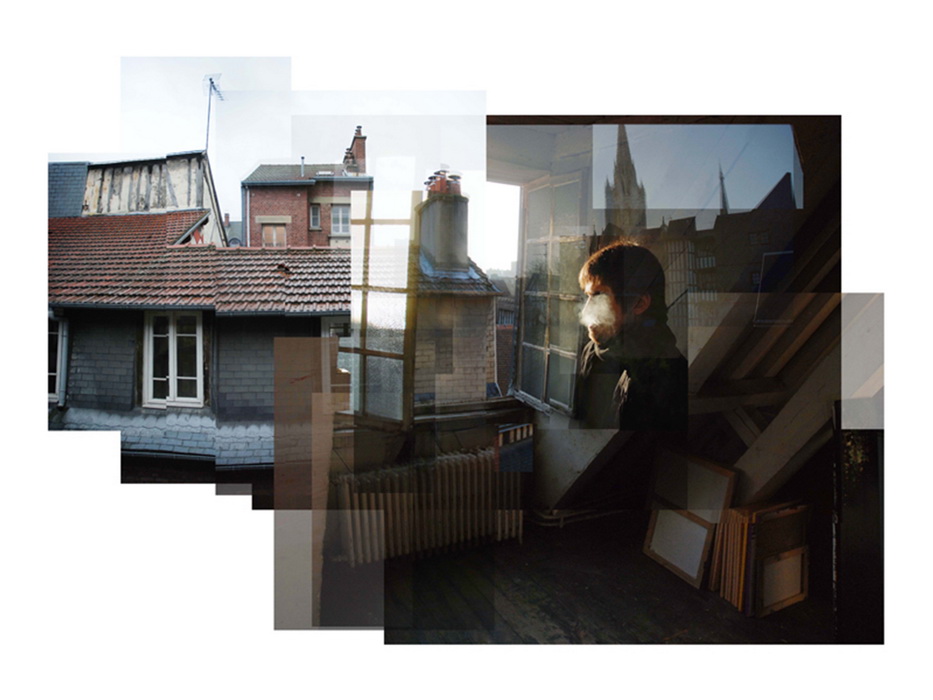
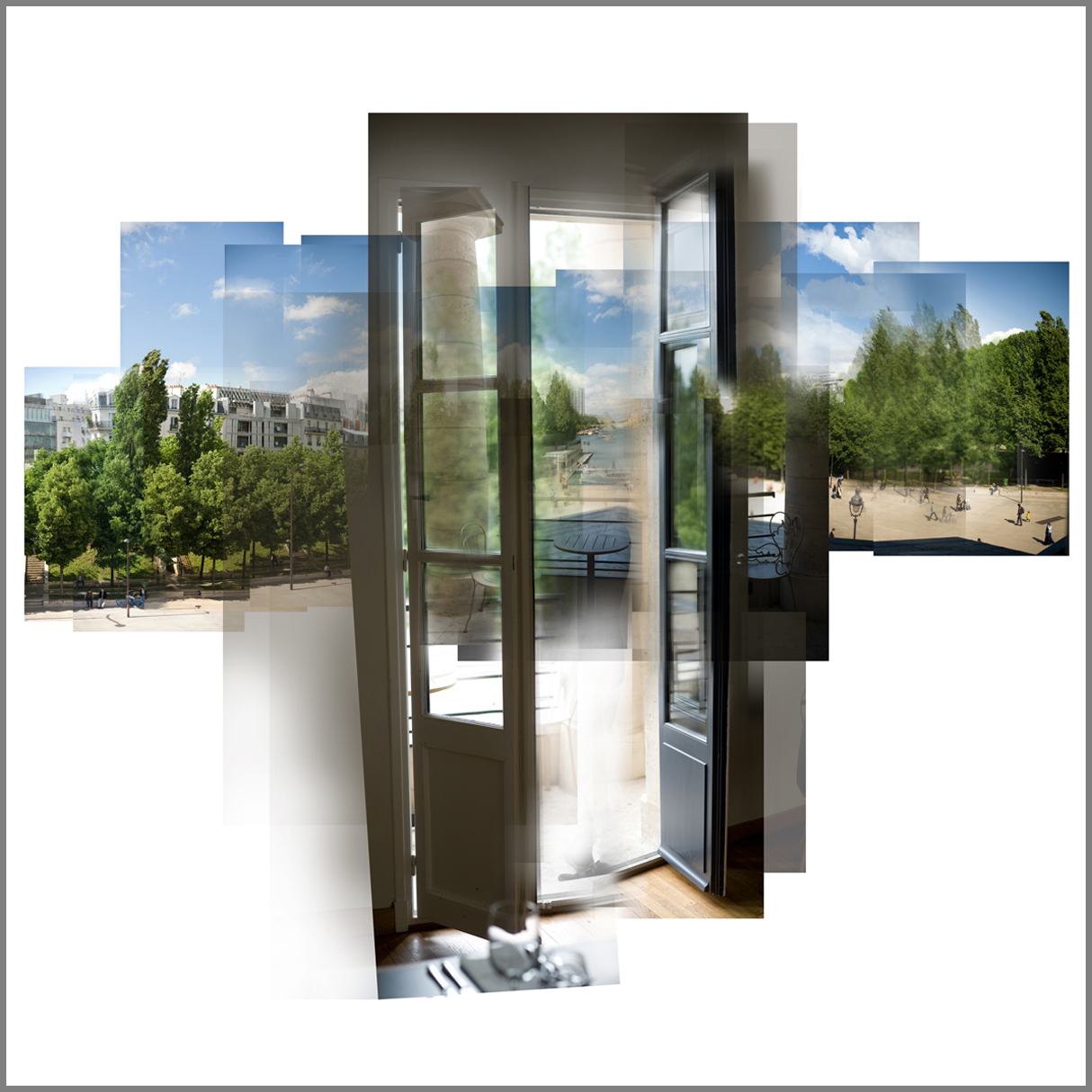
"Window, Clear Mirror, Perspective" No. 12, Smoke Before the Window 110x82cm Post-processed photograph 2009
"If you cannot find your god in daily life, then you will not be able to find Him anywhere."
Camus - Life Aesthetics (Note 1)
Text / Chen Chi-Hsiang
Preface: In today's digital age, photography has become a habit of daily life, a tool for recording or expressing oneself. Everyone carries a device, checks in everywhere, photographs everything, and pressing the shutter becomes a source of pleasure. In this era of image overload, under the new trends of contemporary art after postmodernism, photography is gradually becoming a prominent discipline, replacing the narrative depiction of traditional painting; images have become the text of painting. The renowned scholar Susan Sontag wrote regarding current photography: "When photography began providing copies of the world, human landscapes also began to accept an unprecedentedly dizzying change in rhythm." Furthermore, "through the indirectness of photography, the world becomes more liberated... History, the past, and the present all become anecdotal and diverse. The camera fogged reality, allowing free manipulation like a maze. This popularized concept denies interdependent elements and continuity, granting each 'now' a magical sign..." "Mallarmé believed that the most rigorous aesthetics of the nineteenth century declared that the entire existence of the universe ends with a book; now all existence exists only to obtain a photograph." (Note 2)
The Relationship Between Painting and Photography: Art is the contemplation of humanity's inner self and the reflection of understanding the world. Early Renaissance pursued truth by imitating realistic images through rational scientific methods, making painting images indicative of photographic realism, implicitly containing the concept of photography. Painting and photography have always maintained an intimate relationship. David’s famous painting The Coronation of Napoleon resembles a giant reportage photograph. Realist master Courbet’s works are closer to photography; photographs did not replace paintings but became references for painters. In the 1970s, Photorealism or Superrealism painted images more realistically than photographs, reviving them through photographic imagery. Painting did not die with the invention of photography in 1838. The invention of photography changed people's views on reality and artists' observation and depiction of it, instead stimulating artists' imagination and vision, moving from the depiction of objects to the subjective expression of modernism.
Under today's digital revolution, human life has entered an unprecedented new era of images. Human visual fields and imagination have expanded infinitely. Technological civilization has completely changed people's horizons for viewing things, arousing new awareness and consciousness. Coupled with the development and prosperity of recent image post-processing techniques (such as Photoshop compositing), contemporary art brings new opportunities. The post-production of images in the digital age provides artistic creation with more diverse possibilities. Since the liberation of Modernism or avant-garde art, tradition aesthetics have been overturned again and again. The diverse use and interpretation of photographic images in the 1970s changed the perception of images. Photographs broke free from painting, becoming a medium for art to directly convey thoughts and concepts.
Painting is the intellectual and emotional material and image expression under careful consideration, while photography is a mirror image that captures perceived moments as they are. Painting creation stems from inspiration, while photography comes from discovery. What often dominates photography is identifying its subject; painting is the organizational construction of materials, where the subject is not necessary. "If the original intention of creating images was to see the image of an object even after its physical entity disappeared, then the 'mirror-like' charm of 'photography' often comes from the close relationship between the imaging result and real scenery, as well as its association with real life. Viewing photographs as concrete manifestations of inner emotions, the opposition between eternity and transience disappears in the modern world; finally, images replace true existence." (Note 3)
Currently, photography has become a creative medium. Combined with post-processed images, photographs transform into carriers of paintings or concepts, becoming a trend. Chang Chung-Liang’s painting and photography construct his overall artistic framework. In the ambiguous relationship between (non-)photography and (non-)painting, he regards photography as a new medium, exploring the intersection of painting and photography, embodying the differences in materials, consciousness, and aesthetics. Are photographs substitutes for painting or extensions of painterliness? Do photographs become references or ghosts of painting? Deeply analyzing the attributes of both images—painterliness, temporality, and spatiality—he emphasizes layout and structure, focusing on field contexts. Space is the stage; how to create atmosphere, both painting and photography are like films, narrating a story. The artist writes: "When I work, I often ask: what subject or object can express painterliness? Is there something that can truly express it? What are the commonalities between painting and photography? After careful deliberation, what I found was the form of folds/crumpling, which clarifies the relationship between painting and photography and constructs my two major creations." (Note 4)
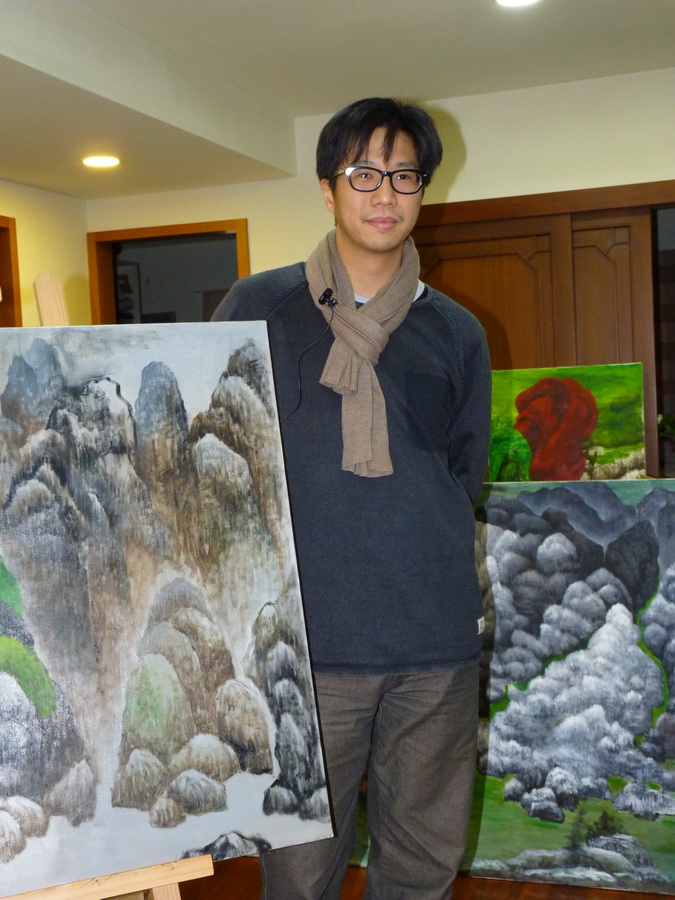
Roaming Between Painting and Photography – Chang Chung-Liang: Chang Chung-Liang (born 1979 in Kaohsiung) is a Taiwanese artist living in Paris, France, part of the new generation. His creation roams between painting and photography, wandering as a traveler in the latitude and longitude of time and space (Note 5). In the artistic context after postmodernism, he is skilled at appropriating and transforming images (such as Western masterpieces or Chinese landscape paintings) for narrative and storytelling. He had a strong interest in painting since childhood. In middle school, he liked reading poster design books and participated in making school posters during both middle and high school. Interest became the direction for the high school college entrance exam; he decided to apply for an art department, prepared for the technical exam, entered the Rembrandt studio to learn art, drew charcoal, and began to explore what painting is and what painting history is like. It took two years to fulfill his wish and enter NTUA (National Taiwan University of Arts). During university, the most impressive thing was Teacher Chen Shih-Ming’s abstract sketches using materials found anywhere, which allowed him to truly understand what sketching and abstract art are, being very enlightening for an apprentice youth. He majored in oil painting and minored in photography, deeply influenced by Teacher Chen Shih-Ming’s creative attitude and image interpretation: layout, form, structure, spirituality, and the Zen Buddhist attitude towards life. During his studies, he immersed himself in philosophy, spirit, and aesthetics books published by his family’s Lishu Publishing House, which became the foundation for his future creation.
In his junior year, he selected photography courses and entered the world of photography. He took a photography class from renowned photographer Ruan Yizhong, learning basic photography techniques, darkroom work, concepts, and viewing attitudes, as well as humanitarian reportage photography with its humanistic nature. He realized that the unique power and intensity of photography cannot be replaced by painting. In his junior and senior years, he studied classic photography and theory, understanding that photography is a problem of space and time, experiencing the essence and difficulty of photography. Photography is like sculpture; it sculpts the context of time and space. Influenced by Teacher Ruan Yizhong’s reportage photography, he pursued humanitarian reportage photography emphasizing temporality and spatiality during his studies.
Chang Chung-Liang went to the art capital Paris for further study in 2006, beginning to dialogue with images and explore photographic aesthetics, while delving into storytelling painting and simultaneously expanding his exploration of images, starting from humanitarian reportage photography and continuing to this day. In 2007, he entered the Rouen School of Fine Arts in France, seeking new creations. Painterly "Wall Series and Palette Series" (2008-09) and "Folded Series". Starting in 2009, he used post-processed image techniques to break through creative bottlenecks. From deconstruction to reconstruction, through puzzle, collage, opening up panoramic vision, and expressing emotion through scenery, the "Window, Clear Mirror, Perspective Series" was born. In his third year at the Rouen Academy, he began to reflect inwardly, exploring Eastern aesthetics and landscape contexts in the "Seeing Mountains Not Mountains Series" (2011), highlighting Eastern humanistic consciousness through contemporary photography, full of postmodern signs, transforming ink wash paintings into photographic images, crossing boundaries to merge painting and photography. He further appropriated Chinese ink wash paintings for recreation, responding to Eastern humanistic spirit with oil painting, exploring the possibilities of contemporary landscape painting in the "Modern Landscape Painting Series" (2012 to present).
Photography and painting have become the two wings of Chang Chung-Liang’s creation, allowing him to gallop freely in the latitude and longitude of time and space. Each has its own attributes. Photography combined with post-processing is an independent creative field; it can be a reference for his painterliness but can never replace painting. Their interaction expands his imagination and vision, expressing his sensibility and weaving his unique painting or photography style. Whether exploring painting or photography, Chang Chung-Liang’s art is full of narrative, anecdotal, dramatic, literary, and performative qualities. He roams between fiction and reality, space and time, imagination and emotion, consciousness and expression, East and West, modern and postmodern, attempting to explore the meaning and profundity of some existence in the present moment of time and space.
Theater-like Storytelling Paintings: Chang Chung-Liang’s theater-like storytelling paintings began during his time at NTUA. He watched many movies and plays and was deeply influenced by Western narrative paintings, especially French painter Balthus, American painter Edward Hopper, and British painter Lucian Freud. "How to construct a narrative? How to excellently express a story, how to create narrative painting through personal concrete experience, how to transmit abstract concepts and poetic emotions through a single narrative image. And be able to express all stories in one painting, one image." (Note 6) Theater-like "Love Is Not That Simple Series" (2004), inspired by movies and advertisements, integrating photography and cinematic contexts into painting. Cleverly arranged layouts through special field arrangements and composition, presenting tension in the picture and capturing a certain dramatic atmosphere, full of cinematic scenes, expressing the ambiguous situation and atmosphere of love and hatred between men and women. "No. 1 No One Is Having an Affair" depicts an awkward scene of two men and one woman; a young man hides anxiously under the table, looking bewilderedly at the audience as if saying "Oh no, it's over." A woman sits uneasily on the table, turning to look back at a man entering the room with one hand opening the door and the other in his pocket. The painting cuts off his head just right, searching doubtfully for the room condition, forming a particularly thrilling scene and tension.
"No. 2 Who Is in the Room" describes a sexy, lightly dressed girl sitting on the edge of a bed in a bedroom, in an ambiguous and teasing posture. Next to her lies a cat symbolizing adultery. A man stands at the door looking at the audience, confusedly putting on those men's slippers, seemingly thinking "There’s a ghost inside." "No. 3 Pleasant Dinner" depicts a scene of two men and one woman drinking and chatting at a dining table, expressing the loneliness of the girl amidst the crowd, a realization we often have in daily life. This reminds one of Cézanne’s composition playing cards. Unusually, many objects appropriate parts of world-famous paintings. The yellow tablecloth and bottle at the visual focus come from Vermeer; the hand gesture of the man on the right comes from Manet’s Luncheon on the Grass; the window cityscape background comes from Hopper. These mixed appropriations are like fragments of painting, meaning homage to masters or a kind of ironic distance?
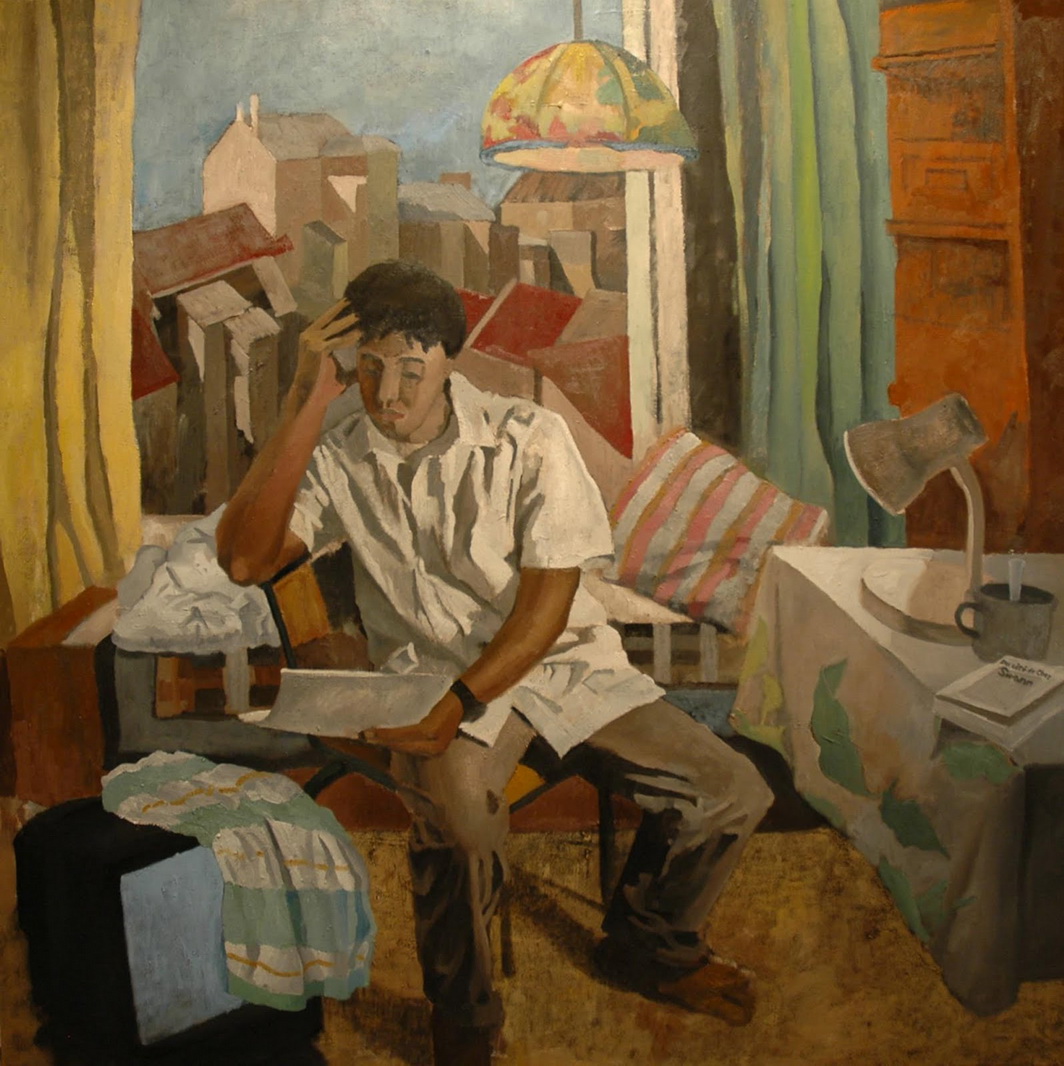
"Paris Room Series" (2006): Full of musical melody, it is a portrayal of the painter’s home life alone in a room with windows. Different layouts of figures: standing facing the window, sitting sideways at a table, or sitting facing the audience. Surrounded by the fold forms of indoor objects (clothes, curtains, tablecloths, pillows), the picture is composed of large and small color planes, creating a musical rhythm. Within the rigorous structure of form, color, and space, it is like an abstract painting. Chang Chung-Liang compares music, believing a piece is composed of many different notes from various instruments; notes are like those objects and colorful color blocks, instruments correspond to different materials. Understanding that all art is a transformation, like a receiving sense, patterned forms and color-blocked colors echo the beauty and signs of New Art.
Dialogue with Images – Reportage Photography (2007–): Starting from 2007, Chang Chung-Liang treated Paris as the spatial stage for reportage photography. Every corner staged play after play, human dramas more dramatic than theater. With curiosity, he unfolded his exploration of images, inspired by the snapshot technique of Paris reportage photography master Cartier-Bresson. The images he photographed maintain a mutual dialogue with painting, determining the layout of figures and their environmental relationships: such as "Inside and Outside the Paris Metro" describing the layout of two figures inside and outside the metro. Seemingly unrelated, yet implying a social tension, composing a dramatic image. Another scene: a shadowy figure flashes into the carriage in the foreground, a woman hurrying to catch the train in the distance, condensing the space-time of the metro at that instant, the illusion of urban mirrors, street scenes dissolving, or blurred light and shadow figures behind phone booths, etc. Keen observation, instantaneous condensation, capturing a certain special atmosphere, sculpting space-time contexts, becoming touching, storytelling reportage photos.
Abstract Painting "Wall and Palette Photography Series" (2007-09): After visiting the exhibition of photographer-painter William Eggleston, Chang Chung-Liang’s creation was impacted. From photographic reportage to photographic expression, he took many photos of walls in Paris, finding painterliness in photography: finding painterly forms and color structures in modern and old, peeling walls, forming rigorous abstract geometric paintings. Another series extracts local details from painters' palettes, transforming feelings into lyrical abstract paintings. This is the purest and most abstract series among all his creations, a painterly photography series, blurring the boundaries and definitions of photography and painting, with photographic images transforming into paintings.
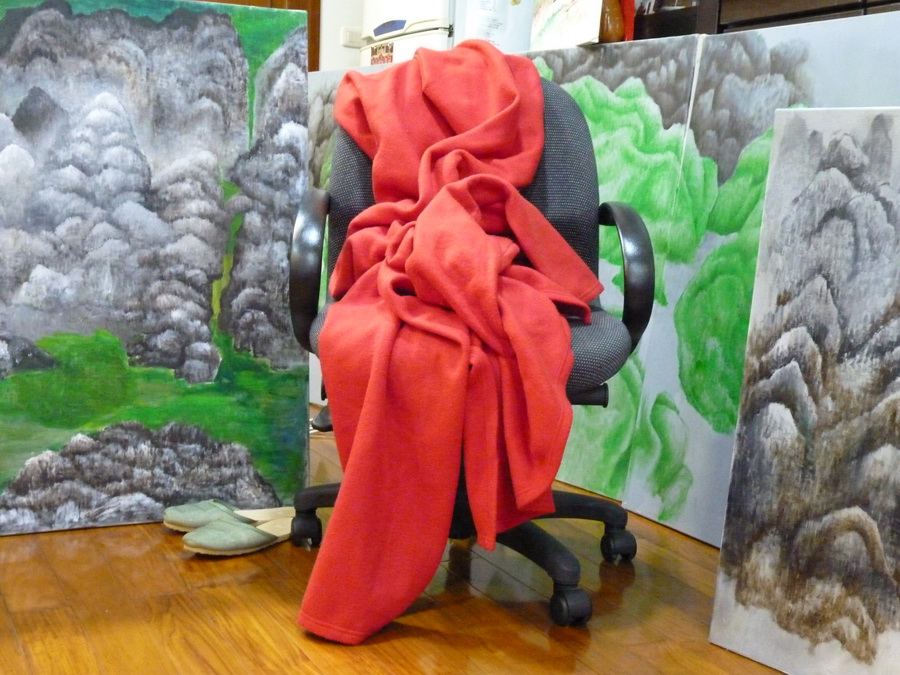
Painterly Photography "Folded Photography Series" (2007-2010): This series was inspired by the folded clothes in the "Paris Room" painting series. Divided into two sub-series, he exclusively photographed soft curtains, large bath towels, clothes, sheets on tables and chairs, etc., and the folded series of women lying between quilts and pillows. Purely formal and color combinations constitute exploration. Rich and changing folds are both concrete and abstract, with light and shadow like painting. Folds are a neutral form laid out, simultaneously external and internal, hidden and unhidden forms: they can resemble mountains and rivers, being both material and spiritual signs.
Expressing Emotion Through Scenery "Window, Clear Mirror, Perspective Photography Series" (2009–): Windows are the concept of painting, framed pictures. Windows are the liminal space between indoors and outdoors, inner realm and outer realm, private and public. They are places where people gaze at scenery to express emotion, spaces for meditation and daily routines. Inside the view and outside the frame, each has its context, atmosphere, and field. The realm of bright moonlight before the window is full of magic and poetry. Romantic poet Baudelaire wrote: "Nothing is deeper, more mysterious, richer, gloomier, more dazzling than a window illuminated by candlelight. What we see in the sunlight always appears more dim and boring compared to what is behind the window. In this dark or brilliant window eye, live life, dream life, bear life..." (Note 7)
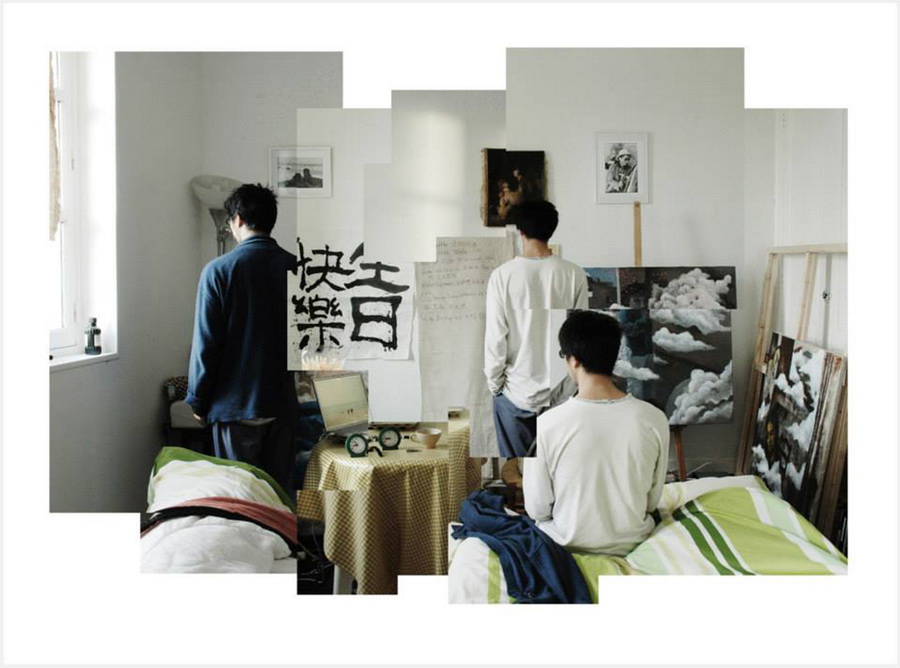
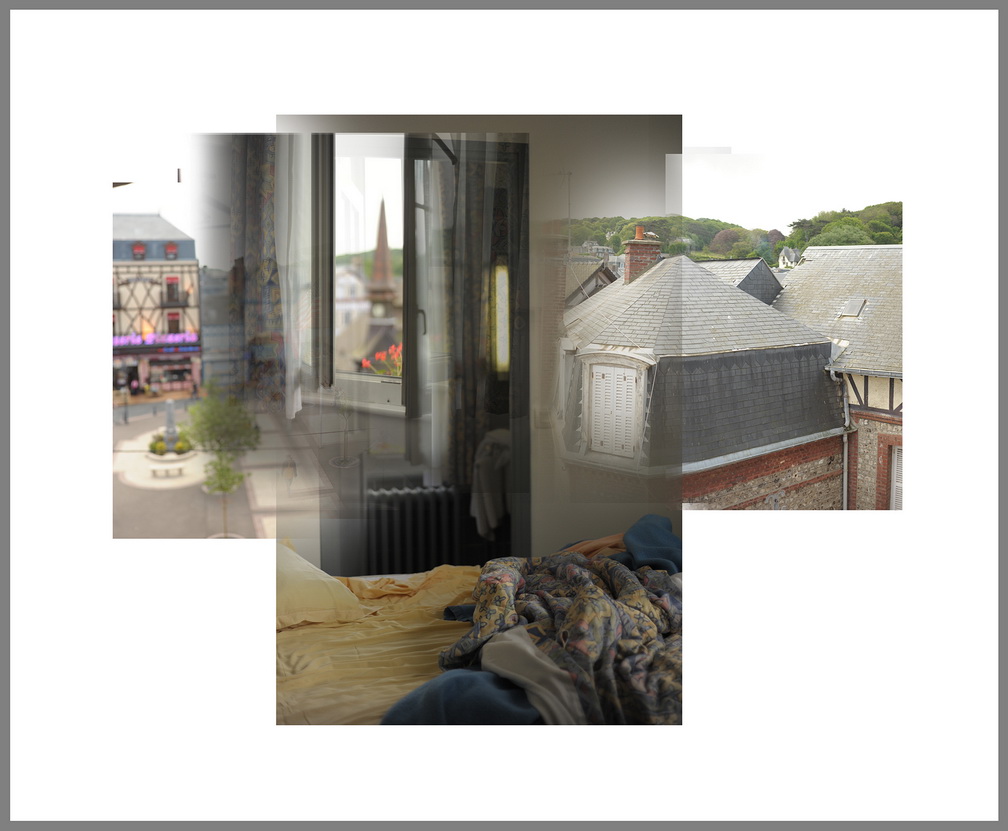
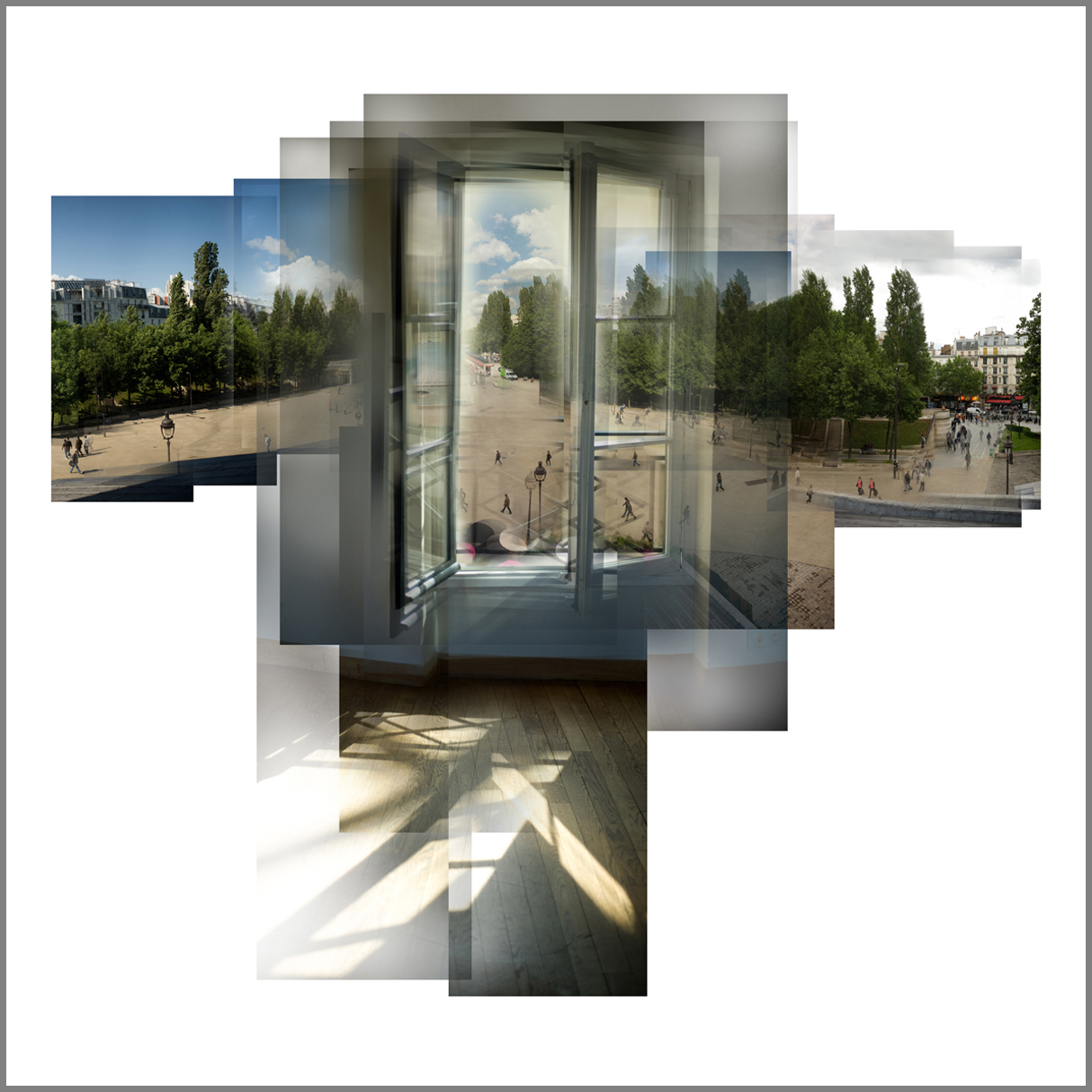
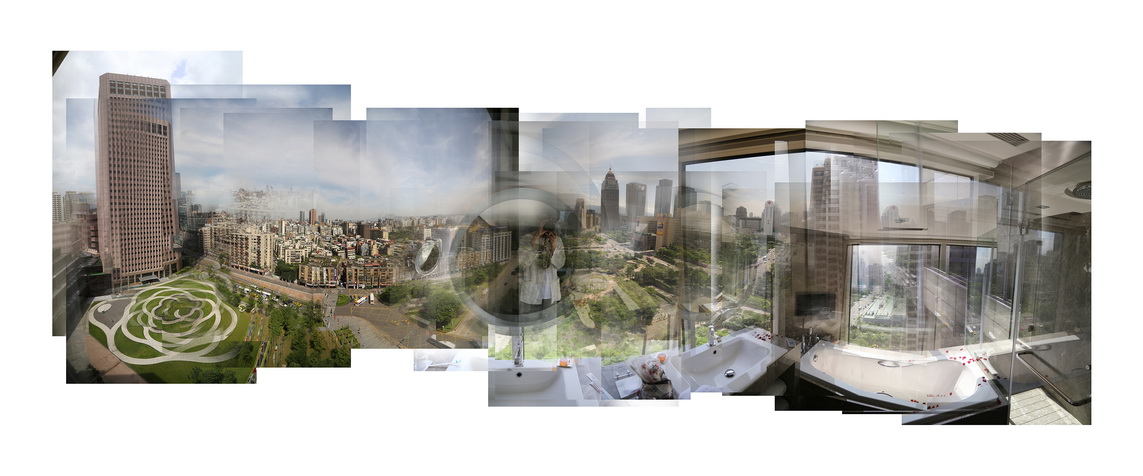
After 2009, entering a new creative vision – image post-processing, collecting photos recording living environments. From deconstruction to reconstruction through puzzle, collage, and overlapping reorganization, opening up a novel context, field, and panoramic vision. The first "Red Curtain" of the "Window, Clear Mirror, Perspective Series" was born. This series extends space and time, misplacement of light and shadow, displacement of environment, and drill of formal structure, creating a mysterious atmosphere of virtual and real that is intriguing. It is painterly, digital, and modern. The Window Series, divided into four main themes through the stacking and scattering of images: Inner View, Outer Exploration, Clear Mirror · Countryside, Clear Mirror · Paris.
Inner View: The painter calmly observes the context of his own living space, surrounded by his paintings and poems, standing or facing away from the audience, reading or meditating, elaborating on scenes of every daily life moment. "I Met Yesterday Series" seeks lost time, such as that person’s special day "Happy Birthday," "Inside the Window and Outside the Painting" within a painting, "Night and Poetry" reading by lamplight late at night. Outer Exploration: The mirror image of the painter’s existence. Outer exploration is all an internal mapping. Vision is not just field of vision; windows are no longer frames. Windows are the horizon for gazing at the sky. Seeing is a context. As space-time displaces and extends, "Gaze" inside the mirror and outside the realm, from gazing at the sky "Woman in Floral Dress," to the realm outside the realm "Disappearance" not being on site, turns out to be the same realm.
Clear Mirror · Countryside: Windows clear as bright mirrors, bright mirrors like the state of mind. Villages in the countryside are all inside and outside the windows. Buildings outside the frame cannot be contained, becoming perspective and structure "Light · Rouen Cathedral in France," overflowing with the painter’s emotion and consciousness "Lazy Morning · Normandy, France." The magnificent Mont Blanc, stretching across the panoramic vision, who is gazing before the window? Clear Mirror · Paris: Displaced and juxtaposed architectural scenery outside Paris windows stacked into a dreamlike light-and-shadow Paris. Rhythmic space-time extension forms a panoramic vision. Ah! Paris, scenery that cannot be framed, I am both inside and outside the realm "Open and Closed," "Paris · Melancholy," skylights mean an uncloseable heart "Sky Well." Memorial monuments "Cross Window Series": Vertically extended windows serve as the interface and subject between inside and outside, interlaced with horizontal urban scenery. Through the cross-shaped spiritually symbolic composition, the window is the doorway to heaven and a metaphor for crossing life and death, summoning a metaphysical implication.
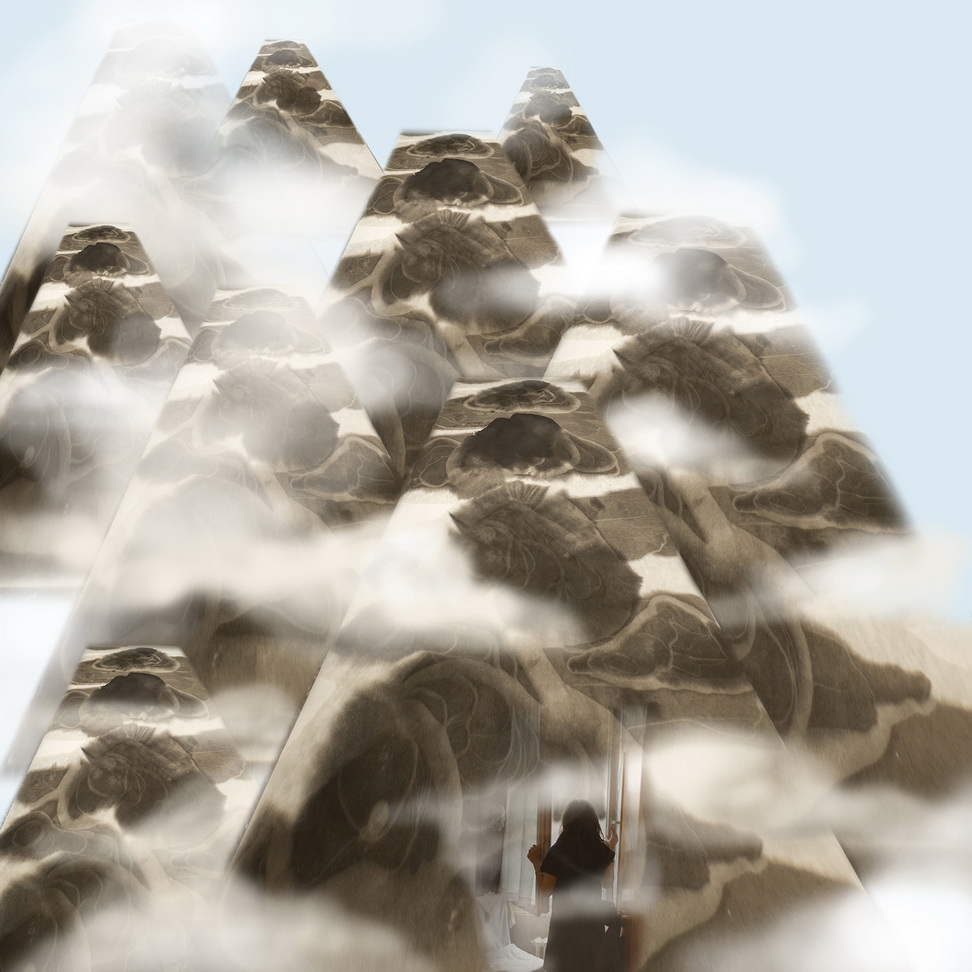
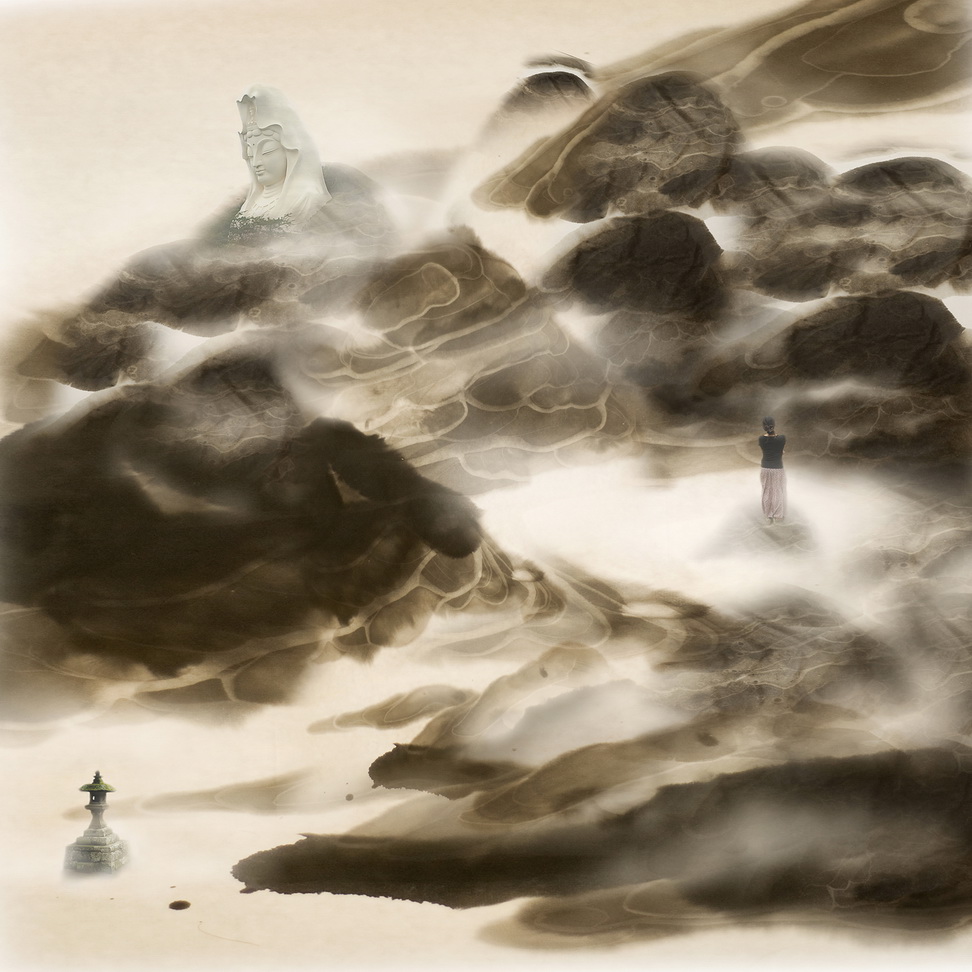
Contemporary Landscape Context "Seeing Mountains Not Mountains Photography Series" (2011–): Expressing emotion in landscape, contemporary photography "Seeing Mountains Not Mountains Series" theme comes from Chinese Zen Buddhist context. Its painterliness attempts to highlight the context and consciousness of Eastern people, full of postmodern signs. Appropriating traditional Chinese landscape paintings and through viewing paper folds, ethereal clouds, layered peaks, transformed into photographic images, then constructed through digital post-processing. Amidst the ethereal smudging of ink wash paintings, ironically adding modern figures, repeated synthesis on the same sheet or construction of different types. Brushstrokes are the expression of emotional spiritual energy. Deconstructing the boundaries of painting and photography, between photography and painting, reality and imagination, visible and invisible, classical and modern, rethinking post-modern post-ink aesthetics and sentiment in a contemporary context.
Recreating Eastern Context "Modern Landscape Painting Series" (2012–): Modern landscape painting comes from the expansion of the Folded Series. The painter discovered wrinkling methods similar to landscape paintings from the folds of clothes, peeking/explored the possibilities of contemporary landscape context. Influenced by the accumulation of dots by famous Qing Dynasty painter Gong Xian, geometric structure, and modernity, the "Modern Landscape Painting Series" instinctively and sensuously, unrestrainedly created free-writing cun (texture stroke) methods. Using oil paint and acrylic, linear and rhythmic characteristics, no trees or forests, only continuous, layered peaks. Emphasizing cleverly crafted layout forms and colors. Returning to local attributes and cultural heritage, recreating the artistic conception of Eastern ink wash painting. The artist says: "If you cannot find your god in daily life, then you will not be able to find Him anywhere."
Note 1: Camus Life Aesthetics edited by Diane K. Osbon, translated by Zhu Kanru, published by Lishu Publishing House, Republic of China Year 86. Note 2: Chang Chung-Liang Master’s French Thesis Text p4-5. Note 3: Window, Clear Mirror, Perspective Catalog Visit to the Ambiguous Space-Time of Flowing Folds - Chang Chung-Liang’s Unique "Non-Painting" "Non-Image" written by Wang Ya-lun. Note 4: Chang Chung-Liang Master’s French Thesis Text p3. Note 5: Window, Clear Mirror, Perspective Catalog Sun Wei-xuan article title. Note 6: Chang Chung-Liang Master’s French Thesis Text p11. Note 7: Cross Window 2012, October Paris Festival of Foreign Cultures as exhibited works elaboration.
At Zhuluo Mountain Taocheng 2015-04-05