Liu Yi-Lan – Finding the Truth of One’s Own Existence
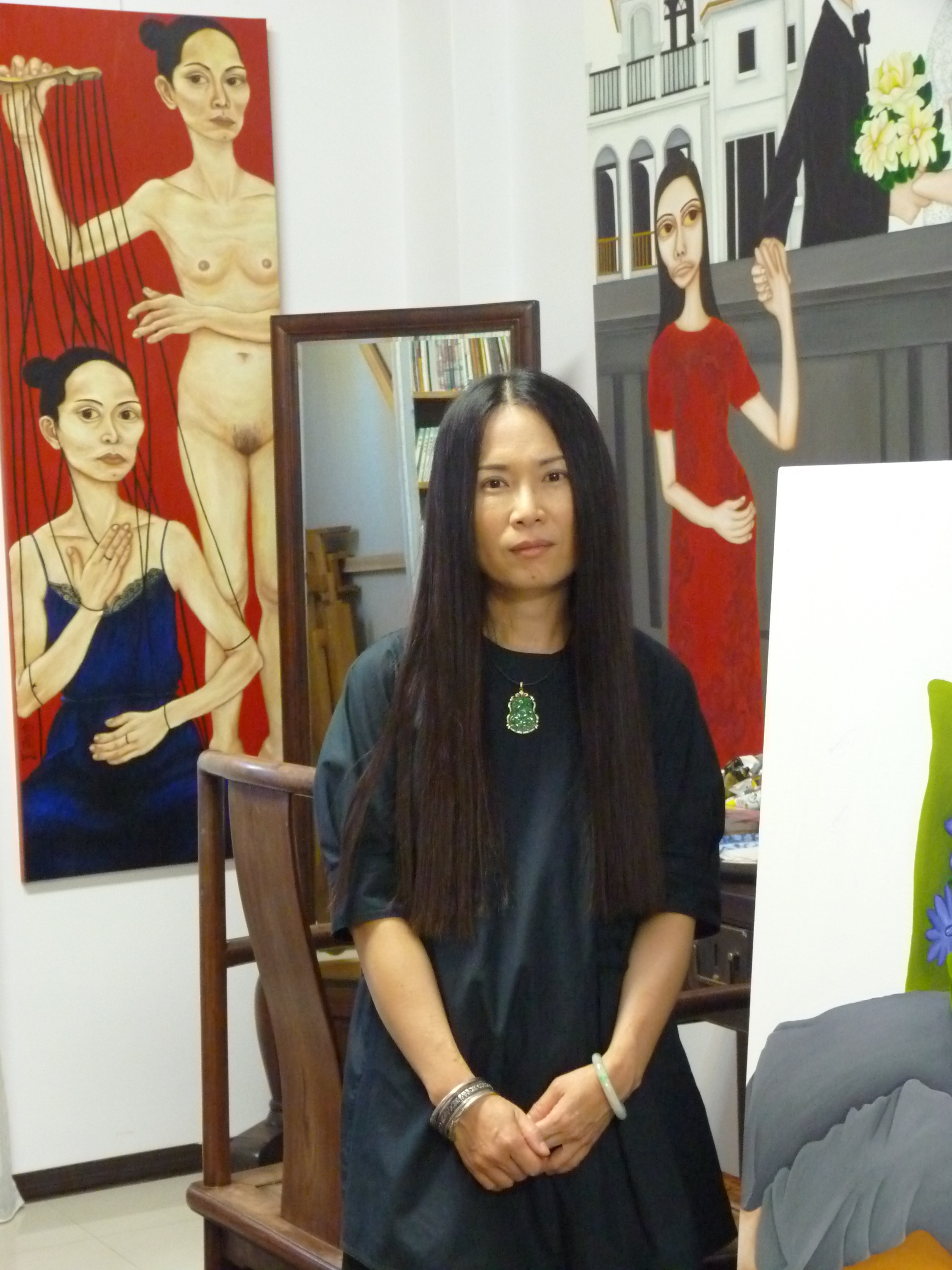
Portrait of painter Liu Yi-Lan - Photo taken in her Kaohsiung studio, 2015-04
![020 扶桑之三 [芙桑之三] 2011](https://s3.eu-west-3.amazonaws.com/titien.net-images/wp-content/uploads/2015/07/22135040/020-%E6%89%B6%E6%A1%91%E4%B9%8B%E4%B8%89-%E8%8A%99%E6%A1%91%E4%B9%8B%E4%B8%89-2011.jpg)
Text by Chen Chi-Hsiang / Images provided by the artist
“Everyone can only live their own life, so they must seek the secret of the garden within themselves” (Note 1)
Preface: Joseph Beuys’ famous quote, “Everyone is an artist,” indeed suggests that creativity is everywhere. As long as one affirms oneself as an artist, there is no doubt about it. However, becoming a master is not a momentary act but a lifelong pursuit. Creation requires persistence and challenge, along with high levels of passion, patience, and talent. In the current era, post-modernism and cross-disciplinary practices imply the limitations of academia and the dilemmas of institutionalization. Today, with the democratization of art, the debate between academic and non-academic backgrounds is absurd. Professionalism is not difficult; what is hard is achieving artistic height and constructing thought. Otherwise, being an artist is merely for joy, yet devoid of meaning.
Who is Liu Yi-Lan? Born in 1966, Liu Yi-Lan from Zuoying, Kaohsiung, is one of the most legendary painters in the Taiwanese art scene. Her works are characterized by deep emotion and profound depiction, radiating intense feeling and moving sentiment. Without formal professional art training, she taught herself diligently, delving into the thoughts of literature, art, philosophy, and humanistic trends, thereby finding greater vitality in her creation. She is obsessed with discovering the truth of her own existence and the various relationships surrounding her family and world. By deeply experiencing her own suffering and insights, she condensed her energy to explore who she is and why she exists. The native family influences a person’s personality the most; the elegy of abandonment and death became a heavy, shadowy confusion in her life.
When she was five or six years old, her parents divorced, and her mother abandoned her husband and children. In sixth grade of elementary school, her father fell ill. While caring for him, she also looked after her two younger brothers. At age twelve, her father passed away first, leaving the family broken and helpless. She relied on her second and third uncles to survive, raised by her grandmother, helping in her second uncle’s clothing shop to learn skills, and attending junior high school at night. Upon graduating from junior high, she married the husband of a bamboo shoot wholesaler across the street. Following her husband, she began selling sour bamboo shoots at the vegetable market, having to start business preparations at 4 AM every morning. After noon, she returned home to continue processing sour bamboo shoots while managing household chores. Her day was like a headless fly, busy until late. Life seemed to revolve endlessly, and her body became a battlefield of labor. As the eldest daughter-in-law, she bore both tangible and intangible pressures from the large family. Home became everything to her. Under the guise of seeking harmony, her heart found no peace, filled with dissatisfaction. Conflicts with her environment and society led to deep inferiority, pain, loneliness, despair, and physical and mental torment. Long-term panic, anxiety, and depression pushed her to the brink of mental collapse. Wandering through a life of suffering, “the older one lives, the more alienated one becomes.” After giving birth to her second child, she gathered immense courage to turn her life around, breaking free from the fate and imprisoned soul of traditional women.
Emerging from the Valley of Life: At age twenty-five, Liu Yi-Lan realized that only she could save herself. She bravely stepped out of wandering and suffering, breaking through the dilemma of existence. Joyce said in Ulysses: “If you can penetrate it with five fingers, even if it is not a door, it is an entrance.” She pondered deeply: Who is Liu Yi-Lan? What can Liu Yi-Lan do? “When people die—where do they go?” Experiencing existence and contemplating its meaning, the fragility of life, and what is eternal, she studied diligently outside of market hours. She read books, attended lectures, pursued further education, participated in reading groups, and took classes everywhere (studying with Teacher Chiang Hsun for over ten years). Touching the depths of her soul, she sought all possibilities of life, extensively reading her favorite materials, especially books on art and philosophy. She enriched herself from emptiness, transforming and growing through struggle. Often, struggle allows one to break through and transcend rational dominance, finding an exit for one’s own life.
Life took a turn in 1998, when Liu Yi-Lan reached a turning point—learning to paint from Teacher Chiang Hsun. His method of free learning inspired students without technical guidance or material restrictions. The first class, a “self-portrait” based on sensory instinct, involved painting without technique, reflecting the subconscious, liberating the self, and releasing energy, attempting to find the truth of self-existence over skill. Deeply moved by Kafka’s story of A Hunger Artist, she said: “Please believe me, if I had food like you, I would eat my fill and not disturb anyone (…)” (Note 2). She suddenly understood, “Because I cannot find the food I want to eat” (Note 3). She found redemption in painting; what she could not obtain in reality, she found solace in her paintings. Outside of work, she devoted herself wholeheartedly to the world of painting. Potential comes from energy deep within the heart; art became the spiritual food that comforted her soul. Painting was the tempering of her own life’s foundation. Through the transformation and sublimation of art, she found herself, bravely being herself, and fearlessly welcoming challenges. Art became her life’s faith. Campbell said: “Art is to take you out of your own tangled wings” (Note 4), towards the free soaring of the soul. Yi-Lan bravely did herself, a woman chasing dreams, dreaming her dreams and completing herself through painting. Jiang Xun said: “She is a flower blooming magnificently on the island of Taiwan. Her self-reflection and self-completion as an Eastern woman have invaluable significance.” (Note 5)
The Style of Liu Yi-Lan’s Painting: Liu Yi-Lan’s painting style is delicate and sensitive, highly feminine, emphasizing literary, anecdotal, narrative, and storytelling qualities in the secular world. Moving from representational depiction to essential expression, her stylized figures have no special expressions, featuring angular faces, a symbolic black mole on the chin, cartoon-like exaggerated big eyes and mouths, expressing a unique emotion. Cold, melancholic, and thin cheeks, varied face shapes, and meticulously styled hair shape the characters’ faces and plots. Referencing classical patterns with modern cuts, luxurious clothing is a kind of life, contrasting with facial expressions, representing the current state of existence. Eileen Chang believed life is a magnificent banquet; loving beauty is women’s nature, and luxury becomes a sign of existence. Delicate decorative elements fully express feminine traits.
Vivid colors and luxurious clothing present the personalized lives of the characters. Decorative clothing (not sweet) becomes a metaphor for social class, while antique furniture signifies family ethics and class symbols. She persists in strong emotions and existential awareness: expressive images, stylized shapes, color planes, flatness, patterning, and bold composition. Rich, bright colors become expressions of emotion and symbolism. Decorative brilliance is synonymous with luxury and a social metaphor. She is quite bold with color, possessing high sensitivity and overflowing sensibility. She prefers contrasting flat blocks of color, devouring them with gusto. She said: “I like black; black is the most fastidious color. I like white; white is a cooperation without assimilation, an uncompromising stance” (Note 6). Lines construct the body of the painting; unique colors transform into the soul of the characters. Titles carry thought and concept, faintly desolate and beautiful, refreshing the heart, powerfully highlighting elegance, grandeur, and vividness, becoming Liu’s unique painting style.
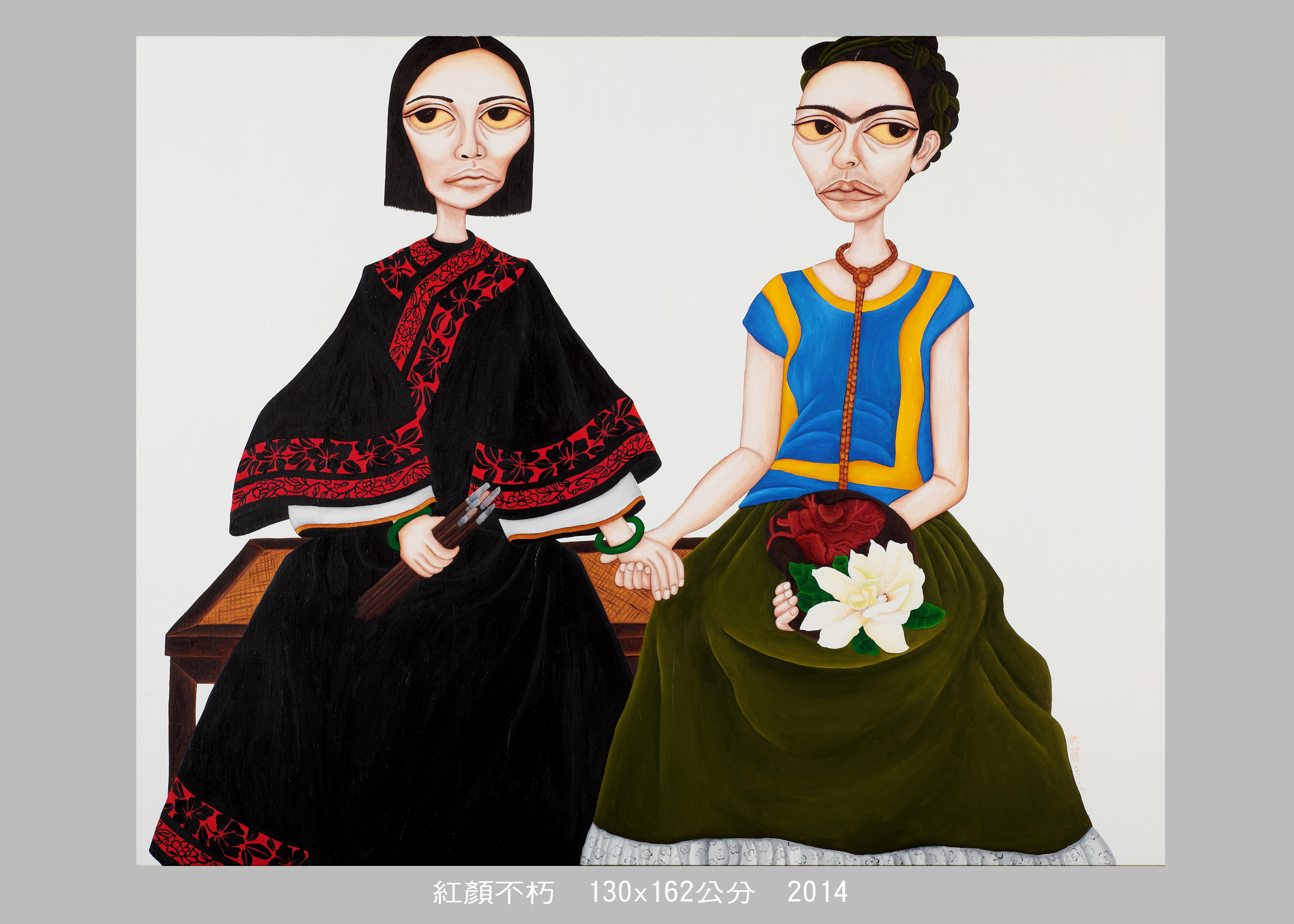
In Liu Yi-Lan’s paintings, one smells a deep-seated melancholy, even amidst gorgeous and stunning colors of clothing and flowers. Poetic coldness and sorrow become her unique taste. Strong existential awareness possesses the unique tolerance/inclusiveness of Eastern women, along with Confucian humility and wisdom. Her paintings rival Frida Kahlo of Latin America and Georgia O’Keeffe of the USA. From Kahlo, she found the truth of her own existence (“Red Beauty, Unlucky” (2014) proves this); in the sparkling Taiwan flower series, she calls out to O’Keeffe’s favorites.
Liu Yi-Lan’s entire creation begins with self-contemplation from a vast life, moving to relationships between people, people and society, from internal self-analysis to her environment, finding the meaning of life. She said: “My works exist revolving around ‘the survival issues of humans,’ touching ‘the essence of human life’ to raise questions, expressing ‘thinking humans’ humbly and proudly.” Next: “I believe painting is not just visual meaning, but a carrier of thought and concepts. I believe: no matter how quickly external art trends change and differentiate, exploring the essential issues of life still exists because of humanity” (Note 7). Yi-Lan’s creation focuses on humanism—figure paintings. Mostly, she appears in makeup herself, extending to close family members, husband, son, mother-in-law, wife, mother, grandmother, and social others. Another mirror of the soul—the Taiwan sparkling flower series constructs a symphony of consciousness formed by her overflowing emotions.
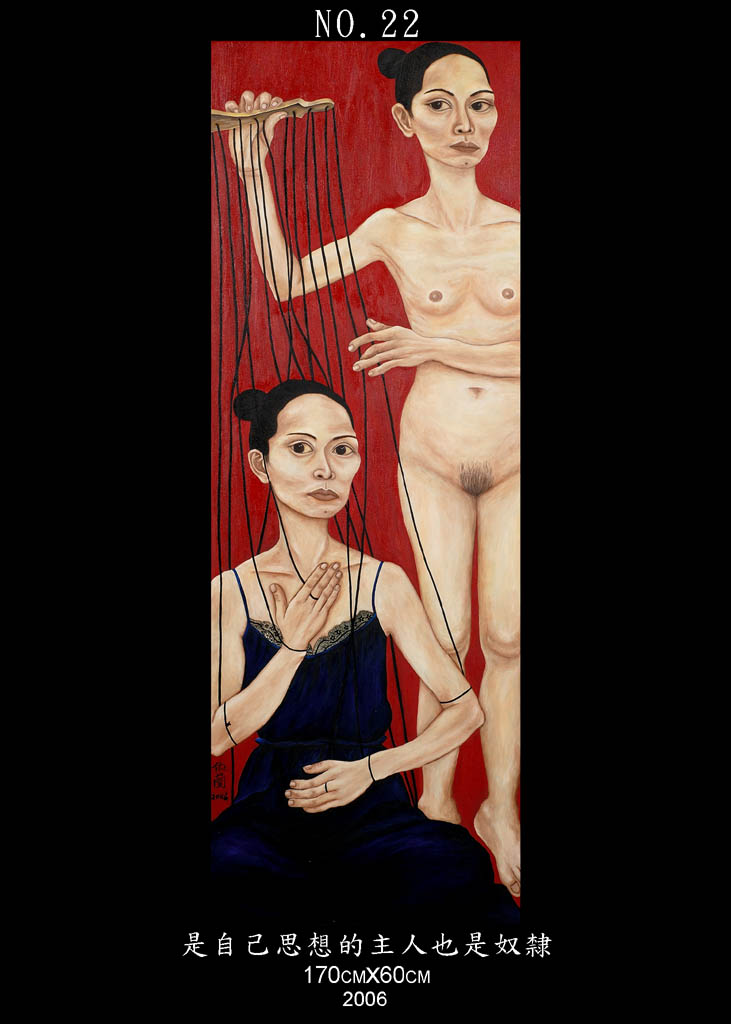
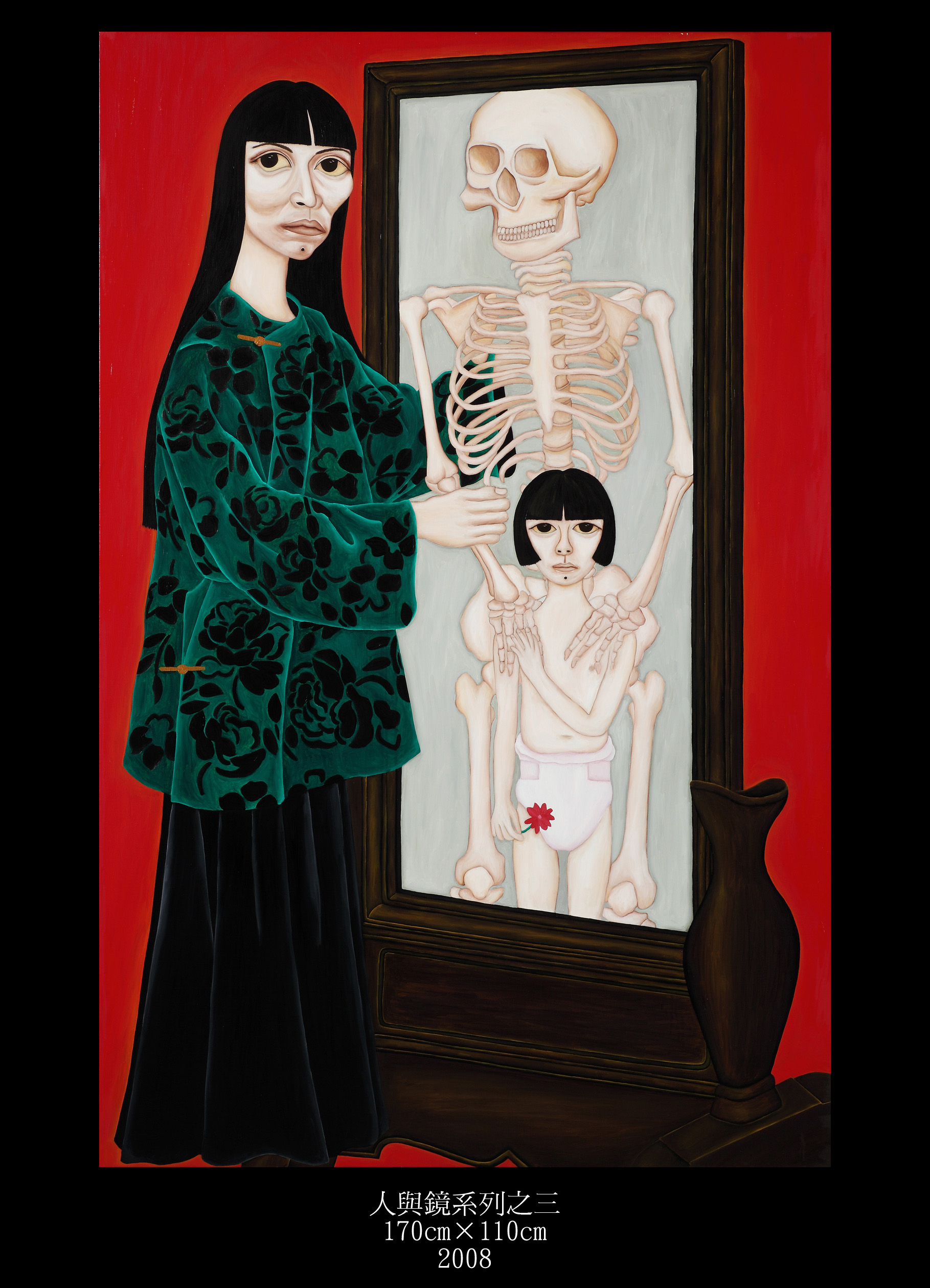
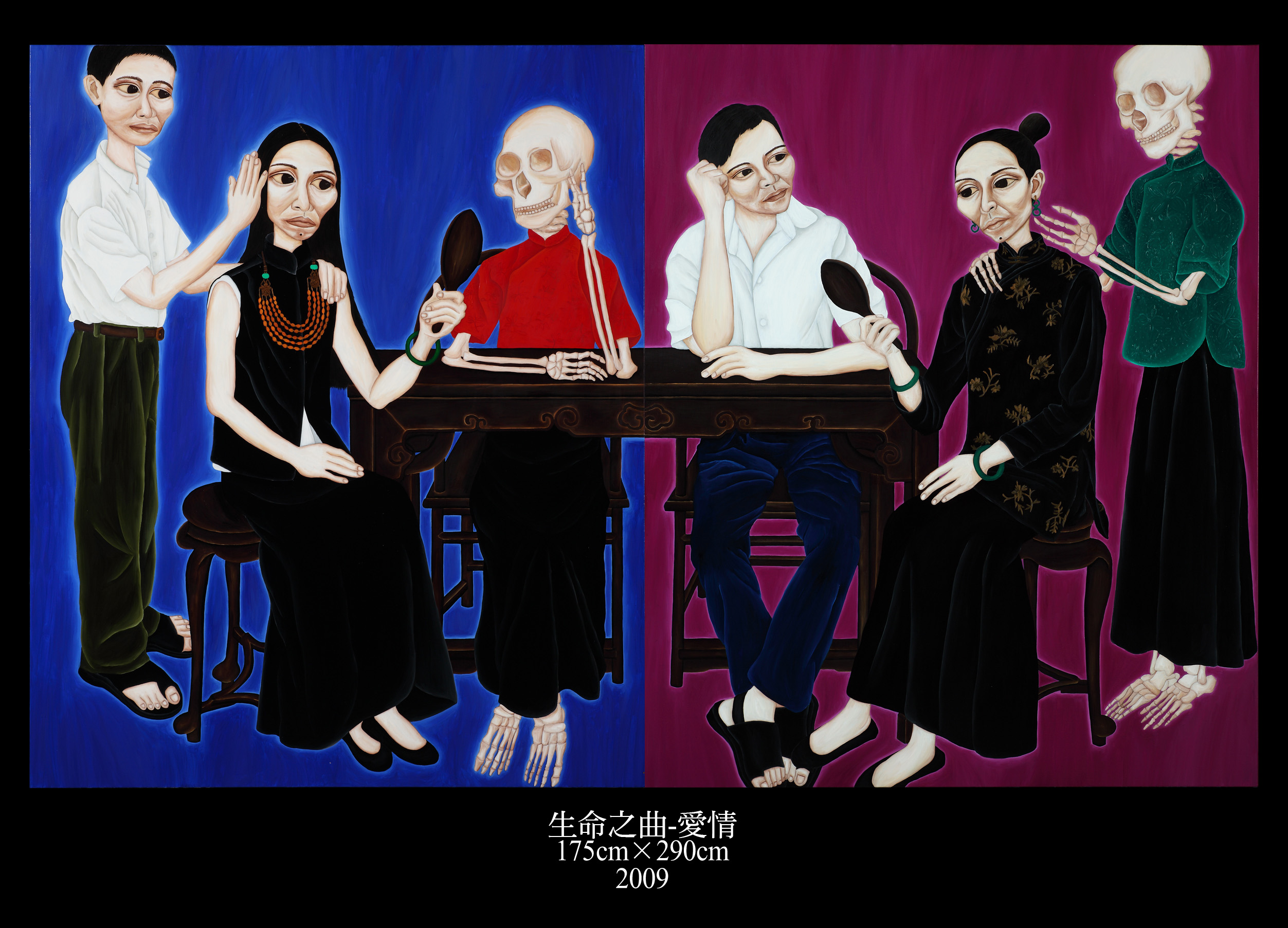
Finding the Truth of One’s Own Existence – Self-Portrait Series: Liu Yi-Lan’s artistic output is autobiographical painting. Starting with self-portraits in 1998—self-contemplation, recording, analysis, discovery, healing, reconstruction—she seeks the secret of the garden within herself, saving her soul in the painting, and finding the truth of “self” existence and life’s meaning. Joyce said: “As long as one looks at each thing seriously and attentively, it can be a door leading to the gods’ eternal luck.” Moving from representational depiction to essential expression, “The Initial Self” (2000) depicts a drifting lonely soul in darkness, a panicked face, sincerely expressing the hesitation, melancholy, loneliness, and confusion of her inner self at that time. The ideal self “Dressed in Black” (2002-07) wears black clothes, sitting on a brown wooden chair, with a Modigliani-style elongated body, color planes, affirming self-image through contours. “Completing Myself with Painting” (2005) is naked, attempting to find the truth of her own existence. Double self-portrait reveals “Master and Slave of One’s Own Thoughts” (2006), realizing the master of life—thought, showing the situation of existence at that time. Existential portrait “Death and Rebirth” (2005) describes her personal experience of witnessing the suffering of women’s life and death during pregnancy, fetal death in utero, and cesarean section. “An Artist’s Love and Desire” (2007) sees the formation of Liu’s style, with dramatic multiple self-portraits and family members acting out a play of human life, death, joy, sorrow, love, desire, emotion, and regret. The illusory “Man and Mirror Series” (2008) presents a context of self-contemplation via mirrors, transcending reality across time and space, conveying a subtle consciousness of life. “Melody of Life Series” (2009) presents diverse scenes where the whole family appears in makeup. “Love for Life and Death – Taiwan Dream – God Bless Our Land” (2010) shows the painter praying for Taiwan personally, strongly expressing her abundant emotions and consciousness.
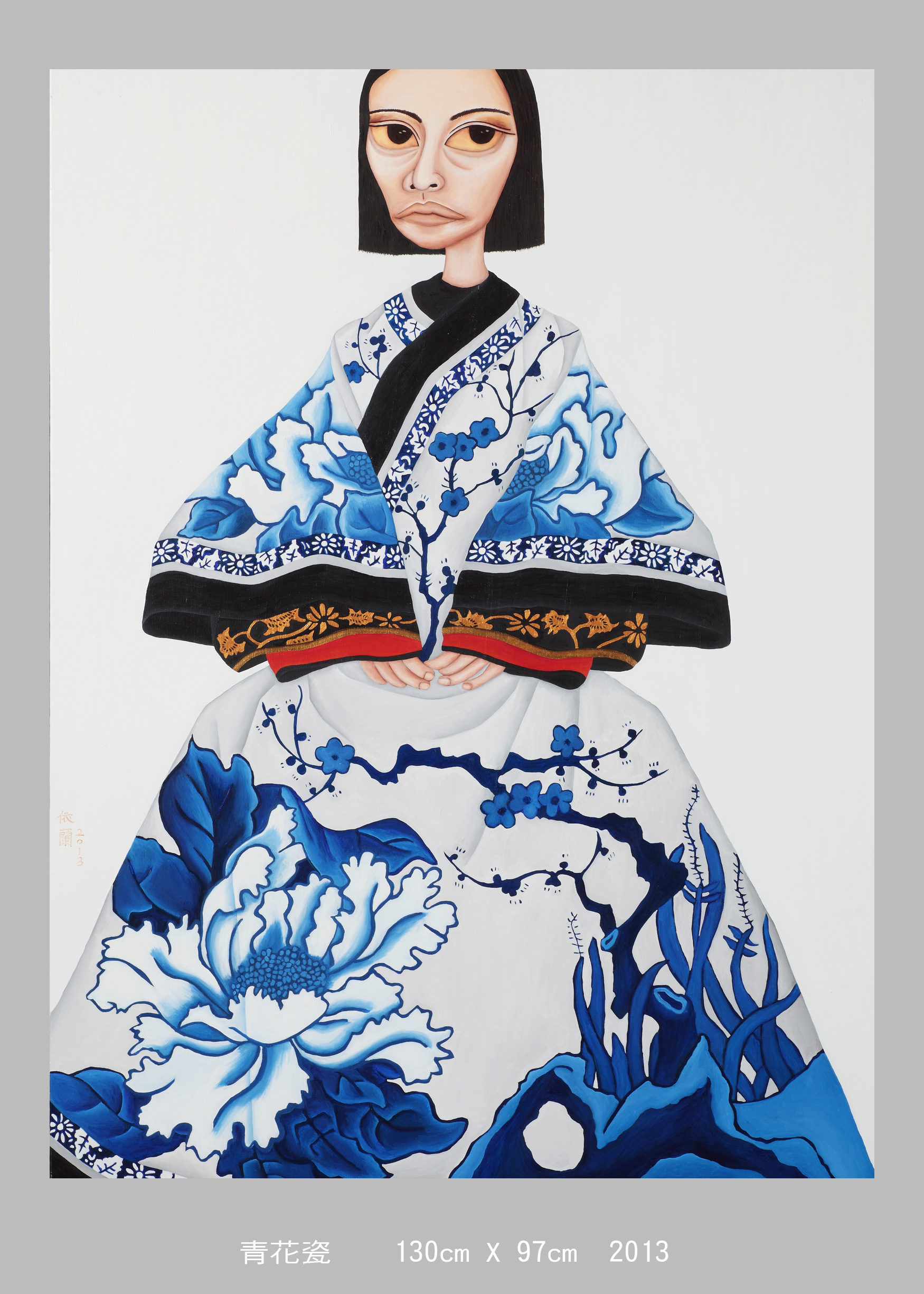
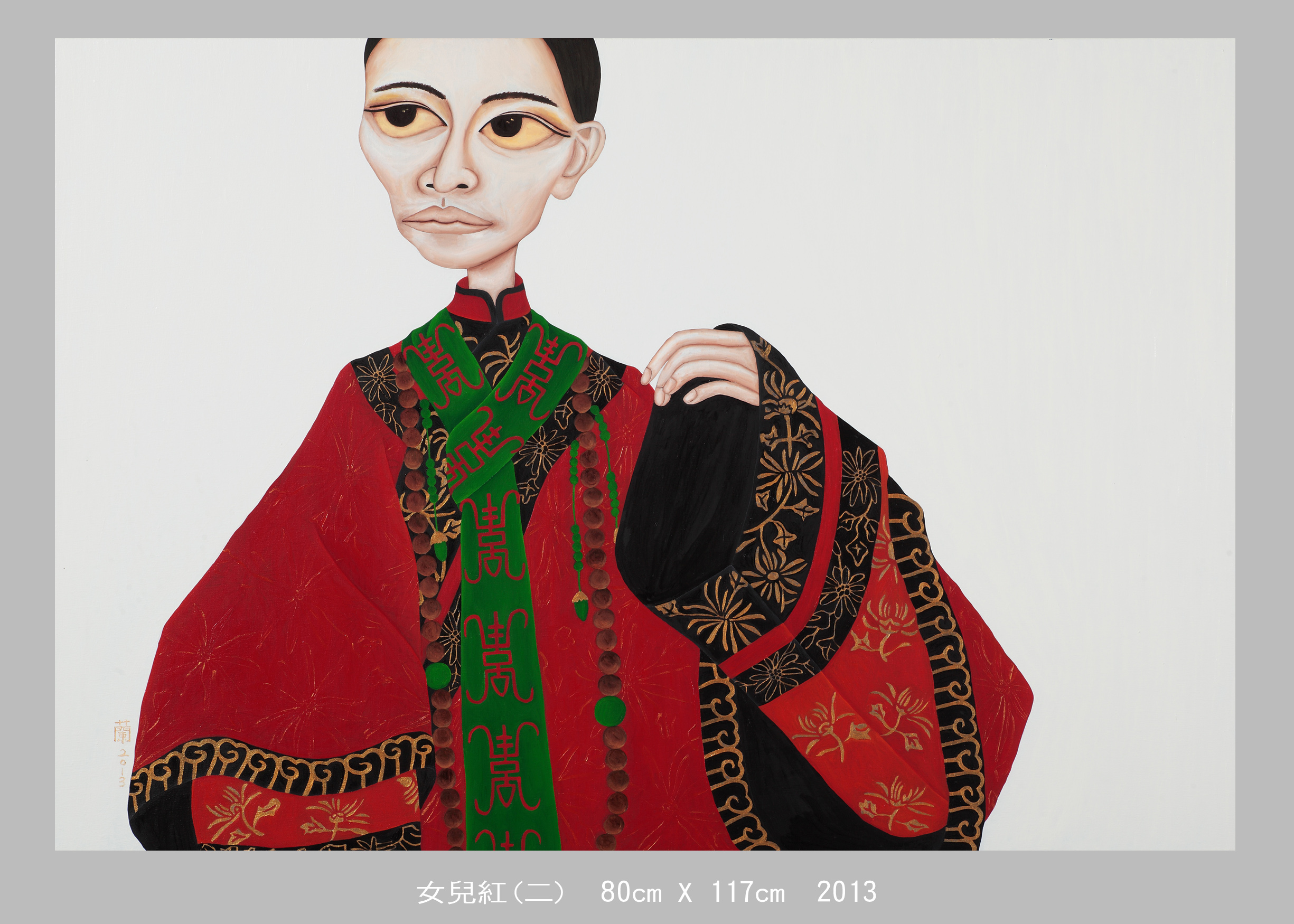
Metaphorical “Daughter Red” (2011) (three versions) features a self-portrait wearing a red classical opera robe. Yi-Lan explained: “If I were a jar of wine, what kind of wine would I be? Of course, Daughter Red.” Daughter Red symbolizes the father’s pearl, blending familial love and romantic love. When a woman wears red, it means she is getting married; marriage is a woman’s expectation for the future (Note 8). “Blue and White Porcelain” (2013), “Black and White,” and “Daughter Red” (2014) show the same posture and clothing with three hairstyles, poses, and gazes. Blue-white, black-white, and fiery red luxurious makeup are full of decoration. Color-plane flowers and flying phoenix patterns, brilliant and luxurious, signify the awakening of female consciousness. But under the splendid attire, the bewitching body disappears; clothes become a display of vanity for social class. The luxurious red robe implies the bondage of emotion and family, or blue-and-white porcelain becomes social decoration. It questions whether women, after self-liberation, willingly fall into the abyss of emotional and familial bondage. She moves from naked self-inner analysis to delicate and keen observation of human nature and visual beauty, returning to the deep essence of human nature. Self-portraits are her dancing with her own soul, conversing with herself, embracing herself in loneliness, entering the interior to seek the secret of the garden.
The Soul of the Land – Taiwan Flower Series: On the beautiful island, flowers bloom magnificently, born and living here. They symbolize land consciousness, striving to bloom the most beautiful flowers regardless of the environment. Each colorful and brilliant flower comes from the mystery of existence. Under the relationship between flowers and the painter herself, they become a metaphor for local existence. The flower series is Yi-Lan’s other mirror of the soul: “When I started hoping, I didn’t know if I could possess it? So I preserved a posture to tell the story, thus, longing begins to spread, from the first flower to the last. Suddenly, in a blink, it becomes a sky full of red, weeping and complaining, at the beginning of spring…” (Note 9).
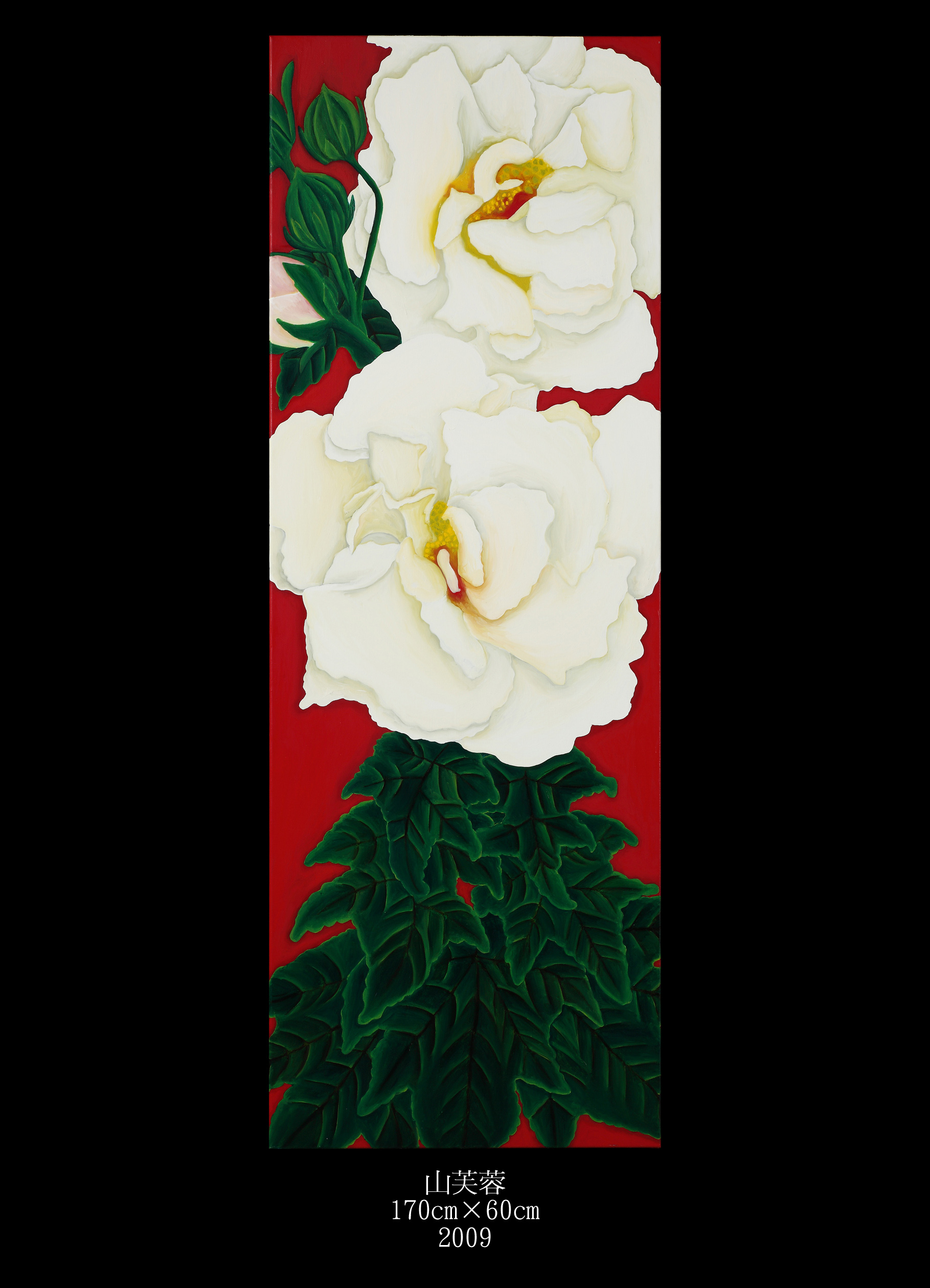
Native flowers of Taiwan are the emotions and rhythms of local seasons, climate, and temperature. Flowers are the soul from the land, indicating the gentle and pleasant face of life in Taiwan. Each flower language has its unique reference: “Sunflower” (2006) faces the light to find the direction and meaning of existence; “Bougainvillea” (2007) represents wild and unrestrained power; blooming “Wild Lily” and “Hime Lily” (2008) are pure aesthetic beauty of natives; “Hibiscus” (2008 and 2011) red papaya is full of vitality; “Calla Lily” (2008 and 2011) is the beauty of loneliness; “Hippeastrum” demonstrates the poetry of self-existence; “Iris” implies the entrustment of the soul; “Costus” is the fresh fragrance of the wilderness; “Allamanda” is pieces of brilliant sunshine; “Canna” (2009) is vivid red, more charming than people. Concise and powerful shapes, color planes, and unique structures, she uses vivid contrasting strong colors to boldly confront the essence of flowers, demonstrating their tenacious vitality. Between figurative, imagistic, and abstract, she expresses local emotions, consciousness, energy, vibration, and fragrance of the sparkling Taiwan, metaphorically representing the vigorous and lush vitality and consciousness of the beautiful treasure island.
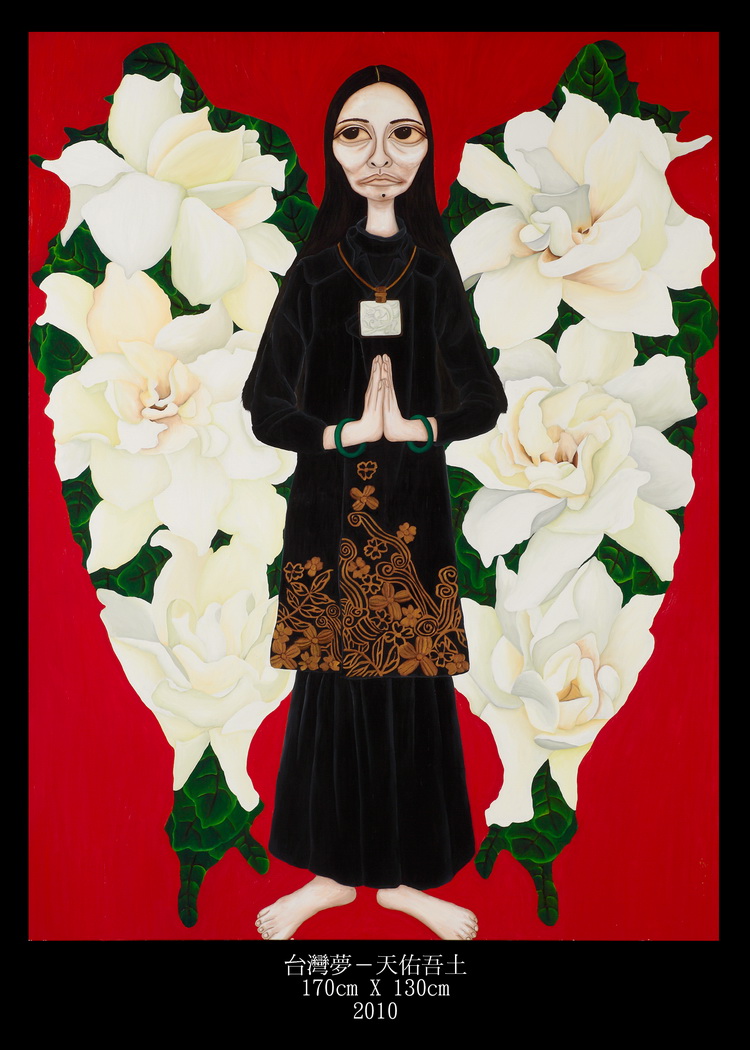
The Call of the Land – Taiwan Dream Series: People living in this beautiful island homeland care for this land in different forms. Painter Liu Yi-Lan is no exception. The “Taiwan Dream Series” is her expression of emotion and consciousness for those born and living on this land. This series presents two symmetrical maps of Taiwan—ruling and opposition ways—with figures arranged in the middle, forming like butterflies. Awakened sentiments: butterflies mean fortune stacked together, also implying free soaring. Magnificent and brilliant butterfly wings metaphorically represent the fertile land, its beauty, and sorrow. “God Bless Our Land” (2010) shows the painter’s figure with palms joined, sandwiched among competing gardenias, guarding the Taiwanese people blooming magnificently, expressing strong emotion for the land, sincerely praying for blessings for this land. “Deep Plowing Condenses Hearts” (2011) features red hibiscus, indicated by a family hugging each other. Living on this beautiful island (like a family) requires deep plowing and condensing hearts to bloom beautiful flowers. “Guarding Life and Death” (2011) is covered with vibrant daily periwinkles, using a skeleton holding a baby to symbolize being born as a Taiwanese, dying as a Taiwanese soul. The painter stated: “Two Taiwans symbolize political checks and balances, but the social movements of political parties are not the focus of painting I want to convey. The land is the mother that nurtures us. I hope this island can have deep-rooted cohesion and bloom beautiful flowers. As a painting creator, I must propose a perspective to view this world and present my own style. Therefore, I still use feminine writing to cut into my expectations and love for this land. God bless our land, Taiwan Dream! I pray for favorable weather, national prosperity, and peace.” (Note 10)
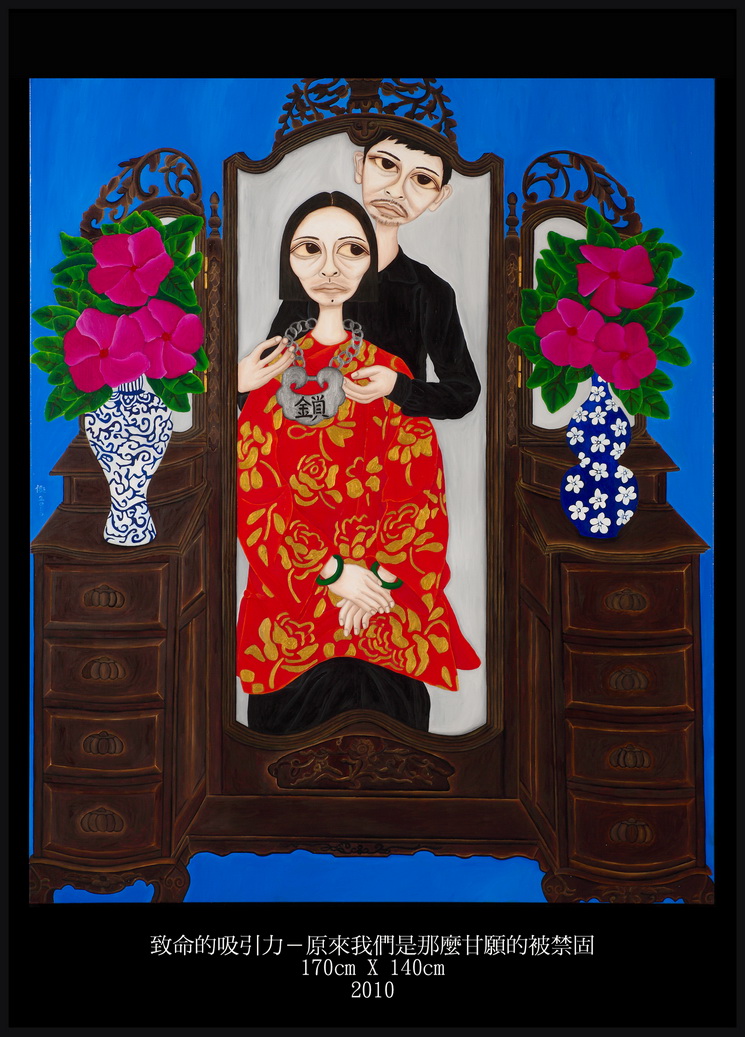
Magnificence in the Human World and Red Dust: Love is the most beautiful in the human world; it comforts people’s souls. Familial love intertwines with difficult-to-part-with strong emotions. Love in the red dust (secular world) is bewildering and has a fatal attraction, making it hard to extricate oneself. The “Fatal Attraction Series” is the awakening and reflection of female painter consciousness, regarding insights/experience of current social love and marriage. “Originally We Were So Willingly Bound” (2010) love is pledging oneself to a vow, love is giving the other party a pair of wings to soar freely, but in deep love, are we so willingly bound? People willingly bound are not just love, but also fame, profit, and power. “Successive Truths” and “Love, Originally So Troublesome” (2012) explore gender relations and the essence of emotion, depicting complex entangled human relationships, the mistress incident, the love-hate of wealthy families, happiness after storms, and liberation from worldly dust.
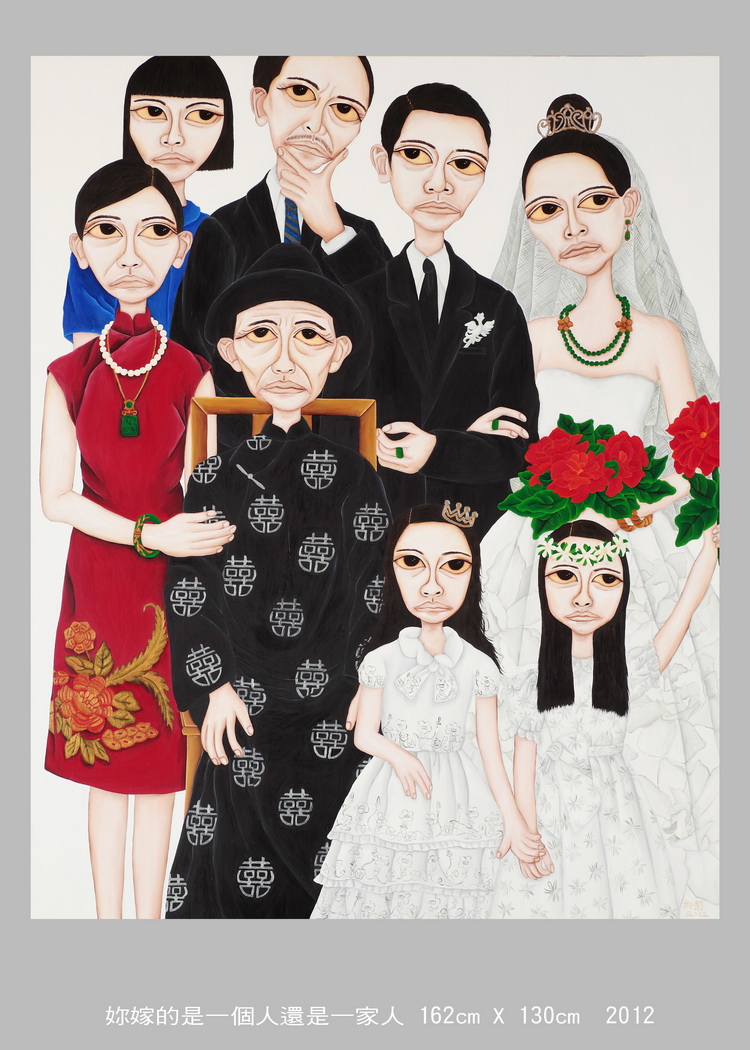
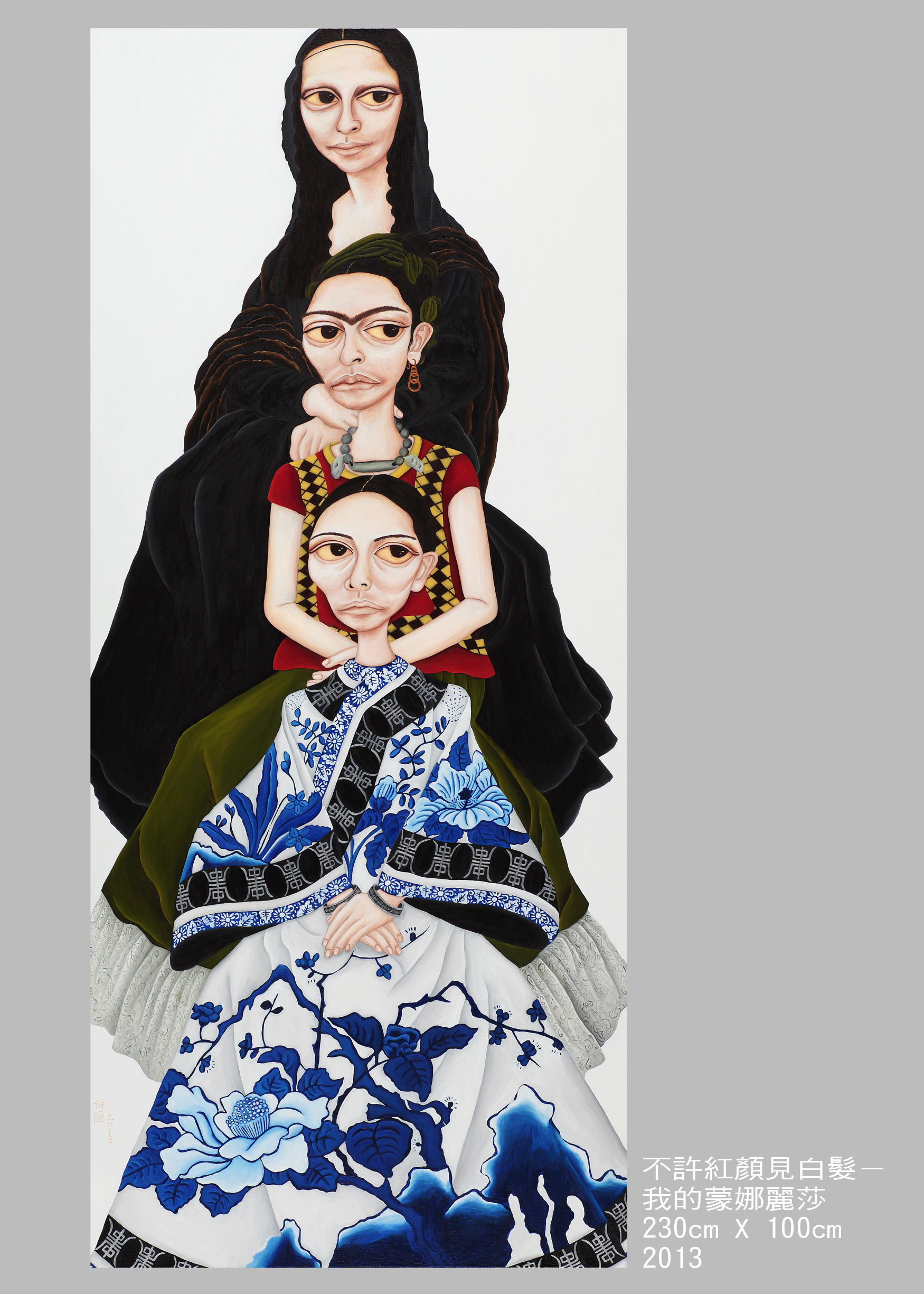
Exploring the twists and turns between mother-in-law and daughter-in-law in life, “Did You Marry a Person or a Family?” (2012) shows the pressure on the eldest daughter-in-law under traditional family shackles, male superiority and female inferiority in large families, showing the subtle relationship between women, family, and mother-in-law/daughter-in-law. Home becomes a shackle for women. “Her Name Is Mother-in-Law” (2013) sighs at traditional families, female suppression and desire for power, depicting the voice of traditional Taiwanese women, showing the painter’s endless doubts about her realistic situation. Furniture in the paintings is the symbol of family ethics and class; objects are more real than history. Under traditional ordinary social roles—as the father’s pearl, husband’s wife, mother, and daughter-in-law—she does herself through painting. “Boiling into a Mother-in-Law” (2013) is a metaphor for time, the presentation of years, an extension of self-portraits, from young girls, marrying to become wives, to having grandchildren, experiencing the arduous march of life becoming a mother-in-law. “Fragment” (2014) is the continuation of the life march, traversing time and space to express life processes through existential fragments. “Let Not Red Faces See White Hair – My Mona Lisa” (2013), within the unbreakable classic beauty of civilization, from Western paradigms to the unlucky Mona Lisa of civilization, Kahlo of South America bravely doing herself, and Liu Yi-Lan finding the truth of her own existence, lined up from top to bottom, expecting Asian-Taiwanese civilization to bloom. “Red Beauty, Unlucky” (2014) shows the painter holding hands with Kahlo, affirming self-consciousness, metaphorically symbolizing that human life is immortal due to art.
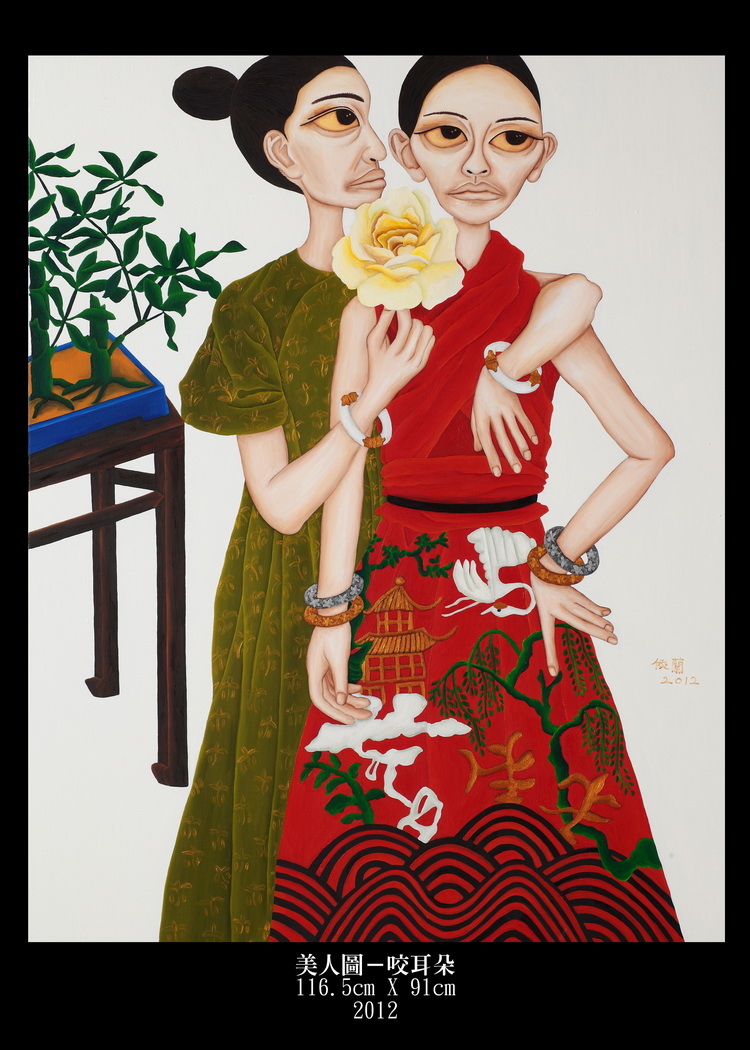
The modern “Beauty Portrait Series” borrows the Twelve Beauties of the Qing Palace, symbolizing elegant Qing culture, to refer to contemporary women’s activities. What are modern women doing? Whispering “Biting Ears” women share private emotions with women. “Between Square Inches” women’s leisurely life hobbies—playing mahjong. Full of wisdom, “Taming Husband Record” shows that only love can access the mystery of winning a husband’s heart. “Reading on the Couch” (2012) is necessary and inevitable life growth for women—reading. “Growing Thinner with Silk Belts, Yet No Regrets” (2013) paper people become a satire of contemporary symbols of beauty.
Narrative Titles and Paintings – I and the Greater Self: Every painting by Yi-Lan is a sentiment, observation, narration, full of literary quality and capable of telling stories, plus intertwined emotional narrative titles: Natural life may be hard to describe, but reflected life is vividly visible (Note 11), such as “The Initial Self” (2000), “Completing Myself with Painting” (2005), “Master and Slave of One’s Own Thoughts” (2006), conveying a subtle consciousness “Man and Mirror Series” (2008). Sentiments of life “Daughter Red” and “Blue and White Porcelain” (2013), social care and insight “The Essence of Love Has Nothing to Do with Gender” (2010), “We Cannot Know the Truth,” novel-like titles “Fatal Attraction Series,” “Did You Marry a Person or a Family?” (2012), “Her Name Is Mother-in-Law” (2013), exploration of life truth and meaning “Melody of Life Series” (2009), “Far from Inverted Dreams” (2010), “Let Not Red Faces See White Hair – My Mona Lisa” (2013), “Red Beauty, Unlucky” (2014).
Yi-Lan’s paintings—all “Self-Greater Self,” the others in the paintings are exactly like self-portraits with her own image. No wonder some say they are all her self-portraits. Indeed, “What we see is not things themselves, but ourselves” (Note 12). Inner and outer unity, others are projections of the greater self image. All beings’ appearances are my appearance; the world is a mirror image of self-existence. Universal compassion, all people, all animals and plants, are ourselves. Immortal works are calls from the depths of the soul. The ultimate meaning of art is to find the hometown of life. Campbell said, “All forms in life are imperfect; only in art can one see glory in imperfection” (Note 13). Ernst Cassirer believed, “Artworks are the intuition of human nature and inner life, manifested in the sensible form of images. In the aesthetic intuition of pure form of artworks, people can see themselves and also see the whole world.” Jung said, “Every life is a whole or self-realization. For this reason, this realization can be called ‘individuation.’ All lives are closely connected to the individual who realizes it. Without the individual, life cannot be imagined. However, each individual has its own destiny and purpose; as long as this is realized, life has meaning.” (Note 14)
Note 1: Campbell’s Aesthetic p190, edited by Diane K. Osbon, translated by Zhu Kanru, Litu Publishing House, published in ROC Year 86. Note 2: Liu Yi-Lan Interview Record - 2015-04. Note 3: Liu Yi-Lan Interview Record - 2015-04. Note 4: Campbell’s Aesthetic p364, edited by Diane K. Osbon, translated by Zhu Kanru, Litu Publishing House, published in ROC Year 86. Note 5: Flowers Blooming on the Island - Introducing Yi-Lan’s Paintings, Jiang Xun 2008 Catalog. Note 6: Liu Yi-Lan Facebook. Note 7: Gazing Fixedly - Liu Yi-Lan Solo Exhibition, Xinyuan Gallery 2015 Catalog. Note 8: Liu Yi-Lan Interview Record - 2015-04. Note 9: Chasing Dreams in Mirrors - Liu Yi-Lan Solo Exhibition Catalog p35, Gaoyuan University of Science and Technology Arts and Culture Center, 2009. Note 10: Liu Yi-Lan Interview Record - 2015-04. Note 11: Self in the Mirror: A Way of Seeing Liu Yi-Lan, Text by Chen Shui-Cai, Splendid Red Dust Catalog, Xinyuan Gallery 2013-11. Note 12: Letting Go of Opposition, Meeting the Joyful Inner World P124, written by Richard Rohr, translated by Wang Shumei, Qishi Publishing. Note 13: Campbell’s Aesthetic p376, edited by Diane K. Osbon, translated by Zhu Kanru, Litu Publishing House, published in ROC Year 86. Note 14: Campbell’s Aesthetic p95, edited by Diane K. Osbon, translated by Zhu Kanru, Litu Publishing House, published in ROC Year 86.
Written in the Flower City – Paris, 05-06-2015