Zeng Yongning: After the "Wildfire" Spreads, "Blooms" Cover the Land
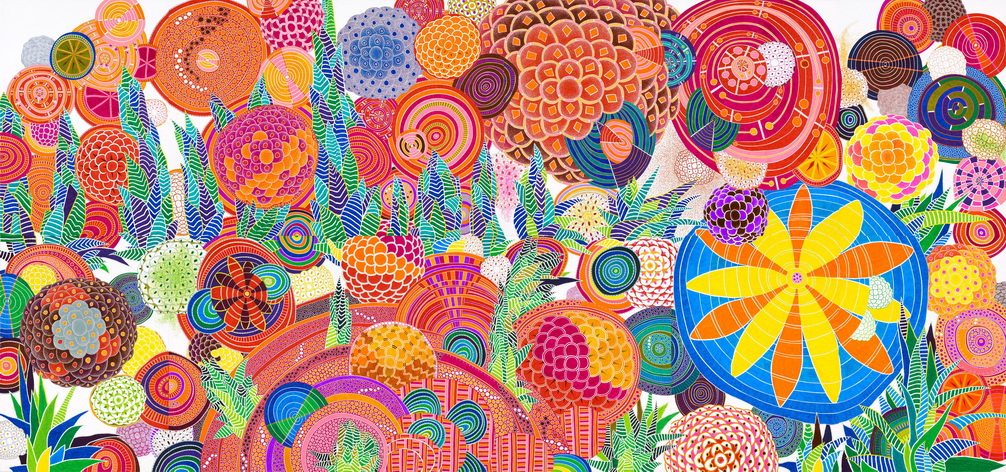
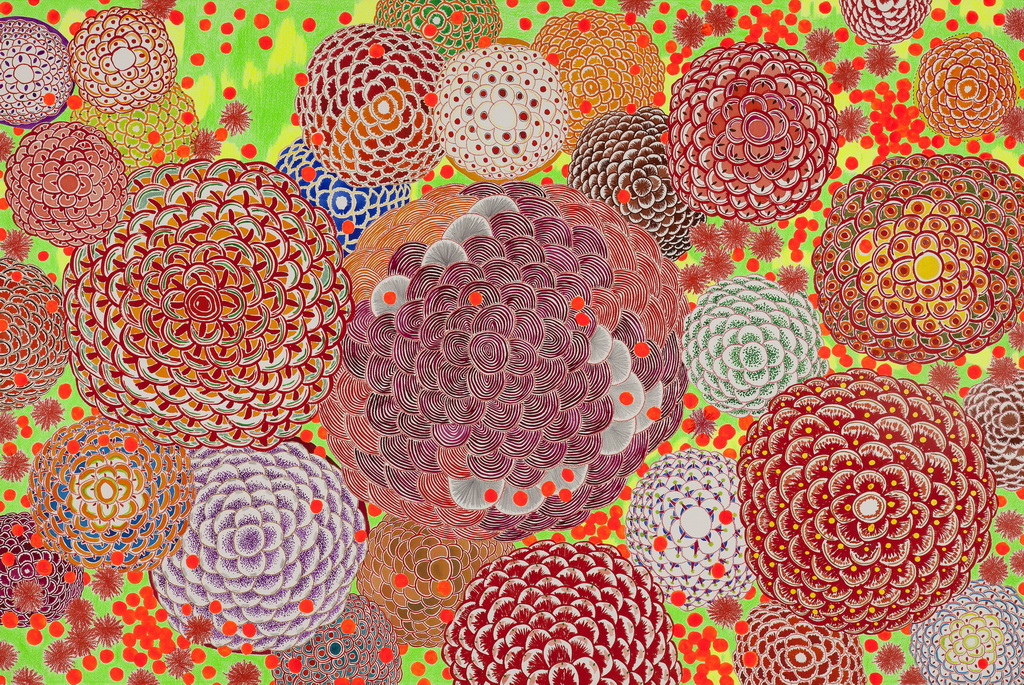
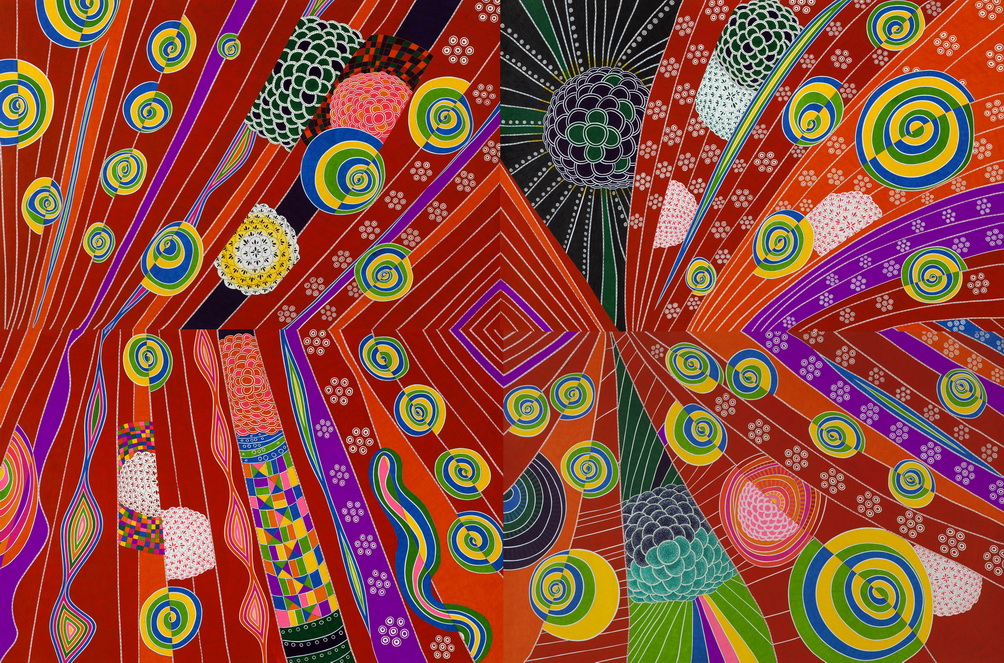
Original Landscape 01 215x450cm 2010 Ballpoint pen Paper
Text and Photos by Chen Chi-Hsiang
"Image is a feeling; color is an argument."
Foreword: Zeng Yongning is one of the most dazzling figures among Taiwan’s new generation of two-dimensional painters. Renowned for his radiant, original ballpoint pen drawings, he explores new tools and painting vocabularies under the spirit of modernism. Focusing on paper sketchbooks, his creation spreads like a "wildfire" born of primal passion, eventually blooming into "flowers" everywhere. His inspiration stems from traditional folk arts, colors, and decorative motifs of his homeland. The myriad forms and brilliant colors construct a kaleidoscopic, dazzlingly decorative style filled with local energy, consciousness, and resonance. Graphics represent the intensity of will; color becomes the temperature of emotion. As he says, "Image is a feeling, color is an argument," or "Image as body, color as soul." His shimmering visual effects reveal a delicate, optimistic, rhythmic aesthetic of joy. The "blooming" mandalas serve as the alchemy of the painter’s life, carrying his rich emotions and spiritual consciousness.
Artistic Enlightenment and Key Figure – Father: Zeng Yongning (born 1978 in Lukang) was born into a family with deep cultural roots and traditional craftsmanship. His grandfather was a craftsman specializing in altar table carvings, and his father worked in interior decoration while also being an amateur photographer (shooting reportage photography starting in 1978). Influenced by this environment, Zeng loved doodling and drawing from a young age. He often accompanied his father on photo shoots, learning by observing. In middle school, his father upgraded to a large-format Hasselblad camera (135 format), which he gave to Zeng. They went out shooting together. Moved, the artist recalled, "My father shot with the big camera, I shot with the small one" (Note 1). Pressing the shutter captures the moment of observation and feeling, teaching him delicate observation of nature—not just form, but especially color perception—heightening his sensitivity and sensibility, changing how he viewed things and deeply influencing his future artistic creation.
Since 1987, his father focused on photographing Lukang, the town where he was born and raised, fully documenting its environmental changes. He held two solo photography exhibitions in Taipei. Once, while photographing in Lukang, he coincidentally met young painter Chen Lai-Xing sketching outdoors, which left a profound impression on Zeng. His father photographed Chen Lai-Xing sketching and visited his studio for the first time, expressing amazement and sharing advice from his own father: "If you want to be an artist, you must be serious. I will fully support you" (Note 2). This sparked Zeng’s initial desire to become a painter. His father became his most important mentor and key figure.
Guidance on the Artistic Path: Zeng originally intended to apply to Fuxing High School of Arts. During middle school holidays, he went north to art studios to study but found it difficult to adapt to standardized technical training. At Zhushan High School’s art department, he was deeply influenced by his art teacher, Guan You-Fu, who introduced him to modern art. Guan was a student of Li Zhong-Sheng, emphasized automatic techniques of the subconscious, and was an outstanding modern abstract painter. This liberated his young mind and consciousness. He began studying Western master albums, recognizing world-famous paintings, which expanded Zeng’s artistic vision and knowledge. Attempting to intuitively find patterned symbolic concepts became the foundation of his creation.
For three years in high school, he immersed himself in painting and photography, neglecting academic subjects. Following teachers’ advice, he applied to the Oriental Institute of Technology’s two-year visual communication program. Visual design allowed him to understand form and structure more broadly and brought him closer to art. Studying in remote areas, going up mountains and down to the sea, he developed a special affection for natural ecology and environment, jokingly comparing himself to a "wild man." He gained preliminary understanding of artistic and natural beauty. After graduating from the two-year program, he stayed in his hometown, Lukang, continuing to pursue his desired artistic path. Living at home, he diligently explored ink painting for six years, actively participating in Changhua County ink painting competitions (from selection to first prize) as self-affirmation. He applied to the newly established National Taiwan University of Arts but failed for three consecutive years (first to third cohort). However, the more he faced setbacks, the stronger he became. Finally, in 2005, he was accepted by both NTUA and NTNUA, choosing NTNUA.
During his time at NTNUA, he was called a "wild man," knowing only how to paint his own work. He focused on creation while neglecting academics, creating a large gap; he knew nothing about art theory. Fortunately, he met benefactor Lin Xian-Jun, who helped him understand art theory in plain language. In 2000, he broke free from ink painting and tried a new medium: ballpoint pen drawing. This new attempt pioneered ballpoint pen combined with watercolor. Between 2004 and 2005, he focused intensely on ballpoint pen painting, immersing himself in massive, continuous production to explore personal symbolic patterns. 2005 marked a turning point in Zeng’s art. Suggested by friend Cai Bing-Xun, he held a solo exhibition in the NTNUA hallway before applying to NTNUA. His unique ballpoint pen drawings attracted the curiosity of teacher Li Zhi-Wen, who became his first collector. This affirmation and encouragement shaped his creative direction. That same year, he won the Li Zhong-Sheng Award, becoming the youngest recipient in history (at 28), establishing his artistic confidence and forming his identity as an artist. NTNUA stimulated greater creative energy, consciousness, and vision. Throughout holidays, day and night, he hid with classmates in the library basement space (Di Mei Guan) to create seriously for three consecutive years, laying the foundation for his unique personal (ballpoint pen) artistic style.
Under the guidance of teacher Chen Shih-Ming at NTNUA, he observed, thought, lived, and experienced life, sincerely discovering himself. He deeply experienced existential consciousness: "Use your own methods to pioneer your creation," and "Before becoming an artist, one must first learn to be a human" (Note 3). In 2007, he won the ACC Scholarship. He took a year off, traveled to China and Japan the following year, broadening his horizons and enriching his future creations. He graduated from NTNUA after five years. In 2010, he participated in a residency in Guilin, China, meeting teacher Su Guo-Qing (who had lived long-term in New York). The next year, resident artists held a large group exhibition in Shanghai, where he met art world friends from both northern and southern China and Taiwan, opening new artistic visions and stimulating creative energy. Since then, he frequently participated in international group exhibitions, gaining opportunities for deep observation abroad. In 2012, a residency in Toulouse, southern France, allowed his creation to transform and mature.
Magic within the Limitations of the Ballpoint Pen: Traditional sketching uses pencils and charcoal or other monochrome media; oil or acrylic on canvas is orthodox. Modern art adds special materials; avant-garde art revolutionizes art, breaking through material constraints and expanding possibilities. Painting in modernism was considered rear-guard and declared dead. Post-modernism or post-post-modernism holds that nothing is impossible. Art creation has never been more open. Painting has risen from the dead. Painting innovation is no longer a prerequisite for artistic exploration. The new generation continues to explore the possibilities of painting through new materials. New media textures always bring new artistic visions and styles.
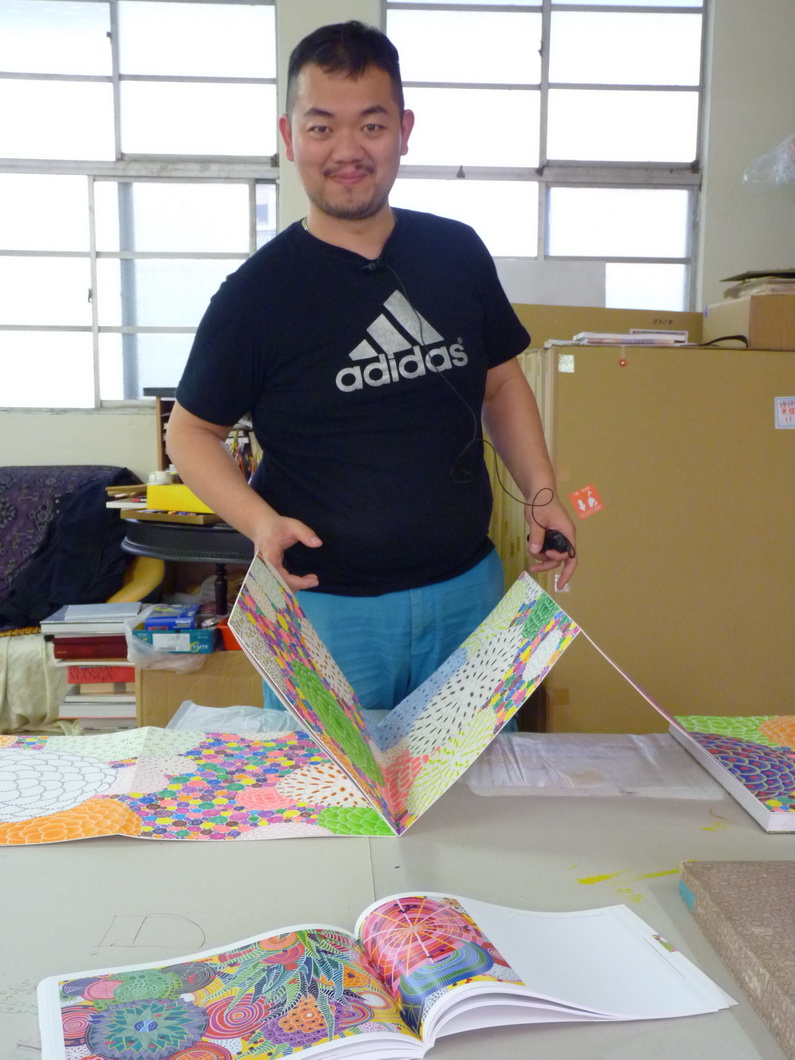
To update painting, one must update tools and materials. Zeng Yongning broke free from ink painting in 2000, mixing it with the familiar, convenient writing tool—the ballpoint pen—which became his primary expressive tool. New tools bring new possibilities for painting, uniquely creating his stunning ballpoint pen style. Ballpoint pens have fine lines but are limited by their inability to mix colors, create gradients, or modify. However, their brilliant and gorgeous color systems give the painter infinite imaginative magic and possibilities. Their delicate elegance and intense brilliance cannot be replaced by other materials. Detailed depiction of scenery, multi-layered overlapping lines weaving myriad forms, complex graphics constructing dense spatial surfaces, interconnected to form the painting’s subject. Ballpoint pen drawings are full of handmade texture and grain, resulting from intensive physical labor. They test the painter’s carefulness and patience. In intuition, instinct, and sensibility, they express the painter’s sensitivity and passion. The painting becomes not only an outlet for energy but also a method for refining the heart. The artist said: "The painting process relies on the continuous repetitive movement of the body, releasing internal energy. This process settles the mind. Potential waits to be stimulated under long-term physical consumption. A test of willpower transforms through art into personal inner spiritual redemption and emotional sustenance" (Note 4). Now, besides ballpoint pens, he adds colored markers, ink, or acrylic paints. Soft and hard pens complement each other, enhancing vitality and creating new feelings. He continues to seek new tools and materials, exploring new methods to expand the possibilities of new painting vocabularies.
How a Painting is Born: Zeng Yongning’s creation has no fixed stance, composition, beginning, or end, nor does it follow a plan or limit itself to frame size (it can extend infinitely). Paintings begin with feeling. He can work on two or more simultaneously. Under subconscious automatic techniques, starting from edges or core, unrestricted by the canvas, he wanders and sketches in all directions. Step by step, stroke by stroke, points and lines repeatedly advance into planes. Flowing with feeling, he shapes graphics—a flower, a cell, etc.—which then grow or reproduce one by one until filling the entire canvas. One follows another, series after series. Open-ended creation begins with intuitive feeling, randomly discovered, capturing immediate awareness at any moment. As the pen enters the creative state, he can paint conveniently every day or repaint. He can let go anytime without restriction, repeatedly delving deeper without tiring. In every state, he intuitively observes form and color. When smooth and free, it is complete. Sometimes he places a rest symbol, pauses for a while, quietly observing changes and waiting for natural formation. Creation often involves multiple works simultaneously, completed under integrated feeling.
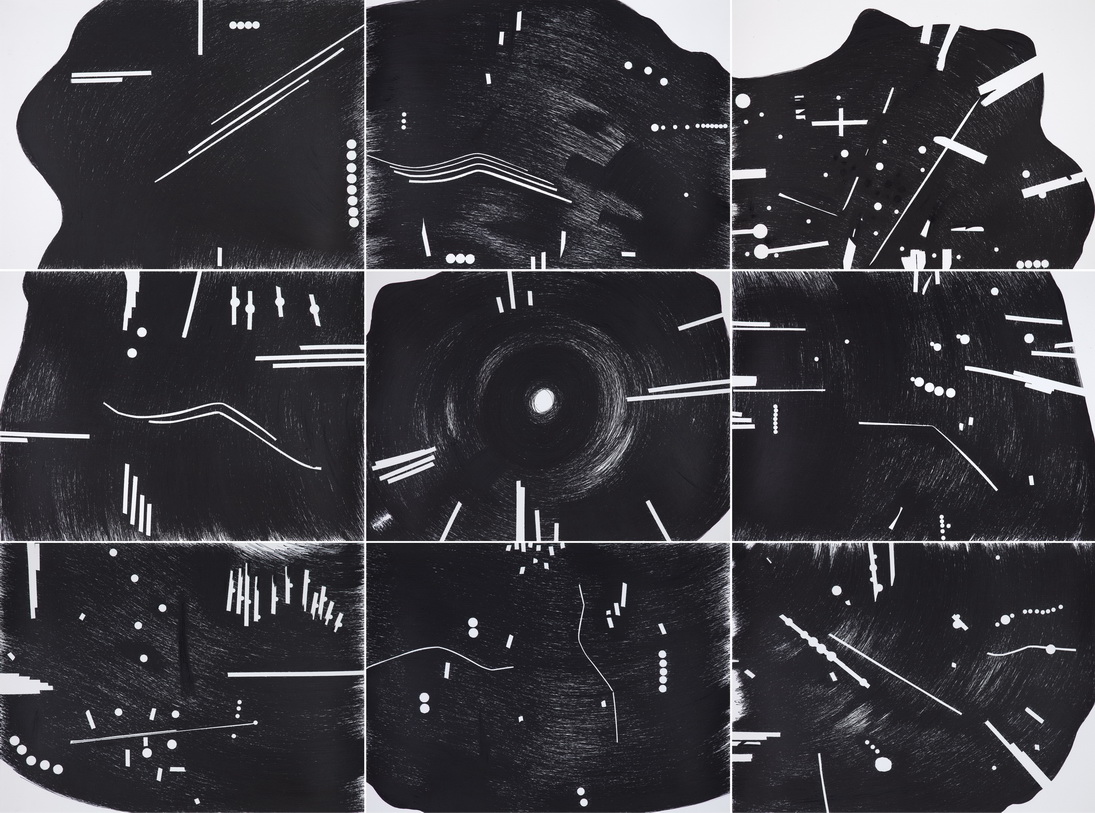
After the "Wildfire" Spreads, "Blooms" Cover the Land: Overviewing Zeng Yongning’s creation, it divides into two major types: Colorful and unrestrained graphic series—all flowers, gardens, environments, kaleidoscopes, etc., constructed through diverse symbolic interweaving, leaning towards decorative natural imagery. Expressive monochrome series—painting spaces and landscapes such as red-themed "Wildfire," "Flaming Mountain," "Fire Seed," and "Red Light"; deep blue-themed "Starry Sky" series; and abstract black-themed "Loop" series, carrying spiritual consciousness. Flowing with awareness, sometimes wild and colorful, sometimes calm and introverted. Thus, colored and monochrome works alternate.
Encouraged by winning the Li Zhong-Sheng Award in 2005 and inspired by entering NTNUA, Zeng launched massive creation. Starting from his emotional connection to the land, he developed the "Wildfire" single-red series through subconscious processes. Bright red is the symbol of fierce fire, the image of fire in hot air, depicting scenes of wind blowing grass (waves) in a fluttering rhythm. Rough, emotional brushstrokes layer different halo levels and scenic rhymes, expressing the painter’s intense inner emotions. "Wildfire" is the result of exploring natural flora and the gesture of holding the pen (holding the core of a ballpoint pen). A passionate "wildfire" spreads. From depiction to 2012’s bright red series expression, it shapes patterned "Red Wood": repeatedly circling the central circle, presenting the posture and time density of years. Structural carving of white fissures enhances rhythm and imagination. Fiery and outward "Fire Seed": the entire space is filled with saturated red dots of varying sizes, mutually dependent, contrasting red and white waves, full of kinetic energy and visual tension, highlighting the consciousness of life. Delicate "Campfire on the Prairie" is exactly opposite to "Fire Seed," leaving white dots of various sizes on a red background, poetic and picturesque like the cosmic starry sky, giving infinite room for imagination. Bewitching "Red Light" is the result of restraining wild (fire) nature, appearing as a divine light in the rosy sky and spacetime. Blurred "Red Flower Fire" comes from the ripples of "Wildfire 42."
The Wildfire series unintentionally opened blooms, leading to the birth of the "Wild Man Garden Series." This series originates from the primitive imagery of "flowers" in Austronesian fields. Lively flowers blooming individually, quiet yet seemingly rigid. After painting over ten pieces, "Wild Man Garden" was liberated and renamed "Primal Rhythm" (2008-2011) under Teacher Qu’s suggestion and Zeng’s realization. Entering a mature creative stage, welcoming the spring of creation and blooming season, he unleashed the most beautiful, colorful, and gorgeous hues of the human world, letting flowers cover the hills. Flowers and circles interlace and stack one by one until complex clusters overflow and gorgeous color structures fill the space. Though crowded, it is full of vitality, kinetic energy, and consciousness, constructing an extraordinary Rococo grand style. Singing and dancing musical rhythm and melody forms shine together, glamorous but not vulgar, full of joyful shimmering decoration, dazzling and bewildering. Blooms turn into Eden, revealing the imagery of earthly paradise, pointing to existential spiritual consciousness.
"Primal Rhythm" is Zeng Yongning’s most representative masterpiece. Entering the colorful flowering season of creation, the entire canvas is radiant, overflowing with large and small blooming flowers and circular fruit-like imagery. With overlapping front and back shapes and color distribution, it forms an organic order space. Homogeneous large compositions continue to extend endlessly beyond the border. Shimmering contrasting colors and dazzling light, along with musical rhythm, become optimistic and progressive energy, displaying the dazzling, colorful sensory experience of the city (neon lights or disco). It expands a lively new vision of color and light, constructing his personal gorgeous artistic vocabulary style.
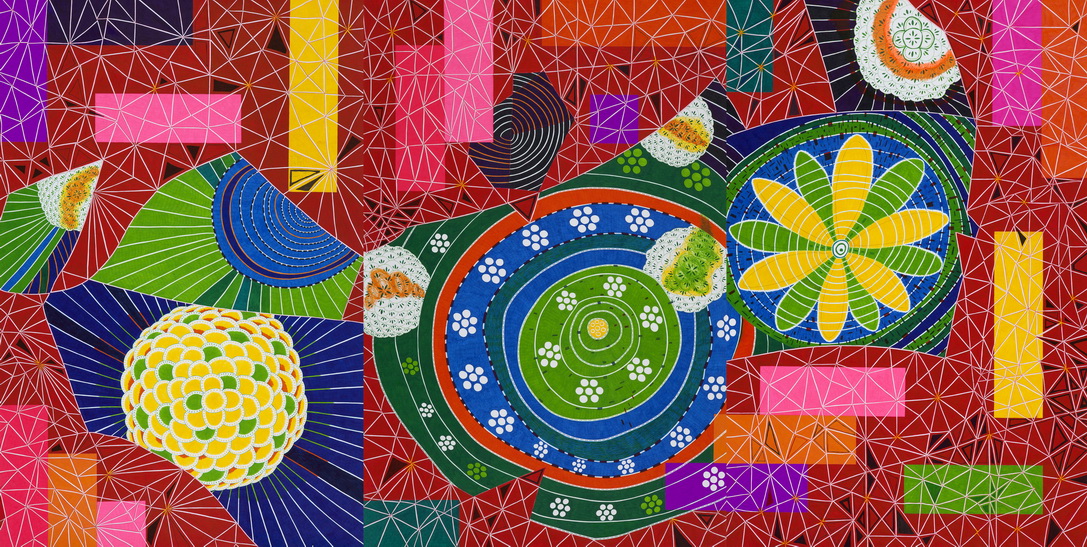
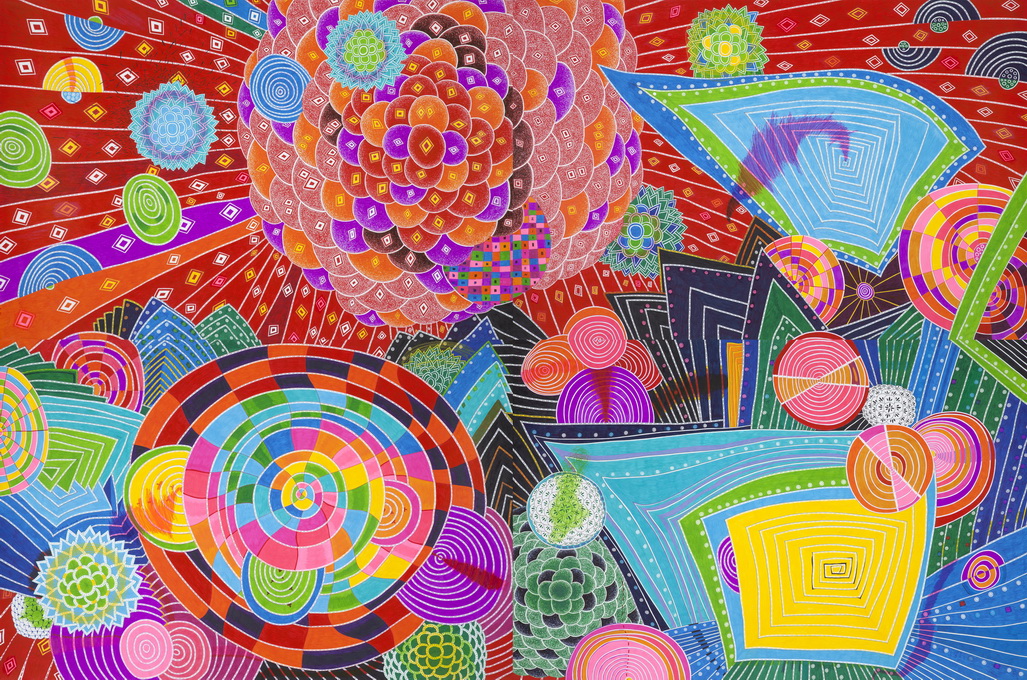
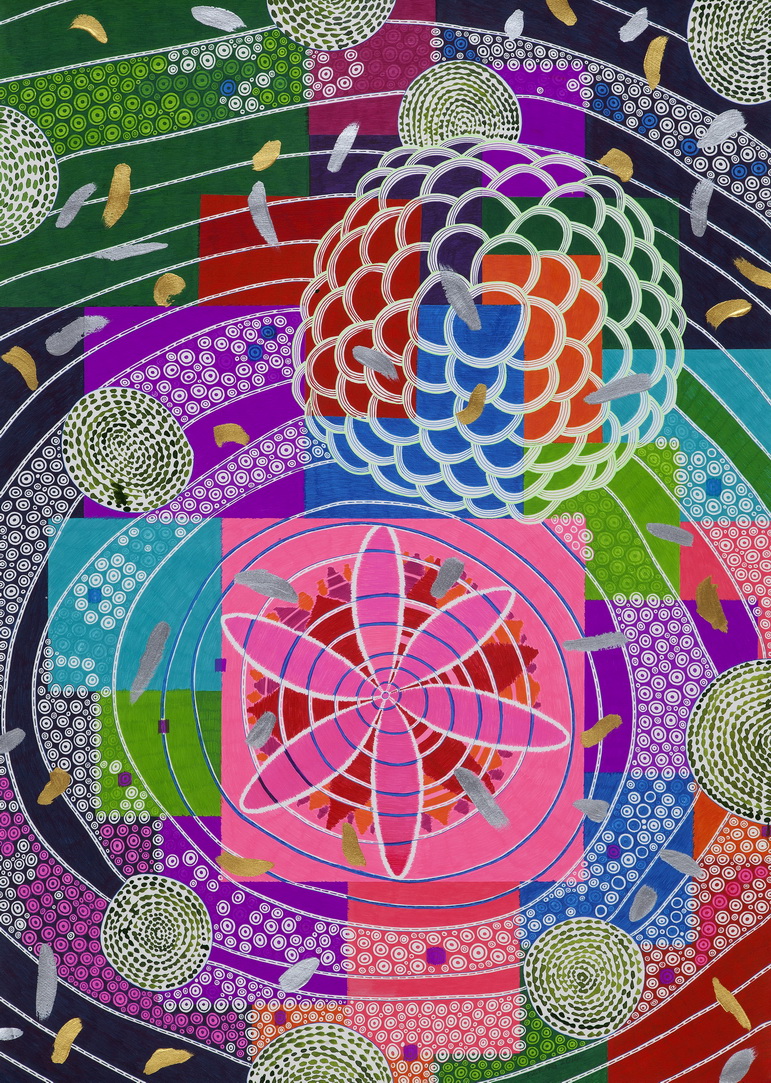
Clearly, each new series represents transformation and rebirth in the painter’s creation. The "Bloom" large series (2010-2014) is the result of developing the Primal Rhythm series’ linear carved graphics, colorful hues, dazzling light, and melodic dynamics. Continuing to exaggerate and qualitatively change the organic floral round and oval shapes of Primal Rhythm, it frees breathing background space, adding multiple symbols, images, interlaced line forms, etc. On the rippling large floral graphics, organized floating small and large colored dots or colorful rings, or triangles strengthening the picture structure, irregular random forms and lines, and juxtaposing different color systems and spectrums enhance rhythm and consciousness. By 2014, "Bloom" deconstructed the past floral subject, entering organizational rational structure, constructing color planes and linear pictures through fragments, patching, and collage, pioneering new picture rhythm and blooming new space.
Urban Allegory "Build" (2011-13) and "Steaming City" series (2013-15): Strong urban senses, more organized and designed. Within rigorous geometric symmetrical architectural structures, multiple urban architectural and street views are presented through color planes and lines. Abstract geometric and non-geometric form collages elucidate the bewitching imagery of the city’s dazzling colors. Warm color systems express natural seasons like "In Spring" or "Autumn Mood" (2013), using mature floral vocabulary where color becomes the temperature of emotion.
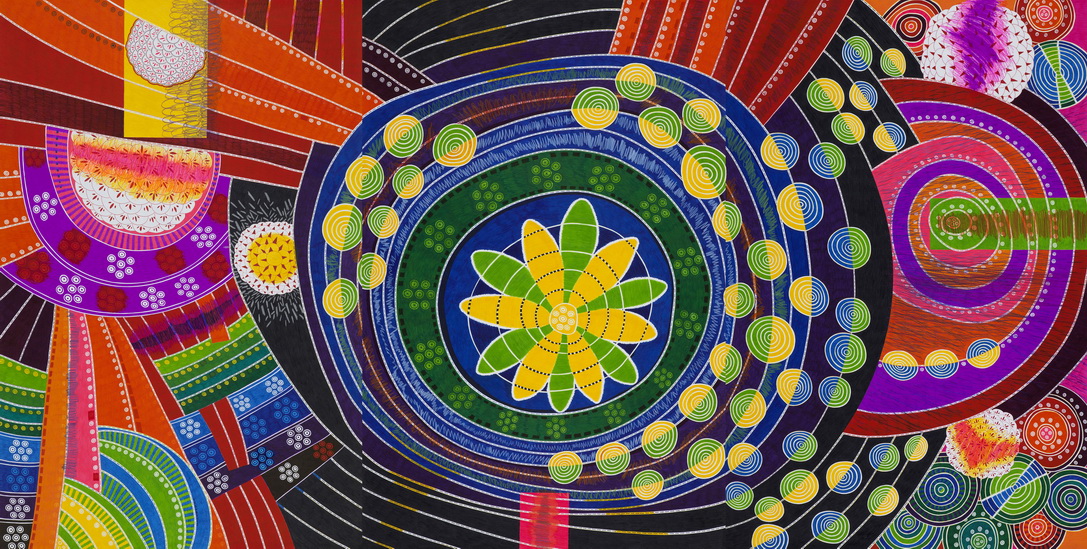
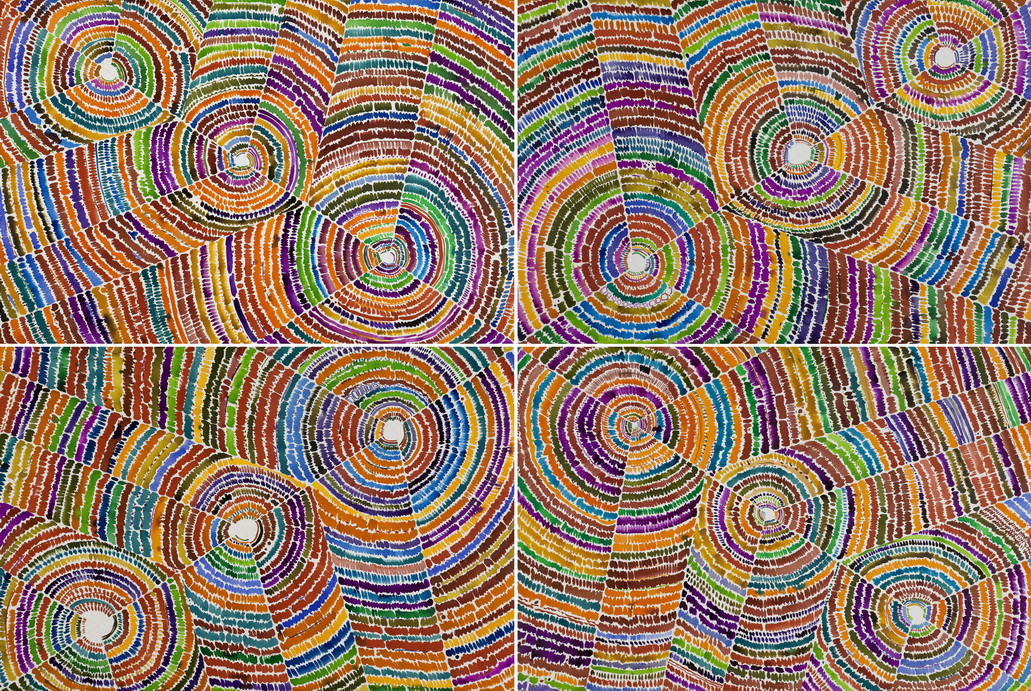
"Wheel" and "Vortex" series (2014) are the colored versions of "Blazing Heat" (2012). All repeatedly circle the central axis, radiating outward from the inner circle step by step. Circular rhythmic textures demonstrate the dimension of texture and time density. "Blazing Heat" is constructed with red and white separated curves, having a fluctuating effect. White space strengthens picture structure and rhythm, showing cross-section tree rings. "Wheel" and "Vortex" are gorgeous contrasting circular wheel textures. The painted spiral patterns of "Wheel" remind one of the textures of cross-section mineral gems. "Wheel" is a triptych placed together, with the central wheel as the core, symmetrically composed with two half-cut sides facing each other. Deconstructing natural imagery, rich and varied painted textures overflow with rhythm, presenting inward gathering and outward expansion effects. "Vortex" is a variation of vortexism, using thin white lines to divide left-right symmetrical quartet folded layered ring graphics. Vortex extension and rotation rhythm, like a dazzling and bewildering kaleidoscope world.
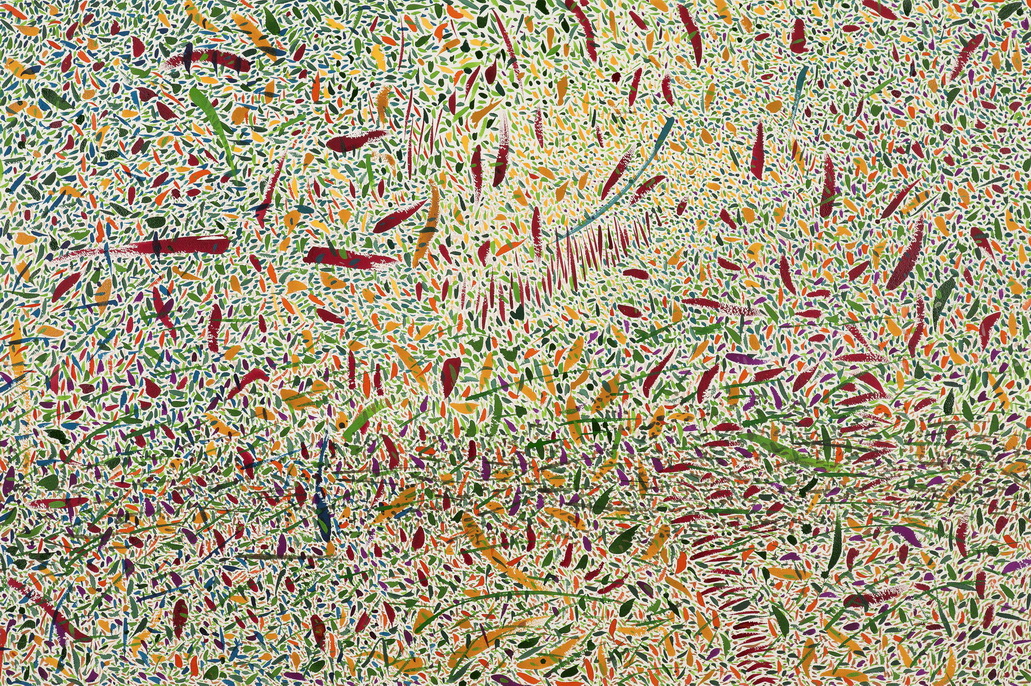
New Consciousness Dimension "Path Series" (2014): Deconstructs the rings, cores, and graphics of "Wheel" and "Vortex," spreading numerous irregular forms of varying sizes homogeneously. Under the red visual field, it constructs based on extending and rotating according to each local rhythm. Wide and dense, sparse, delicate, and rough lines organize into maze scenes. A yellow path crosses through, unifying visual focus and consciousness, resembling a military aerial survey map of hilly terrain, pioneering a new vision. Innovative exploration of light "Shimmering Waves" (2014): Composed of large and small saturated red dots, surrounded by dark gradients forming central pale yellow and white, creating dazzling, sparkling shimmering waves. Full of vitality "Sprout" (2014): Uniformly and densely composed of random colorful small dots, with a few strokes of color added like dotting the dragon’s eye on the small dots, transforming into new sprouts ready to burst forth with vitality. Shimmering visual effects metaphorically imply the creator’s existential consciousness.
Zeng Yongning’s Gorgeous Style Characteristics: Zeng Yongning’s most unique style is decorative aesthetic joy. For him, form and color are inseparable. One must think about form, plus rich imagination for color. "Image is a feeling, color is an argument," "Image as body, color as soul." Unique forms and gorgeous colors come from his lifelong living environment, full of local energy and consciousness. Brilliant colors come from Austronesian fields' nature (subtropical plants and flowers) and Minnan-style temples (such as high-saturation colored paintings, cross-fired pottery, cut-and-paste ceramic glazes), even folk temple processions like Song Jiang Army, White Crane Army, and floats’ dazzling colors. He has no taboos or limits regarding color, preferring pure, bright, high-saturation hues. Sometimes gentle and harmonious, sometimes unrestrained and contrasting, intending to liberate traditional colors and express unparalleled tension. Mysterious colors reach their peak in his intuition and imagination. He is the most outstanding color magician in today’s Taiwan art scene. Gauguin said: "The sensory stimulation colors bring us is mysterious in itself, so logically, it can only be used mysteriously. Each time, using color is not for depiction, but to take the musical feeling flowing from color itself, the characteristics of color, its inner mysterious power. Through exquisite harmony, one can create symbols. Color vibrates like music, capable of touching the most universal, ubiquitous, and extensive inner forces of nature."
Zeng Yongning’s formal pattern prototypes come from nature’s flowers and plants in Austronesian (subtropical) fields and myriad imagery deep in the subconscious. Blooming flowers covering hills—these nameless oval floral shapes—are full of subjective evidence and associative space. Rather than flowers, they are better described as his most original vocabulary for unique stylistic forms. This is closely related to the decorative Bagua lattice windows and complex engraved totems of Longshan Temple in his hometown Lukang. The internal construction of flowers and the lattice engravings/totems share similar principles. All graphics propagate and grow piece by piece, flower by flower. Randomly emerging within the blooms are circles, triangles, organic regular and irregular lines strengthening picture structure and stimulating energy.
From ballpoint pens to signature pens, colored markers, ink, and acrylics, Zeng Yongning liberates tools to release form and color, pioneering new visual vocabularies. Constructed through intuition and imagination, consciousness and subconscious, sensibility and rationality, imagery and abstraction. Clearly, stylistic features are flatness, color-plane orientation, patterning, abstraction, decoration, and music. Organic forms, organizational structure, flat painting, no brushstrokes, pure bright colors, complex overflowing form and color, dazzling and bewildering, fiery, full of sensibility, kinetic energy, and visual senses. Graphics are color; color is shape block. Hue summons light; color becomes the temperature of emotion. Multi-rhythmic form and color become rhythm; rhythm composes musical melody; rhythm becomes energy; feeling transforms into context; structure blooms into spatial field.
Note 1: From artist interview record, Taipei, 2015-03-31. Note 2: From artist interview record, Taipei, 2015-03-31. Note 3: From artist interview record, Taipei, 2015-03-31. Note 4: Quoted from Primal Rhythm 2008-2012 Zeng Yongning Collection Album. Painting as Body, Body as Organ - Zeng Yongning's Subtropical Landscape by Wang Pin-Hua, p.5. Paris, 2015-08-07.