Zeng Yongning – After the Fire, a Sea of Flowers
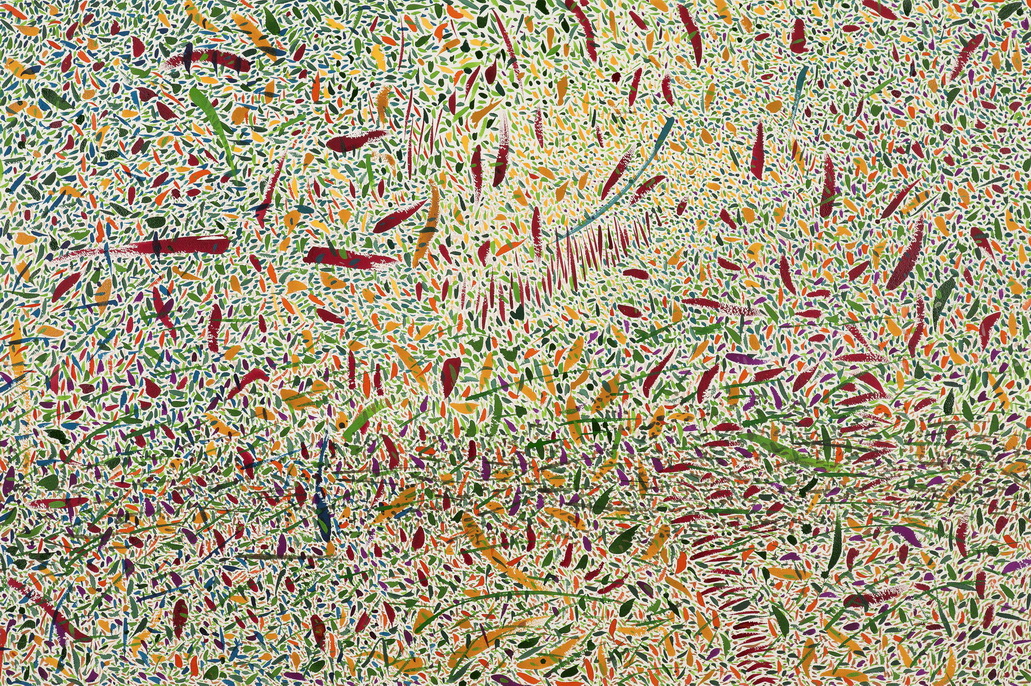
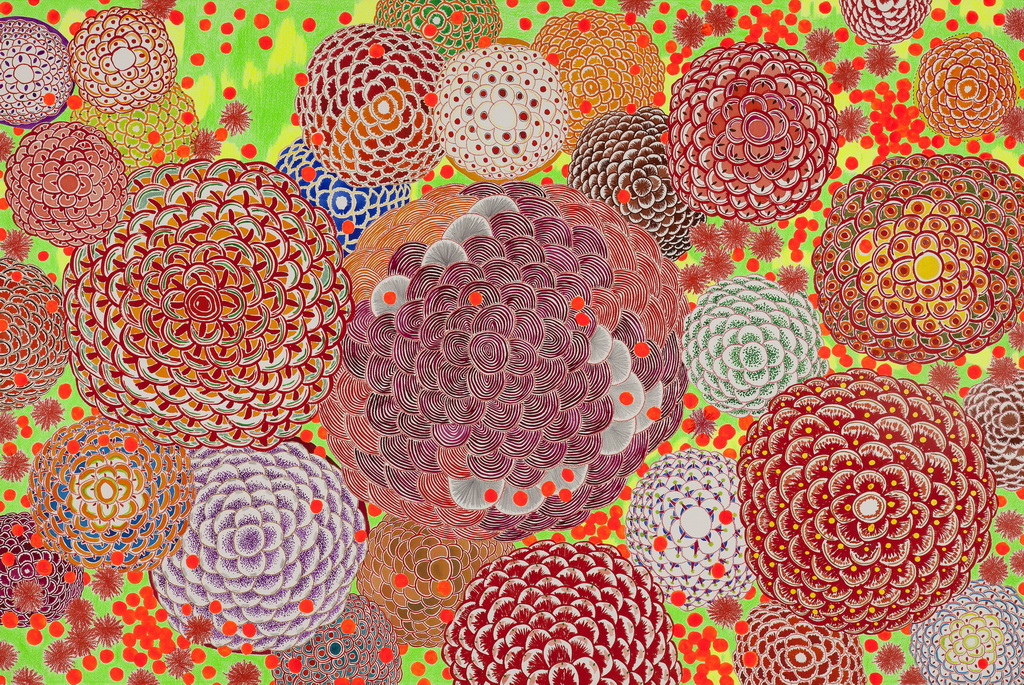
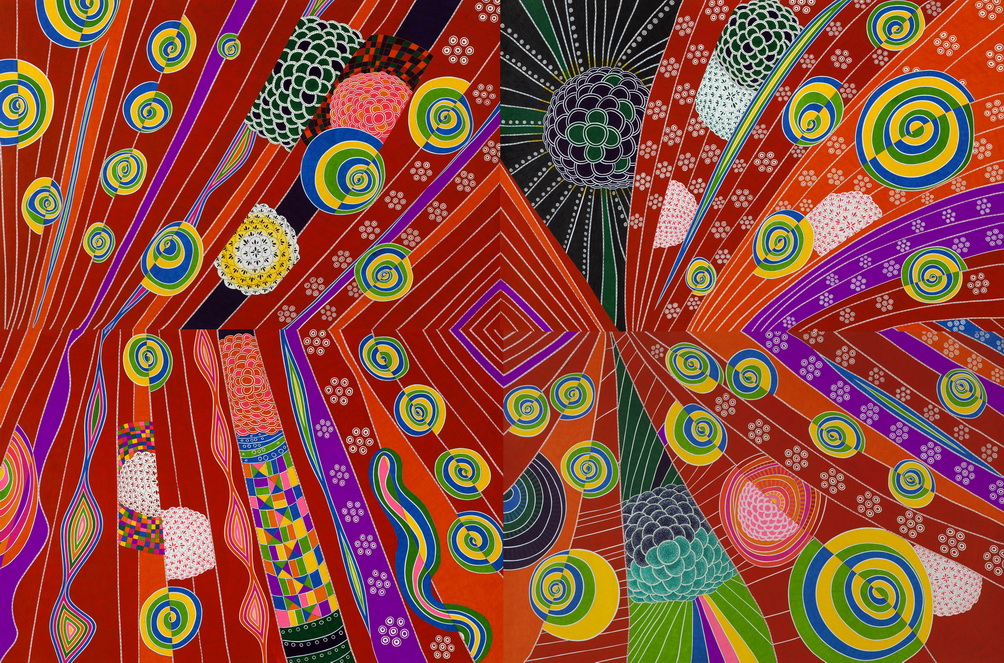
Original Landscape 01 215x450cm 2010 ballpoint pen on paper
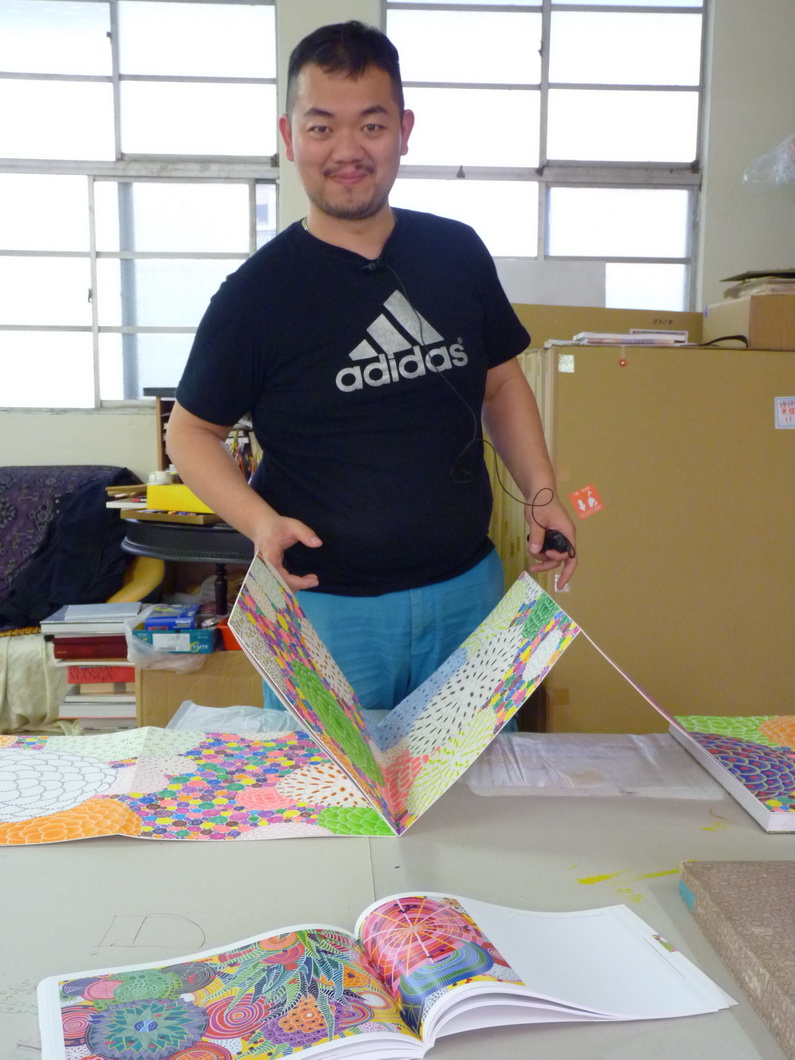
Text and photos / Chen Chi-Hsiang
"The image is a feeling, color is a demonstration"
Preface: Zeng Yongning is one of the brightest figures of the new generation of Taiwanese painters in flat painting. Renowned for his ballpoint pen works of striking originality, he explores modernist spirits through new tools and a new pictorial vocabulary. Focused on drawing on paper, his work develops like a "virgin forest" that, after setting the plain ablaze, gives way to a profusion of "flowers." His inspiration draws from traditional forms of folklore, the colors, and the cultural decoration of his homeland. The multiplicity of forms and the brilliance of colors construct a kaleidoscopic and decorative style, dizzying, charged with local energy, consciousness, and vibrations. Graphic design is the intensity of will; color becomes the temperature of emotions. "The image is a feeling, color is a demonstration," or again "the image as body, color as soul." The dazzling visual effects reveal a subtle, optimistic aesthetic rhythmed with joy. The mandalas shaped like "flowers" become the alchemy of the painter's life, carrying his rich emotions and spiritual consciousness.
Artistic initiation and the key figure – the father: Born in 1978 in Lukang, Zeng Yongning grew up in a traditional family with strong cultural and artisanal roots. His grandfather was a sculptor of altar tables; his father, an interior decoration entrepreneur and amateur photographer (practicing photo-reportage since 1978). Bathed in this universe, he loved to draw and doodle from childhood. He often accompanied his father on photographic outings to learn and observe. In middle school, his father bought a large Hasselblad camera (135 format) which he entrusted to him. Together, they went out to photograph. The painter remembers with emotion: "My father took pictures with the large camera, I did the small ones" (Note 1). Pressing the shutter is the moment of observation and feeling. Thus, he learned a fine observation of nature, not only formal but especially chromatic, refining his sensitivity and profoundly modifying his perception, which would durably influence his artistic creation.
From 1987, his father dedicated himself exclusively to Lukang, his hometown, documenting by color photographs the environmental mutations of the city. He organized two personal photography exhibitions in Taipei. During a photo outing in Lukang, he happened to cross paths with the young painter Chen Lai-Xing plein air, an encounter that marked Zeng Yongning. The father photographed Chen Lai-Xing painting and visited his studio for the first time, stunned and admiring. He then passed on precious advice to his son: "If you want to be an artist, be serious. I will support you fully" (Note 2). This moment germinated the desire to become a painter; the father became his first mentor and the key figure of his journey.
On the artistic path – the influence of mentors and friends: Initially, Zeng Yongning wished to enter the Fuxing School of Arts, and spent his school holidays at college studying in a workshop in Taipei, but he struggled to adapt to standardized technical training. At the Zhushan Professional Institute (plastic arts section), he was strongly influenced by his modern art teacher, Guan You-Fu, a student of Li Zhong-Sheng. The latter prioritized automatic techniques linked to the unconscious and was an excellent modern abstract painter. This approach freed the young mind of Zeng Yongning, opening him to catalogs of Western masters and world masterpieces, thus broadening his artistic horizon. He attempted to intuitively find iconographic concepts that would become the basis of his creation.
During three years of high school, he immersed himself unreservedly in painting and photography, neglecting academic subjects. On the advice of his teachers, he joined the visual design department of the Oriental Institute of Design (junior college level). Visual design allowed him to better understand form and structure, bringing him closer to art. His studies took place in remote rural areas, between mountains and sea; he developed a particular affection for ecology and the environment, readily comparing himself to a "savage," acquiring a first apprehension of natural and artistic beauty.
After obtaining his junior diploma, he returned to Lukang, home, continuing his artistic path. He lived reclusively, exploring ink painting alone for six years. He actively participated in provincial ink painting competitions in Changhua (from selection to first prize) to validate himself. He applied to the New York Academy of Art (NYAPA), but failed three consecutive years (first to third year). The more he failed, the more he persevered, and finally got admitted simultaneously to NYAPA and the National Taiwan University of Arts (NTUA) in 2005. He chose NTUA. During this period, nicknamed "savage," he knew only how to paint his own works, neglecting theoretical courses. The gap was great; ignorant of artistic theory, he luckily met Lin Xian-Jun, who helped him understand these concepts in a simplified manner.
In 2000, freed from ink, he experimented with a new medium: ballpoint pen painting. This new attempt inaugurated the association ballpoint pen/watercolor. Between 2004 and 2005, he concentrated intensely on ballpoint pen painting, producing enormously and tirelessly, exploring his own symbols and personal motifs. 2005 marks a turning point in the art of Zeng Yongning. On the suggestion of his artist friend Cai Bing-Xun, he organized a personal exhibition in the corridor of NTUA before the entrance exam to the Academy of Fine Arts. His unique style of ballpoint pen painting aroused the curiosity of Professor Li Zhi-Wen, who became his first collector. This recognition and encouragement oriented his creation. That same year, he won the Li Zhong-Sheng Prize, becoming the youngest laureate in history (at 28 years old), consolidating his artistic confidence and affirming his role as an artist. NTUA stimulated in him a creative energy, a wider consciousness, and a broader horizon. During vacations, day and night, he took refuge with his classmates in the basement of the library (the former Taipei Museum of Fine Arts) to create intensively (for three consecutive years), laying the foundations of his unique personal artistic style (ballpoint pen painting).
Under the guidance of Professor Chen Shih-Ming at NTUA, he observed, reflected, lived, and perceived life. He sincerely discovered that he had to be himself, deeply experimenting with existential consciousness: "Use your own method to open your creation." "Before being an artist, one must know how to be human" (Note 3). In 2007, he obtained the ACC scholarship, took a sabbatical year, then traveled to China and Japan the following year, enriching his experience and horizon, which would nourish his future creations. He finished his studies at NTUA in five years. In 2010, he resided in Guilin, China, where he met Professor Su Guo-Qing (who had lived long in New York). The following year, during a large collective exhibition of resident artists in Shanghai, he befriended artists from northern and southern China and Taiwan, opening new artistic horizons and stimulating his creative energy. From then on, he regularly participated in collective exhibitions abroad, having the opportunity for in-depth observations. In 2012, a residency in Toulouse, in the south of France, caused a change and maturation in his creation.
The magic under the limits of the ballpoint pen: Traditional drawing uses graphite, charcoal, or other neutral materials; oil or acrylic painting on canvas is considered orthodox. Modern art introduces special materials, while avant-garde revolutionizes art, expanding the possibilities of supports. Modernist painting is sometimes seen as reactionary and declared dead. In postmodernism, or after it, nothing is impossible. Artistic creation reaches an unprecedented openness; painting is reborn from its ashes. Pictorial innovation is no longer a prerequisite for artistic exploration; the new generation continues to explore the possibilities of painting via new materials. The texture of new media always brings new horizons and styles.
To renew painting, one must renew tools and materials. In 2000, freed from ink, Zeng Yongning combined common and practical writing tools – the ballpoint pen – which became his main tool. This new tool offers new pictorial possibilities, creating a stunning ballpoint pen painting style. The ballpoint pen has fine lines, but suffers from limitations: impossibility to mix colors, create gradients, or retouch. However, its colorful and brilliant palette offers the painter infinite imagination and magical potentialities. Its elegant delicacy and intense brilliance are irreplaceable by other materials. He draws scenes with precision, superimposes several layers of lines to weave a multitude of forms, constructs dense pictorial spaces through complex graphics, linking elements to form the main subject. Ballpoint pen painting, charged with manual textures and reliefs, results from intense physical work. It tests the meticulousness and patience of the painter. In intuition, instinct, and sensitivity, it expresses the acuity and passion of the artist. Painting is no longer just an outlet for energy, but also an alchemy of the heart. As the painter says: "The painting process relies on the constant repetition of the body, releasing inner energy. This process calms the mind; potential awaits stimulation after long, laborious consumption. A test of will transforms through art into inner spiritual redemption and emotional outlet" (Note 4). Today, besides the ballpoint pen, he adds felt-tip pens, ink, or acrylic paint. The complementarity of thin and thick strokes reinforces vitality and creates new sensations. He continues to seek new tools and materials, exploring new methods to broaden the pictorial vocabulary.
How a painting is born: The creation of Zeng Yongning follows no fixed position, no predefined composition, no chronological plan, and is not limited by format (infinitely extensible). The painting begins with a feeling. He can work on two paintings or more simultaneously. Under the effect of unconscious automatic techniques, he starts from the edges or the center, without constraint, wandering and scratching in all directions. Little by little, stroke by stroke, he develops points and lines that become surfaces. Guided by the flow of feeling, he shapes graphics: a flower, a cell, etc. Then, one after another, they grow or reproduce until covering the entire surface. One painting follows another, a series succeeds another. Open creation, it begins with an intuitive feeling, random discovery, seizing the consciousness of the moment. The brush (or pen) engages the state of creation. Every day, one can draw easily or start over. One can let go at any time, without limits, repeating without weariness the deep immersion. At each state, one intuitively observes form and color. Everything is fluid and natural when it goes well; sometimes, one takes a pause, patiently observing natural formation. Often, several paintings advance simultaneously; series are completed under the integration of feelings.
After the fire, a sea of "flowers": One distinguishes two main types in the work of Zeng Yongning:
- The colorful and free graphic series – flowers, gardens, environments, kaleidoscopes, etc., built by the interweaving of multiple symbols, with natural imagery tending towards the decorative.
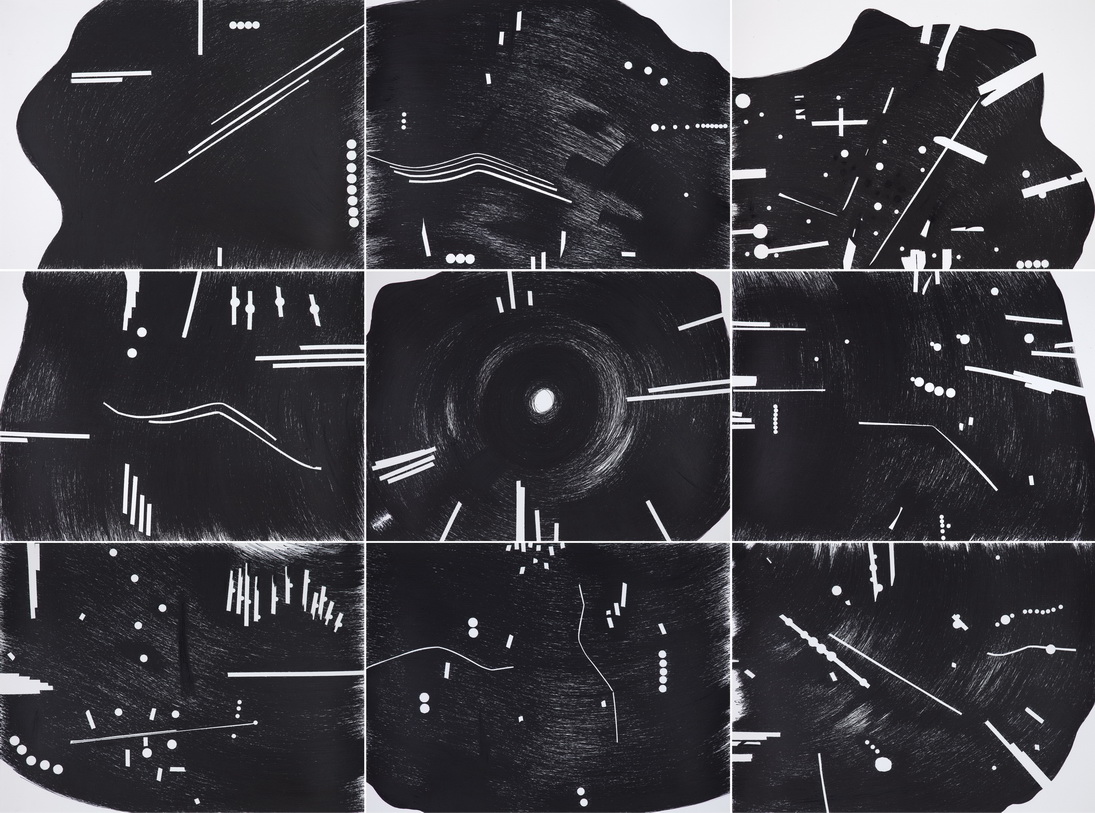
- The expressive monochrome series – spaces and landscapes such as the red series "Forest Fire," "Fire Mountain," "Fire Seed," and "Red Light"; the dark blue series "Starry Sky" and the black abstract series "Whirlpool," carrying spiritual consciousness.
According to the flow of consciousness, sometimes wild and multicolored, sometimes calm and introspective, colored painting and monochrome alternate.
Encouraged by the Li Zhong-Sheng Prize in 2005 and motivated by NTUA, Zeng Yongning launches massive production. Starting from his attachment to the land, he develops via the unconscious the monochrome red series "Forest Fire." Bright red is the symbol of burning fire; the image of fire in the burning air describes the undulating rhythm of grass in the wind. Raw and emotional brushstrokes superimpose different layers of halos and nuances, expressing the strong inner emotions of the painter. "Forest Fire" is the result of the exploration of natural plants and the gesture of holding the ballpoint pen (gripping the refill of the pen). After this fire of free emotions, moving from description to the bright red series of 2012, he sculpts the motif "Red Wood": repeated centered circles, showing temporal density and the attitude of the years. The structural engraving of white cracks reinforces rhythm and imagination.
The extroverted and ardent "Fire Seed": the entire space is filled with saturated red dots of various sizes, dependent on each other, contrasting red and white, full of energy and visual tension, manifesting the consciousness of life.
The "Campfire in the Prairie," detailed, is the opposite of "Fire Seed": white dots of various sizes on a red background, poetic and picturesque, evoking the cosmic starry sky, offering an infinite space of imagination.
The mysterious "Red Light" is the result of the domestication of wild nature (of fire). In the red twilight, a divine light appears in space-time.
The diffused "Fire-Flowers" come from the undulations of "Forest Fire 42."
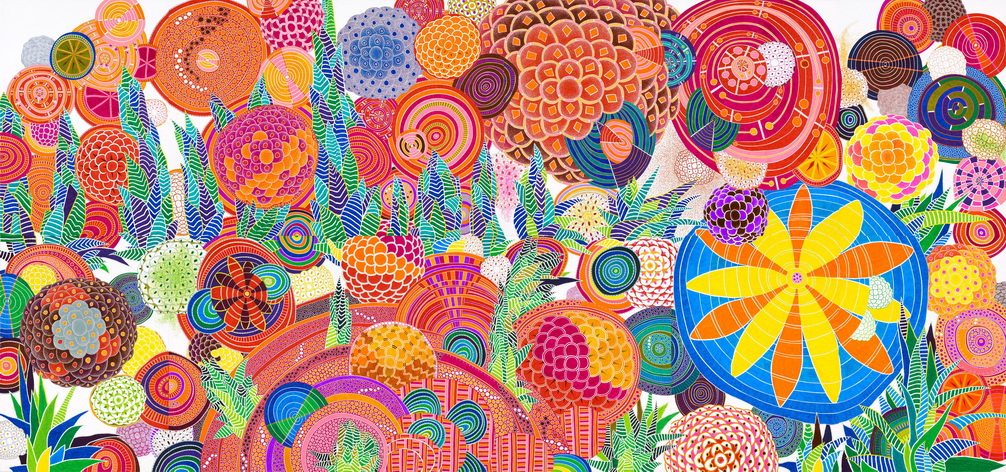
The "Forest Fire" series involuntarily opens flowers, giving birth to the "Wild Garden Series." Inspired by the primitive image of the Austronesian "flower," this series shows individual flowers blooming vigorously, tranquil but somewhat rigid. After about a dozen canvases, on the suggestion of Professor Qu and understanding of Zeng Yongning, the series is liberated and renamed "Original Rhythm" (2008-2011), entering a phase of creative maturation, welcoming the spring of creation and the floral season. He explodes the most beautiful and brilliant colors of the world, making mountains bloom. Flowers and circles intertwine and superimpose until complex organizations and lush colored structures fill the space. Although crowded, the whole is alive, dynamic, and conscious, constructing an extraordinary baroque style. Musical rhythms and graphic forms illuminate each other, decorative and joyful, dizzying. Flowers become Eden, revealing the image of earthly paradise, pointing towards existential spiritual consciousness.
"Original Rhythm" is the most representative stylistic work of Zeng Yongning, entering the brilliant floral season. The entire surface is luminous, filled with large and small flowers and images of fruits/circles. According to the front/back superpositions of forms and the distribution of colors, a space of organic order composes. A large homogeneous composition extends indefinitely outside the frame. The dazzling contrasts of colors and light, associated with musical rhythm, become an optimistic and progressive energy, manifesting the brilliant and multicolored urban senses (neons or disco), widening a new active field of color and light, constructing his own exquisite artistic vocabulary.
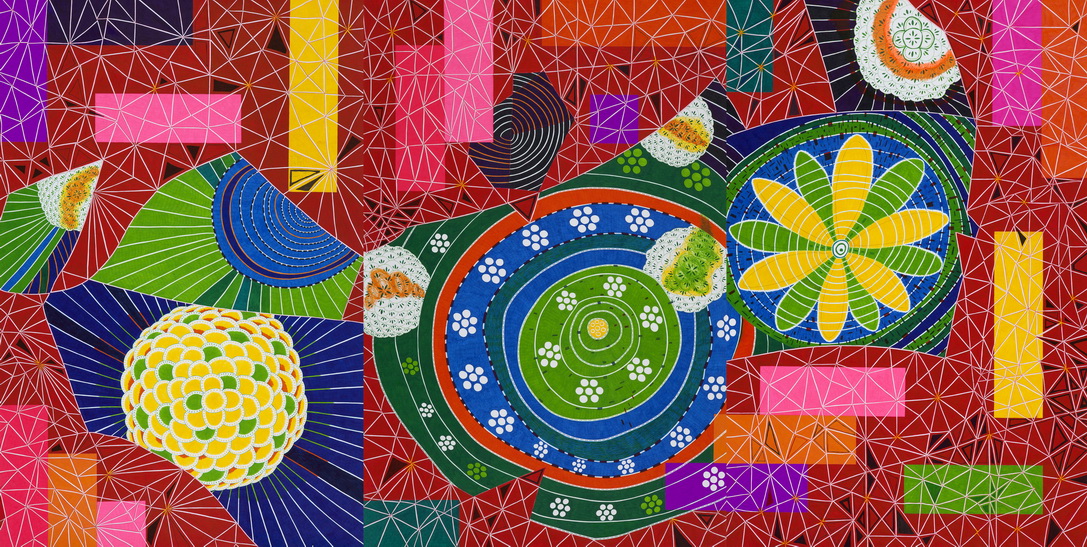
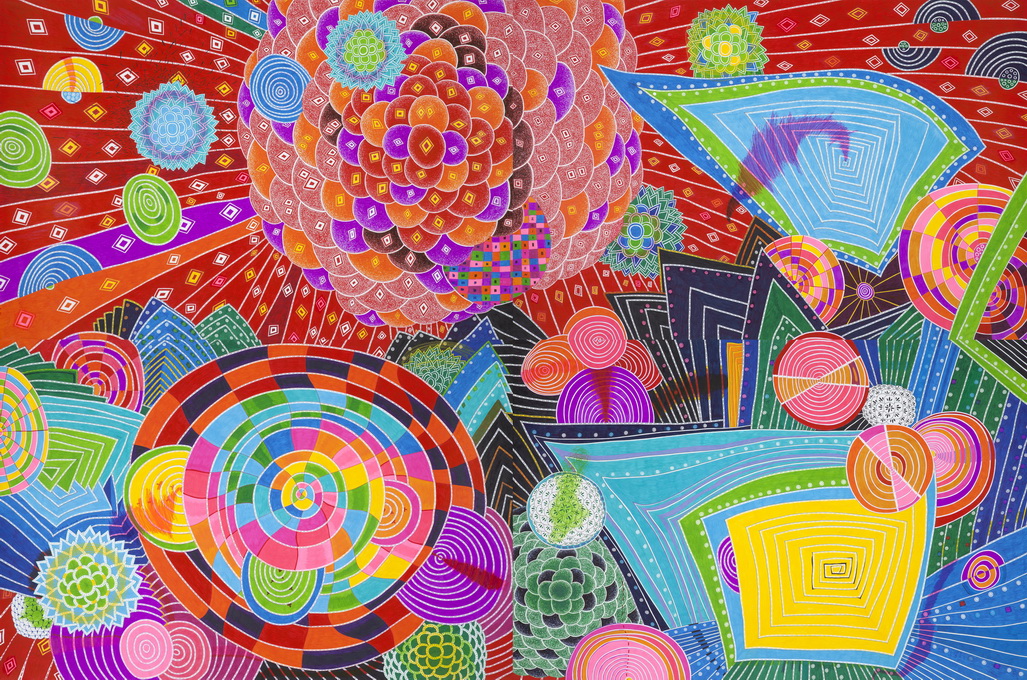
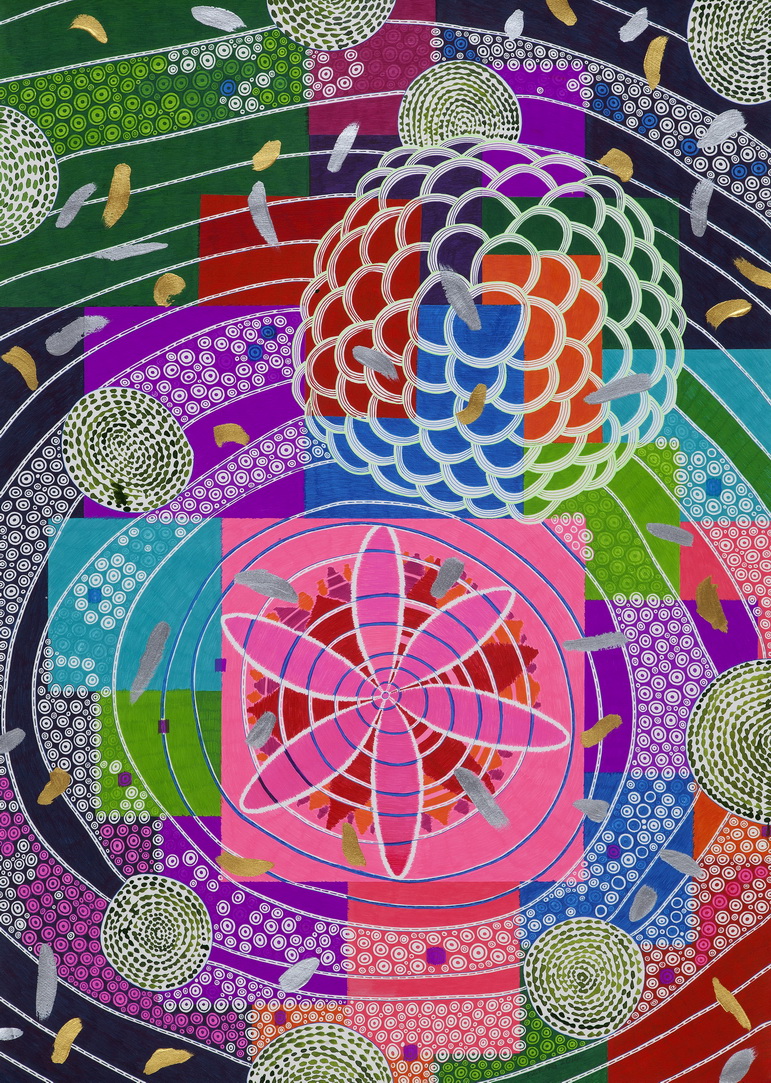
Clearly, each new series is a metamorphosis and a rebirth in the painter's creation. The large series "Blooming" (2010-2014) is the result of the development of "Original Rhythm" towards linear graphics, brilliant colors, bright lights, and melodic movements. He exaggerates and qualitatively transforms the round and oval organic forms of the flowers of "Original Rhythm," freeing a breathing background space. He adds multiple symbols, images, forms of interlaced lines, etc. On the large undulating floral forms, he organically floats colored dots or multicolored circles of various sizes, or reinforces the pictorial structure with triangles, irregular shapes, and random lines. He juxtaposes different systems and color spectrums, reinforcing rhythm and consciousness. With "Blooming" in 2014, he deconstructs the past floral subject, entering a rational organizational structure. He constructs colored surfaces and linear graphics in the form of fragments, patchworks, and collages, inaugurating a new pictorial rhythm and opening new spaces.
The urban connotation series "Build" (2011-13) and "Steaming City" (2013-15): Strong urban sense, more organized and designed. In rigorous geometric and symmetrical architectural structures, he presents multiple visions of architecture and urban streets via colored surfaces and lines. Collages of abstract geometric and non-geometric forms, illustrating the seductive and multicolored image of the city.
Warm palettes express natural seasons like "Spring" or "Autumn" (2013), using the mature vocabulary of floral forms, where color becomes the temperature of emotions.
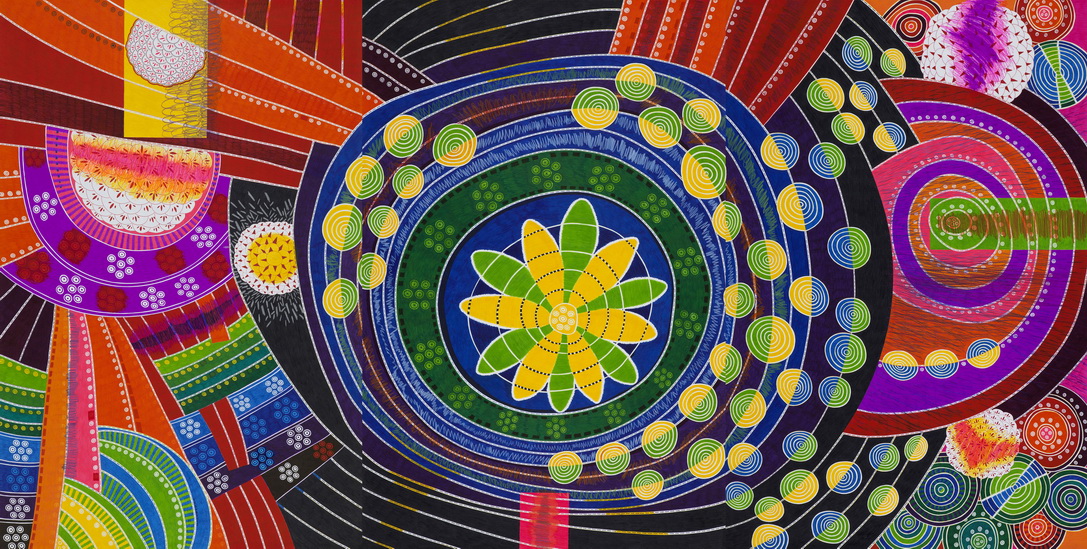
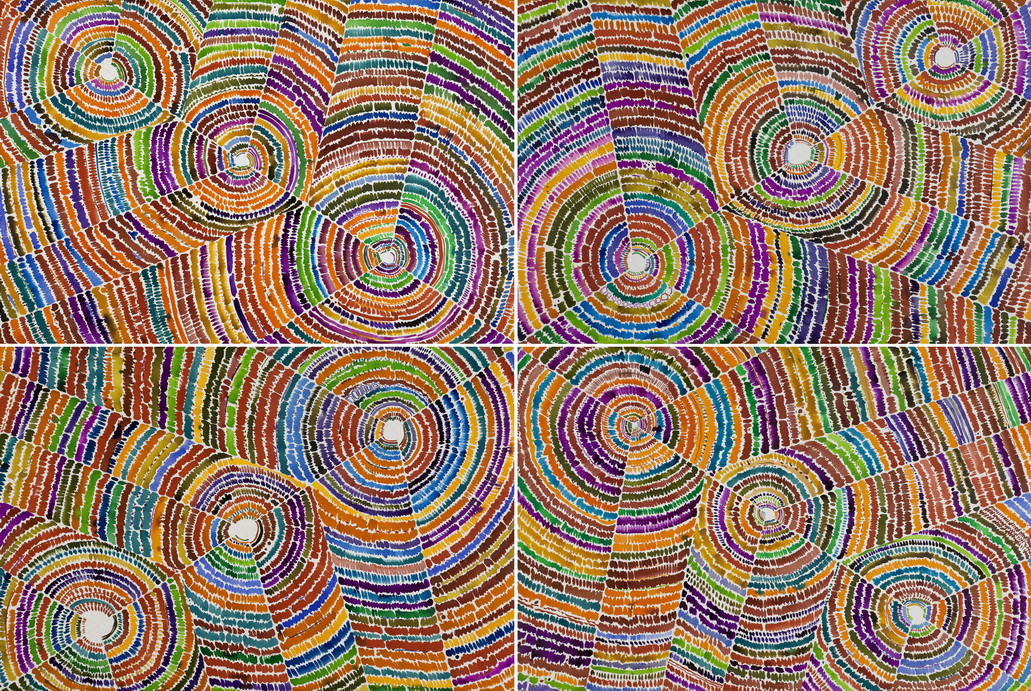
The "Wheel" and "Whirlpool" series (2014) are the colored version of "Burning Heat" (2012). They all revolve around a central circle, radiating progressively outwards from the inner circle. Rhythmic patterns in circles show the textural dimension and temporal density. "Burning Heat" is built by curves separating red and white, with a wavering effect; the white void reinforces structure and rhythm, showing a cross-section of tree rings. "Wheel" and "Whirlpool" present contrasting and magnificent circular textures. The painted motifs of "Wheel" recall the textures of cross-sections of minerals and gemstones. "Wheel" is a juxtaposed triptych, with the central circle as the core, symmetrically composed with two lateral semi-circles, deconstructing natural imagery. The rich and variable painted textures overflow with rhythm, presenting convergence and expansion effects. "Whirlpool" is a variation of the vortex, tracing quadruple layers of folded and symmetrical annular shapes with fine white lines. The whirlpool expands and turns rhythmically, like a dizzying kaleidoscopic world.
The new conscious dimension of the "Paths Series" (2014): Deconstructing the circles, the core, and the graphic of "Wheel" and "Whirlpool," he uniformly spreads many irregular forms of various sizes. Under the red visual domain, he builds according to the rhythm of each part, extending and turning. Wide/tight lines, sparse, fine, or coarse organize scenes of labyrinth. A yellow path crosses, unifying the visual focal point and consciousness, similar to a military aerial topographic map of hills.
An innovative exploration of light "Reflections" (2014): Composed of saturated red dots of various sizes, surrounded by dark gradients towards a pale yellow and central white, creating dazzling reflections.
"Sprouts" (2014), full of vitality: Uniformly and densely constituted of improvised multicolored small dots, with a few touches of color added as a final point, transforming dots into sprouts ready to explode with life. The dazzling visual effects suggest the existential consciousness of the creator.
The exquisite stylistic characteristics of Zeng Yongning: The most distinctive style of Zeng Yongning is the joyful and decorative aesthetic. For him, form and color are inseparable; one must think of form, added to rich chromatic imagination. "The image is a feeling, color is a demonstration," "The image as body, color as soul." Unique forms and exquisite colors come from his daily living environment, charged with local energy and consciousness. Brilliant colors come from Austronesian nature (subtropical tropical plants) and Minnan temples (such as high saturation paintings, Jiaozhi ceramics, collage enamels), even folk processions like Song Jiang, Bai He, and light floats. He has no taboos or limits regarding color, preferring pure and luminous high-saturation shades. Sometimes soft and harmonious, sometimes wild and contrasted, he aims to liberate traditional color, expressing unparalleled tension. Enigmatic colors reach their apex in his intuition and imagination; he is today the greatest magician of color in the Taiwanese artistic milieu. Gauguin said: "The sensory stimuli that colors bring us are themselves a mystery; logically, one can only use them as a mystery. Each time, using color is not to describe, but to grasp the musical feeling that flows from the color itself, its quality, its internal mysterious force. Through refined harmony, one can create symbols. Color vibrates like music, capable of touching the most universal, omnipresent, and vast internal forces of nature."
The graphic prototypes of Zeng Yongning come from the nature of Austronesian subtropical fields (plants and flowers) and the countless images at the bottom of the unconscious. Flowers covering the mountains – these oval forms of unnamed flowers – full of interpretative freedom and associative space, are less flowers than the most original vocabulary of his unique styling. This is intimately linked to the bagua latticed windows and the complex engraved motifs of the Longshan Temple of his hometown, Lukang. The internal structure of flowers and engraved motifs function similarly; all graphics develop from pieces and individual flowers. Sometimes, random forms like circles, triangles, regular or irregular organic lines emerge in flowers, reinforcing the pictorial structure and stimulating energy.
Starting from the ballpoint pen, passing to the fountain pen, felt-tip pens, ink, and acrylic, liberating the tool is liberating form and color, inaugurating a new visual vocabulary. Built in intuition and imagination, consciousness and unconscious, sensitivity and reason, image and abstraction. Clearly, the stylistic characteristics are bidimensionality, colored surface, graphic design, abstraction, decorative, and musical. Organic forms, organizational structures, painted flats, without brush traces, pure and luminous colors, complex and overflowing forms and colors, dizzying, ardent, full of sensitivity, dynamic and sensorial. Graphic design is color, color is the block of form; hue calls light, color becomes the temperature of emotions. Forms and colors with multiple rhythms become a movement; rhythm composes the musical melody, movement becomes energy, feeling transforms into atmosphere, structure bursts into spatial field.
Note 1: Excerpt from the painter's interview, Taipei, March 31, 2015. Note 2: Excerpt from the painter's interview, Taipei, March 31, 2015. Note 3: Excerpt from the painter's interview, Taipei, March 31, 2015. Note 4: Cited from Original Rhythm (2008-2012), catalog of works by Zeng Yongning. Painting as body, the body becomes organ – Subtropical Landscapes of Zeng Yongning, Wang Pin-Hua, p. 5. Paris, August 7, 2015.