Hsiao Mei-Ling – "The Other Shore / Glimpsing the Past" Video Solo Exhibition
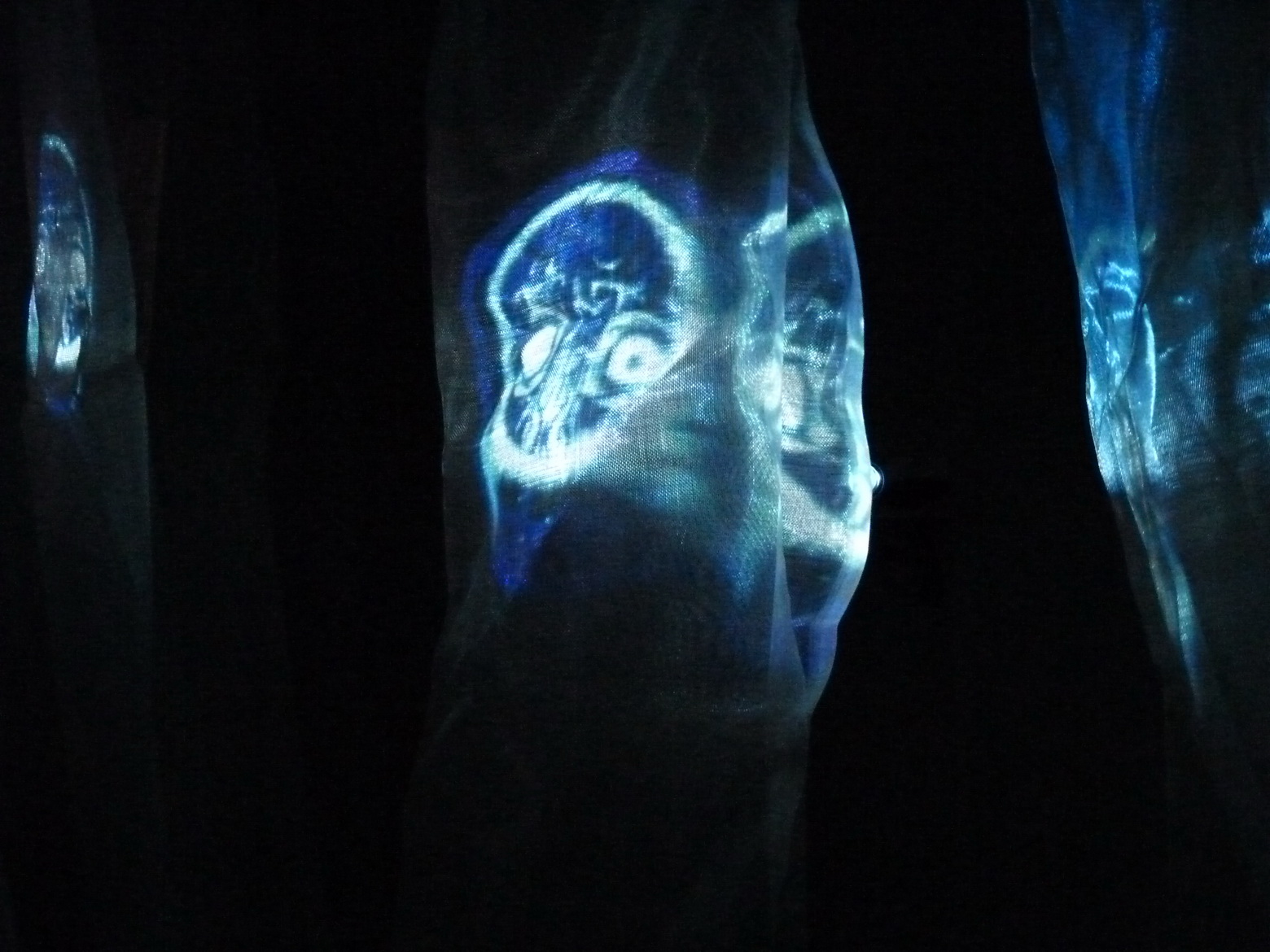
What Landscape Is My Memory? 2015 One of ten video spatial installations
Text and photos by Chen Chi-Hsiang. Venue: Taipei Digital Art Museum. Dates: December 5 to December 27. Hsiao Mei-Ling is a young Taiwanese video artist who has long worked on documentary creation, excelling at cleverly interspersing variations in narrative compilation, with a special fondness for narrative imagery. Active in international documentaries and women’s film festivals, she is regarded by the Taiwanese art world as a documentarian. However, there is no distance or conflict between documentaries and contemporary video art; documenting the present is not always a documentary—it is merely a difference in the handling of imagery and narrative. Whether it is art depends on its concepts and formal expression. More precisely, Hsiao Mei-Ling’s work crosses video art and documentary. "The Other Shore / Glimpsing the Past" is her first solo video exhibition in fourteen years, overturning documentary narration, which is replaced by iconicity and expressiveness, tending toward imagery and abstraction. Imagery becomes the interface of creative consciousness, constructing situations and unique fields through three-channel video and environmental object spatial installations.
This lyrical "The Other Shore / Glimpsing the Past" video solo exhibition is based on Hsiao Mei-Ling’s long-term close-up records of her wandering between mainland China (France) and Taiwan, attempting to compile gradually peeling-away memories and perceptions. Shuttling between the virtual and real afterimages of existence or fragments of life memory imagery, it evokes phantoms in life, probing under awareness the distant situations and consciousness of unknown, subtle life. She uses the gaze of imagery to comb through the essence of ideas and explore time and space. "The Other Shore / Glimpsing the Past" video creation exhibits three new video works: "Meeting Oneself in the Forest," "Forest," and the memorial monument video spatial installation "My Memory Is Your Landscape." All are under literary propositions, full of reference and metaphor, attempting to focus on reality. Clearly, her works shuttle between reality and virtuality, perception and imagination, time and space, imagery and abstraction, field and situation, intending to probe the subtle situations of life's existence.
"Meeting Oneself in the Forest" and "Forest" both use three-channel video screens playing synchronously (the former uses three video monitors, while the latter projects directly onto the exhibition hall walls). Both take the (French) forest as their field, using fixed-focus scenery. Under bright light, following the forest imagery’s time and space, they slowly interweave and move under natural sounds and the rhythm of light and shadow, forming subtle situations.
"Meeting Oneself in the Forest": Starts from the artist’s own perspective, exploring the subtle relationship between the forest and herself. Through poetic imagery, she meets herself. Bathed in the forest, hearing dead leaves, insects chirping, birds singing, and babbling water, she sees her own light and shadow awakening deep inner consciousness. The encounter between natural situations and internal mapping with oneself is always unintentional, metaphorically depicting the traces of interaction between imagery and life, attempting to peek into the inner self through the lens.
"Forest": Uses different times (differences) of horizontal narrative compilation and broadcasting for the same story. It focuses on the artist’s daughter shuttling through the forest, her eyes looking around, searching for an inner uneasy situation. Does fear come from ignorant self? Or from the outside? Through sound effects like footsteps, breathing, wind, falling leaves, and bird calls, it presents a view from natural situations to inner subtleties, attempting to outline the girl’s inner life situation.
Memorial Monument’s "My Memory Is Your Landscape": Ten video projections in a multi-layered transparent gauze spatial installation. It includes images of the artist’s own brain MRI scans, journey imagery traveling between Taiwan and France, such as highways, train stations, ferries, tunnels, ports, subways, airports, French streets, and life records—a series of transfer stations connecting countless moments and memories. Documentary imagery, projected through the cleverly crafted multi-layered transparent gauze space, penetrates and intersects with each other, producing various defocusing, overlapping, and displacement. This makes imagery, in the gaps of time, like the refracted memory of life’s phantoms, piercing through time and space to become fleeting glimmers. Ghost-like flashing, like the recognizable and unrecognizable, conscious and unconscious, perception and imagination, abstract and imagistic memory, transforms into abstract, subtle life situations. The audience is invited to roam and shuttle between virtual and real illusions, entering a journey of moving, changing time-space light and shadow, testing the essence of ideas and memory, and the subtle states of life.