Toasting Taiwan: "Island, Islanders — Dagou Fish Assassins Island Series – Tainan Story"
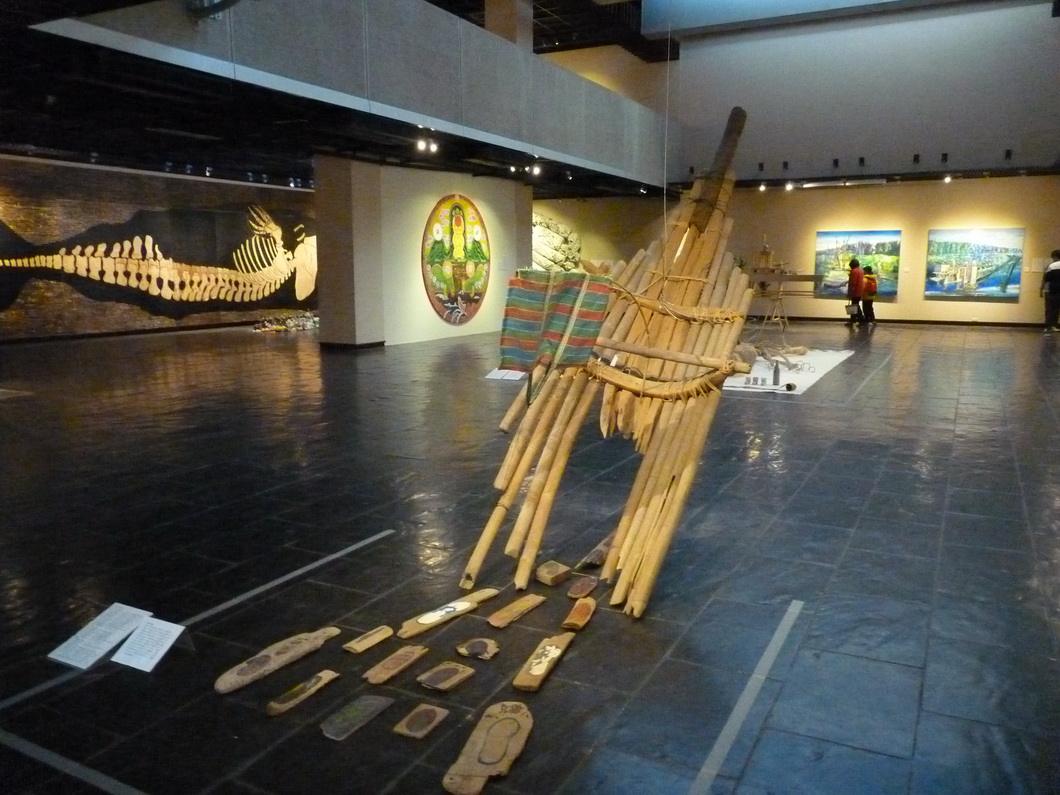
Lagake Talifau Typhoon Project 2015 Object Space Installation
Text and photos by Chen Chi-Hsiang. Dates: December 26 to January 24. Location: Tainan City Cultural Center.
“Artworks are first the feelings of truly lived life; their connotation and structure come from truly lived initiatives.” — Palestinian artist Mona Hatoum
Foreword – Fish Assassins: The most vibrant “Fish Assassins” is a non-organized group centered on Austronesian knight Li Chun-Hsien, not an official Austronesian art collective but a gathering of artists. Starting in 2004 at the triangular beach corner of Shiquan Road and Tianjin Street in Kaohsiung, at the “Quan Jin Qie Stall,” Lu Zhu (Li Chun-Hsien) hosted artists from both north and south for drinks and conversation. Regardless of race or provincial origin, even extending overseas, it was a place where brothers raised glasses of beer to celebrate art. After more than ten years of deep artistic bonds and customary consciousness, in 2011 they solidified their shared ethnic value identity into the name “Fish Assassins,” concretizing the character and attributes of “wielding boundless passion, singing our own songs” (Note 1).
Extension – New Taiwan Mural Team: In autumn 2010, initiated by the art world’s dual Lis (Chun-Hsien and Chun-Yang) at the White House in Kaohsiung Qiaotou Art Village, the entire participating team used “Fish Assassins” as the main axis, becoming a collective artistic action platform for Austronesian artists. It explores possibilities in Taiwanese art history, grounds local artistic practice, steps out of art’s utopia, feels the land of Taiwan with their bodies, and dialogues with the environment. Thus emerged alternative “off-site creation projects” and “rural outreach programs,” traveling across Taiwan, entering folk society and communities, collaborating with local artists to feel local emotions and consciousness. Using Austronesian language and mountain-river symbols, they narrate the image stories of every city in Taiwan, intending to expand the profound significance of authentic “Taiwanese” aesthetics.
Fish Assassins’ Creative Philosophy: Grounding themselves in local Austronesian life experiences to witness their own identity, they explore the raw vitality within Taiwan’s cultural heritage, seeking the relationship between this constrained island and the ocean. Li Chun-Hsien said, “The mission of art is concern for this hopeless land,” dedicating himself to excavating Taiwanese culture as his vocation. Under a macro-epic framework, he constructs Taiwan’s subjective consciousness. The Fish Assassins’ creative philosophy revolves around local consciousness, reviving Taiwan’s heritage, summoning the land’s distant, weathered, and bitter history, wielding boundless passion to recount rich local stories and compose their own poetry. Their art displays expressive, instinctive, anecdotal, and literary richness, consciously constructing a unique aesthetic of Taiwanese local subjectivity.
Possibilities of Ocean Aesthetics: Taiwan is an island nation, surrounded by sea on all sides. Like an aircraft carrier riding the waves of the Pacific and the Taiwan Strait, it holds an international geographical strategic position. This beautiful treasure island is the land permitted by the mother—our mother’s name is “Taiwan.” The ocean is the origin of nurturing life, the field where humans survive together. Many histories and humanities of island nations have intimate relationships with the ocean. Artists born and raised in this geographical environment naturally have the conditions and ability to express other creative possibilities regarding the ocean. Of course, people should become like the ocean, boundless and stretching into four seas as brothers; one must never be self-contained and become an isolated island. However, under the long-term high-pressure rule of the Nationalist Government’s “sea ban” policy, the tight connection between islanders and the sea was severed. Islanders lost sight of the horizon without realizing it; the ocean right before their eyes vanished, and thus they lost the imagination of vast horizons. Political prisoner Ke Qi-Hua described it in his memoir as “Taiwan Prison Island,” and writer Li Ao also believed: “Under blue rule, the white terror made Taiwan’s small island look like a prison” (Note 2). Cut off from the world, Taiwan became an isolated or ghost island. The imprint of the ocean in the souls of imprisoned islanders gradually degenerated, causing children of the ocean to lose their way in the vast ocean, drifting unknown.
After the awakening consciousness of the local soil movement in the 1970s, and following the lifting of martial law, a new artistic vitality and emerging local native energy arose, searching for the core self-value of this land. Exploring the raw vitality and unique appearance within Taiwan’s cultural heritage, identity recognition became a prominent study for the older generation of Taiwanese artists. Post-martial law, Fish Assassins, with the macro vision of children of the ocean, restored the historical memory of prehistoric maritime activities. Their duty is to create marine life content focused on the island, rediscovering the fundamental attributes of island culture, constructing a system of images for Taiwan’s marine culture, and fulfilling the mission of recreating local culture: “The foundation of life’s origin: first there was the ocean, then the land; the development of culture: first there were people, then art.” From the perspective of an island’s historical and humanistic development, the ocean is not the edge of the land, but the core of all signs of life. From the viewpoint of cultural regional communication, the waters surrounding the island outside are not barriers, but passages and “fields on the sea” (Note 3).
Island, Islanders – Dagou Fish Assassins Island Series – Tainan Story: “Island, Islanders – Tainan Story” is a toast by the Fish Assassins to the ancient city of Tainan, paying tribute to Taiwan, echoing the exhibition title. The Tainan story signifies marine culture, the breath of the sea, and the flavor of the ocean. From an archaeological perspective, it is not an exaggeration to say that Tainan is “a city built on marine historical coordinates” (Note 4). Tainan is the ancient capital-city where humanities gathered and commerce flourished over the past three hundred years, a region closely related to the ocean. Anping Port in the inner sea of Taijiang was once the gateway connecting to the world. The entire historical and humanistic development and changes of Tainan (or Taiwan) cannot be separated from the relationship and influence of the ocean.
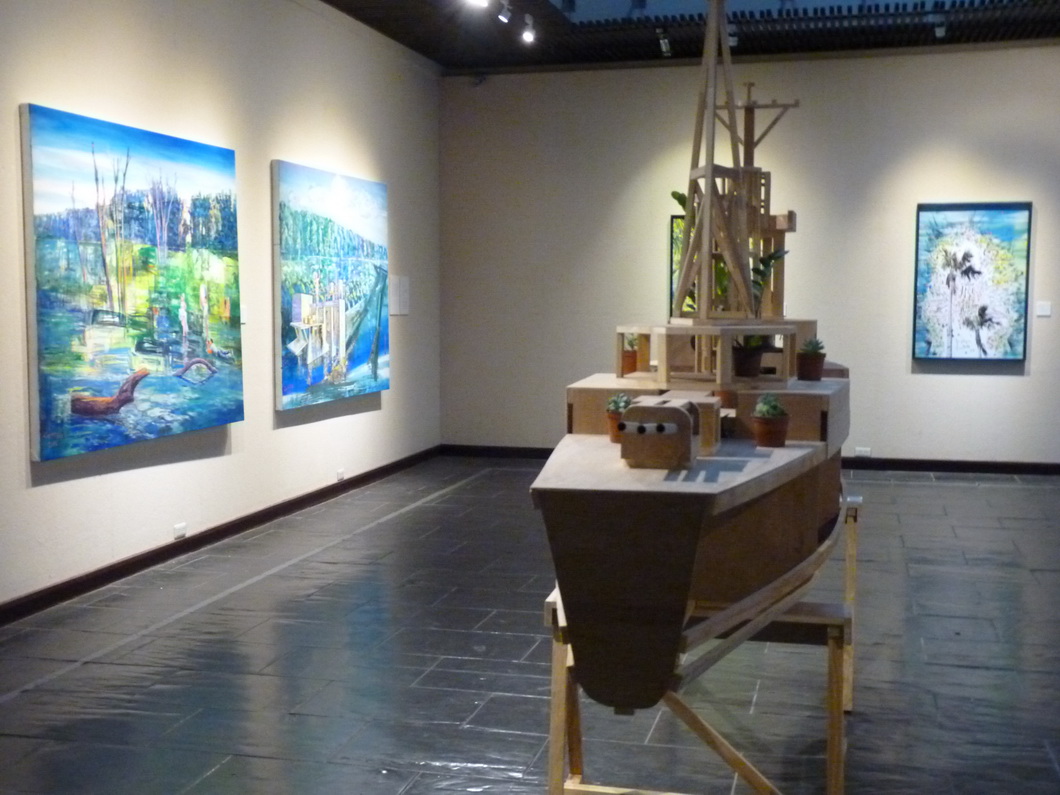
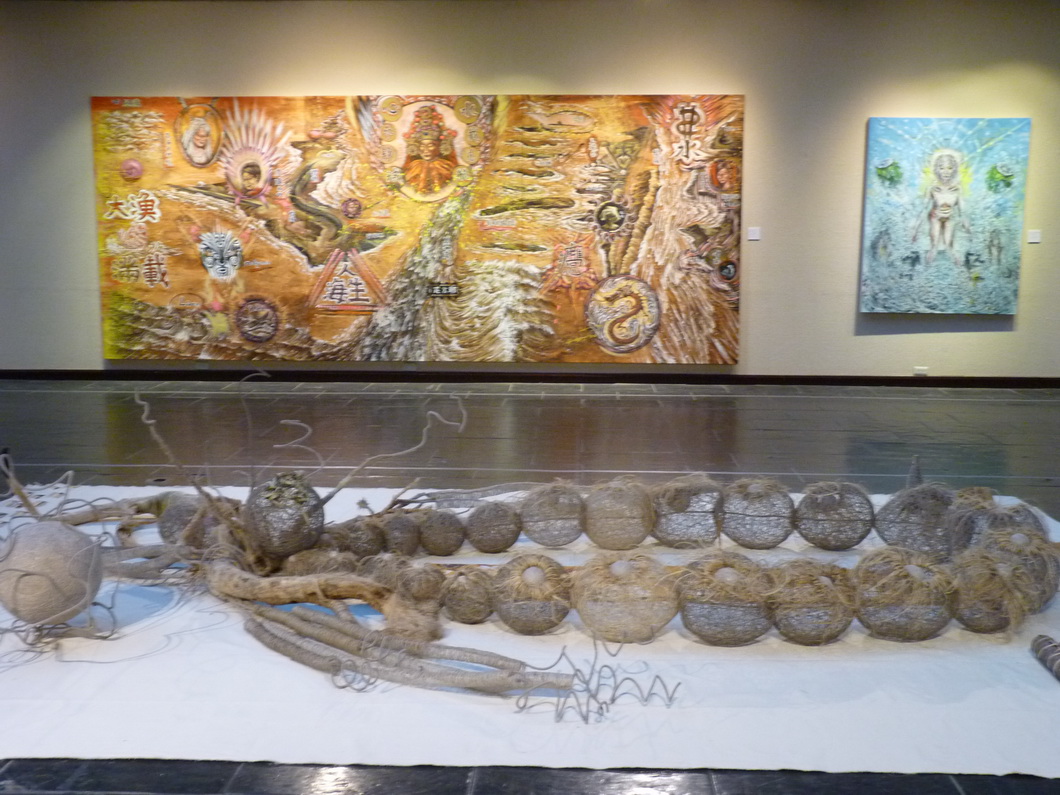
“Island, Islanders – Tainan Story” is the first team-curated exhibition launched by Fish Assassins after the New Taiwan Mural Team. Exhibition Director Li Chun-Hsien served as the chief priest (Master of the Stove), with young painter Chen Yan-Ming curating. Fourteen artists participated. They diversely explored local humanities, history, geography, and natural environments, investigating through painting, sculpture, photography, object installation, and new media. Li Chun-Hsien expressed the changes of the Tainan coastline and the historical sentiment of Taiwanese humanities. Monumental forms like “Sea God, Knightly Woman” (2012) and the current natural geographical landscape “Southwest Coast” (2015) both possess marine thinking, depicting the historical relationship between land and ocean from humanistic signs and allusions. Zhang Xin-Pi’s new landscapes “Selfie on the Sluice Gate” and “Windbreak Forest Project Wedding Photos” (2015): describe the humanities and landforms left behind by development burdening the surrounding natural environment. Li Chun-Yang explored primal images deep in the mind, summoning Taiwanese folk mountain-sea imagery through folk totems. “My Home Has Mountains and Water – May I Be Rich” (2015) hopes that all Taiwanese are talented (wealthy).
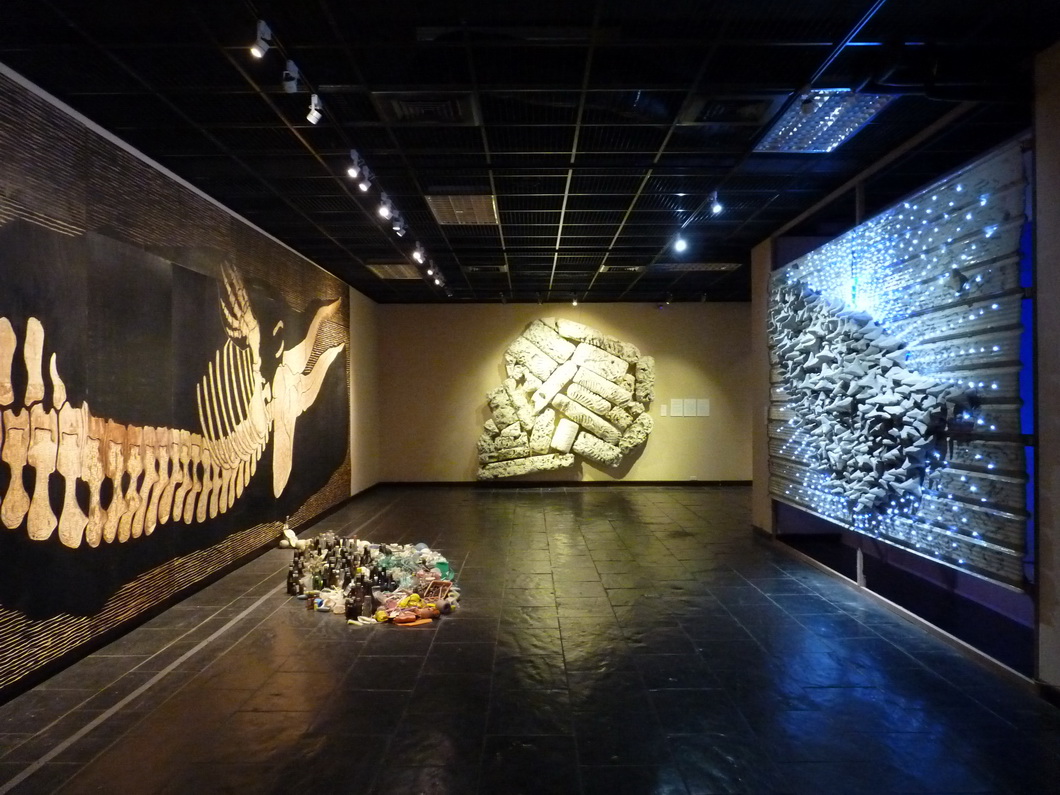
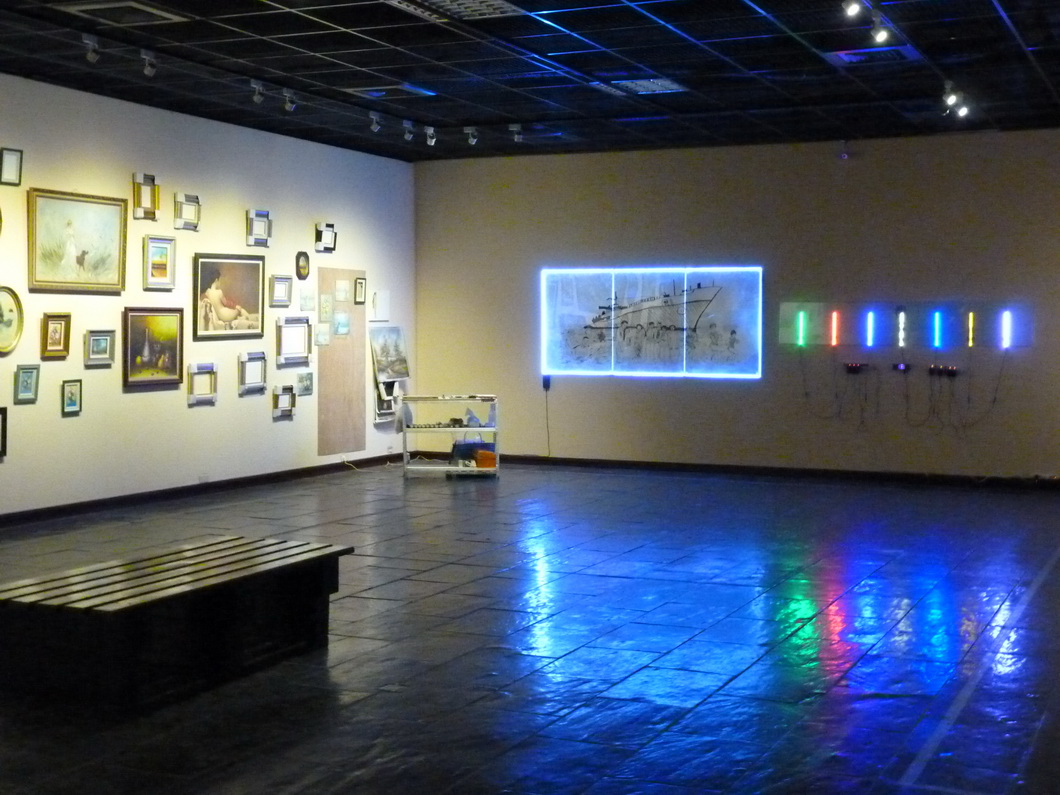
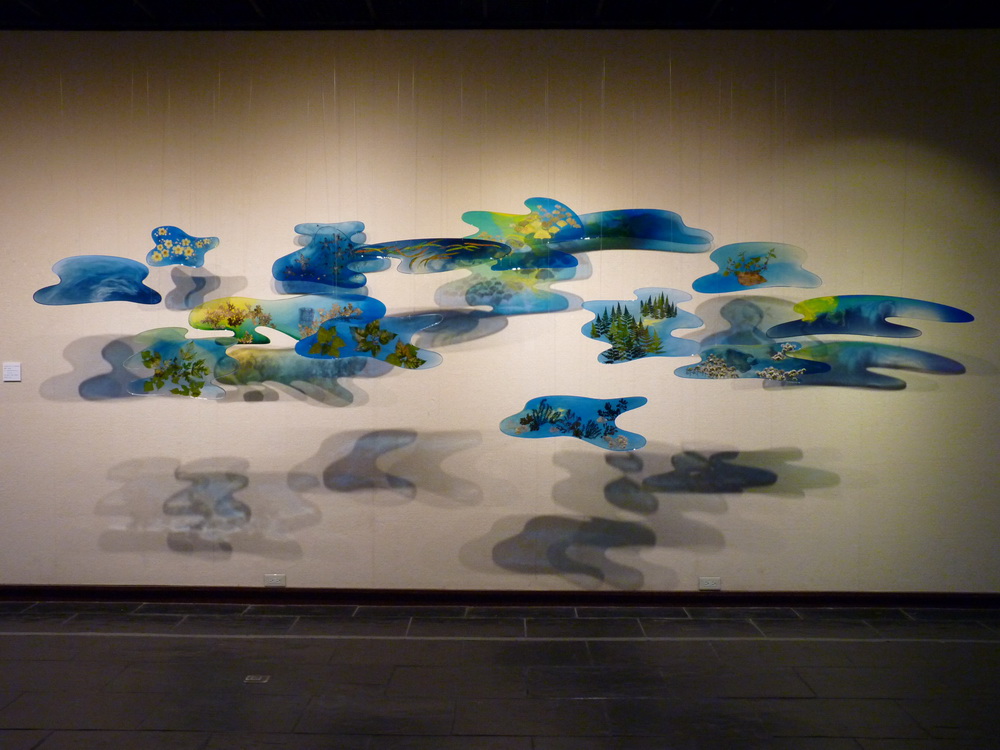
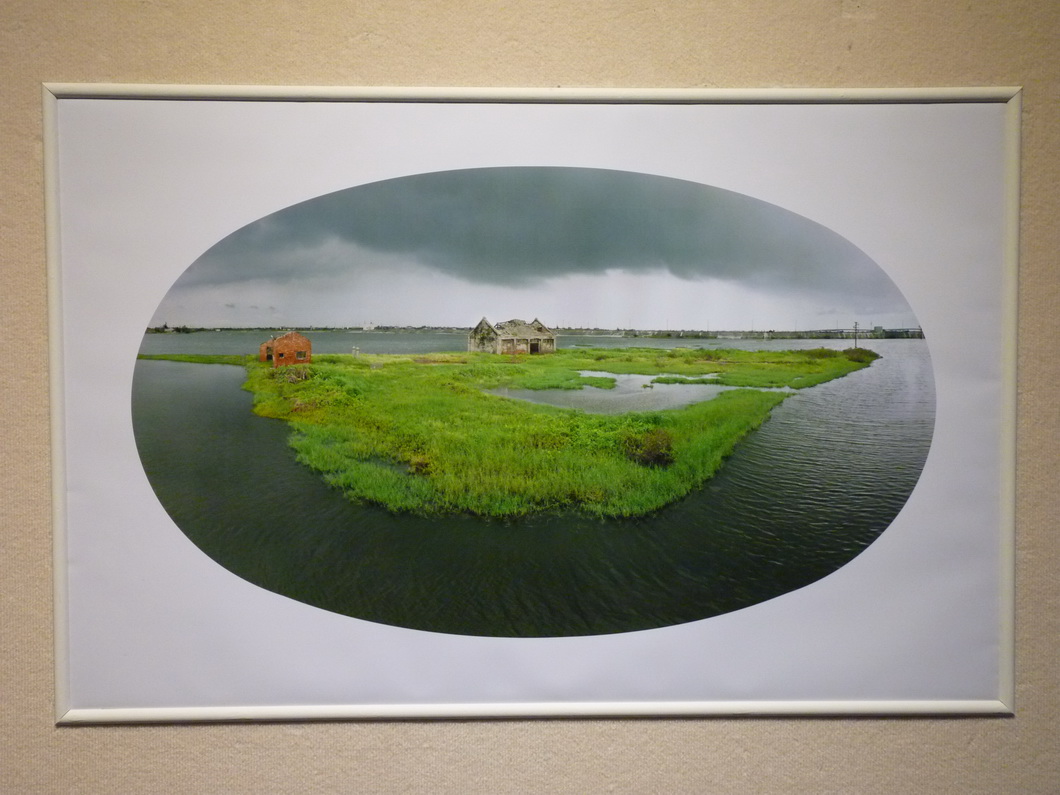
Regarding environmental awareness and climate change discussions for island coastlines: Lin Chun-Yong witnessed Taiwan’s ocean pollution under the unity of mountains and seas in “Tomorrow’s Table,” or described the stranding and death of a giant whale in the southwest coast’s natural ecology in “Stranding and Death of Kunpeng” (2015). Photographer Yang Shun-Fa witnessed the waterlogging situation in Tainan’s Qigu and Budai areas due to global warming, illegal logging of windbreak forests, excessive groundwater extraction for aquaculture development, and seawater intrusion, with his “Taiwan Waterlogged” image series (2015), sounding the alarm bell of nature. Chen Yan-Ming traced personal family history to recover the native identity of Tainan people in “Three Associations Sending Prayers for True Feelings – Records of Lujimen” and “Drowned Inner Sea – Records of Madou Village” (2015). Through root-seeking, using two maps and temples with deities, he narrates the marine humanities in urban history and the source relationship between family and deities. He Jia-Zhen used new media LED object installations to recover historical memories, gently reviewing the tragic song of young American women stationed in Taiwan during the era of the “US Seventh Fleet Club” (2015). Huang Zhi-Wei’s lyrical “Water Light Color Form” (2015) presents the floral patterns and shapes of water splashes and floating light illusions, showing pure form, color, and light, poetic and picturesque, emitting emotion and imagination between the concrete and abstract. Zeng Wan-Ting specialized in pressed flower “Under the Sea Level -II Theory of Taiwan Origin” acrylic space installation (2015). Amidst poetic indigo marine imagery, various plants and flowers were pressed, floating in space. The projection of light and shadow on the walls highlighted the atmosphere and volume of the ocean, forming subtle scenes, implying finding the legend of Taiwan’s ocean from the perspective of plants. Among these literary stories and narratives, the works of these two artists had the most pure aesthetic quality.
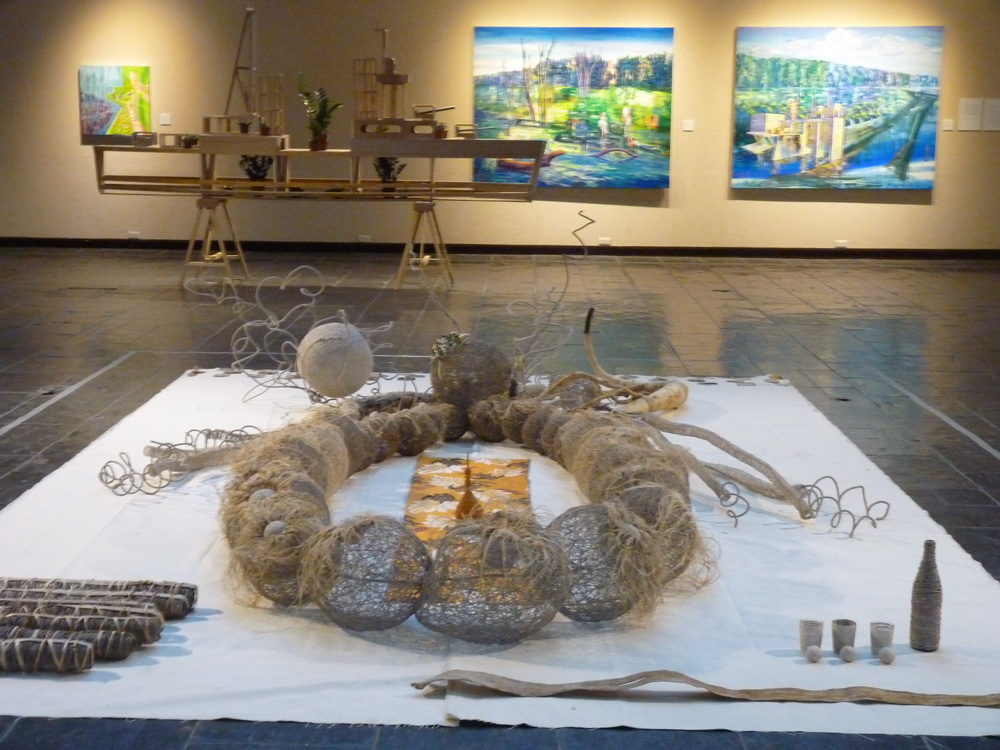
Two indigenous artists: An Sheng-Hui of the Rukai tribe presented the metaphysical “Mata, Abai, Tainan” natural material space installation (2015). “Mata” is a common Austronesian vocabulary and associative context, linked into the form and meaning sign of eyes, serving as emotional belonging and finding a way home. “Abai” weaves and fuses rituals of the food chain, creating a new dialogue in meaning, intending to recall the code and existential profundity of Austronesian art. Lagake Talifau of the Amis tribe has conducted the “Typhoon Project” object space installation (2015) over the past seven years. Using drift bamboo woven into bamboo rafts (upright), followed by placing drift fragments with shoe prints, it reflects and discusses the current environmental situation. Typhoons are subtropical climate signs, possessing natural phenomena of rebirth and disillusionment. By collecting drift slippers on the coast after typhoons, he constructed environmental art. He wrote, “Bamboo travels on water, slippers travel on roads. Broken drift bamboo can return to dust and earth, but drift shoes have nowhere for their souls to return. He took the tangible form of the slippers from the ocean, leaving the intangible. The destination may be unknown, but let the drift story continue” (Note 5).
“Island, Islanders – Tainan Story” is a reflection of the island’s collective synchronicity. Through creation and dialogue with the environment, time, and space, it recalls Taiwan’s subjective cultural consciousness, presenting local vitality, shock, scent, character, and attributes, constructing the genuine “Taiwanese” great local spirit, advancing headlong into the journey monument of island and ocean aesthetics.
Note 1: From the inaugural editorial of “Art World” written by Chen Shui-Cai in 1985. Note 2: Hou Kun-Hong, Analysis of White Terror in Post-War Taiwan, p.141, National Palace Museum Special Publication. Note 3: Marine Aesthetics · Flavor of the Ancient City, text by Chen Yan-Ming / Press release for Island, Islanders – Dagou Fish Assassins Island Series – Tainan Story. Note 4: Ibid. Note 5: Explanation of creative concepts for works at the exhibition site.
Exhibiting Artists: An Sheng-Hui, Li Chun-Hsien, Li Chun-Yang, Lv Mu-Ben, Lagake Talifau, Lin Chun-Yong, He Jia-Zhen, Chen Yan-Ming, Chen Yi-Zhang, Zhang Xin-Pi, Zeng Wan-Ting, Huang Zhi-Wei, Jiao Sheng-Wei, Yang Shun-Fa. February 17, 2016, Chiayi