Su Kuo-ching Solo Exhibition "Solitude and Nature"
Looking Back 100x80cm 2015 Oil on canvas
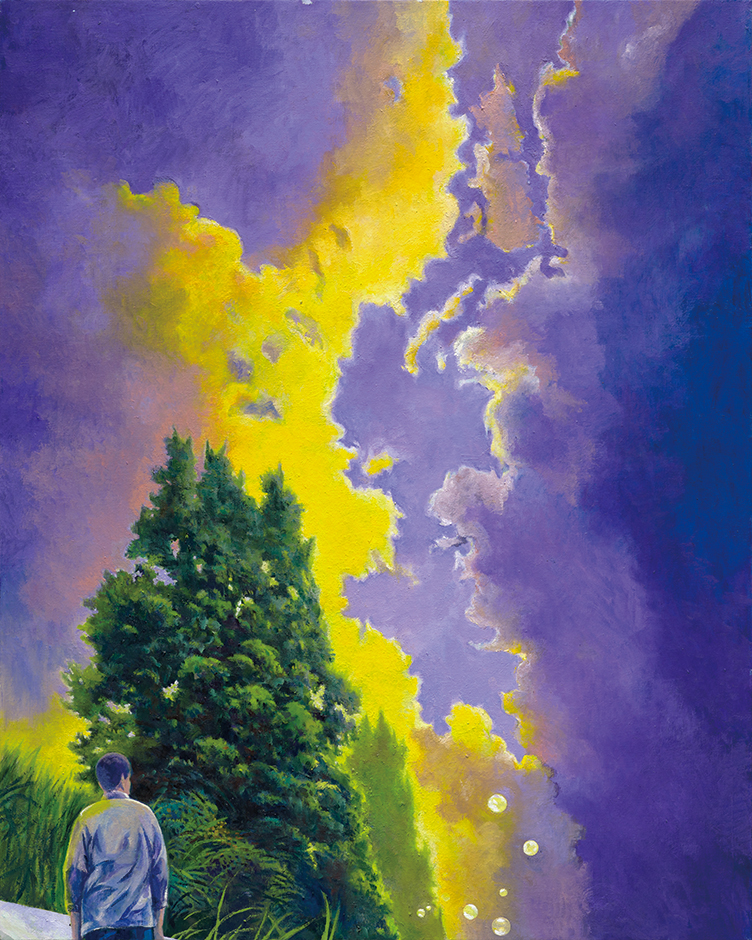
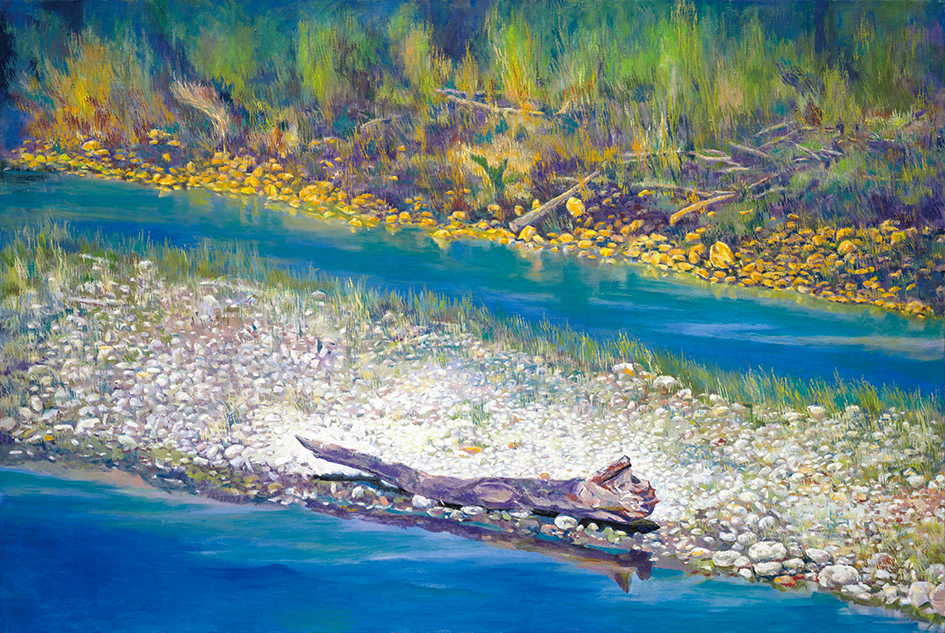
Text/Chen Chi-Hsiang Curator: Wang Chia-Chi Location: Kaohsiung Little Gallery Dates: April 16 to June 5
"I use landscape painting to convey the shared human emotions at the deepest level of my heart."
Su Kuo-ching
In this post-postmodern context where anything goes, how does one paint landscapes, what kind of landscapes, and how can landscapes express inner insights? When the artist visits and contemplates nature, the point of contact is not the trigger; the landscape itself is the catalyst. It strikes the painter's deep subconscious consciousness at that moment. Indeed, the landscape is a field and context of existence. When facing the scenery before one's eyes in meditation, it is inseparable from present emotions and experiences. The landscape reflects and analyzes the self's inner world, using the scene to express feelings and awareness regarding people, things, and events. Between perception and sensibility, the visible and invisible, it elucidates the beautiful landscapes within the painter's magnificent life. Su Kuo-ching says, "I use landscape painting to convey the shared human emotions at the deepest level of my heart."
Su Kuo-ching (born 1947) is from Zhuojiao, Baihe, Tainan. Born amidst bright natural scenery with clear mountains and waters, he has painted landscapes since childhood. This projection of strong affection for nature from his rural upbringing made landscape painting Su Kuo-ching's unique preference. Amidst Eastern and May Fourth abstract storms, when classmates like Cheng Yen-ping and a group of radical young art students went to study automatic techniques with Li Chung-sheng, Su Kuo-ching remained unmoved, favoring natural scenery instead. Indeed, personality determines one's destiny; painting landscapes became Su Kuo-ching's artistic fate and personal pursuit of style.
Knowing well that Su Kuo-ching loves natural scenery, especially trees, he believes trees are the existence closest to humans. Forests are like human society, having experienced various stories. He says that whenever he stands in natural scenery or in cities mixed with people and trees, the opening monologue of Hamlet—"Who's there?"—resounds in his ears. (Note 1)
Landscape is Su Kuo-ching's inner reflection triggered by the scene, reflecting present awareness. He paints the landscapes in his eyes using literary techniques. The landscape of life in his heart changes continuously as he participates in, observes, and comprehends life. He constantly seeks the key to life to unlock its code. His landscape paintings are records of this search, documenting what disappears (Note 2). Overall, his landscape paintings fall into three categories: urban landscapes—figurative, natural landscapes—imagistic, and inner landscapes—mental images. The German Symbolist painter Caspar David Friedrich said, "The landscape is the state of mind of the painter." Su Kuo-ching believes this has two aspects: one is "the painter sees the world with the mind's eye," and the other is "the painter uses landscapes to express his mental image world" (Note 3). Although drawn from real scenes in the phenomenal world, Su Kuo-ching's landscape paintings always carry an intriguing sense of solitude (Note 4), echoing the German poet Rilke: "Flowers bloom and fall simultaneously in our consciousness."
Note 1: Su Kuo-ching Landscape - My Inner World Lecture Notes March 2011 Introduction Wang Yi-jia. Note 2: Landscape Code Explanation for Kunshan University of Science and Technology classmates Su Kuo-ching. Note 3: Su Kuo-ching Landscape - My Inner World Lecture Notes March 2011. Note 4: Su Kuo-ching "Solitude and Nature" 2016 Solo Exhibition Press Release Wang Chia-Chi.