Chuang Ming-Chi – The Original Hodgepodge Aesthetics of the "Pseudo-Amateur"
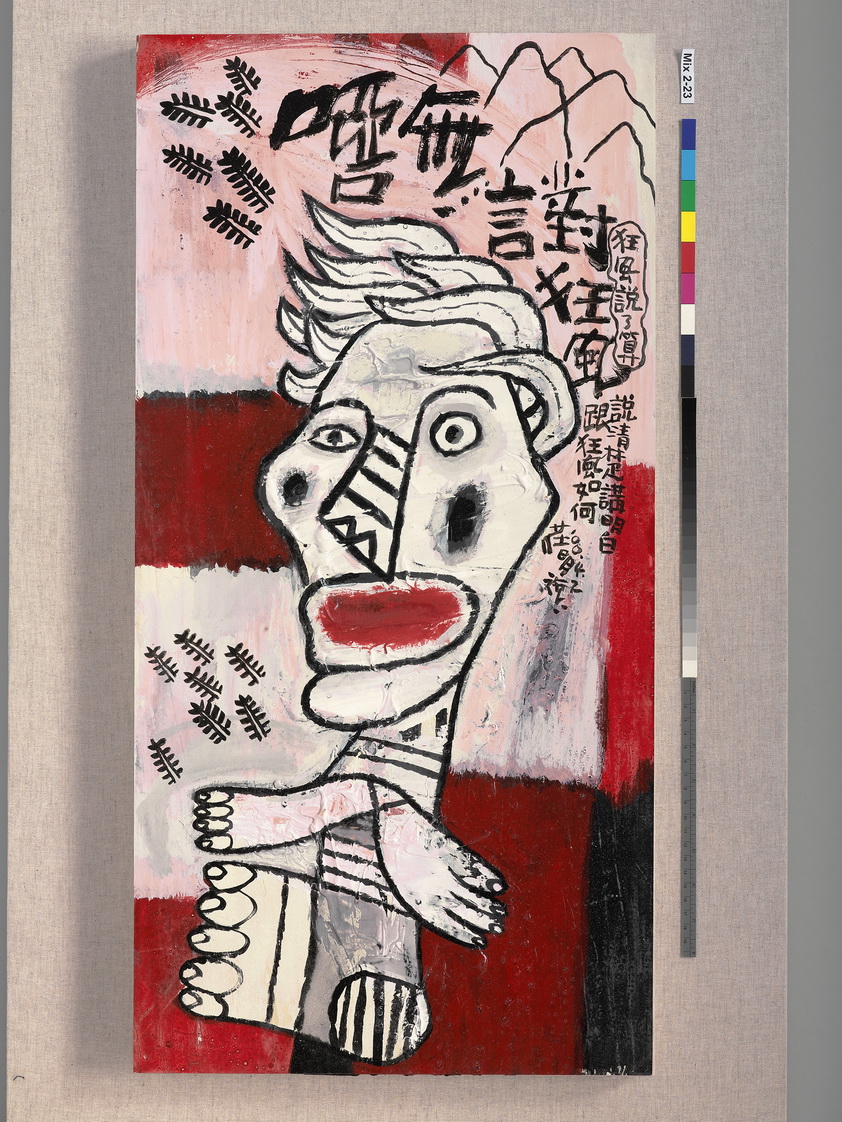
Speechless 2000 Ink and acrylic on paper
By Chen Chi-Hsiang
"It was not I who chose to create, but creation that chose me."
— Chuang Ming-Chi (Note 1)
Preface: From the End of Modernism to Post-Postmodernism
Contemporary art has broken free from the dictatorship and constraints of avant-garde art, opening the doors and consciousness of tradition and modernity. It has galloped forth into the realm of globalization, full of vitality, where cross-boundary fusion has become a new, vibrant hodgepodge aesthetic. In this era of globalized hundred schools of thought contending or displaying their wonders, all possibilities for artistic creation are unveiled. Chuang Ming-Chi witnessed this prosperity firsthand. Crossing East and West, blending ancient and modern, domestic and foreign, academic and non-academic, he reveals his true self. With a diverse perspective as his open, multi-directional creative foundation, he goes with the flow, freely expressing his instincts and sensibility. He sings his own song, writes about the subtle tremors of his heart, and creates his original "pseudo-amateur" aesthetics.
He takes a resolute attitude toward creation, discarding all art books, theories, and trends. He rejects all artistic information, avoids all exhibitions, and contacts no other artists, isolating himself from the art world to enter life. As the saying goes, you must be willing to let go to gain; how can you gain if you cannot let go? Chuang Ming-Chi remains immovable regardless of the winds from east, west, south, or north, entering the depths of his own heart. He forgets art, works every day yet forgets how to create, and forgets he is an artist. He intends to empty his mind to open the living source of creation, revealing that art is like absolute freedom and selfhood. He finds boundless joy roaming freely in his own artistic kingdom, embracing himself with supreme individuality. Yet his dream of being an artist remains constant. Regardless of facing or experiencing difficulties and hardships, his willpower never wavers because art is his beloved lover. No matter how long the seas run dry or rocks crumble, he loves only "her" in his life.
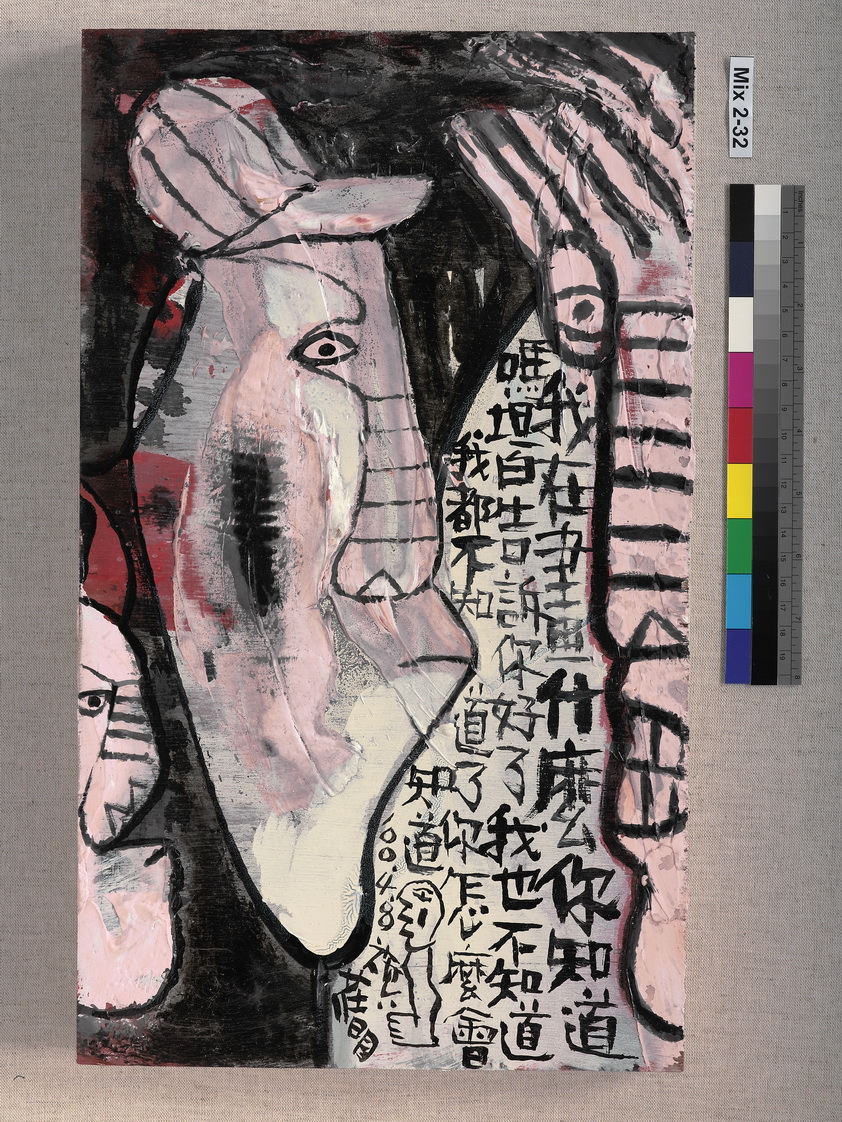
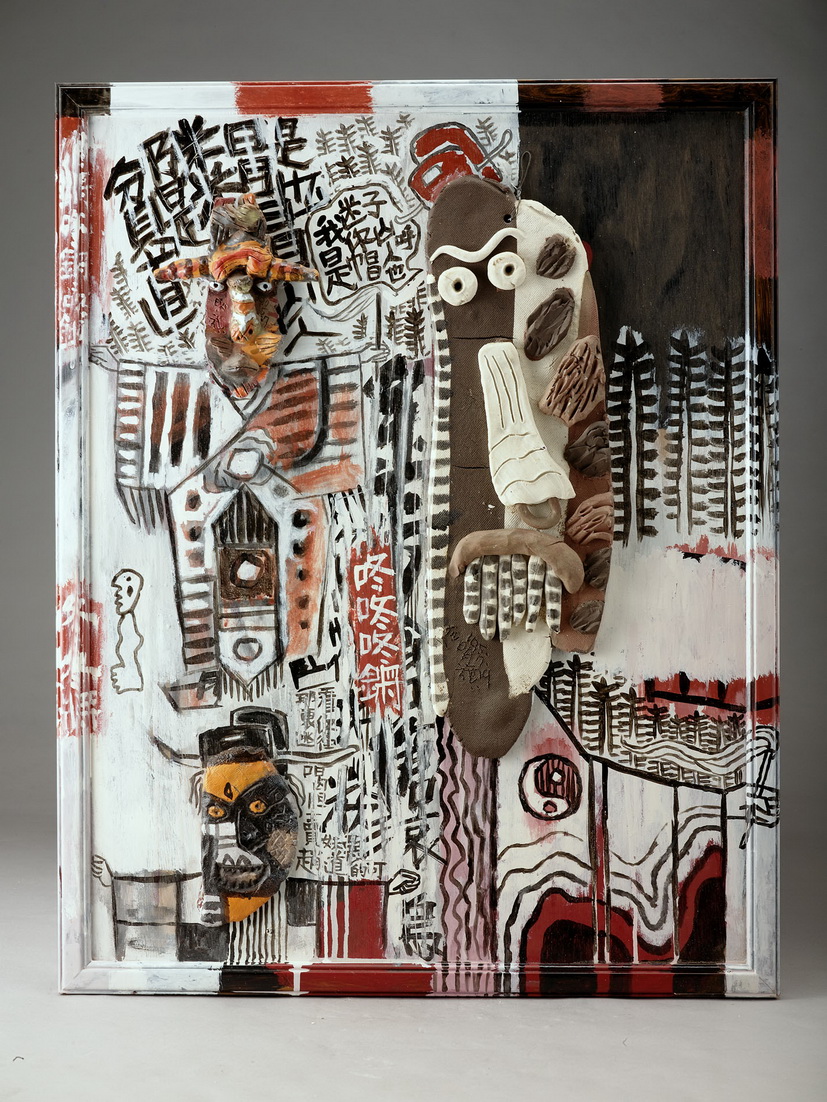
Chuang Ming-Chi is a multi-dimensional artist with a panoramic vision. His creative power is vigorous, direct, unadorned, and unaffected. Regardless of any form (academic, folk, amateur, children's, etc.) or material medium, he cares little for whether it is "art" or not. His diverse forms of painting include ink on paper, acrylic on canvas or clothing, paint on wood boards, cardboard, bricks, or tiles. Sculpture, objects, and painting are integrated; intuitive sculptures possess painting attributes. Text and images shine together, writing emotional doggerel (humorous and teasing) words. Unconstrained by form, he fuses painting, sculpture, objects, and text into an alternative presentation. His creative power is extraordinarily vigorous and diverse. "Painting or creating is like talking to myself, drinking tea, and eating rice with a salted egg—natural and sufficient," he says. "It was not I who chose to create, but creation that chose me." More wonderfully, he adds, "...entering life, entering the depths of my own heart, forgetting art... creating every day yet forgetting how to create, forgetting I am an artist, just a greedy, playful fat man, hahaha!" (Note 2). Indeed, creation stems from instinct and sensibility. Creation is everywhere, opening the "Qi" artistic skylight in this "non-presence."
Ming-Chi is a prolific artist whose creative power is extraordinarily vigorous and whose creation is arrogant. Artistic creation is like an active volcano, ready to erupt at any moment with thunderous force, violent storms, loud explosions, and colorful chaos—everything is present. When it does not erupt, earthquakes occur, bringing bad luck to those around him. If the volcano stays dormant for a while, he becomes restless and uneasy. Once the urge to create strikes, he works day and night until the world turns upside down, soothing his energy and calming his restlessness, solely to express the most beautiful things in the world. He paints ceaselessly day and night, only stopping to eat or use the toilet. He even paints while watching TV; if he doesn't paint, his hands itch unbearably. He secretly gets up in the middle of the night to paint. It is unimaginable how his arrogant "work" allows him to roam freely, soaring into the clouds, enjoying his personal artistic sky.
Chuang Ming-Chi – A Natural-Born Artist:
Born in Renwu, Kaohsiung in 1954, Chuang Ming-Chi is one of the most representative artists of Taiwan's younger generation. Famous for his unique pseudo-amateur style, he is often mistaken for an amateur painter and is considered one of the most marginal artists in the Taiwanese art scene. He possesses an innate sensitivity and devotion to art, an extreme rebellious personality, and a strong idealistic drive. He values the instinctual and sensual impulses of human existence, unlocking symbols derived from spontaneous potential, expanding the boundaries of all artistic possibilities.
Ming-Chi is a natural-born artist. He says, "Artists are born; they emerge naturally when the time comes. Just as no one can stop a volcano from erupting, once it starts, it is uncontrollable. With such abundant sources and such great energy, release them fully. Regardless of shaking heavens or high earth, love her even unto death!" (Note 3). He is sensitive, instinctual, sensual, and spontaneous by nature, with a strong subjective consciousness. He can paint freely whenever he picks up a brush. Any material medium in his hands becomes art. Once the door to art is opened, the fire of creation burns cracklingly, spreading like wildfire, uncontrollable. Nature shapes personality, personality determines character, and hard character creates his strong painting style. Arrogant and boastful to the point of absurdity, his eccentricities produce his unique aesthetics. The fire of Ming-Chi's painting was ignited when he took his first art class in the fourth grade of elementary school. Boiling blood awakened his creative instinct and consciousness, plunging him into an artistic vortex from which he could not extricate himself, remaining addicted to this day. Obsessed with graffiti, he neglected his studies, going from a gifted student to a dropout. Painting became everything of his existence. The artist says, "It was not I who chose to create, but creation that chose me."
Ming-Chi's artistic enlightenment came during junior high school in Donggang, Pingtung, when he coincidentally met sculptor Teacher Tsai Shui-Lin. During his three years at Donggang High School, the only weekly expectation was Teacher Tsai's art class. He began learning watercolor and sculpture, including molding and casting techniques, combining two-dimensional and three-dimensional work, which expanded his artistic vision and had a profound impact on him. Teacher Tsai opened the art classroom during lunch breaks for students who loved to draw, allowing them to learn with immense joy. Under Teacher Tsai's guidance, he participated for the first time in a sketching competition for junior high students across seven southern counties at the Confucius Temple in Tainan. Surprisingly, he won an award, and from then on, he frequently went on stage to receive prizes. Painting brought him great joy, feeling wonderful, loving it from the bottom of his heart, as if waking from a dream to find the answer to life.
After graduating from junior high, with the fire of art burning, Ming-Chi resolved to become a painter, accepting the test of existence. He insisted on choosing teachers over schools, traveling south from Kaohsiung to follow Teacher Chang Wen-Ching to enter Chaozhou Zhicheng Commercial and Industrial High School's Graphic Design Department. Under Teacher Chang's diverse instruction, he became obsessed with plaster sketching, further deepening his watercolor and sculpture skills. In his third year of high school, crazy about painting, he simply built a bed in the art classroom and lived there. During this period of boarding at school, starting from his third year, he prepared for admission to art departments. He spent half of his meager living expenses on tutoring, saving money and eating frugally, having only one meal a day. Like a desperate fighter, he deeply felt the stumbling and hardship of the path to becoming a painter. Enduring hardship builds strength, tempering his spirit and will. Inspired and guided by Teachers Tsai and Chang, he moved forward with unwavering resolve toward his original "dream" with the spirit of Don Quixote.
Ming-Chi fought throughout his life with iron-willed determination against the bumpy fate of painters. To squeeze through the narrow gate of the National Taiwan Normal University (NTNU) Fine Arts Department, he endured eight joint college entrance exams. Finally, in 1980, he entered the last batch of NTNU's evening division at the very end of the list. Full of confidence, he entered his dream department but quickly lost hope in the authoritarian art education, which violated the respect for individuality and free, open inspiration he had received. Mature and decisive, he chose the Chinese Painting group. By his third year, unable to bear the constraints of traditional molds, his avant-garde artistic traits and courage inevitably led to clashes with his surroundings. He tested the law himself because a real and creative way of living requires reversing this authoritative order. Gathering tremendous courage, he attempted to break free from academic shackles, painfully searching for himself. He said, "What benefited me most and truly helped me at NTNU was learning Chinese painting, exploring the true meaning of creation within it" (Note 4). The chronic truant finally graduated in 1984 and returned to his alma mater, Zhicheng Commercial and Industrial High School, to teach.
A Path of Thorns – Finding Self:
Ming-Chi showed his artistic talent at a young age. His cement "statue" (1970) at fifteen (junior high) and the woodcut "Young Man Statue" (1973) at eighteen (vocational high school) proved his keen observation and sculptural skills, with precise proportions and perfect forms, resembling works by masters. Indeed, great teachers produce great students, giving the impression of surpassing one's master. His expressive watercolor "Overlooking" (1973) presented a simple and heavy beauty with an extraordinary vision and rich tones, sensibly expressing the painter's subjective consciousness, clearly demonstrating his traits as a natural-born artist.
Having laid the foundation of grinding an iron pestle into a needle during junior and vocational high school, his freshman work "Doll" (1981) demonstrated exquisite drawing skills, appropriate color application, expressive brushstrokes, and light and shadow, proving his mature painting art. Abandoning Western painting for Chinese painting allowed him to delve into Eastern essence and achieve future multi-dimensional creation. Although the chronic truant only attended two classes with Teacher Cheng Shan-Hsi, his keen and wise mind quickly mastered the secrets of ink painting. Works like the lion dance "Celebration" (1983) and the original graduation exhibition triptych "Let Me Arrange" (1984), depicting birds-eye-view water buffaloes with massive, suffocating bodies filling the frame, combined text and images. Its bold composition completely subverted traditional ink painting, leaving teachers both amused and frustrated, nearly causing him to fail graduation. He said, "I learned to observe nature and emulate nature from Chinese painting, categorizing things, realizing that objects have fixed principles while paintings have no fixed conclusions, gaining full subjective construction, freedom, and liberation in creation. This is entirely thanks to my choice of the Chinese Painting group back then" (Note 5).
After graduating from NTNU, Ming-Chi returned to his alma mater, Zhicheng Commercial and Industrial High School, to teach, opening the path for his self-expansion in art. Crossing East and West in painting, he fused modern ink and Cubist painting vocabulary in works like "Group Photo" (1984). Letting go and releasing became tools of liberation. Appropriately, he discovered the vital Puyuma tribal woodcarvings, intuitively grasping their pure, primitive aesthetic beauty in "Puyuma Totems" (1985). Determined to be a full-time artist, he struggled between ideals and reality in works like "Scream" (1985). Two years later, he resigned from teaching to teach children's painting, witnessing the instinct, vitality, and innocence of creation, which influenced him greatly, as seen in "The Person with the Shield" (1987). Ming-Chi's path of thorns crossed Eastern and Western art, primitive art, and naive art. All were part of his self-liberation process, dedicated solely to achieving his own art.
Gratitude to Spain – Finding Himself in a Foreign Land:
Ming-Chi searched far and wide for the promised land of art. In 1988, leaving his wife and children behind, he resolutely arrived in Madrid, the capital of Spain. His persistence and foolishness drove him to throw himself into a strange country, seeking rebirth through death, exiling, fragmenting, and tearing himself apart, solely to find himself anew. Knowing not a word of Spanish, he learned freely without attachments, relying entirely on instinct and intuition. Almost every day, he humbly studied and absorbed artistic inspiration in Madrid's major museums, constantly ruminating on his own creations. Facing art from various eras and living in environments where masters were born and raised, he suddenly realized the truth that local waters nurture local people.
During his two years of study in Spain, his exploratory footsteps covered Madrid, Salamanca, Barcelona, northern Spain, Paris, southern Spain, Morocco, the Sahara Desert, and more. Countless artists influenced him, causing deep shocks and intuitive understanding of art, discovering many possibilities for artistic creation and stimulating creative energy. In Barcelona, he marveled at Picasso to Miró and submitted to the highly creative Sagrada Familia Cathedral under the genius architect Gaudí. Gratitude to Spain! Under these magnificent halls, he attained enlightenment—finding his renewed self.
Full of ambition and possessing full courage and boldness in artistic creation, Ming-Chi painted crazily. In just two short years, he produced over 700 works. The creations during this period were quite bold and fearless, crossing modernism and postmodernism. Under the expressionism of instinct and sensibility, he vented the emotions and consciousness deep in his heart. Mixing children's drawings and graffiti in "Two-Legged Animals" (1989), with heroic, exaggerated, deformed, and twisted forms, and bold, strong colors, the pseudo-amateur style emerged in works like "Severed Lotus Roots Still Connected by Threads" (1988), "Feeling of Crowding," and "Life and Death Struggle" (1989). This nurtured the prototypes for subsequent series like "Earth-Shattering," "Like a Fish in Water," "Crowded," and "Two-Faced Person."
Childlike Shift to "Pseudo-Amateur" Style:
After finding himself in Spain, Ming-Chi returned to Taiwan in 1989, full of confidence. Amidst the economic downturn, he continued to accept difficult life challenges, still holding high the belief of a professional painter. Establishing himself in Taiwan with a macroscopic vision, he emphasized local characteristics (images and colors) without being attached to locality. Actively creating like a volcanic eruption, igniting himself, he simultaneously conducted painting and three-dimensional colored sculpture series, deepening his unique pseudo-amateur style. Works from the 1990s significantly increased in size. To express his intense inner feelings, he needed bolder, more arbitrary images and more wild, explosive colors, such as "Annoying Numbers," "Trapped Beast" (1991), "I Protest," and "Damn It" (1992), reflecting personal dilemmas. Or sighing over Taiwan's history in "Taiwan Experience," "Goliath," and "Phoenix Seeking Phoenix" (1991), using vivid contrasting colors between innocent children's drawings and amateur paintings.
Ming-Chi's most striking work is the giant piece "Ten Thousand Feet of Red Dust" (1991-1992). Inspired by contemporary population explosion associations, it uses the myriad states of red dust spanning millennia across time and space, grandly connecting into a large-scale painting. On a canvas 2 meters wide and 84 meters long, using free-writing methods, he depicted survival of the fittest, mammoths, wild bears, tigers, leopards, antelopes, and many beasts disappearing in civilization. The image is filled with the situation of an overcrowded Earth, marking the birth of the pseudo-amateur style. Under the vigorous creativity of the 1990s, feasts of rich whimsy, crowding, "Like a Fish in Water," and "Spirit of All Things" series burst forth.
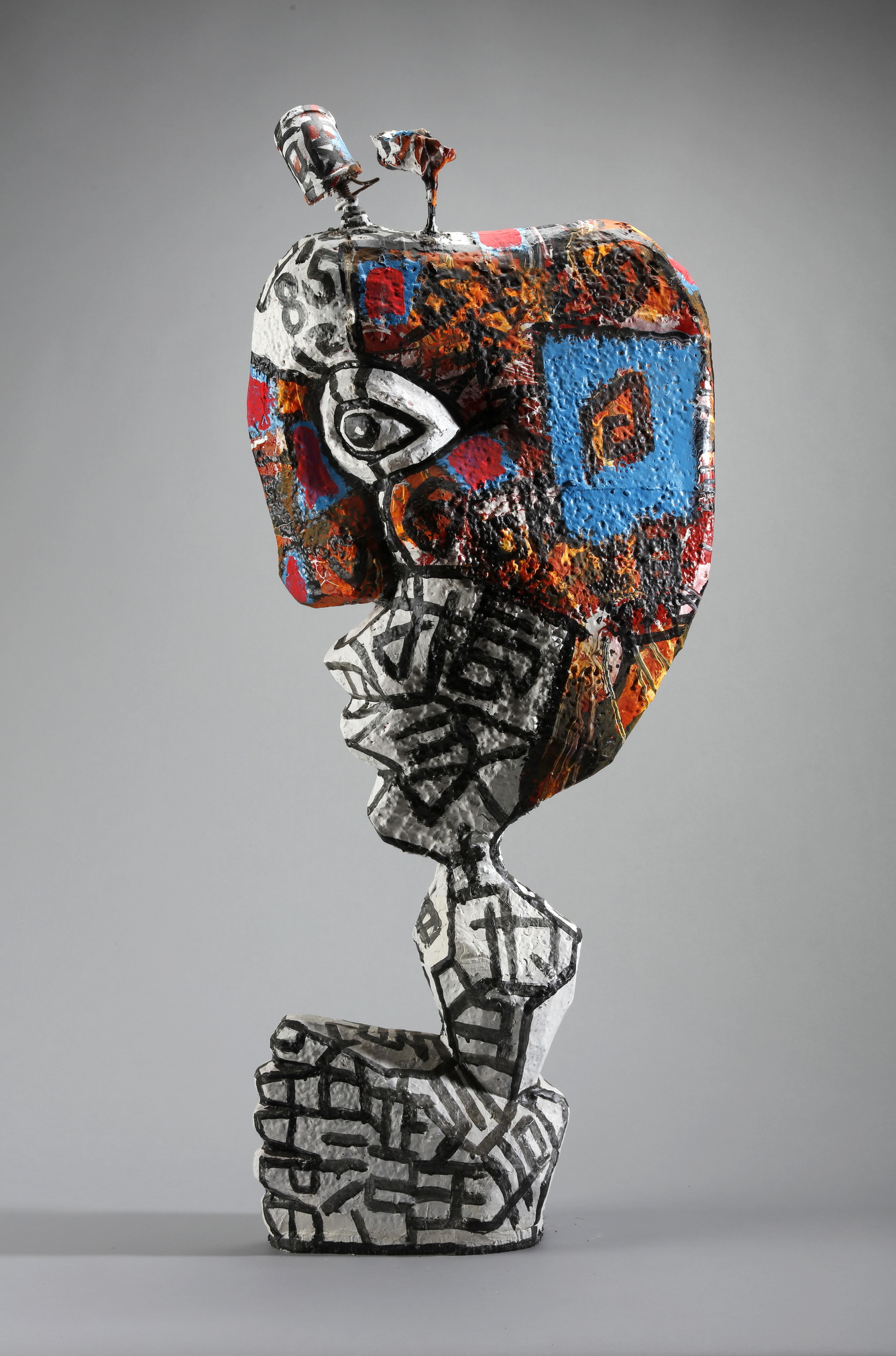
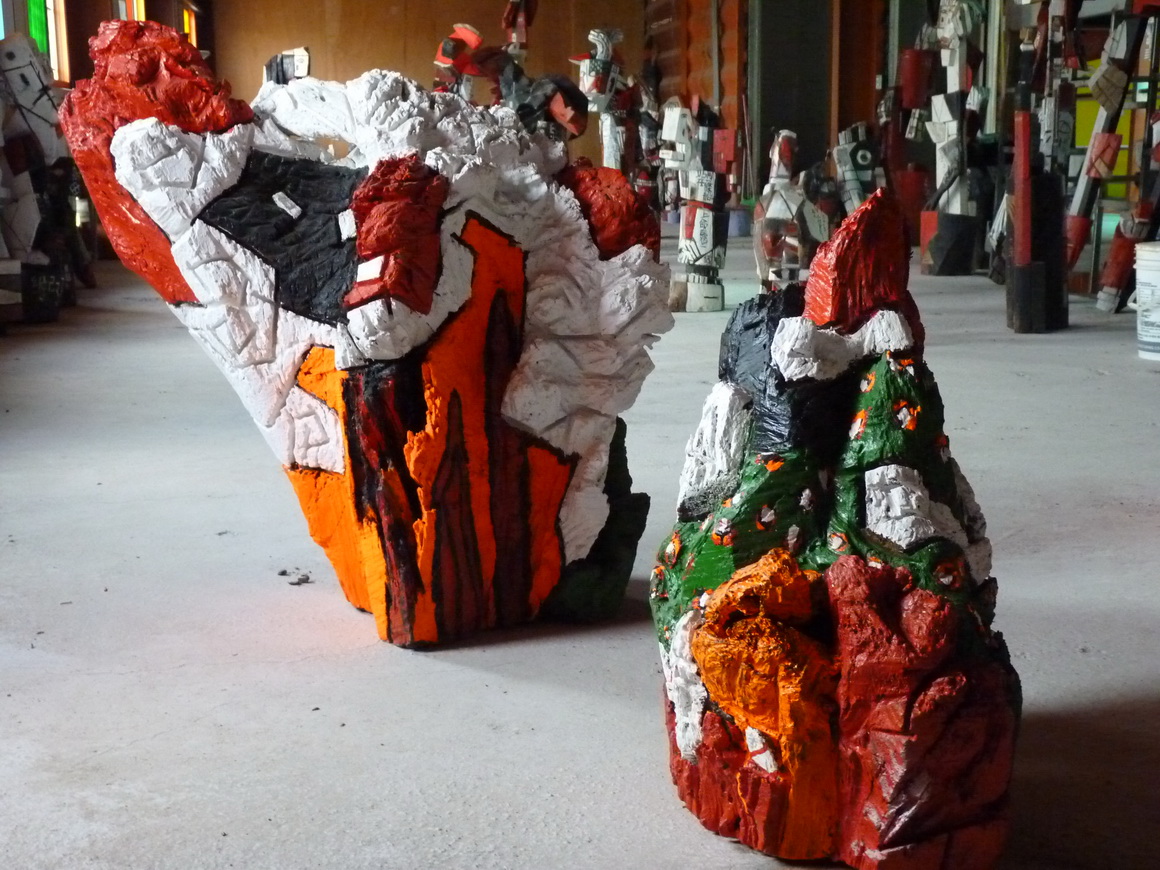
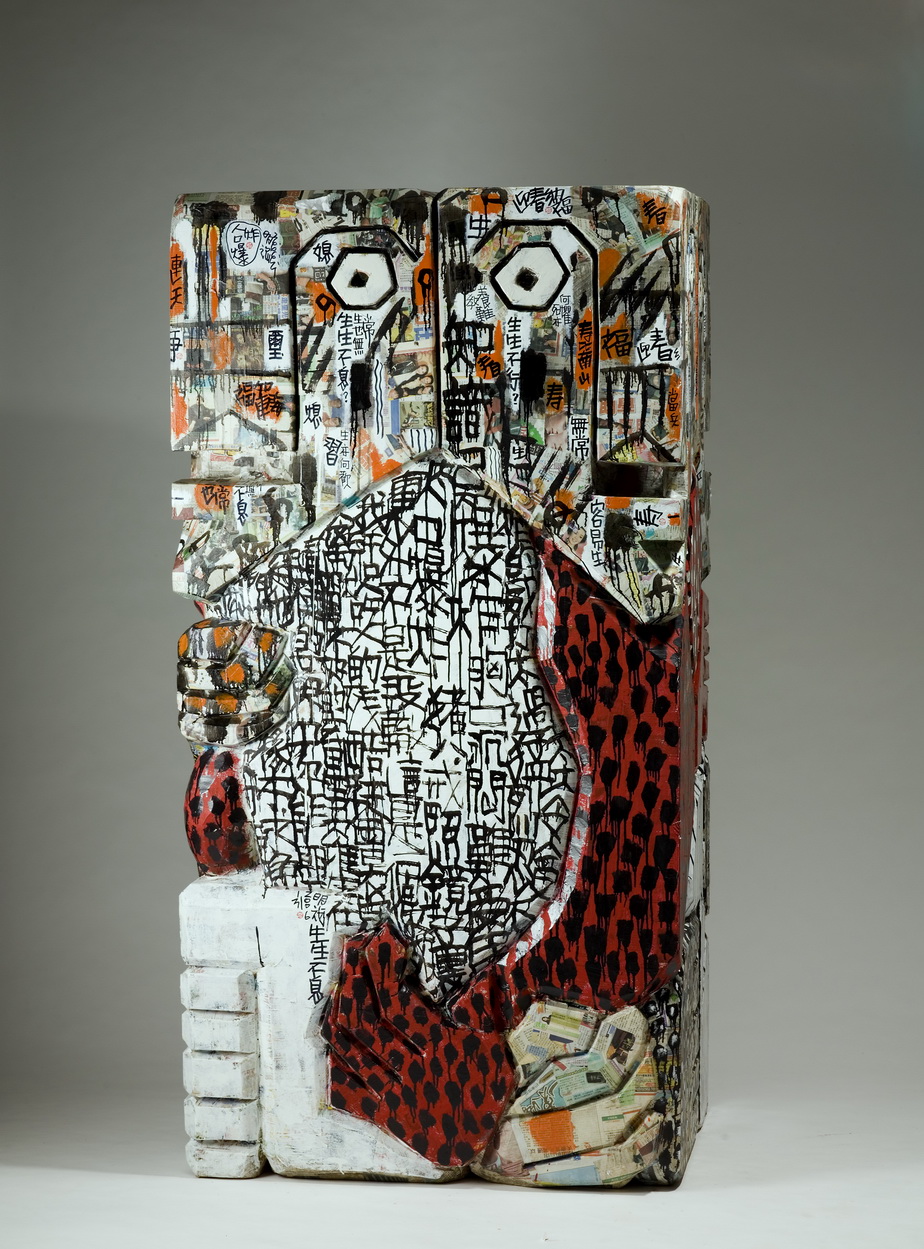
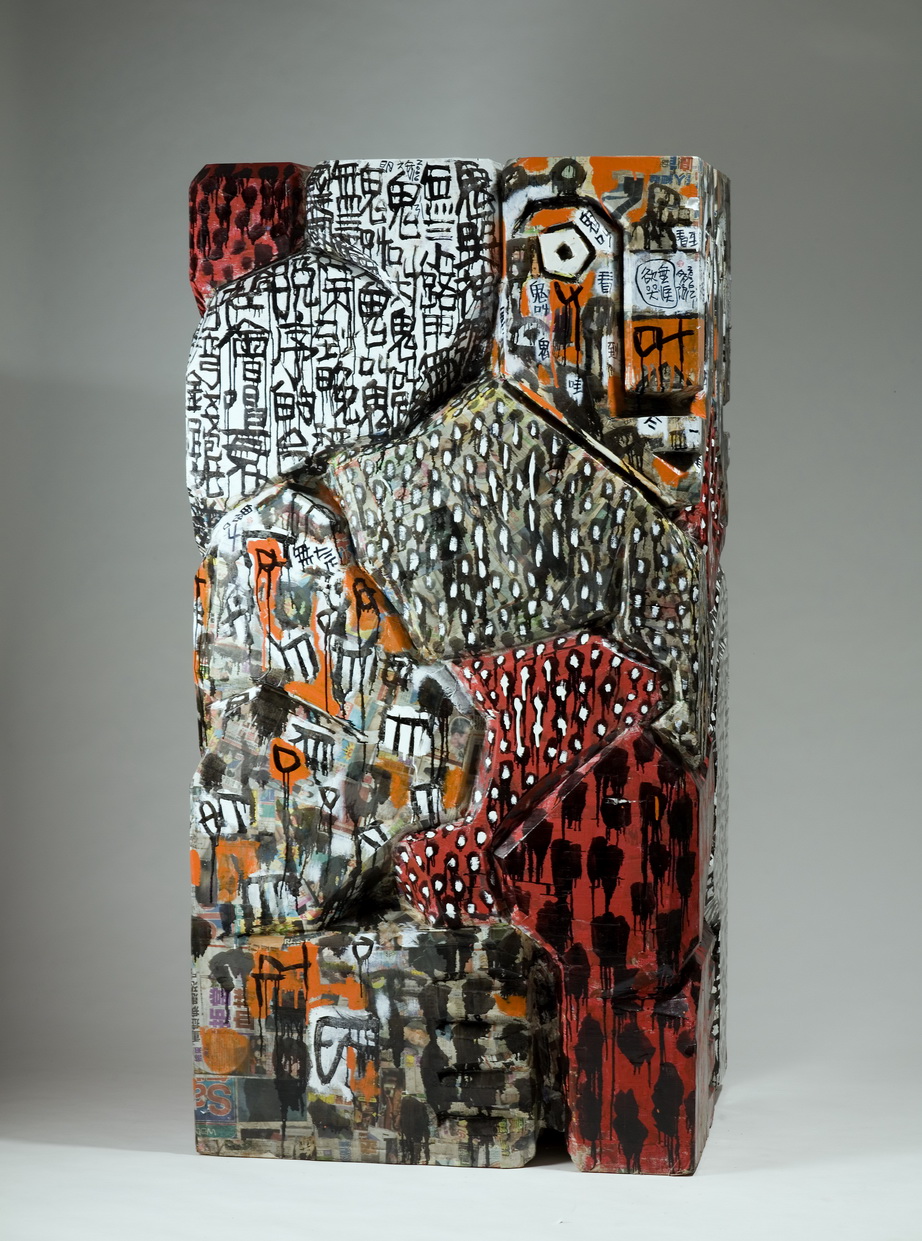
In the 1990s, Ming-Chi pioneered colored sculpture carving, inspired by folk art—puppetry and pulp modeling. Bold and free imaginations of "monster" figures, such as "Hair Standing on End" and "Three Aunts and Six Ladies" (1990), presented social figures visible everywhere and familiar to all ears, under cartoon-like character signs. Colorful and brilliant images or written texts unintentionally merged sculpture and painting into one, becoming Ming-Chi's unique hodgepodge sculpture-painting style.
Insightful Recognition by Chu Ming Museum Residency Creation:
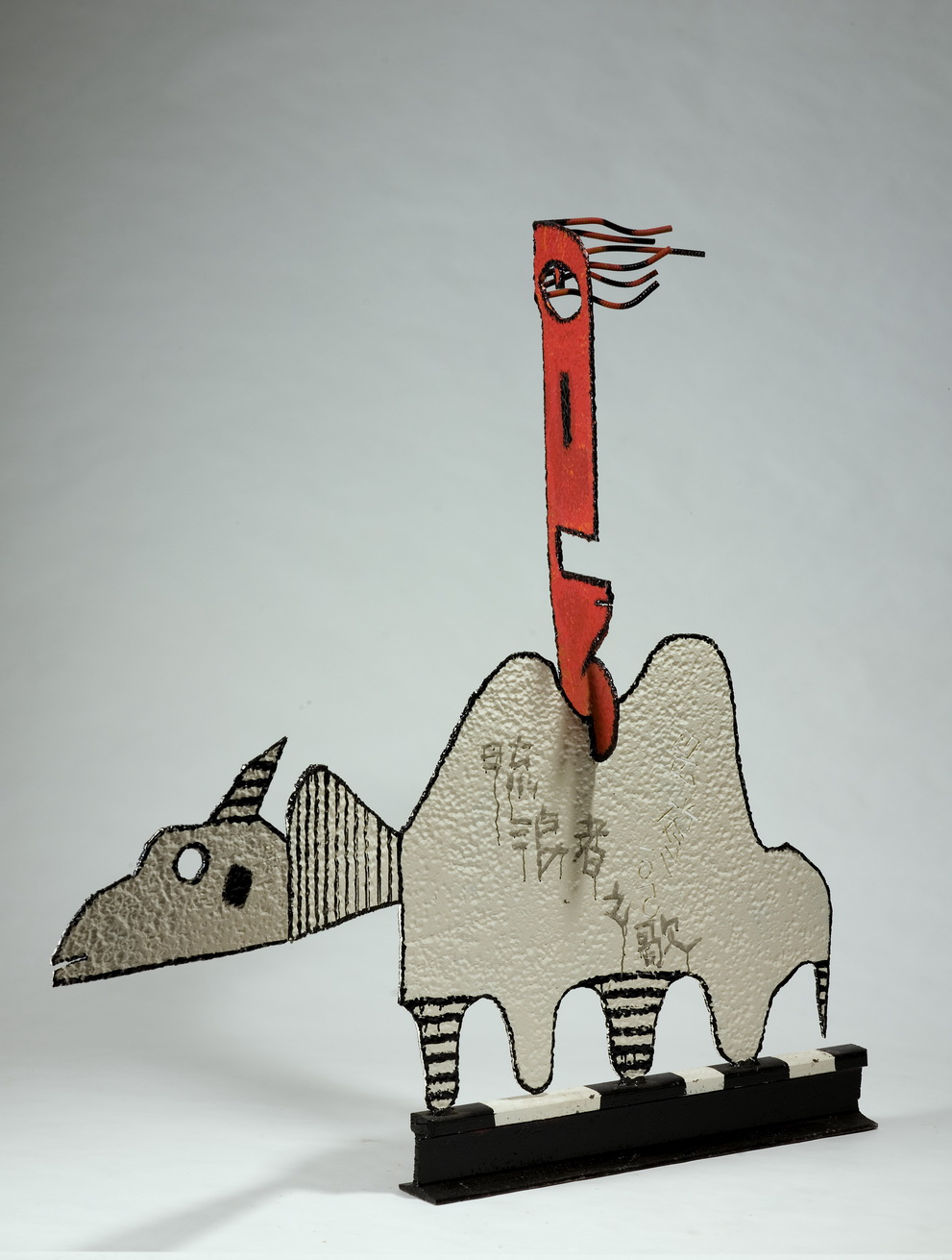
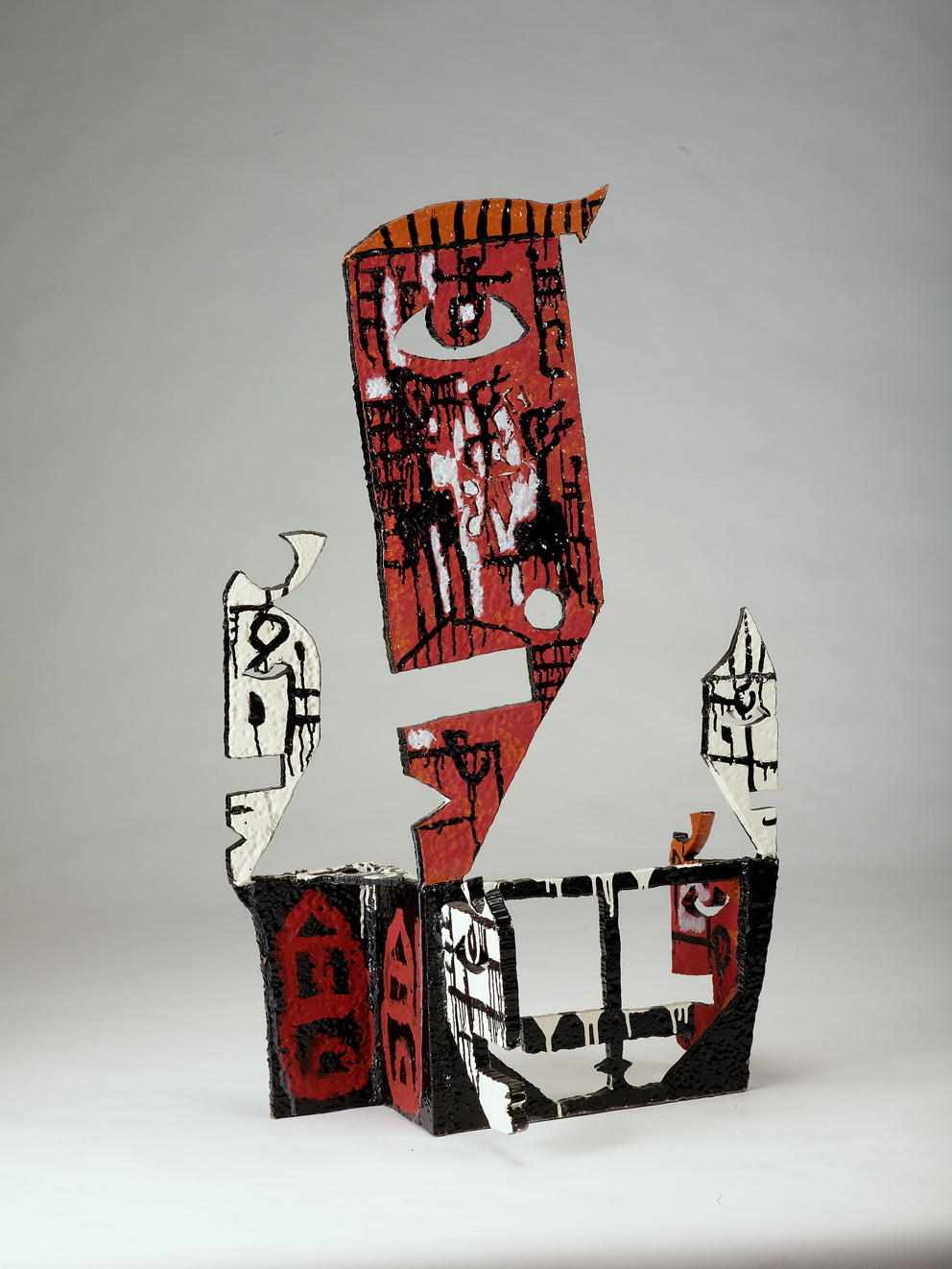
Ming-Chi actively participated in art activities. His pseudo-amateur style elicited polarized reactions. Famous sculptor Chu Ming recognized his heroism, seeing his pictures in newspapers and magazines, attracted by this strong amateur style. Unexpectedly, he turned out to be a top student from NTNU's Fine Arts Department. In 1999, Ming-Chi entered the Chu Ming Museum for residency creation, linked by artistic fate with the master. The residency lasted two years and four months. Vigorous and diverse in creativity, he cleverly transformed rusted iron plates left over from the museum's construction into five sets of sculptures: "Come Sit If You Have Time," "Restless Sitting and Standing," "Face Changing Like Turning Pages," and "Beak-to-Beak Drum," among other major iron sculptures. He also created the "Faces of All Beings" series, combining text and images. The artist planned to "show some color to the Chu Ming Museum," wildly painting every corner of the campus, from the exterior walls to concrete walkways and restaurant walls, almost completely renovating the museum.
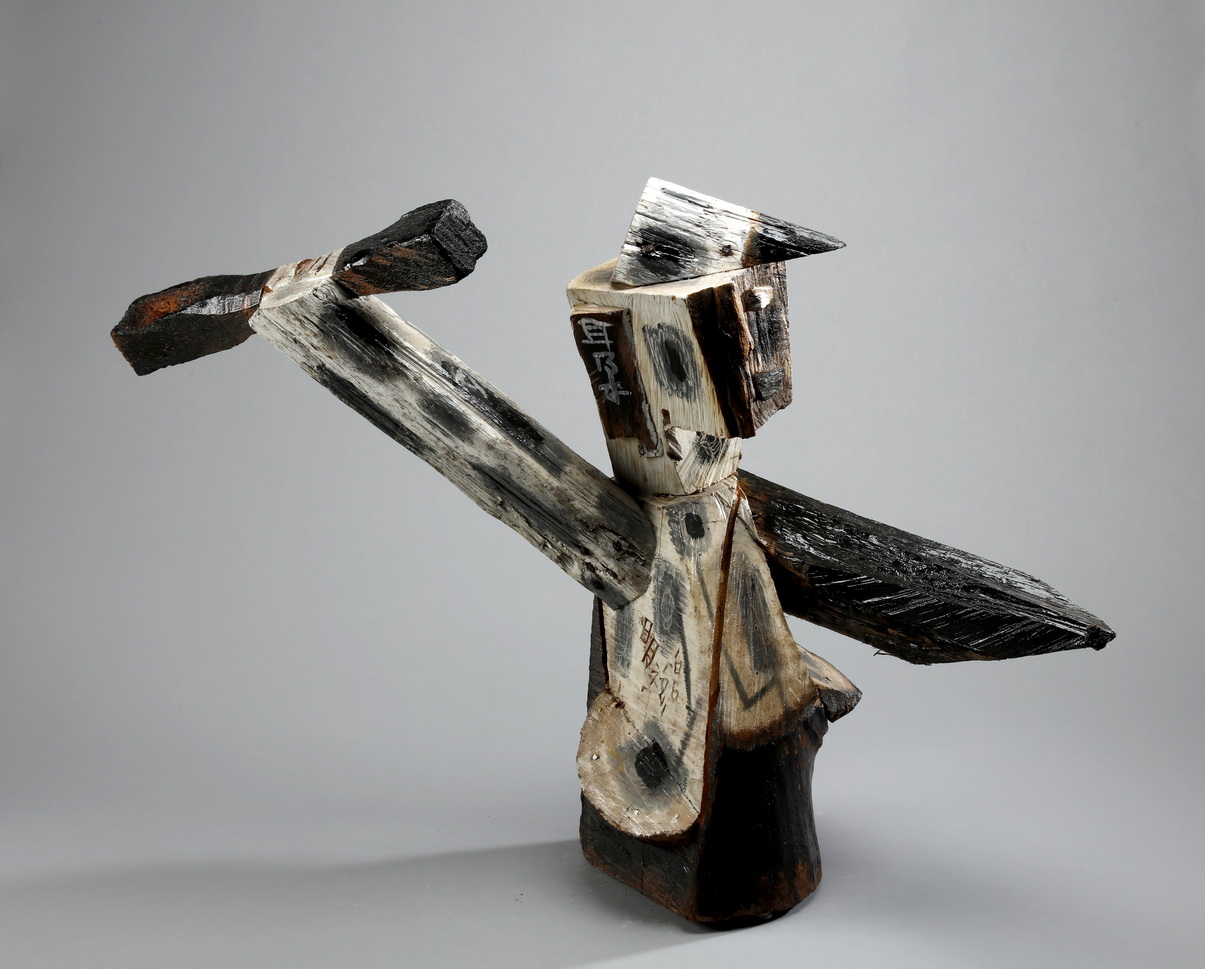
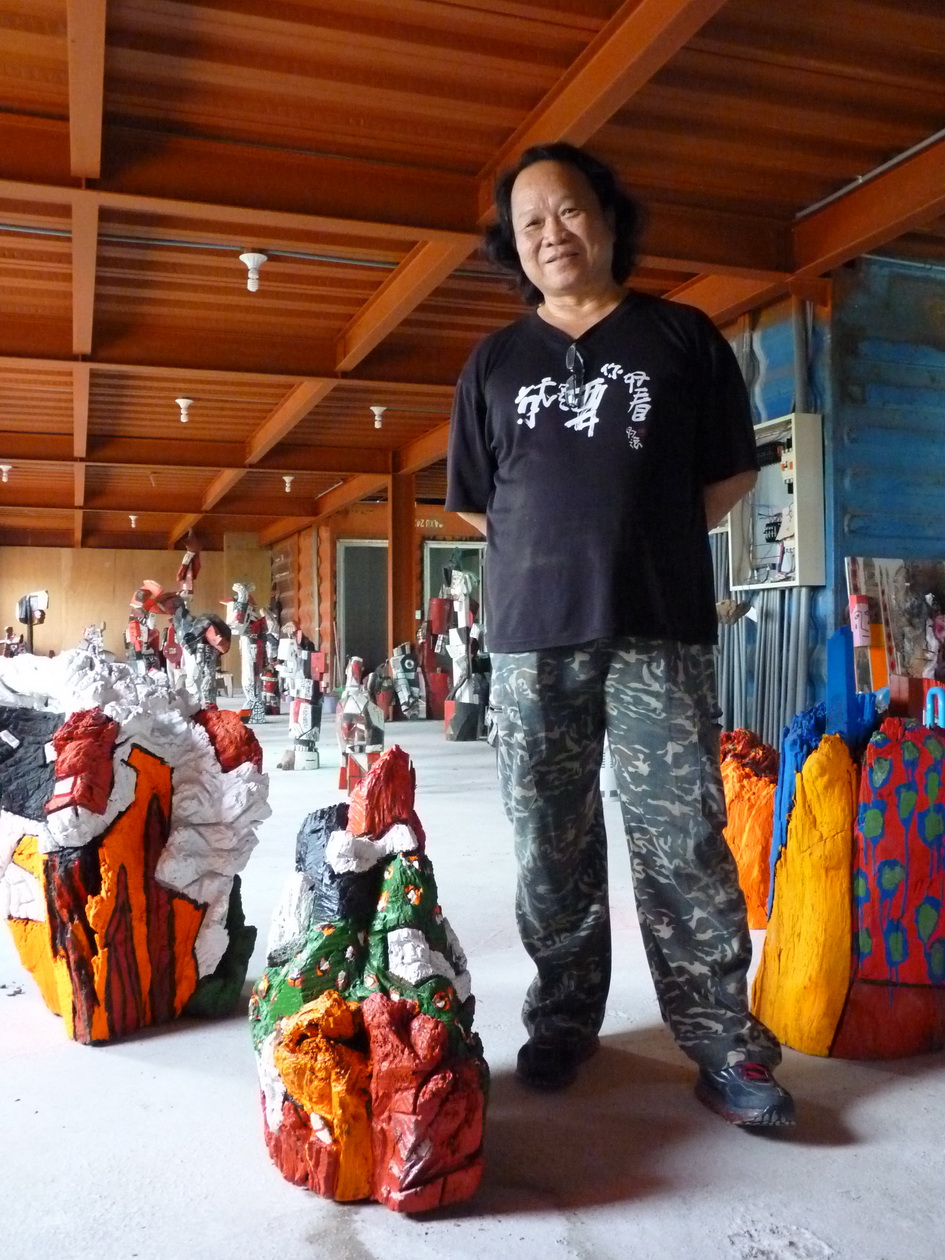
In 2001, concluding the residency, he held the solo exhibition "Burn! Firebird: The Artistic World of Chuang Ming-Chi." In 2005, he returned to the Chu Ming Museum to create desperately, presenting diverse displays: colored relief "Crowded Series," painting and object "Inverted Series," iron sculpture "Song of the Wanderer Series," and stacked leftover wood "Wooden Scream Series," all colored and combining text and images. Throughout his creative journey, almost all of Ming-Chi's classic works were completed at the Chu Ming Museum. In 2006, the Chu Ming Museum held the "Song of the Wanderer" creation exhibition, and the following year, a 15-meter-high iron sculpture "A Piece of Cloud" was collected by the museum.
Recent Major Creative Series:
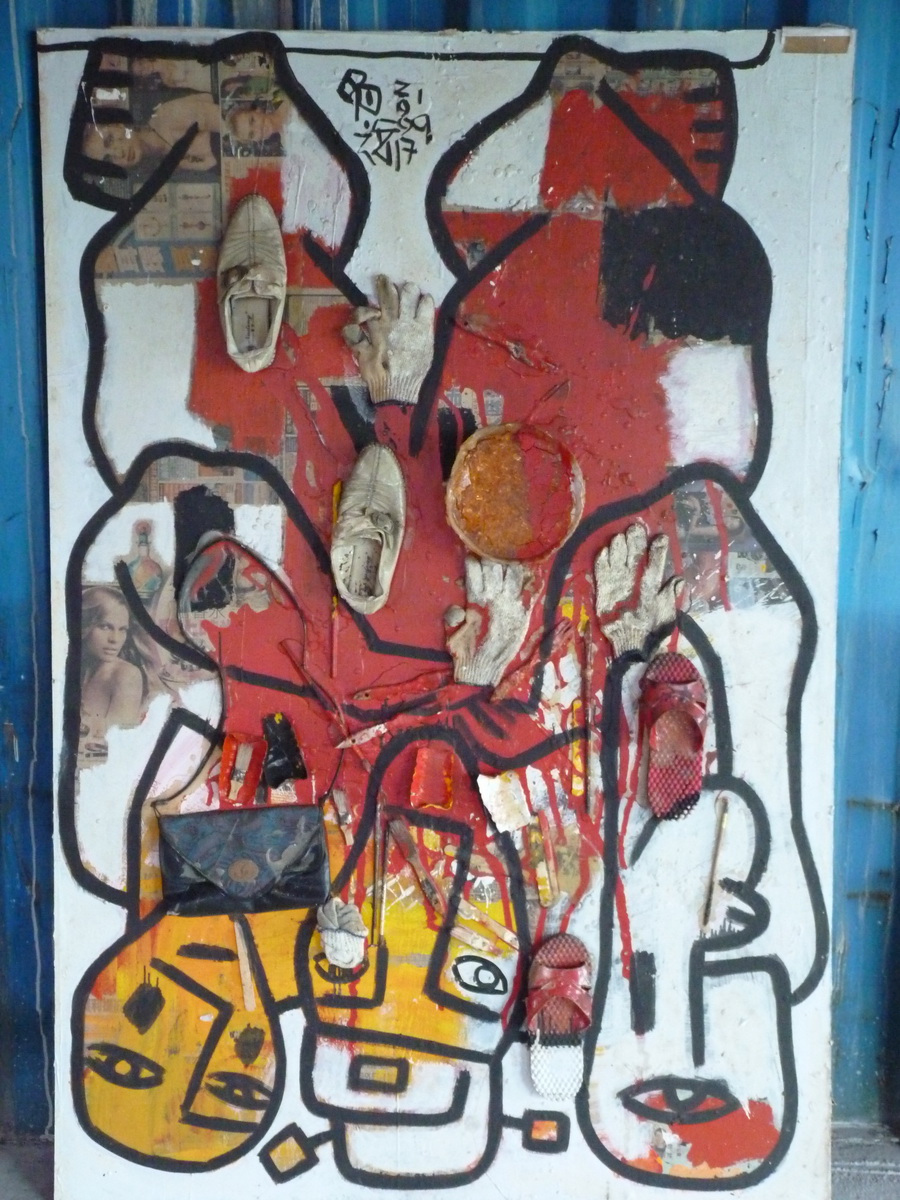
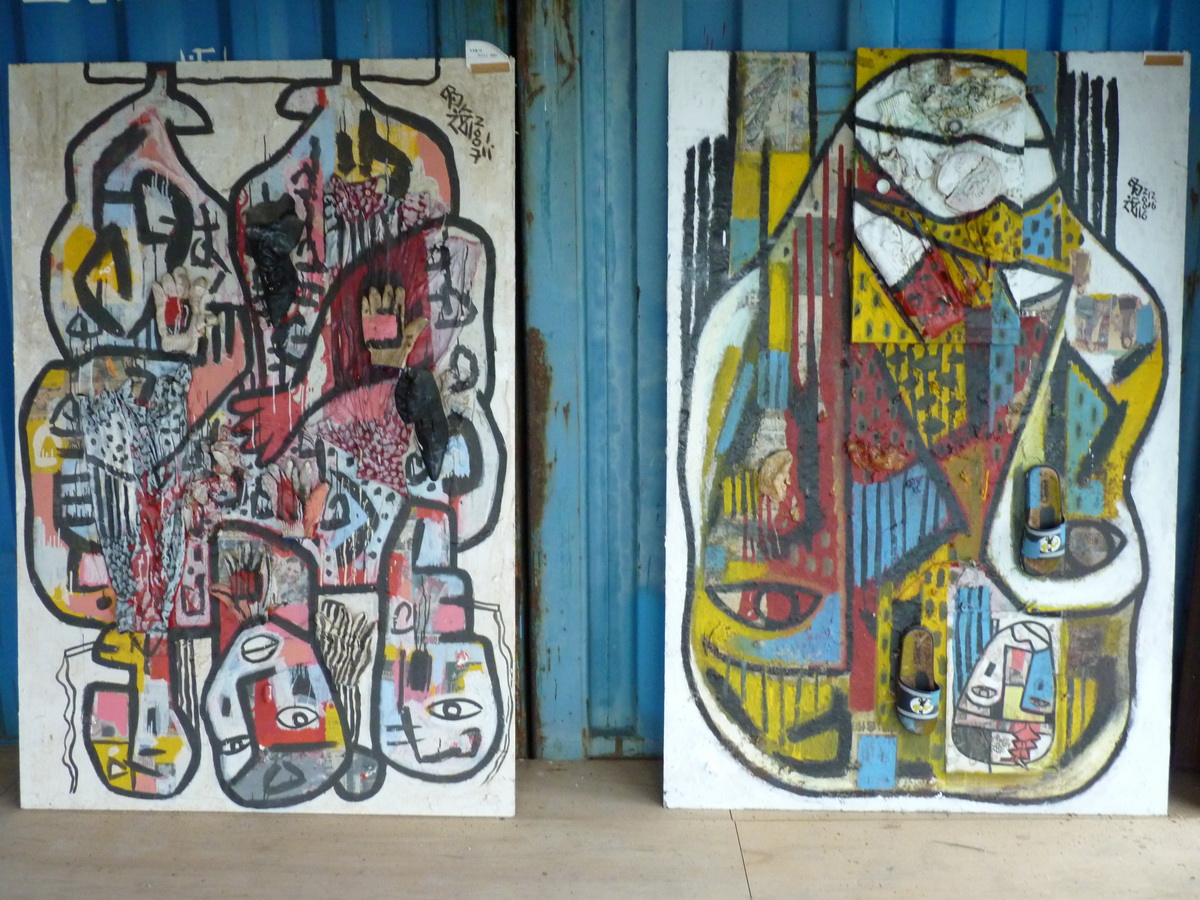
Ming-Chi's creation is random and casual, following his feelings. With vigorous creativity and a desperate fighter spirit, he is prolific. Painting, sculpture, and objects alternate in creation, all combining text and images. Sometimes Ming-Chi's painting is an emotional outlet, such as the "Faces of All Beings" series (2000), with bold, arbitrary, liberated images expressing societal various states in black and white, possessing expressive and amateur qualities. Elegant lyrical expressions appear in the "Hot Dry Noodles Ink" series (2003) and "Floating Immortal" (2004) series, patterned and decorative, close to folk art. Sensory works include the "Erotic Portraits" (2006) series, writing on erotic images, and the performance of painting and object collections in the large "Inversion" series (2006-07), featuring existing objects on the canvas. His painting signs: images or pictures are feelings, colors are expression, and text quotes the context of the moment of creation. Flat, color-plane, patterned, humorous, decorative, and possessing grand block-dynamic beauty.
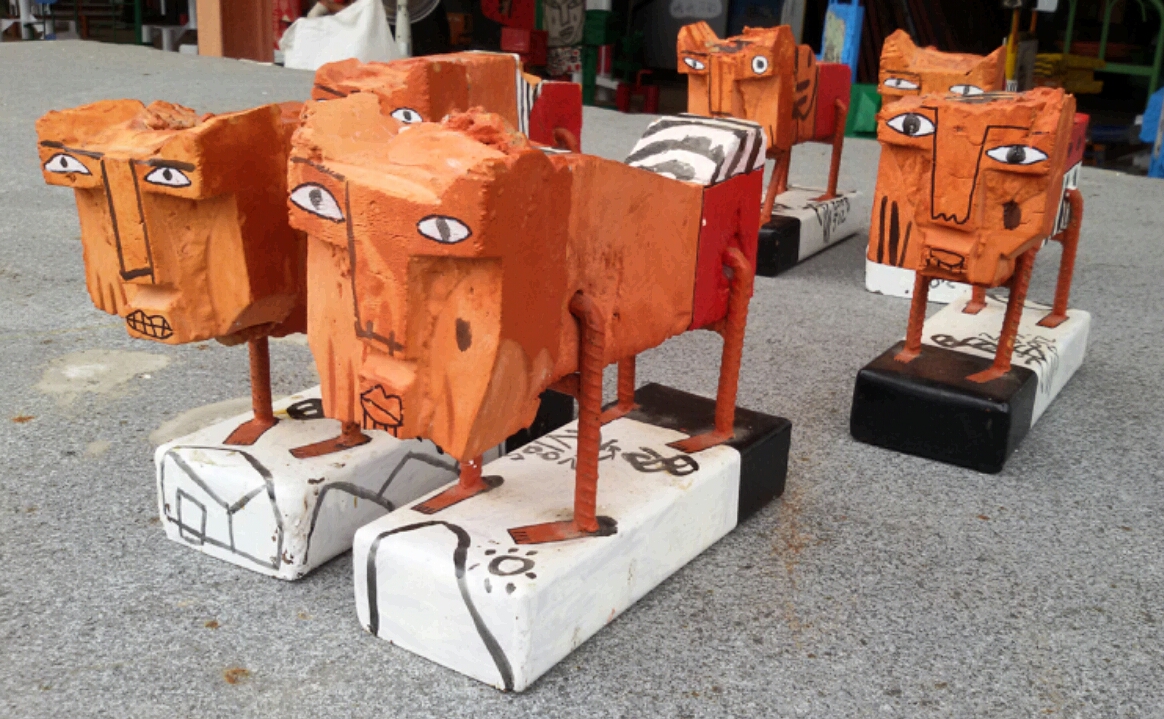
Ming-Chi is unconstrained by any material medium; anything in his hand becomes a work. He excels at mastering materials. Going with the flow, almost all three-dimensional spatial works use received media. At the Chu Ming Museum, he transformed readily available old iron plates into iron sculptures resembling paper-cutting, such as "Come Sit If You Have Time" (2000) and the "Song of the Wanderer Series" (2005). He stacked leftover wood into the expressive "Wooden Scream Series" (2005) and decorative colored reliefs in the "Crowded Series" (2006-07). In Hsinchu, he cleverly transformed iron plates into "Figure-shaped Seats," linear lyrical "Flying with the Wind" sculpture series, painted stones into "Headshots," and dotted red bricks into lively "Lion King Series" (2008). All, under free imagery symbols, strong colors, and sensual doggerel, unleashed the infinite imaginative space of "Qi."
The "Reluctant Clothing Series" (2008-2015) Dialogue with Materials:
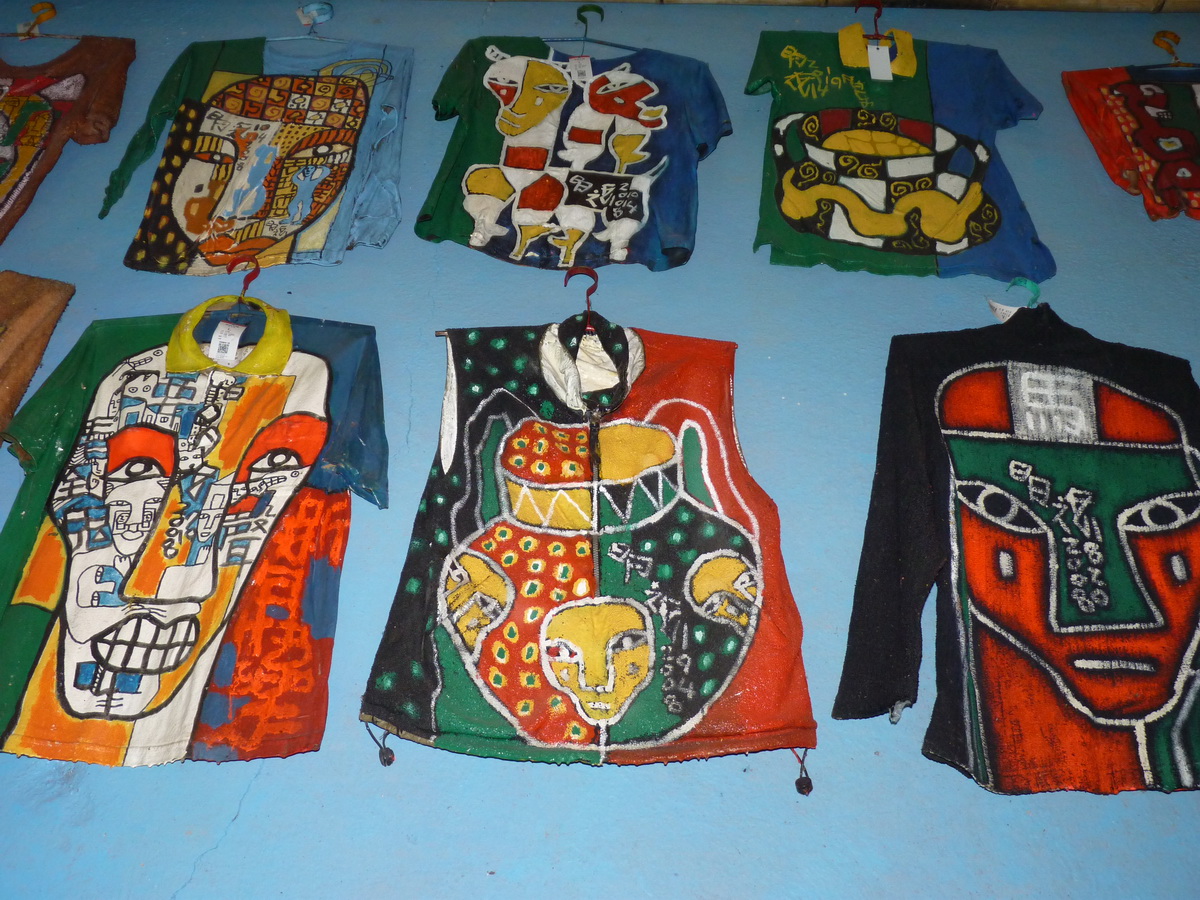
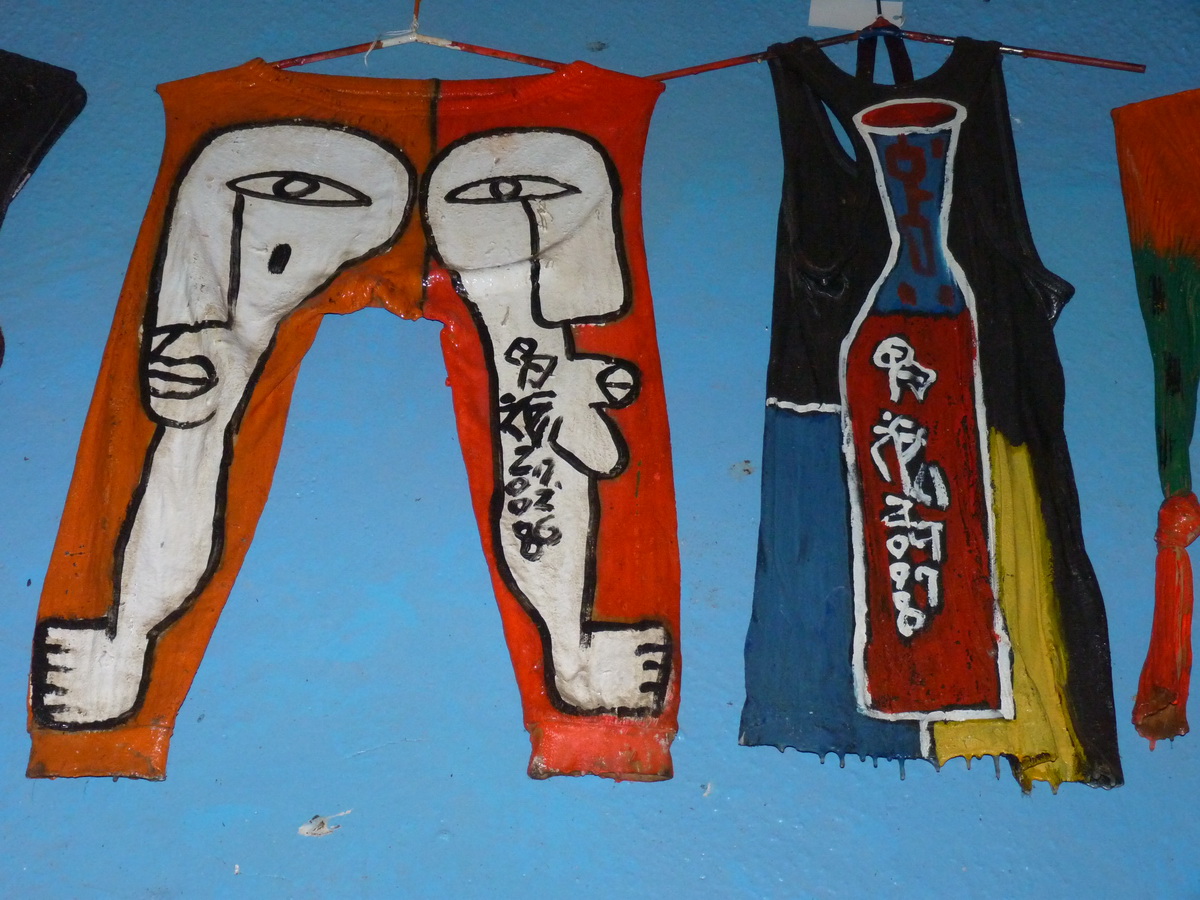
Ming-Chi widely applies materials. Materials are both media and vocabulary. It is not for the sake of materials, but through materials to trigger inner creative ideas. The "Reluctant Clothing" theme, borrowing the homophone for reluctance, uses clothing, which covers and warms the body, to metaphorically represent non-existent bodies. He processes these media, directly dialoguing with cloth through painting, coating, drawing, and writing, renewing them into 3D works. Old must go for new to come; old clothes can become new artworks. The entire series, hung, placed, and arranged, becomes a dramatic laundry field.
The Difference Between "Pseudo-Amateur" and "Amateur":
"Pseudo-amateur" and "amateur" seem similar but are not entirely the same. The trait of amateurs is a strong emotional connection with themselves, simplicity, and purity, which are innate qualities of life. The difference is that he received higher education. The pseudo-amateur sheds the gorgeous coat of knowledge to return to the primal ego, representing Ming-Chi's rebellious anti-cultural cultural characteristics. Ming-Chi said, "Many people think I am an amateur artist without academic training. At my first solo exhibition, a primary school student challenged me, 'I paint better than you.' Most artists cling to treasures they hold for a lifetime, but I regarded them as worn-out shoes and threw them away long ago... I forgot long ago that I could paint. Am I really an artist?" (Note 6)
Painting and Sculpture Combining Text and Images:
Ming-Chi's works all combine text and images, fusing painting, sculpture, objects, and text. This is the result of his dialogue with his works. Images and text shine together, with lyrical and unrestrained sensual writing, carrying strong emotion and consciousness. Direct statements are powerful. Sometimes it is a performance, context, feeling, thought, or complaint, intentionally or unintentionally expressing certain social contexts and life allegories. Whether text or image, it views the human world and self-existence reflection with a mocking attitude. Revealing true feelings, he said, "At the moment of creation, besides naturally venting my inner dissatisfaction, I also pay attention to the common feelings of all Taiwanese. It has nothing to do with politics, only reluctance and pain, a heart-wrenching pain, not terrifying ferocity. This is what I often call dialogue and natural emergence. While dialoguing with the canvas, I am also chatting with everyone. Through color, form, and text, emerging naturally without disguise, I actually carry everyone's inner dissatisfaction, exploding together, shaking together, erupting together. Ugly doesn't matter; I want truth!" (Note 7)
Original Hodgepodge Aesthetics:
Under the adventure of creation, Ming-Chi goes with the flow. Creation has no rules and needs no rules. The artist says, "I take nature as my teacher, using the most casual creative attitude to let works become naturally formed" (Note 8), freely expressing his sensibility and performance. For him, creation is a process of returning to simplicity and liberation. Starting from orthodox academic art education at NTNU, he sneaked into the "pseudo-amateur," beginning to liberate himself from academic constraints. Starting with Eastern ink painting, he integrated Western modernist Cubism, Expressionism, cartoons, and graffiti. Crossing academic, non-academic, and marginal art, he fused children's painting, primitive art, folk art, and amateur art. From academic to non-academic, tradition to subverting tradition, entering modern to non-modern modern, pseudo-amateur to non-amateur amateur, from two-dimensional to three-dimensional, figurative to freehand, and combining text and images to fuse painting, sculpture, objects, and text, he hodgepodged Ming-Chi's unique aesthetics, revealing his true self. He humorously said, "I don't like single techniques; I prefer mixed forms of expression. Including eating, I super love dishes with mixed flavors, full of the taste of life's sour, sweet, bitter, and spicy. Eating a meal is like chewing life, damn it, it fits perfectly..." (Note 9)
Note 1 - Interview record 2016-02. Notes 2-9: From Ming-Chi's records.
April 7, 2016, in Paris