Farewell, President Chirac
(Image) Chirac bids farewell to the French public on television; image from ANP official news photos. Amidst the transition of power, Chirac ends his twelve-year presidency, delivering a brief but solemn "goodbye" to the nation on May 15 at 8 PM via public television, bowing to conclude his mixed-re
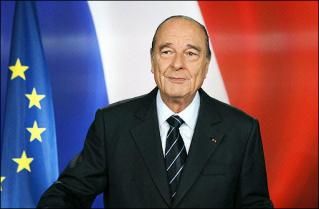
Chirac ended his twelve-year presidency during the presidential transition. On May 15 at 8 PM, he delivered a brief but solemn farewell to the French people via public television, bowing to conclude his mixed-reputation tenure and bid farewell to his forty-plus years in French politics. Chirac stated he would continue to serve France in other ways.
French media offered praise but did not forget to criticize his record. Polls showed 54% dissatisfaction with his twelve-year administration, particularly regarding domestic failures such as economic mismanagement, high tax rates, persistent unemployment, rising poverty, immigrant concentration in suburbs, and deteriorating social order (the 2005 Paris suburb riots). France’s economic growth rate ranked last in the EU, with GDP dropping from 7th to 17th globally, and per capita wealth falling from 5th to 13th over ten years. Unemployment hovered between 8.5% and 10%, sparking social issues that eroded confidence in the country’s future. Le Figaro noted Chirac failed to awaken awareness of basic economic problems, leaving France in an unjust predicament.
France and Germany were once leading forces in the EU, but the 2005 referendum rejecting the EU Constitution due to lack of government promotion rendered Chirac’s efforts futile and diminished France’s influence, causing EU stagnation. Le Croix criticized Chirac’s “overconfidence and indifference” for ruining the constitutional approval process.
However, Chirac was praised internationally for defending France and opposing the US invasion of Iraq. The Financial Times noted he acknowledged France’s responsibility for deporting Jews during WWII, led the “Old Europe” against the US-led invasion in 2003, and warned against American unilateralism. Centrist leader François Bayrou called him a voice of dignity and greatness in foreign policy when France needed it most. His achievements in opposing racism were also cited.
Born in Paris in 1932, Chirac married in 1956, served in Algeria (1956-57), and entered politics in 1962 as an advisor to Prime Minister Pompidou. He formed his first cabinet in 1967, became Agriculture Minister under President Pompidou (1972-74), and served as Prime Minister under President Giscard d’Estaing (1974-76). In 1977, he founded the right-wing RPR party and was elected Mayor of Paris, serving eighteen years. Corruption allegations during his mayoralty remain unresolved, becoming his first legal case after leaving office.
He ran for president in 1981, receiving 18% in the first round, losing to Mitterrand and Giscard. During cohabitation (1986-88), he served as Prime Minister under Mitterrand. He lost again to Mitterrand in 1988. In 1995, he defeated Socialist Lionel Jospin to become the 22nd President. He dissolved parliament in 1997, leading to another cohabitation with Jospin as Prime Minister. In 2002, he won re-election with 82% of the vote after Jean-Marie Le Pen eliminated Jospin in the first round.
In 2003, he led international opposition to the US invasion of Iraq. In 2005, the EU Constitution was rejected by referendum, and riots erupted in Paris suburbs. Chirac was hospitalized for a stroke. On June 20, 2006, he inaugurated the Musée du Quai Branly, focusing on cultural dialogue, marking a unique cultural contribution. In early 2007, he announced he would not run for president again. Having served over forty years since de Gaulle, including two terms as minister/prime minister, two presidencies, and eighteen years as mayor, he seemed satisfied to retire. Chirac said, “I will fight with different means, but with the same passion for justice, progress, peace, and France’s glory.” Regardless of mixed reviews, a page of French history has turned. Farewell, Chirac.