"Madrid" Pilgrimage, Part One
(Figure 1) The backyard garden of Madrileños—Buen Retiro Park. The lake in front of the magnificent monument to Alfonso XII is the center for boating and leisure for the people of Madrid. (Figure 2) The picturesque, unconventional Glass Palace by the lakeside is a temple for contemporary art exhibit
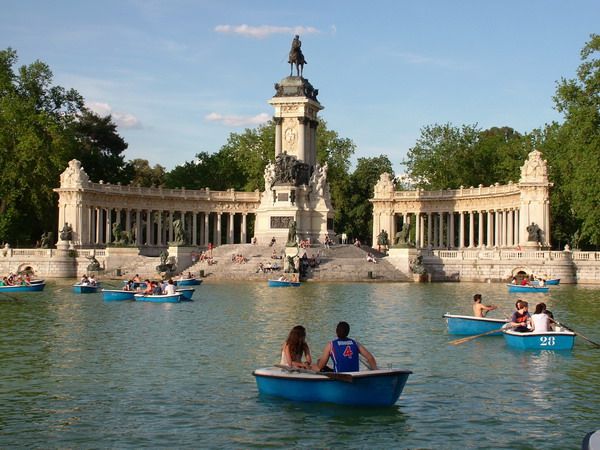
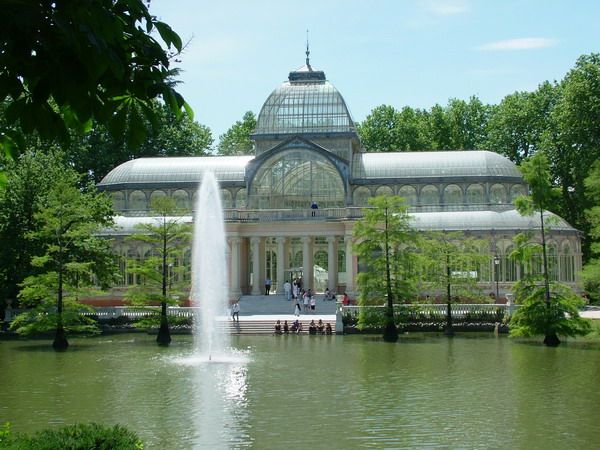
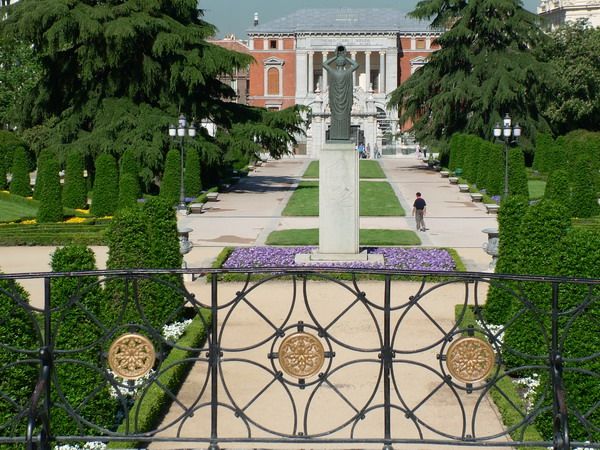
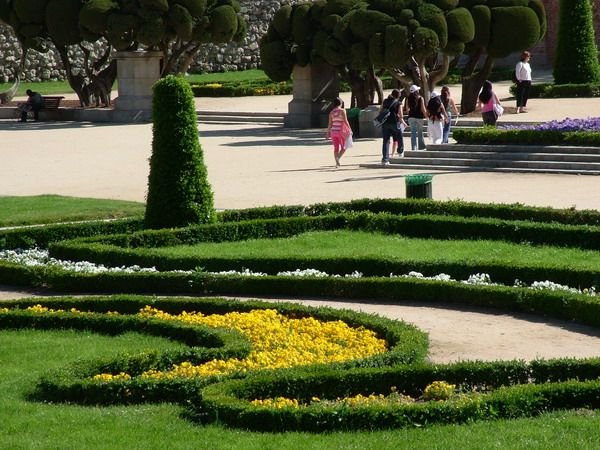
(Figure 1) The backyard garden of Madrileños—Buen Retiro Park. The lake in front of the magnificent monument to Alfonso XII is the center for boating and leisure for the people of Madrid. (Figure 2) The picturesque, unconventional Glass Palace by the lakeside is a temple for contemporary art exhibitions. (Figure 3) The park's most exquisite, splendid flower beds are right next to the Prado Museum. (Figure 4) Magnificent, rigorously geometric symmetrical flower beds.
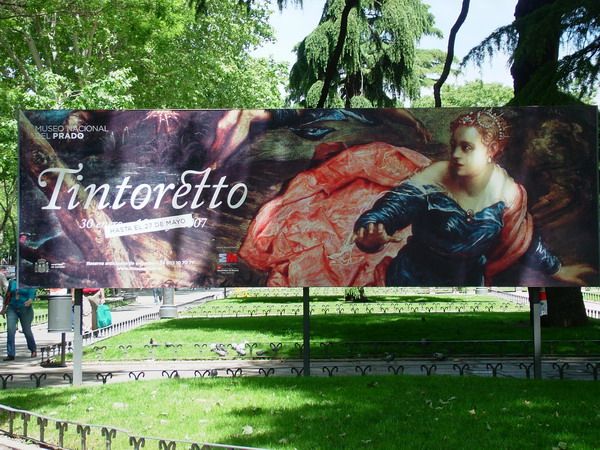
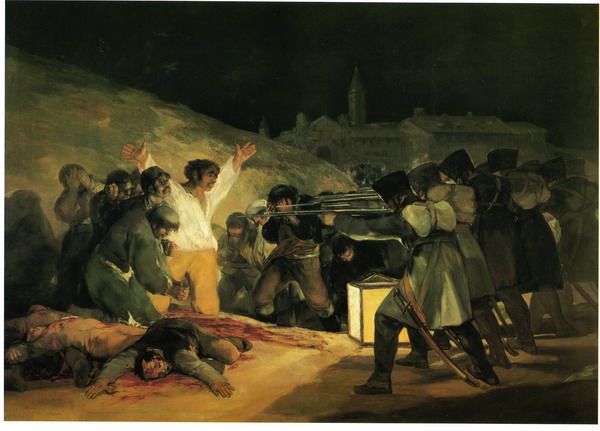
(Above) The Prado Museum's current special exhibition—Tintoretto, the great painter of the Venetian school of the Italian Renaissance. (Below) Goya's famous painting, The Third of May 1814.
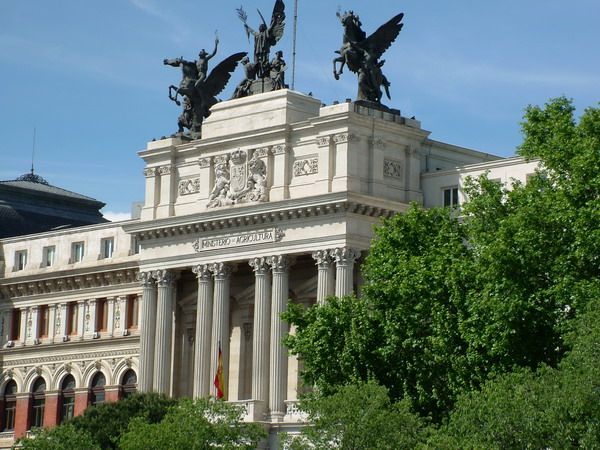
(Above) Madrid metro station signage. (Below) The building of the Spanish Ministry of Agriculture.
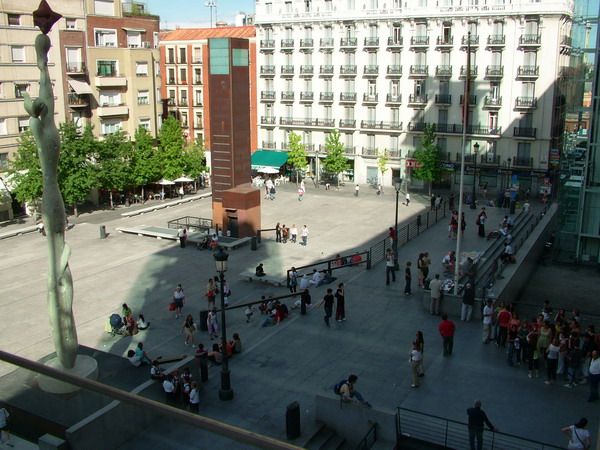
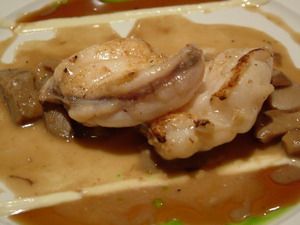
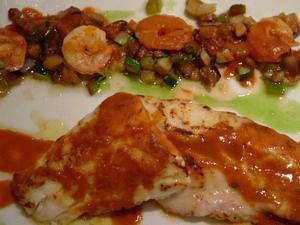
(Above) The plaza of the Queen Sofia Art Center. (Below) A mouthwatering fish dinner.
On this long weekend of the Ascension "bridge" holiday (four consecutive days), at a friend's invitation we flew to Madrid to spend the weekend. In less than two hours we arrived at the capital of Spain—the art capital of Southern Europe: Madrid, on a fine, sunlit weekend. We arrived in Madrid at noon on Thursday and, following our friend's directions, took the metro line 8 from the airport to Colombia, then transferred to line 9 to P. De Vergara. The metro signage was quite clear, so everything went smoothly. Upon exiting the metro we immediately found our friend's place, right across from the station. The fine, sunny weather carried a warmth that was worlds apart from Paris. Sun-drenched Madrid lifted our spirits. Under our friend's hospitality, we had tea, rested, and chatted. Toward evening, we accompanied our friend to the supermarket, full of curiosity, looking around in every direction as our friend introduced everything about Madrid one by one. They live on the most spacious Vergara Avenue in Madrid, surrounded by buildings reminiscent of Paris's Haussmann era, and right next to Madrid's largest park, Buen Retiro. They gave us an introduction to their neighborhood so that we could explore and get around freely.
Spanish dinner is later than in France. It was past 9 PM, with sunset glow still filling the sky, before our friend began preparing dinner. Tonight we had a traditional Spanish salad: Paris mushrooms, two different types of tomatoes, raw salad greens, canned red peppers, marinated smoked anchovies (Anchois), and so on, dressed with olive oil and fruit vinegar, a little salt and black pepper, and finally topped with a milky white cheese resembling tofu. Tasting this Spanish-style salad carried a distinctive exotic flavor. They had also specially prepared Italian rolled pasta mixed with pan-fried five-spice sausage and cheese. Eating while conversing, we got a taste of the Spanish way of life. After the meal we continued drinking floral tea and, before we knew it, it was past midnight. It is said that Spaniards tend toward nightlife, whereas Parisians would have long since been fast asleep.
The next day we got up first and, after breakfast, it was already nearly 10 AM. The sun was shining and the weather was fine, so we set out to explore, entering the backyard garden of Madrileños—Buen Retiro Park. We began strolling through this vast, forest-like garden, with shade trees everywhere, expanses of green lawn, tree-lined paths large and small, geometric flower beds, all kinds of monuments, an Oriental pavilion, small waterfalls, classical statue fountains, small lakes, the Glass Palace, the Oriental pavilion again, and the Velazquez palace exhibition hall. It blends the rigorous geometry of French-style gardens with the natural formations of English-style landscaping. Centered on the magnificent monument to Alfonso XII, with a large geometric lake directly in front, the shimmering water is the largest space for Madrileños to relax and go boating, surrounded by monuments and outdoor cafés. At dusk or on weekends it is always packed with crowds—strolling, jogging, meditating, courting, picnicking, sunbathing, and children playing. It is a space where young Madrileños particularly love to gather or go on dates. The picturesque, unconventional Glass Palace by the lakeside is a temple for contemporary art exhibitions. The park's most exquisite, splendid flower beds are right next to the Prado Museum—magnificent, rigorously geometric symmetrical flower beds, a dolphin fountain platform, and neatly pruned, rounded clusters of shrubs that are quite enchanting. The finely carved portico combined with the unconventional building opposite creates a delightful scene. This lush green heart of Madrid was built in the 15th century under Henry IV of Castille, and was restored in the 17th century as a paradise for Madrid's royals and nobles to escape the impoverished streets. Today it has become a holy retreat for Madrileños to escape the summer heat and a space for dates and romance.
We exited through the grand gate and headed to the long-awaited Prado Museum. Walking along the boulevard, there were crowds of tourists everywhere. Of course, coming to Madrid without making a pilgrimage to the Prado Museum would be like losing one's artistic halo, and we were no exception. We came to share in human civilization and Spain's unique artistic splendor, bathing in the artistic radiance of Greco, Velasquez, Zurbaran, Ribera, Murillo, and the passionate and dramatic Goya. It opened our hearts with deep satisfaction, letting us feel the spiritual energy of art and the beauty of eternity.
We met up with our friend at the Prado Museum. In the afternoon we bought food at a takeout shop and ate under the shade of the trees in Buen Retiro Park, then went to an outdoor café for a coffee and a brief rest. Together we visited the magnificent Glass Palace for an exhibition. On display were four contemporary artists: the familiar Italian artist Mario Merz's glass igloo; the iron enclosure in monument form by Susana Solano, the most representative young Spanish artist of the 1990s; Cristina Iglesias's living-space wall installation; and the mirror-house sculpture by Danish artist Per Barclay.
From there we strolled through tall, upright pine and cypress trees to the Queen Sofia Art Center, Madrid's temple of modern and contemporary art. Along the way through the park and tree-lined paths, we passed the magnificent equestrian statue building of the Ministry of Agriculture and, opposite it, the Art Nouveau-style Madrid train station then under renovation. Crossing the busy avenue, we arrived at the Queen Sofia Art Center. Returning to this familiar place stirred up ripples of memory. When I first visited, the plaza was empty; now there are three monument-form sculptures, and two conspicuous transparent elevators in front of the museum connecting four floors of exhibition rooms. Fortunately, there was no queue like at the Prado Museum. Our target for this visit was Picasso's most famous masterpiece—Guernica—located in the large exhibition room 6c on the second floor. Going up to the second floor and following the floor plan, we passed through Cubist sculptures and arrived before the world-renowned painting Guernica. Finding a suitable spot among the crowd, we studied it carefully. The tragic and deeply moving image invited silent contemplation of art's grandeur and beauty, and one felt a certain spiritual shock beyond words. Around it were a series of preparatory studies for Guernica and photographs documenting its creation process. There were also countless famous painters such as Miró, Dalí, Calder, and so on. In addition, in various themed exhibition rooms—Cubism, Surrealism, organic abstraction—on the fourth floor, from 1950s modernist abstract art to today's postmodern young Spanish art, the displays were predominantly Spanish in character, presented in dialogue and comparison with world art trends. Dedicated rooms for renowned artists ranged from Klein, Fontana, to Spain's most representative postwar artists such as Tapies, Saura, the Guernica school, Arroyo, and so on. There were also 1970s American Minimalism, Italian Arte Povera, international narrative realism, and finally today's postmodern art, especially the vibrant work of the younger generation of Spanish artists, all on display before our eyes: Barcelo, Broto, Sicilia, Urzay, Usle, Solano, Plensa, Munoz, and Iglesias. From painting, sculpture, objects, photography, video art, and installations, walking through this forest of art, there were unexpected surprises and discoveries at every turn.
Returning home, we took a shower, had a cup of tea, and rested a bit, as our friends were taking us out to a restaurant for dinner that evening. Under their enthusiastic recommendation—Spain being a nation that loves fish—we simply had to try the distinctive Spanish seafood cuisine. They had already made a reservation at a restaurant. Our party of seven went to an authentic local restaurant near their home. The bar outside was already packed with customers. Spaniards like to have a drink with friends and family before dinner and sample some salty snacks. What was special here was the array of tempting seafood. The atmosphere was bustling with cheerful chatter. The dining room was in the back, and we took our seats at past 9:30 PM. Ours was the only table. Spaniards dine particularly late—at this hour in Taiwan it would be time for a late-night snack, but in Spain they had not even started yet. Each country has its own customs.
The menu was incomprehensible to us. After our friend's explanation, he took full charge and ordered five seafood salads, and each person ordered an individually distinctive fish dish. One seafood salad after another arrived—starting with salt-grilled shrimp, then squid mixed with greens and mayonnaise, salmon with rice, small clams with fried fish and tomato sauce, and so on. Each was delicious, with its own distinct flavor and satisfying texture. Moreover, the sauce on each plate had a particularly Mediterranean character, with herbs and aromas of distinctive taste, absolutely superb when paired with bread. Then came the main course—each person's fish dish was different: whole fish, fillet steaks, thin slices, or fish balls (as a freeloader I didn't know the fish names). Some were grilled, smoked, or boiled, served with all kinds of raw vegetables and seafood, accompanied by various mouthwatering, colorful sauces. Just looking at them made you want to dig in, and eating them was even more enchanting—full of flavor, the fish fresh, with sweet, salty, and spicy notes each having their own character. Chatting as we ate, we savored big mouthfuls, enjoying the finest flavors of the world and spending a wonderful day in Madrid, lasting deep into the night. The nightlife of the Madrileños was just about to begin, but the Paris travelers were already weary. Returning home, we quickly fell into sweet dreams of Madrid. 2007-05-21