A Tour of London Gardens - Kew Gardens (Royal Botanic Gardens)
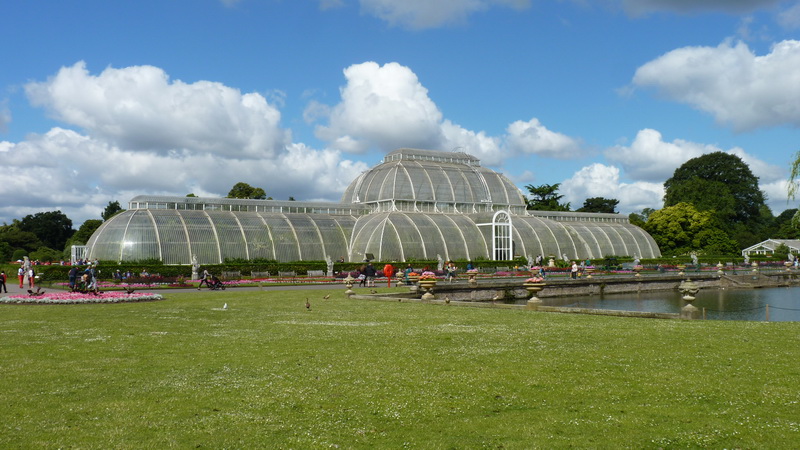
The magnificent, colossal Palm House is the most representative (Victorian-era) building in Kew Gardens.


Text and photos by Chen Chi-Hsiang. I do not view exhibitions only in art museums, museums, or galleries; I also find joy in gardens, parks, or nature. I enjoy looking at flowers and plants and engaging in a romantic dialogue with them.
Immersion in both nature and art are my greatest loves. Viewing exhibitions and taking walks are indispensable parts of my daily life.
My passionate devotion to art and my deep love for nature mean that wherever there are no exhibitions to see, there are surely natural landscapes, mountains, rivers, flowers, plants, or special geological features.
For me, viewing art and viewing nature hold no difference; both are fields of energy where I converse softly with art, flowers, plants, mountains, and rivers.
"Beauty" is omnipresent, unrelated to art alone; as long as one opens their eyes and mind to feel and perceive, it is there. London holds my deepest affection. It is an artistic capital of Europe, lined with art museums and galleries, and numerous first-class galleries.
There are endless exhibitions to see. As a member of the International Association of Art Critics, I carry my membership card, granting me free access to view exhibitions (special or thematic shows) anywhere. This privilege means no queuing and no ticket purchases.
Curious and eager to look, I am diligent in my viewing, resting only when satisfied. Viewing exhibitions never tires me; for me, it is all-you-can-eat.
Wandering through gardens, parks, or even forests, enjoying the scenery and immersing myself in nature’s embrace brings me great happiness. London is a city overflowing with greenery. Lush trees line the winding banks of the Thames River.
Large gardens, parks, and green spaces are found throughout the city. For instance, Kensington Park in the city center connects to Hyde Park, forming a vast oasis—truly the lungs of London. Other highlights include the beautiful Regent’s Rose Garden, the Sports Ground, St.
James’s Park—a peach blossom paradise before Buckingham Palace—and the verdant gardens behind it. Most homes have front and back yards, reflecting the quality of life for Londoners. Botanical gardens are a must-visit space during my travels.
Not only do I visit exotic plants from around the world that spark imagination, but I also delve into the humanistic and geographical landscapes of each place. Like a plant enthusiast, I feel excited, joyful, and intoxicated every time I visit a garden.
The Royal Botanic Gardens in the southwestern suburbs of London is arguably the world’s most beautiful, largest (120 hectares), and richest in global (temperate to tropical) plant collections.
The world’s first glasshouse, the Palm House, was designed by architect Decimus Burton in 1860 and has become an important institution for botanical research today. In 2003, it was listed as a UNESCO World Heritage Site.
This unparalleled botanical garden was created in 1759 by Princess Augusta of Wales, who loved plants, on the banks of the Thames. Designed by Count Architect Decimus Burton, it became Britain’s first royal botanical garden.
After the Princess passed away in 1772, her son King George III and the Queen continued to merge and expand Kew Gardens. Joseph Banks, a count who loved nature conservation, managed it.
During this glorious era of the British Empire, tens of thousands of plant species were collected from around the world.
Kew Gardens was once a royal summer retreat until the British government acquired it in 1840, rapidly expanding its scope and facilities to take on its current appearance.
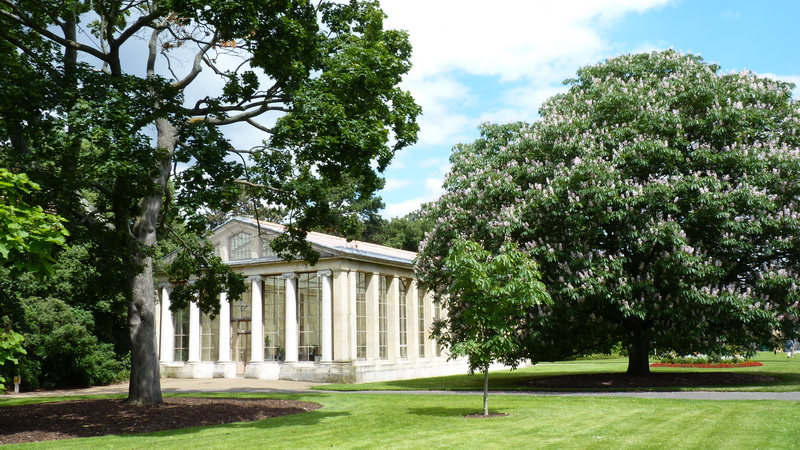
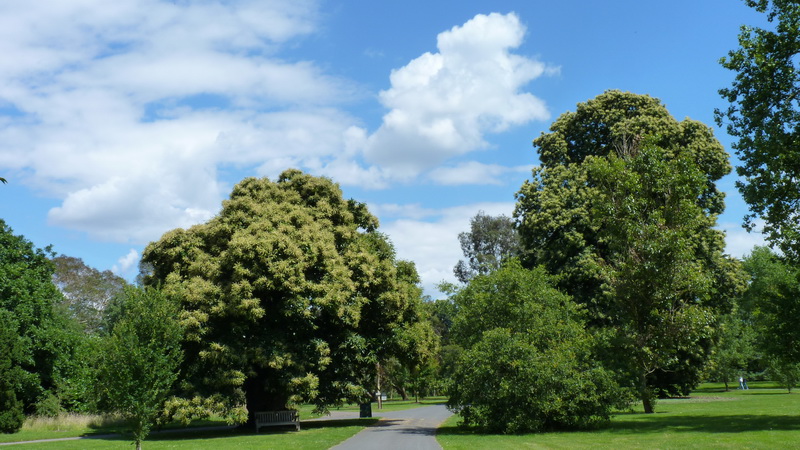
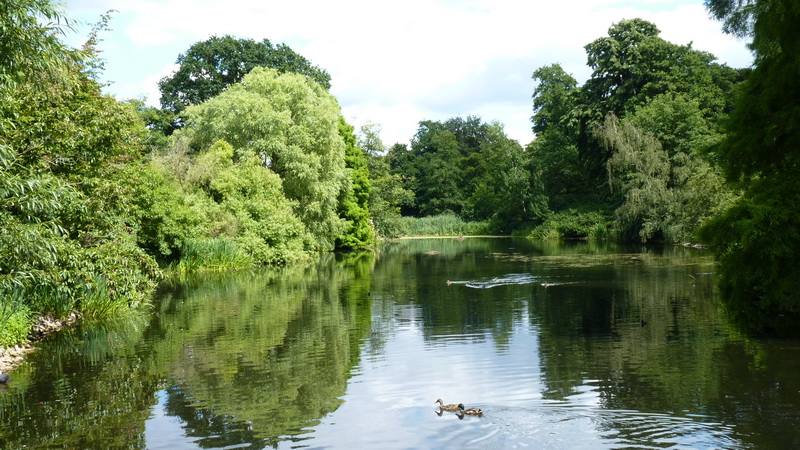
The sea of flowers and green lawns present a diverse thematic form within a large English garden: lake views, lush forests, colorful seasonal flowers, large lawns, rose gardens, greenhouses of various sizes, palaces, the Chinese Pagoda, Japanese Garden, Bamboo Garden, Mediterranean Garden, aerial walkways, cottages, bamboo groves, pastoral paths, small bridges over flowing water, admired centuries-old trees, and beautiful pastoral scenery—all linked together to form a utopian paradise on earth.
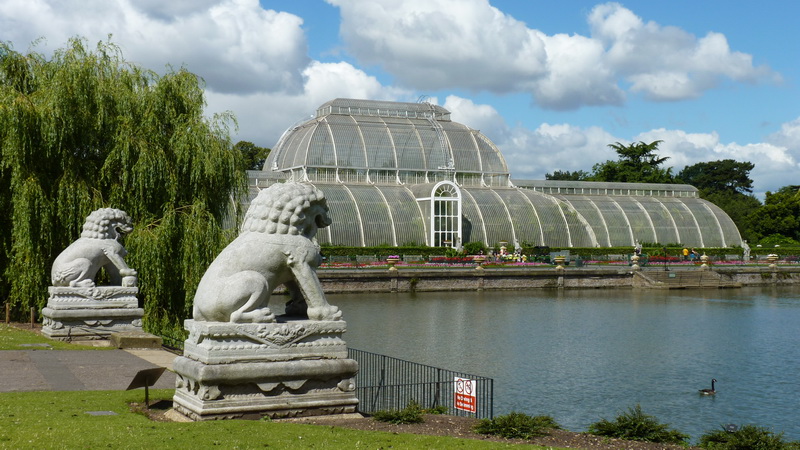
Palm House: Upon entering, one is immediately attracted by the magnificent, colossal Palm House. It is the most representative (Victorian-era) building in Kew Gardens, situated by the shimmering lake. A pair of majestic Chinese stone lion statues guard the entrance.
In front of the greenhouse lies a large, orderly bed of seasonal flowers and twelve white symbolic animal stone statues (lions), symbolizing courage and strength in the Edwardian era.
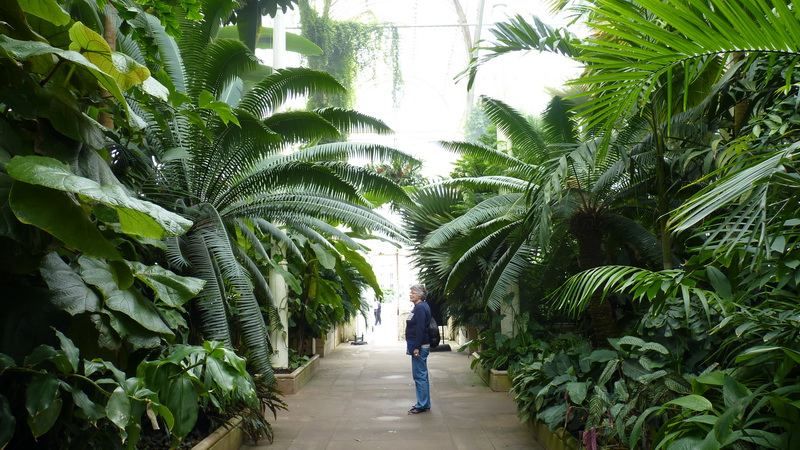
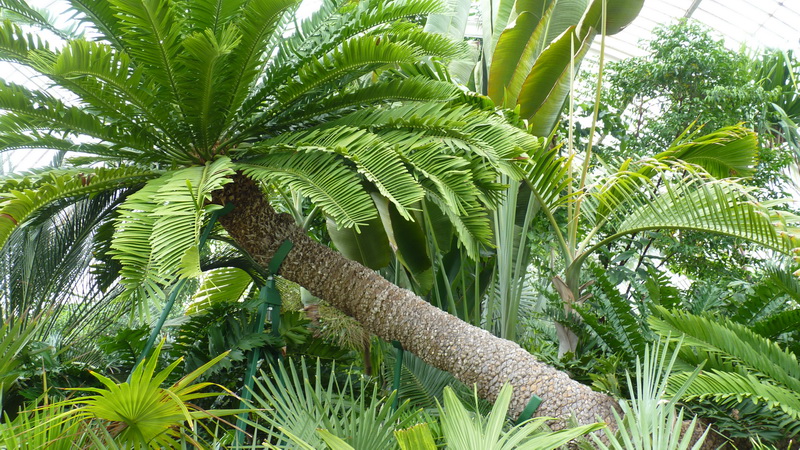
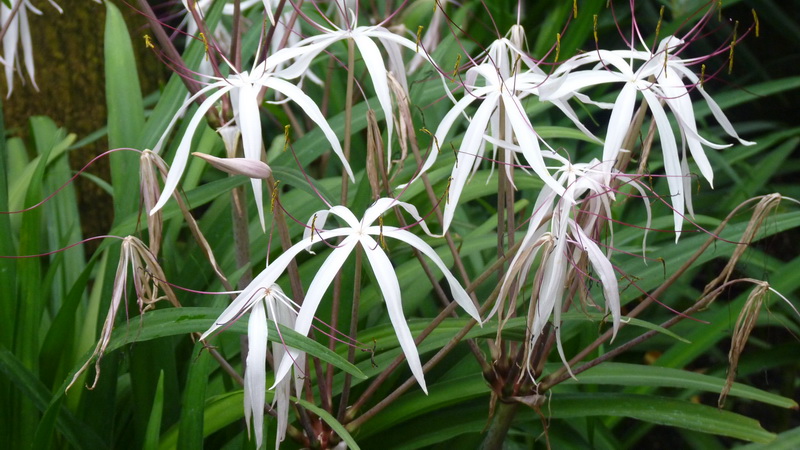
The Palm House houses a collection of subtropical plants such as palm trees, coconut trees, rubber trees, cycads, banana plants, bananas, and ginger flowers. Vibrant with life, it periodically sprays mist into the humid and stuffy interior.
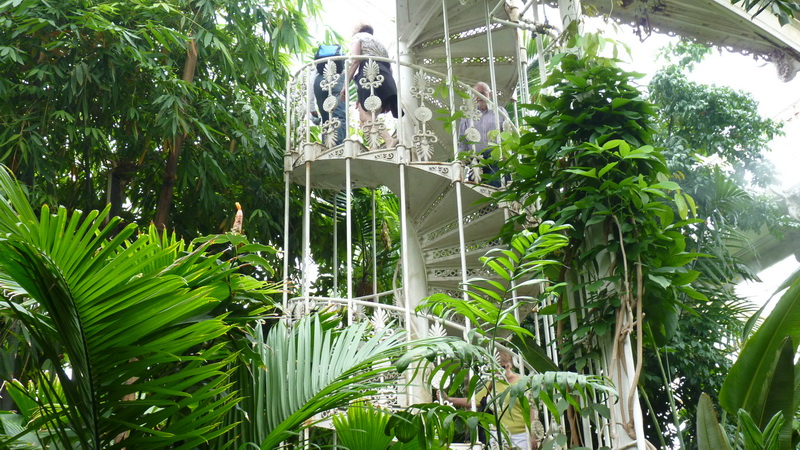
The massive greenhouse is divided into two levels; people can ascend via the spiral staircase to admire the flora from the elevated platforms, offering a unique experience, though the heat makes one sweat profusely.
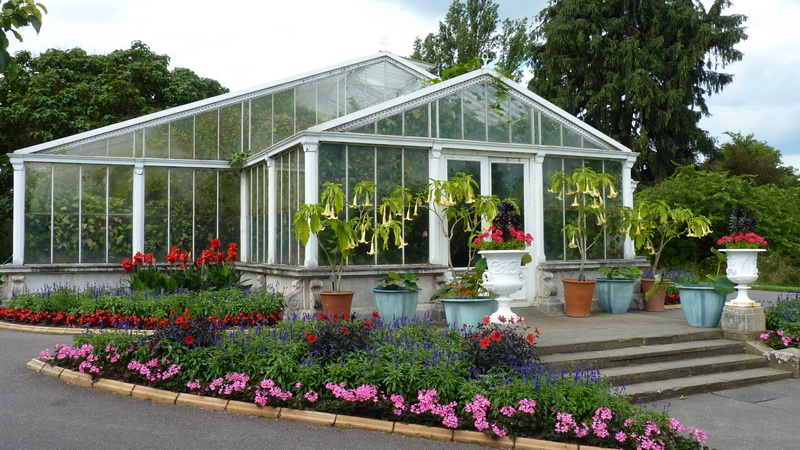
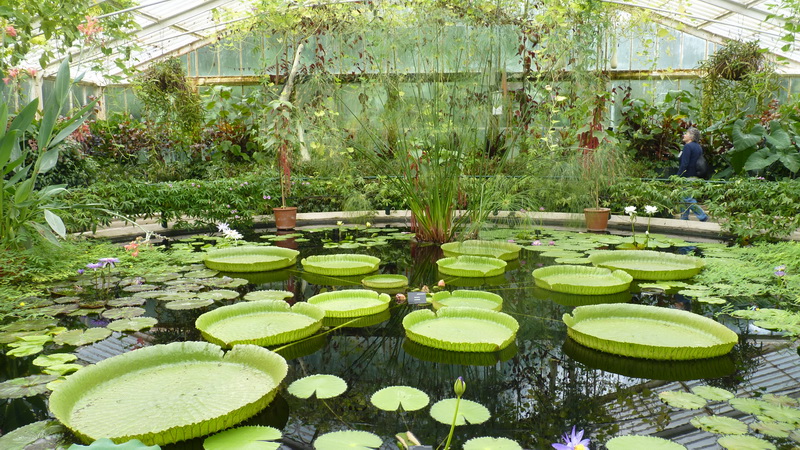
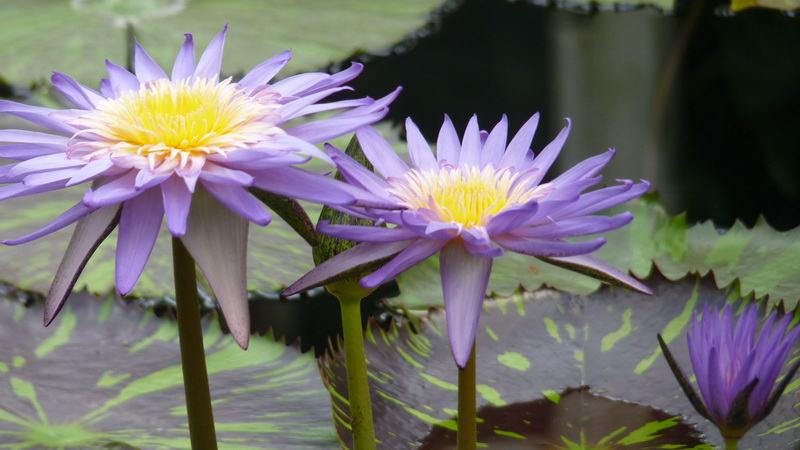
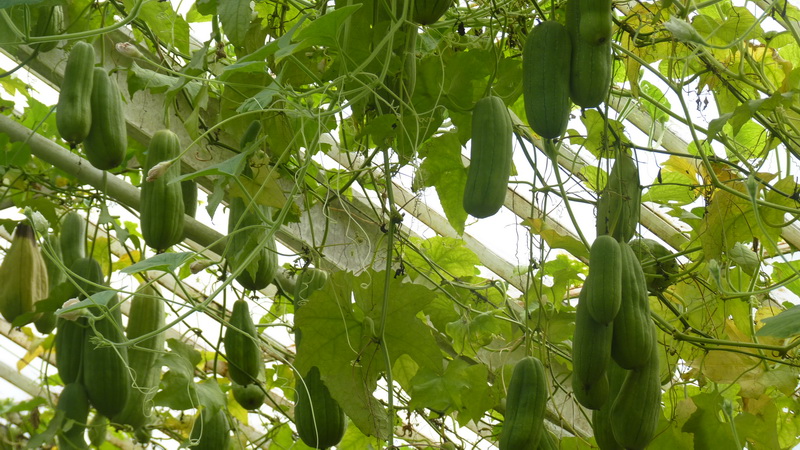
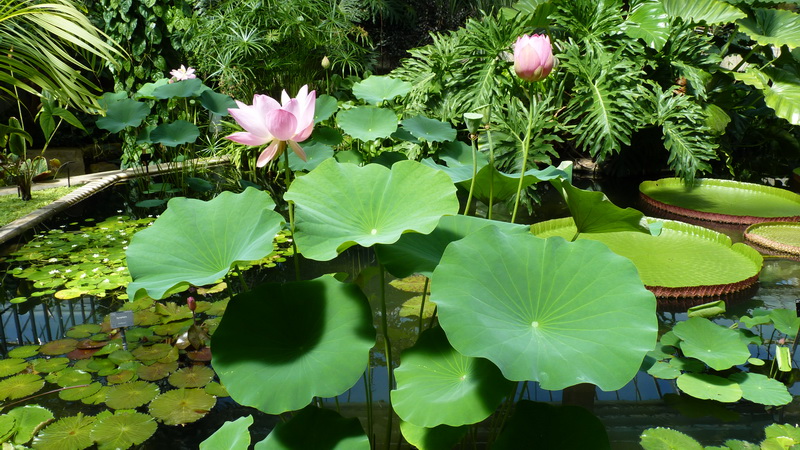
Behind it lies a fragrant rose garden, and to the left, a small white Lotus Greenhouse. A circular pond features large-leafed lotuses paired with blue-purple small lotuses, while vines of melons and pumpkins climb overhead.
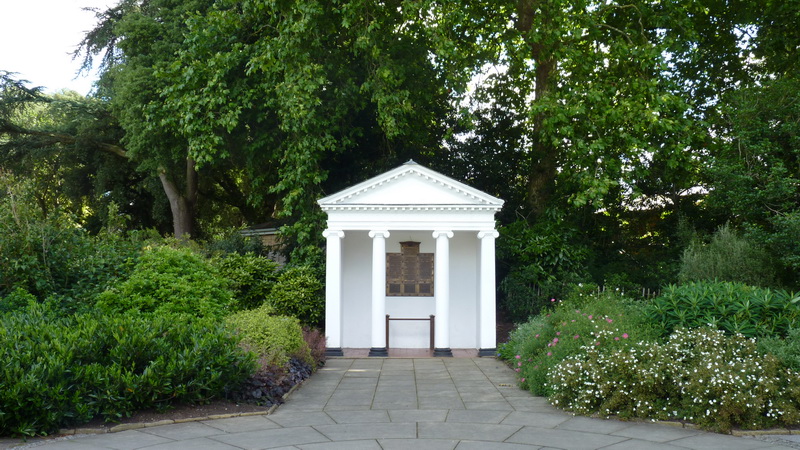
Princess Augusta’s Cultivation Greenhouse: Exiting the Lotus Greenhouse and passing by the lake, a picturesque pavilion stands on a hill, followed by the Woodland Garden featuring colorful flower beds and vegetable patches.
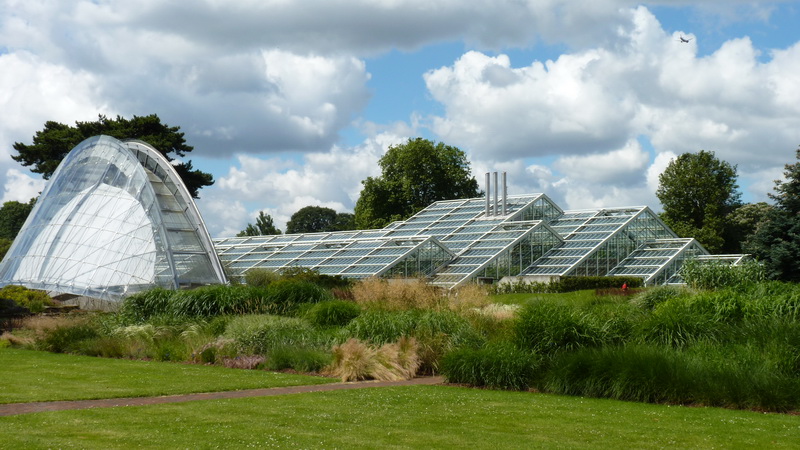
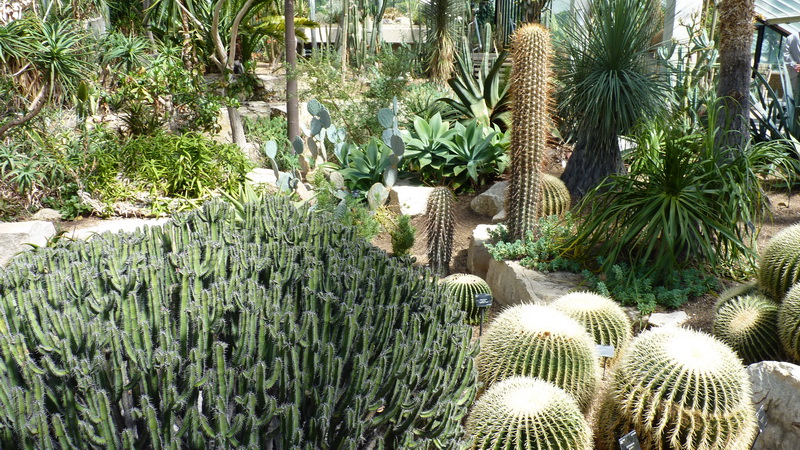
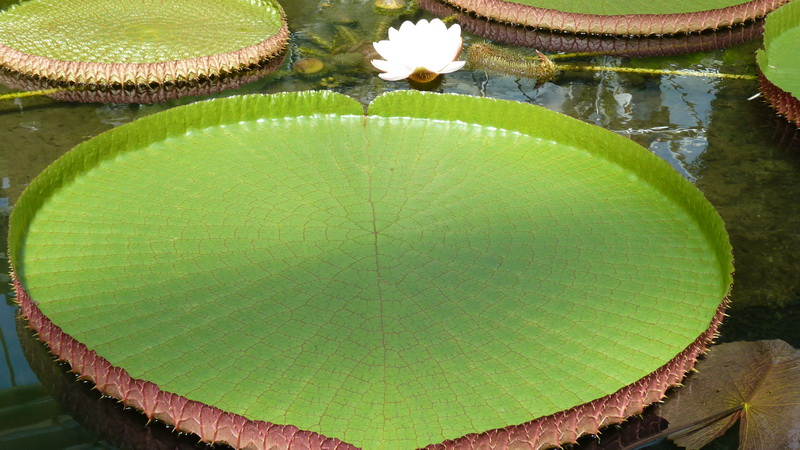
Arriving at a series of modern cultivation greenhouses dedicated to Princess Augusta, equipped with automatic control technology, they primarily display tropical plants and flowers, including various cacti, ferns, succulents, coffee trees, coconut family plants, large-leafed lotuses, and various orchids.
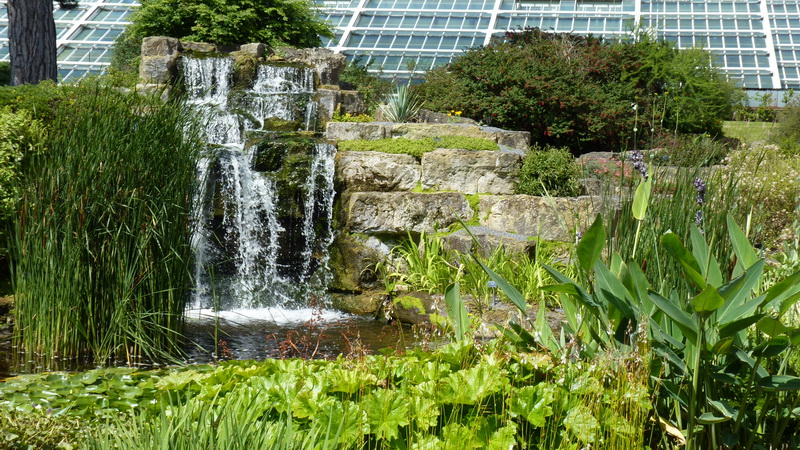
A tall fan-shaped greenhouse is dedicated to storing alpine plants from the European Alps. Outdoors, rock waterfalls surround the area, with dense aquatic plants and vibrant alpine plants from around the world growing among the rocks.
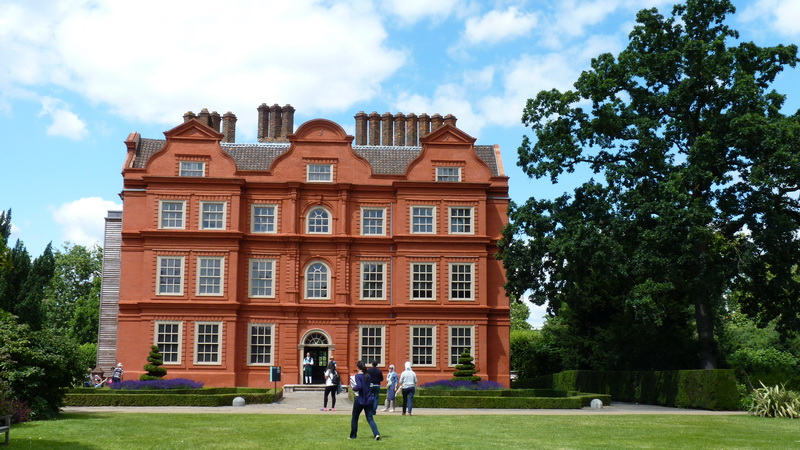
Dignified Red Kitchen Garden: The dignified, vividly red Kitchen Garden is a Dutch-style building constructed in 1631, also known as the "Dutch House." In front lies a large, lush green lawn, a leisure space for Londoners.
This exquisite Kitchen Garden was used as a royal palace during the reign of George III and later became a sanctuary for British kings and queens to escape the summer heat. Today, it serves as a museum.
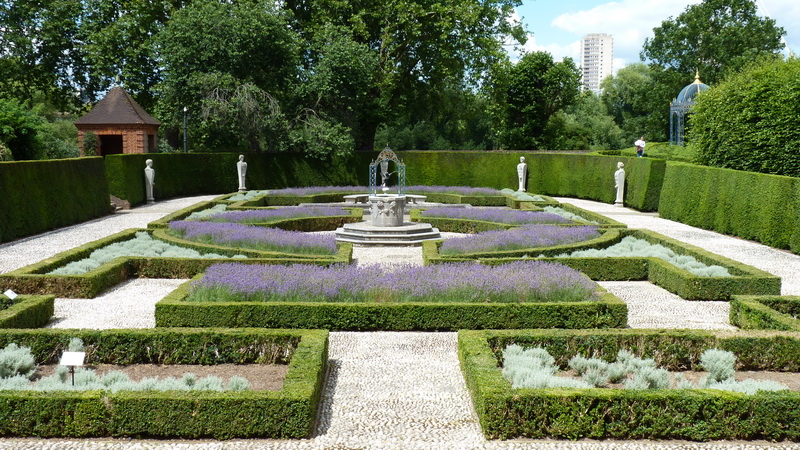
Behind the palace lies the French Garden, specifically the Queen’s Garden, which is meticulous and perfect, filled with colorful seasonal flowers, stunning in beauty. There is also a fragrant herb garden, next to which a royal vegetable garden is hidden behind hedges.
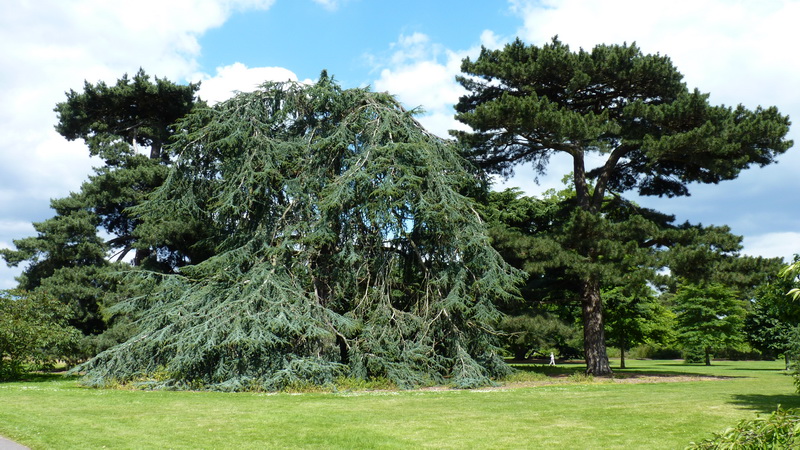
During the summer vacation, guides in period costumes offer special tours for pilgrims. Queen’s Summer Retreat: Picturesque pastoral scenery, with lush gardens standing everywhere with admired centuries-old trees.
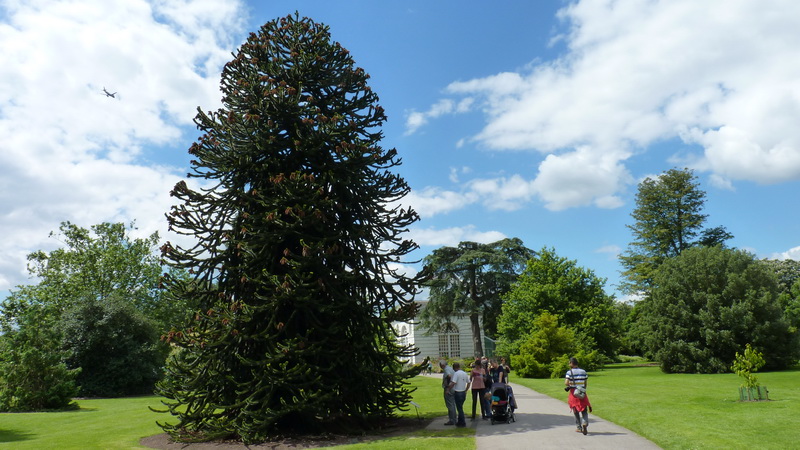
Following winding paths, crossing lawns, and entering lush green forests, one hears insects chirping and birds singing, appreciating the beauty of various tree species (plane trees, chestnuts, oaks, ginkgoes, magnolias, etc.), immersing oneself in air rich with phytoncides.
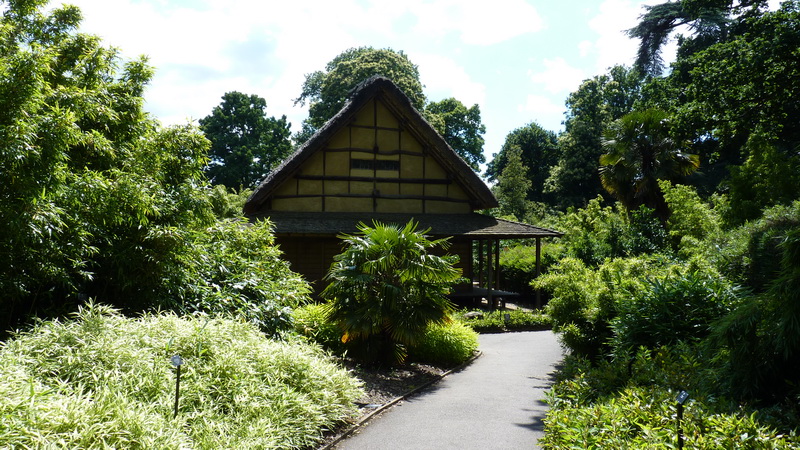
Passing the Rhododendron Garden, one continues to stroll and explore. Arriving at a quiet corner with exotic charm, the Bamboo Garden features a simple straw house, Charlotte’s Summer Palace, the Queen’s retreat, built in 1771.
It remained a space for royal family activities in summer until Queen Victoria’s Diamond Jubilee in 1897, after which it opened to the public. Today, it serves as a lifestyle exhibition hall.
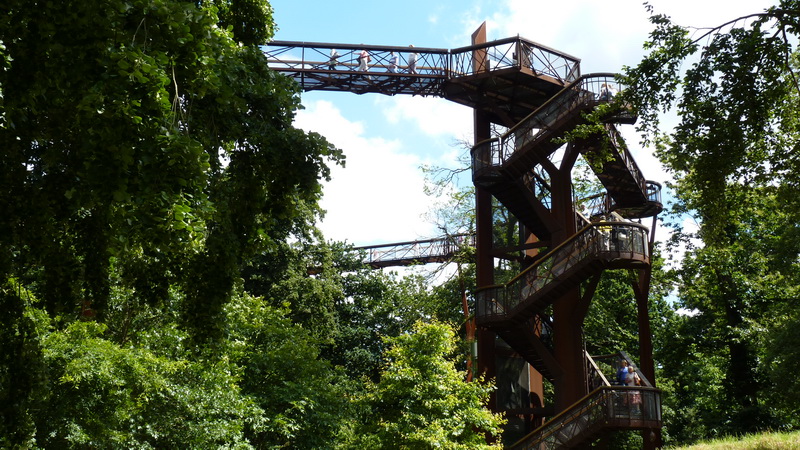
Aerial Walkway: Guided by winding paths, crossing redwood forests, one enters a picturesque utopian setting. Shimmering lakes offer charming views, resembling heaven on earth.
The lakeside becomes an ideal place for people to contemplate or relax, washing away fatigue and enjoying the beauty of nature. Following the guide map, one arrives at the striking aerial walkway of the botanical garden.
People can choose to climb stairs or take an elevator to overlook the magnificent scenery of Kew Gardens from above.
Large Greenhouse and Mediterranean Garden: In a quiet corner stands a magnificent large greenhouse, built between 1860 and 1899, equipped with state-of-the-art air conditioning. It houses a rich variety of subtropical plants.
Due to the large exhibition area, plants are displayed according to geographical regions. The north wing features Asian plants, and the polygonal room on the north side displays exotic flowers and plants from Oceania—New Zealand, Australia, and Pacific islands.
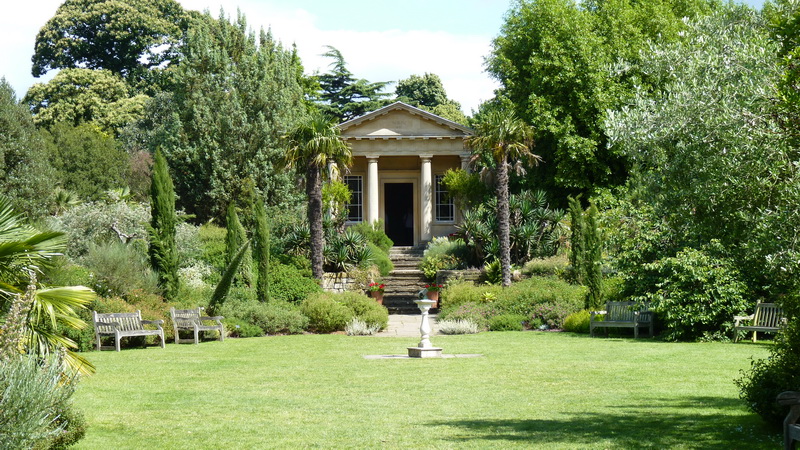
Due to aging and safety issues, it is closed for renovation (I visited it last time). Turning a corner leads into the Mediterranean Garden, centered around a decorative William IV shrine, surrounded by all Mediterranean plants and flowers, colorful and pleasing to the eye.
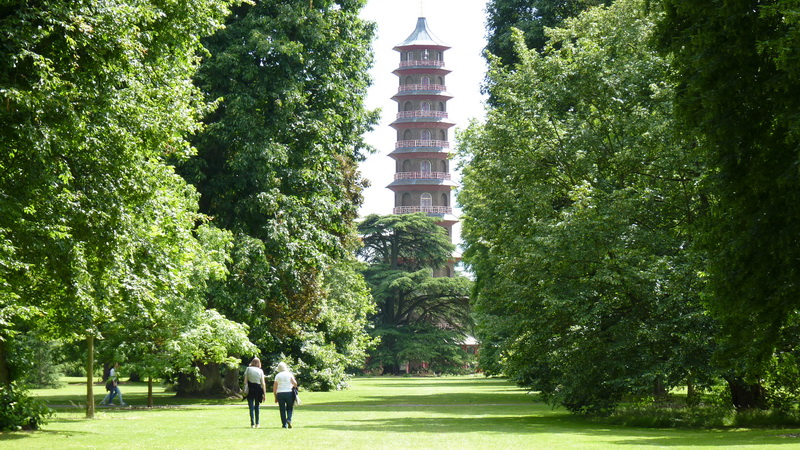
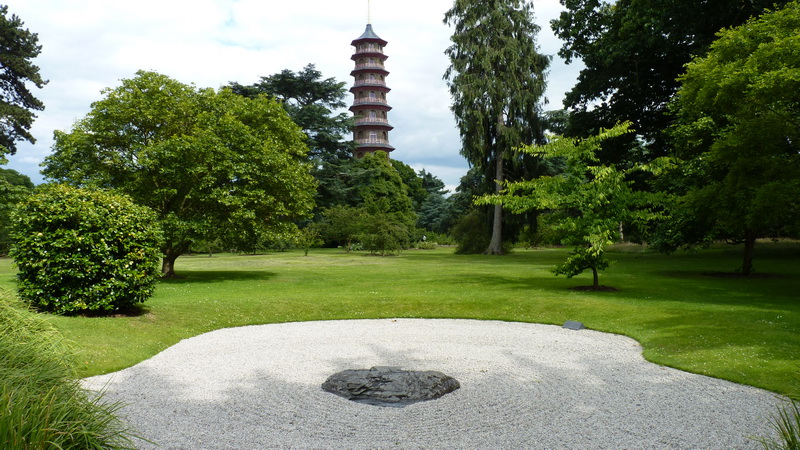
Chinese Pagoda and Japanese Garden: Along a magnificent avenue of century-old trees, arriving at the southern corner of Kew Gardens, another landmark—the Chinese Pagoda—stands tall at 163 inches high.
Built by Sir William Chambers between 1761-62, its inspiration came from pagodas near Amboise on the Loire River in France. This exotic pagoda serves purely as a decoration for the English garden. Inside, there are 253 steps leading visitors to the top floor for panoramic views.
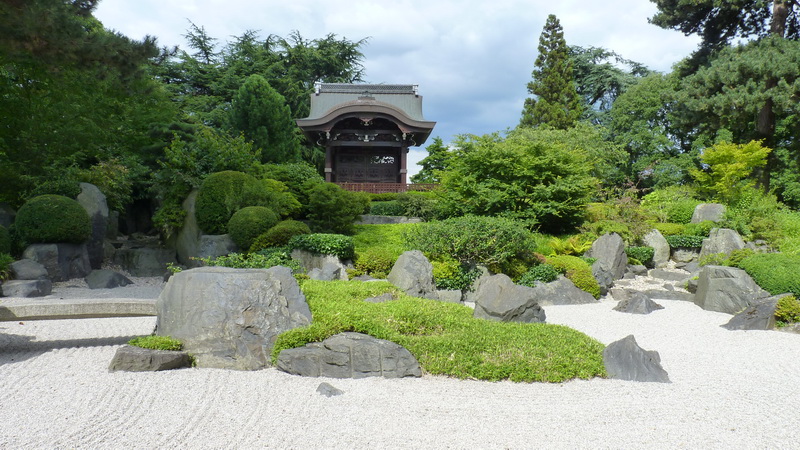
Situated beside the Chinese Pagoda is a Zen-like Japanese Garden, creating a dry landscape scene centered around a Japanese temple, depicting grand mountains, rivers, small bridges, and flowing water, immersing visitors in poetic and picturesque beauty, allowing them to sincerely experience the beauty of the integration of nature and culture.
"The Hive" Large-Space Installation Exhibition: Every year, Kew Gardens hosts a spatial installation special exhibition with a nature and environmental education theme.
This year, artist Wolfgang Buttress collaborated with Simmonds Studio to create a work themed "The Hive," constructing a giant beehive using interlocking geometric steel rings.
Full of structure like a beehive, it elucidates current environmental problems through visual and tactile forms.
In recent years, the mysterious mass death of bees worldwide has sparked global discussion: is it due to natural climate change and environmental damage, or is it the result of human pesticide use?