Hsu Yang-Chung - Everyday Tales - New Material Aesthetics
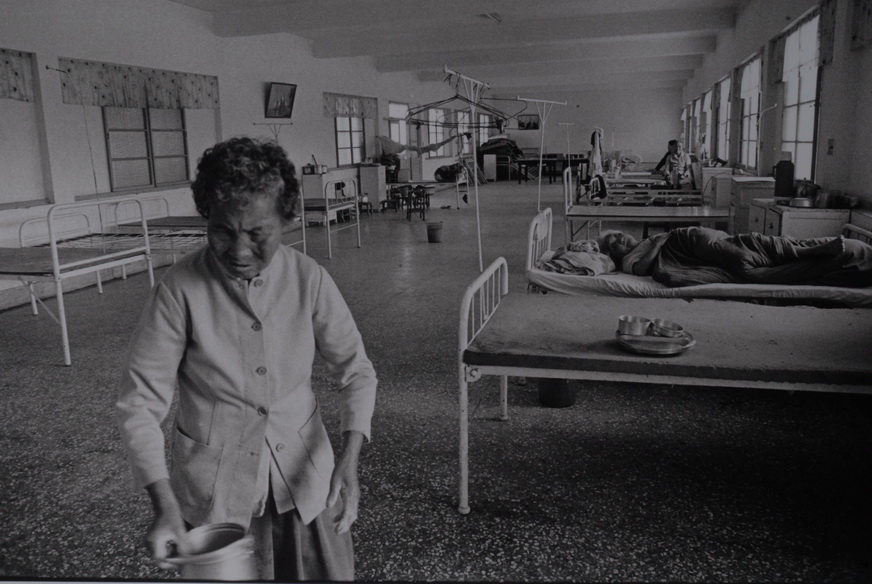
Tainan Beimen black-and-white photograph of patients with blackfoot disease, 1980
Text and photos by Chen Chi-Hsiang
"Unexpected scenery can be found everywhere in life."
Preface: Art comes from life, and life shapes art; the two are inseparable. Hsu Yang-Chung’s creative source stems from life itself. Life nurtures the seeds of art, allowing him to discover consciousness and awareness within everyday objects, thereby revealing all possibilities for creation. With keen perception and imagination, he utilizes craftsmanship to develop applications and forms distinct from traditional materials, forging a new path. By intervening in society, he highlights his contemporary relevance, demonstrating a critical attitude toward daily life and modern narratives.
Hsu prefers wandering through department stores, fashion boutiques, and hardware shops over visiting art museums. His work is open-ended, sparked by sudden whims encountered in these commercial spaces. Interactions with objects ignite sparks of inspiration, blurring the line between art and non-art. His practice involves selecting, processing, transforming, and fabricating materials. Hsu’s creations arise from accidental, unintentional attempts: dismantling everyday objects, reassembling them into new structures (considering shape, color, and brightness), and experimenting with lighting. Through intuition and imagination, he explores unexpected vistas that prove particularly captivating. He believes: "Unexpected scenery can be found everywhere in life."
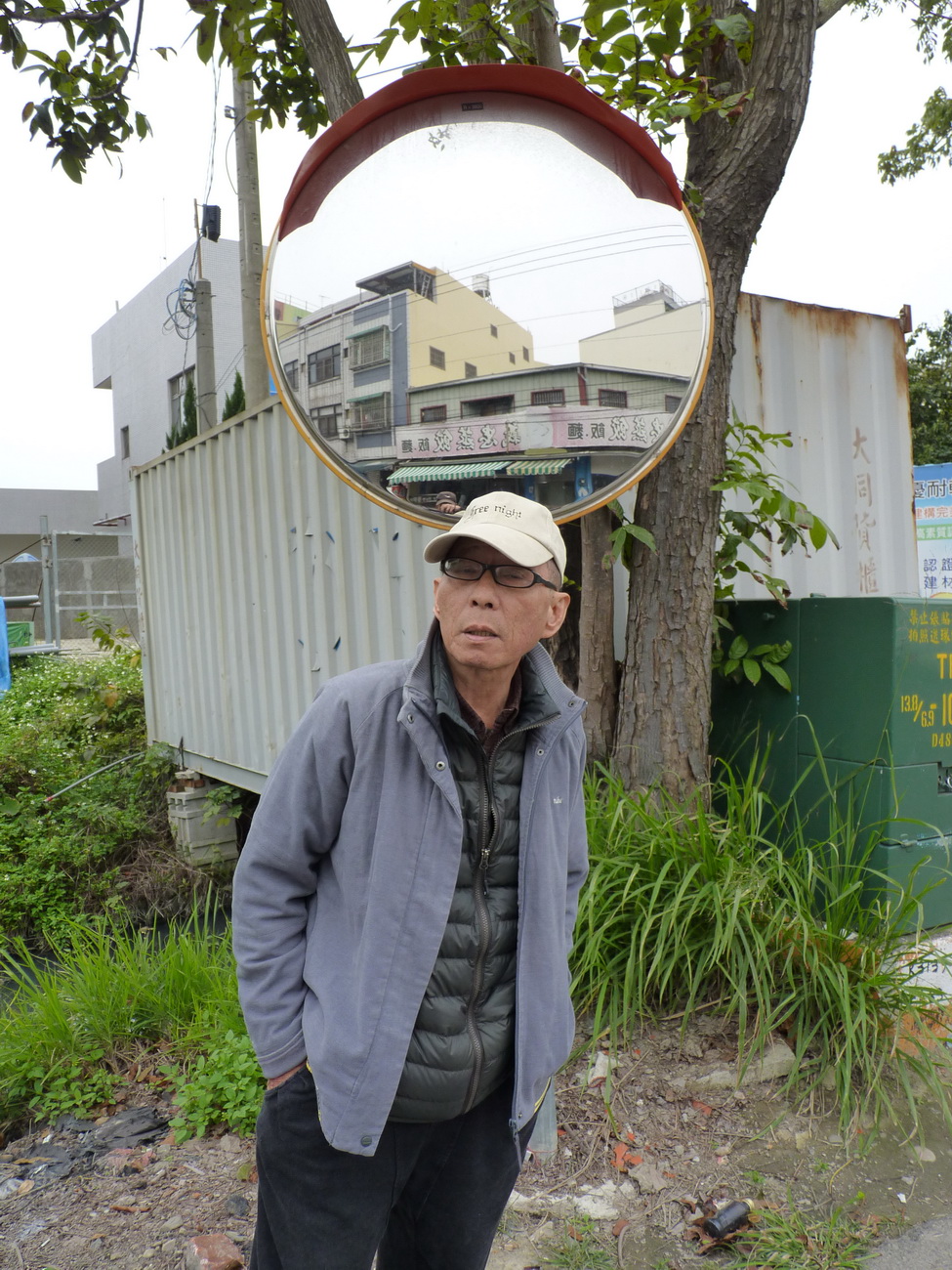
Hsu Yang-Chung (1953–2016, Dou Nan, Yunlin): Hsu’s work spans design, photography, and sculpture, using social intervention to construct his consciousness. As Taiwan’s only mid-career artist exploring light-emitting sculptures, he emphasizes craftsmanship. His dazzling plastic light-emitting sculptures engage with social sites and environmental awareness in Taiwan. Naturally dexterous since childhood, he loved labor, crafts, and drawing. In second grade, he redrew illustrations from his language textbook and designed house models at home. By fourth grade, he made wooden pencil boxes. He adored painting, peeking into upper-grade art classes, and sweeping courtyards to observe dew patterns on brooms—impressions that formed his earliest aesthetic experiences. What drives such capability? Is creativity innate? Perhaps everyone possesses infinite potential driven by instinct, validating German performance artist Joseph Beuys’ statement that "everyone is an artist."
In junior high, Hsu continued painting under the mentorship of young art teacher Guo Hong-Ji (graduated from Taipei National College of the Arts). He built sketchboards, practiced plein air painting, and became a muralist at school. Reading art books fueled his artistic aspirations. Influenced by watercolorist Chen Cheng in high school, he entered Chen’s studio to prepare for art college entrance exams. Inspired by Guo’s graduation from the arts college, Hsu wished to study there. After military service, he finally entered the Sculpture Department of the Taipei National College of the Arts.
By then, his thinking had matured. During military service, he read art magazines but preferred advertising and design publications, which expanded his vision and awakened his sensitivity. This period solidified his focus on daily life narratives. At college, he experimented with ready-mades in concise, ad-like vocabularies, such as The Hardships of Pioneering (1978), featuring gold thumbtacks arranged around an orange pierced by one, symbolizing youthful struggles. That year, following ROC’s UN expulsion and US-Taiwan diplomatic severance, he created Look at Yourself: a table displaying a map of Taiwan surrounded by protest texts and news clippings about the severance, with a rear-view mirror placed in Taipei to prompt reflection on national fate and collective consciousness under authoritarianism.
The following year, his work gained tension and maturity. Is Water Coming? used green plastic pipes, faucets, yellow tubes, and a red bucket dripping water, referencing Taiwan’s drought. His graduation piece, Taipei Sky (1979), featured a dusty map of Greater Taipei with a multi-sided bus stop sign inserted, critiquing metropolitan traffic and pollution. Deconstructing ready-mades into large-scale spatial installations revealed his precocious "contemporaneity."
Photography fell into Hsu’s lap when his father won a prize bond, buying him a high-end camera. He quickly became obsessed, learning darkroom techniques from renowned photographer Ruan Yi-Zhong. After graduating, he held a duo photography exhibition with classmate Yang Ming-Zhong as a farewell gift. Unexpectedly, the show was hosted by Far Eastern Department Store, leading to a job designing covers and shooting for their magazine Consumption Era upon graduation in 1979. Using deconstructed symbolic elements and modernist contrast, he created striking images like Packaging Design Album, where a banana peel wrapped an egg suspended by pink string, or Home Appliances Special, showing an iron melting ice, showcasing strong contemporaneity.
Three years later, he worked as a freelance photographer for women’s magazines. Balancing livelihood photography with night-time artistic creation, he sketched ideas. In 1985, at a life turning point, he submitted Intimate Relationship based on a sketch to the first ROC Modern Sculpture Exhibition competition. The newcomer unexpectedly shared top honors with internationally established artists Lin Shou-Yu and Li Zhi-Wen, marking his unique artistic path. He subsequently participated in exhibitions like Avant-Garde, Installation, Space (1986) and the annual ROC Modern Sculpture Exhibition. In 1990, before going abroad, he held the solo photography exhibition Walking Through the Human World at Taipei Jazz Photography Gallery, accompanied by a photo book published by Photographer Publishing House documenting 14 years of Taiwanese life.
In 1990, Hsu and his wife moved to Milan, Italy, studying at the Academy of Fine Arts of Brera to deepen his art and design knowledge. From 1991’s bone hanger objects to 1996’s fluid architectural models, he explored various creative possibilities. In 1997, he earned dual master’s degrees in sculpture from the Academy of Fine Arts of Brera and product design from Domus Academy. Returning to Taiwan, he actively engaged in design and creation. In 2000, he held his first Taipei solo exhibition Taking the Lawn for a Picnic at Han Yaxuan, constructing poetic scenes that opened the window to his light-emitting sculpture series.
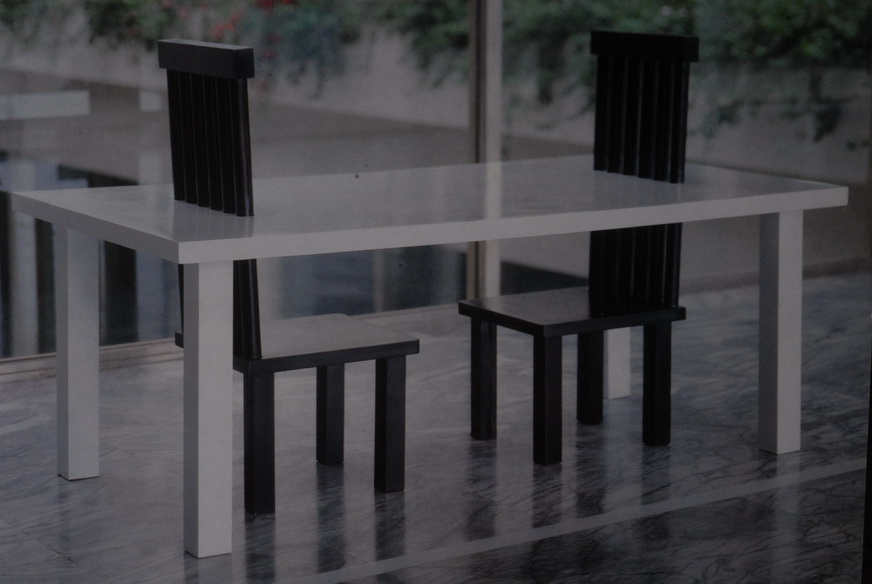
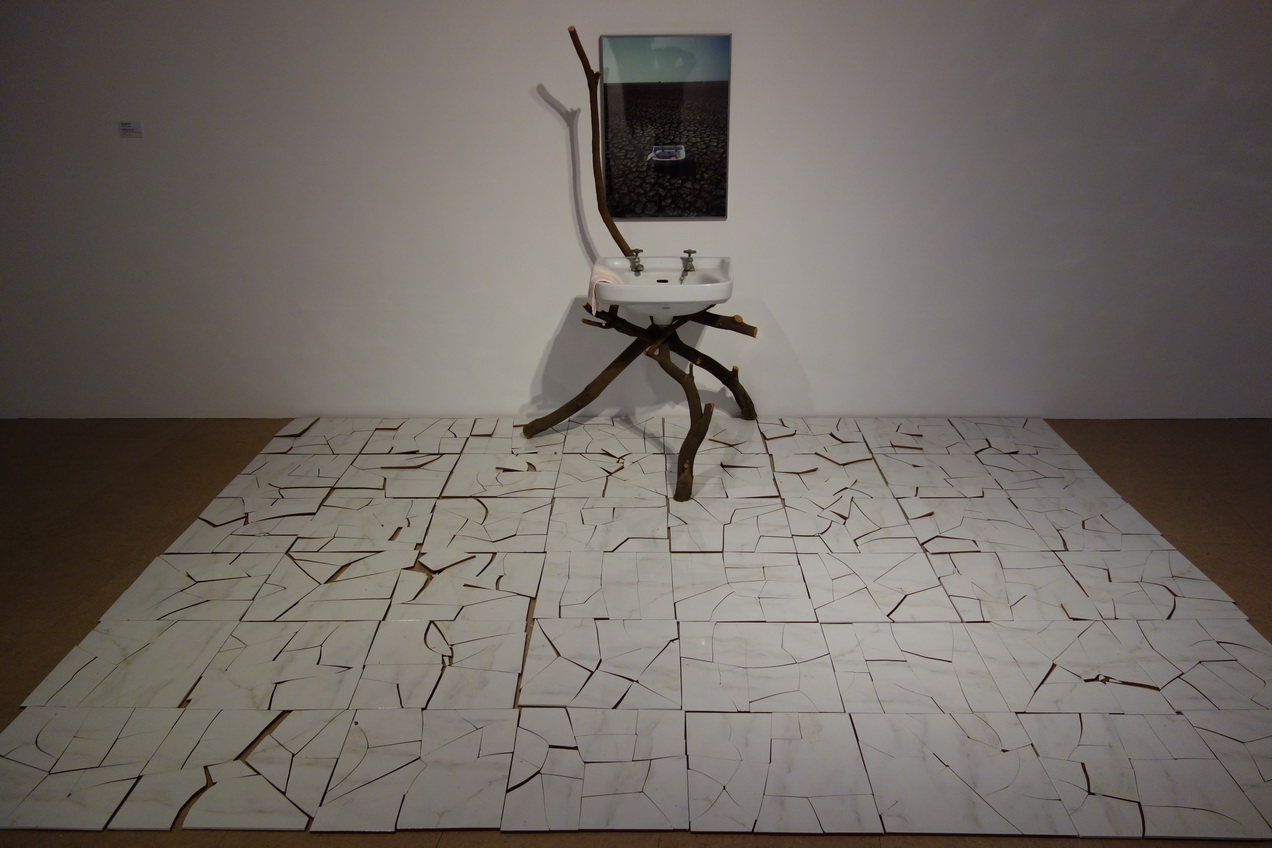
Modern Sculpture Intervening in Society: In the 1980s, Hsu produced four concise modern sculptures using ad-like vocabulary and deconstructed ready-mades. Intimate Relationship (1985) embeds two black chairs into a white table surface, suggesting urban alienation and the desire for closeness beyond black-and-white binaries. Helpless (1985) featured a tilted white chair with a black suit jacket on its back, casting diagonal shadow-lines, metaphorizing societal pressure and lack of choice. Deadly Gambling Table (1987) used six square tabletops resembling dice faces with nails and spikes, critiquing life’s political traps. Days Without Water (1988) deepened the earlier drought theme, using cracked tiles, a curved branch sink frame, and a photograph of a dry landscape replacing the mirror, implying human-caused disasters and the subtle atmosphere before Taiwan’s martial law ended.
Photography Collection Walking Through the Human World: Hsu’s humanistic photography captures resilient vitality, often focusing on marginalized groups, remote villages, and forgotten urban corners. Empathetic lenses recorded social realities, such as patients at Tainan Beimen Blackfoot Hospital, indigenous people in Wutai, psychiatric patients in Xinhua, protests at Chiang Kai-shek Memorial Hall, former prostitute districts, rural outcasts, funerals, and family moments. He noted, "Because life is hard, feelings are stronger; there lies vitality that makes you want to press the shutter." His work shifts from reproducing reality to expressing it. As Ruan Yi-Zhong wrote in the preface, Hsu’s photos have a special charm, lacking perfect composition but possessing an undefined structural sense. Hsu emphasized process over result: "Exhibiting works is just communication... The result is merely an explanation; the process is the true artwork."
Everyday Tales: After absorbing Italian contemporary art and design, Hsu adopted a casual creative mindset. In Milan, he explored everyday objects, modifying and deconstructing them into creative components. His 2000 solo exhibition Taking the Lawn for a Picnic featured works like a bicycle seat carrying plastic lawn squares with aluminum sparrows, or streetlamps with birds holding copper wires connected to glowing bulbs. Series like Little Figures and Little Birds reflected contemporary individual and collective consciousness, blending social-humanistic care with new material aesthetics.
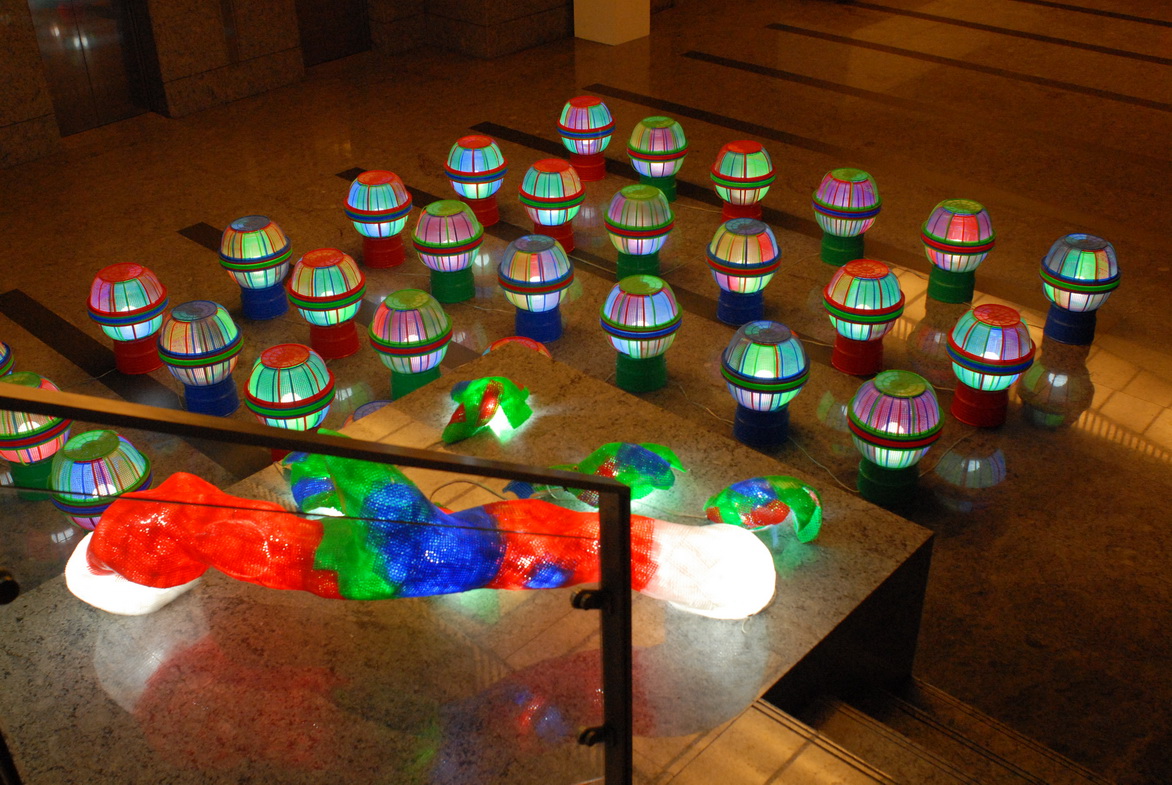
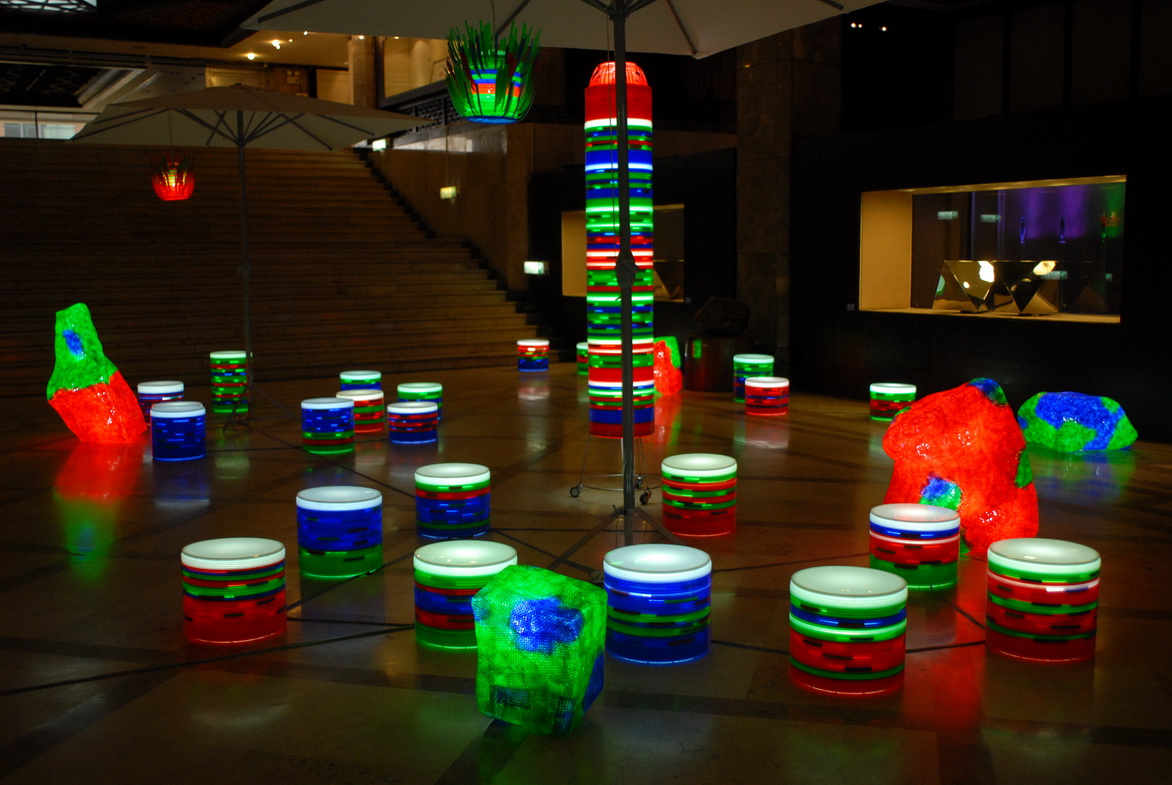
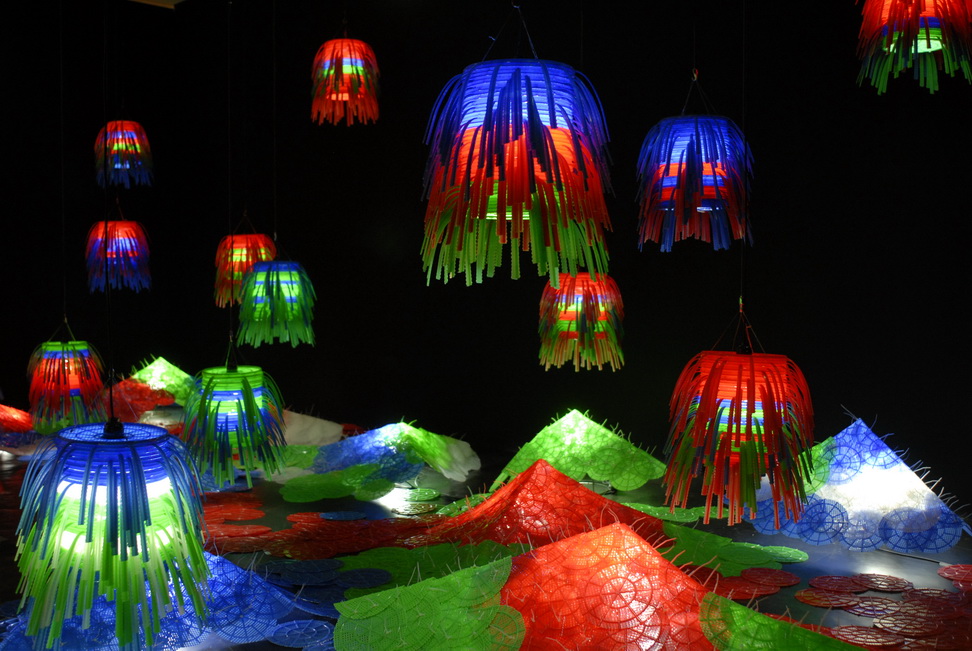
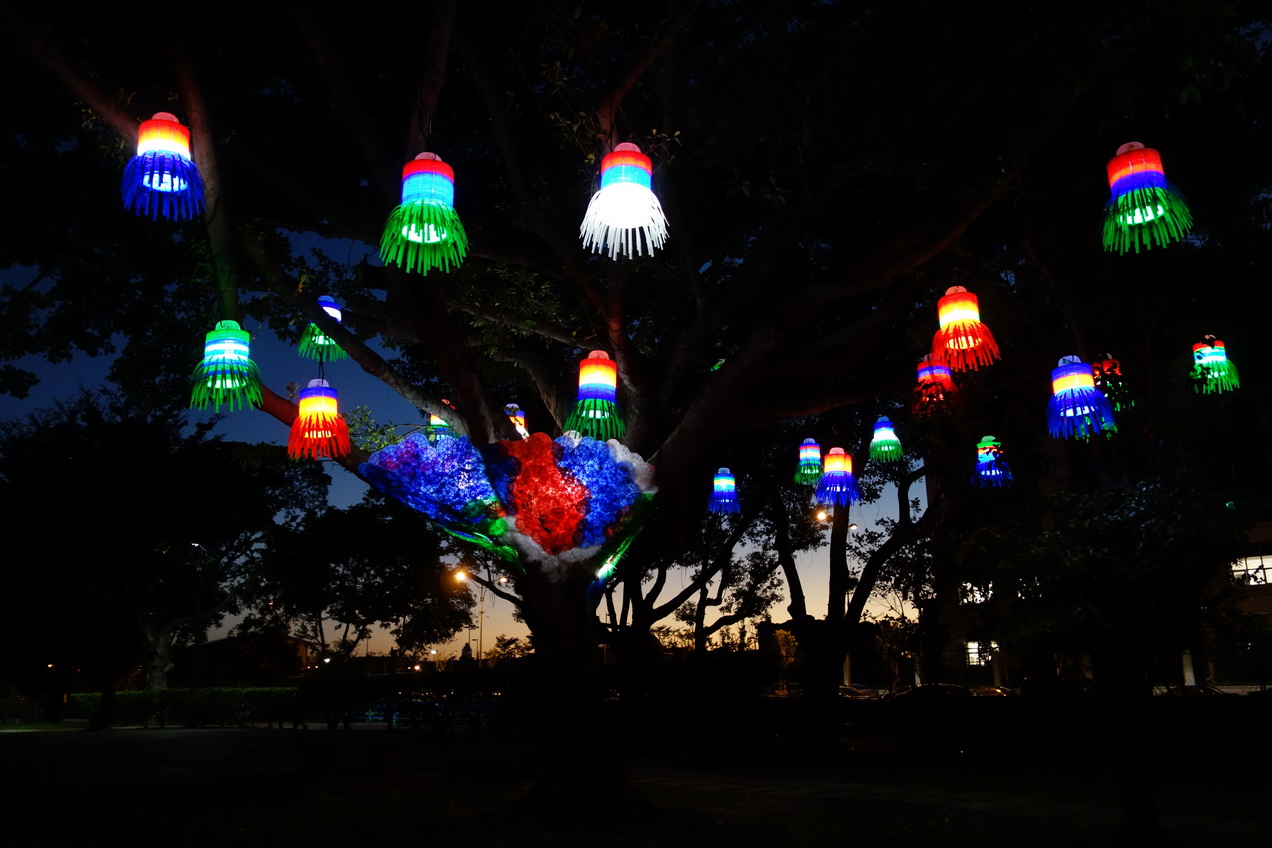
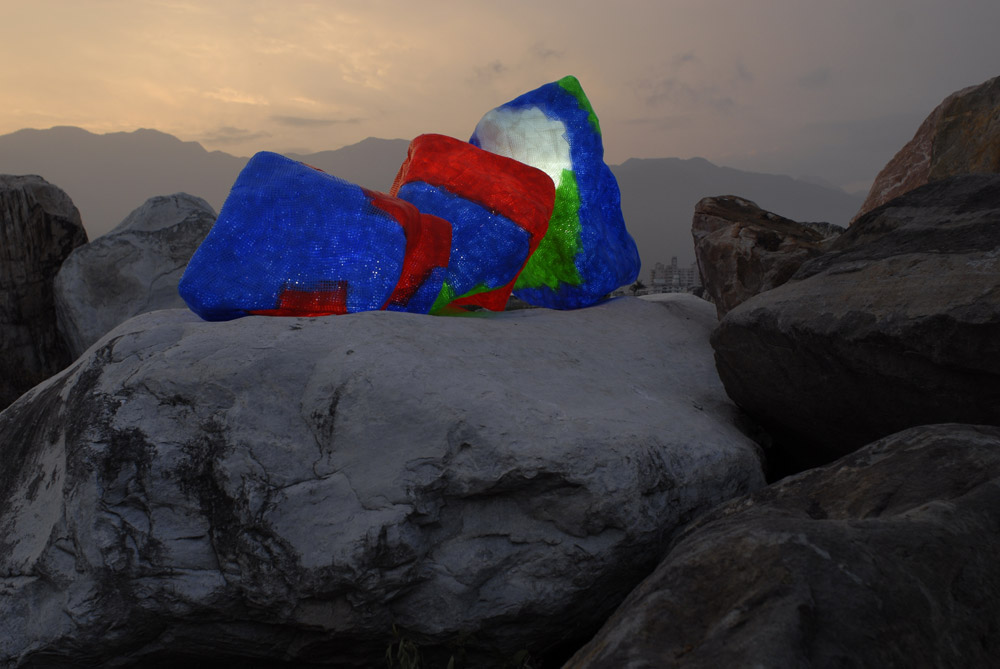
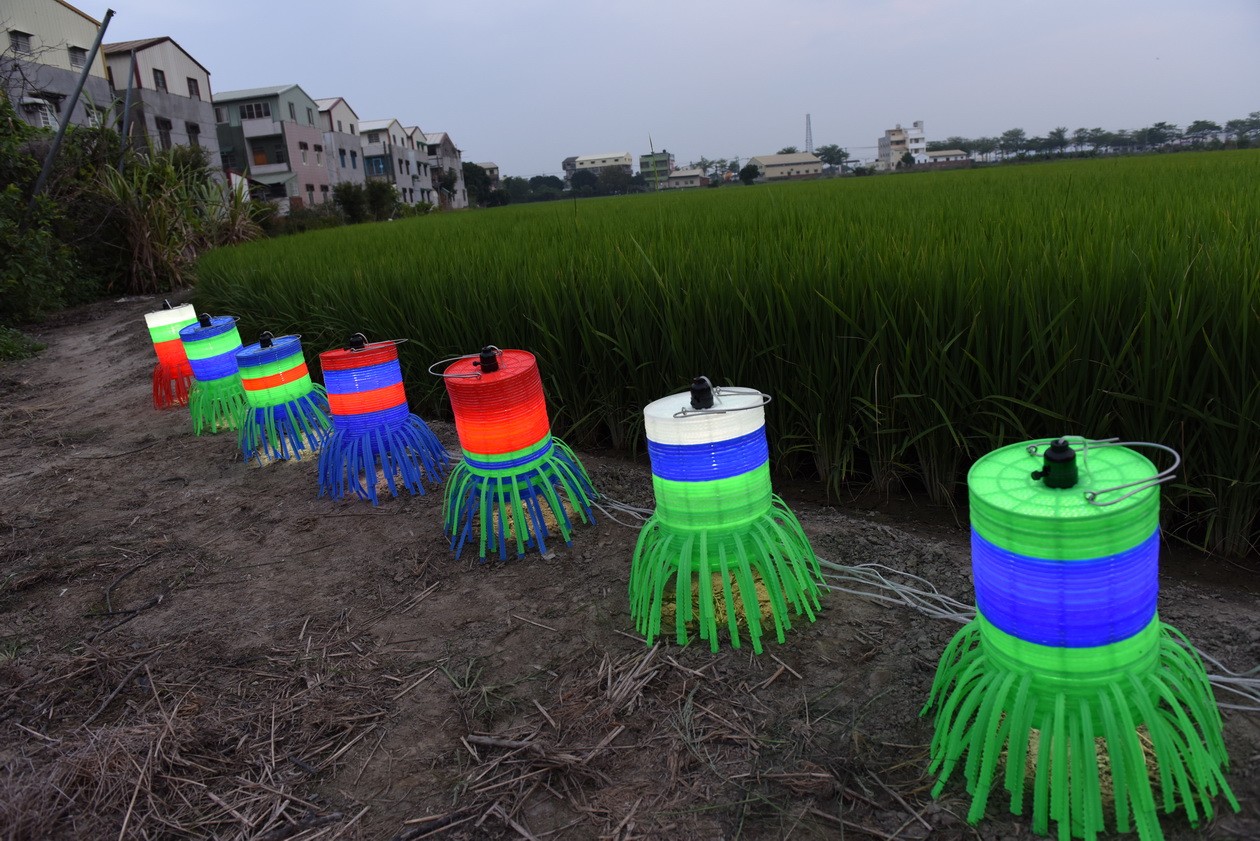
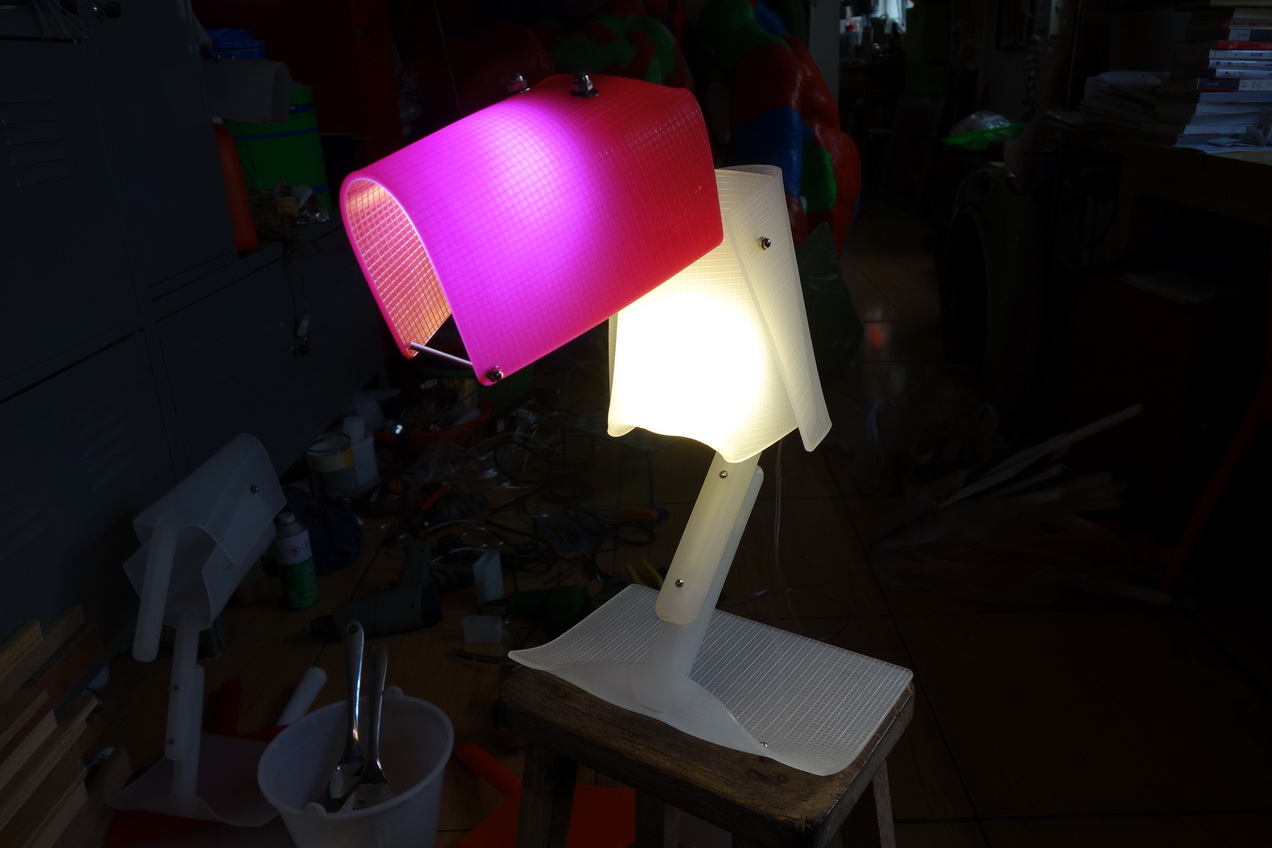
New Material Aesthetics – Light-Emitting Contemporary Sculptures: Hsu’s most mature and distinctive works are dazzling light-emitting sculptures. Breaking traditional boundaries, "light" adds volume, scale, and atmosphere. He began using lights in college and reintroduced LED designs in 1999. By 2002, he found inspiration in colorful plastic laundry baskets, dissecting and reassembling them to mimic biological forms. These luminous sculptures resemble giant lanterns, standing out against sleeping traditional sculptures at dusk, creating romantic, poetic field dialogues with stars and cities. Using vibrant plastics in post-structuralist spatial installations, he aimed to create an atmosphere "of expectation or seduction," facilitating mental interaction and information dialogue. His work bridges design and sculpture, material and form, light and atmosphere, perception and imagination, life and art.
He described his mindset as "unintentional yet purposeful." Using simple tools and complex handwork, he refined his craft in isolation. By releasing the aesthetic genes of ready-made or semi-ready-made plastics, he deconstructed and recombined them into new three-dimensional forms, utilizing internal lighting to convey a functionalized new material aesthetics.
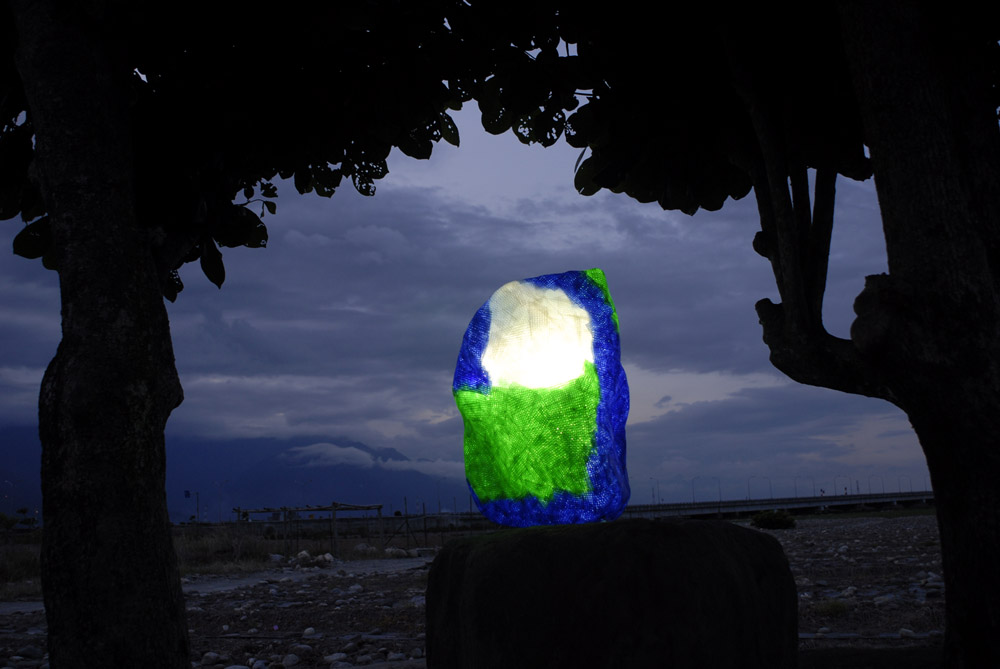
Re-creation Series of Light-Emitting Sculptures (2011–2016): Upon returning from Italy, Hsu broke new ground. The 2000 exhibition Taking the Lawn for a Picnic initiated a fluid creative type dependent on spatial context. This evolved into re-creative explorations. In 2011, his solo exhibition Dogs Rule: When the Master Travels with a Large Stone at Taipei Bema Gallery featured light-emitting sculptures integrated into natural or cultural landscapes, documented via photography. Whether traveling across Taiwan’s mountains, seas, fields, forests, or beaches, or shot day or night, the works displayed different moods according to scenery and light, verifying Hsu’s belief that "unexpected scenery can be found everywhere in life."
Notes:
- Lin Xiu-Ying, Behind the Image - This Person, Hsu Yang-Chung, Walking Through the Human World Photo Book, 1990, Photographer Publishing House.
- Ibid.
- Ruan Yi-Zhong, Publishing Origin, Walking Through the Human World Photo Book, 1990, Photographer Publishing House.
- Postscript, Walking Through the Human World Photo Book, 1990, Photographer Publishing House.
- Keelung Cultural Bureau, Hsu Yang-Chong Sea.Light.Rain Exhibition Materials, 2008.
- Ibid.
2016-12-14 Zhu Luo City